| Author |
Message |
 |
|
|
|
|
Advert
|
Forum adverts like this one are shown to any user who is not logged in. Join us by filling out a tiny 3 field form and you will get your own, free, dakka user account which gives a good range of benefits to you:
- No adverts like this in the forums anymore.
- Times and dates in your local timezone.
- Full tracking of what you have read so you can skip to your first unread post, easily see what has changed since you last logged in, and easily see what is new at a glance.
- Email notifications for threads you want to watch closely.
- Being a part of the oldest wargaming community on the net.
If you are already a member then feel free to login now. |
|
 |
2020/12/01 17:13:38
Subject: Oil paint pin washing issue, Oils aren't moving into the recesses as easily
|
|

Fresh-Faced New User
|
I have recently attempted to do some pin washing with oil paints. I am having a few problems with this method unfortunately. (FYI applying this oil paint onto a primaris intercessor)
When applying 2 layers(4 hours in between) of (unthinned) gloss varnish (Vallejo gloss) and waited 24hrs for it to cure. It seems the oil paints aren't flowing into the recesses as easily and quickly as I see on many YouTube videos, I have to draw my brush directly over the recesses for the oil to move into the recesses and even then I have to go over a second time to get the oils to land properly into the recesses. In other videos you see someone just pinning the brush in a recess (just a singular point) and the oil moves around through the recesses of that entire specific area. I have thinned the oils with solvent thinner (both oil and solvent thinner is from W&N, Lamp black oil + Sansodor). I checked the consistency so it flows easily enough and the colour is dark enough to my preference, about a milky consistency,
May I ask anyone with oil wash pinning experience as to why this is happening ?
Also it seems when trying to tidy up the oil paints on the flat areas of the model (I use a q-tip with solvent to clean up the areas) it seems even with 2 layers of unthinned gloss varnish its very easy to break the gloss. Is this normal?
Many thanks for your help.
|
|
|
 |
|
2020/12/01 18:34:56
Subject: Re:Oil paint pin washing issue, Oils aren't moving into the recesses as easily
|
|

Longtime Dakkanaut
|
Do you apply varnish on the model before you do the oil wash?
I allways do to protect the paint, i allso use a thinner from MIG spesificly for oil and enamel paints(atleast that is what it says on the bottle) when i do my oil washes.
I honestly dont know why your attempts wont flow out, but i never had that issue.
Perhaps some surface tension aspect is playing a role here? i never realy tought about how it works, im just happy that it works.
|
|
This message was edited 1 time. Last update was at 2020/12/01 18:36:00
darkswordminiatures.com
gamersgrass.com
Collects: Wild West Exodus, SW Armada/Legion. Adeptus Titanicus, Dust1947. |
|
|
|
|
2020/12/01 18:46:23
Subject: Oil paint pin washing issue, Oils aren't moving into the recesses as easily
|
|
Longtime Dakkanaut
|
For smaller scale models with small surfaces like a space marine, you don't really need to varnish beforehand, so I am wondering if it's the varnish that hasn't cured properly between coats before oil washing or your varnish has clogged some of the detail and that is causing the issue. I'm always paranoid with varnish so I'm leaving the stuff for ages between coats as I've been burned before. Are you using polyurethane varnish?
Generally, the folks you see on youtube with the exception of a few are using high quality oils and they do a lot better when thinned down into a wash like consistency. I don't, but I don't have the issue you have.
Milk is a general guideline for consistency, but ultimately it depends a lot on "feel" if the wash is thinned too much, it won't transport the pigment because the oil separates which is where I think you may be encountering your issue. I don't use sansodor, just white spirit as my thinner, and if you're too hard on the model, the paint will lift, varnish or none, because white spirit is a solvent.
|
|
|
|
|
|
2020/12/01 20:28:38
Subject: Re:Oil paint pin washing issue, Oils aren't moving into the recesses as easily
|
|
Fresh-Faced New User
|
 FrozenDwarf wrote: FrozenDwarf wrote:Do you apply varnish on the model before you do the oil wash?
I allways do to protect the paint, i allso use a thinner from MIG spesificly for oil and enamel paints(atleast that is what it says on the bottle) when i do my oil washes.
I honestly dont know why your attempts wont flow out, but i never had that issue.
Perhaps some surface tension aspect is playing a role here? i never realy tought about how it works, im just happy that it works.
Yes I gloss varnish the model before using the oil paints. Could it possibly be due to too much gloss varnish applied? Automatically Appended Next Post: 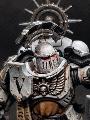 Tyranid Horde wrote: Tyranid Horde wrote:For smaller scale models with small surfaces like a space marine, you don't really need to varnish beforehand, so I am wondering if it's the varnish that hasn't cured properly between coats before oil washing or your varnish has clogged some of the detail and that is causing the issue. I'm always paranoid with varnish so I'm leaving the stuff for ages between coats as I've been burned before. Are you using polyurethane varnish?
Generally, the folks you see on youtube with the exception of a few are using high quality oils and they do a lot better when thinned down into a wash like consistency. I don't, but I don't have the issue you have.
Milk is a general guideline for consistency, but ultimately it depends a lot on "feel" if the wash is thinned too much, it won't transport the pigment because the oil separates which is where I think you may be encountering your issue. I don't use sansodor, just white spirit as my thinner, and if you're too hard on the model, the paint will lift, varnish or none, because white spirit is a solvent.
Yep polyurethane varnish from Vallejo via airbrush. I use Winsor and newton oil paints so I assume they are high quality oils. As you mentioned I too am wondering if I applied too much gloss varnish which led to as you say clogging some of the details and made the recess's surface tension different somehow. Automatically Appended Next Post: Tbh I am thinking it is the fact that i applied too much gloss varnish. I applied 2 layers(4 hr intervals) non thinned down and I just sprayed the crap out of the airbrush until the model was really wet. But I can understand why if this is indeed the cause
|
|
This message was edited 2 times. Last update was at 2020/12/01 20:33:12
|
|
|
|
|
2020/12/01 20:43:30
Subject: Oil paint pin washing issue, Oils aren't moving into the recesses as easily
|
|

Martial Arts Fiday
|
I would try it without the gloss beforehand. I’ve never used it unless I had large flat areas I wanted untouched by the wash. Like a vehicle.
|
"Holy Sh*&, you've opened my eyes and changed my mind about this topic, thanks Dakka OT!"
-Nobody Ever
Proverbs 18:2
"CHEESE!" is the battlecry of the ill-prepared.
 warboss wrote: warboss wrote:
GW didn't mean to hit your wallet and I know they love you, baby. I'm sure they won't do it again so it's ok to purchase and make up. 
Albatross wrote:I think SlaveToDorkness just became my new hero.
EmilCrane wrote:Finecast is the new Matt Ward.
Don't mess with the Blade and Bolter! |
|
|
|
|
2020/12/01 20:45:45
Subject: Oil paint pin washing issue, Oils aren't moving into the recesses as easily
|
|
Longtime Dakkanaut
|
Might be that Vallejo Gloss, but oil solvents shouldn't be breaking through it at all. Might try a different brand varnish, I personally use Future Finish (see this website for what the current label is), but any acrylic or polyurethane gloss SHOULD be OK.
But I suspect it's the Sansador. I've never used that thinner, but after looking at the W&N site and their "choosing a solvent" vidoe, I don't think it's acting like the odorless white spirits do when they thin oils and it might also be what's eating through the gloss varnish. Mona Lisa brand odorless paint thinner or Weber brand odorless turpenoid are the only 2 thinners I use, (mostly Weber) both are awesome and almost completely odorless and dry fairly quickly (Sansodor is specifically mentioned as slow-drying). and they don't lift the acrylic paint or varnish. Both are readily available online and in art supply stores.
Lastly, look into enamel washes. They are awesome for mechanical parts for 2 reasons: they wipe away cleaner leaving a hard line behind (oil washes tend to smear, leaving a blurry edge, better for soft and round shapes). Also, enamel washes can be applied directly to acrylic paint without a gloss coat. My 2 favorite are Tamiya Panel Line Accent Color and PLW (panel line wash) by Mig Jimenez/AMMO, with the Mig PLW being my favorite. Both are ready-mixed washes that can be applied straight from the bottle and then clean up with white spirits just like oil washes (dry Q-tip, or a Q-tip wetted with a bit of thinner). I prefer the MIG PLW because it's a little thinner and flows better and wipes away cleaner, but the Tamiya has a brush built into the cap, has a short squat bottle that doesn't tip over, and sometimes you want the wash to be a little more resistant to wiping away. Without a gloss coat they don't wick into the recesses quite as easily, but they wipe away cleaner and don't stain the area like oil washes do, so it's OK to be alittle messy with them
In my Ultramarines thread I used a dark grey MIG PLW enamel wash for the Ultramarines and a traditional oil wash of Winsor & Newton burnt umber+black for the Custodes
|
|
|
|
|
|
2020/12/01 20:46:22
Subject: Oil paint pin washing issue, Oils aren't moving into the recesses as easily
|
|
Deathwing Terminator with Assault Cannon
|
You may have "erased" the crevices with all that varnish.
|
|
|
|
|
2020/12/01 20:50:49
Subject: Oil paint pin washing issue, Oils aren't moving into the recesses as easily
|
|
Dakka Veteran
Seattle, WA USA
|
MoneyWaster00 wrote: I checked the consistency so it flows easily enough and the colour is dark enough to my preference, about a milky consistency,
May I ask anyone with oil wash pinning experience as to why this is happening ?
My guess is if it's "milky consistency" it's far too thick for doing the oil pin-washing (which I do all the time). For it to flow, you need it to be really thin, like thinner than inks. It's hard to give an exact ratio, but if I have say one-half small brush full of oil paint out of the tube (like the size of a grain of rice or smaller), that will probably get 10-15 drops of mineral spirits to thin. It should run easily off the side of the container/palette cup, leaving very little on the edge and flowing naturally into the well.
For clean up, if needed, a very light hand with a cotton swab or makeup sponge with just a tiny amount of mineral spirits to dampen it is all I usually need. Automatically Appended Next Post: Also, yeah, if your varnish coat is too thick, it will have filled in the recesses and thus the oils won't have anywhere to run into. I actually have found it's not always necessary to varnish before oils, depending on what paint is on there ( GW still needs it; Warcolours and Vallejo don't). It doesn't hurt, of course, but you need to make sure it's very thin coats of varnish.
|
|
This message was edited 1 time. Last update was at 2020/12/01 20:52:25
|
|
|
|
|
2020/12/01 21:12:26
Subject: Oil paint pin washing issue, Oils aren't moving into the recesses as easily
|
|
Fresh-Faced New User
|
 SlaveToDorkness wrote: SlaveToDorkness wrote:I would try it without the gloss beforehand. I’ve never used it unless I had large flat areas I wanted untouched by the wash. Like a vehicle.
I never knew it was possible without gloss varnish. I assumed the varnish is required if we wanted the oil to pour into those recesses and without the varnish it won't move into them at all. Is that mistaken ? Automatically Appended Next Post:  Kalamadea wrote: Kalamadea wrote:Might be that Vallejo Gloss, but oil solvents shouldn't be breaking through it at all. Might try a different brand varnish, I personally use Future Finish (see this website for what the current label is), but any acrylic or polyurethane gloss SHOULD be OK.
But I suspect it's the Sansador. I've never used that thinner, but after looking at the W&N site and their "choosing a solvent" vidoe, I don't think it's acting like the odorless white spirits do when they thin oils and it might also be what's eating through the gloss varnish. Mona Lisa brand odorless paint thinner or Weber brand odorless turpenoid are the only 2 thinners I use, (mostly Weber) both are awesome and almost completely odorless and dry fairly quickly (Sansodor is specifically mentioned as slow-drying). and they don't lift the acrylic paint or varnish. Both are readily available online and in art supply stores.
Lastly, look into enamel washes. They are awesome for mechanical parts for 2 reasons: they wipe away cleaner leaving a hard line behind (oil washes tend to smear, leaving a blurry edge, better for soft and round shapes). Also, enamel washes can be applied directly to acrylic paint without a gloss coat. My 2 favorite are Tamiya Panel Line Accent Color and PLW (panel line wash) by Mig Jimenez/AMMO, with the Mig PLW being my favorite. Both are ready-mixed washes that can be applied straight from the bottle and then clean up with white spirits just like oil washes (dry Q-tip, or a Q-tip wetted with a bit of thinner). I prefer the MIG PLW because it's a little thinner and flows better and wipes away cleaner, but the Tamiya has a brush built into the cap, has a short squat bottle that doesn't tip over, and sometimes you want the wash to be a little more resistant to wiping away. Without a gloss coat they don't wick into the recesses quite as easily, but they wipe away cleaner and don't stain the area like oil washes do, so it's OK to be alittle messy with them
In my Ultramarines thread I used a dark grey MIG PLW enamel wash for the Ultramarines and a traditional oil wash of Winsor & Newton burnt umber+black for the Custodes
I agree with you saying it could possibly be the varnish or the solvent. Also the Sansodor I heard from 1 guy in a forum that he had the same problem as me that the oil paints didn't move but when he switched to the W&N Artist's white spirit it worked. I might actually try that.
The reason I used Sansador is because the youtube video i watched from clearly showed the Sansador working so I assumed this will mean it should work. Also that bottle comes in a 75ml size for around 15 dollars which is crazy!
I have also been thinking of trying enamels as well and it just so happens I have ordered the black Tamiya panel line as you have suggested but I need to order an enamel thinner right, or I can try use the Sansador or buy a white spirit instead ? Also I have no clue on enamels but is it highly toxic ? i.e. you need to use a rebreather while using ?
Automatically Appended Next Post:  skchsan wrote: skchsan wrote:You may have "erased" the crevices with all that varnish.
Yes that is the reason I am guessing as well. Does this mean I should thin down the gloss varnish ? any recommendations on ratio ? Automatically Appended Next Post:  Valander wrote: Valander wrote:MoneyWaster00 wrote: I checked the consistency so it flows easily enough and the colour is dark enough to my preference, about a milky consistency,
May I ask anyone with oil wash pinning experience as to why this is happening ?
My guess is if it's "milky consistency" it's far too thick for doing the oil pin-washing (which I do all the time). For it to flow, you need it to be really thin, like thinner than inks. It's hard to give an exact ratio, but if I have say one-half small brush full of oil paint out of the tube (like the size of a grain of rice or smaller), that will probably get 10-15 drops of mineral spirits to thin. It should run easily off the side of the container/palette cup, leaving very little on the edge and flowing naturally into the well.
For clean up, if needed, a very light hand with a cotton swab or makeup sponge with just a tiny amount of mineral spirits to dampen it is all I usually need.
Automatically Appended Next Post:
Also, yeah, if your varnish coat is too thick, it will have filled in the recesses and thus the oils won't have anywhere to run into. I actually have found it's not always necessary to varnish before oils, depending on what paint is on there ( GW still needs it; Warcolours and Vallejo don't). It doesn't hurt, of course, but you need to make sure it's very thin coats of varnish.
Yes I am having difficulty with the consistency even more then consistency with acryllic paints in the airbrush unfortunately. I guess its all trial and error. Automatically Appended Next Post: Thank you all for the awesome feedback. Much appreciated.
If possible I would like to ask a few more questions since the response was really quick haha  .
- I use a rebreather when using solvent thinners because I heard its very toxic when breathed in and can have permeant health effects.(I also spray within a shed or garage which is outside and I keep the door open) Is this true ? And is there any other hazards I should be concerned about when using enamels and oils. Unfortunately I am a very "over-cautious" person when it comes to health so I prefer to not use toxic materials too much. If there are any "safest" oils/enamel brands to use then I would greatly appreciate some alternative suggestions
- Would enamels be considered less toxic then using oils ? I read on the back of the Tamiya paints that it can cause cancer as well.
- For Vallejo gloss varnish should I thin it down (with airbrush) ? if so may I possibly ask for a ratio ? because as some people have suggested the gloss varnish might be too much hence the wash doesn't move into the crevices.
|
|
This message was edited 4 times. Last update was at 2020/12/01 21:26:55
|
|
|
|
|
2020/12/01 21:36:04
Subject: Oil paint pin washing issue, Oils aren't moving into the recesses as easily
|
|
Longtime Dakkanaut
|
You can use oil washes over bare paint, but it won't flow like a pin wash and it will leave behind some staining depending on how flat/matte your paint is. It's good for round organic and fur shapes, not great for mechanical armor and panels. The gloss coat primarily lets the oil wash wipe away cleaner and helps it flow into crevices from capillary action. Unfortunately, there's no substiture for experience, so try it on a few spare models and see how you like it.
As for enamels, no rebreather necessary for hand painting unless you're particularly sensitive. They have a slight smell to them, but nothing that has ever bothered me. They definitely work with odorless white spirit, they would probably work fine with Sansador, but that is really expensive compared to the Weber/Mona Lisa, where $15 gets you a liter sized bottle. In an airbrush, you're aerosolizing the paints, probably best to use a rebreather then. Note that the paints themselves are not very toxic (except for a few like cadnium red!), but the thinners vary greatly in toxicity. Turpentine is very bad for you, some of the odorless ones are specifically much safer to use. If in doubt, you already have a mask, so just use it when airbrushing.
|
|
This message was edited 2 times. Last update was at 2020/12/01 21:39:17
|
|
|
|
|
2020/12/01 21:44:42
Subject: Oil paint pin washing issue, Oils aren't moving into the recesses as easily
|
|
Thane of Dol Guldur
|
Too high a gloss sheen can actually negatively affect oil washes due to the increased surface tension. This can sometimes take the form of the oil wash beading on the surface. Not sure if this has been mentioned.
I would try again with a satin wash, or even on bare paint.
|
  Heresy World Eaters/Emperors Children Heresy World Eaters/Emperors Children 
Instagram: nagrakali_love_songs |
|
|
|
|
2020/12/01 22:10:06
Subject: Oil paint pin washing issue, Oils aren't moving into the recesses as easily
|
|
Fresh-Faced New User
|
Kalamadea wrote:You can use oil washes over bare paint, but it won't flow like a pin wash and it will leave behind some staining depending on how flat/matte your paint is. It's good for round organic and fur shapes, not great for mechanical armor and panels. The gloss coat primarily lets the oil wash wipe away cleaner and helps it flow into crevices from capillary action. Unfortunately, there's no substiture for experience, so try it on a few spare models and see how you like it.
As for enamels, no rebreather necessary for hand painting unless you're particularly sensitive. They have a slight smell to them, but nothing that has ever bothered me. They definitely work with odorless white spirit, they would probably work fine with Sansador, but that is really expensive compared to the Weber/Mona Lisa, where $15 gets you a liter sized bottle. In an airbrush, you're aerosolizing the paints, probably best to use a rebreather then. Note that the paints themselves are not very toxic (except for a few like cadnium red!), but the thinners vary greatly in toxicity. Turpentine is very bad for you, some of the odorless ones are specifically much safer to use. If in doubt, you already have a mask, so just use it when airbrushing.
Understood. Thank you very much.
I also recall you said Tamiya enamel panel line is great, would I require a thinner for that ? since its already thinned and it has a brush attached I wouldn't really require a thinner unless used for cleaning up mistakes correct? Automatically Appended Next Post:  queen_annes_revenge wrote: queen_annes_revenge wrote:Too high a gloss sheen can actually negatively affect oil washes due to the increased surface tension. This can sometimes take the form of the oil wash beading on the surface. Not sure if this has been mentioned.
I would try again with a satin wash, or even on bare paint.
That makes sense. I should try less gloss maybe some thinner mixed in. I did also hear satin sometimes works better for some people so I will definitely consider that as well. Thank you very much
|
|
This message was edited 1 time. Last update was at 2020/12/01 22:10:59
|
|
|
|
|
2020/12/01 22:26:34
Subject: Oil paint pin washing issue, Oils aren't moving into the recesses as easily
|
|
Thane of Dol Guldur
|
Yeah varnish really isn't necessary as some others have mentioned. I oil wash over bare acrylic all the time. You do need to be precise and not just drown the area in the wash mind, as this can lead to what I can only describe as something like a micro staining of the flat layers, which can sometimes be difficult to clean, and runs the risk of damaging your acrylic layer, but if you're careful the oil should flow nicely into your selected recess with no issues, and minor clean ups of mistakes shouldn't cause an issue. I very rarely use thinner for cleanup, just a bit of kitchen towel, or even a fingertip. Oils come off very easily. Once they're down, give them a good cure time. At least 24 hours or so for thinned washes, and apply a varnish if you plan on painting any more acrylics in that area. I sometimes leave oil painted miniatures for days and work on something else, although this is usually when I'm using oil paints for the actual layers and not just washes, so as long as you varnish you should be ok.
|
|
This message was edited 2 times. Last update was at 2020/12/01 22:33:00
Heresy World Eaters/Emperors Children
Instagram: nagrakali_love_songs |
|
|
|
|
2020/12/02 05:22:54
Subject: Oil paint pin washing issue, Oils aren't moving into the recesses as easily
|
|
Longtime Dakkanaut
|
queen_annes_revenge wrote:Too high a gloss sheen can actually negatively affect oil washes due to the increased surface tension. This can sometimes take the form of the oil wash beading on the surface. Not sure if this has been mentioned.
I would try again with a satin wash, or even on bare paint.
I knew surface tensions had some role in all of this. when i do my oil pin washes, i have only given my model one thin coat of satin varnish.
To clear up oil that is not ment to be where i want it, i just use a normal paint brush damped in thinner.
For the tam panel liners, yes i would suggest you thin that out atleast the black and dark brown, they are realy pigment heavy(or atlest thouse i bought 3 years ago are, they might have changed up the formula since the grey did not exist back then). light brown and grey are fine straight from the bottle.
|
darkswordminiatures.com
gamersgrass.com
Collects: Wild West Exodus, SW Armada/Legion. Adeptus Titanicus, Dust1947. |
|
|
|
|
2020/12/02 13:34:43
Subject: Oil paint pin washing issue, Oils aren't moving into the recesses as easily
|
|
Fresh-Faced New User
|
In terms of gloss:thinner may I ask if anyone knows what would be good ? also how many layers ?
also is anyone has experience using satin:thinner may I ask this too?
Many thanks.
|
|
|
|
|
2020/12/02 14:36:46
Subject: Oil paint pin washing issue, Oils aren't moving into the recesses as easily
|
|

Longtime Dakkanaut
|
I use Humbrol Clear. It's closest to what the oldschool "Klear" was. Never had problems. I don't thin it, just airbrush straight.
I usually do 2 layers max.
|
|
|
|
|
|
2020/12/02 19:59:25
Subject: Oil paint pin washing issue, Oils aren't moving into the recesses as easily
|
|
Dakka Veteran
Seattle, WA USA
|
MoneyWaster00 wrote:In terms of gloss:thinner may I ask if anyone knows what would be good ? also how many layers ?
also is anyone has experience using satin:thinner may I ask this too?
Many thanks.
I've got Createx Airbrush Gloss Varnish that I use most of the time when I do varnishing before oils. Typically just straight out of the bottle, and only one thin coat, just enough to get the surface uniformly "wet" as it were.
For this step in general, you're not really wanting a super hard protective coat, but more of a smoother surface for the oils to run off of. I will most often do another gloss coat after any final cleanup, followed by a matte coat (Vallejo Polyurethane Matte, again through airbrush; thinned only with a tiny bit of water/flow improver if needed).
|
|
|
|
|
|
|


