Blue Table Painting
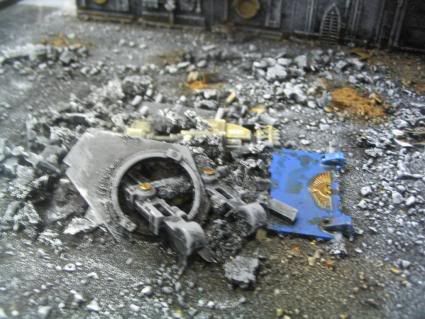
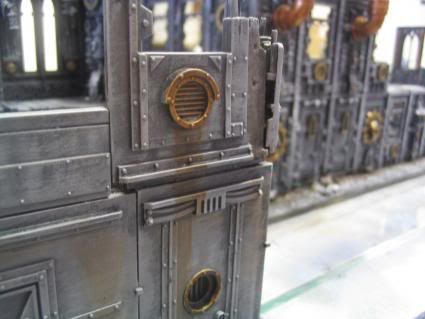
Battle-torn Imperial City
Here are a few dozen pics of the new GW city terrain. There was a limited splash release of an Imperial city box. This represents the contents of one of these boxes.
Two more sets are forthcoming.
It became clear early in construction that the buildings each needed a foot. These were made from ¼? board and graveled with (of all things) a mix of kitty litter and other types of rocks.
These city kits are well worth the money in all the extra bitz they provide for subsequent basing of other projects. By avoiding Imperial symbols they can even be used for other game systems, and being plastic they are very friendly to having models pinned to them.
For the grey base on these pieces we used regular craft paint, available for about $1.50 per two ounce bottle. For this much area, it?s too expensive to use game paint like Vallejo. I would also recommend for terrain pieces to go to your local hardware store and get a house paint to match. In fact, they have machines that can match samples, so it?s very possible to get a quality Vallejo color (like Hull Red, a favorite of mine) by the gallon!
You?re likely to get some stares asking for black housepaint, though. I did.
Aaanyway, it?s important to use a large soft brush. I usually get the cheap $1.00 wood-handled kind from a hardware store. Nylon or plastic-bristled brushes don?t work so well.
I like to hand mix my shades of grey from straight black and white, I?m John Wayne like that, but start with a base of charcoal grey, and then a highlight of a lighter grey. The two tones will generally do it if you apply them smoothly. It?s important to avoid streaking so you have to put the paint on then wipe it off on a paper towel (I like a stack of three folded in half) multiple times in a circular motion, getting the paint off from every angle. Then I do a few test slaps on a piece of scrap cardboard to get out any lumps of paint. Then it?s time to gently put on the drybrush.
Stage two is using a brown mix?I?d say part brown ink, part brown paint and part water. This will create mud and rust effects. GW Flesh ink is good for rust, too. Let the ink dry partially into a pudding then use a chisel-shaped brush to swipe in parallel strokes from your point of rust origin. This creates those streaks like water has dripped down and corroded or stained the stone/steel.
There are a zillion things you can do to make cool terrain, but I think that?s it for now.
Shawn Gately
Blue Table Painti