I originally played 40k as a teenager back in the Rogue Trader days, and stopped just as 2nd edition came out. Not because 2nd edition came out, but because I went to Sixth Form in a different town and A-levels and life took over. I came back to the hobby in 2018 as an adult just after 8th edition launched and put together a new firstborn Ultramarines army. The Space Marines codex was already out so I didn't experience the 8th edition indexes, but I was right there for the Primaris-replacing-firstborn angst. When Chaos Knights were introduced I started a second army, and during 9th edition I bought the Hexfire boxed set and started another two armies - GK and TSons. With the advent of 10th edition (and the subsequent firstborn cull) I've retired my Ultramarines and bought index cards for my other three armies.
So in summary, since I came back to the hobby, I've retired one fully painted army, 2 BRBs and two editions worth of codexes.
Until recently I felt somewhat annoyed by edition churn and the additional expense that involved, but more recently I think I've come to accept that it's a good thing to keep me interested in the hobby. There's a limit to the amount of armies I can collect, and I'm a sucker for a physical rulebook, so buying a BRB and 3 codexes every few years for around £100 is actually quite a nice way of keeping the game fresh for me. The index cards gave me a bit of concern when 10th edition launched, but because I play Chaos Knights, GK and TSons I'm going to get a year's use out of all of them before the codexes come along, so even that seems okay.
I guess my opinion might be somewhat skewed by being an adult with disposable income - that and having other hobbies that are more expensive than 40k - but in any case I think my view has changed recently.
I don't mind change.
But the permanently changing meta and rules should be free of charge and not tied to codexes.
They made points free, that's good. Now they need to untie datasheets from printed material, so that updating them is just as easy as making points adjustments.
I don’t mind changes, but I feel personal that GW has mostly fallen into a churn of rules. Where the game barely changes in depth or what it’s achieving, but changes massively in how it gets there.
End in a shallow game that mostly just feels like going though the motions, and players not engaged enough to really put out any quality work of there own.
In comparison I see other games, even those abandoned by GW get mountains of content of great quality that keeps me engaged even for what is basic games.
I have more story’s and happenings in most Mordheim campaigns, than I do for 40K in the last 5 editions.
With 40K stuff mostly just happening, but not really living up to what happens more naturally in other games.
Even campaign books for 40K are awful and throwaway content, when they should be highlights of editions.
Something to go back to, but I just don’t think GW will ever put out that quality.
GW is slow to update my dudes. The updates they do are often at the tail end of an edition, which leaves very little or no time to use them, if something like covid happens.
Their updates and points changes, often change very little. Some faction can go through 5+ supposed nerfs and still be a top 3 army. The no rules changes outside of codex, way GW deals with armies that don't have a codex yet is very anti player. But I guess GW thinks that if someone doesn't like an army they should buy a different army, and not expect theirs to be fixed. Almost as if GW was the hobby and not the game.
Studio favouritism, slow update cycle and fast nerf cycles, combined with nerfs to factions that don't need it, are just a bonus. In general if GW and w40k especialy wasn't a monopolist, I would say that playing their games on a budget is not a wise thing to do.
It's entirely unnecessary and driven purely by greed, and not the creative process.
It's why I stopped buying printed material for 40k (outside of the rulebook, and that's just 'cause it comes with the big sets at the start of the edition). Just a waste of money overall.
My gaming group (and myself) is a bit burned out by it and partly moved to One Page Rules or other games altogether because of it.
I've started my Orks 4 years ago, now have enough to field 2000points and during that time their rules changed 3 times with some options vanishing and most of the squadsizes changing, it's madness.
I'd say it's one of the most serious aspects holding 40K back to become a really good game (The other being the no models no rules policy.) At the end of each edition there are a couple of months were you think: they just have to improve these 2 or 3 things and do some balance patches and we're good to go- and then they burn it all down.
GW can do better, see lotr and HH. Those rules got refined a bit but if you started lotr 20 years ago you'll still be pretty familiar with the current rules.
Sgt. Cortez wrote: My gaming group (and myself) is a bit burned out by it and partly moved to One Page Rules or other games altogether because of it.
I've started my Orks 4 years ago, now have enough to field 2000points and during that time their rules changed 3 times with some options vanishing and most of the squadsizes changing, it's madness.
I'd say it's one of the most serious aspects holding 40K back to become a really good game (The other being the no models no rules policy.) At the end of each edition there are a couple of months were you think: they just have to improve these 2 or 3 things and do some balance patches and we're good to go- and then they burn it all down.
GW can do better, see lotr and HH. Those rules got refined a bit but if you started lotr 20 years ago you'll still be pretty familiar with the current rules.
I agree, One Page Rules is a ton of fun and how quickly and smoothly it plays is a big bonus for me. I keep looking at the 40k rules and they just seem a bit much in comparison. Lots of fluff to add complexity without adding any depth.
I always give an edition a solid chance before moving on to something else.
The pace is maybe 30% irritating mostly because playing HH1 was an absolute nightmare at times with the lack of rules updates. Before HH2 came out we'd gone almost three years without an FAQ and while it was fine, the issues with the game were community policed which meant you weren't guaranteed they wouldn't pop up in a game.
I started in 2nd, enjoyed 4th edition the most, took a break for several years due to life/marriage/divorce/etc., and also came back during the beginning of 8th which I enjoyed until the 2nd space marine codex released and the rules/stratagem bloat significantly increased. I skipped 9th due to even more bloat, and don’t like what I see with 10th’s balance, especially power level instead of points.
So edition churn, including constant new rules, errata “patches” and “balance” updates, has turned me off of the 40k game (I still paint old OOP40k minis). Despite having 5+ painted armies, they sit in a display case and I now just play Blood Bowl and MESBG which both have great rulesets with mostly only minor revisions over the past 20+ years. Lesson learned: good games stick to the same core rules set and should only need minor balance updates occasionally, not constantly. I tried One Page Rules; it wasn’t bad, but too “lite” for my tastes. I’d like to go back to a ruleset similar to 3rd-5th edition 40k. I am interested in getting into Horus Heresy/30k, as I mostly like the rules I have read. As a “specialist” game, I hope HH2.0 does not suffer from the same rules churn as 40k and AOS.
Reminder: GW rules churn is not designed to improve the game rules or balance in any way. It is designed to sell more rulebooks, codexes, supplements, cards, etc. to please stockholders, not fans. As long as you continue to purchase those books and accessories GW will continue to reset everything every three years or so, even if a good, balanced ruleset is somehow achieved. Your army will eventually be invalidated in some form or another to motivate you to buy new “better!” “ bigger!” models. I like my old painted models and have no desire to contribute to this corporate greed (a big reason why the old great 40k game designers like Rick Priestley and Andy Chambers left GW . . .).
Edition churn is bad. Having to constantly change a game to keep people interested means the game's value is based in novelty, not depth of mechanics or interesting player decisions that keep players interested because of a continually rising skill ceiling. Ideally an edition change should be a refinement of rules, not a total overhaul every three years.
Honestly I don't think GW even needs edition churn for the effect. Whenever people are talking about a new edition its often "OMG look at X and Y armies and all the new models they got" rather then "OMG the new hotness rules!"
IF anything the rules excitement is more "maybe this time it will be balanced" or "Maybe this time my army won't suck" or "maybe sub-faction army will come back as a bulidable option" .
Ergo people don't really get excited that GW changed how to roll for shooting; they are more excited about the potential for the game to fundamentally work better or for their armies to work better. Those latter things you can get without major edition reshuffle.s
Of course big adjustments mean GW can sell books with rules in them to everyone; so its very hard to ween GW off that model of sale. Thing is we can all see that there are many ways GW could leverage its resources and its style of release to produce a better quality game; support it for longer and improve balance greatly over time. GW choose not to do it and I suspect won't change unless new staff take on key roles to push it from inside; or GW sees what happened when Warmachine was on the rise - a continual drop in sales and popularity that they can trace back to rules (as one major contributing factor).
I like that GW is so fast with FAQ and Errata today; but I don't like having all these expansion books; not to mention somewhere after 4th edition Gw lost the ability to write codex rules in a logical fashion. It used to be even worse where you'd have to flip through many pages of a codex for each single model which makes army building and ingame referencing really complicated. Not because the game and information was complex; but because its layout was a jumbled mess.
I think edition churn is fundamentally antithetical to ever fixing anything or improving the game. GW's insistence on burning everything down and starting over, with one significant update to any given army every time, means that they can't iterate or improve on anything and are stuck frantically guessing.
Overread wrote: Honestly I don't think GW even needs edition churn for the effect. Whenever people are talking about a new edition its often "OMG look at X and Y armies and all the new models they got" rather then "OMG the new hotness rules!"
IF anything the rules excitement is more "maybe this time it will be balanced" or "Maybe this time my army won't suck" or "maybe sub-faction army will come back as a bulidable option" .
Around 2 months before GW rules drop for 10th, the forges here started getting a ton of orders for models by people outside of Poland. And those were not the top units/models for end 9th ed. Ton of warp spiders , GSC infantry orders parts for knights, bucket loads of custodes tanks etc. And then when the edition actualy started the good stuff was, as always, gone from the site in seconds. The only people I have seen do the "maybe" stuff are some western players and people that played w40k for one edition. If someone played the game longer, they know the game is not going to be balanced. Especialy after seeing the leaked rules for most w40k stuff posted on Telegram.
It's good to see a different opinion once in a while OP. Personally, I'll be happy when 10th dies if GW gets rid of the stupid melee rules.
If 9th edition had stuck around for 5 more years it'd be a big commitment, but you'd at least get a long period of enjoying having a deep knowledge of all the gotchas and stuff, but why even bother if you only have 4 months with the latest codex?
Edition churn is fine if GW are trying to fix various things and they don't add too much homework. GW should have limited themselves to changing 3 Stratagems, removing 3 Stratagems and adding 3 Stratagems from each 8th edition codex, that would not have been an immense amount to learn and adapt to, same for relics. 25 removed Stratagems, 30 new Stratagems was ridiculous. The problem of rebuying the artwork a third time in 10 years is why I believe we should have indexes with rules and collectors guides with fluff, specialist games, art, dioramas and lore, buy 1 collectors guide every 10 years, one index every 2-4 years. The bad value and the bad design are the two reaosns why I try to borrow as many 40k books as possible instead of buying them from GW. I don't think the main rulebook changing once every 3 years is a big deal, especially if GW releases a compact version with the competitive mission pack.
10th actually has a decent amount of homework because of the baffling choice to move Stratagems into unique abilities on datasheets You were so close GW, Stratagems aren't a homework factor anymore because you can read 6 Stratagems in a fifth of the time it would have taken to read the 30 Stratagems in a 9th edition codex but explaining all the abilities units have is a chore and a half. Immortals and Warriors are totally different, they don't need snowflake abilities to make them distinct. I don't think every USR needs to be in the main rulebook, but just having a standard version of "takes objectives from the enemy" "stickies objectives" "kills things on objectives" would go a way toward making the game not a huge homework assignment.
new editions would be fine if each time the game iterated it got significantly better as a core set of rules and unit stats based on experience and to expand the framework to cope with new items
churn for the sake of churn where it never really gets better or seldom by much and then new army lists gradually break it until reset isn't good
by now 40k should be among the best written rule sets out there
new Edition and change would be ok, even with the 3 year cycle, if the core of the game would be the same and we see improvements over time
every 3-6 years a new game that is the same in name only, with everything they learned from the past being forgotten by both GW and the players, is not worth the money any more
I don't like it, I mean, Bolt Actions been going with only two edition for a long long time and it doesn't stop them from adding stuff to keep us interested I think.
I came at a bad time though because I started right at the turn of 6th to 7th and teenage us couldn't update at the time. Then I saw the rules and codices pile up and always thought no, I can't catch up, that's just to many books going live and whenever they stop pouring them it's pretty much that it'll go out and onto 'ext edition.
What's more, now with the 2nd wipeout of the rules following relatively closely on that of 8th, I'm nowhere confident enough to throw money at it and see it all vaporised in the end because they'll rewrite the fundamentals again.
Note that, as I always repeat, I personally never left 6th/a bit a 7th in the end.
It doesn't help that the last edition was mostly dominated by covid issues so for 3 year editions where the first 1-2 years were lockdowns, worries, concern, stress and such there were likely far fewer games played. Lots of models bought, but far fewer games before suddenly BOOM new edition.
Yeah sticking to the 3 year cycle this time around feels especially egregious because a) 9th was in a genuinely good spot when they pulled the plug on it and b) the first year and a half of the edition was just continually fethed up by repeated covid lockdowns. It's sort of what happened with AOS2 where people were annoyed at 3rd edition coming out because covid literally just stopped the latter half of the edition from really being a thing.
I was actually super ready for 8th to end because it was a giant mess but 9th could have and should have stayed around for much longer.
I am fully supportive of regular balance updates though. They're a long overdue thing and outside of emergency ones, I think the rumoured new method of doing them in bi-annual instalments and quarterly points updates is better than quarterly balance updates and bi-annual points updates.
As it says in my sig, I quit the churn years ago, but a friend of mine who stopped by a hobby shop last week was sorely tempted by some of the new ork stuff and contemplated building an army and getting back into the hobby.
But he knew the game had totally different rules from when he played, and that they would change in three years, so better not to bother.
I think in the long run the churn hurts more than it helps financially. If the rules were stable, I'd probably have bought some of the new units. As it is, I haven't bought anything from GW in at least 15 years.
leopard wrote: new editions would be fine if each time the game iterated it got significantly better as a core set of rules and unit stats based on experience and to expand the framework to cope with new items
churn for the sake of churn where it never really gets better or seldom by much and then new army lists gradually break it until reset isn't good
by now 40k should be among the best written rule sets out there
Suppose you have a company, let's call them WG, they have untalented designers and their development methods are primitive and outdated so whenever they try to iterate to improve upon feedback they make mistakes and mess things up. Do you ask WG to never iterate and respond to feedback? They just update pts based on tournament results until they get everything in a satisfyingly balanced range. It doesn't matter if games end turn 2 or if the best anti-flyer weapon is flamers? Or do you take the rocky road toward a better game two steps forward, one step back once in a while?
kodos wrote: new Edition and change would be ok, even with the 3 year cycle, if the core of the game would be the same and we see improvements over time
every 3-6 years a new game that is the same in name only, with everything they learned from the past being forgotten by both GW and the players, is not worth the money any more
8th and 10th are the same in name only? Come on. Vehicles got tougher, army construction and Stratagems got simplified, small changes to cover, fly, modifiers and flyers. Listing all the things shared between the two editions would take days. GW learned that wombo combos and aura castles were bad in 8th. GW learned that stat creep was bad in 9th. What are your problems with 10th compared to 9th?
Bosskelot wrote: Yeah sticking to the 3 year cycle this time around feels especially egregious because a) 9th was in a genuinely good spot when they pulled the plug on it and b) the first year and a half of the edition was just continually fethed up by repeated covid lockdowns. It's sort of what happened with AOS2 where people were annoyed at 3rd edition coming out because covid literally just stopped the latter half of the edition from really being a thing.
I was actually super ready for 8th to end because it was a giant mess but 9th could have and should have stayed around for much longer.
I am fully supportive of regular balance updates though. They're a long overdue thing and outside of emergency ones, I think the rumoured new method of doing them in bi-annual instalments and quarterly points updates is better than quarterly balance updates and bi-annual points updates.
Agree with everything here. Do you think the magnitude of changes between 8th-9th and 9th-10th were right (ignoring whether you liked the changes that were made).
FWIW, 9th edition had me pretty burnt out between all the different power sources and the 7+ objectives active in a given game. Plus the general sense of power creep. I was definitely ready for a reset. Of course, 10th didn't really go far enough with simplifying missions for my taste, and it has its own host of issues, so it hasn't proven to be the refresh I was hoping for.
In general, I like the smaller changes that feel like productive improvements to balance and gameplay in general. I'm less fond of the changes that end up piling up and making it a pain to figure out how things work if you've stepped away from the hobby for too long. And as others have said, all the rule changes are much more acceptable if you aren't forking over a ton of money for books every time they do it.
I started in 2nd edition. Mostly enjoyed 3rd while bemoaning all that had been lost, quit for a while during 4th because it was awful, played the hell out of 5th, and lost interest in 6th. Once 7th edition rolled around, I had no interest in learning yet another version of the game that just took it further away from the game I actually enjoyed playing instead of improving what was already there, and nothing I've seen since has really changed that.
If I go back to 40K at this point, it will be to revisit 2nd edition.
I don't care about the money cost. Rules are free and buying new stuff is only necessary if you're chasing the meta for competitive play.
I do care about the constant change for the sake of change, where GW never learns from their mistakes and refines the game into something better because they're constantly flipping the table and starting over from zero. I care about the inevitable cycles of power creep and rules bloat over the life of an edition, where players are stuck with a bad codex for years and keep falling further behind with each new release. And I care that all of this is dictated by marketing department timelines, not by the actual needs of the game. But fortunately current GW rules are not necessary to enjoy the 40k hobby.
Agree with everything here. Do you think the magnitude of changes between 8th-9th and 9th-10th were right (ignoring whether you liked the changes that were made).
9th felt about right. It was building on 8th and addressing specific 8th issues and trying to fix and improve on them. It felt like a natural and needed evolution.
10th is just.... bizarre. I don't begrudge them for wanting to reset things a little bit, if only to just try and develop a new paradigm for Vehicle and Monster toughness, but there is just so much change for the sake of change, breaking things that worked and reintroducing old problems that were fixed in late-8th or 9th that it's just baffling. It really speaks to the insular nature of GW's rules teams and how little communication is done, OR it speaks to some unchecked egos/salty designers who are being actively spiteful that the community rejected past ideas and so now they're going to force them on people.
Plus the whole "simplified no simple" mantra is anything but a success. I'm someone who enjoyed the (overblown) complexity of 9th and I think that 10th is a slog to play and actively more complicated than needed in several areas. It's too complicated and has shifted its burden of knowledge around, rather than solving it, so that it can still be hard to access for newer players, meanwhile there is so much uncontrolled and un-fun randomness now that it's also a lot less satisfying for more experienced crunch-focused players to actually enjoy. It doesn't really feel like its appealing to anyone except for 40+ year old dads who have been playing since 3rd. And hey, if that's the demographic GW wants to chase then that's fine, but 8th and 9th's success wasn't built off of the back of those types of people.
Warlord Games is not something we should compare GW to
and GW listens to player Feedback, problem is what the players say is not what they mean that GW needs to change
like people complain about too many books and to many units by asking to make the game "less complex" so the game gets easier and easier but increase the amount of books and rules
people feel that the downtime between actions or too long and call this "IGoUGo needs to be removed", so GW listens and adds Stratagems in 40k (and double turn in AoS) to break IGoUGo. as this term simply means that the opponent does not act during my "Go" and not alternating player turns, so as soon as the opponent acts during my "Go" or can have 2 "Go" in a row IGoUGo is gone, but this is not what the player wanted, they thought that taking a full turn is too long and alternating turns should be replaced by something shorter (be it phases or unit activation)
people get what they ask for, but they forget that they already asked for those things and don't understand that for a different outcome they need to ask for different things
8th and 10th are the same in name only? Come on. Vehicles got tougher, army construction and Stratagems got simplified, small changes to cover, fly, modifiers and flyers. Listing all the things shared between the two editions would take days. GW learned that wombo combos and aura castles were bad in 8th. GW learned that stat creep was bad in 9th. What are your problems with 10th compared to 9th?
except that for what GW learned it is the same situation between 7th and 8th? Karol said it very well, GW learns the lessons, the problem is that they learn the same lessons with every Edition and than start fresh again
or better, tell me which rules stayed the same, the "to wound" table that "to hit" is a profile value now, AP reduces Armour Saves, and what else?
this is not a new Edition were changes are made to improve it of the same game if more than halve of the rules changes, it is a new game starting with the very same problem again as every other Edition
PS: you can call Bolt Action a new Edition of 40k as well, because the amount of rules that are the same as 8th Edition 40k is equal to 10th Edition. Should call it 40k Historical by now because by that definition it is the very same game, just with some minor changes
Anyone care to educate me on what things changed for the sake of change? It seems like a recurring criticism. Is it the PL thing which led to a lot of stat changes to equalise the value of weapons? Is it stuff like lowering the range of Immortal weapons 6"? I see weapon ranges being too long for the size of the table criticized every once in a while, although I can see how not having that problem in 9th would make any such reductions feel dumb and random. There must be at least 3 other important things right? Fly I certainly can see, but what else is totally random?
It's not so much changing of stats but how the game functions. Eg 10th edition has removed the psychic phase from the game. There's no real "reason" for this save that its different to earlier editions of the game.
GW basically just juggles around how the game mechanically works at its core each edition. IT generates a "need" to rebuy all the material to keep up which is why GW likes it (nice guaranteed 3 year profit boost); but on the flipside it means that despite being a 30 year old game; the rules are only 3 years old.
So GW's overall game quality never improves because the changes are more at random. Removing the psychic phase isn't the result of 27 years of major problems being resolved by its removal as part of a calculated measure; its just done because they can.
Overread wrote: It's not so much changing of stats but how the game functions. Eg 10th edition has removed the psychic phase from the game. There's no real "reason" for this save that its different to earlier editions of the game.
GW basically just juggles around how the game mechanically works at its core each edition. IT generates a "need" to rebuy all the material to keep up which is why GW likes it (nice guaranteed 3 year profit boost); but on the flipside it means that despite being a 30 year old game; the rules are only 3 years old.
So GW's overall game quality never improves because the changes are more at random. Removing the psychic phase isn't the result of 27 years of major problems being resolved by its removal as part of a calculated measure; its just done because they can.
There was a very common complaint that some armies were bored/unable to compete/felt neglected due to little to no psychic phase presence (tau, DE, sisters, WE, necrons).
Overread wrote: It's not so much changing of stats but how the game functions. Eg 10th edition has removed the psychic phase from the game. There's no real "reason" for this save that its different to earlier editions of the game.
GW basically just juggles around how the game mechanically works at its core each edition. IT generates a "need" to rebuy all the material to keep up which is why GW likes it (nice guaranteed 3 year profit boost); but on the flipside it means that despite being a 30 year old game; the rules are only 3 years old.
So GW's overall game quality never improves because the changes are more at random. Removing the psychic phase isn't the result of 27 years of major problems being resolved by its removal as part of a calculated measure; its just done because they can.
There was a very common complaint that some armies were bored/unable to compete/felt neglected due to little to no psychic phase presence (tau, DE, sisters, WE, necrons).
They could have expanded it to a command phase, there is plenty in those army’s that could use a dedicated phase to clean things up.
Overread wrote: It's not so much changing of stats but how the game functions. Eg 10th edition has removed the psychic phase from the game. There's no real "reason" for this save that its different to earlier editions of the game.
GW basically just juggles around how the game mechanically works at its core each edition. IT generates a "need" to rebuy all the material to keep up which is why GW likes it (nice guaranteed 3 year profit boost); but on the flipside it means that despite being a 30 year old game; the rules are only 3 years old.
So GW's overall game quality never improves because the changes are more at random. Removing the psychic phase isn't the result of 27 years of major problems being resolved by its removal as part of a calculated measure; its just done because they can.
There was a very common complaint that some armies were bored/unable to compete/felt neglected due to little to no psychic phase presence (tau, DE, sisters, WE, necrons).
They could have expanded it to a command phase, there is plenty in those army’s that could use a dedicated phase to clean things up.
You'd still be forced to change the mechanic not to exclude a bunch of factions, irrespective of the "when".
Dudeface wrote: There was a very common complaint that some armies were bored/unable to compete/felt neglected due to little to no psychic phase presence (tau, DE, sisters, WE, necrons).
for the same reason you could remove a dedicated melee phase and just put the stuff into the movement phase if it happens
"not everyone has something to do in that phase" does not link to "remove the phase and put the stuff that was done there into other phases" as the only solution
so we still have factions that do nothing with physic powers, this was not improved, and that those that do nothing can just skip the phase, well you don't need to act in the opponent's phase anyway so this is not a problem
There was a very common complaint that some armies were bored/unable to compete/felt neglected due to little to no psychic phase presence (tau, DE, sisters, WE, necrons).
And that's a valid complaint... But one that is better resolved by giving those factions something worthwhile to do in that phase rather than by rewriting the core rules, IMO.
Again it comes down to learning the wrong lessons.
There was too much psychic bloat in 9th? Marines had 100-ish powers, many of the psychic races had a whole lot of powers, and there was a whole phase of the game that certain armies just didn't get to participate in other than rolling the occasional saving throw.
GW's solution? Gut psychic powers so much that the "Psyker" or "Psychic" tag is actually only ever a negative, so that there's no choice in psychic powers, and some powers don't even function unless the character is leading a unit (which is also a problem with the character rules in 10th - characters that don't lead units, unless they are designed that way, might as well not exist).
H.B.M.C. wrote: Again it comes down to learning the wrong lessons.
There was too much psychic bloat in 9th? Marines had 100-ish powers, many of the psychic races had a whole lot of powers, and there was a whole phase of the game that certain armies just didn't get to participate in other than rolling the occasional saving throw.
GW's solution? Gut psychic powers so much that the "Psyker" or "Psychic" tag is actually only ever a negative, so that there's no choice in psychic powers, and some powers don't even function unless the character is leading a unit (which is also a problem with the character rules in 10th - characters that don't lead units, unless they are designed that way, might as well not exist).
This goes back to GW's completely incoherent design process. It seems pretty clear to me that in order to juice sales, GW offers new rules and units with special powers, but doesn't really have a par in mind, so you get wild power differentials.
That is to say, if a class of unit is created that gets its own phase, all lists should have something that can participate. The suggestion that it could be a "command" phase so non-psyker units can play makes sense.
But that's now how GW rolls, and just from reading about all the things that are now in the game is a huge deterrent to me even thinking about getting current. I followed a link to someone doing a battle report, and did not understand anything that was happening. It's new rules with some of the same figures.
tauist wrote: I dont like the churn, especially since 10th edition might be the last edition to support firstborn (via Legends).
I'm just glad I'd already decided to retire my firstborn Ultramarines. Out of 34 games of 9th edition I only played them twice and they lost both times. They'd already become uncompetitive. 10th edition should have been the edition to squat them, rather than releasing index cards for them then discontinuing the models a few weeks later. That made no sense at all. Mind you, not just releasing truescale marines in 8th edition in the first place instead of all this Primaris made no sense at all. All it led to was codex bloat, incompatible units and lots of false reassurance that Primaris won't be replacing firtsborn. I suspect that by 11th edition there will just be Primaris truescale marines, and the Primaris designation will be dropped.
Bosskelot wrote: I was actually super ready for 8th to end because it was a giant mess but 9th could have and should have stayed around for much longer.
I agree that 8th edition was bloated by the end, and that 9th edition was in a good place, but I did find the 9th edition rules pretty complex, so I can see why GW decided to simplify 10th edition. I've enjoyed the games of 10th edition I've played so far, but I'll need to play a few more (and use all of my armies) to see if i prefer it to 9th edition.
H.B.M.C. wrote: the "Psyker" or "Psychic" tag is actually only ever a negative
That's not the case for TSons. There are some really useful buffs for PSYCHIC weapons (and also a strat to make bolt weapons PSYCHIC to use with those buffs).
It feels like the change in 7th-8th was good, even if 8th had significant issues.
The change in 9th was 8.5, a refined edition that started off strong had a VERY rocky middle with OP armies taking months to balance, and ended with what I consider to be the most balanced 40k has ever been at any point in its history.
I'd call 10th churn. The bulk of these changes did not require that we start from scratch. This should have been 9.5, like 9th was 8.5. We could have gone to Index hammer where the Indices were the 9th edition codices with USRs and the various quality of life changes (weapons broken out like in Kill Team, Battleshock, OC, etc) applied. Strip out all but six stratagems core to the faction. Streamline the army/faction rules like 10th did (but don't arbitrarily limit them to 1 then give Tyranids 2 right out the gate). Stream line allied units like 10th did. Assign leader rules to characters and adjust abilities. Keep the removal of the psychic phase, make anything that did mortals a shooting attack like in 10th, buffs go to command phase. What a great change that was by the way, no joke. Things that don't interact with your opponent (mortals) are generally bad.
But no, we had to churn it and make everyone (including and especially the writers!) start from scratch.
We gave up the best balance this game has ever had for this mess, it didn't have to be this way at all, and its increasingly tempting to just put out a call for folks who want to play modified 9th edition locally. You can capture the vehicle/monster changes by making those things bracket only at the lowest bracket and have -1 to wound until bracketing. Easy, done, didn't need to completely screw up the balance.
The only bonus is GW might have started to realise that lots of expansion books aren't popular. I got a feeling that come the end of 9th they were starting to feel that bit of feedback.
New core rules and codex is fine; but once you start having to buy multiple expansion books to run 1 army and your opponent has several more to run theirs; suddenly the game is losing its fun because of all the book-keeping.
It also undermines GW's FAQ/Errata production because that adds even more documentation on top which gets even more confusing because each publication gets its own (which they should).
we can just hope GW realises the solution is less books rather than "ok lets keep making books but also nudge everyone to use the App to make hte game work"
There was a very common complaint that some armies were bored/unable to compete/felt neglected due to little to no psychic phase presence (tau, DE, sisters, WE, necrons).
and the fix to this was not giving them something instead, but rather removing stuff from psychic heavy armies. Or to be more precise from one army, because someone at the studio decided that 1ksons without a psychic phase would be wack, so he just designed the army to have a psychic phase, even if there isn't one in the core rules.
Right now having a psychic trait on anything, is a way to give buffs to your enemy. It is a litteral nerf trait, that exist to make an army worse.
I got started with 3rd. Played actively for the entire edition. I practically lived at DakkaDakka. I didn't mind 4th so much because the changes to vehicles and combat had already been added at the end of 3rd. I played a few hundred games of 4th.
When 5th dropped and changed the rules of terrain to true line of sight, all the terrain at my flgs became useless. I quit 40k completely after 1 game and didn't return until the very tail end of 7th because I happened to have an Eldar army that was all the rage (wave serpents and scatterbikes). That lasted about 3 games before no one wanted to play against it any more.
By the time 8th dropped a few friends FINALLY got into 40k but by then I just didn't care.
I played 3 games of 9th. Worst version of 40k ever. I honestly can't understand how anyone could enjoy it. I just assume the people that like it all started after 5th and probably learned of 40k through videogames (that's not a dig at anyone, just the way it seems to me).
10th is kind of what I've been waiting for (a return to 3rd edition) but it's missed the mark almost entirely.
At this point I'm done. I'm trying to get rid of all my Warhammer stuff. I just stopped caring on every level. I don't like the game, I don't like the direction GW has been going, I don't like the culture around the hobby anymore.
Where once upon a time Warhammer was the coolest thing ever to me, it's now become a deep regret and it feels like I've wasted 25 years of my life.
Overread wrote: The only bonus is GW might have started to realise that lots of expansion books aren't popular. I got a feeling that come the end of 9th they were starting to feel that bit of feedback.
New core rules and codex is fine; but once you start having to buy multiple expansion books to run 1 army and your opponent has several more to run theirs; suddenly the game is losing its fun because of all the book-keeping.
It also undermines GW's FAQ/Errata production because that adds even more documentation on top which gets even more confusing because each publication gets its own (which they should).
we can just hope GW realises the solution is less books rather than "ok lets keep making books but also nudge everyone to use the App to make hte game work"
What gives you the idea that 10th ed is not going to have codex, supplements, sesonal rules packs etc? They are not doing it for AoS, and w40k and AoS enchange core rule ideas, when ever an edition drops. There is already take that, because of the unbalances faction "objectives" cause in AoS, next year edition is going to have the same card system w40k has now. And the rumors aren't coming from "guy on the internet", but named people who know playtesters and AoS designers, who themselfs were one of either at some point etc.
H.B.M.C. wrote: Again it comes down to learning the wrong lessons.
There was too much psychic bloat in 9th? Marines had 100-ish powers, many of the psychic races had a whole lot of powers, and there was a whole phase of the game that certain armies just didn't get to participate in other than rolling the occasional saving throw.
GW's solution? Gut psychic powers so much that the "Psyker" or "Psychic" tag is actually only ever a negative, so that there's no choice in psychic powers, and some powers don't even function unless the character is leading a unit (which is also a problem with the character rules in 10th - characters that don't lead units, unless they are designed that way, might as well not exist).
And what makes it even more absurd is that we already did this same dance with the change from 2nd to 3rd edition, where Space Marine Librarians (as perhaps the most egrarious example) went from having access to a wide range of varied abilities to having an in-built heavy bolter. Everybody hated it, and they gradually worked proper psychic powers back into the game as a result. So they're not just learning the wrong lessons, they're also ignoring that they already learnt the right lesson years ago...
Automatically Appended Next Post:
Overread wrote: The only bonus is GW might have started to realise that lots of expansion books aren't popular. I got a feeling that come the end of 9th they were starting to feel that bit of feedback.
New core rules and codex is fine; but once you start having to buy multiple expansion books to run 1 army and your opponent has several more to run theirs; suddenly the game is losing its fun because of all the book-keeping.
I feel like this is another of those 'wrong lesson' things, though, although on this one I might be skewed by personal preference. I'm all for expansion books... but they should be optional material for playing out specific campaigns and the like, rather than required to run an army.
Although I'll admit that my interest in buying optional books also decreases the more compulsory books there are to buy first.
H.B.M.C. wrote: Again it comes down to learning the wrong lessons.
There was too much psychic bloat in 9th? Marines had 100-ish powers, many of the psychic races had a whole lot of powers, and there was a whole phase of the game that certain armies just didn't get to participate in other than rolling the occasional saving throw.
GW's solution? Gut psychic powers so much that the "Psyker" or "Psychic" tag is actually only ever a negative, so that there's no choice in psychic powers, and some powers don't even function unless the character is leading a unit (which is also a problem with the character rules in 10th - characters that don't lead units, unless they are designed that way, might as well not exist).
And what makes it even more absurd is that we already did this same dance with the change from 2nd to 3rd edition, where Space Marine Librarians (as perhaps the most egrarious example) went from having access to a wide range of varied abilities to having an in-built heavy bolter. Everybody hated it, and they gradually worked proper psychic powers back into the game as a result. So they're not just learning the wrong lessons, they're also ignoring that they already learnt the right lesson years ago...
Automatically Appended Next Post:
Overread wrote: The only bonus is GW might have started to realise that lots of expansion books aren't popular. I got a feeling that come the end of 9th they were starting to feel that bit of feedback.
New core rules and codex is fine; but once you start having to buy multiple expansion books to run 1 army and your opponent has several more to run theirs; suddenly the game is losing its fun because of all the book-keeping.
I feel like this is another of those 'wrong lesson' things, though, although on this one I might be skewed by personal preference. I'm all for expansion books... but they should be optional material for playing out specific campaigns and the like, rather than required to run an army.
Although I'll admit that my interest in buying optional books also decreases the more compulsory books there are to buy first.
I for one love it when my Psyker casts "Slugga Pistol but with extra AP"
insaniak wrote: And what makes it even more absurd is that we already did this same dance with the change from 2nd to 3rd edition, where Space Marine Librarians (as perhaps the most egrarious example) went from having access to a wide range of varied abilities to having an in-built heavy bolter. Everybody hated it, and they gradually worked proper psychic powers back into the game as a result. So they're not just learning the wrong lessons, they're also ignoring that they already learnt the right lesson years ago...
Which brings us back to the whole "they don't iterate" issue.
I'll say it again: 40ks core rules should be like BattleTech. So refined and buffed to a mirror finish that the changes over the years are minimal. Now I fully acknowledge that BTech, from a unit perspective, is far simpler than 40k - there are only two "factions", and even then they all pretty much have the exact same weapons and equipment, just one side has better versions of them - so there is a lot more going on in 40k as Tyranids don't have any common weaponry/equipment that they share with Eldar or Orks or Knights, for example.
But even so, the constant need to reinvent the wheel every time they re-do something creates a maddening level of unnecessary change. A cynic might even go so far as to say that it's intentional, but Hanlon's Razor says otherwise.
vict0988 wrote: Anyone care to educate me on what things changed for the sake of change? It seems like a recurring criticism. Is it the PL thing which led to a lot of stat changes to equalise the value of weapons? Is it stuff like lowering the range of Immortal weapons 6"? I see weapon ranges being too long for the size of the table criticized every once in a while, although I can see how not having that problem in 9th would make any such reductions feel dumb and random. There must be at least 3 other important things right? Fly I certainly can see, but what else is totally random?
I don't see it as change for the sake of change, I see more that GW has several ideas/gimmicks/whatever you want to call them - and they usually just can't make them work, but they keep trying. I suspect that drives edition churn as much as anything else.
Annoyed. well i was until i decided to step off and go back to playing an older edition of 40K.
I understand the economic reasons why GW is addicted to the churn. but i also know it is unnecessary.
You could keep a wargame with the same basic rule set with only minor tweaks without invalidating any faction or model. BattleTech is a shining example of this. the core rules are mostly unchanged in the same span of time GW has gone through 10 editions of 40K. all the models from every era/setting are still useable and the miniature line is just as massive. to address the "variety" or "growth" there is an entire sub set of official rules that are "optional" for players to use at their own discretion. as well as a set of variations of the game such as alpha strike for a specialist games style approach to the system.
The great thing about playing an older edition of 40K is that the game is both fun and there is no concern over GW changing things, invalidating rules or models or entire armies.
3rd edition was ages ago, I think it's safe to say any lessons learned would be forgotten in most industries. All the psychic powers were removed to reduce bloat because the community complained tonnes about bloat and imbalanced options. The level of criticism towards GW's disciplines was insane IMO, the removal is the deserved punishment.
People cheered when they got another 6 OP Stratagems in 8th/9th as well, that doesn't mean removing most Strats wasn't the right option. GW can always release a psychic supplement with a GT pack.
vict0988 wrote: 3rd edition was ages ago, I think it's safe to say any lessons learned would be forgotten in most industries. All the psychic powers were removed to reduce bloat because the community complained tonnes about bloat and imbalanced options. The level of criticism towards GW's disciplines was insane IMO, the removal is the deserved punishment.
People cheered when they got another 6 OP Stratagems in 8th/9th as well, that doesn't mean removing most Strats wasn't the right option. GW can always release a psychic supplement with a GT pack.
The players shouldn’t be punished for bad rules, GW should just learn to do better.
I think it's natural for there to be a lot of salt about the latest edition, especially when it's just landed. Psychic and battleshock are handled differently for sure, but I wouldn't say worse. The rules organisation is definitely better than 9th though - with a few index cards I can actually find the rules for my units during a game without cross-referencing several books and my notes on which of the 50-odd stratagems are relevant.
When I played TSons in 9th edition my opponent spent ages waiting for me to complete the psychic phase so I can see why GW wants to try something different. As for GK, I think the focus on teleporting rather than psychic is fun. They still have psychic too of course. I've not yet played my Chaos Knights but I'm disappointed that their army and detachment rule is all battleshock-focused. I'll see how it plays before making further comment, but it seems like it's not as strong as other factions.
vict0988 wrote: 3rd edition was ages ago, I think it's safe to say any lessons learned would be forgotten in most industries. All the psychic powers were removed to reduce bloat because the community complained tonnes about bloat and imbalanced options. The level of criticism towards GW's disciplines was insane IMO, the removal is the deserved punishment.
People cheered when they got another 6 OP Stratagems in 8th/9th as well, that doesn't mean removing most Strats wasn't the right option. GW can always release a psychic supplement with a GT pack.
The players shouldn’t be punished for bad rules, GW should just learn to do better.
And if the bad rules are a result of the comnunity noise?
vict0988 wrote: 3rd edition was ages ago, I think it's safe to say any lessons learned would be forgotten in most industries. All the psychic powers were removed to reduce bloat because the community complained tonnes about bloat and imbalanced options. The level of criticism towards GW's disciplines was insane IMO, the removal is the deserved punishment.
People cheered when they got another 6 OP Stratagems in 8th/9th as well, that doesn't mean removing most Strats wasn't the right option. GW can always release a psychic supplement with a GT pack.
Going back to the simple, but essential truth that while the comapany remains, staff change and removing or moving one or two key executives can totally shift the focus in one way or another. It would be interesting to have a summary of GW's personnel over the years.
Thing is this isn't griping just about the newest edition changes; its about the speed of changes. New editions of core rules every 3 years is fast and yet carries an inherent problem that so long as each new edition is basically a new game; all the balance improvements, all the refinements, all the tweaks and feedback from the previous game - is all thrown out the window.
It creates an endless cycle of "new game, new issues". Yes there are good things that come along with each edition, but again because each new edition is a rebuild the good things get left out too.
vict0988 wrote: 3rd edition was ages ago, I think it's safe to say any lessons learned would be forgotten in most industries. All the psychic powers were removed to reduce bloat because the community complained tonnes about bloat and imbalanced options. The level of criticism towards GW's disciplines was insane IMO, the removal is the deserved punishment.
People cheered when they got another 6 OP Stratagems in 8th/9th as well, that doesn't mean removing most Strats wasn't the right option. GW can always release a psychic supplement with a GT pack.
The players shouldn’t be punished for bad rules, GW should just learn to do better.
And if the bad rules are a result of the comnunity noise?
Then hire competent management to sort through the noise, it’s their Job at a certain point they should be able to do it.
A lot of the noise is entirely reflective of how bad the rules are, they put out bad rules. Then get bad feedback as players work through the mess.
From a personal point of view, it has always been something that annoys the hell out of me. I'm more of a collector than a gamer and over the many years I being involved in the hobby, I have at least 2500 points of every single faction and sub-faction in the game but every time there is a new edition, there is a cost of £100's just to rebuy codexes and keep 'up to date'. It's one of the reasons I got off the merry go round last edition and am seeking an edition to choose where my model collection and book collection harmonize. I think I will stick to 9th - it isn't the best edition by a long shot but I get to use all the fancy new models my armies have (plus Votann) and not need to buy any new books.
vict0988 wrote: What was the signal about psychic powers that got lost in the noise?
"I, as a thousand sons player, really love the dynamic feel of sharting out MW at my Tau opponent, watching as they're decimated with nothing they can do! This really enhances the feel of power for my faction."
Well the tau player has chaff, LoS shoting, shark bombers throwing out MW, that the 1ksons player can not counter either. He also has marker lights, drone farms and big robots, which the 1ksons player may struggle to counter, especialy if he doesn't want to or can't use Magnus.
The tau player didn't lose anything in the translation from 9th to 10th. His army is just bad because of weak stats, points costs and rules.
Now on the other hand someone playing an army where the psychic powers were part of the faction fantasy, lost what was their faction fantasy. Now 1ksons got lucky, because they had someone at the studio write in a psychic phase for them, and eldar were made OP and so cheap, that everything they have feels magical. But not all armies were that lucky.
Automatically Appended Next Post:
Dudeface 811321 11583478 wrote:
And if the bad rules are a result of the comnunity noise?
When was it ever the time, where bad rules were caused by community noise. Aside maybe for eldar player claiming that their army has to be annoying to play, because it is part of how eldar armies would be in RL?
If anything most of the problems we had the last 2 editions switch, come from the fact that GW brings most armies to some level, they function. And then GW resets everything and now the WE player can wait anothe 2-3 years for his faction to be fixed, when at the end of 9th good or bad, it at least worked.
Automatically Appended Next Post:
dreadblade wrote: . As for GK, I think the focus on teleporting rather than psychic is fun. They still have psychic too of course.
Only it is a no they don't situation. GK don't have "psychic" there are units in the GK army which have one once per GAME special rule, or rules that work vs extremly specific opponents. the 1ksons cabal points thing works always. It even works when there is no Magnus around. GK weapons have psychic on them, and the weapons are worse versions of weapons that have better stats and are not psychic.
Also teleporting and not being able to kill anything, turns the GK game play in to 45 min turns where you have to check all the ranges, all the potential LoS after your opponents potential movment, combined with what happens when they Rapid Ingress, teleport themselfs etc. And vs certain armies like GSC or marines with the anti deep strike guys, you play as if you don't have an army rule. It is extremly taxing and unfun to the GK player, and just as unfun to the opponent, who has to wait for the GK players to check ALL the ranges. And if both players are playing clock games, then the opponents has more fun game, but the GK players game turns in to a game of "upps you missed this move by 1", guess you lose the game turn 1".
Overread wrote: It's not so much changing of stats but how the game functions. Eg 10th edition has removed the psychic phase from the game. There's no real "reason" for this save that its different to earlier editions of the game.
GW basically just juggles around how the game mechanically works at its core each edition. IT generates a "need" to rebuy all the material to keep up which is why GW likes it (nice guaranteed 3 year profit boost); but on the flipside it means that despite being a 30 year old game; the rules are only 3 years old.
So GW's overall game quality never improves because the changes are more at random. Removing the psychic phase isn't the result of 27 years of major problems being resolved by its removal as part of a calculated measure; its just done because they can.
That's a pretty perfect explanation of it, exalted!
Battleshock I like. I think that change was positive, even if I think it should last a little longer.
Pyschic powers are, in theory, good. In actuality, the lack of options and overall blandness of them makes them not really fun. For me, at least.
JNAProductions wrote: Pyschic powers are, in theory, good. In actuality, the lack of options and overall blandness of them makes them not really fun. For me, at least.
And that so many of them only function if the psyker has a unit with him.
JNAProductions wrote: Pyschic powers are, in theory, good. In actuality, the lack of options and overall blandness of them makes them not really fun. For me, at least.
And that so many of them only function if the psyker has a unit with him.
Yeah, that Leader thing where it doesn't work if they're alone is DUMB.
insaniak wrote: And what makes it even more absurd is that we already did this same dance with the change from 2nd to 3rd edition, where Space Marine Librarians (as perhaps the most egrarious example) went from having access to a wide range of varied abilities to having an in-built heavy bolter. Everybody hated it, and they gradually worked proper psychic powers back into the game as a result. So they're not just learning the wrong lessons, they're also ignoring that they already learnt the right lesson years ago...
Which brings us back to the whole "they don't iterate" issue.
I'll say it again: 40ks core rules should be like BattleTech. So refined and buffed to a mirror finish that the changes over the years are minimal. Now I fully acknowledge that BTech, from a unit perspective, is far simpler than 40k - there are only two "factions", and even then they all pretty much have the exact same weapons and equipment, just one side has better versions of them - so there is a lot more going on in 40k as Tyranids don't have any common weaponry/equipment that they share with Eldar or Orks or Knights, for example.
But even so, the constant need to reinvent the wheel every time they re-do something creates a maddening level of unnecessary change. A cynic might even go so far as to say that it's intentional, but Hanlon's Razor says otherwise.
Overread wrote:Thing is this isn't griping just about the newest edition changes; its about the speed of changes. New editions of core rules every 3 years is fast and yet carries an inherent problem that so long as each new edition is basically a new game; all the balance improvements, all the refinements, all the tweaks and feedback from the previous game - is all thrown out the window.
It creates an endless cycle of "new game, new issues". Yes there are good things that come along with each edition, but again because each new edition is a rebuild the good things get left out too.
Well said, the both of. This is one of the many reasons why I've dropped out of 40k for a comparatively more solid ruleset. Gw's penchant for fixing things that aren't broken notwithstanding.
I think change for change's sake is rarely ever a good thing. However, it might be more bearable if the changes didn't consistently make the game worse.
e.g.
Customisation has been hammered into the dirt. It wasn't exactly spectacular in 9th but now it's basically non-existent for many armies. Here is your character. Here is his permitted weapon loadout. You may not change weapons. You may not add any additional wargear. You may not add warlord traits. You may not choose psychic powers. You may give him this single, state-approved artefact, but ensure that in doing so you do not exceed your daily allotment of fun.
The character rules are worse than the Independent Character rules of old, and miles worse than the rules in 8th/9th. Characters are now glorified sergeants who must start the game glued to specific units and cannot ever leave said units or join new units, even if their starting unit is killed to a man. There is no explanation for this beyond "writing is hard". We also have baffling abilities that work on the character while he's in a unit but then cease affecting him if his unit dies. I guess Resurrection Orbs are defeated by loneliness?
USRs exist again... except for all the rules that are endlessly reprinted but still not USRs. But at least everyone and their dog now has one of the three USRsGW bothered to make. That's good, right?
Unit loadouts are rigidly fixed to match the boxes... except for the units that aren't even permitted weapons that exist in the box. Sorry, Wyches, your Wych weapons no longer exist because GW designers are too lazy even to hit Ctrl+C, Ctrl+V.
"Points"... oh dear Lord. I remember in 8th edition (the last recorded instance of effort) when point costs of weapons and units were tweaked so that the majority of units and gear actually felt like they had a place (or, at the very least, wouldn't be a detriment if taken). Well, obviously we can never have that happen again. You never know when the Russians will detonate an EMP device and destroy all of little Timmy's calculators, thus leaving him powerless to add 7 to 4. No, now the system is that you just take the best weapons on every unit because they all cost the same and units are priced with the assumption that they'll be carrying the best gear available. How lucky we are to have reached such an epic age of balance.
"Points"... oh dear Lord. I remember in 8th edition (the last recorded instance of effort) when point costs of weapons and units were tweaked so that the majority of units and gear actually felt like they had a place (or, at the very least, wouldn't be a detriment if taken). Well, obviously we can never have that happen again. You never know when the Russians will detonate an EMP device and destroy all of little Timmy's calculators, thus leaving him powerless to add 7 to 4. No, now the system is that you just take the best weapons on every unit because they all cost the same and units are priced with the assumption that they'll be carrying the best gear available. How lucky we are to have reached such an epic age of balance.
What are you talking about? In the event of an emp little Timmy isn't going to be able to play 10e 40kat all - because he relied upon an app for both pts & stats.
vipoid wrote: I think change for change's sake is rarely ever a good thing. However, it might be more bearable if the changes didn't consistently make the game worse.
e.g.
Customisation has been hammered into the dirt. It wasn't exactly spectacular in 9th but now it's basically non-existent for many armies. Here is your character. Here is his permitted weapon loadout. You may not change weapons. You may not add any additional wargear. You may not add warlord traits. You may not choose psychic powers. You may give him this single, state-approved artefact, but ensure that in doing so you do not exceed your daily allotment of fun.
The character rules are worse than the Independent Character rules of old, and miles worse than the rules in 8th/9th. Characters are now glorified sergeants who must start the game glued to specific units and cannot ever leave said units or join new units, even if their starting unit is killed to a man. There is no explanation for this beyond "writing is hard". We also have baffling abilities that work on the character while he's in a unit but then cease affecting him if his unit dies. I guess Resurrection Orbs are defeated by loneliness?
USRs exist again... except for all the rules that are endlessly reprinted but still not USRs. But at least everyone and their dog now has one of the three USRsGW bothered to make. That's good, right?
Unit loadouts are rigidly fixed to match the boxes... except for the units that aren't even permitted weapons that exist in the box. Sorry, Wyches, your Wych weapons no longer exist because GW designers are too lazy even to hit Ctrl+C, Ctrl+V.
"Points"... oh dear Lord. I remember in 8th edition (the last recorded instance of effort) when point costs of weapons and units were tweaked so that the majority of units and gear actually felt like they had a place (or, at the very least, wouldn't be a detriment if taken). Well, obviously we can never have that happen again. You never know when the Russians will detonate an EMP device and destroy all of little Timmy's calculators, thus leaving him powerless to add 7 to 4. No, now the system is that you just take the best weapons on every unit because they all cost the same and units are priced with the assumption that they'll be carrying the best gear available. How lucky we are to have reached such an epic age of balance.
etc.
The forcing of power levels on to everyone is such a terrible idea for reasons you described. 40k is basically a card game with models now.
Perhaps not directly churn in and of itself, but the direction terrain and boards have gone in 40k is reall really sad. Every event I've been to in the last year, every single 40k board is the same collection of L shaped carboard ruins and maybe a handful of fdm shipping crates all arranged on absurd angles to each other in defiance of god and sane city planning. AOS boards, kill team, lord of the rings, all still look great and are often full of gw's own expensive terrain, but bottom line is it actually looks like the battle have some leve of effort and immersion. The churn has gobbled up not just sane army construction and points but seemingly most players willingness to care even 1% about world building or the boards they play on.
vipoid wrote: I think change for change's sake is rarely ever a good thing. However, it might be more bearable if the changes didn't consistently make the game worse.
e.g.
Customisation has been hammered into the dirt. It wasn't exactly spectacular in 9th but now it's basically non-existent for many armies. Here is your character. Here is his permitted weapon loadout. You may not change weapons. You may not add any additional wargear. You may not add warlord traits. You may not choose psychic powers. You may give him this single, state-approved artefact, but ensure that in doing so you do not exceed your daily allotment of fun.
The character rules are worse than the Independent Character rules of old, and miles worse than the rules in 8th/9th. Characters are now glorified sergeants who must start the game glued to specific units and cannot ever leave said units or join new units, even if their starting unit is killed to a man. There is no explanation for this beyond "writing is hard". We also have baffling abilities that work on the character while he's in a unit but then cease affecting him if his unit dies. I guess Resurrection Orbs are defeated by loneliness?
USRs exist again... except for all the rules that are endlessly reprinted but still not USRs. But at least everyone and their dog now has one of the three USRsGW bothered to make. That's good, right?
Unit loadouts are rigidly fixed to match the boxes... except for the units that aren't even permitted weapons that exist in the box. Sorry, Wyches, your Wych weapons no longer exist because GW designers are too lazy even to hit Ctrl+C, Ctrl+V.
"Points"... oh dear Lord. I remember in 8th edition (the last recorded instance of effort) when point costs of weapons and units were tweaked so that the majority of units and gear actually felt like they had a place (or, at the very least, wouldn't be a detriment if taken). Well, obviously we can never have that happen again. You never know when the Russians will detonate an EMP device and destroy all of little Timmy's calculators, thus leaving him powerless to add 7 to 4. No, now the system is that you just take the best weapons on every unit because they all cost the same and units are priced with the assumption that they'll be carrying the best gear available. How lucky we are to have reached such an epic age of balance.
etc.
The forcing of power levels on to everyone is such a terrible idea for reasons you described. 40k is basically a card game with models now.
Perhaps not directly churn in and of itself, but the direction terrain and boards have gone in 40k is reall really sad. Every event I've been to in the last year, every single 40k board is the same collection of L shaped carboard ruins and maybe a handful of fdm shipping crates all arranged on absurd angles to each other in defiance of god and sane city planning. AOS boards, kill team, lord of the rings, all still look great and are often full of gw's own expensive terrain, but bottom line is it actually looks like the battle have some leve of effort and immersion. The churn has gobbled up not just sane army construction and points but seemingly most players willingness to care even 1% about world building or the boards they play on.
That's not churn doing that, it's the domination of the competitive ideal in 40k - it's to bring balanced and repeatable whilst cost effective terrain sets that have the required needs for comp play, which is the "default" now.
JNAProductions wrote: Pyschic powers are, in theory, good. In actuality, the lack of options and overall blandness of them makes them not really fun. For me, at least.
And that so many of them only function if the psyker has a unit with him.
Yeah, that Leader thing where it doesn't work if they're alone is DUMB.
Do we want smashammers again where leaders are not to lead but solo?
Perhaps not directly churn in and of itself, but the direction terrain and boards have gone in 40k is reall really sad. Every event I've been to in the last year, every single 40k board is the same collection of L shaped carboard ruins and maybe a handful of fdm shipping crates all arranged on absurd angles to each other in defiance of god and sane city planning. AOS boards, kill team, lord of the rings, all still look great and are often full of gw's own expensive terrain, but bottom line is it actually looks like the battle have some leve of effort and immersion. The churn has gobbled up not just sane army construction and points but seemingly most players willingness to care even 1% about world building or the boards they play on.
That's not due to gw but due to players. Guys like itc make proflt by tournaments so are fooling people to competive 40k fantasy for sake of profits.
Regardless of gw rules doesn't matter if players decide to restrict their games to pretend they play competitively
That's not churn doing that, it's the domination of the competitive ideal in 40k - it's to bring balanced and repeatable whilst cost effective terrain sets that have the required needs for comp play, which is the "default" now.
What's telling about GW's competence here is that this tournament terrain was designed to mimic terrain functionality GW already had and then randomly removed for no reason other than not having any idea of what constitutes a good game.
Do we want smashammers again where leaders are not to lead but solo?
Are we pretending these extremes are the only option?
Other GW games have managed to have both buffing and smashing characters exist and be worth taking. Hell, every other edition of 40k has had a multitude of characters viable via the buffs they bring or the smashing they excel at. And there was a time when they didn’t even have to be named characters!
10th edition is not so much a staggering step backwards in terms of game design, it’s straight up fallen off a bridge and down a ravine.
Dudeface wrote: That's not churn doing that, it's the domination of the competitive ideal in 40k - it's to bring balanced and repeatable whilst cost effective terrain sets that have the required needs for comp play, which is the "default" now.
I agree but I think the churn is also related to fostering that competitive ideal: every three years, the game resets so everyone has to decode the new edition. It builds hype, jump-starts army composition debates, and just when the edition has been optimized, GW starts all over again.
I'd love to see the product sales figures to see just how much money GW makes with each reset. It seems to me that their main source of income is these reboots, which is why they went from five to three years. Growing the hobby is no longer something they try to do.
Commissar von Toussaint wrote: I'd love to see the product sales figures to see just how much money GW makes with each reset. It seems to me that their main source of income is these reboots, ...
Kirby said as much in one of his various investor statements, IIRC.
I wouldn't think what was happening when Kirby was around is still the case though, given how often people just tell others to hit up sites of questionable legality.
From the Peachy videos there was an indication that the average GW customer doesn't last all that long (say 18 months to 2 years).
Partly that's people moving on in life to other things. Partly that will be people getting a 2kish point 40k army together and thinking that's it. Maybe they get a new codex each edition, but they aren't meaningful customers any more.
The edition churn is therefore a tool to keep on bringing in new customers. Theoretically there's no reason you couldn't have sold the 8th edition starter for 6-10 years, with an ever expanding list of FAQs, supplements etc, but I feel that's not really how marketing works.
Kanluwen wrote: I wouldn't think what was happening when Kirby was around is still the case though, given how often people just tell others to hit up sites of questionable legality.
I would. People have always been pirating the books. My first codex way back in 2nd edition was a photocopy of Codex: Ultramarines supplied by a helpful older club member while I was getting started on a practically non-existent disposable income. It's fairly obvious just from looking at store sales that new edition releases drive a lot of sales, and I doubt that piracy makes much of a dent in that. (Not an endorsement of the practice, just an observation).
The thing that jumps out for me here is - We've heard statistics before from various sources that the majority of players only stick with the game for a year or so, and very few last more than 5. If that's true, then it would seem that edition churn, while annoying for the minority who stick around for longer than those hypothetical 5 years, wouldn't actually be detrimental to sales overall, because the majority of customers are only ever buying a single edition, or two at most.
Which leads to the question of how much bigger that veteran group would be without the edition churn, and whether or not retention of that group would have a knock on effect to retain some of those other players who otherwise drop out sooner. Which is anyone's guess, really.
Also lets face it the BIG thing that gets attention isn't the new rules. It's the two main armies getting a huge chunky update in one big go and the potential for "better rules".
I'd wager GW could still clean up great sales if they stuck to a fixed core set of rules and a new edition was more of a big update to the rules in terms of adding all the FAQ/Errata date of the last 3 years into them and then on top of that adding in a few extra bits here and there, but not rebuliding.
Heck how many of us get the Big Rule book either because of lore and artwork (and not rules because its stupid big for rules); or because it came in the boxed set with new models we want.
The "rules" being reworked aren't what seems to sell a new edition.
Plus I agree, if GW improved its rule writing quality it would likely retain more older customers. Heck we 100% saw this when GW improved things and turn them around signfiicantly compared to what they were - GW did that and they all but killed PP and restored themselves with a huge market gain.
One can also look at the gains of games like Battletech. Or how Warmachine almost stole all of GW's long term customers with better tighter rules being a big part of that.
There is evidence everywhere that if GW improved rule writing they would likely see great profits.
Thing is I'd argue that as the market leader (by a massive way) GW has got a system that works and they don't want to rock the boat too much from what they know works.
I wager we also have issues in that we have both rules staff who are set in their non-strict rules style (seriously they consider the double turn in AoS to be a huge bonus feature) and also in management in not allocating greater resources to rules writing.
Two big attitudes that might not shift under a new generation of staff works their way up.
Uptonius wrote: ...
Where once upon a time Warhammer was the coolest thing ever to me, it's now become a deep regret and it feels like I've wasted 25 years of my life.
Ah, that was a sad story to read. :(
The best part about old editions of tabletop games is that they cannot be replaced. You and like-minded people can continue to play it or update it yourselves with the lessons GW learned from newer editions.
I feel like this edition churn is due to GW not knowing what kind of game they want 40k to be, besides profitable. They sort of "packaged" classic 40k into HH 2.0 and have been trying to evolve it into something new for 8th, 9th, and 10th. I personally like the direction they took with 10th compared to 8th, but if they really go all in on selling this rough, half-baked, beta release then I ain't buying.
A shame, too, because I think overwatching on your enemy's turn is the kind of thing that let's IGOUGO still work.
If GW can keep cooking this edition, keep trying to balance it before rolling out the books, I'd call it a success.
Crablezworth wrote: The churn has gobbled up not just sane army construction and points but seemingly most players willingness to care even 1% about world building or the boards they play on.
I'm part of a 40k terrain group on Facebook and there's always tons of great stuff.
And then every now and again someone comes along to show off the 'great boards' they saw at a recent event, and every single one is a symmetrical swarm if identical L-shaped buildings, just paintee differently from table to table. Some even use city street mats and put buildings in the streets.
Cancerous.
tneva82 wrote: Do we want smashammers again where leaders are not to lead but solo?
Would you like to make real argument rather than some hyperbolic staw-filled black and white statement?
Characters doing nothing when not part of a unit is a problem. That personal wargear like P-Hoods simply cease functioning when a Libby isn't with friends is stupid, and has nothing to do with Smash Captains or any other nonsense.
And then every now and again someone comes along to show off the 'great boards' they saw at a recent event, and every single one is a symmetrical swarm if identical L-shaped buildings, just paintee differently from table to table. Some even use city street mats and put buildings in the streets.
Cancerous.
Which ultimately comes down to even WAACers realizing that for the game to function it needs pieces that block LOS without blocking movement, ie. the area terrain that GW in their infinite wisdom removed from the game in 2008. We could have still had nice tables if GW hadn't forced players to improvise their own solutions for missing essential mechanics.
And then every now and again someone comes along to show off the 'great boards' they saw at a recent event, and every single one is a symmetrical swarm if identical L-shaped buildings, just paintee differently from table to table. Some even use city street mats and put buildings in the streets.
Cancerous.
Which ultimately comes down to even WAACers realizing that for the game to function it needs pieces that block LOS without blocking movement, ie. the area terrain that GW in their infinite wisdom removed from the game in 2008. We could have still had nice tables if GW hadn't forced players to improvise their own solutions for missing essential mechanics.
Being a tournament player or a TO does not make you WAAC.
tneva82 wrote: Do we want smashammers again where leaders are not to lead but solo?
Would you like to make real argument rather than some hyperbolic staw-filled black and white statement?
Characters doing nothing when not part of a unit is a problem. That personal wargear like P-Hoods simply cease functioning when a Libby isn't with friends is stupid, and has nothing to do with Smash Captains or any other nonsense.
If my Cryptek has a value of 60 in a unit and a value of 25 outside a unit and the Cryptek has a cost of 40 then I will not take any outside units. Smash Captains and Daemon Princes were undercosted. They provided a brick of stats with a value of X, that brick was improved by their re-rolls aura applying to themselves giving them an additional value of Y and then separately they provided a re-roll aura for other units with a value of Z. The unit's cost was A, the value was X+Y+Z. But the value of X+Y was higher than A. Removing Y does increase the likelihood that the unit is bad unless you get Z. Is it still possible for the brick without re-rolls to have a higher value than cost? Yes, but it is less likely than if the unit also got the value of re-rolls.
kingpbjames wrote: If GW can keep cooking this edition, keep trying to balance it before rolling out the books, I'd call it a success.
This is not how GW works.
Right now the earliest point we might see "lessons learned" from actual 10th edition gameplay in printed books is with some of the codizes in early 2024. All books to be released in 2023 are already done and either printed already or to be printed in the next few weeks.
Small "course corrections" in the form of point and rule adjustments can of course come at any time, the upcoming balance patch is set for September if I remember correctly. With how long the lead times on printed stuff is though, none of these early changes will get incorporated in there until early/mid 2024 - if at all.
Most of the actual "we have seen A and B do not work as intended in 10th edition, and we will implement C and D as a response" might not happen before 11th edion. I would rather bet money on them doing somethign completely different...
and this was already obvious in 8th and 9th, when we got solutions to problems of the previous version of the game instead of the current problems
and while all changes have influence, it won't solve the problems
so expect the problems of 10th Edition books to be solved with 11th Edition core rules, but than again having the same problems with 11th Edition books
kodos wrote: so expect the problems of 10th Edition books to be solved with 11th Edition core rules, but than again having the same problems with 11th Edition books
Either this, or "nah, we just do something new instead".
3rd to 7th editions are (sort of) cross-compatible, in the sense that the basic rules frameworks and each units stats share the same system. From 3rd to 4th one could see a clear and deliberate attempt to actually evolve the rules instead of "change for changes sake". There were even early versions of rules printed in White Dwarf to gather actual player feedback!
There were also introductions of completely unnecessary "innovations" though, especially during 6th and 7th. Those edition changes felt more like "new ruleset is the bestest ever... also necessary to play the new hotness!" (flyers and superheavies). Which... they were.
Maybe the "lesson learned" for GW from the crashing and burning of 7th edition was just "evolving ruleset = bad". Which would be a shame, but at the same time very on brand for GW.
I think the lesson GW learned was (from 7th to 8th)
the worse the previous Edition is in the end, the more the new one sells
and if the rules are bad enough people are happy to buy everything again after a reset as if they are happy with the current version of the game, a "change" is not well received
and as it is much cheaper of not investing anything to improve the current version of the game and just "let it happen" this makes a nice and successful sales strategy for a game
kodos wrote: so expect the problems of 10th Edition books to be solved with 11th Edition core rules, but than again having the same problems with 11th Edition books
Either this, or "nah, we just do something new instead".
3rd to 7th editions are (sort of) cross-compatible, in the sense that the basic rules frameworks and each units stats share the same system. From 3rd to 4th one could see a clear and deliberate attempt to actually evolve the rules instead of "change for changes sake". There were even early versions of rules printed in White Dwarf to gather actual player feedback!
There were also introductions of completely unnecessary "innovations" though, especially during 6th and 7th. Those edition changes felt more like "new ruleset is the bestest ever... also necessary to play the new hotness!" (flyers and superheavies). Which... they were.
Maybe the "lesson learned" for GW from the crashing and burning of 7th edition was just "evolving ruleset = bad". Which would be a shame, but at the same time very on brand for GW.
Looking back at 3rd to 7th rules as you say, this is really the impression i'm under.
While I started in 6th, I own previous rulebooks because I love them, and read them all through, and really, rather than a change, it feels like attempts at refining, really adding more and more to the mechanics of the game to widen its possibilities and gradually deepen the gameplay, or tweaking things. Whether it was successful is another kettle of fish - while I never had enough time on my hands to try 4th LoS, it feels as if ture LoS wasn't a great change, new stuff added in the end such as duels or detachments were a great idea but poorly thought out or implemented... etc.
However, as new codices appeared, as per 4chan over the top but ture at heart list of 40k cheese for exemple, it is obvious that whatever the rules are, in the end, codices were always problematic in balance. Reading through dakka in 8th edition as I wondered whether I should jump in, I remember how the game's appreciation seemed to shift from fairly good in the indices phase to dumpster fire in the codices stage.
As ever, people who played in those periods, feel free to correct me.
6th was already a bad one and had the "change for the sake of change" going for
specially as the old faction rules were not updated for the new core rules with an Errata but only with the Codizes
7th was a soft re-boot of 6th, but the changes were on the level of an Errata and but people were happy to buy because it solved a lot of problems 6th had and they bought into the promise that "this time" it will be better
the same that sold 8th
I would say the process already started with 6th/7th rather than with 8th
Yeah 6th and 7th were sidegrades at best, but mostly just putting more bloat onto an engine that was already at maximum capacity.
I also think kodos might be onto something with this "burn it down on purpose so people are happy for a fresh start". A bit cynical, but not at all unreasonable.
I think its ok to accept that things like the old force organisation chart needed serious updates to account for the fact that GW had increased army sizes in model range and number of models on the table; by a lot more than the chart was built to play with.
That kind of evolution is where you can do a big edition change because there is a big clear problem that requires a fundamental adjustment to the game.
H.B.M.C. wrote: And then every now and again someone comes along to show off the 'great boards' they saw at a recent event, and every single one is a symmetrical swarm if identical L-shaped buildings, just paintee differently from table to table. Some even use city street mats and put buildings in the streets.
Cancerous.
Remember one event the club put on. Organiser set up a bunch of boards and club members set up some others. Horror ensued as we were informed the thematic boards we had set up wouldn't be fair to some of the armies coming and they wouldn't have practiced or known to expect those sorts of layouts.
kodos wrote: 6th was already a bad one and had the "change for the sake of change" going for
specially as the old faction rules were not updated for the new core rules with an Errata but only with the Codizes
7th was a soft re-boot of 6th, but the changes were on the level of an Errata and but people were happy to buy because it solved a lot of problems 6th had and they bought into the promise that "this time" it will be better
the same that sold 8th
I would say the process already started with 6th/7th rather than with 8th
Agreed, they came to a moment when it became too much and they broke the camel's back.
I feel there is nuance though because 7th was still in the end a bad attempt at fixing and upgrading the same core rules. 8th in a way needed to happen because the 3rd edition chassis couldn't survive the bloat bolted onto it.
However, that 8th core rules lasted only 2 editions is when it gets weird and, again, from my pov as someone playing older editions, discouraging. We can't know for how long 10th core rules will last, maybe they'll be there for ever and more, but the trend set by GW lets us me worry that they may reboot it anytime and that it's not worth coming back to buying newer GW rules. Uncertainty of sorts.
Crablezworth wrote: The churn has gobbled up not just sane army construction and points but seemingly most players willingness to care even 1% about world building or the boards they play on.
I'm part of a 40k terrain group on Facebook and there's always tons of great stuff.
And then every now and again someone comes along to show off the 'great boards' they saw at a recent event, and every single one is a symmetrical swarm if identical L-shaped buildings, just paintee differently from table to table. Some even use city street mats and put buildings in the streets.
Cancerous.
This is what I can't for the life of me understand, the tables would at least be baseline acceptable if the building at least conformed to the roads, having giant L's that cross two lane roads is just baffling.
kodos wrote: 6th was already a bad one and had the "change for the sake of change" going for
specially as the old faction rules were not updated for the new core rules with an Errata but only with the Codizes
7th was a soft re-boot of 6th, but the changes were on the level of an Errata and but people were happy to buy because it solved a lot of problems 6th had and they bought into the promise that "this time" it will be better
the same that sold 8th
I would say the process already started with 6th/7th rather than with 8th
In my place and my part of Poland, 8th when it came out was huge. I don't know how 7th looked like, but people HATED it to a point where there was talk about playing something else. Infinity Kurva meta, 9th Age etc existed to a large degree because someone did something really bad with 7th. 9th was wierd. Ton of people droped out, not many new came. There was a slop drop off and covid didn't help with stores being closed and people being unable to play or get models etc. The main problems was no new people, and as I said before 8th had a ton, new new players and new returning players of prior editions. 9th slowly grinded those people down. 10th was expected and waited on. Then the leaks dropped from Telegram and of course some people went "not real" etc but then GW showed the rules without points and the leaks were like almost all true. What worse is the true ones was the stuff that is making the game unfun. eldar rules and point costs, very aggresive pointed necron and knights. GSC insanity etc. Right now most of the people playing the game right now are tournament players, people who were lucky to win the lottery and have a 50% win rate army and few noobs who fall for the "play what you want meme". I for example saw the first other real GK player last weekend. Young dude, a bit older then me when I started with GK, getting blown off the table by a necron army. It was not fun to watch, I talked about with him after his game. Non of the you have to play X, Y and Z, but hearing him talk what he wants to buy and play just made me feel bad inside and think "what are you doing to yourself dude". On top of that he is worried about the -10VP for an unpainted army. I tried to explain to him that for GK it doesn't really matter, but he was adamant on finding out how to paint his army fast and cheap. I just felt bad after that, and I didn't even play a game of w40k that day.
similar situation here, although those that still played 7th and defended it as a good system really hated 8th to the bone and even ignored 9th and now coming back with praising 10th the same way as they did 7th back than (hence why I am not sure were the game is going)
Maréchal des Logis Walter wrote: However, that 8th core rules lasted only 2 editions is when it gets weird and, again, from my pov as someone playing older editions, discouraging. We can't know for how long 10th core rules will last, maybe they'll be there for ever and more, but the trend set by GW lets us me worry that they may reboot it anytime and that it's not worth coming back to buying newer GW rules. Uncertainty of sorts.
technically, the "same" core was 3rd and 4th, minor changes with 5th (LOS, Terrain & Cover, but this changes the gameplay a lot), 6th and 7th again was a different core (flyers/AA, how characters work, Tank Armour)
so not that special that the core sees major changes after 2 Editions, and the decision of there are updates or a full reset is not based on the amount of changes that happens at all (as you can use the 8th Indices with 3rd core rules without a big problem by assigning the special rules from the RB to the units mainly because AP was a direct translation instead of an adjusted value, old AP5 became new AP1)
Darnok wrote:Yeah 6th and 7th were sidegrades at best, but mostly just putting more bloat onto an engine that was already at maximum capacity.
I also think kodos might be onto something with this "burn it down on purpose so people are happy for a fresh start". A bit cynical, but not at all unreasonable.
might not make it bad on purpose but just "don't do anything to fix it"
Overread wrote:I think its ok to accept that things like the old force organisation chart needed serious updates to account for the fact that GW had increased army sizes in model range and number of models on the table; by a lot more than the chart was built to play with.
That kind of evolution is where you can do a big edition change because there is a big clear problem that requires a fundamental adjustment to the game.
this is another problem as the old game was written with 1000-1500 points in mind and filling up the FOC was never really indented while for bigger games, taking a 2nd one was somehow suggested
but increasing the game size not only showed the limits of the FOC but also the limits of the core mechanics as they were not meant to handle that amount of models in 2-3 hours
and the gameplay length GW gives for 2k points is a joke
Yeah doublling up on FOCs is when we got that crazy edition where everyone started running allies or two or three subarmies and we got those daft "Your models must use the official rules if you paint in an official scheme" because you had (esp for marines) perhaps 2 or 3 different subfactions all with the same paint scheme.
Because all people were doing was taking the subfaction for close combat and putting the CC models in that and then putting their ranged ones in the ranged bonus army etc...
Another issue was that some armies suffered - Tyranids had a lot of utility models in Elites, but the number of elite slots was so few for the army that you often couldn't take many utility models in your force before you hit that limit.
I think the concept was good, it just needed a massive overhaul for a larger game; or splitting into the regular FOC for 1K or less and then a different system for larger games.
Which ultimately comes down to even WAACers realizing that for the game to function it needs pieces that block LOS without blocking movement, ie. the area terrain that GW in their infinite wisdom removed from the game in 2008. We could have still had nice tables if GW hadn't forced players to improvise their own solutions for missing essential mechanics.
What kind of bad take is that? People play with a lot of terrain because if they don't, they get shot off the board and even casual players usually enjoy actually playing their army past turn 1
H.B.M.C. wrote: And then every now and again someone comes along to show off the 'great boards' they saw at a recent event, and every single one is a symmetrical swarm if identical L-shaped buildings, just paintee differently from table to table. Some even use city street mats and put buildings in the streets.
Cancerous.
Remember one event the club put on. Organiser set up a bunch of boards and club members set up some others. Horror ensued as we were informed the thematic boards we had set up wouldn't be fair to some of the armies coming and they wouldn't have practiced or known to expect those sorts of layouts.
This is where GW really fails with their terrain rules, as well as presenting different environments for play.
You can do a lot of awesome board layouts that are good for tournament’s and events, if players know even to expect them and can actively build fun army’s that can play on them.
But there terrain rules are just so uninspired, and they don’t even seem to want to make terrain that is good for the game. Or fix factions that have skew issues, and lack of rosters.
Even the tournament terrain packs could be improved without huge jump in costs, as tournament terrain can be basic if it supports good gameplay. And much better looking for players that like it.
The focus on balanced competitive play for real-world prizes will inevitably and invariably produce a race to the bottom for terrain layouts in the interest of predictability and repeatability. If you don't want players clamoring for boring, fixed board layouts, terrain layout needs to be part of the game- having either a set of prescriptive layouts (see: maps in competitive videogames) or having players place terrain as a mechanic.
It's not really about how good the terrain rules are. Different layouts will always affect different armies differently and that sort of inconsistency- particularly when it's at the whims of a tournament organizer- is antithesis to 40K's tournament community.
But as far as the rules themselves, my issue with 40K's terrain rules is that the game is too big for it to work. You need a ton of LOS-blocking terrain to have interesting maneuver rather than raw target prioritization, but then trying to move a tank (let alone a superheavy) around becomes nigh-impossible. A 2000pt army takes up too much space to comfortably exist on a 60x44" board.
As for the OP: I was excited about a lot of things in 10th. On the whole, I like it better than 9th. But I think my group is getting weary of churn, and there hasn't been much enthusiasm; the way 10th handles points and army-building is the straw that broke the camel's back. Still having a great time with Alpha Strike and Grimdark Future.
kodos wrote: similar situation here, although those that still played 7th and defended it as a good system really hated 8th to the bone and even ignored 9th and now coming back with praising 10th the same way as they did 7th back than (hence why I am not sure were the game is going)
Maréchal des Logis Walter wrote: However, that 8th core rules lasted only 2 editions is when it gets weird and, again, from my pov as someone playing older editions, discouraging. We can't know for how long 10th core rules will last, maybe they'll be there for ever and more, but the trend set by GW lets us me worry that they may reboot it anytime and that it's not worth coming back to buying newer GW rules. Uncertainty of sorts.
technically, the "same" core was 3rd and 4th, minor changes with 5th (LOS, Terrain & Cover, but this changes the gameplay a lot), 6th and 7th again was a different core (flyers/AA, how characters work, Tank Armour)
Feel like it is piled or bolted onto rather than being another core: stats, all other types of infantry, most vehicules (except that they had now HP), missions looked more or less like 5th... Maybe 7th more than 6th because formation and randomised mission objectives etc really made the articulation of the game completly go off. That's as much an opinion as it is trying an analysis, rather than asserting something wholesale.
However, there is absolutly no denying that what they bolted on in those times really seems to have messed up the game. Then the process we discuss now started with 7th being 6.5th to try to fix it instead of FAQs... and for some reason deciding that throwing totally new stuff would not create new issues...
kodos wrote: so expect the problems of 10th Edition books to be solved with 11th Edition core rules, but than again having the same problems with 11th Edition books
Either this, or "nah, we just do something new instead".
3rd to 7th editions are (sort of) cross-compatible, in the sense that the basic rules frameworks and each units stats share the same system. From 3rd to 4th one could see a clear and deliberate attempt to actually evolve the rules instead of "change for changes sake". There were even early versions of rules printed in White Dwarf to gather actual player feedback!
There were also introductions of completely unnecessary "innovations" though, especially during 6th and 7th. Those edition changes felt more like "new ruleset is the bestest ever... also necessary to play the new hotness!" (flyers and superheavies). Which... they were.
Maybe the "lesson learned" for GW from the crashing and burning of 7th edition was just "evolving ruleset = bad". Which would be a shame, but at the same time very on brand for GW.
Looking back at 3rd to 7th rules as you say, this is really the impression i'm under.
While I started in 6th, I own previous rulebooks because I love them, and read them all through, and really, rather than a change, it feels like attempts at refining, really adding more and more to the mechanics of the game to widen its possibilities and gradually deepen the gameplay, or tweaking things. Whether it was successful is another kettle of fish - while I never had enough time on my hands to try 4th LoS, it feels as if ture LoS wasn't a great change, new stuff added in the end such as duels or detachments were a great idea but poorly thought out or implemented... etc.
However, as new codices appeared, as per 4chan over the top but ture at heart list of 40k cheese for exemple, it is obvious that whatever the rules are, in the end, codices were always problematic in balance. Reading through dakka in 8th edition as I wondered whether I should jump in, I remember how the game's appreciation seemed to shift from fairly good in the indices phase to dumpster fire in the codices stage.
As ever, people who played in those periods, feel free to correct me.
As somebody who played through those editions, yes 3rd-5th seemed like a natural progression to improve the game with a few huge hiccups where they threw out some good rules for the sake of change.
Core rules wise 5th was mostly the finished fixed edition that Andy was shooting for before he left while working on it. but at the same time they ruined the wound allocation rules and vehicle assault rules as an example(4th was better in those areas). 6th was an absolute disaster and its short lifespan proves the point. 7th ed started out really well in most cases with a soft re-boot but by the end it was an even worse trainwreck. about the only things that work well in 5th that 6th/7th added were versions of older rules they brought back-snap fire/overwatch/grenade throwing and a few other minor tweaks.
That's why our homebrew rules set based around 5th can use the better version of certain rules from 4th or 6th/7th to fix the few flaws in 5th as they are all effectively cross compatible.
GW also really shifted it's focus on gaming and hobby to model sales. you grab some of the older books circa 3rd ed-5th ed including WD and chapter approved. with VDR and kitbashing with non-GW bits was not only not prohibited it was actually encouraged.
GW also really shifted it's focus on gaming and hobby to model sales. you grab some of the older books circa 3rd ed-5th ed including WD and chapter approved. with VDR and kitbashing with non-GW bits was not only not prohibited it was actually encouraged.
Beyond the rules, owning most older codicies, this is what it looks like and what really bugs me. That shift you talk about. It must have been a blast to play in those times where at least they hinted at being a bunch of passionate nerds... But unfortunatly I wasn't there and came in the raging dumpster fire that 6th/7th was
Overread wrote: I think its ok to accept that things like the old force organisation chart needed serious updates to account for the fact that GW had increased army sizes in model range and number of models on the table; by a lot more than the chart was built to play with.
That kind of evolution is where you can do a big edition change because there is a big clear problem that requires a fundamental adjustment to the game.
Unfortunately, while some tweaks may have been necessary, the changes to the FoC have only served to remove any meaningful limitations to army-building.
Hence why GW have had to try and bolt on extra limitations like the 'Rule of 3' for non-troops, the 'Rule of 2' for Fliers, the 'Rule of 1' for Flyrants etc.
This is further compounded by the puddle of sick that is dataslates. So where once a model might have just had a pile of wargear options, now it has a dozen different dataslates for different loadouts, all of which count as separate units for the purposes of the aforementioned 'Rule of X' rules. Hence why people can have entire armies comprised of about two dozen Marine Captains.
Overread wrote: I think its ok to accept that things like the old force organisation chart needed serious updates to account for the fact that GW had increased army sizes in model range and number of models on the table; by a lot more than the chart was built to play with.
That kind of evolution is where you can do a big edition change because there is a big clear problem that requires a fundamental adjustment to the game.
Unfortunately, while some tweaks may have been necessary, the changes to the FoC have only served to remove any meaningful limitations to army-building.
Hence why GW have had to try and bolt on extra limitations like the 'Rule of 3' for non-troops, the 'Rule of 2' for Fliers, the 'Rule of 1' for Flyrants etc.
This is further compounded by the puddle of sick that is dataslates. So where once a model might have just had a pile of wargear options, now it has a dozen different dataslates for different loadouts, all of which count as separate units for the purposes of the aforementioned 'Rule of X' rules. Hence why people can have entire armies comprised of about two dozen Marine Captains.
Yeah I think that's another core issue, foc's and unit types used to matter. But it just feels like any limitation now has someone in marketing saying "but that might limit sales". It just feels like post 7th the rules design was handed off to like someone who thinks a casino and magic the gathering are two of the greatest inventions of mankind but worse, somehow have lessons that can be applied to combined arms military sci-fi skirmish.
To your point about having entirely different unit listings based on different wargear for essentially the same model/unit, it just one more reason 10th feels a card game with models.
GW also really shifted it's focus on gaming and hobby to model sales. you grab some of the older books circa 3rd ed-5th ed including WD and chapter approved. with VDR and kitbashing with non-GW bits was not only not prohibited it was actually encouraged.
Beyond the rules, owning most older codicies, this is what it looks like and what really bugs me. That shift you talk about. It must have been a blast to play in those times where at least they hinted at being a bunch of passionate nerds... But unfortunatly I wasn't there and came in the raging dumpster fire that 6th/7th was
I feel like 8th was the real dumpster fire, firing from tank aerials and flyers assaulting bastions... it was remarkably worse than past editions and it seems like that trend has just continued, especially with 10th just flat out forcing people to play with power levels by any other name. I'm starting to see parallels with 40k and stuff like star citizen, it feels like people almost want something that will never be remotely complete that is always in an endless state of churn.
Automatically Appended Next Post:
catbarf wrote: The focus on balanced competitive play for real-world prizes will inevitably and invariably produce a race to the bottom for terrain layouts in the interest of predictability and repeatability. If you don't want players clamoring for boring, fixed board layouts, terrain layout needs to be part of the game- having either a set of prescriptive layouts (see: maps in competitive videogames) or having players place terrain as a mechanic.
It's not really about how good the terrain rules are. Different layouts will always affect different armies differently and that sort of inconsistency- particularly when it's at the whims of a tournament organizer- is antithesis to 40K's tournament community.
But as far as the rules themselves, my issue with 40K's terrain rules is that the game is too big for it to work. You need a ton of LOS-blocking terrain to have interesting maneuver rather than raw target prioritization, but then trying to move a tank (let alone a superheavy) around becomes nigh-impossible. A 2000pt army takes up too much space to comfortably exist on a 60x44" board.
Competitive 40k from like 5-7 somehow managed without much standardization in layout.
It is about how good terrain rules are, in concert with sane design choices on the part of the game makers. I agree with you it's difficult to have a one size fits all level of los blocking terrain without it limiting large units. but lets start there, part of what made 40k function well and what reduced that was the forcing of more and larger unit types into what was a skirmish game. Having to cater an entire board design to the existence of silly nonsense like super heavies in 1500pts games or knights was the start of the downfall. I remember in 5th flat out telling prospective ork players who wanted to attend the tournament we were running that like, as cool as battlewagon based off baneblades were, we really couldn't cater board setup so that every big los blocker was exactly 14 inches apart. It's very much like GW axing a bunch of classic marine units, while axing none of the terrible new marine units, all while claiming "its just so hard to balance so many units and armies" which is again weird coming from a company whose design has purposefully gone the other way to the point where we have entirely separate unit listing because a model is on a bike. They also spin off every conceiveable sub faction into its own codex now, again puzzling to do that to only go "gee golly we got all these different factions to balance" -immediately makes every chaos god its own sub faction because money-
The great "path not taken" was GW trying to sustain a long-term 40k player base. We know that GW makes money from churn, but I don't think Tom Kirby ever thought about what mature gamers in their prime earning years might unleash on a hobby they grew up with.
The money I spent as a starving youth pales in comparison to what I could drop on 40k today if it was still a going concern. If I had any faith that the design was stable, that the mechanics were decent and that the company wasn't going to pull the rug in three years regardless of how it was going, I'd dive into it.
And there is a certain irony to it all - just as I was coming into my own, I realized that new editions weren't about improvements to the rules, they were about making my re-buy all the books and rebuild my armies. It was a software upgrade that brought inferior performance.
As I said at the time, the console industry understood that people wanted real improvement before they dropped money on a new system. Switching to a new edition was the price of a PS 4 with none of the guaranteed fun.
So the people of my generation who "grew up" on 40k found other things to do with our money. I keep tabs on it, and I still play 2nd ed. (which I love), but nothing over the past 20 years has tempted me to get me 'current.'
Far from it, I see references to weird new mechanics, new army composition concepts, and I think to myself "What about just throwing some models down and playing a game? Why is this so hard?"
And yes, Battle Tech is on my mind as well. It wasn't my cup of tea, but it has stood the test of time. At this point, can anyone argue that 40k ever had a better system?
While this was discussed in the new meta watch data thread, I am appalled by the marketing and can't really wrap my head around it.
On the one hand, the IP is sold like no tomorrow. 40k blogs, YouTubers and even Instagram are everywhere, pumping hype like never before. You get space marines plastered on CSGO and WoT, primaris at every corner...
And yet, despite all the hype brewed over the internet and some rarer times beyond for the IP, for the universe, it seems GW has lost any interest in its own lore, in being a modelling hobby, in letting people have fun, in short.
I may be completely mistaken on this, but that's really a paradox a feel about this, putting into perspective my dives into GW channels, internet, and seeing how people around me who got in lately don't seem to have any interest in painting, modelling, campaigning... Often because they are too lazy to be bothered, they acknowledge it themselves.
So, I'm quite puzzled by the feeling that now 40k is totally different, both hellbent on selling it's IP but then doing nothing to sustain the interest of potential newcomers. Effectively relying on 300 first pledge maybe.
Not that I'll feel sick about out, it's but a hobby in the end, but I'd say more like disappointed by GW. Personnal thoughts.
Maréchal des Logis Walter wrote: While this was discussed in the new meta watch data thread, I am appalled by the marketing and can't really wrap my head around it.
On the one hand, the IP is sold like no tomorrow. 40k blogs, YouTubers and even Instagram are everywhere, pumping hype like never before. You get space marines plastered on CSGO and WoT, primaris at every corner...
And yet, despite all the hype brewed over the internet and some rarer times beyond for the IP, for the universe, it seems GW has lost any interest in its own lore, in being a modelling hobby, in letting people have fun, in short...
I mean, it scans to me as pretty deliberate/strategic that GW is trying to be Disney. They want a colorful poster they can use to sell merchandise to children without having to worry about the baggage of making a game that works or a story that makes sense.
it is that simple, the IP reached a point were placing an icon prints money
why should they invest anything else or even care
not like GW ever cared on the previous stuff but changed everything on the fly for new releases, because it is models first background later
no need to care or keep things in line with anything or even try to be consistent as long as it works
fans will ignore the new fluff anyway because the know the IP and don't care to adjust for the new things
and new people only know the new things anyway
in this case it is fans being angry at newcomers and vice versa rather than both being angry at the company
PS: also be aware that selling toys to kids works better without there being a story behind
Primaris toys and posters selling because they look cool, adding somewhere that those are space nazis won't work well
H.B.M.C. wrote: And then every now and again someone comes along to show off the 'great boards' they saw at a recent event, and every single one is a symmetrical swarm if identical L-shaped buildings, just paintee differently from table to table. Some even use city street mats and put buildings in the streets.
Cancerous.
Remember one event the club put on. Organiser set up a bunch of boards and club members set up some others. Horror ensued as we were informed the thematic boards we had set up wouldn't be fair to some of the armies coming and they wouldn't have practiced or known to expect those sorts of layouts.
This is where GW really fails with their terrain rules, as well as presenting different environments for play.
You can do a lot of awesome board layouts that are good for tournament’s and events, if players know even to expect them and can actively build fun army’s that can play on them.
But there terrain rules are just so uninspired, and they don’t even seem to want to make terrain that is good for the game. Or fix factions that have skew issues, and lack of rosters.
Even the tournament terrain packs could be improved without huge jump in costs, as tournament terrain can be basic if it supports good gameplay. And much better looking for players that like it.
I've often thought to myself that GW could do really well by making a nice thematic terrain set for each of their campaigns. The Kill Team box sets do that to a degree. But if they put out a nice looking terrain set that isn't endless L shaped ruins it could be a lot of fun if yearly there's a warzone in a new sector with terrain that gives some good verisimilitude to your battles.
If they were to do this, I think it would be smart to lower their profits on terrain, make the latest warzone "on sale" for the duration and encourage people to build nice terrain sets for the year, along with warcom and white dwarf showing off the various ways you can set up the terrain pieces for the beginners and the advanced players.
But as far as the rules themselves, my issue with 40K's terrain rules is that the game is too big for it to work. You need a ton of LOS-blocking terrain to have interesting maneuver rather than raw target prioritization, but then trying to move a tank (let alone a superheavy) around becomes nigh-impossible. A 2000pt army takes up too much space to comfortably exist on a 60x44" board.
All the ruins and obscuring terrain as a band-aid to fix the high lethality arms race (although I'm happy with 10th my chaos crab is able to scuttle over terrain pieces). A lot of this could be solved by letting go of TLOS or just establishing something more meaningful when it comes to unit targeting as well as visibility and very small portions of a target being visible. I often wonder what went on in the GW design studio when TLOS became the way moving forward and why it's been untouchable since then.
I will give them credit in 10th for making cover much simpler and having the unit partially obscured by anything generally results in a cover save. (Though that is also a bandaid for too much AP lethality). There are some good ideas in 10th, some half baked ideas (good and bad), but also a ton of unecessary churn. The edition has many items that point to it being rushed out the door, I get the impression management saw an increasing bloom in 40k popularity and wanted to get a 'simplified' edition out the door for new customers. Unfortunately a rushed edition isn't as simple as one that's been polished and removed much of the "this could be a neat idea" rules.
True line of stupid became the norm because its "easy"
the trouble is its an abstraction and, as with most abstractions, this brings in other things - specifically for TLOS to work you need a fixed ground scale, or you are shooting around corners
you also need some mechanic to factor in dust, smoke etc in the air, especially close to the ground. ditto bring in that light flat out refuses to scale so shadows etc are wrong
some mechanic to allow a "roll to see" perhaps, harder at increased ranges, easier with elevation etc - adds complexity that a d6 system will struggle with though
GW do have a decent terrain system, its used in MESBG, but a more structured system would help
at least now we have "in/out but not through" ruins
leopard wrote: True line of stupid became the norm because its "easy"
the trouble is its an abstraction and, as with most abstractions, this brings in other things - specifically for TLOS to work you need a fixed ground scale, or you are shooting around corners
you also need some mechanic to factor in dust, smoke etc in the air, especially close to the ground. ditto bring in that light flat out refuses to scale so shadows etc are wrong
some mechanic to allow a "roll to see" perhaps, harder at increased ranges, easier with elevation etc - adds complexity that a d6 system will struggle with though
GW do have a decent terrain system, its used in MESBG, but a more structured system would help
at least now we have "in/out but not through" ruins
Any insight why true LoS works so bad at 40k? Because in both Bolt action an project z that I regularly play, it works perfectly fine, so I wouldn't say its a flawed mechanic in and of itself.
I truly need to get to implement 4th edition lines of sight in my games some day to see how good it fairs and how smooth it goes. Be it only for the sake of curiosity.
Any insight why true LoS works so bad at 40k? Because in both Bolt action an project z that I regularly play, it works perfectly fine, so I wouldn't say its a flawed mechanic in and of itself.
I truly need to get to implement 4th edition lines of sight in my games some day to see how good it fairs and how smooth it goes. Be it only for the sake of curiosity.
because it penalises dynamic models heavily. A space marine with his stubby boltgun close to his chest kinda stays in his "1x2" inch silhouette no matter the pose. But then you have any sniper unit ever, where the barrels poke out of the base and theyre suddenly vulnerable, as if the gun was a vital part of them.
It means "Modeling for advantage" can be a thing so it restricts options for the modeler.
If i put my Lord of change behind a ruin, facing the enemy, his wings poke out and he's visible. If i put him sideways, he's not suddenly hidden.
And why is LoS bound to the model yet distances are bound to the bases?
If you play any other game with an actually decent LoS system (Malifaux, Infinity, SW:Legion) , 40k's flaws suddenly come to light
A visibility check may not be too bad on a d6 system. Just off the top of my head here's a quick idea using 2d6.
Visibility in the Maelstrom of Battle To target a unit beyond 24" you must succeed on a Leadership check.
If you want granularity you could assign penalties if the unit is further away (>36" or if there's a lot of smoke and debris (a blast weapon targeted this unit already this turn), or if they are partially obscured by cover. Of course you'd have to make an exception about the stacking of penalties to make that work in 10e.
I'd also include an exception where this rule does not apply if you are targeting the nearest enemy model or if you are using a [Precision] weapon. I'm sure there are other exceptions to be made and flaws to be pointed out since it's just a quick idea, but I do think it's possible to do in a d6 system.
As for why TLOS is so bad in 40k, the most common example is the tank fully obscured by a hill, except the antenna is sticking out, thus you can dump several heavy weapons teams worth of lascannons into the tank without issue. Since 40k is built around building cool models with fun spiky bits, it's definitely a feels bad moment that having a single iota of model exposed means the enemy can unload every weapon in their arsenal at it without penalty.
Uptonius wrote: I got started with 3rd. Played actively for the entire edition. I practically lived at DakkaDakka. I didn't mind 4th so much because the changes to vehicles and combat had already been added at the end of 3rd. I played a few hundred games of 4th.
When 5th dropped and changed the rules of terrain to true line of sight, all the terrain at my flgs became useless. I quit 40k completely after 1 game and didn't return until the very tail end of 7th because I happened to have an Eldar army that was all the rage (wave serpents and scatterbikes). That lasted about 3 games before no one wanted to play against it any more.
By the time 8th dropped a few friends FINALLY got into 40k but by then I just didn't care.
I played 3 games of 9th. Worst version of 40k ever. I honestly can't understand how anyone could enjoy it. I just assume the people that like it all started after 5th and probably learned of 40k through videogames (that's not a dig at anyone, just the way it seems to me).
10th is kind of what I've been waiting for (a return to 3rd edition) but it's missed the mark almost entirely.
At this point I'm done. I'm trying to get rid of all my Warhammer stuff. I just stopped caring on every level. I don't like the game, I don't like the direction GW has been going, I don't like the culture around the hobby anymore.
Where once upon a time Warhammer was the coolest thing ever to me, it's now become a deep regret and it feels like I've wasted 25 years of my life.
If you enjoyed your hobby, it is never a waste of time. I never played the 4th, but after going over the books, it does interest me. I would check to see if any of your old buddies from the 4th are still around and are willing to play once again. Of course if you get a few classic games in your local, you are more than welcome to post any batreps at the website in my sig. But there is also this thread:
kodos wrote: it is that simple, the IP reached a point were placing an icon prints money
This. The days of gw being a couple of hobby nerds in an attic are long gone, sadly. It's just another corporate lead by its sales/marketing department now*. The "churn instead of improvement" model makes perfect sense if you see them as such.
*another poster linked the "what happened to gorkamorka" articles on goonhammer a while ago. It's a depressing read, but it supports the "just another corporate" vibe.
Now that you talk about models restriction because of LoS, I see what you mean and it does ring a bell.
I just doubt the antenna tank bit as at least in 6th it was stated that only seeing minor outstreched details didn't make a valid target. I guess it's hyperbole on your part but anyways i'm being touchy for the sake of it and the point stands no questions asked.
Comparing with Bolt Action mostly where it works fine is that BA has got a lot of to hit penalties, so shooting at a quite effectively hidden ennemy often misses anyway, and the models are more or less streamlined humans with few fancy poses.
I really really need to test out 4th LoS rules gork damn it
I just doubt the antenna tank bit as at least in 6th it was stated that only seeing minor outstreched details didn't make a valid target. I guess it's hyperbole on your part but anyways i'm being touchy for the sake of it and the point stands no questions asked.
in the current edition, targetting an antenna is 100% valid according to the rules
MODEL VISIBLE
If any part of another model can be
seen from any part of the observing
model, that other model is visible to
the observing model.
I just doubt the antenna tank bit as at least in 6th it was stated that only seeing minor outstreched details didn't make a valid target. I guess it's hyperbole on your part but anyways i'm being touchy for the sake of it and the point stands no questions asked.
in the current edition, targetting an antenna is 100% valid according to the rules
MODEL VISIBLE
If any part of another model can be
seen from any part of the observing
model, that other model is visible to
the observing model.
Another reason I dislike models like this, with pointlessly large wings. For display its great, for gaming, especially seeing as those are resin wings, its going to be nightmare. and los is only the beginning of that.
Crablezworth wrote: Another reason I dislike models like this, with pointlessly large wings. For display its great, for gaming, especially seeing as those are resin wings, its going to be nightmare. and los is only the beginning of that.
That really is the perfect image isn't it? I remember my first time playing 8th a small 500pt game and a buddy of mine said all his necrons were going to dump a load of gauss fire onto one of my marines with a visible spiky bit. I thought he was messing with me but as we looked it up, yes technically he could. Obviously we apply some sanity with house rules, but it is the default.
Funny too because GW loves making center pieces models which by their nature have grandiose sweeping poses (and very visible bits). Well at least Bel'lakor can hide in shadows
I think shooting from antenna is a result of several points:
1. rules lawyers that couldn't accept the old rule of "things sticking out from the main body don't count"
2. GW writers not having a better idea than the old or the new
3. GW trying to make the rules more approachable and with less room for interpretation
4. GW trying to keep the game relatively clean from other gaming tools but dice and range rulers. No tokens (hence no activation mechanic), no silouettes, no templates
In our games we also houseruled it to the old version. Even the designer's commentary from 8th hinted at the old rule, but I guess it was their last attempt to say: If you have reasonable opponents you don't actually shoot at or from antenna and find a common ground, but well... we're getting many mails.
Most games these days have abandoned any sense of TLOS. GW would greatly benefit from a "model height" stat and have players define their terrain with it in mind.
LunarSol wrote: Most games these days have abandoned any sense of TLOS. GW would greatly benefit from a "model height" stat and have players define their terrain with it in mind.
yeah, this is how the games i mentioned earlier function and it makes the game flow much faster.
Malifaux in particular since you assign height to terrain so lets say we translated it to 40k we would have :
Yeah fake heights don't work. It lead to massive problems in titanicus with warlord jumping over building their own height. It doesn't matter what arbitrary number one assigns a model with decorative elements 3 times their body height. Especially when marketing shows up with a model like this:
Can't see any terrain interactions pushing us toward giant L's at all... total mystery. Hey look an entire army of knights, this isn't getting silly one bit, giant L shaped ruins for all
Very simply because you have gaps in terrain of a physical nature regardless of what you pretend the dimensions to be. The lesson of true line of sight was it didn't interact well with terrain full of keyholes or natural terrain like trees. Those are issue one has to contend with in a practical way, not layering abstraction. You can introduce some, like area terrain bubbles, but the devil is in the details, less about unit dimensions that unit types, how they interact and if models that can benefit need to be entirely within the area to do so. It wasn't total line of sights fault that gw would write nebulous things like "in" and not include a qualifier like "entirely". Nothing sillier than flying fmc's with their toes in area terrain. Then 8th just completely destroyed unit types and any semblance left of building on what works. Baby with the bath water. Churn baby churn.
Commissar von Toussaint wrote: The great "path not taken" was GW trying to sustain a long-term 40k player base. We know that GW makes money from churn, but I don't think Tom Kirby ever thought about what mature gamers in their prime earning years might unleash on a hobby they grew up with.
The money I spent as a starving youth pales in comparison to what I could drop on 40k today if it was still a going concern. If I had any faith that the design was stable, that the mechanics were decent and that the company wasn't going to pull the rug in three years regardless of how it was going, I'd dive into it.
^^^^^
Exactly this.
I got into 40k when I was like…. Ten? 20+ years later I have a six figure income and upwards of 50k annual disposable income as a huge nerd. If 40k was actually good, and GW hadn’t rung my last drops of food will out years ago, I’d happily drop 10k ish a year on their products.
But instead GW is a demonstrably incompetent company with no interest in putting out a product that encourages me to buy. So I buy the odd rule book / boxed game and that’s it, and instead dump thousands of dollars into 3rd party producers like kromlech and various Etsy stores.
Crablezworth wrote: Very simply because you have gaps in terrain of a physical nature regardless of what you pretend the dimensions to be. The lesson of true line of sight was it didn't interact well with terrain full of keyholes or natural terrain like trees.
That's why more serious games use templates with tree models serving as decorative reminders.
One of the telling differences between 2nd and 3rd for me was how 2nd ran well in a dense, urban environment. Indeed, most the games I saw being played were set up like this, and that was a large part of what drew me into the game. The idea of troops fighting along multi-level walkways while jump troops dropped onto the rooftops was seriously cool.
When 3rd came out, those boards vanished, never to return. Codex: Cityfight came out to try to make it work, but the fact that the game had to generate a second rule book to cover what was a core function of the rules spoke volumes.
And of course the book costs money, $25 if memory serves.
I think GW is the first gaming company to hit on the idea of making people pay for erratta.
Crablezworth wrote: Very simply because you have gaps in terrain of a physical nature regardless of what you pretend the dimensions to be. The lesson of true line of sight was it didn't interact well with terrain full of keyholes or natural terrain like trees.
That's why more serious games use templates with tree models serving as decorative reminders.
One of the telling differences between 2nd and 3rd for me was how 2nd ran well in a dense, urban environment. Indeed, most the games I saw being played were set up like this, and that was a large part of what drew me into the game. The idea of troops fighting along multi-level walkways while jump troops dropped onto the rooftops was seriously cool.
When 3rd came out, those boards vanished, never to return. Codex: Cityfight came out to try to make it work, but the fact that the game had to generate a second rule book to cover what was a core function of the rules spoke volumes.
And of course the book costs money, $25 if memory serves.
I think GW is the first gaming company to hit on the idea of making people pay for erratta.
It's been a LONG time since I played 3rd edition (but I do have the BRB and the City Fight book laying around), but I don't really remember any core issues with the terrain rules. IIRC the City Fight book mostly tackled thematic rules for fighting in a city. Things like grenades / flamers getting additional strength vs targets in ruins, rules for firing at vehicles from significantly higher up, and giving some highly specific terrain rules for various types of urban debris / deterants (tank traps, razorwire, ect). Otherwise I mostly remember it being alternate deployments, a few specific missions, and a substantial amount of 'campaign' stuff such as buying terrain, booby trapping buildings, paying for pre-game bombardments, and the logistics of levelling your units in a city fight / creating campaign maps.
Like wise, I also have a 4th ed rulebook and the associated City Fight book in my garage (somewhere) and IIRC it's basically the same thing. AFAIK the terrain rules in 3rd and 4th were pretty much spot on. A smattering of TLOS but with broad-strokes area terrain effects such as depth limits, no shooting through area terrain, and model size categories.
People will pay for rules. But additional ones. Not for erratas flung at your face as an "expension". Similar to videogames DLC: you have normal DLC (say, return to Palmyra for the game Syrian warfare, that adds more units and missions to the game to make it last longer) and make-believe DLC of raw cancer that paradox makes for its games, selling and unfinished EU4 and then having you pay 10 euros for each "patch" to have the full game.
Like wise, I also have a 4th ed rulebook and the associated City Fight book in my garage (somewhere) and IIRC it's basically the same thing. AFAIK the terrain rules in 3rd and 4th were pretty much spot on. A smattering of TLOS but with broad-strokes area terrain effects such as depth limits, no shooting through area terrain, and model size categories.
Andy Chambers kept many of those same type of terrain rules when he did the 3d terrain rules for DUST tactics/1947 he also did the armor/wounds system better.
That Land Raider it isn't fully covered from most angles regardless and many munitions won't need a straight shot to have a chance of destroying the enemy and please correct me if I'm wrong but doesn't that thing provide cover for the Land Raider this edition?
Sgt. Cortez wrote: I think shooting from antenna is a result of several points:
1. rules lawyers that couldn't accept the old rule of "things sticking out from the main body don't count"
2. GW writers not having a better idea than the old or the new
3. GW trying to make the rules more approachable and with less room for interpretation
4. GW trying to keep the game relatively clean from other gaming tools but dice and range rulers. No tokens (hence no activation mechanic), no silouettes, no templates
In our games we also houseruled it to the old version. Even the designer's commentary from 8th hinted at the old rule, but I guess it was their last attempt to say: If you have reasonable opponents you don't actually shoot at or from antenna and find a common ground, but well... we're getting many mails.
I have no obligation to play by your stupid house rule that makes the game one big debate about what counts and what doesn't count as part of the model, just forge the narrative and move on. Have you tried to politely bring it up before the game? In the handful of games where people have done it I've accepted, but don't call me a rules lawyer because I won't accept you bringing in house rules in the middle of the game to favour you, if I notice you haven't shot something that can see me with its antenna I'll point it out as well. You're only really a rules lawyer when the rules only apply when it benefits you. A classic scenario is in Yugioh when you let your opponent make an illegal move and instead of immediately correcting your opponent you wait long enough that the game gets tangled and then you call a judge and say the initial thing was illegal, now by the letter of the rules your opponent gets a game loss because he did not follow the rules and it has become impossible to reset the game state back to before the cheating occurred. Or you will take advantage of your opponent not knowing their antenna are part of the model and a representation of the model's combat output and input and can therefore be shot at or with, let it move into a position where it can be shot, ignore your opponent not shooting with it because they think it cannot shoot and then shoot it to bits in your following turn. That's being a rules lawyer, but if you point out when it is moved into that position that you can see it then you are not a rules lawyer, you are just playing the game by the rules.
Your tone seems a bit salty like you have been through this before.
One of the basic rules of good sportsmanship is taking a look at a debated rule or interpretation of a rule and understanding that if it seems to give an unfair advantage you DO NOT USE IT.
Any wargame is something that by it's nature involves the consent of both players. if you act like a jerk you will soon find you have no players to game with.
By settling on the agreed upon rules before the game it prevents these kinds of issues.
Our group uses "house rules" to fix 5th edition. although i use the term loosely because they are just official rules from other editions that work better and should not have been changed (4th ed wound allocation instead of 5th even though we are playing 5th). but we all agree to it ahead of time so we have no issues.
Same with terrain and LOS in 5th you have to see the body of the model from the firing model or weapon mount of the vehicle. antenna, wings, banners etc.. do not count in the official rules. so while we use area terrain as an abstract like a forest/tree template with a hard cover save. with true LOS we also include modular terrain that is "solid" that blocks LOS including large hills, buildings etc....
Well, if the introduction to your post is that it is not illogical to shoot though stuff because you make potshots at the supposed location of the véhicule judging by the antenna, then:
Take into account the fact that the projectile loses momentum by going through terrain features
Determine what kind of weapon can punch through what terrain features
For non véhicules models, what do you hit since you're either Blindshooting or shooting at that gigantic wing? Does it make a difference of targeting, damaging or saving?
Are those factors integrated into the game in 10th?
If not, I guess it still sounds quite badly designed and needs building up, clarifying, or changing outright.
I'm not commenting much about the abiding by the rules etc because there's nothing to say argue over.
Other than that technically the rule lawyers is as valid as you just playing by the rules, he's just not using common sense on purpose, probably being dishonest, and doesn't care, but technically there's no arguing against it rulewise.
This is a tabletop game, the rules cannot and should not try to account for everything, shooting and melee rules in 10th are very abstract I will concede and abstractness offers a poor simulation. The rules for LOS work really well for me, I am willing to give up a lot of simulation-effectiveness for just a little bit of making the game easier to learn and less likely to cause arguments at the table, it is regrettable our preferences are at odds. At the end of the day I also need for there to be a game, I don't want to play 40k autochess, although I do love me some autochess, the key feature of autochess is that the computer handles all the movement, so you don't have to follow some stupid algorithm for movement like you have to with melee in 10th.
aphyon wrote: Your tone seems a bit salty like you have been through this before.
One of the basic rules of good sportsmanship is taking a look at a debated rule or interpretation of a rule and understanding that if it seems to give an unfair advantage you DO NOT USE IT.
Any wargame is something that by it's nature involves the consent of both players. if you act like a jerk you will soon find you have no players to game with.
By settling on the agreed upon rules before the game it prevents these kinds of issues.
Our group uses "house rules" to fix 5th edition. although i use the term loosely because they are just official rules from other editions that work better and should not have been changed (4th ed wound allocation instead of 5th even though we are playing 5th). but we all agree to it ahead of time so we have no issues.
Same with terrain and LOS in 5th you have to see the body of the model from the firing model or weapon mount of the vehicle. antenna, wings, banners etc.. do not count in the official rules. so while we use area terrain as an abstract like a forest/tree template with a hard cover save. with true LOS we also include modular terrain that is "solid" that blocks LOS including large hills, buildings etc....
If you are better at playing by the rules you have a fair advantage, not an unfair advantage. The rules are that you can see and be seen from an antenna, the assumption all players need to make is that unless otherwise agreed we play by the rules. I cannot ask every opponent about every possible house rule they might want to play with. If a house rule becomes common then it is a good idea to see whether it is in effect before a game, I thankfully can't think of any right now. If playing with a certain house rule is more popular than playing without it then the expectation is reversed and if you do not want to play with the house rule then you have to ask for that since almost everyone will assume you are playing with that house rule. In which of these 3 layers your house rule falls can be up to debate, if the people you have played with in 8th-10th have all agreed that changing the LOS rules was a common sense house rule and you used it then I guess I'll just have to educate you about how it's played at every major tournament and therefore most clubs around the world and how it's taught to new players where I play. But if you know almost nobody plays LOS the way you want to play it and you try to be sneaky and change things up turn 2 when I'm in my shooting phase and say I can't shoot with the large decorative strut on my Doomsday Ark you are being a git.
Your definition of house rules is silly in my opinion, either it's house rules or it's a unique Frankenstein edition, it's not regular 40k that anyone else has ever played, but lots of people have played 4th edition or 7th edition and anyone could go back and play those editions, I cannot play your house rules without learning about them from you because there is basically no way that I'd come to use the exact same Frankenstein edition you do.
I can see why you would prefer TLOS, obviously. But in a way, again, I can take that for BA that is a "competitive WW2 themed" set of rules rather than a lore or a simulation.
Going that far into simplicity feels tasteless because the game is supposed, to some extent, (or was maybe) to reenact the lore and let you fight and reenact stories within it. At least that's what I expect from 40k. Oversimplified rules don't really provide that I think.
It's then a matter of balance of course, as we said 6th started to really pile stuff on for the sake of it and it quickly escalated into unrunnable.
I don't know. An eldar player knowing his rules playing vs a Votan players knowing his rules, has a fair adventage in the game?
It would be good if GW decided what it wants and stuck with it for some time. And not try to have skirmish game rules , like an attempt at true LoS in a table top game. And vice versa if we are suppose to operate in a true LoS setting, then could we not be getting banners, dudes doing jumps in to the air, standing on rocks/rubble/stairs/etc so that no one has to worry that their Salamanders captin gets hit in to smoke from his brazier or part of his cloak.
Karol wrote: I don't know. An eldar player knowing his rules playing vs a Votan players knowing his rules, has a fair adventage in the game?
No. If two players play Poker and one player knows what level of investment is good with two aces in hand, a king, 2 and 7 on the field and the other player just knows it's a good position but might overinvest or underinvest then the more knowledgable player has fair advantage. If one player always brings a pair of aces and the other player always brings a 2 and a 7 then it's not a fair game even if the cards on the field will in rare cases give the second player a win. The problem of being seen because of antennae, banners, and wings is overblown because infinitely tall ruins can hide them anyway.
Regarding the LoS debate, I suppose one advantage of removing any sense of firing arcs is that there is no longer any scenario in which a vehicle can be shot without being able to return fire.
So if an antenna on a Leman Russ can be shot, that Leman Russ can fire its entire arsenal through that antenna.
Beyond that, I think the issue with house-ruling this sort of thing is that it seems entirely open to debate and opinion as to what counts as a 'vital' part of a model.
For example, I used to see it suggested that the sails on Raiders shouldn't count. Okay, I can get behind that. However, it was also said that the nose-cones shouldn't count either. That seems very strange to me.
Hell, it seems strange that wings wouldn't count. I mean, they're still part of the model's actual body, right? This isn't like a flag. You'd expect shooting them to, at the very least, severely slow the model down. I can understand why you wouldn't want wings to count (especially looking at that abomination above). At the same time, it's not your opponent's fault that GW made the wings three-stories tall.
A good test I think is whether removing the tactical rock on the new jump marines is modelling for an advantage or not.
The captain is quite tall on the rock, and if I get one. I would be compelled to remove it.
It looks stupid, and from a hobby perspective I could not be happy with it.
But a tournament or even other player’s independent may consider that an advantage on a CC unit.
You mean GW have never gotten them to work. It works fine in other games.
The reason they work in other games, that everyone seems to be casually skipping over is because those other games have defined and locked-in base sizes (or have what base they are considered to be on, like with some units in Warmachine like the Covenant of Menoth for example) baked into their stats. 40k does not, no matter what people might claim, currently there are no "legal base sizes" in 40k, and there's a whole wealth of historical models on bases of all shapes and sizes.
If they wanted to do anything with the "fake height" thing they need to absolutely 100% codify what bases things go on, and GW is too woolly for that with the size currently being "Whatever the model fits and looks cool on", even with inconsistencies amongst the same units (Lord of Contagion for example).
Yeah GW has this huge casual vs competitive gulf. They kind of want to make competitive rules but they also don't want to turn casual people away.
It doesn't help that in most other games the base sizes have remained fixed for years whilst GW they vary and these days sometimes seem to vary almost at random. Plus as noted sometimes they vary at random between different kits including the same model at the same time and its not simply a case of old stock having to work its way out of the sales chain.
AoS almost looked hopeful as GW started a base size chart, but they've not updated it in over a year now; meanwhile 40K is just an sheer mess.
No one likes rebasing, but if GW gave clear guidelines it would just create one moment of pain instead of this drip fed issue they have now
In my place and my part of Poland, 8th when it came out was huge.
Massive uptake of 40k with 8th. Players from 2nd ed coming back.
All stopped playing in 9th. Early disruption from Covid, then a morass or rules and updates. Some are trying 10th, too early to say if they will stick with it. But nowhere near as many as came to try 8th again.
But as far as the rules themselves, my issue with 40K's terrain rules is that the game is too big for it to work. You need a ton of LOS-blocking terrain to have interesting maneuver rather than raw target prioritization, but then trying to move a tank (let alone a superheavy) around becomes nigh-impossible. A 2000pt army takes up too much space to comfortably exist on a 60x44" board.
Yes, a lot of people don't seem to realise that upping base sizes, model numbers and shrinking board sizes just kills meaningful manoeuvre tactics. One reason that I am disheartened by the Epic reboot, seems to follow GWs design instincts and go back to armies smashing into each other like 2nd ed Epic.
You would have to work hard to tell me shrinking the distance armies start at, shrinking the deployment zones, all while having a greater footprint of stuff to deploy is good for any game other than maybe a cardgame...
Automatically Appended Next Post:
kodos wrote: it is that simple, the IP reached a point were placing an icon prints money
why should they invest anything else or even care
not like GW ever cared on the previous stuff but changed everything on the fly for new releases, because it is models first background later
It is amazing that for something which is in theory an IP protecting strategy they bin it so fast and easily. Look at the fiasco around Primaris and all the establish fluff for other chapters and scouts etc. Now it is all slowly being released will they simply go back tot he old ideas and pretend none of this ever happened? How long will we be at war with Eastasia?
Overread wrote: Yeah GW has this huge casual vs competitive gulf. They kind of want to make competitive rules but they also don't want to turn casual people away.
It doesn't help that in most other games the base sizes have remained fixed for years whilst GW they vary and these days sometimes seem to vary almost at random. Plus as noted sometimes they vary at random between different kits including the same model at the same time and its not simply a case of old stock having to work its way out of the sales chain.
AoS almost looked hopeful as GW started a base size chart, but they've not updated it in over a year now; meanwhile 40K is just an sheer mess.
No one likes rebasing, but if GW gave clear guidelines it would just create one moment of pain instead of this drip fed issue they have now
It's the same stuff that births concepts like trying to account for one building their model incorrectly, example skimmers and flight stands GW "remove the model from the flight stand and place it on the table as a wreck... oh you glued your flight stand in? Cool, lets just pretend you didn't"
Which always seemed weird for a game very much about the details in terms of wysiwyg on weapons/wargear. Like in 30k people insisting their drop pod with a place for a flight stand just doesn't need one, because reasons.
I don't even know how any company can attempt to even make rules without at least having fairly locked down standards. And constantly wanting both ways is self defeating on gw's offerings.
You mean GW have never gotten them to work. It works fine in other games.
The reason they work in other games, that everyone seems to be casually skipping over is because those other games have defined and locked-in base sizes (or have what base they are considered to be on, like with some units in Warmachine like the Covenant of Menoth for example) baked into their stats. 40k does not, no matter what people might claim, currently there are no "legal base sizes" in 40k, and there's a whole wealth of historical models on bases of all shapes and sizes.
If they wanted to do anything with the "fake height" thing they need to absolutely 100% codify what bases things go on, and GW is too woolly for that with the size currently being "Whatever the model fits and looks cool on", even with inconsistencies amongst the same units (Lord of Contagion for example).
GW could potentially get around this somewhat with keywords. Not ideal, but at least you wouldn't end up with a SoB Hospitaller having the same hitbox as a Dreadnought.
Though, even then, I'm not sure what you'd do with things like the Raider and Wave Serpent (which substantially overspill their rspective bases).
You mean GW have never gotten them to work. It works fine in other games.
The reason they work in other games, that everyone seems to be casually skipping over is because those other games have defined and locked-in base sizes (or have what base they are considered to be on, like with some units in Warmachine like the Covenant of Menoth for example) baked into their stats. 40k does not, no matter what people might claim, currently there are no "legal base sizes" in 40k, and there's a whole wealth of historical models on bases of all shapes and sizes.
If they wanted to do anything with the "fake height" thing they need to absolutely 100% codify what bases things go on, and GW is too woolly for that with the size currently being "Whatever the model fits and looks cool on", even with inconsistencies amongst the same units (Lord of Contagion for example).
GW could potentially get around this somewhat with keywords. Not ideal, but at least you wouldn't end up with a SoB Hospitaller having the same hitbox as a Dreadnought.
Though, even then, I'm not sure what you'd do with things like the Raider and Wave Serpent (which substantially overspill their rspective bases).
You make the model height a stat on each datasheet having nothing to do with base size. Tying height to base size doesn't work when you have vehicles taking up more horizontal space than giants.
vict0988 wrote: That Land Raider it isn't fully covered from most angles regardless and many munitions won't need a straight shot to have a chance of destroying the enemy and please correct me if I'm wrong but doesn't that thing provide cover for the Land Raider this edition?
Sgt. Cortez wrote: I think shooting from antenna is a result of several points:
1. rules lawyers that couldn't accept the old rule of "things sticking out from the main body don't count"
2. GW writers not having a better idea than the old or the new
3. GW trying to make the rules more approachable and with less room for interpretation
4. GW trying to keep the game relatively clean from other gaming tools but dice and range rulers. No tokens (hence no activation mechanic), no silouettes, no templates
In our games we also houseruled it to the old version. Even the designer's commentary from 8th hinted at the old rule, but I guess it was their last attempt to say: If you have reasonable opponents you don't actually shoot at or from antenna and find a common ground, but well... we're getting many mails.
I have no obligation to play by your stupid house rule that makes the game one big debate about what counts and what doesn't count as part of the model, just forge the narrative and move on. Have you tried to politely bring it up before the game? In the handful of games where people have done it I've accepted, but don't call me a rules lawyer because I won't accept you bringing in house rules in the middle of the game to favour you, if I notice you haven't shot something that can see me with its antenna I'll point it out as well. You're only really a rules lawyer when the rules only apply when it benefits you. A classic scenario is in Yugioh when you let your opponent make an illegal move and instead of immediately correcting your opponent you wait long enough that the game gets tangled and then you call a judge and say the initial thing was illegal, now by the letter of the rules your opponent gets a game loss because he did not follow the rules and it has become impossible to reset the game state back to before the cheating occurred. Or you will take advantage of your opponent not knowing their antenna are part of the model and a representation of the model's combat output and input and can therefore be shot at or with, let it move into a position where it can be shot, ignore your opponent not shooting with it because they think it cannot shoot and then shoot it to bits in your following turn. That's being a rules lawyer, but if you point out when it is moved into that position that you can see it then you are not a rules lawyer, you are just playing the game by the rules.
You sound pretty offended by a rule that, IIRC worked at least from 5-7th edition 40K and since 21years for lotr which some consider to be GWs best game. You just talk to each other. "Can you see me if I go here?" "Well, there's the tip of his sword... I wouldn't count that." "Okay."
LOTR has “in the way” tests; apples to oranges. Count me as one who preferred 4th edition’s terrain and targeting rules over what we have now and since.
Gnarlly wrote: LOTR has “in the way” tests; apples to oranges. Count me as one who preferred 4th edition’s terrain and targeting rules over what we have now and since.
We were talking line of sight, not cover.
Lotr rulebook says: if you can only see a banner, wings, a tail, weapons or something comparable a model is not within line of sight.
You make the model height a stat on each datasheet having nothing to do with base size. Tying height to base size doesn't work when you have vehicles taking up more horizontal space than giants.
Crates : Height 1
Barricades : Height 2
First floor building : Height 3
second floor building :Height 6
then any model that has a height smaller than the intervening terrain is out of LoS
Which is more or less how 40k 4th edition worked but then they went with full TLOS instead
4th ed had 3 height bands, but so far as terrain was concerned they only applied to area terrain. The height bands were used to determine if models could see over intervening area terrain or close combats. The rest of the time, 4th used true LOS... So a model shooting over, say, a stack of crates used TLOS just like in every other edition.
Crates : Height 1
Barricades : Height 2
First floor building : Height 3
second floor building :Height 6
then any model that has a height smaller than the intervening terrain is out of LoS
Which is more or less how 40k 4th edition worked but then they went with full TLOS instead
4th ed had 3 height bands, but so far as terrain was concerned they only applied to area terrain. The height bands were used to determine if models could see over intervening area terrain or close combats. The rest of the time, 4th used true LOS... So a model shooting over, say, a stack of crates used TLOS just like in every other edition.
The thing is, area terrain was the majority of terrain on the board. A stack of crates was usually on (though not affixed) to a base with another few crates to make a "storage area" for example, that was area terrain.
Scatter terrain wasn't expected to do much, precisely because of TLOS and primarily served as tank obstacles.
I suspect that was rather situational, depending on individual groups' terrain collections. Most of the boards I saw during 4th edition contained just as many hills and complete buildings (which weren't area terrain) as ruins and forests (which were). And scatter terrain was as useful as you made it to be... my collection included a lot of it, in various different sizes to block LOS for different models.
Sgt. Cortez wrote: You sound pretty offended by a rule that, IIRC worked at least from 5-7th edition 40K and since 21years for lotr which some consider to be GWs best game. You just talk to each other. "Can you see me if I go here?" "Well, there's the tip of his sword... I wouldn't count that." "Okay."
I've had people ragequit a game because I did not agree with them on a rule, once in a game we looked something up we still disagreed and I said I'd play it his way but did not agree that was official, he said if I was going to be impossible he wouldn't play me, agreeing on what the rules are is really important. I did not play 4th, I can pretend that's the perfect solution, 5th wasn't. House rules are cool, but like with proxies and conversions bring it up as soon as possible, don't deploy a Rhino with "Assault Marines" inside and then disembark Spacehulk Genestealers on 25MM bases turn 2 without prior notice, you are breaking the social contract by even trying to do it instead of doing it while we are discussing what mission to play.
Crates : Height 1 Barricades : Height 2 First floor building : Height 3 second floor building :Height 6
then any model that has a height smaller than the intervening terrain is out of LoS
Which is more or less how 40k 4th edition worked but then they went with full TLOS instead
4th ed had 3 height bands, but so far as terrain was concerned they only applied to area terrain. The height bands were used to determine if models could see over intervening area terrain or close combats. The rest of the time, 4th used true LOS... So a model shooting over, say, a stack of crates used TLOS just like in every other edition.
So that "problematic" Land Raider image would still be problematic in 4th, darn.
So that "problematic" Land Raider image would still be problematic in 4th, darn.
Yes, and no.
In 4th ed that land raider wouldn't have been able to shoot, as LOS was from the weapon mount, and the terrain is blocking it.
I can't remember for sure, but have a vague recollection that the ruling to ignore antennas and the like was added in an FAQ, and that you could initially target a model so long as you could see any part of it... Fairly sure the Turn Signals on A Land Raider web comic's 'Hit him right in the heraldry' bit came from that era.
If it was a forest instead of a big rock, then the land raider would be both concealed and unable to shoot, as both vehicle and terrain are size 3.
vict0988 wrote: I view it abstractly the soldier isn't posing in battle but the model abstractly shows the space the model takes up.
And yet a model that comes from GW modeled in a prone position cannot see over some two-foot-tall sandbags, helpless to stand up, forever locked into hugging the dirt no matter how nonsensical it is in context.
While the Sergeant forever frozen into a pose with his sword outstretched becomes unable to hide behind cover and renders his entire squad vulnerable to attack, yet his nearly identical compatriot in a more timid pose is free to take advantage of terrain.
TLOS isn't abstract. It's the opposite of abstract; a hyper-literal kludge to avoid needing to actually come up with LOS rules, but which in turn causes all sorts of stupid outcomes.
Sgt. Cortez wrote: You sound pretty offended by a rule that, IIRC worked at least from 5-7th edition 40K and since 21years for lotr which some consider to be GWs best game. You just talk to each other. "Can you see me if I go here?" "Well, there's the tip of his sword... I wouldn't count that." "Okay."
I've had people ragequit a game because I did not agree with them on a rule, once in a game we looked something up we still disagreed and I said I'd play it his way but did not agree that was official, he said if I was going to be impossible he wouldn't play me, agreeing on what the rules are is really important. I did not play 4th, I can pretend that's the perfect solution, 5th wasn't. House rules are cool, but like with proxies and conversions bring it up as soon as possible, don't deploy a Rhino with "Assault Marines" inside and then disembark Spacehulk Genestealers on 25MM bases turn 2 without prior notice, you are breaking the social contract by even trying to do it instead of doing it while we are discussing what mission to play.
I mean, it's pretty easy, in 5th to 7th and lotr I am right in saying with only the tip visible you are not in los, since 8th you are right in saying you are visible.
You seem to automatically assume TFG behaviour when someone uses houserules which is a different discussion altogether.
vict0988 wrote: I view it abstractly the soldier isn't posing in battle but the model abstractly shows the space the model takes up.
And yet a model that comes from GW modeled in a prone position cannot see over some two-foot-tall sandbags, helpless to stand up, forever locked into hugging the dirt no matter how nonsensical it is in context.
While the Sergeant forever frozen into a pose with his sword outstretched becomes unable to hide behind cover and renders his entire squad vulnerable to attack, yet his nearly identical compatriot in a more timid pose is free to take advantage of terrain.
TLOS isn't abstract. It's the opposite of abstract; a hyper-literal kludge to avoid needing to actually come up with LOS rules, but which in turn causes all sorts of stupid outcomes.
You're right LOS should be more abstract. Ignoring antennae and figuring out how much of a model is 25% or 50% is cursed rules writing that led me to have worse play experiences. You can almost always draw LOS in 8th-10th, not having to go down to draw LOS from guns or eyes has improved the game for me. I get why you don't like it, I don't see how I'd be convinced to change my mind though. I'd agree the game should be changed to the preference of most people, so if most people wanted to go back, but it wouldn't change my preference.
Sgt. Cortez wrote: You sound pretty offended by a rule that, IIRC worked at least from 5-7th edition 40K and since 21years for lotr which some consider to be GWs best game. You just talk to each other. "Can you see me if I go here?" "Well, there's the tip of his sword... I wouldn't count that." "Okay."
I've had people ragequit a game because I did not agree with them on a rule, once in a game we looked something up we still disagreed and I said I'd play it his way but did not agree that was official, he said if I was going to be impossible he wouldn't play me, agreeing on what the rules are is really important. I did not play 4th, I can pretend that's the perfect solution, 5th wasn't. House rules are cool, but like with proxies and conversions bring it up as soon as possible, don't deploy a Rhino with "Assault Marines" inside and then disembark Spacehulk Genestealers on 25MM bases turn 2 without prior notice, you are breaking the social contract by even trying to do it instead of doing it while we are discussing what mission to play.
I mean, it's pretty easy, in 5th to 7th and lotr I am right in saying with only the tip visible you are not in los, since 8th you are right in saying you are visible.
You seem to automatically assume TFG behaviour when someone uses houserules which is a different discussion altogether.
What is TFG behaviour is trying to sneak in a house rule turn 2 because I moved to get vision on TFG's model and TFG didn't think to ask me whether I'd be able to see the sword of TFG's model after moving. I will often offer to let my opponents nudge their model or rearrange their squad to get the Sergeant's sword out of LOS or to to get the special weapon instead of a regular guy into range. I have said that I think house rules are cool, I also think proxies, having limited time for a game and unpainted minis are cool, but bring that gak up before the game. Now maybe you think take-backsies are trash and ruin your game, fair enough as long as you don't accept any of my offers to take back things and don't expect any future offers I won't be miffed you don't extend any to me.
What is TFG behaviour is trying to sneak in a house rule turn 2 because I moved to get vision on TFG's model and TFG didn't think to ask me whether I'd be able to see the sword of TFG's model after moving. I will often offer to let my opponents nudge their model or rearrange their squad to get the Sergeant's sword out of LOS or to to get the special weapon instead of a regular guy into range. I have said that I think house rules are cool, I also think proxies, having limited time for a game and unpainted minis are cool, but bring that gak up before the game. Now maybe you think take-backsies are trash and ruin your game, fair enough as long as you don't accept any of my offers to take back things and don't expect any future offers I won't be miffed you don't extend any to me.
That's all well and good, but unless the fate of the world is at stake, it's also worth considering that your opponent is perhaps not trying to 'sneak a house rule in' but simply didn't think to mention it before hand as everyone else they play with plays it the same way as they're trying to.
vict0988 wrote: What is TFG behaviour is trying to sneak in a house rule turn 2 because I moved to get vision on TFG's model and TFG didn't think to ask me whether I'd be able to see the sword of TFG's model after moving. I will often offer to let my opponents nudge their model or rearrange their squad to get the Sergeant's sword out of LOS or to to get the special weapon instead of a regular guy into range. I have said that I think house rules are cool, I also think proxies, having limited time for a game and unpainted minis are cool, but bring that gak up before the game. Now maybe you think take-backsies are trash and ruin your game, fair enough as long as you don't accept any of my offers to take back things and don't expect any future offers I won't be miffed you don't extend any to me.
but that is neither a problem of house rules, nor TOLS and not even 40k that is a problem of you and your opponent not clearing up which rules are used prior the game, which would be single question as "rules as written with the latest FAQ/Errata?"
that GW writing rules and than designing models/terrain that does not work with said rules has nothing to do with you not talking to your opponent prior the game
That’s also a big issue with them just up and changing the games ideas on how things should be.
So you end up with a very literal way of interacting with the rules, since from edition to edition the intent can completely flip with no commentary to why they even think it’s better changed.
Draw from the models eyes
Ignore friendlies (not vehicules)
Infantry is seen if torsos or head is visible.
Armour is visible if hull or turret is visible. Everything else counts, in both cases.
If only details outstrecthing or "peripherical part" are visible "we assume troopers cannot see amongst the din, smoke and dust of battle".
that's true line of sight, but pretty straight forward I think.
The reason they work in other games, that everyone seems to be casually skipping over is because those other games have defined and locked-in base sizes (or have what base they are considered to be on, like with some units in Warmachine like the Covenant of Menoth for example) baked into their stats. 40k does not, no matter what people might claim, currently there are no "legal base sizes" in 40k, and there's a whole wealth of historical models on bases of all shapes and sizes.
If they wanted to do anything with the "fake height" thing they need to absolutely 100% codify what bases things go on, and GW is too woolly for that with the size currently being "Whatever the model fits and looks cool on", even with inconsistencies amongst the same units (Lord of Contagion for example).
I'm confused on why fixed base sizes are necessary for abstract model height to function.
For people who never played 4th/have forgotten/ haven't got the rulebook of back then, so you kind of know:
Reading 4th edition LoS rules right now, I'd summarize saying that it is TLoS until:
units of different sizes are aligned. In that case, which can be seen depends on their respective sizes.
Units are in area terrain (as opposed to scatter terrain). Then, how deep in it they are and height categories are is taken into account. If minis are as tall as said area terrain, there's no seeing through, unless target is taller than terrain.
Units are behind terrain features. Then depends on height categories the mini and the terrain feature
monstruous creatures, tanks and immobilised antigrav vehicules, wrecks, block LoS anyway.
Heights categories:
1: small targets special rules
2 others
3 monstruous creatures, vehicules.
Terrain: to be agreed with the opponent before game starts. Can be any of the three categories.
There's still one or two details but that's most of it.
The reason they work in other games, that everyone seems to be casually skipping over is because those other games have defined and locked-in base sizes (or have what base they are considered to be on, like with some units in Warmachine like the Covenant of Menoth for example) baked into their stats. 40k does not, no matter what people might claim, currently there are no "legal base sizes" in 40k, and there's a whole wealth of historical models on bases of all shapes and sizes.
If they wanted to do anything with the "fake height" thing they need to absolutely 100% codify what bases things go on, and GW is too woolly for that with the size currently being "Whatever the model fits and looks cool on", even with inconsistencies amongst the same units (Lord of Contagion for example).
I'm confused on why fixed base sizes are necessary for abstract model height to function.
Because the abstract model height is tied to base size. So if you model on a larger than normal base for diorama reasons or whatever you're now able to see over stuff etc.
Note: it could be a keyword but that'd get messy quickly.
What is TFG behaviour is trying to sneak in a house rule turn 2 because I moved to get vision on TFG's model and TFG didn't think to ask me whether I'd be able to see the sword of TFG's model after moving. I will often offer to let my opponents nudge their model or rearrange their squad to get the Sergeant's sword out of LOS or to to get the special weapon instead of a regular guy into range. I have said that I think house rules are cool, I also think proxies, having limited time for a game and unpainted minis are cool, but bring that gak up before the game. Now maybe you think take-backsies are trash and ruin your game, fair enough as long as you don't accept any of my offers to take back things and don't expect any future offers I won't be miffed you don't extend any to me.
That's all well and good, but unless the fate of the world is at stake, it's also worth considering that your opponent is perhaps not trying to 'sneak a house rule in' but simply didn't think to mention it before hand as everyone else they play with plays it the same way as they're trying to.
This. There are pretty widespread houserules in most 40k editions. In 6th/7th you had a houserule to redraw maelstrom cards that were impossible to use with your army, as well as the whole package of ITC houserules.
8th edition had the "rule of 3" which, at the time, actually was a "suggestion of 2/3/4 for organized play" and no part of the rules at all. 9th edition (bit of a stretch) had the houserule that noone actually used the expanded terrain rules that came in a book quite at the start of the edition. Going by a goonhammer poll 9th also brought the discussion which of the seasons rules to use, if any.
As Insaniak says, these are things you declare/ discuss before the game. "Btw we still use the older way of Los, because the new rules suck. I don’t want to punish you by using my plague Marines from 3rd edition that are much smaller and I don’t want to punish me for having modelled wings for a jumppack 10 years ago."
Apple fox wrote: That’s also a big issue with them just up and changing the games ideas on how things should be.
So you end up with a very literal way of interacting with the rules, since from edition to edition the intent can completely flip with no commentary to why they even think it’s better changed.
isn't that the main advantage of 40k, that everyone plays it and everyone is on the same level of never actually reading the rules but just playing what they think the rules are (and/or houserules) because with the constant change no one keeps track of what the current rules actually are
The reason they work in other games, that everyone seems to be casually skipping over is because those other games have defined and locked-in base sizes (or have what base they are considered to be on, like with some units in Warmachine like the Covenant of Menoth for example) baked into their stats. 40k does not, no matter what people might claim, currently there are no "legal base sizes" in 40k, and there's a whole wealth of historical models on bases of all shapes and sizes.
If they wanted to do anything with the "fake height" thing they need to absolutely 100% codify what bases things go on, and GW is too woolly for that with the size currently being "Whatever the model fits and looks cool on", even with inconsistencies amongst the same units (Lord of Contagion for example).
I'm confused on why fixed base sizes are necessary for abstract model height to function.
Because you don't just need a model's abstracted height, you need its abstracted volume.
For other games, you can assume that a model takes up a cylindrical area, with the boundaries being defined by the area of its base. However, that doesn't work for 40k because base sizes are all over the place.
I can't remember for sure, but have a vague recollection that the ruling to ignore antennas and the like was added in an FAQ, and that you could initially target a model so long as you could see any part of it... Fairly sure the Turn Signals on A Land Raider web comic's 'Hit him right in the heraldry' bit came from that era
Page 16 5th ed BRB "to any part of the body of at least one of the models in the target unit ( for body we mean it's head, torso, legs and arms) sometimes, all that may be visible of a model is a weapon, an antenna, a banner, or some other ornament he is wearing or carrying (including it's wings and tail, even though they are technically part of the body) in these cases the model is not visible. these rules are intended to ensure models do not get penalised for having impressive standards, blades, guns, majestic wings, etc.."
The TSOLR was a joke because you could not target those things in the game. hence you rolled "crew inconvenienced" when you shot them.
The TSOLR was a joke because you could not target those things in the game. hence you rolled "crew inconvenienced" when you shot them.
No, it was definitely a thing when the TSoaLR bit was written. That sketch is obviously just a bit older than I remembered.
The 2nd Ed rulebook doesn't exempt any parts of the model from LOS. I don't recall what 3rd had to say about it, and can't check as my 2nd Ed books are the only ones not currently packed in boxes in the storage shed...
I'm not always as good as having a pre-game discussion as I should be, but I think it should be pretty obvious that LOS can be drawn sword-banner in 8th-10th edition unless something else was brought up before the start of the game. 9th and 10th had far fewer house rules because TOs agreed with GW to stop house ruling so much so GW could try to make their game better (failed and I think it's time for TOs to tell GW that). 8th edition was an edition where a lot of things had to be discussed because whether the house rule was in effect or not was 50/50. Then there was the house rule that everybody played with that you fast-rolled saves and were allowed to use command re-rolls on the fast-rolled saves. Ideally, you can get abbreviations to explain exactly the kind of game you want. Like what kinds of take-backsies are allowed, where are dice rolled and do any dice rolls not count (if the dice are cocked or end up under a sofa).
I had a rather uncomfortable experience not too long ago where a game was ruined by a player saying they wanted to do A, they then did B and the opponent did not notice and warn them that they were making a huge and obvious mistake, dice were rolled and while the opponent did not allow the player to try to do A instead because the dice roll for B failed even though A did not require a dice roll to do or something like that.
Draw from the models eyes
Ignore friendlies (not vehicules)
Infantry is seen if torsos or head is visible.
Armour is visible if hull or turret is visible. Everything else counts, in both cases.
If only details outstrecthing or "peripherical part" are visible "we assume troopers cannot see amongst the din, smoke and dust of battle".
that's true line of sight, but pretty straight forward I think.
Are tall hats or decorative struts part of the head? How about backpacks? What if the backpack is part of the torso on a Necron? Are those wings, part of the torso or is it a piece of clothing? Just like with the silly corner to corner vehicle thing, it breaks down when aliens enter the discussion. The extra bloat needed to clarify edge cases is not worth it to me, too bad if GW makes a model that is kind of crazy, if your models aren't the right size bring it up before the game and we'll come to an agreement. Oh no, the Slaanesh Primarch is bad at hiding, okay so he is balanced at a lower pts cost, no big deal. His flamboyant wings become a weakness and his low cost makes him very cost-efficient in melee.
And then your competitive-minded opponent throws a fit because your twenty year old Daemon Prince doesn't have the big bullet magnet wings of the current model and is therefore mOdElInG fOr AdVaNtAgE.
Bolt Action is the same TLOS kludge as 40K. Try Infinity for a more robust LOS system.
TLOS isn’t such a problem when there is consistency, this why I said that changing it up all the time is the worst way to do a bad system.
Because it leads to every rehash players needing to work out and rule intent in some way.
There are several ways to handle it, number system with volume for bases.
Tank hull or width of profile system for the tanks not on bases.
The more complex eldar and nekron tanks could also be given bases that are a little smaller for sleekness.
Ultimately bringing a consistency even if slightly more complex is fitting with their current philosophy of design supposedly.
Or a consistent TLOS that they keep with each edition as well as discuss it. Just acknowledging and discussing their intent and ruling on it would be a huge step forward.
TLOS isn't abstract. It's the opposite of abstract; a hyper-literal kludge to avoid needing to actually come up with LOS rules, but which in turn causes all sorts of stupid outcomes.
And those problems arise largely from silly model poses or models with oversized decorative features (giant wings/banners) the pragmatic solution to me would be don't have those, rather than turn oneself into a pretzel adding layers of abstraction.
TLOS isn't abstract. It's the opposite of abstract; a hyper-literal kludge to avoid needing to actually come up with LOS rules, but which in turn causes all sorts of stupid outcomes.
And those problems arise largely from silly model poses or models with oversized decorative features (giant wings/banners) the pragmatic solution to me would be don't have those, rather than turn oneself into a pretzel adding layers of abstraction.
Which further dilutes the hobby out of the game, the abstraction is to simplify when done right. And allow players to put themselves into the hobby itself and make the army their own.
It should be up for GW to step up their game, not force players to seperate further in the Hobby.
Apple fox wrote: TLOS isn’t such a problem when there is consistency, this why I said that changing it up all the time is the worst way to do a bad system.
Because it leads to every rehash players needing to work out and rule intent in some way.
There are several ways to handle it, number system with volume for bases.
Tank hull or width of profile system for the tanks not on bases.
The more complex eldar and nekron tanks could also be given bases that are a little smaller for sleekness.
Ultimately bringing a consistency even if slightly more complex is fitting with their current philosophy of design supposedly.
Or a consistent TLOS that they keep with each edition as well as discuss it. Just acknowledging and discussing their intent and ruling on it would be a huge step forward.
Completely agree no one bothers learning on account of churn because there's no stable core to anything like back in 5-7 and learning all the rules seems pointless at the speed gw updates/changes/erratas/faqs them.
TLOS isn't abstract. It's the opposite of abstract; a hyper-literal kludge to avoid needing to actually come up with LOS rules, but which in turn causes all sorts of stupid outcomes.
And those problems arise largely from silly model poses or models with oversized decorative features (giant wings/banners) the pragmatic solution to me would be don't have those, rather than turn oneself into a pretzel adding layers of abstraction.
Which further dilutes the hobby out of the game, the abstraction is to simplify when done right. And allow players to put themselves into the hobby itself and make the army their own.
It should be up for GW to step up their game, not force players to seperate further in the Hobby.
I agree but there is no abstraction ruleswise for my primarch with 47 meter tall wings can't physically fit into the ruin, this requires a more pragmatic physical solution, like magnetizing the wings, to even allow for an abstraction in the rules where the abstraction is pretending you didn't just rip off the wings but they folded up or something. But the problem is you'd have people use something like wobbly model syndrome to justify completely ignoring a model's size/volume so that it could be placed pretty much anywhere.
It definitely should be up to gw to fix this short of thing, but as we know the design team basically just hands rules team a model and says go, that's a big problem we see manifest at the core of a lot of gw game issues.
insaniak wrote: The 2nd Ed rulebook doesn't exempt any parts of the model from LOS. I don't recall what 3rd had to say about it, and can't check as my 2nd Ed books are the only ones not currently packed in boxes in the storage shed...
The 2nd ed. rules are leavened with a lot of common sense and understanding that the models are representative not perfectly-posed. In discussing cover, for example, the rules state that the models are assumed to conform themselves to it, so while there is something of a TLOS (it mentions periscopes to get a "model's eye view") there's a clear sense that banners, antennas, etc. are for decoration, not a practical target.
Moreover, 2nd had rules for models to go into "hiding," that is hugging cover so that they present no target whatsoever. Hidden models can only be engaged if they are sensed in some way, and then only with area-effect weapons (blast templates). So there was very much a sense that the rules were trying to recreate a real situation.
This is reinforced in the vehicle rules, which (for those who don't know) actually target parts of a vehicle, so one rolls to see whether a shot hit the track or hull, turret, exposed crew, etc. The rules specify that if a location is protected by sufficient cover, it can't be hit even if the vehicle is visible (the example given in a Rhino whose tracks are protected by a low wall).
Vehicle facings mattered as well, and so having a tank go "hull down" was an actual thing. Not only was it in cover, but the only viable target was the hardest part.
There was also the understanding in that edition that before the game, there should be a discussion among the players as to what counted as hard cover, obstacles, etc. This was because GW made very little scenery, so everything as assumed to be homemade and need an explanation. This usually went quickly, and did much to eliminate disputes. If there was a dispute, the old GW solution was to flip a coin or roll a die, and it worked.
The constant churn destroyed this common understanding of the rules because they have been all over the place, and GW has since embraced hyper-detailed interpretations of the various rules systems. Put simply, there is no "common culture" to fall back on. A venerable player from Rogue Trader has a completely different understanding of rules from a new 10th ed. player, and depending on when one came into the hobby, people will be all over the place.
For the Grognard generation, the rules were more simulation than abstraction, which was the natural result of them sharing the same platform with the Fantasy game. Nowadays, I have no idea what the game is supposed to be.
TLOS isn't abstract. It's the opposite of abstract; a hyper-literal kludge to avoid needing to actually come up with LOS rules, but which in turn causes all sorts of stupid outcomes.
And those problems arise largely from silly model poses or models with oversized decorative features (giant wings/banners) the pragmatic solution to me would be don't have those, rather than turn oneself into a pretzel adding layers of abstraction.
So no banners, no wings, no heroic poses or other fantasy elements in your space fantasy game.
While you're at it, no kneeling models, and certainly no prone models- those cause problems for seeing over terrain. And absolutely no scenic basing that might affect the elevation either.
Just wind the clock back to 1995 with all your troops in the same duplicate standing-with-gun-to-the-chest pose on flat green bases, because the designers can't be bothered to learn anything about how LOS systems in wargames have evolved in the last thirty years.
Infinity makes it work. This isn't an insurmountable problem that requires all your models look like chess pieces in order to have a functional LOS system.
TLOS isn't abstract. It's the opposite of abstract; a hyper-literal kludge to avoid needing to actually come up with LOS rules, but which in turn causes all sorts of stupid outcomes.
And those problems arise largely from silly model poses or models with oversized decorative features (giant wings/banners) the pragmatic solution to me would be don't have those, rather than turn oneself into a pretzel adding layers of abstraction.
So no banners, no wings, no heroic poses or other fantasy elements in your space fantasy game.
While you're at it, no kneeling models, and certainly no prone models- those cause problems for seeing over terrain. And absolutely no scenic basing that might affect the elevation either.
Just wind the clock back to 1995 with all your troops in the same duplicate standing-with-gun-to-the-chest pose on flat green bases, because the designers can't be bothered to learn anything about how LOS systems in wargames have evolved in the last thirty years.
Infinity makes it work. This isn't an insurmountable problem that requires all your models look like chess pieces in order to have a functional LOS system.
Here's a pragmatic thought on model posing, you can have scenic bases like most primarchs but still have the model itself on a removeable 40mm base for gaming purposes. Horus doesn't need a staircase everywhere he goes. This is an example of pragmatic design from the ground up, this is much better than writing a rule that says "just pretend the dude who should be on 40mm who is on a 100mm scenic isn't on one, or something". Banners and wings, press fit or magnetize if its an issue, for wing could have a and b options, folded and spread for display, that would be a good example of pragmatism and someone in design and rules coming together and realizing "we're out own worse enemies here but perhaps we can make gamers and modelers both happy". As for prone models, those aren't common outside of some old metal weapons teams or sniper models. Kneeling is less of an issue, if its like 1 in 10 models.
The constant churn destroyed this common understanding of the rules because they have been all over the place, and GW has since embraced hyper-detailed interpretations of the various rules systems. Put simply, there is no "common culture" to fall back on. A venerable player from Rogue Trader has a completely different understanding of rules from a new 10th ed. player, and depending on when one came into the hobby, people will be all over the place.
For the Grognard generation, the rules were more simulation than abstraction, which was the natural result of them sharing the same platform with the Fantasy game. Nowadays, I have no idea what the game is supposed to be.
Ya it's gone further away from sim/wargame to like some bastardized card game with models.
Dudeface wrote: Because the abstract model height is tied to base size. So if you model on a larger than normal base for diorama reasons or whatever you're now able to see over stuff etc.
Note: it could be a keyword but that'd get messy quickly.
Sounds like a made up excuse to justify the current state of things. Other games do it just fine. Old 40k did it just fine.
Dudeface wrote: Because the abstract model height is tied to base size. So if you model on a larger than normal base for diorama reasons or whatever you're now able to see over stuff etc.
Note: it could be a keyword but that'd get messy quickly.
Sounds like a made up excuse to justify the current state of things. Other games do it just fine. Old 40k did it just fine.
It was an explanation to the question. Neither abstract sizes nor tlos are an ideal solution in truth. There's always going to be a weird bs interaction that comes up, either aerials sticking out to shoot at/from or huge guys who are hidden behind a random cube they're bigger than, or a shortish fella visible over the top of a tall ruin or whatever.
It's not perfect, it never will be, it's just what poison do you prefer.
Crablezworth wrote:Here's a pragmatic thought on model posing, you can have scenic bases like most primarchs but still have the model itself on a removeable 40mm base for gaming purposes. Horus doesn't need a staircase everywhere he goes. This is an example of pragmatic design from the ground up, this is much better than writing a rule that says "just pretend the dude who should be on 40mm who is on a 100mm scenic isn't on one, or something". Banners, press fit or magnetize if its an issue. As for prone, those aren't common outside of some old metal weapons teams or sniper models. Kneeling is less of an issue, if its like 1 in 10 models.
Throwing up your hands and just accepting that an entire Heavy Weapons Squad, built as intended, is incapable of seeing over a waist-high wall isn't 'pragmatism'.
It's making excuses for a crappy system. Guess how many other games have required me to make removable bases or magnetized banners just to have functional LOS mechanics.
Dudeface wrote:It was an explanation to the question. Neither abstract sizes nor tlos are an ideal solution in truth. There's always going to be a weird bs interaction that comes up, either aerials sticking out to shoot at/from or huge guys who are hidden behind a random cube they're bigger than, or a shortish fella visible over the top of a tall ruin or whatever.
It's not perfect, it never will be, it's just what poison do you prefer.
Having a codified height system combined with the base size to determine volume does still have edge cases, but at least they're things like 'sorry, your monster is actually still visible behind that wall because his footprint is not defined by his modeled pose' rather than 'sorry, your sniper is modeled prone and incapable of standing up so it's impossible for him to see out the window'.
Not to mention the latter is actively antithetical to the hobby, preventing players from deviating from official sculpts and poses lest it be considered 'modeling for advantage'.
You guys are doing that thing 40K players do where problems of 40K that have already been solved in other systems are instead universal, unsolvable obstacles that a wargamer has no choice but to accept.
Dudeface wrote: It was an explanation to the question. Neither abstract sizes nor tlos are an ideal solution in truth. There's always going to be a weird bs interaction that comes up, either aerials sticking out to shoot at/from or huge guys who are hidden behind a random cube they're bigger than, or a shortish fella visible over the top of a tall ruin or whatever.
It's not perfect, it never will be, it's just what poison do you prefer.
Lots of other systems do this well, and 2nd worked just fine. It had other problems, but the rules for LOS were pretty clear and easy to consistently apply.
The core rules specified that for human-sized models, cover 2 inches high would totally obscure them, while those between 1-2 inches provided cover. And of course players were encouraged to discuss terrain effects prior to game play.
I will add that these were in line with other contemporaneous systems. I remember a boxed Battle Tech set that came with a periscope, so you could actually get a models' eye view.
In all cases, common sense prevailed and because it used to hit modifiers (no idea what the current system uses), you had a scaled progression of concealment.
Hidden (may not target at all)
Detected (may be targeted with template weapons, models hit only on a 4+)
Hard cover (-2 to hit)
Light cover (-1 to hit)
The conceptual discussion of cover explicitly said that models in real life would conform to terrain, so there was no question about your greater demon raising his mighty sword and spreading his vast wings while trying to hide; the assumption instead was to look at the model's body and reason whether it could curl up behind that rock or not, and how much was exposed.
Again, just like lots of other games, including WHFB.
That framework is utterly gone, and each new edition creates a new one, often totally at odds with earlier conceptions. That in turn breeds rules lawyering and complaints, and so a new edition tries some other method, with the result that it's always a new game design without any of the feedback or development a game of its age should have.
And those problems arise largely from silly model poses or models with oversized decorative features (giant wings/banners) the pragmatic solution to me would be don't have those, rather than turn oneself into a pretzel adding layers of abstraction.
hard disagree, might as well play chess if every models are gonna be modeled the same
And those problems arise largely from silly model poses or models with oversized decorative features (giant wings/banners) the pragmatic solution to me would be don't have those, rather than turn oneself into a pretzel adding layers of abstraction.
hard disagree, might as well play chess if every models are gonna be modeled the same
No, you're right, 40k had to die so people could model riptides doing handstands without ramification.
Throwing up your hands and just accepting that an entire Heavy Weapons Squad, built as intended, is incapable of seeing over a waist-high wall isn't 'pragmatism'.
That's not a reason to keep designing models laying in a prone position, though.
The rules, and the game, got worse so people could do silly dynamic poses on giant scenic bases while somehow expecting to benefit from a chest high wall for cover at the same time. I'm saying you can't have it both ways, design models for display or wargaming, but don't destroy a wargame so a person who treats it as a passing fad who will quit in 2 years can glue his leader character on a 160mm bases atop the corpses of better editions.
Crablezworth wrote: design models for display or wargaming, but don't destroy a wargame so a person who treats it as a passing fad who will quit in 2 years can glue his leader character on a 160mm bases atop the corpses of better editions.
Throwing up your hands and just accepting that an entire Heavy Weapons Squad, built as intended, is incapable of seeing over a waist-high wall isn't 'pragmatism'.
That's not a reason to keep designing models laying in a prone position, though.
The rules, and the game, got worse so people could do silly dynamic poses on giant scenic bases while somehow expecting to benefit from a chest high wall for cover at the same time. I'm saying you can't have it both ways, design models for display or wargaming, but don't destroy a wargame so a person who treats it as a passing fad who will quit in 2 years can glue his leader character on a 160mm bases atop the corpses of better editions.
Interesting opinion coming from a HH player, where the "antenna, wings weapons, etc" don't count for LOS rule exists and functions just fine.
The game was worse when you had to evaluate whether 25% of a model's body (with exception of some body parts) were covered by terrain. The rules are better now that a Captain can grab cover behind a barrier if he's infantry. It's not about whether tactical rocks make or break a unit, it's about not having to stoop down and do percentage assessment on visual obscuration which isn't something most people have trained to do or are inherently able to do and are therefore terrible at.
Are you able to see it, yes or no, is much simpler than are you able to see 70%, or 80% of the target (not counting wings, antenna, etc). Do you close one eye to prevent seeing the target in 3D, is it the flat surface area of the image painted unto your retina that you are estimating? The 5-7th edition cover rules were a mess.
How many models in the game have a prone model? Fixing that handful of models with abilities would be way easier than assigning height values to every piece of terrain and every datasheet.
vict0988 wrote: The game was worse when you had to evaluate whether 25% of a model's body (with exception of some body parts) were covered by terrain. The rules are better now that a Captain can grab cover behind a barrier if he's infantry. It's not about whether tactical rocks make or break a unit, it's about not having to stoop down and do percentage assessment on visual obscuration which isn't something most people have trained to do or are inherently able to do and are therefore terrible at.
Are you able to see it, yes or no, is much simpler than are you able to see 70%, or 80% of the target (not counting wings, antenna, etc). Do you close one eye to prevent seeing the target in 3D, is it the flat surface area of the image painted unto your retina that you are estimating? The 5-7th edition cover rules were a mess.
5th edition didn't require you to assess a percentage of the model. 4th and 5th edition just required any part of the model to be obscured. 6th edition added the percentage requirement back in.
I'll agree that the percentage version was a terrible idea, but much prefer the 5th edition approach to LOS than having models defined as a cylinder of specific height by the rules. If you're not using the model for LOS, it serves no purpose whatsoever other than to be a very expensive token, as you can play just as effectively with just the base with 'Marine' written on it in sharpie, and that seems a shame. Using a model's eye view has its problems but is more immersive... and, ultimately, most of those problems go away when you're playing with like minded opponents. I started playing 40K in 1994, playing in many different groups and a couple of different countries, and in that time I could count the number of LOS disputes that weren't quickly and easily resolved on one hand with most of the fingers missing.
On paper the cylinder approach is certainly cleaner, and causes fewer problems for tournament play... but it's just not as much fun.
vict0988 wrote: The game was worse when you had to evaluate whether 25% of a model's body (with exception of some body parts) were covered by terrain. The rules are better now that a Captain can grab cover behind a barrier if he's infantry. It's not about whether tactical rocks make or break a unit, it's about not having to stoop down and do percentage assessment on visual obscuration which isn't something most people have trained to do or are inherently able to do and are therefore terrible at.
Are you able to see it, yes or no, is much simpler than are you able to see 70%, or 80% of the target (not counting wings, antenna, etc). Do you close one eye to prevent seeing the target in 3D, is it the flat surface area of the image painted unto your retina that you are estimating? The 5-7th edition cover rules were a mess.
How many models in the game have a prone model? Fixing that handful of models with abilities would be way easier than assigning height values to every piece of terrain and every datasheet.
The "percentage" requirement was generally just for things like Vehicles. Not infantry. Just sayin.
vict0988 wrote: The game was worse when you had to evaluate whether 25% of a model's body (with exception of some body parts) were covered by terrain. The rules are better now that a Captain can grab cover behind a barrier if he's infantry. It's not about whether tactical rocks make or break a unit, it's about not having to stoop down and do percentage assessment on visual obscuration which isn't something most people have trained to do or are inherently able to do and are therefore terrible at.
Are you able to see it, yes or no, is much simpler than are you able to see 70%, or 80% of the target (not counting wings, antenna, etc). Do you close one eye to prevent seeing the target in 3D, is it the flat surface area of the image painted unto your retina that you are estimating? The 5-7th edition cover rules were a mess.
How many models in the game have a prone model? Fixing that handful of models with abilities would be way easier than assigning height values to every piece of terrain and every datasheet.
The "percentage" requirement was generally just for things like Vehicles. Not infantry. Just sayin.
To be exact, in 6th, the percentage is not involve when checking LoS, it is involved when determining whether a unit benefits from cover. Just looked it up to be sure.
Edit: sorry I skipped that insaniak had precised it already
The worst part of this rule, as I still play with them, is that it's not specified what is accessories and what is body/the mini. Hence the comparison I draw to BA that uses quite a similar system but makes it works because what is taken into account is stated with literaly and, on the other hand, because it has to hit modifiers that effectively mean a hidden unit will be harder to hit. Having the best system is maybe not at GW reach for now, but at least they could define in in a precise manner. It'd be already better if you at least can easily determine what counts and what doesn't even if the overall system is not that good.
Crablezworth wrote: design models for display or wargaming, but don't destroy a wargame so a person who treats it as a passing fad who will quit in 2 years can glue his leader character on a 160mm bases atop the corpses of better editions.
Agree or disagree, this is a Mic-drop quote.
I'd argue it's a 'mic should be forcibly removed before he embarrasses himself further' quote, but each to their own.
dreadblade wrote: This seems to have descended into an in depth discussion about one specific game mechanic.
But its one of 40k's interminable theocratic debates.
We should probably give the various schools of thought names - rather than talking about X edition from decades ago. I mean I'm probably in some evil heresy - but I've never really found it a problem that people can shoot banners, wings, antennae etc. The idea that the model isn't really the model, but instead is a imaginary cylinder of such and such dimensions has also always struck me as too abstract. I think such a system works better in a strictly infantry (preferably human sized) game (because almost every model occupies the same sort of space) than 40k with its every growing menagerie of weird and wonderful minis. Infinity being a good example as mentioned. (Yes there are larger models etc, but not all the time, unless things have moved on a lot in the last few years.)
But then while I have various issues with 10th, I find terrain/who can shoot what is reasonable. Except maybe towering (which, yes, competitive tournaments are increasingly working around, but this feels silly and should just be FAQed.)
Why can't things be just have numbers? Rubble hight 1. infantry hight 1. building hight 3, knight hight 4 or what ever. if the number is smaller then your hight you are visible, if it is equal, then you have cover, if it bigger then you don't see the model behind the terrain. It really doesn't require high geometry and creating 3d images to check if a model is 49% or 50% visible.
And under such a system it doesn't matter if your cannones is kneeling in prayer, standing on huge stairs or run of the mill standing on a regular base. Because all versions will have the size X and checking if something is visible or not takes seconds.
I'll agree that the percentage version was a terrible idea, but much prefer the 5th edition approach to LOS than having models defined as a cylinder of specific height by the rules. If you're not using the model for LOS, it serves no purpose whatsoever other than to be a very expensive token, as you can play just as effectively with just the base with 'Marine' written on it in sharpie, and that seems a shame.
That's an interesting point, though I'd argue it creates issues of its own because it implies that models are locked forever in their current poses.
A model that's crouching or prone can never stand up to shoot over a wall, and a leaping model just floats around in the air, never able to crouch or take cover.
Also, on a more practical level, am I the only one who finds the whole 'model's eye view' to be a pain in the arse? I've lost count of how many times a model has had terrain, models, or other such behind it - meaning the only way to get down to the right level is to move a chunk of the board out of the way. Hardly what I'd consider an elegant system.
dreadblade wrote: This seems to have descended into an in depth discussion about one specific game mechanic.
It has but it remains linked to the critic that GW apparently can't seem to make clear cut rules and instead rewrites them while not learning from past attempts, since they regularly change stuff for various reasons.
Case in points. Fate points were a problem in 9th. They got fixed in 9th. Someone at GW decided, that alongside all the positive changes eldar got on top of the stuff they had in 9th, they should also have a buffed up version of fate points. GW is like the kid who wants to take out potatoes from hot ash every day, and gets burned by them daily.
I'll agree that the percentage version was a terrible idea, but much prefer the 5th edition approach to LOS than having models defined as a cylinder of specific height by the rules. If you're not using the model for LOS, it serves no purpose whatsoever other than to be a very expensive token, as you can play just as effectively with just the base with 'Marine' written on it in sharpie, and that seems a shame.
That's an interesting point, though I'd argue it creates issues of its own because it implies that models are locked forever in their current poses.
A model that's crouching or prone can never stand up to shoot over a wall, and a leaping model just floats around in the air, never able to crouch or take cover.
Also, on a more practical level, am I the only one who finds the whole 'model's eye view' to be a pain in the arse? I've lost count of how many times a model has had terrain, models, or other such behind it - meaning the only way to get down to the right level is to move a chunk of the board out of the way. Hardly what I'd consider an elegant system.
You were saying something about me embarrassing myself further and yet you can't be asked to bend over to see if model has los
You know magic the gathering is much less physically demanding, that's just a thought now.
Throwing up your hands and just accepting that an entire Heavy Weapons Squad, built as intended, is incapable of seeing over a waist-high wall isn't 'pragmatism'.
That's not a reason to keep designing models laying in a prone position, though.
The rules, and the game, got worse so people could do silly dynamic poses on giant scenic bases while somehow expecting to benefit from a chest high wall for cover at the same time. I'm saying you can't have it both ways, design models for display or wargaming, but don't destroy a wargame so a person who treats it as a passing fad who will quit in 2 years can glue his leader character on a 160mm bases atop the corpses of better editions.
Interesting opinion coming from a HH player, where the "antenna, wings weapons, etc" don't count for LOS rule exists and functions just fine.
Only went to HH to avoid 8th edition, and sadly 2nd edition HH is worse than 1.0
Karol wrote: Why can't things be just have numbers? Rubble hight 1. infantry hight 1. building hight 3, knight hight 4 or what ever. if the number is smaller then your hight you are visible, if it is equal, then you have cover, if it bigger then you don't see the model behind the terrain. It really doesn't require high geometry and creating 3d images to check if a model is 49% or 50% visible.
And under such a system it doesn't matter if your cannones is kneeling in prayer, standing on huge stairs or run of the mill standing on a regular base. Because all versions will have the size X and checking if something is visible or not takes seconds.
Because your 26mm tall cannoness is definitely taller than the 35mm tall pile of rubble. It's a different form of abstraction and is just as liable to stupid implementation as tlos is. It might make gameplay smoother but might be less intuitive or visually clear.
Karol wrote: Why can't things be just have numbers? Rubble hight 1. infantry hight 1. building hight 3, knight hight 4 or what ever. if the number is smaller then your hight you are visible, if it is equal, then you have cover, if it bigger then you don't see the model behind the terrain. It really doesn't require high geometry and creating 3d images to check if a model is 49% or 50% visible.
And under such a system it doesn't matter if your cannones is kneeling in prayer, standing on huge stairs or run of the mill standing on a regular base. Because all versions will have the size X and checking if something is visible or not takes seconds.
Because your 26mm tall cannoness is definitely taller than the 35mm tall pile of rubble. It's a different form of abstraction and is just as liable to stupid implementation as tlos is. It might make gameplay smoother but might be less intuitive or visually clear.
That in any sane system would just be considered taller than a normal 28mm model. We can discuss these issues, and so many games do with that fine, just fine.
And it’s not like TLOS deals with it, just subverts it. If you put a rock under a mini for cool hobby reasons, it’s now taller than that tall pile of rubble.
And becomes a it’s fine when GW does it issue. Since GW does that, if you use those minis in a converted model that uses 100% GW parts, you then need to ask where the line is anyway.
But this also comes down to GW basically ignoring so many issues with consistency and discussing why they hold and use current systems. The pay could discuss what they consider there ideas, and offer rulings that attach to rules to further clarify.
But over the years often they have just been snarky, even when they do something kinda dumb.
There culture is a issue, that they themselves created.
Maréchal des Logis Walter wrote: It has but it remains linked to the critic that GW apparently can't seem to make clear cut rules and instead rewrites them while not learning from past attempts, since they regularly change stuff for various reasons.
Well I think i'll defend it like that
As you should.
If GW had followed normal game design and development procedures, not only would there be clearer rules, but decades of precedent for what to do in hard cases.
Determining LOS is central to a miniatures game. It is also one of the advantages of playing with miniatures over a mapsheet because things like elevation, corners, etc. are readily apparent. Whether you are using a tape line or "model's eye view," the result is generally clear.
Yet GW has made this basic function highly problematic because they can't figure out how they want it to work. Should cover be easy to obtain or hard? How much protection does it offer?
The debate over figure posture is a result of this. If one was interested in tactical advantage (and the rules supported it), models in a kneeling position would have a clear advantage over those frozen in mid leap with their weapon raised to the heavens.
Then again, they might not if one can "see" from a wing tip or the tip of a power sword.
I'll agree that the percentage version was a terrible idea, but much prefer the 5th edition approach to LOS than having models defined as a cylinder of specific height by the rules. If you're not using the model for LOS, it serves no purpose whatsoever other than to be a very expensive token, as you can play just as effectively with just the base with 'Marine' written on it in sharpie, and that seems a shame.
That's an interesting point, though I'd argue it creates issues of its own because it implies that models are locked forever in their current poses.
A model that's crouching or prone can never stand up to shoot over a wall, and a leaping model just floats around in the air, never able to crouch or take cover.
Also, on a more practical level, am I the only one who finds the whole 'model's eye view' to be a pain in the arse? I've lost count of how many times a model has had terrain, models, or other such behind it - meaning the only way to get down to the right level is to move a chunk of the board out of the way. Hardly what I'd consider an elegant system.
You know what solves this particular problem?
A paperclip bent straight & held next to the aiming point.
Karol wrote: Why can't things be just have numbers? Rubble hight 1. infantry hight 1. building hight 3, knight hight 4 or what ever. if the number is smaller then your hight you are visible, if it is equal, then you have cover, if it bigger then you don't see the model behind the terrain. It really doesn't require high geometry and creating 3d images to check if a model is 49% or 50% visible.
And under such a system it doesn't matter if your cannones is kneeling in prayer, standing on huge stairs or run of the mill standing on a regular base. Because all versions will have the size X and checking if something is visible or not takes seconds.
Because your 26mm tall cannoness is definitely taller than the 35mm tall pile of rubble. It's a different form of abstraction and is just as liable to stupid implementation as tlos is. It might make gameplay smoother but might be less intuitive or visually clear.
Why have Trule LoS at all ? Every terrain has bases, all units have bases, aside for old marine and IG tanks. Every unit, terrain pice etc would have a size, the table layout are GW created anyway, so there would no problem with the "I would have to learn what x, y and z size is every time". Clear cut, no need for crazy rules like towering or problem creating windows, door or holes in walls. At the same time as long as the base is proper size it, again, doesn't matter how someone models their model. A Lictor with its scyth claws up isn't suddenly taller and more visible then one modeled to have them down. Huge gains in quality of game with no bad sides, aside for maybe those crazy for true LoS.
Karol wrote: Why can't things be just have numbers? Rubble hight 1. infantry hight 1. building hight 3, knight hight 4 or what ever. if the number is smaller then your hight you are visible, if it is equal, then you have cover, if it bigger then you don't see the model behind the terrain. It really doesn't require high geometry and creating 3d images to check if a model is 49% or 50% visible.
And under such a system it doesn't matter if your cannones is kneeling in prayer, standing on huge stairs or run of the mill standing on a regular base. Because all versions will have the size X and checking if something is visible or not takes seconds.
Because your 26mm tall cannoness is definitely taller than the 35mm tall pile of rubble. It's a different form of abstraction and is just as liable to stupid implementation as tlos is. It might make gameplay smoother but might be less intuitive or visually clear.
Why have Trule LoS at all ? Every terrain has bases, all units have bases, aside for old marine and IG tanks. Every unit, terrain pice etc would have a size, the table layout are GW created anyway, so there would no problem with the "I would have to learn what x, y and z size is every time". Clear cut, no need for crazy rules like towering or problem creating windows, door or holes in walls. At the same time as long as the base is proper size it, again, doesn't matter how someone models their model. A Lictor with its scyth claws up isn't suddenly taller and more visible then one modeled to have them down. Huge gains in quality of game with no bad sides, aside for maybe those crazy for true LoS.
None of my terrain has a base as such, GW don't dictate my table layout, almost none of my terrain is GW made to GW dimensions.
So yes, everything has a base apart from vehicles, GW terrain outside of GW events, non-gw terrain as a rule of thumb and potentially every item of terrain you use/own.
Why have Trule LoS at all ? Every terrain has bases
Maybe 5-10% of my terrain has bases, precisely so the majority of it can be used on any board/mat and isn't locked into the theme/colour its based on.
Complete aside - do you apply a similar philosophy when it comes to model bases?
Obviously you can't leave them off entirely, but do you use transparent bases or leave them black to try and draw minimal attention to them?
Genuine question as the 'theme/colour' issue would seem to apply as much to models as to terrain. e.g. if you've decorated your models with green plants, it will look strange if the board instead resembles a desert, a barren ruin, a snowfield etc.
Why have Trule LoS at all ? Every terrain has bases
Maybe 5-10% of my terrain has bases, precisely so the majority of it can be used on any board/mat and isn't locked into the theme/colour its based on.
Complete aside - do you apply a similar philosophy when it comes to model bases?
Obviously you can't leave them off entirely, but do you use transparent bases or leave them black to try and draw minimal attention to them?
Genuine question as the 'theme/colour' issue would seem to apply as much to models as to terrain. e.g. if you've decorated your models with green plants, it will look strange if the board instead resembles a desert, a barren ruin, a snowfield etc.
Thing is most terrain can fully stand on its own without requiring a base. Furthermore many bits of terrain are already pretty large. Adding a base to them makes them even bigger and that means less space for terrain and less space to allow things like tanks, knights, mechs nad such to move through the board easily.
So if you start adding bases to big terrain features you quickly start cutting down on the amount of room on the table for terrain and models at the same time.
Why have Trule LoS at all ? Every terrain has bases
Maybe 5-10% of my terrain has bases, precisely so the majority of it can be used on any board/mat and isn't locked into the theme/colour its based on.
Well if terrain doesn't have a base then instantly you are having problems with how the terrain blocks LoS, when is something on it or not on it. If w40k is suppose to be a good game, all terrain should have bases. Can't have half the "models" in the game work with bases and half without them. Otherwise we go back to the true LoS problems over and over again. And w40k is not a skirmish games with 10-15 models, where such a system can work.
Automatically Appended Next Post:
Overread wrote: Thing is most terrain can fully stand on its own without requiring a base. Furthermore many bits of terrain are already pretty large. Adding a base to them makes them even bigger and that means less space for terrain and less space to allow things like tanks, knights, mechs nad such to move through the board easily.
So if you start adding bases to big terrain features you quickly start cutting down on the amount of room on the table for terrain and models at the same time.
well that is the problem of the store or, if someone participates in those, the event orgeniser. I really fail to see how this is somehow a limiting factor. If the stores run something else then w40k, they already need storage space. Even if it is other GW games. For non GW games very specific terrain and tables. Infinity on a w40k table ends VERY fast.
Overread wrote: Thing is most terrain can fully stand on its own without requiring a base. Furthermore many bits of terrain are already pretty large. Adding a base to them makes them even bigger and that means less space for terrain and less space to allow things like tanks, knights, mechs nad such to move through the board easily.
So if you start adding bases to big terrain features you quickly start cutting down on the amount of room on the table for terrain and models at the same time.
Counterpoint: having a base provides additional structural support, and so long as it mates with the underlying terrain, there's no issue.
There's also the option of using something like felt to delineate the boundary of the terrain. For example, if I want to create a forest, I put a couple of trees on a dark green bit of felt because actual tree models would make moving models next to impossible.
Miniatures are an abstraction, and bases can help clarify their bounds.
GW could and should have embraced this concept, as every other set of miniatures rules I've seen does.
I'd say that's normal as well, I think Karol has gotten lost inside a tournament hall and is yet to escape.
I played 8 tournament games in my life. all in 8th ed, all in a new player monthly event. I don't think it had a big impact on me.
None of my terrain has a base as such, GW don't dictate my table layout, almost none of my terrain is GW made to GW dimensions.
So yes, everything has a base apart from vehicles, GW terrain outside of GW events, non-gw terrain as a rule of thumb and potentially every item of terrain you use/own.
Then this is a clearly a you problem, and if you are running a store, then you should update the terrain so people can play the game properly. This is not a question of GW terrain or not, but quality of life. LoS issues make w40k horrible. Do I really have to remind people what Towering is doing to the game and why first floor of terrain is being played as blocking LoS, no matter what kind of doors/windows it has.
Automatically Appended Next Post:
Commissar von Toussaint 811321 11585713 wrote:
Counterpoint: having a base provides additional structural support, and so long as it mates with the underlying terrain, there's no issue.
There's also the option of using something like felt to delineate the boundary of the terrain. For example, if I want to create a forest, I put a couple of trees on a dark green bit of felt because actual tree models would make moving models next to impossible.
Miniatures are an abstraction, and bases can help clarify their bounds.
GW could and should have embraced this concept, as every other set of miniatures rules I've seen does.
Yes, grey felt in an L or O shape to represent a forest patch. I really struggle to imagine that people are not playing like this. I mean if someone were to mount single trees, without a base, on the board then they don't break LoS. If they have a base then there is the problem of puting units in to the forest, check ranges to models in unit, and lets not even get in to what happens if a terrain pice with fixed trees happens to have a melee happen inside of it.
I'd say that's normal as well, I think Karol has gotten lost inside a tournament hall and is yet to escape.
I played 8 tournament games in my life. all in 8th ed, all in a new player monthly event. I don't think it had a big impact on me.
None of my terrain has a base as such, GW don't dictate my table layout, almost none of my terrain is GW made to GW dimensions.
So yes, everything has a base apart from vehicles, GW terrain outside of GW events, non-gw terrain as a rule of thumb and potentially every item of terrain you use/own.
Then this is a clearly a you problem, and if you are running a store, then you should update the terrain so people can play the game properly. This is not a question of GW terrain or not, but quality of life. LoS issues make w40k horrible. Do I really have to remind people what Towering is doing to the game and why first floor of terrain is being played as blocking LoS, no matter what kind of doors/windows it has.
Automatically Appended Next Post:
Commissar von Toussaint 811321 11585713 wrote:
Counterpoint: having a base provides additional structural support, and so long as it mates with the underlying terrain, there's no issue.
There's also the option of using something like felt to delineate the boundary of the terrain. For example, if I want to create a forest, I put a couple of trees on a dark green bit of felt because actual tree models would make moving models next to impossible.
Miniatures are an abstraction, and bases can help clarify their bounds.
GW could and should have embraced this concept, as every other set of miniatures rules I've seen does.
Yes, grey felt in an L or O shape to represent a forest patch. I really struggle to imagine that people are not playing like this. I mean if someone were to mount single trees, without a base, on the board then they don't break LoS. If they have a base then there is the problem of puting units in to the forest, check ranges to models in unit, and lets not even get in to what happens if a terrain pice with fixed trees happens to have a melee happen inside of it.
I'm sorry, you're flat out wrong. The rules nor the products stipulate you must base terrain. It not running the game "properly" if you base your terrain, it's a personal choice and fwiw is not a normal or standard choice in a lot of circumstances. Most people buy a ruin, build a ruin, paint a ruin and play with the ruin. No base. It's as simple as "what do we consider the footprint, join the furthest 2 vertices to make an area or literally just if you're stood under a roof" etc. It's minimal work and a perfectly ordinary conversation to have pregame as you need to define what categories of terrain a lot of stuff is anyway.
I will say much of the terrain I am familiar with from way back in 4th had "bases" only in the loosest sense, i.e. there was a box of bases and a box of terrain pieces and you could put the terrain pieces ON the bases to make area terrain.
The only exception is ruins, some of which had bases and some of which didn't (but could then be placed on a base or could have a rectangular footprint yadda yadda just like now).
Unit1126PLL wrote: I will say much of the terrain I am familiar with from way back in 4th had "bases" only in the loosest sense, i.e. there was a box of bases and a box of terrain pieces and you could put the terrain pieces ON the bases to make area terrain.
The only exception is ruins, some of which had bases and some of which didn't (but could then be placed on a base or could have a rectangular footprint yadda yadda just like now).
Don't forget hills. In all my decades of minis gaming I've yet to see anyone base a hill....
Unit1126PLL wrote: I will say much of the terrain I am familiar with from way back in 4th had "bases" only in the loosest sense, i.e. there was a box of bases and a box of terrain pieces and you could put the terrain pieces ON the bases to make area terrain.
The only exception is ruins, some of which had bases and some of which didn't (but could then be placed on a base or could have a rectangular footprint yadda yadda just like now).
Yes, there has to be something to hold it up/keep it from falling over. Other than hills and rock outcroppings, I have bases but they are unobtrusive (thin layer of cardboard or plastic) and so can either help mark the terrain, or simply be ignored if we're going purely off wall height, etc.
And it's funny that the exact same terrain works so differently between editions.
Unit1126PLL wrote: I will say much of the terrain I am familiar with from way back in 4th had "bases" only in the loosest sense, i.e. there was a box of bases and a box of terrain pieces and you could put the terrain pieces ON the bases to make area terrain.
The only exception is ruins, some of which had bases and some of which didn't (but could then be placed on a base or could have a rectangular footprint yadda yadda just like now).
Don't forget hills. In all my decades of minis gaming I've yet to see anyone base a hill....
A hill *is* a base. I have seen other terrain based on hills, haha!
Karol wrote: Why can't things be just have numbers? Rubble hight 1. infantry hight 1. building hight 3, knight hight 4 or what ever. if the number is smaller then your hight you are visible, if it is equal, then you have cover, if it bigger then you don't see the model behind the terrain. It really doesn't require high geometry and creating 3d images to check if a model is 49% or 50% visible.
It totally can be, it already used to be and might be again, and you can bet a kidney that the same sycophants who claim it's impossible today will claim it's the only logical way to do it when GW says so.
The rules, and the game, got worse so people could do silly dynamic poses on giant scenic bases while somehow expecting to benefit from a chest high wall for cover at the same time. I'm saying you can't have it both ways, design models for display or wargaming, but don't destroy a wargame so a person who treats it as a passing fad who will quit in 2 years can glue his leader character on a 160mm bases atop the corpses of better editions.
Throwing up your hands and just accepting that an entire Heavy Weapons Squad, built as intended, is incapable of seeing over a waist-high wall isn't 'pragmatism'.
That's not a reason to keep designing models laying in a prone position, though.
The rules, and the game, got worse so people could do silly dynamic poses on giant scenic bases while somehow expecting to benefit from a chest high wall for cover at the same time. I'm saying you can't have it both ways, design models for display or wargaming, but don't destroy a wargame so a person who treats it as a passing fad who will quit in 2 years can glue his leader character on a 160mm bases atop the corpses of better editions.
You literally can have it both ways if you're willing to look at all outside the GW-sphere of game design, where this is a solved problem.
Infinity does it fine; you can build out your models however you want but as long as they're on the right base the pose literally doesn't matter, and even if a model is on a different base it's not hard to work out the correct LOS representation. The LOS implementation runs on a base size + height mechanic forming a three-dimensional silhouette. You get the ease of determination of TLOS while still keeping it divorced from the actual physical pose of the model. Plenty of other two-dimensional solutions also exist that work off of tracing between bases and then checking intervening terrain; or there are systems that use the physical models for the initial 'gut check' and then use more deterministic solutions to refine. All of these can build a functional wargame without expecting the models to be reduced to chess-like static figures.
This isn't an issue of pragmatism, or a hard pick-your-poison dilemma, it's just GW choosing crappy LOS mechanisms and, frankly, it sounds like you don't have much experience with anything else.
Which really touches on a fundamental problem with 40K's edition churn: That GW's designers seem to primarily either cannibalize mechanics from older editions or make up new mechanics wholesale, rather than examining ongoing trends and applying a lens of modern design standards to the game. For all the churn, the core of 40K is a very 80s-style design, with new ideas appended seemingly at random rather than contributing to a holistic vision.
If the best 'gotcha' you can come up with is a model that Infinity would have no problem whatsoever handling, I think you're making my point for me.
Seriously, LOS is not a complex thing and there are plenty of ways to make it work without needing your army to look like boring static chess figures. Try some other games, broaden your horizons, don't white knight for GW just because they've never come up with a robust system themselves.
I mean, Infinity aside, 40K shouldn't have any models like that either. It's a lovely display piece, but utterly ridiculous as a gaming model.
Somewhere along the line, GW stopped considering gaming practicality in favour of just making models that look cool and figuring out how to shoehorn them into the rules later. With the end result that 40K now includes a bunch of models that look cool but are impractical for gaming.
I mean, Infinity aside, 40K shouldn't have any models like that either. It's a lovely display piece, but utterly ridiculous as a gaming model.
Somewhere along the line, GW stopped considering gaming practicality in favour of just making models that look cool and figuring out how to shoehorn them into the rules later. With the end result that 40K now includes a bunch of models that look cool but are impractical for gaming.
It's a cool diorama but beyond impractical.
Automatically Appended Next Post:
catbarf wrote: Try some other games, broaden your horizons, don't white knight for GW just because they've never come up with a robust system themselves.
I mean, Infinity aside, 40K shouldn't have any models like that either. It's a lovely display piece, but utterly ridiculous as a gaming model.
Somewhere along the line, GW stopped considering gaming practicality in favour of just making models that look cool and figuring out how to shoehorn them into the rules later. With the end result that 40K now includes a bunch of models that look cool but are impractical for gaming.
It's a cool diorama but beyond impractical.
Automatically Appended Next Post:
catbarf wrote: Try some other games, broaden your horizons, don't white knight for GW just because they've never come up with a robust system themselves.
A forest with fixed trees? An idea as dumb as 3d sloping hills. I'm quite sure nobody has been making unplayable terrain like that for decades for any game.
So 40k is the only game with this kind of LoS rules
40k is also the only game were original LoS rules combined with original models is considered a problem
Yet people claim that handling it in any other that works well for any other game, won't work for 40k for reasons
Somehow the "GW can do nothing wrong and there is no other way of doing it" is very strong with some people here
kodos wrote: So 40k is the only game with this kind of LoS rules
40k is also the only game were original LoS rules combined with original models is considered a problem
Yet people claim that handling it in any other that works well for any other game, won't work for 40k for reasons
Somehow the "GW can do nothing wrong and there is no other way of doing it" is very strong with some people here
Has anyone directly said that GW does no wrong and there's no other way of doing it?
The model still has got one base and nothing stops you from saying right it's infantry on a big fat chair, height two. The infinity system as summarised above (I don't play infinity) doesn't seem to be impossible right there.
On the contrary, going for a more abstract height/width ratio can emcompass any strange model no matter how it looks actually. Seems harder on paper but if these are simply characteristics you'll get used to them and it'd seem normal.
However, say 11th edition 40k rolls out with that system. At the current rate, am I sure they won't decide for the sake of it to revert to some strange othrr mechanic all of a sudden in 12th? Am I certain they'll only restrain themselves to fixing the issues encountered and not revamp it all over again?
Has anyone directly said that GW does no wrong and there's no other way of doing it?
was there any other reason given why true line without height and base values (except for "as the model is sold) is necessary for 40k?
Maybe I have missed it but all the arguments why other rules won't work can be summed up as "gw said so"
No? There's a lot of peoples anecdotal comments and subjective opinions, but nobody has said "cover must be written this way, GW says so" thati noticed, especially when gw have used a ancillary height system themselves previously.
consider Flame of War, in its 3rd edition, used "TLoS", but included a page, with photographs to illustrate, what "in cover" (more than half hidden) was, and to also illustrate what was not enough of a model to shoot at (mudflaps, gun barrels etc)
worked fine
4th edition brought the Team Yankee system in with "tall" and "low" terrain, "tall" (hills, buildings etc) totally blocking line of sight beyond it except to and from aircraft. "low" terrain providing concealment
the game working clearing on the assumption that the models were not in scale with the terrain
works
GW's Middle Earth game works, though could do with "area terrain" adding as it wants to use individual trees - though its a system with models acting individually so it wort of works
the Two Fat Lardies systems generally have "in the open", "light cover", "hard cover" and "out of sight", again well explained in the rules of the various games, works well
all of these games make a single useful assumption, just because the table is flat doesn't mean the terrain depicted would also be flat - as such it doesn't really matter is you can see an antenna or flag or whatever, what matters is how the thing obscuring the view is considered (basically does it block sight, obscure it or have no effect)
The idea of giving models an additional stat for "height" and sticking it on the profile, then working with terrain heights in a suitably abstract way works fine.
e.g. "small stuff" is "1" (grots, swarms etc), "normal stuff" is "2" (humans and similar), Marines get "3" as they are now taller than humans, the larger Orks the same. seriously large infantry maybe "4".
then buildings are in the order of say 5 per floor (roughly "1" per inch maybe, other models are abstracted)
this is not complicated, but it requires writing rules, GW would prefer to not bother
What you say here I found in a slowed auto-centered way, relates to what I tried to show with bolt action: system of LoS don't need to be perfect, they need to be clear cut and satisfying to play.
Granted in a way, TLoS as in :any millimeter of the model make it visible" is clear cut, it's just not satisfying at all.
the way TLoS is currently they may as well stick in a blanket "everything is always visible at all times" coupled with giving everything cover at all times and be done with it
leopard wrote: the way TLoS is currently they may as well stick in a blanket "everything is always visible at all times" coupled with giving everything cover at all times and be done with it
Sounds like 5th edition to me.
Weird to say, but 9th and 10th both made the tiniest of tiny steps back in the right direction after 5th-8th actively tried to make terrain a total non-factor in games (excepting the pay-to-win Aegis defense line meta of 6th)
leopard wrote: the way TLoS is currently they may as well stick in a blanket "everything is always visible at all times" coupled with giving everything cover at all times and be done with it
Sounds like 5th edition to me.
Weird to say, but 9th and 10th both made the tiniest of tiny steps back in the right direction after 5th-8th actively tried to make terrain a total non-factor in games (excepting the pay-to-win Aegis defense line meta of 6th)
That was absolutely not the case with 5th edition, unless all of your terrain was 'forest' bases with just two or three trees on them.
Ultimately, all of the editions of 40K I've played (2nd through to 6th) worked best with a lot of terrain on the table, in a variety of sizes and types. If you're not using terrain that's big enough for models to hide behind, your models not being able to hide behind it is not a fault in the rules.
leopard wrote: the way TLoS is currently they may as well stick in a blanket "everything is always visible at all times" coupled with giving everything cover at all times and be done with it
Sounds like 5th edition to me.
Weird to say, but 9th and 10th both made the tiniest of tiny steps back in the right direction after 5th-8th actively tried to make terrain a total non-factor in games (excepting the pay-to-win Aegis defense line meta of 6th)
at least some sense with "in or out of a ruin but not through" is now present, which given GW kits are basically a collection of window frames glued together was needed
GW have too much of a focus on trying to make the game need ever more models, its why sets of rules without a specific model line attached tend to be far better
leopard wrote: the way TLoS is currently they may as well stick in a blanket "everything is always visible at all times" coupled with giving everything cover at all times and be done with it
Sounds like 5th edition to me.
Weird to say, but 9th and 10th both made the tiniest of tiny steps back in the right direction after 5th-8th actively tried to make terrain a total non-factor in games (excepting the pay-to-win Aegis defense line meta of 6th)
That was absolutely not the case with 5th edition, unless all of your terrain was 'forest' bases with just two or three trees on them.
Ultimately, all of the editions of 40K I've played (2nd through to 6th) worked best with a lot of terrain on the table, in a variety of sizes and types. If you're not using terrain that's big enough for models to hide behind, your models not being able to hide behind it is not a fault in the rules.
Agreed.
Playing with very terrain is only worth as a deliberate attempt to simulate very specific conditions like some desert or anything, and is only fun once in a while.
Terrain is what makes you manoeuvre and not go black powder era lines.
Yep did a big 4k 5th ed game last weekend. it was an urban mat/table so we had solid buildings that blocked LOS (8) as well as ruins (8) and even a fortification. no problems at all.
And it wasn't the random mirror tables of 9th/10th it actually looked like a proper city.
IIRC the specific problem with 5th (through 8th or even 9th), besides doing away with abstract area terrain so forests and ruins effectively became meaningless, was also that if even one elbow of one guy was visible, the whole unit was eligible for destruction.
Yes that was a bit cringe. I more or less accept the idea that it could represent soldiers running back and forth trying to rescue WIA, take aim ... But it makes a terrible game mechanic because bothering to hide your dudes to get them slaughtered anyway is zogging stupid.
A model that can easily be treated like the aforementioned Covenant of Menoth or artillery were in WMH. Both were mounted on 50mm bases for the sake of practicality, but both had rules stating what base they are considered to be on for LOS purposes. Done.
A model that can easily be treated like the aforementioned Covenant of Menoth or artillery were in WMH. Both were mounted on 50mm bases for the sake of practicality, but both had rules stating what base they are considered to be on for LOS purposes. Done.
A model that can easily be treated like the aforementioned Covenant of Menoth or artillery were in WMH. Both were mounted on 50mm bases for the sake of practicality, but both had rules stating what base they are considered to be on for LOS purposes. Done.
It's immersion breaking that multiple humans on a scenic base are as tall as a human?
Oh I forget, it has nothing to do with mechanics, it's because only what GW currently does is good and everything else is bad
I'm again completely baffled how anyone's commentary in this thread could be remotely considered to be some defense of gw, they're awful and this whole thread is about the level of churn in 40k and at a quick glance, it's not a positive attribute.
It's immersion breaking that multiple humans on a scenic base are as tall as a human?
Oh I forget, it has nothing to do with mechanics, it's because only what GW currently does is good and everything else is bad
I don't know, assuming all infantry models are exactly 1.75" and needing that as an exception because they're not on a "human base" doesn't exactly seem any smarter or slicker imo.
I don't know Warmachine rules, is the terrain also an imaginary height? If it's not that must make LoS a pain in a different way as you measure the height of every terrain piece each game, or guesstimating where the head of the physical model who is less than 1.75" is. If it is then logically you can have a situation where a model can see over a terrain piece it's hidden behind despite being physically hidden, which will be confusing to play against as you may forget it's there or viable as a target. Conversely you could have something clearly visible and taller than the cover but be completely hidden.
Those seem to break immersion to me, it makes little sense to be me that a squat is the same height as a terminator, or even a primaris. It's a game enabling interaction and may be smoother in purely that sense, but it doesn't make it objectively better because checks notesGW didn't write it. As obviously only something GW doesn't do is good and anything they do is bad
If ever there was a LOS issue because of terrain (assuming you used 3d terrain), you'd just plonk the marker down and see if you had LOS, despite how the model is posed.
So, to circle this back to 40k with what I have been getting at from the start in my post ITT. Say, 40k now has LOS tied to base size, like WMH did. To eliminate that corner case of models of gigantic oval bases or whatever having a special rule called "Gargantuan" (or "Towering" ), allowing them to see over everything. You would have to make a special case for models such as that, giving their own special rule called "man-sized", where they are treated as being on a smaller base whilst not being physically mounted on one.
It all goes back again to GW not implementing the rules they produce in their games to the fullest extent. Anyone remember the dumb corner case in 5th edition where all of a sudden IG heavy weapon teams became a single model with 2 wounds? So now they can be one shotted despite there being two crew. GW had, in the very 5th ed rulebook a solution to this in their USRs, yet never, ever took advantage of it.
All they had to do was give the teams "Eternal Warrior", making them immune to Instant Death, and "Vulnerable to Blasts", which doubled their wounds took when hit by a blast weapon. Both of which could nicely represent the fact you had a weird interaction of 2 models being represented by a single statline.
Just to go back to the OP with some thoughts I have now that we have seen a 10th codex....
GW is obviously incapable of understanding complaints and fixing them. People complained that there were too many stratagems, so they monkies pawed that into 6 stratagems for the 6 different detachments meaning that the Tyranid codex is sitting at....36 stratagems. The 9th Tyranid codex at my count had 32. I can hear the white knighting already about how "You only need to remember 6 now!" except that when playing 9th Tyranids I knew which of the 32 strats were actually worth using so I only had to remember like...4 or 5. The problem was that there was no way of knowing all of the strats your opponent might be using which leads to gotcha moments which suck. They managed to make that problem even worse with 10th.
I've been playing since 3rd, 7th pretty much killed the game for me but I came back for 8th-9th and while I had my complaints at least the game felt playable. I look at 10th and I can't even be bothered with it. While making a list for my Orks I see things like a Big Mek with Shokk Attack Gun gives rerolls of 1 to hit and can be attatched to Lootas who have that rule natively; Or how my Squiggoths can only hold 10 models which means I have to either pay for a 10 man squad for 9 men or not attach a character. Doubly annoying with the Gargantuan Squiggoth that can hold 20 models but I can only attach one character to a squad meaning I have to play the worst game of Tetris to try and figure out how to make that not awkward to fill.
tneva82 wrote: So it's hard for you to check 6 stratagems opponeet can use?
Seriously? How slow reader you are? Word a minute?
Remember. Opponent doesn't have them to show, he cant use them.
It’s not about being able to check at the table it’s about mental space and design, it’s a massive failure state for the game. That GW proved they couldn’t handle.
It’s similar to how so many people complained about USRs in the passed, even if GW has never had that many. It’s just that they suck at designing the game in a smooth and in a way to promote understanding of the rules.
tneva82 wrote: So it's hard for you to check 6 stratagems opponeet can use?
Seriously? How slow reader you are? Word a minute?
Remember. Opponent doesn't have them to show, he cant use them.
It’s not about being able to check at the table it’s about mental space and design, it’s a massive failure state for the game. That GW proved they couldn’t handle.
It’s similar to how so many people complained about USRs in the passed, even if GW has never had that many. It’s just that they suck at designing the game in a smooth and in a way to promote understanding of the rules.
"Hi, what detachments does your army use"
"Oh I use X"
"Nice, what that's does X get"
"These 6, have a look"
"Cool, thanks, I might even make a couple of quick notes"
How is that so hard? Compared to the 30ish of last edition? Is that such a huge mental burden?
I'd wager at events, top players will know what the favoured builds are and learn those and hence know the same or fewer as before. For casual folks beer and pretzeling, often they'll play the same people/armies in the group regularly enough to learn them, and probably be less likely to punish someone for forgetting.
tneva82 wrote: So it's hard for you to check 6 stratagems opponeet can use?
Seriously? How slow reader you are? Word a minute?
Remember. Opponent doesn't have them to show, he cant use them.
It’s not about being able to check at the table it’s about mental space and design, it’s a massive failure state for the game. That GW proved they couldn’t handle.
It’s similar to how so many people complained about USRs in the passed, even if GW has never had that many. It’s just that they suck at designing the game in a smooth and in a way to promote understanding of the rules.
"Hi, what detachments does your army use"
"Oh I use X"
"Nice, what that's does X get"
"These 6, have a look"
"Cool, thanks, I might even make a couple of quick notes"
How is that so hard? Compared to the 30ish of last edition? Is that such a huge mental burden?
I'd wager at events, top players will know what the favoured builds are and learn those and hence know the same or fewer as before. For casual folks beer and pretzeling, often they'll play the same people/armies in the group regularly enough to learn them, and probably be less likely to punish someone for forgetting.
Most armies in 8th and 9th were only using 6-8 strats anyway. Even now with "only" 6 strats people will forget their opponents ones, not to mention the massive explosion in unique rules on datasheets which also leads to added mental load.
I think that paring it down so any given army only has 6 Faction Strats total is a positive development. Even if that's not much less than was actually used in 9th, it at least cuts down on wading through the crap options.
And it gets rid of the ones that are so situational as to never arise in nine out of ten games, but in the rare event that it does and your opponent uses it, it feels like a 'gotcha'.
In terms of mental load, reducing the total set of stratagems to a single sheet that you can have readily available as a quick reference is way easier to deal with than a giant list of which most will probably be irrelevant, even if the total number of stratagems in the game remains the same. Only having six opponent stratagems to remember is not the same as only choosing to remember six stratagems and hoping the other thirty won't come up.
It's such a no-brainer for streamlining that I'm genuinely surprised to see people dismissing it as pointless. There are other issues relating to the number of special rules now in play but as far as stratagems themselves, this is a sane and playable implementation, which the 8th/9th system of 'just try to remember the important ones and the rest don't matter, probably' was not.
Most armies in 8th and 9th were only using 6-8 strats anyway. Even now with "only" 6 strats people will forget their opponents ones, not to mention the massive explosion in unique rules on datasheets which also leads to added mental load.
The datasheet rules is fair play, but why are people's memories suddenly faulty? Isn't remembering your opponent's 6 easier than their 30ish? Having to know your opponent's is no different now, if not easier.
Grimtuff wrote: So, to circle this back to 40k with what I have been getting at from the start in my post ITT. Say, 40k now has LOS tied to base size, like WMH did. To eliminate that corner case of models of gigantic oval bases or whatever having a special rule called "Gargantuan" (or "Towering" ), allowing them to see over everything. You would have to make a special case for models such as that, giving their own special rule called "man-sized", where they are treated as being on a smaller base whilst not being physically mounted on one.
This was already the case in 40k 4th edition
What's one extra keyword on a small number datasheets
Despite the ridiculous caricatures that some people are trying to paint of other systems in order to defend GW, you don't actually need a size class for every 1/4" step of model height.
Grimtuff wrote: So, to circle this back to 40k with what I have been getting at from the start in my post ITT. Say, 40k now has LOS tied to base size, like WMH did. To eliminate that corner case of models of gigantic oval bases or whatever having a special rule called "Gargantuan" (or "Towering" ), allowing them to see over everything. You would have to make a special case for models such as that, giving their own special rule called "man-sized", where they are treated as being on a smaller base whilst not being physically mounted on one.
This was already the case in 40k 4th edition
4th edition wasn't tied to base sizes, though. Swarms were size 1, vehicles and monstrous creatures were size 3, and everything else was size 2. Base sizes didn't factor into it at all.
Grimtuff wrote: So, to circle this back to 40k with what I have been getting at from the start in my post ITT. Say, 40k now has LOS tied to base size, like WMH did. To eliminate that corner case of models of gigantic oval bases or whatever having a special rule called "Gargantuan" (or "Towering" ), allowing them to see over everything. You would have to make a special case for models such as that, giving their own special rule called "man-sized", where they are treated as being on a smaller base whilst not being physically mounted on one.
This was already the case in 40k 4th edition
4th edition wasn't tied to base sizes, though. Swarms were size 1, vehicles and monstrous creatures were size 3, and everything else was size 2. Base sizes didn't factor into it at all.
Hence my confusion as to why some people insist that height class can't work without prescribed base sizes.
But I was referring to needing keywords (ie unit types) for exceptions.
In 4th edition, it 'worked' because there were only three Sizes, and the system just dumped a bunch of wildly varying sized models into a single category. Given that in 4th edition the size categories only actually applied some of the time, keeping the system simple was (IMO) the best approach within that framework, as it meant that it was relatively easy to remember what went where... but it was widely criticised at the time for being far too simplistic.
Making more height classes without tying it to base sizes would add that granularity that some people felt was missing from 4th edition, but at the expense of having to remember a more complicated system. Some people will be fine with that, others will hate it.
You're never going to get everyone to agree on just how much granularity is the right amount.
ok so i'll post an example of Infinity's silhouette system to make sure its clearly understood instead of people seemingly guessing how it works
1.Every "datasheet" in infinity has a "Silhouette" stat that varies from 1-8
2. Every one of these stats are defined on their wiki with exact sizes, they also provide physical game aids that let you see their exact size on the board (shown in that image)
Spoiler:
3. This lets the model sculptors have more freedom because various poses are all clearly defined and abstracting ALL of the line of sight means you don't get stupid things like "Shooting from and antenna" or "requiring view from the eyes of the model to a lethal part of the enemy's body"
These are an example of how it affects various models in Infinity
Spoiler:
And this is an example of 3 physical models that in-game all have the same silhouette
VladimirHerzog wrote: ok so i'll post an example of Infinity's silhouette system to make sure its clearly understood instead of people seemingly guessing how it works
tneva82 wrote: So it's hard for you to check 6 stratagems opponeet can use?
Seriously? How slow reader you are? Word a minute?
Remember. Opponent doesn't have them to show, he cant use them.
It’s not about being able to check at the table it’s about mental space and design, it’s a massive failure state for the game. That GW proved they couldn’t handle.
It’s similar to how so many people complained about USRs in the passed, even if GW has never had that many. It’s just that they suck at designing the game in a smooth and in a way to promote understanding of the rules.
"Hi, what detachments does your army use"
"Oh I use X"
"Nice, what that's does X get"
"These 6, have a look"
"Cool, thanks, I might even make a couple of quick notes"
How is that so hard? Compared to the 30ish of last edition? Is that such a huge mental burden?
I'd wager at events, top players will know what the favoured builds are and learn those and hence know the same or fewer as before. For casual folks beer and pretzeling, often they'll play the same people/armies in the group regularly enough to learn them, and probably be less likely to punish someone for forgetting.
Let me be clear, neither 32 nor 6 stratagems are overwhelming or make the game more difficult. My point is that we lost so much design space in how armies function jumping over to 10th but we kept the worst aspect of 9th completely intact. People did complain about there being too many stratagems and there are still the same amount, more in fact, but they broke it down into nice little bite size 6 starts blocks. Great, that doesn't change the fact that they are pushing this reliance on stratagems and boy do I hate stratagems.
When 10th was in pre-release I remember GW going on about how they were going to reduce the number of stratagems by making a core block of universal stratagems and each codex would have a small number of unique stratagems. This was a misleading statement at best. They seem to be removing flavor from armies and forcing it into the neat little box of stratagems.
Circling back to my original point that the response above failed to grasp was that GW just seems determined to learn the wrong lessons and change things without actually understanding why something is a problem. How many times has GW made a blanket nerf to target a single unit and end up smashing a whole slew of units?
VladimirHerzog wrote: ok so i'll post an example of Infinity's silhouette system to make sure its clearly understood instead of people seemingly guessing how it works
...snip...
Not gonna lie, that looks awful. I can see it being tolerable, if tedious, in a game like Infinity with half a dozen models on the table... but in a game the size of 40K, a chart like that would be the point where I close the rulebook and go do something else.
Game scale needs to be considered in these sorts of mechanics. Introducing a need to check the profile of every model against a template in a game with 100+ models on the table would be a nightmare.
For all its flaws TLOS has the benefit of being fast, which means it scales easily.
Dudeface wrote: They're actually suggesting it's worse somehow, not just pointless.
I kind of made this argument 3 months ago - but I think if your issue before was remembering 30~ possible stratagems (arguably 60, as you have both yours and your opponents), then the fact each faction will eventually have 36 stratagems across 6 subfactions doesn't seem a huge improvement.
Yes, in theory I guess if both players make cards for the 6 they've got, possibly up to having them displayed on the table, then I guess it will be easy enough. Obviously if you play a lot, you are probably going to find the good subfactions show up over and over - and the bad ones don't.
But the issue to my mind was still the sheer breath of stratagems that you have to somehow install into your head. You are inevitably going to have people (either deliberately, or by accident) getting stratagems wrong because they always use them but now they are playing a different subfaction etc. Hopefully not at tournaments (although we have seen certain things already from lesser played factions).
It feels like a solution to the problem of "I'm sure stratagem #23 would save me, and I know its in this codex, or that supplement, give me 5 minutes to try and find it". But I feel that was a really narrow issue.
Personally I don't really mind stratagems - I didn't mind them in 9th - and I don't hugely mind this. So its arguably all a bit devils advocate. But if your concern in 9th was just how much there was to remember, you are still getting that. There's eventually going to be around 150~ subfactions in 40k, with 900 stratagems. Before we get into the surely inevitable supplements. Will you need to know every single one to play a game? No, but then I feel you didn't in 9th either.
Its probably slightly simpler - especially if you adopt the approach of two players running through all their rules at the outset. But I don't know if that will stay that way. (Ultimately, I feel most of 40k's "issues" are resolved by playing with such a mentality, the issue has always been that a lot of people don't.)
VladimirHerzog wrote: ok so i'll post an example of Infinity's silhouette system to make sure its clearly understood instead of people seemingly guessing how it works
...snip...
Not gonna lie, that looks awful. I can see it being tolerable, if tedious, in a game like Infinity with half a dozen models on the table... but in a game the size of 40K, a chart like that would be the point where I close the rulebook and go do something else.
Game scale needs to be considered in these sorts of mechanics. Introducing a need to check the profile of every model against a template in a game with 100+ models on the table would be a nightmare.
For all its flaws TLOS has the benefit of being fast, which means it scales easily.
i mean sure, but hard disagree with you.
Its a thing where you learn the silhouettes and they become intuitive. Give them a straight up height stat and thats it if you want to simplify it. You only need to pull out the actual silhouettes for weird angles where LoS isnt obvious (infinity tables are muuuch denser and more vertical than 40k's)
do you check the Toughtness, movement or save stat of every unit every time they do anything?
insaniak wrote: Not gonna lie, that looks awful. I can see it being tolerable, if tedious, in a game like Infinity with half a dozen models on the table... but in a game the size of 40K, a chart like that would be the point where I close the rulebook and go do something else.
Game scale needs to be considered in these sorts of mechanics. Introducing a need to check the profile of every model against a template in a game with 100+ models on the table would be a nightmare.
Why? You have two heights for "men," three for "ogres," two for "giant" and then one for "gargantuan."
Without knowing anything about the game, I can imagine having dudes in light armor vs power armor or bigger dudes covering the two 25mm sizes, small dudes on bikes and small dudes in terminator armor and bigger dudes in power armor in 40mm, and so on. It's no more complicated than knowing the current number of factions, sub-factions and small arms.
For all its flaws TLOS has the benefit of being fast, which means it scales easily.
Depends on how agonizingly long the measurement and discussion is, doesn't it?
Dudeface 811321 11586042 wrote:
"Hi, what detachments does your army use"
"Oh I use X"
"Nice, what that's does X get"
"These 6, have a look"
"Cool, thanks, I might even make a couple of quick notes"
How is that so hard? Compared to the 30ish of last edition? Is that such a huge mental burden?
I'd wager at events, top players will know what the favoured builds are and learn those and hence know the same or fewer as before. For casual folks beer and pretzeling, often they'll play the same people/armies in the group regularly enough to learn them, and probably be less likely to punish someone for forgetting.
No one has to tell the other person what rules an army has before the game. And during the game you only have to anwser targeted questions, so can your unit do X, what does stratagem Y do. If someone wants to know the rules of another army in advance they have to do it on their own. Especialy when the clock it ticking and you have a specified time to play the game. It would be stupid to wait for someone to go through your entire rule set. especialy as if this maybe a time move, because their army loses steam after round 3, and by "checking the rules" for 20 min they can assure that the game will last only that long or close to it.
Automatically Appended Next Post:
Commissar von Toussaint 811321 11586107 wrote:
For all its flaws TLOS has the benefit of being fast, which means it scales easily.
Depends on how agonizingly long the measurement and discussion is, doesn't it?
True. Claiming TLoS is faster, is maybe true if the army is super fast, has a ton of LoS ignoring rules etc. Play a game vs a GK player who doesn't want to lose turn 2, and with TLoS the turns drag for ages, because everything has to be checked multipletimes.
Dudeface 811321 11586042 wrote:
"Hi, what detachments does your army use"
"Oh I use X"
"Nice, what that's does X get"
"These 6, have a look"
"Cool, thanks, I might even make a couple of quick notes"
How is that so hard? Compared to the 30ish of last edition? Is that such a huge mental burden?
I'd wager at events, top players will know what the favoured builds are and learn those and hence know the same or fewer as before. For casual folks beer and pretzeling, often they'll play the same people/armies in the group regularly enough to learn them, and probably be less likely to punish someone for forgetting.
No one has to tell the other person what rules an army has before the game. And during the game you only have to anwser targeted questions, so can your unit do X, what does stratagem Y do. If someone wants to know the rules of another army in advance they have to do it on their own. Especialy when the clock it ticking and you have a specified time to play the game. It would be stupid to wait for someone to go through your entire rule set. especialy as if this maybe a time move, because their army loses steam after round 3, and by "checking the rules" for 20 min they can assure that the game will last only that long or close to it.
No one has to.
You also don't have to game with people who intentionally try to conceal info or otherwise game the system.
JNAProductions wrote: No one has to.
You also don't have to game with people who intentionally try to conceal info or otherwise game the system.
If the game isn't fun, don't play it.
What do you mean by intentional. The rules are clear. Do you also say what are you going to do in the game pre game too, so the person isn't suprised? Go through the math of how many wounds of specific army have to be assigned to a necron brick, or something similar, in advance? It is a game, and while it maybe cool for the audiance of one of the participants shows his plans in advance and then does it, in general, in every sport it is considered a bad thing to do. And it doesn't matter if it is a charity event, league game, or training fight. It makes you look like an donkey-cave if you do it.
JNAProductions wrote: No one has to.
You also don't have to game with people who intentionally try to conceal info or otherwise game the system.
If the game isn't fun, don't play it.
What do you mean by intentional. The rules are clear. Do you also say what are you going to do in the game pre game too, so the person isn't suprised? Go through the math of how many wounds of specific army have to be assigned to a necron brick, or something similar, in advance? It is a game, and while it maybe cool for the audiance of one of the participants shows his plans in advance and then does it, in general, in every sport it is considered a bad thing to do. And it doesn't matter if it is a charity event, league game, or training fight. It makes you look like an donkey-cave if you do it.
If you say, up front, "I'm not familiar with your detachment-can you tell me what your stratagems do?" then a sportsmanlike player should go over them with you.
If you already know how they play, then you don't need to ask, but I certainly wouldn't want to win because of a cheap trick they had no idea was possible.
VladimirHerzog wrote: do you check the Toughtness, movement or save stat of every unit every time they do anything?
No, because these are fixed things that can be remembered. That's not the same thing as checking a model's position against a silhouette, which is a physical process.
If you're not following that physical process and just eyeballing it, then the process is irrelevant... you're just playing TLOS, with a bunch of extra rules that supposedly add clarity but which you don't actually use.
Depends on how agonizingly long the measurement and discussion is, doesn't it?
Not very long, in the vast majority of my games. If someone is arguing over every single LOS call, chances are I'm not playing against them more than once. This goes back to the need to play against like-minded players. If you don't want games to devolve into endless arguing about LOS... don't play games where you endlessly argue about LOS.
True. Claiming TLoS is faster, is maybe true if the army is super fast, has a ton of LoS ignoring rules etc. Play a game vs a GK player who doesn't want to lose turn 2, and with TLoS the turns drag for ages, because everything has to be checked multipletimes.
Nothing ever has to be checked multiple times. It's a game. The fate of the world is not in the balance. If you can't agree on a given LOS call, roll off for it and move on. If your opponent refuses to agree on everyLOS call, pack up and go find someone who's actually interested in playing the game. Because once you've reached that level of finicky, the arguments aren't only going to be over LOS, and no amount of clarity in the rules is going to save that game. A miniatures game on an open table is always going to have a certain amount of imprecision baked in by its very nature, and players have to be prepared to give and take. If you want precision in every action, stick to games that play on a grid.
VladimirHerzog wrote: ok so i'll post an example of Infinity's silhouette system to make sure its clearly understood instead of people seemingly guessing how it works
...snip...
Not gonna lie, that looks awful. I can see it being tolerable, if tedious, in a game like Infinity with half a dozen models on the table... but in a game the size of 40K, a chart like that would be the point where I close the rulebook and go do something else.
Game scale needs to be considered in these sorts of mechanics. Introducing a need to check the profile of every model against a template in a game with 100+ models on the table would be a nightmare.
For all its flaws TLOS has the benefit of being fast, which means it scales easily.
In my experience, having to use the Silhouette markers is very rarely required. and when it is, it will be a case of 'shooting a sniper rifle, through a window, down an alley, over a wall, and between some cars' and even then, with such a janky shot, you probably won't need to check if you have been playing the game for any length of time.
Once you get used to the fact that your miniatures occupy a cylinder with a diameter equal to their base, up to a certain height, the rest is intuitive. It allows for miniatures to have dynamic and cool poses without having any effect whatsoever on whether you can shoot them or not. there is no MFA in infinity, you can pose your miniatures however you want, all that matters for LOS is their silhouette size.
Another thing to consider is that Infinity terrain, either purchased or scratch built will be designed specifically for the game, and takes into account the LOS rules. My experience of playing the game is that Infinity players take almost as much, if not more, pride in their terrain as they do in their actual miniatures. buildings and scatter terrain (which in infinity actually matters, A LOT) will be designed to provide total or partial cover to some units, and only partial to others. Your basic infantryman can stand behind a car and not be seen, a TAG (Dreadnought equivalent) can still use the car as cover, but it won't hide it completely. and there is always the option to go prone.
Its an easy to understand system, MFA doesn't exist, and silhouette markers are rarely required anyway.
What do you mean by intentional. The rules are clear. Do you also say what are you going to do in the game pre game too, so the person isn't suprised? Go through the math of how many wounds of specific army have to be assigned to a necron brick, or something similar, in advance? It is a game, and while it maybe cool for the audiance of one of the participants shows his plans in advance and then does it, in general, in every sport it is considered a bad thing to do. And it doesn't matter if it is a charity event, league game, or training fight. It makes you look like an donkey-cave if you do it.
Removed - rule #1 please
Automatically Appended Next Post:
insaniak wrote: [
No, because these are fixed things that can be remembered. That's not the same thing as checking a model's position against a silhouette, which is a physical process.
If you're not following that physical process and just eyeballing it, then the process is irrelevant... you're just playing TLOS, with a bunch of extra rules that supposedly add clarity but which you don't actually use.
Youre clearly speaking from a point of view of someome thag never tried the rule... You dont need to pull out the template when a dude is out in the open or behind a waist-high barricade. The system simply tells you what the height of a model is so its clearer and the banner of a dude isnt suddenly a vital part of their body
JNAProductions wrote: No one has to.
You also don't have to game with people who intentionally try to conceal info or otherwise game the system.
If the game isn't fun, don't play it.
What do you mean by intentional. The rules are clear.
Oh, well since the rules are clear, then I suggest you go read them: https://www.warhammer-community.com/wp-content/uploads/2023/06/dLZIlatQJ3qOkGP7.pdf Please read Mustering Your Army, sections 2-6. Particularly section 2 where it states that players must show their completed rosters to their opponents before the battle commences.
And since "Muster Armies" is the very 1st step of the entire game sequence - before setting terrain, missions, etc?
You will be providing the answers to any questions about your force. How much of an you are while you do that is up to you.... And may influence your odds of getting future games.
Failure/Refusal = We do not proceed to Step 2 & there is no game.
So if I get it right, in infinity, you use TLoS and when in doubt, check with the silhouette template? More or less.
Sounds very good to me.
Automatically Appended Next Post: As far as I am aware both in 40k and bolt action not showing your list beforehand is an option Al rules players might agree on, but the normal rule is that they must show clearly what they bring.
For once, I think this is something GW has been pretty consistent with over the years? Am I mistaken?
So if I get it right, in infinity, you use TLoS and when in doubt, check with the silhouette template? More or less.
Sounds very good to me.
Automatically Appended Next Post: As far as I am aware both in 40k and bolt action not showing your list beforehand is an option Al rules players might agree on, but the normal rule is that they must show clearly what they bring.
For once, I think this is something GW has been pretty consistent with over the years? Am I mistaken?
I think I only needed to check in infinity a handful of times,maybe twice in Warmachine. Since often you can see the base so easy to eye it.
I think for 40K hidden info is better left for narrative than anything in game, it’s just not a system that’s good with that.



 You were so close



 made no sense at all. All it led to was codex bloat, incompatible units and lots of false reassurance that Primaris won't be replacing firtsborn. I suspect that by 11th edition there will just be

 But at least everyone and their dog now has one of the three

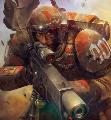




 or if there's a lot of smoke and debris (a blast weapon targeted this unit already this turn), or if they are partially obscured by cover. Of course you'd have to make an exception about the stacking of penalties to make that work in 10e.

 but as we looked it up, yes technically he could. Obviously we apply some sanity with house rules, but it is the default.