So basically some people made a giant 3D printing system for building houses of any desired configuration without the cost and safety hazards of the current construction industry.
The houses include steel reinforced concrete walls, full plumbing, and full electronics wiring and networking. All done by a rather straightforward robot, and from bare foundation to finished product in 20 hours.
The application potential for low cost, high quality housing across the globe is staggering. Essentially the cost of the home comes down to renting the machine, buying whichever house format file you like, and the materials needed.
FM Ninja 048 wrote:Would be a Great Idea for disaster relief housing, get some of those in and build some big buildings like dorms for people while you rebuild.
But as a replacement for building normal houses, seeing that the construction industry employs over 2 million people in the UK.
The video covers that issue. Way back when, the largest job market in the US was farming. In 1900 62% of US citizens were farmers. Due to efficiency changes from technology, today less than 1.5% of US citizens are farmers. The world didn't end then, and it won't end now. Like every other single industry, construction will have to adapt to change. Those workers will need to find a new place in the field.
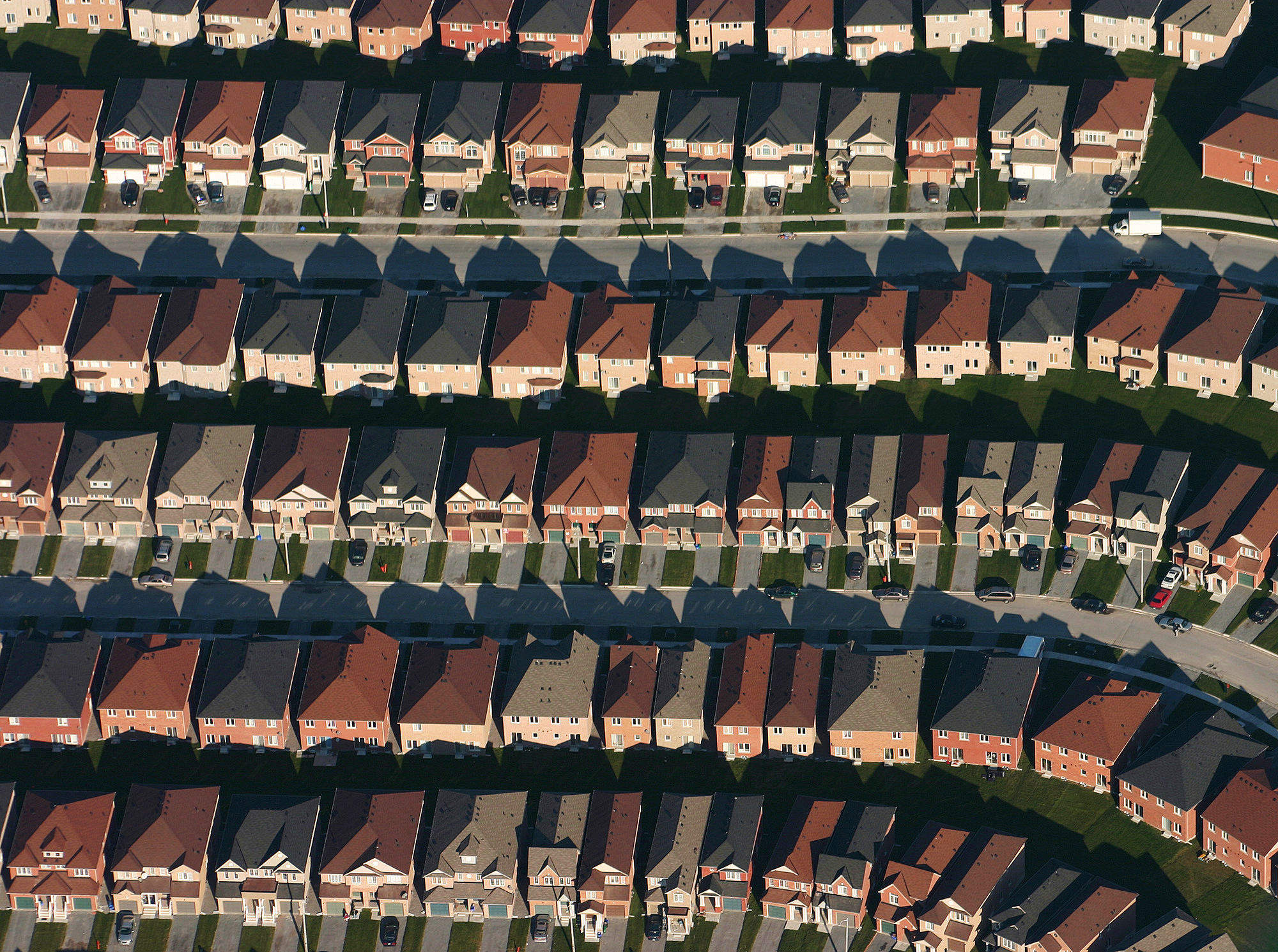
Henners91 wrote:Hooray for bland identical neighbourhoods springing up.
You can paint a favela bright colours, but it won't hide the paupers within.
The video also specifically says that the houses don't need to be identical. They are that way in the video for sake of brevity and ease of animation. On top of that, perhaps you don't have it in the UK, but tract housing exists here in the US, where communities have 3 or 4 styles of houses that are alternated.
Aerethan wrote: a few million people with work history having to find new jobs? or the 1 billion people living in slums with no income or work opportunity at all?
This technology will not give billions of people income or work opportunities. Therefor, it is not a choice between the two things that you present, no matter how much you want to lie and claim that it is.
As I said (not that you paid any attention), I have no problem with this technology. I mostly have a problem with the false assertions that you are making. This WILL have a negative impact on employment if widely adopted. That is a thing which is true. In many ways it's well worth it. In other ways, it is not.
I didn't say it would make 1 billion jobs. I said it could provide HOUSING for 1 billion people who don't have it or the means to acquire it, which to me is a bigger concern than what Bob is going to do for a living from now on.
I agree that people will lose their jobs. The point I'm making is that damn near every other industry has gone through such a change and somehow the world survives.
The positive possibilities for this application far outweigh the negative impacts. In this case it isn't some company trying to crank out MORE products for less money so that they can have higher profits.
People complained when robots started making cars, and we all got over it. This won't be any different.
Aerethan wrote: I didn't say it would make 1 billion jobs. I said it could provide HOUSING for 1 billion people who don't have it or the means to acquire it, which to me is a bigger concern than what Bob is going to do for a living from now on.
The world is not currently surviving very well. Unemployment is ~10% or higher for more than half the planet and middle class medium wage jobs in America have been dramatically reduced in number. Mcdonalds and starbucks can't employ everyone on earth and they don't pay a liveable wage. Technological unemployment is real.
Aerethan wrote: I didn't say it would make 1 billion jobs. I said it could provide HOUSING for 1 billion people who don't have it or the means to acquire it, which to me is a bigger concern than what Bob is going to do for a living from now on.
The world is not currently surviving very well. Unemployment is ~10% or higher for more than half the planet and middle class medium wage jobs in America have been dramatically reduced in number. Mcdonalds and starbucks can't employ everyone on earth and they don't pay a liveable wage. Technological unemployment is real.
It's disappointing to lose your job to a machine, but the benefits to society outweigh the losses to construction workers. For everyone else anyway. It's not going to be long till everyone loses their job to machines though.
Aerethan wrote: I didn't say it would make 1 billion jobs. I said it could provide HOUSING for 1 billion people who don't have it or the means to acquire it, which to me is a bigger concern than what Bob is going to do for a living from now on.
The world is not currently surviving very well. Unemployment is ~10% or higher for more than half the planet and middle class medium wage jobs in America have been dramatically reduced in number. Mcdonalds and starbucks can't employ everyone on earth and they don't pay a liveable wage. Technological unemployment is real.
It's disappointing to lose your job to a machine, but the benefits to society outweigh the losses to construction workers. For everyone else anyway. It's not going to be long till everyone loses their job to machines though.
Which makes me question if the benefits are outweighing the losses to society. Technological unemployment has a very real chance to cause a societal collapse. Total labor automation is something the human race has never dealt with before.
Aerethan wrote: I didn't say it would make 1 billion jobs. I said it could provide HOUSING for 1 billion people who don't have it or the means to acquire it, which to me is a bigger concern than what Bob is going to do for a living from now on.
The world is not currently surviving very well. Unemployment is ~10% or higher for more than half the planet and middle class medium wage jobs in America have been dramatically reduced in number. Mcdonalds and starbucks can't employ everyone on earth and they don't pay a liveable wage. Technological unemployment is real.
It's disappointing to lose your job to a machine, but the benefits to society outweigh the losses to construction workers. For everyone else anyway. It's not going to be long till everyone loses their job to machines though.
Which makes me question if the benefits are outweighing the losses to society. Technological unemployment has a very real chance to cause a societal collapse. Total labor automation is something the human race has never dealt with before.
I'm not worried. That much. Society is resilient, Capitalism even more so. Things will change, but we are built to handle change.
Aerethan wrote: I didn't say it would make 1 billion jobs. I said it could provide HOUSING for 1 billion people who don't have it or the means to acquire it, which to me is a bigger concern than what Bob is going to do for a living from now on.
The world is not currently surviving very well. Unemployment is ~10% or higher for more than half the planet and middle class medium wage jobs in America have been dramatically reduced in number. Mcdonalds and starbucks can't employ everyone on earth and they don't pay a liveable wage. Technological unemployment is real.
It's disappointing to lose your job to a machine, but the benefits to society outweigh the losses to construction workers. For everyone else anyway. It's not going to be long till everyone loses their job to machines though.
Which makes me question if the benefits are outweighing the losses to society. Technological unemployment has a very real chance to cause a societal collapse. Total labor automation is something the human race has never dealt with before.
I'm not worried. That much. Society is resilient, Capitalism even more so. Things will change, but we are built to handle change.
I question how capitalism, an economic system predicated on the idea of distributed workloads and no social class system survives the creation of a class system and an environment where work isn't done by laborers.
Well...I would be considered upper crust society....rest of you drones....eerrrr servents....eerrrr worker CASTE get back to work and eat your porridge
Aerethan wrote: I didn't say it would make 1 billion jobs. I said it could provide HOUSING for 1 billion people who don't have it or the means to acquire it, which to me is a bigger concern than what Bob is going to do for a living from now on.
The world is not currently surviving very well. Unemployment is ~10% or higher for more than half the planet and middle class medium wage jobs in America have been dramatically reduced in number. Mcdonalds and starbucks can't employ everyone on earth and they don't pay a liveable wage. Technological unemployment is real.
It's disappointing to lose your job to a machine, but the benefits to society outweigh the losses to construction workers. For everyone else anyway. It's not going to be long till everyone loses their job to machines though.
Which makes me question if the benefits are outweighing the losses to society. Technological unemployment has a very real chance to cause a societal collapse. Total labor automation is something the human race has never dealt with before.
I'm not worried. That much. Society is resilient, Capitalism even more so. Things will change, but we are built to handle change.
I question how capitalism, an economic system predicated on the idea of distributed workloads and no social class system survives the creation of a class system and an environment where work isn't done by laborers.
Maybe you used too many big words, but I don't understand why you think it will brake down?
Aerethan wrote: I didn't say it would make 1 billion jobs. I said it could provide HOUSING for 1 billion people who don't have it or the means to acquire it, which to me is a bigger concern than what Bob is going to do for a living from now on.
The world is not currently surviving very well. Unemployment is ~10% or higher for more than half the planet and middle class medium wage jobs in America have been dramatically reduced in number. Mcdonalds and starbucks can't employ everyone on earth and they don't pay a liveable wage. Technological unemployment is real.
It's disappointing to lose your job to a machine, but the benefits to society outweigh the losses to construction workers. For everyone else anyway. It's not going to be long till everyone loses their job to machines though.
Which makes me question if the benefits are outweighing the losses to society. Technological unemployment has a very real chance to cause a societal collapse. Total labor automation is something the human race has never dealt with before.
I'm not worried. That much. Society is resilient, Capitalism even more so. Things will change, but we are built to handle change.
I question how capitalism, an economic system predicated on the idea of distributed workloads and no social class system survives the creation of a class system and an environment where work isn't done by laborers.
Maybe you used too many big words, but I don't understand why you think it will brake down?
Too many people without any revenues. Too much authority and importance given to those with the technological knowledge necessary to operate/build the automatons.
Eventually large companies will start seeing the fall in sales from any growth in unemployment. When that happens to a severe enough point, they will need to reassess their salary and bonus structures as they are huge financial draws against the company.
Look at small businesses. When sales are down, who is the first person to not get paid? The owner, who also runs the place. He's the one who needs the place to succeed, and it can't run without employees, and those employees won't work without pay.
Large companies need to realize that downsizing shouldn't be firing people to cover gaps in profit, but rather downsizing salaries based on exactly how much money one needs to live.
My mother worked as an insurance broker for a mid sized firm here in CA. When the economy tanked, their business slowed down a lot. As such, every person on salary in the company took a 10% loss in wages. From the CEO to the front desk girl. You know how many people were fired? Zero. They could have very well fired someone to cover a good portion of the loss, but instead they wanted to keep their employees for when things turned back up.
This is how large companies need to run. Instead of firing 200,000 employees, take 10% off the entire payroll. Now the 10% from those employees isn't often huge, perhaps a few thousand dollars a year. But what about that CEO who by himself makes 2 million a year? Right there you saved $200k, from a single employee. Will that CEO lose his house over that kind of hit? Not likely. And when downsizing payroll, management should be the first ones on the list. Manufacturing can carry on without the VP of special projects. Manufacturing can't carry on without the VP of pulling products out of the molds and refining them for sale.
Businesses need to realize that management is where a huge portion of their money ends up, and a lot of that management can be done without or with less.
Now, none of that has anything to do with automated housing. Yes construction workers will lose their jobs. So did a crap ton of farmers 100 years ago, and a crap ton of auto employees in more recent years. Those industries survived, society survived, and life moved on.
I maintain that the number of people living in absolute squalor due in no part to their own decisions far outweighs the number of people who will be browsing Craigslist for a new job.
Production and manufacturing are moving towards automation. That doesn't mean that new jobs are being created. How many data entry jobs were there 100 years ago? 50? 25? Customer service jobs? IT jobs? The job market is shifting away form manual labor into service. Starbucks will always be around to hire college kids and what not. But those who need work because their career was automated have plenty of other options, many of which are entry level. Data entry requires almost no experience, and can be learned quite quickly compared to any construction field. The pay is less, but then so is the risk, and the conditions are insanely nicer.
People will adapt out of necessity as they always have.
Not really a new class though. THey're just one that is getting more and more power.
Still waiting for Shuma's answer, because I think it's more amongst the line of the technocratic class.
After all, like you say, there's little difference betwen the class that owns the machines and that which 'owns' the workers. Beside issues like unions and such.
If I crank up a company I try to get in as many robotic gadgets I can in order to remove as much human helpers that I can. So profits for me and less Unions I have to deal with --->insert evil laughter<---
Not really a new class though. THey're just one that is getting more and more power.
Still waiting for Shuma's answer, because I think it's more amongst the line of the technocratic class. After all, like you say, there's little difference betwen the class that owns the machines and that which 'owns' the workers. Beside issues like unions and such.
Well, those who own the means of production own the means of production, no matter what those means are.
Melissia wrote: Also you have to ensure that they cannot reprogram themselves or that an outside force cannot do so.
Which is why if I had some kind of robot workforce, they'd only be networked locally, separated from any terminal with access to the internet. And of course no wifi.
That way the only method of reprogramming would be to physically be in the building at a local terminal. Which I'd make underwater. At the end of an EMP tunnel. You know, so the robots can't get to it.
Great....Mist of Pandora releasing this 25th....and Janthkin advertising a bit of WoW.....bad bad MOD I broke my WoW addiction and now your tempting me again....bbbbaaaddddddd MOD
That's just brilliant, I thought printing organs was the best thing a 3d printer could do. But a fully automated robotic house builder that can be launched to the moon, or mars, to start building a colony is just awesome.
Aerethan wrote: I didn't say it would make 1 billion jobs. I said it could provide HOUSING for 1 billion people who don't have it or the means to acquire it, which to me is a bigger concern than what Bob is going to do for a living from now on.
The world is not currently surviving very well. Unemployment is ~10% or higher for more than half the planet and middle class medium wage jobs in America have been dramatically reduced in number. Mcdonalds and starbucks can't employ everyone on earth and they don't pay a liveable wage. Technological unemployment is real.
It's disappointing to lose your job to a machine, but the benefits to society outweigh the losses to construction workers. For everyone else anyway. It's not going to be long till everyone loses their job to machines though.
Which makes me question if the benefits are outweighing the losses to society. Technological unemployment has a very real chance to cause a societal collapse. Total labor automation is something the human race has never dealt with before.
I'm not worried. That much. Society is resilient, Capitalism even more so. Things will change, but we are built to handle change.
I question how capitalism, an economic system predicated on the idea of distributed workloads and no social class system survives the creation of a class system and an environment where work isn't done by laborers.
Maybe you used too many big words, but I don't understand why you think it will brake down?
Human nature. The drive to automate and replace laborers to stay competitive is a modern expression of the capitalist efficiency that created the first assembly line. The British empire and America is a wonderful test case for the model that will likely take root in every nation on earth. Manufacturing labor started out cheap as agrarian workers moved into cities, as they assembled and their productivity grew so did wages. Eventually the rise in wages allowed for something new, technological unemployment through things like the steam engine. For a century increased productivity and wages led to increased demand which allowed factory and natural resource workers to move fluidly into new fields while further mechanical automation replaced the jobs that they left. This continued globally roughly until computers and robotic automation arrived and began replacing skilled laborers in fields that were previously somewhat untouchable.
For a time (80s, 90s) the growing tech fields bloomed and allowed for factory, textile, and resource heavy industries to automate without an overall loss in productivity because IT fields exploded and absorbed the workers. During the late 90's though, refinement in computer systems and the internet began to automate office work. Those workers who were made redundant left to the exploding service and financial industries (this was occurring during the 80's and 90's, but it's really being felt now). Unfortunately, economies don't really work off of just these two industries, especially when the financial industry is rapidly automating (and is wildly corrupt). The creation of computerized automation coincides with the begin of the hollowing of the American (and global) middle class and the widening of the modern wealth gap.
As industries streamline by eliminating laborers for automated systems those people are forced into less skilled and worse paying jobs which are then being automated as technology makes it cheap enough to automate them. This is a continuous downward pressure on wages as technology is becoming increasingly cheap and capable while humans remain human. People have to be payed less to compete with ever cheaper and better machines. There isn't really a bottom to this, eventually there will be no workers. Just the owners of machines that self operate. At this point the global economy will have already broken down as the tipping point for when people can no longer afford to exist in a capitalist system coincides roughly with when government social safety systems (and democratic governments themselves) collapse.
There is already a fairly visible class system in America thanks to it's vanished social mobility (due primarily to our higher education structure and the lack of good paying factory work). The poor can't become unpoor because opportunities don't really exist, the middle class is being split as people move up or down (mostly down), the rich class is growing as the laws in the west and the logic of modern capitalism make it very hard to lose wealth once it's attained and the super rich are attaining a global reach and freedom from national boundaries or the control of law that they've never really had before. This is happening in most developed countries.
These machines cost somewhere between your yearly salary and one hundred times your yearly salary. You would also need to be able to afford a place to put them and the raw capitol required to run them. You then need a pre established market and a supply chain. you specifically can't invest in this future. Nor can I. This form of automation is one of the reasons businesses are consolidating into global multinationals. It's something small businesses can't do and can't really compete with.
feeder wrote: This really sucks. I mean, conceptually it's really cool, but.
In my experience, the difference between a criminal drug addict and a functioning one is the availability of decent paying, semi-skilled work.
In other words, the guy breaking into your car is probably an unemployed drywaller.
The video covered this, it would do something to replace the jobs it takes by expanding the architecture/CAD fields. The new potential will lead to droves of architects and engineers working to push the limits of this tech further, constantly expanding new fields. Like the video said, it's similar to the industrialization of agriculture.
feeder wrote: This really sucks. I mean, conceptually it's really cool, but.
In my experience, the difference between a criminal drug addict and a functioning one is the availability of decent paying, semi-skilled work.
In other words, the guy breaking into your car is probably an unemployed drywaller.
The video covered this, it would do something to replace the jobs it takes by expanding the architecture/CAD fields. The new potential will lead to droves of architects and engineers working to push the limits of this tech further, constantly expanding new fields. Like the video said, it's similar to the industrialization of agriculture.
The video lied and agriculture used to be the job of 7 in 10 people in the united states, now it's something like one in eighty. The video just didn't want to alarm people so it made gak up. It doesn't expand the architectural field at all since it's not adding additional architectural work and one person can CAD a house in a week (they do, 3d mock ups are a standard part of modern architectural engineering), it takes 15 six months to build one.
This has great space colonizations strategy... just send the 3d printer, drones and power resource to the celestial bodies.... viola, fabricaded abodes and supplies as neede!
whembly wrote: This has great space colonizations strategy... just send the 3d printer, drones and power resource to the celestial bodies.... viola, fabricaded abodes and supplies as neede!
Except you would need to ship the same weight in the materials required plus a giant machine that's not very efficient at creating structures (printing isn't nearly as material light as just building a lattice out of metal and giving it a skin). Just ship the buildings instead.
Materials would be on location... nasa did a theorectical study where we could send robots, power source to mars with todays tech. The drones the mine the needed materials, power supply to feed a 3d printer and other builders. Im on my phone, but ill try to find the link fornya...
Polymers are hard as hell to make from their basic elements and compounds. You need incredible purity in your raw materials to make the plastic used in this video. The reactor needed to make the polymers is pretty damn complex.
I know. I used to make them.
Much easier to send the components for the habitat and build it there.
Henners91 wrote: Hooray for bland identical neighbourhoods springing up.
You can paint a favela bright colours, but it won't hide the paupers within.
Pretty much every neighbourhood (At least in the UK) is constructed around the same time which usually means the houses are pretty much identical...
Yea its that way here in the states too. Hell my neighborhood has all of 3 different house styles, and theres probably 200 houses where I live. Its pretty bland
Jihadin wrote: Better off sending a drill robot and drill straight into the moon. Then another robot to install a airlock....
This really is the best way to go about it. Avoids the radiation issue for inhabitants too. It's not a very romantic idea, so it doesn't get a lot of credit but it's the most efficient and effective solution I've yet to hear about making permanent installations on other worlds.
Melissia wrote: That's only relevant whenever those people actually have an alternate employment method.
Not that I oppose 3d printing, I'm just saying, it's not as rosy as they would like to make it out to be.
So which is the greater tragedy:
a few million people with work history having to find new jobs?
or
the 1 billion people living in slums with no income or work opportunity at all?
Who says that first world societies deserve better treatment?
The tech was designed with those 1 billion people in mind, not the less than 1% of that who will have to change careers.
Plenty of other industries underwent just as drastic of changes, and society adapted. Cars, computers, etc.
There isan argaanization that provides one room house builds in a couple of hours. Price is negligible.
Good idea though if the manufacturing cost is better than regular construction. Of course you have to transport.
Not much different than trailer park houses though. Put these down and tornadoes will come within 20 minutes. Its the law.
Automatically Appended Next Post:
kronk wrote: No, Melissa is still pissed off at all capitalists since she was fired from some fast food franchise or something.
It gets old.
Crazily I'm with Melissia and Shumagoroth. Quick someone hold me!
Automatically Appended Next Post:
sirlynchmob wrote: That's just brilliant, I thought printing organs was the best thing a 3d printer could do. But a fully automated robotic house builder that can be launched to the moon, or mars, to start building a colony is just awesome.
Melissia wrote: That's only relevant whenever those people actually have an alternate employment method.
Not that I oppose 3d printing, I'm just saying, it's not as rosy as they would like to make it out to be.
So which is the greater tragedy:
a few million people with work history having to find new jobs?
or
the 1 billion people living in slums with no income or work opportunity at all?
Who says that first world societies deserve better treatment?
The tech was designed with those 1 billion people in mind, not the less than 1% of that who will have to change careers.
Plenty of other industries underwent just as drastic of changes, and society adapted. Cars, computers, etc.
There isan argaanization that provides one room house builds in a couple of hours. Price is negligible.
Good idea though if the manufacturing cost is better than regular construction. Of course you have to transport.
Not much different than trailer park houses though. Put these down and tornadoes will come within 20 minutes. Its the law.
The video does mention the design potential. He cites some adobe structures that were built some time ago in the most earthquake prone area of Iran that are still standing in perfect condition.
Also, a house made out of reinforced concrete won't just up and fly towards downtown in a tornado. The structural integrity is massive compared to trailers and manufactured homes. The energy efficiency would be much higher as well, as stone insulates much better than double wides.
He does mention that the only lower cost of housing than this is the emergency housing you mention, which is single room. The quality of these would be far superior I'd imagine.
As to the jobs, since people apparently don't read my rants on it, as one market loses positions of employment, others create them. People need to realize that no, the drywaller who lost his job won't be doing drywall anymore. Instead, he can get any number of entry level office jobs and learn a new craft since his old one is obsolete. Just like all those farmers did, just like all those manufacturers did.
Boo hoo that your old career choice died out. The benefit of the tech advancement outweighs your personal loss. Get a new job and start over. It sucks, but it is inevitable.
If people from my generation have any clue of what they are doing, they will look to computer based careers as those aren't going away anytime soon. The automation of computers that program computers to program computers is quite far away.
People need to focus on finding answers instead of complaining about the questions.
Melissia wrote: That's only relevant whenever those people actually have an alternate employment method.
Not that I oppose 3d printing, I'm just saying, it's not as rosy as they would like to make it out to be.
So which is the greater tragedy:
a few million people with work history having to find new jobs?
or
the 1 billion people living in slums with no income or work opportunity at all?
Who says that first world societies deserve better treatment?
The tech was designed with those 1 billion people in mind, not the less than 1% of that who will have to change careers.
Plenty of other industries underwent just as drastic of changes, and society adapted. Cars, computers, etc.
There isan argaanization that provides one room house builds in a couple of hours. Price is negligible.
Good idea though if the manufacturing cost is better than regular construction. Of course you have to transport.
Not much different than trailer park houses though. Put these down and tornadoes will come within 20 minutes. Its the law.
The video does mention the design potential. He cites some adobe structures that were built some time ago in the most earthquake prone area of Iran that are still standing in perfect condition.
Also, a house made out of reinforced concrete won't just up and fly towards downtown in a tornado. The structural integrity is massive compared to trailers and manufactured homes. The energy efficiency would be much higher as well, as stone insulates much better than double wides.
He does mention that the only lower cost of housing than this is the emergency housing you mention, which is single room. The quality of these would be far superior I'd imagine.
As to the jobs, since people apparently don't read my rants on it, as one market loses positions of employment, others create them. People need to realize that no, the drywaller who lost his job won't be doing drywall anymore. Instead, he can get any number of entry level office jobs and learn a new craft since his old one is obsolete. Just like all those farmers did, just like all those manufacturers did.
Boo hoo that your old career choice died out. The benefit of the tech advancement outweighs your personal loss. Get a new job and start over. It sucks, but it is inevitable.
If people from my generation have any clue of what they are doing, they will look to computer based careers as those aren't going away anytime soon. The automation of computers that program computers to program computers is quite far away.
People need to focus on finding answers instead of complaining about the questions.
What happens when 10% of all jobs are filled by robots 20% 30% then what, When it takes 10 engineers, and 10 mechanics to build, design, and maintain 1000 robots, you end up with massive unemployment. There has never been a market in history that has ever faced automation at the scale we're facing
I've never understood this argument that we should keep doing things inefficiently so that someone has a job. Replacing old practices with more efficient ones is how we improve living standards.
Moving labour that used to be tied up in building houses, and into, say, building house making robots and other kinds of 3D printing would expand living standards immensely.
It would mean transition costs, but you deal with those. You reskill labour. You don't just refuse progress. That's just bizarre, quite frankly.
I wasn't suggesting that it was a bad thing merely that eventually you can't just move labor around, were going to have to face it eventually and I honestly have no idea what were going to do
youbedead wrote: What happens when 10% of all jobs are filled by robots 20% 30% then what, When it takes 10 engineers, and 10 mechanics to build, design, and maintain 1000 robots, you end up with massive unemployment. There has never been a market in history that has ever faced automation at the scale we're facing
We do what we've always done - we change the rules. When feudalism stopped working we changed to mercantilism. When mercantilism stopped working we changed to capitalism.
We don't even have to try to change this. We just put out each spotfire when it happens, and after a while we look back and see what we've got today is nothing like what they once had.
youbedead wrote: What happens when 10% of all jobs are filled by robots 20% 30% then what, When it takes 10 engineers, and 10 mechanics to build, design, and maintain 1000 robots, you end up with massive unemployment. There has never been a market in history that has ever faced automation at the scale we're facing
Implement a socialist government that can provide for the unemployed (OH GOD NO NOT IN AMERICA!!!!!) in the short term, then dump massive funding into science research and push for 99% as fast as possible. Energy is effectively infinite (especially once you get fusion power working) and raw materials are effectively infinite once you start exploiting space resources, so once you completely automate production of all necessary goods you can move to a post-scarcity communist system in which unemployment ceases to matter.
youbedead wrote: What happens when 10% of all jobs are filled by robots 20% 30% then what, When it takes 10 engineers, and 10 mechanics to build, design, and maintain 1000 robots, you end up with massive unemployment. There has never been a market in history that has ever faced automation at the scale we're facing
Implement a socialist government that can provide for the unemployed (OH GOD NO NOT IN AMERICA!!!!!) in the short term, then dump massive funding into science research and push for 99% as fast as possible. Energy is effectively infinite (especially once you get fusion power working) and raw materials are effectively infinite once you start exploiting space resources, so once you completely automate production of all necessary goods you can move to a post-scarcity communist system in which unemployment ceases to matter.
youbedead wrote: I wasn't suggesting that it was a bad thing merely that eventually you can't just move labor around, were going to have to face it eventually and I honestly have no idea what were going to do
Sure thing.
I had acutally quoted someone from the first page, but when I finished my answer I realised I was commenting more on the thread in general I deleted the quote.
I realise it ended up looking like my post was to you in specific. Sorry about that.
Automatically Appended Next Post:
Peregrine wrote: Implement a socialist government that can provide for the unemployed
Honestly I think it's a mistake to assume future solutions are going to come from pre-existing ideas. Not that I think you're wrong necessarily, but I think once you propose automation on this level it's more a watch this space kind of deal.
sebster wrote: Honestly I think it's a mistake to assume future solutions are going to come from pre-existing ideas. Not that I think you're wrong necessarily, but I think once you propose automation on this level it's more a watch this space kind of deal.
Yeah, it's just a temporary solution to last long enough to get through the bad period where automation has killed a lot of jobs, but not completely eliminated scarcity yet. Once you get through that transition period you'll end up with a completely new system of government, probably some form of communist system, or an extremely limited government with a sole purpose of keeping people from hurting each other.
While I'm not all for complete communism as it works in practice, I do think that corporations should divert funding away from CEO bonuses into new positions. They could be R&D jobs, or increased manufacturing/sales/data services, whatever.
You know how much in bonuses GM's CEO made last year? 5.9 million. On top of his 1.7 million salary. And that is a company that has yet to pay back it's bailout, despite making 7.2 billion in profit in 2011. Why should one man take that much in bonuses(and then complain about it), the company turn massive profit, NOT pay their federal debt, and still not be creating a crap ton of jobs? From his bonus GM could have created 114 jobs at the national median income. Instead he got it all, and most likely didn't even come close to running that amount in living expenses. How many people in middle class income are able to survive a year by saving 85% of their income? Not a damn one. How many millionaires actually spend as much of their income just to live as the working class does? I doubt a single one.
You want more jobs? Make them. Force change on those companies, whether it be change in the private sector or if the government is needed to do it for us.
I'm all for capitalism, provided that the countries interest as a whole is the driving force behind it. How many honest middle class workers would be unhappy with $1,000,000? Every single person I know would retire on that amount. They don't want beach front property, and a yacht, and a summer home. They want a single home to spend the rest of their lives in, and enough money to pay the bills and not starve. How many millionaires are ok with just the first million?
Capitalism should not be about greed, it should be about free competitive markets that support our society. Why bother with capitalism if only the 1% survive it?
I'm not saying to take away the money they already have. I'm saying to stop giving them more. They aren't saving it for a rainy day. They aren't saving up for that island in Dubai. They are just accruing it until they die, then they leave it all to some spoiled snot who feels like he earned it.
Alas, none of this has to do with printing houses.
communism will never work in practice, and that is solely because of people. There will always be someone who wants more.
Err, you realize what removing scarcity means, right? So what if you're lazy, 99.9% of the work is done by machines. So what if you're greedy, you just tell your personal factory to assemble whatever you want. "Wanting more" has no point in a world where any person can have anything they want for the token effort of telling a machine to provide it.
And of course the most important factor here is that there's no way to get financial power over someone. You might want to have a giant house and a hundred slaves to serve you, but why would anyone accept that status when they can have, for zero effort, everything required to live a comfortable life? You'll just end up ignored as "that crazy guy", and have exactly the same things as everyone else.
communism will never work in practice, and that is solely because of people. There will always be someone who wants more.
Err, you realize what removing scarcity means, right? So what if you're lazy, 99.9% of the work is done by machines. So what if you're greedy, you just tell your personal factory to assemble whatever you want. "Wanting more" has no point in a world where any person can have anything they want for the token effort of telling a machine to provide it.
And of course the most important factor here is that there's no way to get financial power over someone. You might want to have a giant house and a hundred slaves to serve you, but why would anyone accept that status when they can have, for zero effort, everything required to live a comfortable life? You'll just end up ignored as "that crazy guy", and have exactly the same things as everyone else.
excuse my ignorance. I took the term scarcity at it's face value, which apparently was incorrect.
A better way to word it is basically the removal of currency.
Now to refer you to what happens when life gets that cushy, go watch WALL-E.
And good luck convincing that 1% that their money is obsolete.
The idea that someone can just walk into some service industry job (like data entry, call centre work etc) after being laid off from their previous employment just doesn't gel with reality. Who wants to hire some 40 or 50 year old ex-builder who has skills and expectations when you can take on some 18 year old with at least a passing competence with computers who is happy (or at least resigned to) to work for nothing in an oppressive environment with little to no prospect of advancement?
If you have ever worked in, or known someone who has worked in these kinds of jobs you can understand why people would do almost anything to avoid them. We may have gotten rid of the workhouses, but we have more than made up for it with low skill data processing jobs.
Regards 3D house printing it is a logical extension of the technology and indeed of the trend towards prefabrication in general. I think for the moment it will still be easier to build houses on site, or ship in prefabricated units than to print houses. There will also still need to be at least sone construction work to prepare and finish the site even if printers come to dominate the market... At least until automated excavation and so on start to be more fully developed
Aerethan wrote: A better way to word it is basically the removal of currency.
No, the removal of scarcity is correct. Currency has value as a medium of exchange because resources are limited. I give GW tokens of currency in exchange for toy soldiers because GW controls the limited supply of them. Even if you remove currency, you still have scarcity, you've just changed everything to a barter system or whatever.
What I'm talking about is removing that limited supply entirely, through a combination of free energy, automated production and space mining for raw materials. Once you have that, supplies of any physical good become effectively unlimited, and greed simply has no purpose.
And good luck convincing that 1% that their money is obsolete.
Why bother? Nobody will have to be convinced of anything, money will simply become obsolete. Why should I care that you have 9999999999999 pieces of paper with funny symbols on them when I have an automated factory capable of providing me with anything I want? If I want pieces of paper with funny symbols on them (maybe they make pretty wallpaper?) I'll just tell my factory to make me some of my own.
By removing currency as an incentive, creativity as we know it will slow to a crawl. R&D is fueled by the idea that it will pay off. There just aren't that many people in this day and age who invent new technologies for the betterment of humanity.
Hell even the tech here in the thread has financial needs that will only be met by someone who expects a return on that investment.
The argument really is moot anyway, as this global system of equality won't ever happen. There are some people who wouldn't be happy with everyone else being happy. Plenty of nations hold endless grudges, and this utopian idea wouldn't change that. North Korea wouldn't be happy with their country being free of the shackles of modern society. They would still want South Korea to pay for whatever it is they did that made NK so mad(presumably they took all the wiener dogs away and sold them to Frazzled, and those were North Koreas favorite kinds of dogs).
So in this utopian world of instant production at a whim, can I tell my robots to craft me an arsenal to make that scumbag neighbor pay for his dog crapping on my yard all the time?
Can Canada whip up some nukes to make South Africa pay for stealing their Olympic gold medal? Can I nuke Scotland for creating curling?
The extrapolation of this idea of removal of scarcity is ridiculous. No one is content to be content. Except perhaps monks, and a few really laid back dogs.
Now perhaps if you created a society with a system like that, which is completely independent from the rest of the world, and whose members had no prior experience with the world as it stands, sure the idea might take off and end well. But we can't really reformat the world like a hard drive and just install a newer better humanity on it.
Aerethan wrote: By removing currency as an incentive, creativity as we know it will slow to a crawl. R&D is fueled by the idea that it will pay off. There just aren't that many people in this day and age who invent new technologies for the betterment of humanity.
But you don't need very many. The whole point of a post-scarcity world is that you've already reached a point where everyone can life a comfortable life. R&D on top of that is just a nice side bonus. And of course it will still happen. There are plenty of scientists and engineers who do their job because they love to discover and build new things, so there will always be people willing to work on projects like curing diseases.
North Korea wouldn't be happy with their country being free of the shackles of modern society.
That's nice. Once North Korea's citizens gain self-replicating factories (perhaps dropped in by a generous donor) capable of producing modern weapons the government will have no means of controlling them. It's kind of hard to force everyone to live in poverty when the military has no reason to be loyal to you, and the citizens have a lot more guns than you and your friends.
The extrapolation of this idea of removal of scarcity is ridiculous. No one is content to be content. Except perhaps monks, and a few really laid back dogs.
What does hating people have to do with scarcity or whether or not you have a communist government? In fact, the one remaining purpose of government will be to maintain peace.
And of course if you look at history you'll find that most wars have a strong element of a desire to obtain resources. If there's no scarcity there's no need to have a war for oil or whatever, so that immediately cuts down on a lot of conflict.
But if we can overthrow governments with our garage kit arsenals, how can the government maintain peace? What happens when the ENTIRE country(or a large enough portion) decides that they really don't like Canada and that they have to go?
War isn't always fought over resources. Some are fought over women. Many have been fought just for perceived slights. How do you convince people to join militaries if they can just sit at home and make their own little invasion proof compounds?
Cutting down a lot of conflict isn't enough. For this idea to work, you'd essentially have to destroy conflict completely. 2 redneck American families slaughtered each other for generations because someone stole a single pig. Now sure, in this dream world they could just make their own pig, but the point remains that some people will start wars over some trivial things.
I maintain that it won't ever happen, most certainly not in the lifetime of anyone currently living.
Aerethan wrote: But if we can overthrow governments with our garage kit arsenals, how can the government maintain peace? What happens when the ENTIRE country(or a large enough portion) decides that they really don't like Canada and that they have to go?
And really, what are the odds of a large enough portion of the country deciding to invade Canada? You might get a few insane extremists, but how are they going to convince anyone to help and risk losing their nice comfortable life? What's in it for the rest of their army? Previously "what's in it for me" has depended on having a lot of angry young men with nothing to lose, and suddenly that element of society is gone.
How do you convince people to join militaries if they can just sit at home and make their own little invasion proof compounds?
Exactly. How do you convince anyone to join a military and threaten another country when they have nothing to gain and everything to lose?
Cutting down a lot of conflict isn't enough. For this idea to work, you'd essentially have to destroy conflict completely. 2 redneck American families slaughtered each other for generations because someone stole a single pig. Now sure, in this dream world they could just make their own pig, but the point remains that some people will start wars over some trivial things.
Right, but that's one family, and everyone else around them has a strong incentive to stop the conflict and maintain a nice peaceful world. In a post-scarcity world it ends there, neither side can get anyone to follow them, so at most you have a case of murder for the police to deal with. And given that murder happens all the time right now, it's not like this is making things any worse.
youbedead wrote: I wasn't suggesting that it was a bad thing merely that eventually you can't just move labor around, were going to have to face it eventually and I honestly have no idea what were going to do
sebster wrote: I've never understood this argument that we should keep doing things inefficiently so that someone has a job. Replacing old practices with more efficient ones is how we improve living standards.
Moving labour that used to be tied up in building houses, and into, say, building house making robots and other kinds of 3D printing would expand living standards immensely.
It would mean transition costs, but you deal with those. You reskill labour. You don't just refuse progress. That's just bizarre, quite frankly.
I don't disagree with the first part of this post . I just disagree that the latter part is ever going to happen until sanity comes back to the Republican party.
Peregrine wrote: so once you completely automate production of all necessary goods
This person has never worked in manufacturing. That time will never* come, I'm afraid.
I watched the video in the original post when I got home. Interesting concept, but I don't see it being viable in the near or not-so-near future. Did you see the massive rails that "machine" was on? That gak ain't cheap. Also, this "machine" is building walls and potentially the plumbing, but you'll still need people to install the cabinets, fixtures, pull electrical lines and cable, pour the foundation, install windows and blinds and a bunch of other work. Don't any of you actually live in houses? Also, all that plastic isn't cheap. For it to hold up to the elements, that will have to be some stout walls as I didn't see them installing any additional bracing. And who would want to live in this plastic house? Can you hang gak on the walls?
While the discussion this has generated here has been interesting, this isn't something we'll see large scale in our children's children's lifetimes... Where's the flying cars that the 60s promised everyone!?!
*Never being a time between now and 500 years from now....
Peregrine wrote: so once you completely automate production of all necessary goods
This person has never worked in manufacturing. That time will never* come, I'm afraid.
While the discussion this has generated here has been interesting, this isn't something we'll see large scale in our children's children's lifetimes... Where's the flying cars that the 60s promised everyone!?!
...
*Never being a time between now and 500 years from now....
You should look into lights out automation in factories. There are factory processes right now that are totally automated and require engineering upkeep occasionally, but which require nothing between feeding raw materials and transporting product for packaging. Amazons automated warehouses are another example, as are automated farms. I'd be surprised if we didn't see a dramatic uptick in total productive automation in quite a few fields by the end of this century. In the last 10 years robotics have experienced their biggest forward leap since their original inception. In 1912 we didn't even have computers, now we have flexible devices that communicate with satellites in space capable of answering obscure questions and finding you anywhere on earth while being powered by their radio antennae wire free. Don't underestimate the acceleration of technological advancement.
Peregrine wrote: so once you completely automate production of all necessary goods
This person has never worked in manufacturing. That time will never* come, I'm afraid.
I watched the video in the original post when I got home. Interesting concept, but I don't see it being viable in the near or not-so-near future. Did you see the massive rails that "machine" was on? That gak ain't cheap. Also, this "machine" is building walls and potentially the plumbing, but you'll still need people to install the cabinets, fixtures, pull electrical lines and cable, pour the foundation, install windows and blinds and a bunch of other work. Don't any of you actually live in houses? Also, all that plastic isn't cheap. For it to hold up to the elements, that will have to be some stout walls as I didn't see them installing any additional bracing. And who would want to live in this plastic house? Can you hang gak on the walls?
While the discussion this has generated here has been interesting, this isn't something we'll see large scale in our children's children's lifetimes... Where's the flying cars that the 60s promised everyone!?!
*Never being a time between now and 500 years from now....
Clearly you didn't pay any attention to the video. The machine is able to install all plumbing and electrical networking as well as install windows. Also, it isn't plastic. It is extruded concrete with synthetic fibers and interlocked steel reinforcement. The presentation was a brief summary of the technology. If they took the time to build an actual working one, and have a contract with NASA, I'm pretty sure they at least conceptualized the abilities to perform every possible by the tech to build a house.
As to when we'll see the tech on the scale being proposed, since when do we research and develop tech that HAS to be mass marketed in the present? Why on earth do we research other planets for habitability if we'll never be able to reach those planets in our lifetime? Plenty of scientists are concerned with 500 years from now. The only people who can afford to live so intensely in the present are college students and artists, many of whom are likely on some sort of recreational drug or herb.
We do things for our children, and their children, and their children. We solve problems that exist now, so that they have the answers in the future, even if we don't/can't implement the answers.
kronk wrote: This person has never worked in manufacturing. That time will never* come, I'm afraid.
Why not? Obviously 3d printing won't create everything, but it's not the only tool in automated manufacturing. Why have a human install the cabinets when you can have a robot do it? At most, you might have a single person supervising the process to ensure that nothing goes wrong, and as confidence in the technology improves that person might turn into a single supervisor watching over an entire city of construction through remote cameras.
Where's the flying cars that the 60s promised everyone!?!
Built in the 1960s. Unfortunately it turned out that even though the concept worked just fine there wasn't really a market for them, and the idea was pretty much abandoned. Of course now improvements in autopilot technology have the potential to remove the biggest problem with flying cars: learning to fly. Once fully automated cars on the road become accepted, it's a short step to having fully automated flying cars.
kronk wrote: This person has never worked in manufacturing. That time will never* come, I'm afraid.
Why not? Obviously 3d printing won't create everything, but it's not the only tool in automated manufacturing. Why have a human install the cabinets when you can have a robot do it? At most, you might have a single person supervising the process to ensure that nothing goes wrong, and as confidence in the technology improves that person might turn into a single supervisor watching over an entire city of construction through remote cameras.
Where's the flying cars that the 60s promised everyone!?!
Built in the 1960s. Unfortunately it turned out that even though the concept worked just fine there wasn't really a market for them, and the idea was pretty much abandoned. Of course now improvements in autopilot technology have the potential to remove the biggest problem with flying cars: learning to fly. Once fully automated cars on the road become accepted, it's a short step to having fully automated flying cars.
Airlines are already almost fully automated, pilots don't do much during most of the flight. The issue with flying cars is infrastructure, fuel efficiency, and the inherent danger. A flying car is called a helicopter.
A flying car is called a missile. Even ignoring malicious intent, I don't want to see the headlines when the 101 year-old who refuse to give up driving confuses the gas and the brake with a flying vehicle.
ShumaGorath wrote: Airlines are already almost fully automated, pilots don't do much during most of the flight. The issue with flying cars is infrastructure, fuel efficiency, and the inherent danger. A flying car is called a helicopter.
Speaking as a pilot, they really aren't. Airlines use the autopilot a lot, sure, but the human pilots have to be there to oversee it even when the autopilot is flying the plane. Whether or not the technology is ready, the government doesn't even come close to trusting it enough to fly the plane unsupervised. The point in automation I'm talking about is a lot more than anything we have now.
And the issue had nothing to do with technology. We built flying cars, they worked just fine. The only problem was that there weren't enough people willing to pay the extra cost for a flying car and invest the effort in getting a pilot's license. Instead, they just bought normal cars. It was a failure of marketing, not technology.
Janthkin wrote: A flying car is called a missile. Even ignoring malicious intent, I don't want to see the headlines when the 101 year-old who refuse to give up driving confuses the gas and the brake with a flying vehicle.
Fortunately aviation is a lot stricter on medical limits, and you'll lose your pilot's license long before you lose your driver's license. So, until the point where flying cars become entirely automated, with no manual control beyond choosing a destination, accidents like that would be incredibly rare.
Whether this type of 3d printing will have a real affect on the construction industry is still very much an unknown, but it does show the 3d printing is here to stay. It also means that the gaming industry needs to looking at this now, not in two years time when it's too late.
My experience of writable CD's was this:
First off the big bulky expensive recorders were purchased by companies and only one or two people had access for them. This meant copyright breaches were very low level. You then got the smaller and mid range priced burners. This was when organised crime came on board as the investment was worth it. You also saw them appear in company departments, which leads to looser control of them, so staff started burner copies of stuff. if you knew the right person. It then went to expensive drives, this again increased access to them. Finally dirt cheap, both the burners and the discs.
3d printers will go a similar way and quickly. As I understand it although not brilliant for tabletop models, it's more than suitable for scenery. This means the likes of Forge World should be worried. Point in case, I'm in the middle of replicating their corridor system using 3d Max, as a project for my portfolio, and I'm doing it just by using photos off their web site. It's that simple. I'm also working on a 3d model of the Imperial Bastion. Both of those could easily be used as templates for a 3d printer.
Gaming companies ignore this technology at their own peril.
Lights... camera... 3D colour printer. During the making of ParaNorman, a new stop-motion animation film released this week in the UK, four 3D printers were essential members of the crew.
Stop-motion is a traditional film-making technique that dates back to the 19th Century.
It involves using puppet models that are gently repositioned frame by frame to create the illusion of movement.
Traditionally, individual facial expressions would be sculpted by hand out of clay, but the producers of ParaNorman built up a library of 8,800 3D-printed faces for the main character alone, which could be used in various sequences, to give him about 1.5 million different expressions.
Production house Laika began experimenting with 3D printers in the production of its 2008 film Coraline, in which the lead character managed a comparatively feeble 200,000 expressions.
Time saving
British animation producers Aardman also used 3D printers in their recent series The Pirates!
"All shapes need to be modelled on the computer before they are printed, but there's a time saving to be made in terms of animation on set," said Stuart Missinger, award leader on the Stop Motion Animation and Puppet Making course at Staffordshire University.
"It means the animator can literally pick and mix from a library of faces. But there's a seam line that runs where a mouth replacement slots in - it goes under the eye, across the bridge of the nose, across the temple.
"If the character has a beard, then the seam line is masked - but if it's visible it needs painting out in post production."
Mr Missinger's colleague, Daryl Marsh is senior lecturer in stop motion at the same university.
He admits the technique isn't to the taste of every potential animator.
"We try to push the students to try it out," he said.
"A lot of stop-motion is craft-based so they prefer working with their hands but there is some cross-over. When you've done it once, it makes sense - the first time it's confusing."
Printer power
Brian McLean is creative supervisor of replacement animation and engineering at the Rapid-Prototype department of Laika.
Laika says 3.77 tonnes of printer powder were used by the four printers working on ParaNorman.
They worked a total of 572 days, churning out faces from the lower eyelids down to the chins of the main characters.
Extra work was still involved once the faces came off the printers.
"There are super-glue and powder elements as part of the process. But the resin is liquid and it's sprayed by multiple heads in a given printer onto a water-soluble powder-based support material, which is the foundation for the entire process," said Mr McLean.
"Though they look like sugar cookies from the oven when they emerge, there's no residue when the support material washes away."
Sometimes the printers made mistakes - one scene in which two characters fall into each other and their faces blend was the result of a printer malfunction.
"The solution of purposefully printing the two characters' faces together came to us after a mistake from one of the printers, where a bunch of faces were printed on top of one another. Whenever there's a mistake in the process, we look at it and wonder, 'Could we utilize that?' In this case, it made for a cool effect."
Mr McLean also has a response for any purists who may believe the new technology takes the skill of stop motion away from its roots.
"The 3D Printers are the connection between computers and stop-motion," he said.
"Cutting-edge computer-generated starts it, and hand-made practicality - the signature of the stop-motion art form - finishes it."
ShumaGorath wrote: Airlines are already almost fully automated, pilots don't do much during most of the flight. The issue with flying cars is infrastructure, fuel efficiency, and the inherent danger. A flying car is called a helicopter.
Speaking as a pilot, they really aren't. Airlines use the autopilot a lot, sure, but the human pilots have to be there to oversee it even when the autopilot is flying the plane. Whether or not the technology is ready, the government doesn't even come close to trusting it enough to fly the plane unsupervised. The point in automation I'm talking about is a lot more than anything we have now.
And the issue had nothing to do with technology. We built flying cars, they worked just fine. The only problem was that there weren't enough people willing to pay the extra cost for a flying car and invest the effort in getting a pilot's license. Instead, they just bought normal cars. It was a failure of marketing, not technology.
I was mostly speaking to the act of turning on autopilot and then leaning back in the chair until you have to make a landing. Minor course corrections and maintaining altitude is something the autopilot should be good at. I know you don't leave the cockpit. As to the technology of flying cars, to this day they're still pretty poor. They're mostly just either ducted fan driven and crash prone or they're small passenger planes with a mode for wheels. None of them have ever been safe or efficient. The issue has never been cost because there have never been any that were widely commercially available. They have the same problem jetpacks did, the technology appears to be there, but it's rough, dangerous, and the concept is kinda stupid.
The gospel about 3D printing is being taken to the streets of New York.
MakerBot Industries, best known for its small 3D printers, has opened a shop in Manhattan through which it will aim to sell the joys of home fabrication to the general public.
The store opening comes as MakerBot releases the second incarnation of its Replicator 3D printer.
The Replicator 2.0 works to much finer resolutions than earlier versions and can fabricate much bigger objects.
Supply side
MakerBot said the store, the first of its kind, would act as a showcase for 3D printing and stage demonstrations and workshops for those who were curious about the technology.
3D printing involves building up objects layer by layer out of plastic that is melted and fed via a carefully controlled nozzle to form a shape. The printers were initially used in engineering and design firms to produce and refine prototypes.
Now many home hackers, makers and artists use 3D printers to turn out their own customised creations. Examples include model soldiers, cases for home electronic projects, and furniture for dolls' houses.
Bre Pettis said the Replicator 2.0 was aimed at the "prosumer" - either a design professional or a hardcore hobbyist. The device costs $2,199 (£1,360) and builds objects up in layers only 100 microns thick. In previous versions, each layer was about 270 microns thick.
Mat Fordy, founder and boss of coolcomponents.co.uk that sells 3D printers and other home hacking gear, said the technology was proving popular.
"We've really seen the affordable 3D printer market in the UK explode over the last couple of years," he told the BBC. "Many types of people use them, not just professionals, but people who have an idea that they need to touch and hold."
He said the new MakerBot was a great looking piece of kit but supply problems had made it hard to get hold of.
"They never seem to have enough to go around, and that puts a lot of people off," he said. "Other excellent printers are in ready supply, and many people just give up waiting and get one of those instead."
Melissia wrote: I don't disagree with the first part of this post . I just disagree that the latter part is ever going to happen until sanity comes back to the Republican party.
I absolutely agree with you there. And I think a government that fails to offer reskilling to people in declining industries is a government that is simply failing to do its job.
And unfortunately right now you have Republican Party that refuses to even consider the idea that such a thing might be part of its job.