Hi all, I was wondering if any of you guys had any story to tell about using psychology against your opponent in 40k, be it successfully or not. I was wondering if this could work against some people, purely for scientific reasons of course. I don't have any example where this has happened in my games, so I don't really know what kind of tricks could be used to deceive your opponent, without cheating, so I'd like to hear some examples.
I have seen a guy ask another guy to drop a game, because he needs the small points to get in to top 8. They were both psychological and physical about it. The asked dude was from my school, and a year older then me. The dude asking was in collage, and his friends too.
I've seen people goad others into charging a specific unit to get them off an objective. I have also done this before.
My opponent was winning but wasn't going to get enough points to win the tournament or even make top 2. I had a low model count unit left and it was my last unit on the board. I knew he wanted to get more points by tabling me. I got him to charge the unit and when the dice were rolled he whiffed them all and got stuck in combat off of the objective, which ended in my victory because we were so close. It was a competitive game and I knew the person but yeah it happens.
Aaranis wrote: Hi all, I was wondering if any of you guys had any story to tell about using psychology against your opponent in 40k, be it successfully or not. I was wondering if this could work against some people, purely for scientific reasons of course. I don't have any example where this has happened in my games, so I don't really know what kind of tricks could be used to deceive your opponent, without cheating, so I'd like to hear some examples.
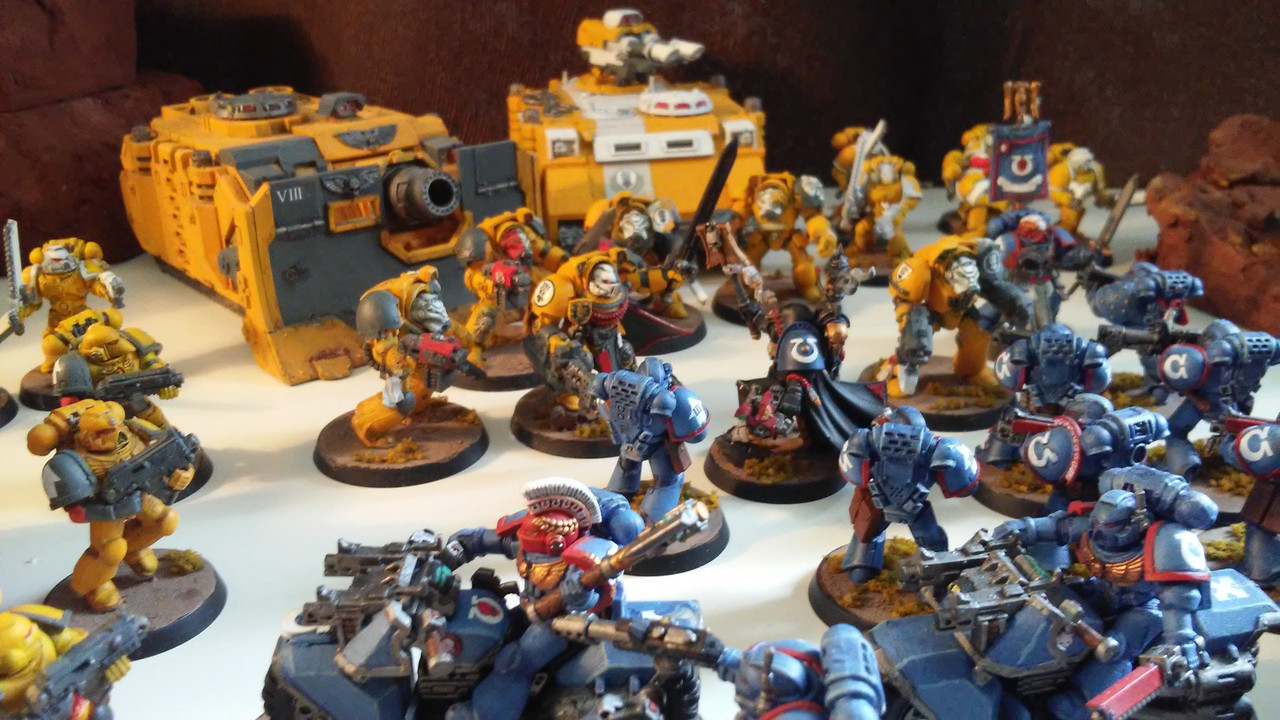
Why yes sir I do use phycollogical warfare. Mostly through my paint scheme. You can arrange the colors of your army to distract or disturb your enemies.
As well as tactical acumen. In combination you can Cowtown your engines easily.
Aaranis wrote: Hi all, I was wondering if any of you guys had any story to tell about using psychology against your opponent in 40k, be it successfully or not. I was wondering if this could work against some people, purely for scientific reasons of course. I don't have any example where this has happened in my games, so I don't really know what kind of tricks could be used to deceive your opponent, without cheating, so I'd like to hear some examples.
Why yes sir I do use phycollogical warfare. Mostly through my paint scheme. You can arrange the colors of your army to distract or disturb your enemies.
As well as tactical acumen. In combination you can Cowtown your engines easily.
Oldest trick in the book. The moment you realize that you *want* your opponent to shoot at the Defiler... is a monumental moment of understanding for the blossoming war gamer. But seriously, having a big scary looking model can take a lot of pressure away from more important and fragile elements of your list. It relies on psychologically messing with your opponents target priority. For maximum effect you stack durability buffs on the distraction carnifex and push it in your opponents face. Using the Defiler example, you take a cheap Defiler. Cast Delightful Agonies or Weaver of Fates on it, Warp Time it as far forward as you can, and pop smoke in the shooting phase. On your opponents turn they have a Defiler in their face, and they will have a strong impulse to kill it. Any shots trending towards the Defiler are shots not at more fragile pieces. In order to really work the Distraciton Carnifex needs to soak the same type of damage your list is afraid of. For example a Defiler can help Hellbrutes, Predators, or other less durable vehicles, but will not help much distracting anti infantry fire.
Don’t know if this counts but playing Dark Angels I had a tactical squad reduced to 1 model, which I promptly moved into the corner of a ruin and then never moved again. I never looked at him or did anything to draw attention to him. I was doing great at objectives but losing models by the handful. At the end of turn 7 my opponent finished of what he thought was the last of my units and declared victory. I then reminded him of my lone marine and the points total.
Crazy Jay wrote: Don’t know if this counts but playing Dark Angels I had a tactical squad reduced to 1 model, which I promptly moved into the corner of a ruin and then never moved again. I never looked at him or did anything to draw attention to him. I was doing great at objectives but losing models by the handful. At the end of turn 7 my opponent finished of what he thought was the last of my units and declared victory. I then reminded him of my lone marine and the points total.
Oldest trick in the book. The moment you realize that you *want* your opponent to shoot at the Defiler... is a monumental moment of understanding for the blossoming war gamer. But seriously, having a big scary looking model can take a lot of pressure away from more important and fragile elements of your list. It relies on psychologically messing with your opponents target priority. For maximum effect you stack durability buffs on the distraction carnifex and push it in your opponents face. Using the Defiler example, you take a cheap Defiler. Cast Delightful Agonies or Weaver of Fates on it, Warp Time it as far forward as you can, and pop smoke in the shooting phase. On your opponents turn they have a Defiler in their face, and they will have a strong impulse to kill it. Any shots trending towards the Defiler are shots not at more fragile pieces. In order to really work the Distraciton Carnifex needs to soak the same type of damage your list is afraid of. For example a Defiler can help Hellbrutes, Predators, or other less durable vehicles, but will not help much distracting anti infantry fire.
My Tartaros Terminators/ Relic Salamanders Contemptor/ Armigers are purposefully put in the face of my enemy so they pay attention to them and not anything else.
But on the flip side I generally see thru the "distraction" and just focus on what's tactically feasible.
Crazy Jay wrote: Don’t know if this counts but playing Dark Angels I had a tactical squad reduced to 1 model, which I promptly moved into the corner of a ruin and then never moved again. I never looked at him or did anything to draw attention to him. I was doing great at objectives but losing models by the handful. At the end of turn 7 my opponent finished of what he thought was the last of my units and declared victory. I then reminded him of my lone marine and the points total.
I hope your promoted that heroic tac marine
I don’t specifically remember promoting him but I did finish painting him so that’s like a promotion
Aaranis wrote: Hi all, I was wondering if any of you guys had any story to tell about using psychology against your opponent in 40k, be it successfully or not. I was wondering if this could work against some people, purely for scientific reasons of course. I don't have any example where this has happened in my games, so I don't really know what kind of tricks could be used to deceive your opponent, without cheating, so I'd like to hear some examples.
Why yes sir I do use phycollogical warfare. Mostly through my paint scheme. You can arrange the colors of your army to distract or disturb your enemies.
As well as tactical acumen. In combination you can Cowtown your enemies easily.
Humans play the game, humans are subject to psychological warfare. Humans get tired, forget things, get distracted, are victims of biases, etc. Psychological tactics are more about exploiting unconscious tendencies or biases than anything else.
I know a guy who has a pathological fear/hatred of wraithlords. No matter what happens, he'll always try to down them first. Total distraction carnifex. Knowing that he has a tendency to do that lets me position them in hard-to-hit areas to draw him out, or act really aggressive with them to put him on the back foot. We also play a lot of 2v2 games and I know he views me as a bigger threat, so he'll target my guys first almost always...so I intentionally can take very durable units and play with that. Or, another example: you're playing with a guy who gets upset/defeated easily, so you target down his baddest boy on the table first, and be as spectacular about it as possible. He gets frustrated, starts paying less attention, makes more mistakes, and unintentionally throws the game.
Not that I think these are necessarily good practice for friendly games, but it's a real thing that happens.
HuskyWarhammer wrote: Humans play the game, humans are subject to psychological warfare. Humans get tired, forget things, get distracted, are victims of biases, etc. Psychological tactics are more about exploiting unconscious tendencies or biases than anything else.
I know a guy who has a pathological fear/hatred of wraithlords. No matter what happens, he'll always try to down them first. Total distraction carnifex. Knowing that he has a tendency to do that lets me position them in hard-to-hit areas to draw him out, or act really aggressive with them to put him on the back foot. We also play a lot of 2v2 games and I know he views me as a bigger threat, so he'll target my guys first almost always...so I intentionally can take very durable units and play with that. Or, another example: you're playing with a guy who gets upset/defeated easily, so you target down his baddest boy on the table first, and be as spectacular about it as possible. He gets frustrated, starts paying less attention, makes more mistakes, and unintentionally throws the game.
Not that I think these are necessarily good practice for friendly games, but it's a real thing that happens.
Someone told me a story about a GT a few editions ago, where one dude from one team was asked to stop a dude from Warsaw winning overall. He couldn't win normally so he used a trick, the warsaw dude had his army on the table edge, and he placed it on his case on the edge of the table they were playing. The models got catapulted in to the air, by the higher mass of the case. Dudes army was broken, and because the round was already started he wasn't able to be ready to play, and the dude from our town won 13-0, as if the warsaw dude droped out.
HuskyWarhammer wrote: Humans play the game, humans are subject to psychological warfare. Humans get tired, forget things, get distracted, are victims of biases, etc. Psychological tactics are more about exploiting unconscious tendencies or biases than anything else.
I know a guy who has a pathological fear/hatred of wraithlords. No matter what happens, he'll always try to down them first. Total distraction carnifex. Knowing that he has a tendency to do that lets me position them in hard-to-hit areas to draw him out, or act really aggressive with them to put him on the back foot. We also play a lot of 2v2 games and I know he views me as a bigger threat, so he'll target my guys first almost always...so I intentionally can take very durable units and play with that. Or, another example: you're playing with a guy who gets upset/defeated easily, so you target down his baddest boy on the table first, and be as spectacular about it as possible. He gets frustrated, starts paying less attention, makes more mistakes, and unintentionally throws the game.
Not that I think these are necessarily good practice for friendly games, but it's a real thing that happens.
Someone told me a story about a GT a few editions ago, where one dude from one team was asked to stop a dude from Warsaw winning overall. He couldn't win normally so he used a trick, the warsaw dude had his army on the table edge, and he placed it on his case on the edge of the table they were playing. The models got catapulted in to the air, by the higher mass of the case. Dudes army was broken, and because the round was already started he wasn't able to be ready to play, and the dude from our town won 13-0, as if the warsaw dude droped out.
breaking someone's army to win? christ why didn't he just send a goon to break his kneecaps well he's at it
HuskyWarhammer wrote: Humans play the game, humans are subject to psychological warfare. Humans get tired, forget things, get distracted, are victims of biases, etc. Psychological tactics are more about exploiting unconscious tendencies or biases than anything else.
I know a guy who has a pathological fear/hatred of wraithlords. No matter what happens, he'll always try to down them first. Total distraction carnifex. Knowing that he has a tendency to do that lets me position them in hard-to-hit areas to draw him out, or act really aggressive with them to put him on the back foot. We also play a lot of 2v2 games and I know he views me as a bigger threat, so he'll target my guys first almost always...so I intentionally can take very durable units and play with that. Or, another example: you're playing with a guy who gets upset/defeated easily, so you target down his baddest boy on the table first, and be as spectacular about it as possible. He gets frustrated, starts paying less attention, makes more mistakes, and unintentionally throws the game.
Not that I think these are necessarily good practice for friendly games, but it's a real thing that happens.
Someone told me a story about a GT a few editions ago, where one dude from one team was asked to stop a dude from Warsaw winning overall. He couldn't win normally so he used a trick, the warsaw dude had his army on the table edge, and he placed it on his case on the edge of the table they were playing. The models got catapulted in to the air, by the higher mass of the case. Dudes army was broken, and because the round was already started he wasn't able to be ready to play, and the dude from our town won 13-0, as if the warsaw dude droped out.
I'm sure this person later proclaimed how much of a strategic genius he is at the game
The lengths some people go to win a game of plastic toys...
Haven't played much this edition but back in 5th through 7th even taking one drop pod and a quick comment could make most of my opponents rethink the way they would deploy. Then again, there is always the good old fashioned, "hmm, you could".
Aaranis wrote: Hi all, I was wondering if any of you guys had any story to tell about using psychology against your opponent in 40k, be it successfully or not. I was wondering if this could work against some people, purely for scientific reasons of course. I don't have any example where this has happened in my games, so I don't really know what kind of tricks could be used to deceive your opponent, without cheating, so I'd like to hear some examples.
Why yes sir I do use phycollogical warfare. Mostly through my paint scheme. You can arrange the colors of your army to distract or disturb your enemies.
As well as tactical acumen. In combination you can Cowtown your enemies easily.
My favorite tactic is demoralization via deepstrike. I let my opponent fight my list till turn 3, waiting for him to get comfy in the fact it has been going even...Before I deesptrike 60ish Bloodletters into the field. The amount they deflate even though I told them about it beforehand is astounding.
Crazy Jay wrote: Don’t know if this counts but playing Dark Angels I had a tactical squad reduced to 1 model, which I promptly moved into the corner of a ruin and then never moved again. I never looked at him or did anything to draw attention to him. I was doing great at objectives but losing models by the handful. At the end of turn 7 my opponent finished of what he thought was the last of my units and declared victory. I then reminded him of my lone marine and the points total.
breaking someone's army to win? christ why didn't he just send a goon to break his kneecaps well he's at it
Was to busy gathering his stuff, and if he tried anything they would call the police and at best kick him out of the event. There was no way for him to prove that our dude did in on purpose, and post event it doesn't matter.
I'm sure this person later proclaimed how much of a strategic genius he is at the game
Not saying he did not do that, I have been 4 at that time. But no one here had problems with it, we don't like people from warsaw and people from out rown won some nice prizes. Win/win.
Crazy Jay wrote: Don’t know if this counts but playing Dark Angels I had a tactical squad reduced to 1 model, which I promptly moved into the corner of a ruin and then never moved again. I never looked at him or did anything to draw attention to him. I was doing great at objectives but losing models by the handful. At the end of turn 7 my opponent finished of what he thought was the last of my units and declared victory. I then reminded him of my lone marine and the points total.
Heh I did similar thing with orks on mega battle recently keeping my big mek as lone survivor from my army scoring personal points netting me like 4th place out of 10 for personal results despite having my army wiped all but for that big mek
Just kept him behind ruin all game.
Albeit helped there was no point for anybody to bother dealing with it.
On last turn just for fun ran top of ruin to have him survey the battlefield.
Was to busy gathering his stuff, and if he tried anything they would call the police and at best kick him out of the event. There was no way for him to prove that our dude did in on purpose, and post event it doesn't matter.
I'm sure this person later proclaimed how much of a strategic genius he is at the game
Not saying he did not do that, I have been 4 at that time. But no one here had problems with it, we don't like people from warsaw and people from out rown won some nice prizes. Win/win.
That donkey-cave is the one that should have been kicked out of tournament. And called in police.
He's miserable no life loser and waste of human life for breaking other persons miniatures for sake of silly tournament.
No. I don't bother with psychological gimmicks. The only people they work against are inexperienced or weaker players, and you don't need gimmicks to beat them. Just play your normal game and take your win.
Well it does help to win if your army is weaker or you are a worse player. Not everyone can be the best gamer, with best army and a ton of testing time.
Karol wrote: Well it does help to win if your army is weaker or you are a worse player. Not everyone can be the best gamer, with best army and a ton of testing time.
It really doesn't help. A superior player isn't going to be fooled by stupid gimmicks, they're just going to make the correct counter-play and defeat it. And if you remove the assumption that your opponent makes a poor play in response to your gimmick then all of these ideas are a waste of time at best, and at worst involve playing a bad strategy yourself to set up the failed trick.
And no, your anecdote about smashing a player's models so they have to forfeit a game is not psychology, it's criminal destruction of property. The who did it should be in prison for several years, on top of having to pay for the full cost of the damage. I find it horrifying that you approve of that kind of behavior, and I'm very thankful that s like you and your friend are far enough away that I will never encounter any of you.
HuskyWarhammer wrote: Humans play the game, humans are subject to psychological warfare. Humans get tired, forget things, get distracted, are victims of biases, etc. Psychological tactics are more about exploiting unconscious tendencies or biases than anything else.
I know a guy who has a pathological fear/hatred of wraithlords. No matter what happens, he'll always try to down them first. Total distraction carnifex. Knowing that he has a tendency to do that lets me position them in hard-to-hit areas to draw him out, or act really aggressive with them to put him on the back foot. We also play a lot of 2v2 games and I know he views me as a bigger threat, so he'll target my guys first almost always...so I intentionally can take very durable units and play with that. Or, another example: you're playing with a guy who gets upset/defeated easily, so you target down his baddest boy on the table first, and be as spectacular about it as possible. He gets frustrated, starts paying less attention, makes more mistakes, and unintentionally throws the game.
Not that I think these are necessarily good practice for friendly games, but it's a real thing that happens.
Someone told me a story about a GT a few editions ago, where one dude from one team was asked to stop a dude from Warsaw winning overall. He couldn't win normally so he used a trick, the warsaw dude had his army on the table edge, and he placed it on his case on the edge of the table they were playing. The models got catapulted in to the air, by the higher mass of the case. Dudes army was broken, and because the round was already started he wasn't able to be ready to play, and the dude from our town won 13-0, as if the warsaw dude droped out.
breaking someone's army to win? christ why didn't he just send a goon to break his kneecaps well he's at it
Why is that a surprise for you? It`s called WAAC. As soon as there is a prize to be had some people display their true sociopathic personalities. I went to a tournament ten years ago and met a WAAC. He told me that to succeed you have to treat all others with utter disrespect. Funny thing was that when a bigger psycho met the WAAC in a match the latter lost his cool. These people need a straight-jacket and be locked away from other people.
Doing it right now. We play 750+750 vs 750+750 in our works group. Me and my team mate have been talking about how cool my new IK codex is and how I can fit a Gallant and two Helverins into 750 points. We have been talking in hushed tones but with just enough volume that one colleague on the other team can overhear. I'll be playing AM
Trying to psych out your opponent is one thing, but damaging their army is beyond the pale. Karol, from your other posts your gaming group sounds pretty toxic; you absolutely shouldn't be normalizing such behavior.
Mr Morden wrote:Occasional "Anything but a 1" is about as far as I go
I've spent the last few weeks inferring my friend's dice are cursed, but given how he has been rolling lately that might actually be true rather than just a psych-out.
I used to play a guy that would just gak talk the whole game, and laugh when he rolled better.
He would also immediately target and destroy your favourite unit so you stopped caring about the game after the first turn or two.
He was a heavy tournament player. He was like the Muhammad Ali of Warhammer. Just get into your head and make you mad until you couldn’t concentrate on the game.
An all knights list with a dominus class further away, everything else was nearly killed or killed but the dominus was barely touched.
Peregrine wrote: No. I don't bother with psychological gimmicks. The only people they work against are inexperienced or weaker players, and you don't need gimmicks to beat them. Just play your normal game and take your win.
Karol wrote: Well it does help to win if your army is weaker or you are a worse player. Not everyone can be the best gamer, with best army and a ton of testing time.
It really doesn't help. A superior player isn't going to be fooled by stupid gimmicks, they're just going to make the correct counter-play and defeat it. And if you remove the assumption that your opponent makes a poor play in response to your gimmick then all of these ideas are a waste of time at best, and at worst involve playing a bad strategy yourself to set up the failed trick.
And no, your anecdote about smashing a player's models so they have to forfeit a game is not psychology, it's criminal destruction of property. The who did it should be in prison for several years, on top of having to pay for the full cost of the damage. I find it horrifying that you approve of that kind of behavior, and I'm very thankful that s like you and your friend are far enough away that I will never encounter any of you.
Nobody is immune to psychological warfare, everyone has a weak spot you can exploit to throw them off their stride.
It could be a sound they find irritating, endlessly telling them about rules they already know, humming off key.
The skill lies in discerning that and then exploiting it without being obvious about it.
It would be fair to say psychology is a big part of my game. It affects how I choose my lists, how I deploy models, and how my army fights. I always want games where opponents make a series of bad decisions that were never going to work out in the first place.
Players tend towards high-risk / low-reward decisions when they feel there are no good options and they feel the need to do something to swing the game. The simplest way to get players to act this way is denial. A lot of my games are focused on stopping opponents from doing anything useful for a few turns, which gets them into a state where they're going to mess up.
So you might see me moving away from opponents, constantly falling back with screens, making charge moves where only one model gets to the target while the rest of the squad ties up 2 other units after consolidating, exposing an HQ to get them to move one way or another, putting models in places where it's not possible to charge them, etc. In missions where you get points for defending objectives, I may ignore all objectives and just focus on keeping my opponent away from them.
My lists are designed to do this. They feature a lot of long range shooting, usually lascannons, surrounded by Cultist screens that are just going to fall back (or die.) Early game, I'm trying to make it impossible to hit my guys by shooting up his tanks / elite units. Late game, I'm trying to make it impossible to charge anything of consequence.
But mid-game, I'm usually just trying to make it hard to get near my army. I tend to keep everything together as one big blob, where screens and shooters do most of the work. Placing models is kind of an art form with me, the optimal placement for denial is 1.5 inches away from each other and 3-4 inches from the nearest friendly unit.
I agree that goading players into actions with suggestions is a poor form of psychology and it doesn't usually work against experienced players. But fielding skew lists and avoiding traditional tactics can be very effective at putting people off their game.
If you're playing horde and your opponent looks out at your army and thinks "There's no way I can kill all of that!" then you're doing something right.
When playing with my Imperial Guard I tend to move my infantry squads forward aggressively unless my opponent is a dedicated CC force. Ignoring my expensive guns for piddling 40~ point infantry squads is what I want most of the time. And if they do manage kill all of my brave soldiers? I always have reserves.
If you're playing in a way that confuses, unnerves or deceives your intentions from your opponent then you're a good player. If you're sledging, insulting or verbally goading them into doing what you want then you're just a bully or worse.
EDIT: Example
Committing a throwaway unit to go for an objective where your opponent ends up over committing = Good psychological tactic.
"My carnifex is going to destroy your guys, you better hurry up and shoot her instead of those genestealers in charge range" = Pathetic and unsporting.
If someone is slow playing then I start to use tactics like this to speed the game up. Just start giving helpful suggestions for their army, helping with dice, etc.
For assault chaos armies there is an element of getting in your opponents head. Khorne Daemon Kin was epic at this. I usually dropped down around 200 models in a 1850 game. And the blood thirster was not in those 200 models but next to the table just to remind them what happened if the chaos lord charging at them died. :-D
3rd ed templars was great for this. If they took shooting casualties and failed a morale check they charged forward 2d6!
Opponents would be sick with worry, trying to not cause enough casualties to trigger a morale check. The last thing they wanted was to get charged before their assault phase, denying them +1 attacks etc.
The only psychological tactic I use is to let a model camping an objetive and to avoid even watching him so my opponent forgets it is there.
Or moving a single dreadnought alone, for the side of tje table, so my opponent doesnt destroys it before it reaches meele.
A friend of mine has the habit of math-hammering some of his stronger units and telling me what they're capable of. These capabilities are usually a "in a best case scenario" kind of situation, but he doesn't always frame it that way. So then, when I face these supposed super-units for the first time, I would focus an unnecessary amount of attention on them, realizing about mid game that they weren't as OP as he was originally describing. I don't know that he would do this on purpose, as he does have a natural flair for the dramatic.
He would do this a lot back in 5th, when I first started playing. In recent years, though, I bring my salt when he's hyping up something new he wants to try against me. My philosophy, "Let experience teach me what will kick my teef in."
Actually no - the people I play with - I am not trying to trick them. Instead - I point out mistakes I think they are making and explain what I would do in that situation. We have discussions about game decisions. If they make a small order of operations mistake I let them fix it. This is how the game is meant to be played.
Xenomancers wrote: Actually no - the people I play with - I am not trying to trick them. Instead - I point out mistakes I think they are making and explain what I would do in that situation. We have discussions about game decisions. If they make a small order of operations mistake I let them fix it. This is how the game is meant to be played.
Oh yeah, I do this all the time, even in tournaments. Asmuch as my teanmates tell me to stop helping my opponents, but normally they are legal and are cool with me in return.
WHFB, block of Grail Knights, always end up as the focus of the enemy - who seldom realised they had no attached characters and as such were actually the cheapest unit of knights in the list.
in 40k there is a Gretchin with a red cap, occasional taunting about how hes still alive may occur...
One of my opponents in our group took psychological warfare to a wholly new level. He always takes super-strong T'au lists against our fun'n'fluffy lists, tableing us on round 3 every game.
I (and few others) lose interest in playing whenever we two have to play. Telling him does not work. :/
+1 on the point on hordes above, get your opponent on the back foot and keep them there.
my Mid War V3 Flames of War Soviet infantry force had a lot of mediocre models, similar to my 40k 5th edition IG (I need to get these guys out again), basically a tide of boots - many look and think have I got enough bullets?.
Difference being if the Soviets caught you, you died to weight of dice (in an Early war game one unit swallowed most of a Japanese assault army whole), where as the IG tend not to do much as just infantry - they are great fun though.
Key is get your opponent convinced you have a plan, I have found #1 with this is deploying and moving quickly, never give the impression of dithering, give your opponent the impression that no matter what they do your steam roller just keeps moving
Yeah, you break my army and you're leaving the tournament with multiple broken bones. There is no fething way. But I'd bet my ass someone who did that is a massive coward and instead picked some poor nerdy kid!s army and apparently bragged about it to you afterwards, speaking to your character just as much as his own. Wonder if he'd do that to some of the ex-military/corps types.
Also, that's not psychological warfare, dirt bag. Deliberately breaking someone's army is physical warfare and is just cowardice.
I really wish that blocking people hide their quotes from other people's posts. Why does the site allow people like this to continue posting?
Once at a Magic tourney there was an "interesting" tactic I saw. In a room of 32 people there were maybe 3 women. Two of these women looked "normal" to slightly nerdy. ( I say this as a nerd myself). The third woman was attractive, somewhat "top heavy",wore short-shorts, flip flops, and a size too small white tank top, sans bra.
The nerd distraction was noticeable. While I have no proof this was intentional, I bet it was.
I played a person once who used bio warfare on me and other opponents. It was like playing a smelly skunk and I should have wore M.O.O.P level 4 protective gear.
cuda1179 wrote: Once at a Magic tourney there was an "interesting" tactic I saw. In a room of 32 people there were maybe 3 women. Two of these women looked "normal" to slightly nerdy. ( I say this as a nerd myself). The third woman was attractive, somewhat "top heavy",wore short-shorts, flip flops, and a size too small white tank top, sans bra.
The nerd distraction was noticeable. While I have no proof this was intentional, I bet it was.
Ah yes, the true crime of being an attractive woman in a room full of neckbeards. How were they supposed to finish a match of 40k between all the hat tipping and bows
cuda1179 wrote: Once at a Magic tourney there was an "interesting" tactic I saw. In a room of 32 people there were maybe 3 women. Two of these women looked "normal" to slightly nerdy. ( I say this as a nerd myself). The third woman was attractive, somewhat "top heavy",wore short-shorts, flip flops, and a size too small white tank top, sans bra.
The nerd distraction was noticeable. While I have no proof this was intentional, I bet it was.
Ah yes, the true crime of being an attractive woman in a room full of neckbeards. How were they supposed to finish a match of 40k between all the hat tipping and bows
I'm not saying she shouldn't be able to wear what she wants. She should. But on the other hand, I do suspect she did it on purpose for attention and distraction. I mean really, in the right lite that tank top was translucent.
cuda1179 wrote: Once at a Magic tourney there was an "interesting" tactic I saw. In a room of 32 people there were maybe 3 women. Two of these women looked "normal" to slightly nerdy. ( I say this as a nerd myself). The third woman was attractive, somewhat "top heavy",wore short-shorts, flip flops, and a size too small white tank top, sans bra.
The nerd distraction was noticeable. While I have no proof this was intentional, I bet it was.
Ah yes, the true crime of being an attractive woman in a room full of neckbeards. How were they supposed to finish a match of 40k between all the hat tipping and bows
I'm not saying she shouldn't be able to wear what she wants. She should. But on the other hand, I do suspect she did it on purpose for attention and distraction. I mean really, in the right lite that tank top was translucent.
sounds perfectly legit to me, if you (neckbeard) are easily distracted by a little skin and then can't function after being exposed to said stimuli you don't deserve to win anyway. but right on for her, she understands cause and effect and knows how to execute her plan.
hobojebus wrote: Nobody is immune to psychological warfare, everyone has a weak spot you can exploit to throw them off their stride.
Nonsense. Good players don't fall for these tricks. Putting a decoy unit out in front in the hope that your opponent makes a mistake and shoots it instead of the real threat only works if you assume that your opponent knows much less about the game than you do and will make that mistake. A player of equal or better skill is going to correctly evaluate the threat, and at best you've wasted your time. At worst you've failed in your pointless gimmick and put a unit in a bad position to attempt it. And if you're playing against an opponent who struggles to correctly evaluate the threat level of your units why do you need the gimmick?
It could be a sound they find irritating, endlessly telling them about rules they already know, humming off key.
That isn't psychological warfare, it's being an annoying that nobody wants to play against and hoping that your opponent will make mistakes rushing through the game so they can be done with you. You might as well talk about your successful strategy for punching your opponent in the face every turn until they pack up and leave.
Humble Guardsman wrote: If you're playing horde and your opponent looks out at your army and thinks "There's no way I can kill all of that!" then you're doing something right.
When playing with my Imperial Guard I tend to move my infantry squads forward aggressively unless my opponent is a dedicated CC force. Ignoring my expensive guns for piddling 40~ point infantry squads is what I want most of the time. And if they do manage kill all of my brave soldiers? I always have reserves.
If you're playing in a way that confuses, unnerves or deceives your intentions from your opponent then you're a good player. If you're sledging, insulting or verbally goading them into doing what you want then you're just a bully or worse.
EDIT: Example
Committing a throwaway unit to go for an objective where your opponent ends up over committing = Good psychological tactic.
"My carnifex is going to destroy your guys, you better hurry up and shoot her instead of those genestealers in charge range" = Pathetic and unsporting.
Ah yes, works even better with 20 man militia throw away tarpits.
Meanwhile your disciples are using whatever guns they got to actually damage stuff.
hobojebus wrote: Nobody is immune to psychological warfare, everyone has a weak spot you can exploit to throw them off their stride.
Nonsense. Good players don't fall for these tricks. Putting a decoy unit out in front in the hope that your opponent makes a mistake and shoots it instead of the real threat only works if you assume that your opponent knows much less about the game than you do and will make that mistake. A player of equal or better skill is going to correctly evaluate the threat, and at best you've wasted your time. At worst you've failed in your pointless gimmick and put a unit in a bad position to attempt it. And if you're playing against an opponent who struggles to correctly evaluate the threat level of your units why do you need the gimmick?
It could be a sound they find irritating, endlessly telling them about rules they already know, humming off key.
That isn't psychological warfare, it's being an annoying that nobody wants to play against and hoping that your opponent will make mistakes rushing through the game so they can be done with you. You might as well talk about your successful strategy for punching your opponent in the face every turn until they pack up and leave.
Are you telling me, that in a tournament format, where time is of the essence and pressures high you calculate everything through and do it properly?
Because if so then you would be the pinacle of evolution regarding the human race and brain.
Also psychological warfare is on the very base annoyment or suggestion. There's also still a vast difference between punching someone in the face and annoying someone sligthly.
Not Online!!! wrote: Are you telling me, that in a tournament format, where time is of the essence and pressures high you calculate everything through and do it properly?
Because if so then you would be the pinacle of evolution regarding the human race and brain.
These are not complicated tricks being suggested here. Bluffing and misdirection are legitimate strategies, presenting the appearance of one threat while intending a different one. For example, making a move in the direction of objective #1 while knowing that really you're more concerned with #3 can be a legitimate bluff. Your opponent might be able to figure out the answer if you gave them infinite time, but they don't have infinite time and they don't have access to the hidden information about your long-term intent. But that's not the same as "tell your opponent they should charge you and maybe they'll be dumb enough to do it" or "put a decoy in front and hope your opponent doesn't have any idea how to evaluate threats and just shoots the closest thing". Those are stupid gimmicks that depend on your opponent making blatant mistakes.
Also psychological warfare is on the very base annoyment or suggestion. There's also still a vast difference between punching someone in the face and annoying someone sligthly.
Psychological warfare in this context is about actions taken within the game, not about making yourself so unpleasant to be around that your opponent would rather take a loss than have to spend any more time near you.
Not Online!!! wrote: Are you telling me, that in a tournament format, where time is of the essence and pressures high you calculate everything through and do it properly?
Because if so then you would be the pinacle of evolution regarding the human race and brain.
These are not complicated tricks being suggested here. Bluffing and misdirection are legitimate strategies, presenting the appearance of one threat while intending a different one. For example, making a move in the direction of objective #1 while knowing that really you're more concerned with #3 can be a legitimate bluff. Your opponent might be able to figure out the answer if you gave them infinite time, but they don't have infinite time and they don't have access to the hidden information about your long-term intent. But that's not the same as "tell your opponent they should charge you and maybe they'll be dumb enough to do it" or "put a decoy in front and hope your opponent doesn't have any idea how to evaluate threats and just shoots the closest thing". Those are stupid gimmicks that depend on your opponent making blatant mistakes.
Also psychological warfare is on the very base annoyment or suggestion. There's also still a vast difference between punching someone in the face and annoying someone sligthly.
Psychological warfare in this context is about actions taken within the game, not about making yourself so unpleasant to be around that your opponent would rather take a loss than have to spend any more time near you.
So in essence you say now that psychological warfare works...
What is it?
Not Online!!! wrote: Are you telling me, that in a tournament format, where time is of the essence and pressures high you calculate everything through and do it properly?
Because if so then you would be the pinacle of evolution regarding the human race and brain.
These are not complicated tricks being suggested here. Bluffing and misdirection are legitimate strategies, presenting the appearance of one threat while intending a different one. For example, making a move in the direction of objective #1 while knowing that really you're more concerned with #3 can be a legitimate bluff. Your opponent might be able to figure out the answer if you gave them infinite time, but they don't have infinite time and they don't have access to the hidden information about your long-term intent. But that's not the same as "tell your opponent they should charge you and maybe they'll be dumb enough to do it" or "put a decoy in front and hope your opponent doesn't have any idea how to evaluate threats and just shoots the closest thing". Those are stupid gimmicks that depend on your opponent making blatant mistakes.
Also psychological warfare is on the very base annoyment or suggestion. There's also still a vast difference between punching someone in the face and annoying someone sligthly.
Psychological warfare in this context is about actions taken within the game, not about making yourself so unpleasant to be around that your opponent would rather take a loss than have to spend any more time near you.
So in essence you say now that psychological warfare works...
What is it?
Perigrine is assuming you mean within the context of the game, not "Hi I haven't played a game out side of a tourny in 10 years because no one will play vs me by choice!"
Not Online!!! wrote: So in essence you say now that psychological warfare works...
What is it?
The thing that works is not "psychological warfare" as people here are discussing it. TBH it's hard to come up with an idea of what I'm talking about in 40k because 40k is such a shallow game with no hidden information, but let's pretend you're playing a variant of maelstrom objectives where the cards are drawn face-down. You move units to threaten objective #1, bluffing that you have cards related to it, because when your opponent moves to counter and keep objective #1 from you they'll be weakening their presence around objective #4. And you have the card for #4, not #1. This works because of hidden information. Your opponent has to guess what the answer is, bluff or real threat, because they can't see all of the information that you have and it's 100% plausible that you do in fact have the card for #1 and every move you have made is a legitimate step towards scoring card #1. Making the incorrect decision is still incorrect, but it's one that experienced and skilled players can make because of that hidden information.
What people are talking about here is just stupid. Painting your models a particular way is not going to do anything against a good player. There is no ambiguity in decision-making, only some weird hope that if your opponent sees bright pink marines they'll somehow magically forget about the rules and make a stupid play.
That sounds plain salty, atleast about 8th edition, which i agree is shallow.
To say however that those stuff have no effect on your enemy is lying though.
Not Online!!! wrote: To say however that those stuff have no effect on your enemy is lying though.
Only against bad players who don't know how basic strategy or threat evaluation. Obviously stupid gimmicks work against bad players that can't even remember what space marines have to roll to hit and select targets essentially at random, but you shouldn't need stupid gimmicks to beat players like that.
Again then you must be the pinacle of the human evolution to just ignore such things.
Frankly if you even have base knowledge about psychology you would know that this is not how it works.
Not Online!!! wrote: Again then you must be the pinacle of the human evolution to just ignore such things.
Or just minimally competent at the games I play. You don't have to be the pinnacle of evolution to evaluate the threat of units based on their stats instead of reflexively shooting the closest unit, or to see your opponent declare a move with a model that takes it into a ruin near an objective and remember that you should kill that model instead of forgetting about it.
Not Online!!! wrote: Again then you must be the pinacle of the human evolution to just ignore such things.
Frankly if you even have base knowledge about psychology you would know that this is not how it works.
It's easy to say it's easy to ignore when you don't play and thus don't get subjected to it
Yeah I never got tactics that rely on your opponent making the mistake of shooting a big fat defensive thing in their face so that you can just hammer them with glass cannons. I feel like that works once at best, against opponents unfamiliar with the army, or multiple times against people who are just bad at the game. Although people who are bad at the game can still be a legitimate threat with the right copy pasted list for the right race, so maybe it has some merit in games like this.
Not Online!!! wrote: So in essence you say now that psychological warfare works...
What is it?
The thing that works is not "psychological warfare" as people here are discussing it. TBH it's hard to come up with an idea of what I'm talking about in 40k because 40k is such a shallow game with no hidden information, but let's pretend you're playing a variant of maelstrom objectives where the cards are drawn face-down. You move units to threaten objective #1, bluffing that you have cards related to it, because when your opponent moves to counter and keep objective #1 from you they'll be weakening their presence around objective #4. And you have the card for #4, not #1. This works because of hidden information. Your opponent has to guess what the answer is, bluff or real threat, because they can't see all of the information that you have and it's 100% plausible that you do in fact have the card for #1 and every move you have made is a legitimate step towards scoring card #1. Making the incorrect decision is still incorrect, but it's one that experienced and skilled players can make because of that hidden information.
What people are talking about here is just stupid. Painting your models a particular way is not going to do anything against a good player. There is no ambiguity in decision-making, only some weird hope that if your opponent sees bright pink marines they'll somehow magically forget about the rules and make a stupid play.
Not Online!!! wrote: Again then you must be the pinacle of the human evolution to just ignore such things.
Frankly if you even have base knowledge about psychology you would know that this is not how it works.
Your first statement would be correct, provided the game had sufficient tactical depth. The point Peregrine and others are making, is that in a game with basically all information known and very little in the way of meaningful tactical choices (due to poor terrain rules, 360-degree LoS, very long-range weapons etc) it's almost impossible to successfully pull some sort of psychological trick against a competent player. The best analogy is probably noughts and crosses (tic-tac-toe if you're American). It's such a simple game that any psychological tricks you try are bound to fail against anyone with a modicum of intelligence. 40k is more complicated than that, but the principle still holds. If a player can't evaluate a threat properly when they have all the information they need, you don't need tricks to beat them.
Your second point is more about defining what we mean when we say "psychological warfare". I think some, such as Peregrine, are taking it to mean things done within the context of the game and its rules to try to disrupt a player's concentration or decision-making abilities. Others are using it to mean anything up to an including being an anti-social donkey-cave or criminal damage. In a tournament, such behaviour would have little effect in-game, but it would mark you down as a douche. In a more relaxed environment it just leaves you without people to play against. That's not because your superior grasp of the human psyche makes everyone resent your amazing ability to win games, it's because you're behaving like an anti-social jerk.
I have seen something like that a lot in small local tournaments. We have a website in germany that almost 90% of tournament organisers use. It will track your own scores and rank you, too. Which means on small tournaments you have 1 or 2 players ranked at 1-50 and all the other players see them as some kind of god or get extremly discouraged when they have to play against them. They will follow every rule they say their units have and will make stupid mistakes because the game was of course lost from the start.... I hate that bs especially as I have noticed that many top players do some kind of "errors" which will affect the game a lot. And their opponent is only standing there drooling over the great presence of a "top" Player.
Aaranis wrote: Hi all, I was wondering if any of you guys had any story to tell about using psychology against your opponent in 40k, be it successfully or not. I was wondering if this could work against some people, purely for scientific reasons of course. I don't have any example where this has happened in my games, so I don't really know what kind of tricks could be used to deceive your opponent, without cheating, so I'd like to hear some examples.
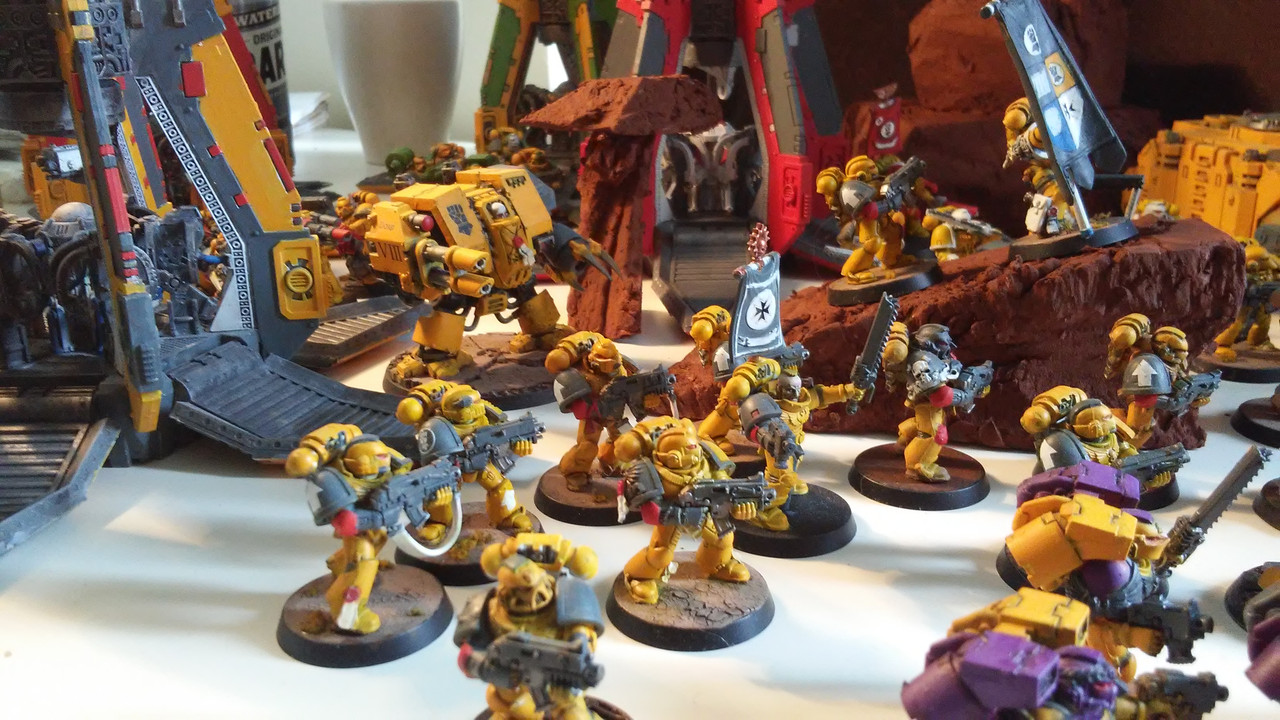
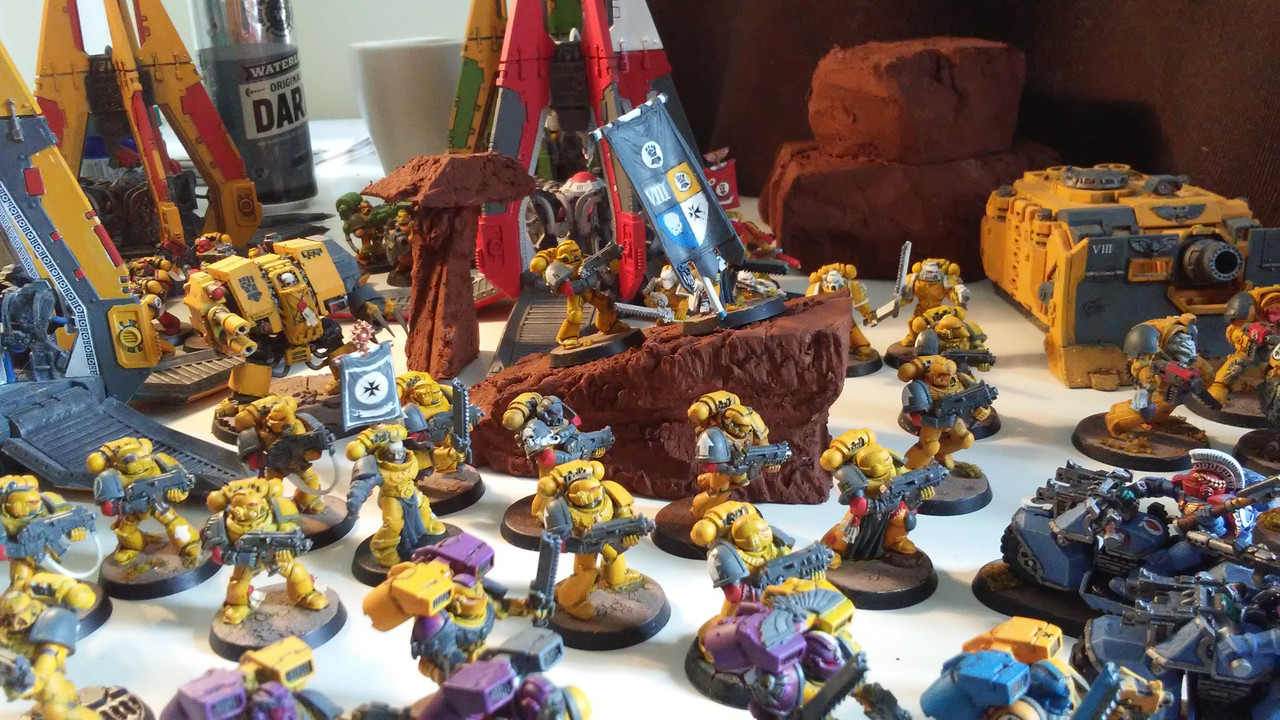
Why yes sir I do use phycollogical warfare. Mostly through my paint scheme. You can arrange the colors of your army to distract or disturb your enemies.
As well as tactical acumen. In combination you can Cowtown your enemies easily.
To explain further the colors were borrowed from looking at fighter squadrons of German ME 109 fighters during WW2
The colors themselves are inherently intimidating. Yellow for caution etc..
The color coordinated squads are to further distract my openent, and to help identify my own squads.
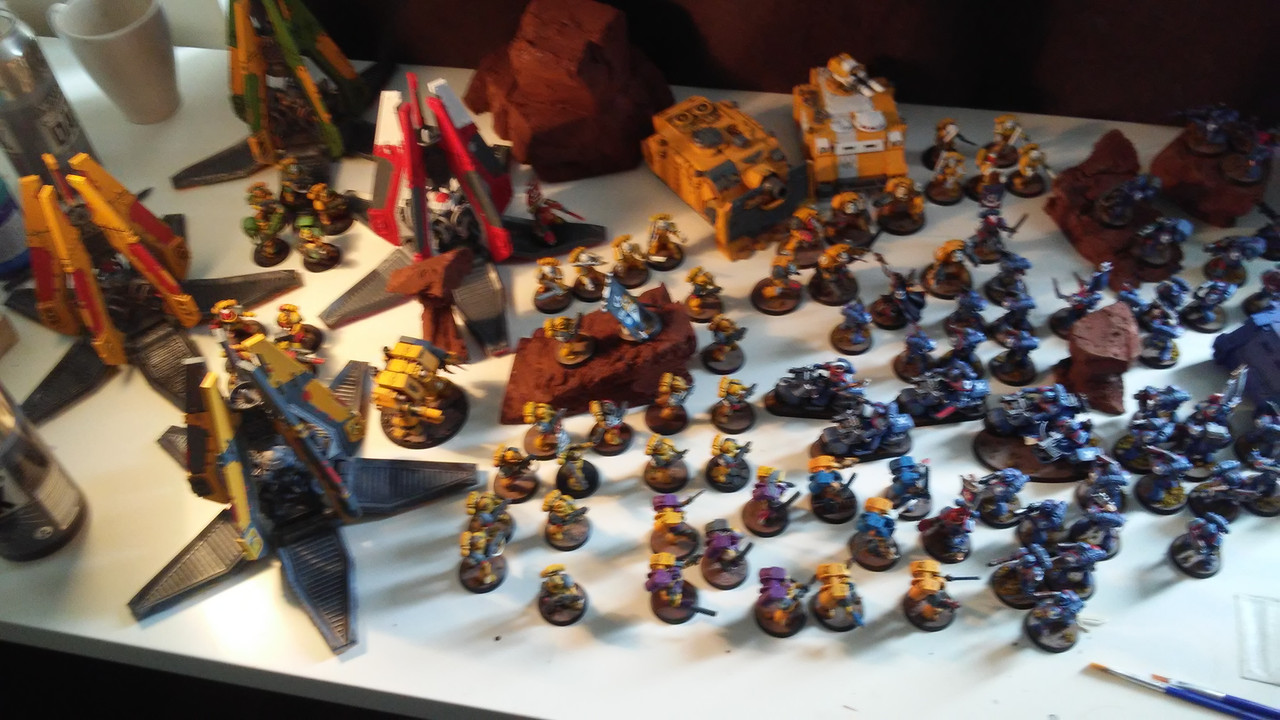
A crap ton of thought went into the theme. Including the 8th company colours. Grey white red yellow blue.. all of it designed to invoke a different emotion. All of which will distract you from the flow of the game.
Hopefully that makes sense to you.
It did get over 70k views on Imgur to solidify the point. And something like plus 300 upvotes.
Aaranis wrote: Hi all, I was wondering if any of you guys had any story to tell about using psychology against your opponent in 40k, be it successfully or not. I was wondering if this could work against some people, purely for scientific reasons of course. I don't have any example where this has happened in my games, so I don't really know what kind of tricks could be used to deceive your opponent, without cheating, so I'd like to hear some examples.
Why yes sir I do use phycollogical warfare. Mostly through my paint scheme. You can arrange the colors of your army to distract or disturb your enemies.
As well as tactical acumen. In combination you can Cowtown your enemies easily.
To explain further the colors were borrowed from looking at fighter squadrons of German ME 109 fighters during WW2
The colors themselves are inherently intimidating. Yellow for caution etc..
The color coordinated squads are to further distract my openent, and to help identify my own squads.
A crap ton of thought went into the theme. Including the 8th company colours. Grey white red yellow blue.. all of it designed to invoke a different emotion. All of which will distract you from the flow of the game.
Hopefully that makes sense to you.
It did get over 70k views on Imgur to solidify the point. And something like plus 300 upvotes.
Aaranis wrote: Hi all, I was wondering if any of you guys had any story to tell about using psychology against your opponent in 40k, be it successfully or not. I was wondering if this could work against some people, purely for scientific reasons of course. I don't have any example where this has happened in my games, so I don't really know what kind of tricks could be used to deceive your opponent, without cheating, so I'd like to hear some examples.
Why yes sir I do use phycollogical warfare. Mostly through my paint scheme. You can arrange the colors of your army to distract or disturb your enemies.
As well as tactical acumen. In combination you can Cowtown your enemies easily.
To explain further the colors were borrowed from looking at fighter squadrons of German ME 109 fighters during WW2
The colors themselves are inherently intimidating. Yellow for caution etc..
The color coordinated squads are to further distract my openent, and to help identify my own squads.
A crap ton of thought went into the theme. Including the 8th company colours. Grey white red yellow blue.. all of it designed to invoke a different emotion. All of which will distract you from the flow of the game.
Hopefully that makes sense to you.
It did get over 70k views on Imgur to solidify the point. And something like plus 300 upvotes.
Aaranis wrote: Hi all, I was wondering if any of you guys had any story to tell about using psychology against your opponent in 40k, be it successfully or not. I was wondering if this could work against some people, purely for scientific reasons of course. I don't have any example where this has happened in my games, so I don't really know what kind of tricks could be used to deceive your opponent, without cheating, so I'd like to hear some examples.
Why yes sir I do use phycollogical warfare. Mostly through my paint scheme. You can arrange the colors of your army to distract or disturb your enemies.
As well as tactical acumen. In combination you can Cowtown your enemies easily.
To explain further the colors were borrowed from looking at fighter squadrons of German ME 109 fighters during WW2
The colors themselves are inherently intimidating. Yellow for caution etc..
The color coordinated squads are to further distract my openent, and to help identify my own squads.
A crap ton of thought went into the theme. Including the 8th company colours. Grey white red yellow blue.. all of it designed to invoke a different emotion. All of which will distract you from the flow of the game.
Hopefully that makes sense to you.
It did get over 70k views on Imgur to solidify the point. And something like plus 300 upvotes.
Do you have any background for those guys?
Its like looking at the starwars logo, but it reads star trek.
Beyond being historically inspired.. not much.
I personally imagine the 8th company as the most badass of all space marines. The reserve assualt company. They get sent in when it's to intense. This particular 8th company is backed up by the captain's personal retinue, and some first company vets. With some tactical squad support.
Aaranis wrote: Hi all, I was wondering if any of you guys had any story to tell about using psychology against your opponent in 40k, be it successfully or not. I was wondering if this could work against some people, purely for scientific reasons of course. I don't have any example where this has happened in my games, so I don't really know what kind of tricks could be used to deceive your opponent, without cheating, so I'd like to hear some examples.
Why yes sir I do use phycollogical warfare. Mostly through my paint scheme. You can arrange the colors of your army to distract or disturb your enemies.
As well as tactical acumen. In combination you can Cowtown your enemies easily.
To explain further the colors were borrowed from looking at fighter squadrons of German ME 109 fighters during WW2
The colors themselves are inherently intimidating. Yellow for caution etc..
The color coordinated squads are to further distract my openent, and to help identify my own squads.
A crap ton of thought went into the theme. Including the 8th company colours. Grey white red yellow blue.. all of it designed to invoke a different emotion. All of which will distract you from the flow of the game.
Hopefully that makes sense to you.
It did get over 70k views on Imgur to solidify the point. And something like plus 300 upvotes.
cuda1179 wrote: Once at a Magic tourney there was an "interesting" tactic I saw. In a room of 32 people there were maybe 3 women. Two of these women looked "normal" to slightly nerdy. ( I say this as a nerd myself). The third woman was attractive, somewhat "top heavy",wore short-shorts, flip flops, and a size too small white tank top, sans bra.
The nerd distraction was noticeable. While I have no proof this was intentional, I bet it was.
Ah yes, the true crime of being an attractive woman in a room full of neckbeards. How were they supposed to finish a match of 40k between all the hat tipping and bows
That has to be a lie, pro tour has strickt rules for players and judges. My uncle had to remove all his earings and wear long sleaves to every tournament, because the rules said he couldn't show them.
But my uncle did tell me that once in a MtG tour in Prag he saw a guy ask his opponent, if he is done after he shuffled, dude wasn't a good english language user and said he was done, thinking that the question was about shuffling. What he did not notice was that the timer has already started, so it was considered a pass. So his first turn was doing nothing, no land play, no muligan, nono thing. He called a judge, and the judge asked what words he used, he used the word "done" in slovenian.
In general my uncle has a lot of stories like that about multiple ccgs.
Not Online!!! wrote: To say however that those stuff have no effect on your enemy is lying though.
Only against bad players who don't know how basic strategy or threat evaluation. Obviously stupid gimmicks work against bad players that can't even remember what space marines have to roll to hit and select targets essentially at random, but you shouldn't need stupid gimmicks to beat players like that.
I don't know, I have seen a guy who is one of the top players here, play against the top player from another district. They have a history and our guy, beat the other guy in multiple games in different systems. Our guy often bumped the guy out of top 8 to place 9 or lower which is the no more prizes for you place. Durning the game I saw, our dude was non stop talking about the times he beat him, and how well the prizes sold, but the game breaking moment was when he mentioned some limited edition infinity model the other dude really wanted, but our dude got instead. Once he started talking about wanting to use it for some conversions the dude went so angry he forgot to roll his "at the start of the turn" stuff, which ment he didn't have enough CP to pull of his full combo, and what cost him the game. So psychological stuff may not always work, may not even work often, but sometimes it does work.
From stuff that happened to me 1 week ago my opponent had a group of 7-8 friends standing behind me and cheer everytime, I failed a roll. Around turn two I was so focused on trying to hear them, that I didn't mvoe my rhino and strike squads on to an objective.
Karol wrote: <Snip - a bunch of fairly worrying anecdotes>
Unfortunately the MtG situation sounds plausible, though a little unlikely if a judge got involved. However, given your second anecdote and your other stories in this thread (assuming they're true), your gaming group/area sounds like one of the most toxic I've ever heard of. This is not normal behaviour.
Aaranis wrote: Hi all, I was wondering if any of you guys had any story to tell about using psychology against your opponent in 40k, be it successfully or not. I was wondering if this could work against some people, purely for scientific reasons of course. I don't have any example where this has happened in my games, so I don't really know what kind of tricks could be used to deceive your opponent, without cheating, so I'd like to hear some examples.
My wife use to where low cut blouses when we would play...
It works. Just wear a corset to a tournament and horrify your opponents so much that they don’t want to look at you, and by extent your army.
Spoiler:
But yes, I generally don’t use meta-level psychological warfare. I know there are people who do it, by “explaining” what particularly intimidating rules their units have to try to make their opponents scared and shoot that way, but honestly it’s a bit dickish and a waste of time against players with a certain amount of experience.
cuda1179 wrote: Once at a Magic tourney there was an "interesting" tactic I saw. In a room of 32 people there were maybe 3 women. Two of these women looked "normal" to slightly nerdy. ( I say this as a nerd myself). The third woman was attractive, somewhat "top heavy",wore short-shorts, flip flops, and a size too small white tank top, sans bra.
The nerd distraction was noticeable. While I have no proof this was intentional, I bet it was.
Ah yes, the true crime of being an attractive woman in a room full of neckbeards. How were they supposed to finish a match of 40k between all the hat tipping and bows
That has to be a lie, pro tour has strickt rules for players and judges. My uncle had to remove all his earings and wear long sleaves to every tournament, because the rules said he couldn't show them...
This is either false or the tattoos (implied by how you mentioned the sleeves) were banned by the location or, if sufficiently obscene, local law. MTG has no explicit rules on attire beyond those required by law, the venue, or common decency. Unless he himself was a judge, in which case he may have had to wear a (generally short-sleeved) uniform.
Karol wrote: But my uncle did tell me that once in a MtG tour in Prag he saw a guy ask his opponent, if he is done after he shuffled, dude wasn't a good english language user and said he was done, thinking that the question was about shuffling. What he did not notice was that the timer has already started, so it was considered a pass. So his first turn was doing nothing, no land play, no muligan, nono thing. He called a judge, and the judge asked what words he used, he used the word "done" in slovenian.
This is also false, or at least significantly overstated. The first pro tour in Prague was 2006, and all the really unsporting angle-shoots like that were explicitly against the rules by around 2002 (when I started judging), if not ignificantly earlier. There were some extremely unsporting edge plays that were legal for a short periodthe first six months of competitive play, but quickly would have been sufficient cause for the player trying that kind of angle-shoot to be given a warning for unsportsmanlike conduct, if not (depending on what he said to the judge) an outright ban for cheating.
Karol wrote: In general my uncle has a lot of stories like that about multiple ccgs.
Lots of anecdotes like that get slung around about CCGs (and tabletop wargames, for that matter), but they are almost all either grossly exaggerated or outright lies. Sorry to call you out on this in such a stark way, but it irks me as it's often used as an excuse to say one group of nerds is somehow "better" than another or to justify bad behaviour as acceptable when it clearly shouldn't be.
psychological plays, even basic ones, only stop working at the very highest levels of play.
It helps if your distraction is also a credible threat in its own right. It may be smarter to unload your fire at Sonic Dreadnaughts as opposed to the Defiler with smoke popped and Delightful Agonies that was warp timed directly into your front lines, but that doesn't mean it is going to hurt any less when the Defiler does in fact hit your lines and uses Daemon forge to re-roll all of its hits and wounds. You can say the same thing about a Gallant. Even if your opponent doesn't mind your distraction, they still get a knight slamming into their lines- which will hurt.
Ultimately, the most basic psychological weapon you see all the time is pressure. When you apply pressure to your opponent they are more likely to make a mistake, or make a bad decision. Taking an offensive stance and forcing your opponent to react to you as opposed to vice versa can do a lot to make your onslaught feel overwhelming. Indeed many players- including those you may find at tournaments- can mentally break when things don't go their way early on. Even where the game is far from over- a strong initial push will often times unnerve an opponent all on its own. Some may even prematurely forfeit a game to avoid what they believe will be a lost cause.
Aggressive play is a strong default stance in any war game for this reason. I have a pretty good track record in terms of winning even in games I have never played before in my life. The reason for this is pure aggression. Push hard, push fast, and don't hold anything back. Pure aggression with your entire list from the word go is one of the most effective ways to win most games- 40K included. The reason it works is purely psychological, and it plays on people's basic fears and instincts. Generally from an instinctual perspective people are naturally defensive and risk averse unless they perceive an advantage. When you take the initiative against them, people will often automatically assume that you have some sort of advantage, even if there is no other supporting evidence and you in fact do not have any such advantage.
When the game will have hidden information, then we can talk wbout actually using bluffs, scare tactics and mental psychological manipulation of the enemy.
As of right now, only real thing that works is "hurry the shop is closing / I have to go to work/bed/school !!!"
akaean wrote: psychological plays, even basic ones, only stop working at the very highest levels of play.
It helps if your distraction is also a credible threat in its own right. It may be smarter to unload your fire at Sonic Dreadnaughts as opposed to the Defiler with smoke popped and Delightful Agonies that was warp timed directly into your front lines, but that doesn't mean it is going to hurt any less when the Defiler does in fact hit your lines and uses Daemon forge to re-roll all of its hits and wounds. You can say the same thing about a Gallant. Even if your opponent doesn't mind your distraction, they still get a knight slamming into their lines- which will hurt.
Ultimately, the most basic psychological weapon you see all the time is pressure. When you apply pressure to your opponent they are more likely to make a mistake, or make a bad decision. Taking an offensive stance and forcing your opponent to react to you as opposed to vice versa can do a lot to make your onslaught feel overwhelming. Indeed many players- including those you may find at tournaments- can mentally break when things don't go their way early on. Even where the game is far from over- a strong initial push will often times unnerve an opponent all on its own. Some may even prematurely forfeit a game to avoid what they believe will be a lost cause.
The sort of pressure you're talking about isn't psychological, it's tactical. You're talking about presenting multiple threats for the opponent to deal with and asking them to decide which is the right target. There's nothing particularly psychological in that tactic, it's simply a fairly basic tenet of good play - present multiple threats. If the "distraction" is a legitimate threat in its own right it's hardly a distraction at all. Sure, people can become despondent when they start losing but I've rarely seen anyone become despondent through some form of psychological trick, it's always been as a result of what happens on the table, and that's about tactics, not psychology.
Slipspace wrote: The sort of pressure you're talking about isn't psychological, it's tactical. You're talking about presenting multiple threats for the opponent to deal with and asking them to decide which is the right target. There's nothing particularly psychological in that tactic, it's simply a fairly basic tenet of good play - present multiple threats. If the "distraction" is a legitimate threat in its own right it's hardly a distraction at all.
Exactly. Having redundant paths to victory isn't psychology, it's just good strategy. You take redundant threats, and each of them is a legitimate path to victory. If they deal with the unit(s) aggressively moving up to shoot then the units camped in the back on the objectives win the game. If they ignore the aggressive threat in favor of dealing with the gunline then the aggressive threat gets into combat, slaughters a bunch of stuff, and claims different objectives. In that situation you almost don't care which option your opponent picks because you're happy to win either way. And from your opponent's point of view it isn't a mistake to pick either option, both counters are legitimate paths to victory and it's just a matter of deciding which strategy you think is more likely to succeed and fits better with your own plans.
What people are talking about with "psychology" is using tactics that aren't a threat and trying to trick your opponent into believing that they are. The decoy unit is just a cheap decoy, not really capable of doing much, but you're hoping that your opponent is a clueless newbie and evaluates it poorly. Or you're hoping that you're facing someone who has never played IG and can't accept losses, so they panic and throw everything at the immediate threat instead of just calmly feeding it a sacrificial unit or two to tarpit it long enough to win elsewhere. The plan's success is 100% dependent on your opponent making a mistake, if they make the correct play then it all falls apart. That's why "psychology" is ineffective. Good players won't make the mistake, and you don't need tricks to beat a weak player.








 who did it should be in prison for several years, on top of having to pay for the full cost of the damage. I find it horrifying that you approve of that kind of behavior, and I'm very thankful that