Hi all, I had some questions about 40k lore.. specifically the workings of guns.
1) many bolt pistols appear to have no barrel or chamber - just a muzzle brake or flash hider. How to they expect to stabilise or even propel the rounds?
2) even with AP ammo, how can bolts penetrate anything....being rocket propelled and huge caliber surely they have almost no velocity
3) how can some of the larger marines change or carry magazines, and surely once they've expended the 15 or so rounds, the gun is useless....especially for terminators or chainsword weilders
4) how does power armour hold up against bolt guns, and what about lasguns or shuriken guns
2) depictions vary quite frustratingly. But there are descriptions of the Bolt having an initial charge, then the rocket kicks in. Add in a suitably dense pointy bit, and penetration occurs.
3) magclamps. Also, Powerfists aren’t active 100% of the time. Magclamp extra mags to your body. Deactivate power field and after hours or days of practice, learn how to get deft with it to reload.
4) The Inquisitor game has the most detailed presentation of Space Marine Power Armour. It’s not simply thick, heavy plating. Firstly, there’s an ablative layer on each location.
Whilst it does of course have weak spots, those tend to vary from Mark to Mark. For instance, Mk2-7 the neck seal is an obvious weak point. Mk8 had a raised collar to mitigate this - but round could get wedged in it. Mk10 (so Primaris stuff) seems to have a more efficient collar.
Its effectiveness against different weapons will vary greatly. Let’s consider the same location struck by different weapons, and assume penetration.
Let’s go with the elbow joint, which by necessity is probably the most prominent weak spot.
Lasgun - depends how much of the energy blast was absorbed in the penetration. But is seems unlikely to cripple a Marine. Flashburn, possibly vaporisation of flesh. Certainly enough to send a non-Marine into shock, but against a Marine’s post-human physiology, in-built armour analgesics etc? You need lots of Lasguns to reliably get the job done.
Shuriken Catapult - these are trickier, as they absolute don’t fire a single shurkien at a time, but a cloud. So if one hits that weak spot, we can reasonably assume others will. Now there’s a decent chance the discs will lose enough “oomph” to come out the other side. But you’re still having that arm sliced off internally, with a not negligible chance the whole thing is coming off there and then. I’d argue the former is worse, because that limb is now dead weight, and any discs part of that slicing are now rattling around.
Bolter - this is why they’re deadly. They penetrate your armour, they detonate. And they don’t really do flesh wounds as a result. One good hit, and your toast, whether you’re wearing Underpants or Terminator Armour. On the elbow joint? That arm is gone, man. Gone.
1/2) They were not designed by people with a good understanding of weaponry before the days of the Internet. You or I can just hope online and get a full mechanical breakdown of most firearms, that wasn't possible. 40k is themes and aesthetics, not hard science.
3) In the video game Space Marine, the Stormbolter carries 100 rounds per magazine. Yes, it has a high ROF but those rounds are all Bolt rounds so a Terminator doesn't need to fire massive amounts to kill most enemies. Terminators are also not meant to be used during long engagements as they are close assault units designed for decapitating strikes and rely more on the CQC power than shooting.
Regular Astartes carry spare magazines into battle and unlike a Lasgun or Autogun, one shot is usually enough to kill most foes, if not multiple with the shrapnel from the unfortunate target.
4) Power Armour holds up fine with a few shots but concentrated fire will bring down an Astartes. Lasguns are far less likely to unless there are a significant number or the shooter gets lucky.
Shuriken weapons are inconsistent probably more than any other weapon. Sometimes they're only useful against lightly armoured targets and other times they can shred Power Armour. Depends on the writer, though that can be said for pretty much every 40k weapon.
For 2) it has been implemented in the fluff that bolts are actually fired and then the rocket kicks in.
Concerning 3) the pre-Primaris Godwyn-pattern has a capacity of 30 rounds (this hardly lines up with the miniatures, but it's what the fluff says ).
How terminators reload? Well, ... Not sure we ever see or hear it works in detail, but going from games and fluff we can say they do.
The fluff also says that you can magnetize stuff at the Power armour (like the chainsword to reload I guess).
Also worth keeping in mind that Space Marines tend to be highly mobile, and whilst they can partake in extended missions, what we see in 40K games is a specific strike more or less in its entirety.
“Just off screen” we can expect some kind of logistics, be that a Thunderhawk or two ready to collect, or Rhinos parked up somewhere safe.
A lot of this is only a problem if you accept miniature scales as accurate and buy into the memeflation of marines.
Bolters have always been 0.75 cal rounds, and their sickle mags carry 30. They aren't firing coke cans. You can fit 30 rounds in the mag at 75 cal.
Generally they have a magazine with 20-30 rounds depending on shape.
Despite some Mandela effect, there has never been an instance bolters were described as caseless. In 2nd ed the autogun was described as caseless.
People assumed they were caseless because gyrojet weapons were.
But.40k consistently describes bolters as having a casing and charge AND rocket propulsion.
Shuriken catapults are interesting. They rely on narrow edge and high velocity to penetrate. The psychoplastics the Eldar use are very hard and light, they're super materials.
To impart the amount of energy needed to be lethal for something that light, it will be travelling at extremely high speeds, high % light speed type speeds.
The shuriken catapult is a railgun in all but name, using gravitic propulsion rather than magnetic fields.
Given the stick ammo is ~300mm long (12 inches) even at 1mm thick that's 300 rounds. I expect they're at least 1/10th of a mm thick if not thinner and a full auto capability, That gives you what is effectively a railgun sandblaster that is firing high speed flechettes one after the other drilling into the target.
They can either be thin enough to pass through the targets molecules and disrupt them like monofilament wire, or thicker and push through with their cutting edge.
Whichever way you look at it, to get a shuriken catapult to function in a lethal manner requires some extreme physics making it quite a crazy gun.
Thanks. I guess the remaoning unanswerable question is how bolts can defeat armour, given the obviously low velocity. Physics would dictate that even with the hardest metal on the planet, a bolt couldn't defeat powe armour if it's a slow gyrojet type thing
Eh. It’s a setting of not only literal space magic, but also unknown thousands of years of development and that of real world physics.
Consider that we’ve gone from simple Muskets to Anti-Tank rifles, and through various iterations thereof, over the past, what, 300 or so years? Who knows what alloys, propellants and tips might be discovered across that time period.
The impression I get is that power armor holds up to the first couple shuriken volleys. The shurikens will carve away at the ceramite sort of kind of like taking a belt sander to wood. Eventually, the armor becomes compromised, and the shurikens start buzzsawing their way through flesh and blood. Or alternatively, the shurikens find a lucky angleand carve their way through the gaps in the actual plate. A marine with his arm raised could theoretically take a storm of shurikens to the armpit and functionally have his arm lobbed off even if 99% of the shurikens are bouncing ineffectively off of the plate.
One of the weirder considerations is what happens with the shurikens after they bounce off. Like, the sheer volume of projectiles makes it seem like they'd be at risk of bouncing into each other. And I have to imagine you *don't* want to be walking bearfoot through a recentbattlefield where the ground is just a molecule-thin sheet of sharp metal snowflakes.
Regarding bolters vs power armor: they mention here and there in the HH novels how bolters are frankly kind of *bad* at killing marines. They were never meant to be an anti-marine weapon. They were meant to punch into less armored targets and then explode, either to kill extra gnarly aliens or to scare the snot out of other humans.
In books, the description is more often than not that the first few volleys of bolter shots fail to kill target marines. The shot tend to bounce of armor (hitting hard enough to potentially damage the armor in the same manner as a sledgehammer), and then maybe do some bonus damage with the sheer force of the possible subsequent explosion. Sometimes a description will go out of its way to emphasize that close proximity to the target or landing a hit somewhere not covered by plate (look at the cabling on some marines' toros) results in the bolt shot having enough raw strength to penetrate a bit and then explode.
My headcanon is that the payload of the explosion is doing a lot of the heavy-lifting.
Regarding stability of the bolt round, if the rocket nozzles in the back of the thing are slightly angled, then the exhaust itself with impart a stabilising spin on the round. No need for a barrel to do that job. And some bolt rounds are described as being seeker ammo, so the rounds may even be able to self-correct their trajectory mid flight. Using space magic.
1-2) Bolters do have chambers and barrels. The models are however not made by people who really properly understand guns.
They are based on the real world Gyrojet weapon. Which fired caseless rockets down a smoothbore "barrel" and relied on the velocity of the rocket engine on its own.
Bolters were originally caseless too, but have evolved since their first depiction. They are now a hybrid of gyrojet and conventional firearms. They are cased ammunition which is fired by a primer igniting a propellent which accelerates the bolt down the rifled barrel. However, in addition to this normal firearm operation, the projectile itself has a rocket engine inside it which continues to accelerate it after firing. This fixes the problem Gyrojets had at close range where they were not very dangerous till they had traveled about 30 ft or so, and you could literally stick your finger in the barrel Loony Toons style and hold the rocket inside when fired. Since bolters have a normal explosive charge as well as the rocket they are dangerous at point blank as well.
As with all AP ammo, bolters rely on the velocity of the projectile to impact the target. I mean, thats how all projectiles work. Mass*Velocity=Energy. And on top of this, bolt shells have an explosive charge that detonates after penetration.
3) Power and Terminator armor still has perfectly functional hands. Reloading isn't really an issue, assuming you even need to in a combat at all. A human sized bolter has a listed magazine size of 24. Marine bolters have a slightly larger magazine of 28. Stormbolters have 60 round capacity. In most fights, you probably wont need to reload under duress, but if you do even a Terminator can reload his stormbolter. Power fists are still capable of fine enough movements to do it, otherwise there would be no point to having distinct fingers and a thumb.
4) As with real life armor, it is complicated. Penetration is dependent on the angle of the incoming ammunition as well as the raw thickness of the armor itself. So while a Bolter can theoretically penetrate power armor anywhere, except probably the pauldrons, in practice it needs to be a good shot on a part that is relatively flat to your incoming attack. A shot that is off by even a little bit will hit at an angle and be deflected. And power armor doesn't have very many flat surfaces, especially if a marine is moving and taking cover.
Which is really how any kind of armor works. It rarely works by taking the full force of an attack, it relies on deflecting the blow and the relative slope of the armor to have thicker protection than exists on paper.
Shurikan would be particularly dangerous due to the area of effect. Its hard to hit a joint or weakspot with a single attack, but a cloud of flying razors is going to hit a weakspot somewhere.
This is for War Thunder, but if you want an idea of how a bolter does its damage. Look at the APHECBC shell.
Keep in mind there are other types of bolter ammo. Some could be described as HEAT warheads or other exotic things.
Smg762 wrote: Thanks. I guess the remaoning unanswerable question is how bolts can defeat armour, given the obviously low velocity. Physics would dictate that even with the hardest metal on the planet, a bolt couldn't defeat powe armour if it's a slow gyrojet type thing
The simplest way to get more velocity out of a short barrel (or rocket with limited acceleration distance) is to make the propellant 'burn' faster. At some point you move from deflagration to detonation, but it's still basically the same principle. Dump energy into the projectile faster and you get it going fast in less distance. This puts a lot of strain on the chamber, barrel, rocket exhaust, etc. so it isn't used much in real life (but there are propellant mixes specifically intended to get good performance out of short barrel rifles; usually combined with heavier projectiles which work with less velocity). In 40k, you can tell yourself that those parts of the weapon are made of super materials (which aren't as practical to use in armour for some reason), or just accept that it is a silly setting where realism isn't really a consideration.
If you insist on trying to make 40k plausible, I suggest thinking of depictions in miniature, art, etc. as only very rough approximations of the 'real' objects. Bolt pistols probably would have barrels at least a few inches longer than the rocket itself, Catachans don't really have completely different muscles to normal humans, most people don't have a pelvis as wide as their femur is long, or hands big enough to cover their scalp, Leman Russ tanks and Taurox and Chimera APCs have functional suspension rather than armour plating extending right to the track, and so on.
Bolts are "low velocity", but relative to other bullets not in general. They're still going fast, are quite heavy, and have a rocket that is constantly accelerating their projectile for a good portion of the flight path.
This would mean that a Bolter has greater penetration the further the target is, at least till the point the rocket motor burns out. But even at close range the bolt still has enough oomph for anti-personnel work.
As for barrel length, remember that the weapons on miniatures are not to proper scale. They are larger and clunkier then they should be. But even without that, a bolt pistol still has room for 3-4 inches of barrel length. That is on the short end for pistols, but well within normal allowances. Add the rocket engine and the projectile will have plenty of velocity.
Bolters also seem to have a depleted uranium core but this is from a single description in a single book and the only reason why I remember it is exactly that, it was never mentioned before or since so could just be that authors reasoning behind them.
Mad Doc Grotsnik wrote: I’ve got access to the Inquisitor rule book, but only the Vault version. No idea if it has weapon descriptions left in.
Sorry for the blurriness on the pic. My copy of Inquisitor was on the bookshelf for years, and not well-thumbed.
Once again, GW made a game that no one really played but we have one of the best known characters from it- Eisenhorn. (More due to Dan Abnett's work ethic than GW)
Anyways, back on tropic: Modern day Automatic shotguns resemble a passing resemblance to some Mk's of bolters:
I'd assumed that bolt shells are about the same size as deer slugs, but due to in-exactness when it comes to scaling up, I think the models show bolter shells are the size of a soda can!
The frag 12 might be the closest common usage thingy, but the OICW probably wins as closest thing overall. 20mm smart explosive rounds with programmable warheads. Not quite mass reactive, but could be programmed for a similar effect.
As noted in the thread linked above, GW's original concept for weaponry was based on trendy futuristic weapon concepts, like gyrojets and caseless ammunition.
The .75 caliber of bolters is also a "Marines are BIG" thing, because while in the 80s armies were going from .30 cal (7.62mm) to .223 (5.56mm), GW's future was THREE TIMES AS LARGE.
"In the far future, the .50 AE Desert Eagle will be puny and underpowered, derided as a mouse gun."
Tyranid weapons are also interesting, as they just don’t behave as regular firearms, real world or 40K, do.
The relatively simple Fleshborer of course launches a voracious beetle, which expends its brief life chewing through whatever it impacts. Against exposed body parts, that’s horrific damage. But, you’re probably safe if if the first volley hits a flak jacket. Again, it’s the weak points you need to worry about.
The Deathspitter however is far more concerning. The initial shot can and will kill. But if it goes splat? You and your squad mates are showered in droplets of a highly acidic compound. Not only is that potentially lethal in itself? But it’s going to degrade even the thickest armour over time, so on a scale 40K isn’t set to properly represent, a volley of Deathspitter shots seems liable to leave your armour in a state where the smaller bioweapons will have an easier time getting you dead.
I could be misremembering, but I thought the point of at least one of the "standard" tyranid guns was that the living ammunition was "smart" enough to seek a weak point. As in, a bug that impacts your pauldron might scurry around trying to find a relatively soft joint to chew on rather than scratching away at the ceramite directly.
Some, perhaps. Certainly the Hiveguard Impaler is able to guide its own flight.
Fleshborers I’m really not sure. It could the weapon beast itself (as opposed to the organism it’s attached to) has an instinctual aim for Soft Bits? I don’t recall the beetle being described as searching for the softer bits. Simply impacting and getting their chew on until they’re exhausted their incredibly short life energy.
Sounds about right. Though I’d imagine any Borer Beetle that lands half on/half off a squishy bit will be able to adjust the direction of its efforts accordingly.
Devourer is particularly unpleasant, given the worms eat their way to the brain.
I think I was thinking of devourers. When I read the 3rd(?) edition codex, iirc the Living Ammunition rule was rerolls to-wound. Which made sense to me as the little gribblies basically eating their way towards a second (hopefully more lethal) location if their initial impact/early burrowing didn't kill the target.
See: Any moment in television where a character survives because the bullet was a smidge to the left. Well, these bullets eat their way a smidge to the right.
But I suppose that could just be burrowing in a random direction rather than landing in a flakk jacket and actively pointing yourself towards flesh.
Tyranid weaponry basically gets a pass because its truly outside of the normal scope of firearms. You squirt a bug filled with acid and whose sole purpose is to chomp on something, and no one disputes that bad things will happen.
The issue with "guns" is things like no ejector ports, or ejecting casings that are 1/10 the diameter of the bore (and rimmed!) that strains credulity.
Though borrowing heavily from "Aliens," GW actually brought something interesting and new to the table when it came to the Nids.
Wyldhunt wrote: I think I was thinking of devourers. When I read the 3rd(?) edition codex, iirc the Living Ammunition rule was rerolls to-wound. Which made sense to me as the little gribblies basically eating their way towards a second (hopefully more lethal) location if their initial impact/early burrowing didn't kill the target.
See: Any moment in television where a character survives because the bullet was a smidge to the left. Well, these bullets eat their way a smidge to the right.
But I suppose that could just be burrowing in a random direction rather than landing in a flakk jacket and actively pointing yourself towards flesh.
Canonically I think they follow the nervous system and burrow to the brain. But someone should double check me on that.
The “modern” boltguns we see in the video games and the tabletop do have barrels. They just aren’t very long to real world standards. With that being said, there are absolutely short barreled rifles in real life depending on the caliber. Marching cartridge, velocity, powder burn rate and barrel length is a science in the real world. Theres a lot more to it but I don’t feel like typing a book on my phone.
The bolt has an initial charge to get the gun to fire the projectile out of the barrel, then the gyro kicks in mid-flight so it doesn’t need a 20 inch barrel to gain velocity and accuracy since the bolt’s own rocket fuel does it and stabilizes it in flight. Theres also lore that the gyro activates in the Boltgun and the bolt doesn’t have an initial cartridge but nonetheless, same explanation as to why a long barrel wouldn’t be needed.
Tyranid bug ammo is definitely unpleasant. But I think that assuming the bug can't find some squishy bit to bite within a second or two you are safe as it dies. So its very RNG, better hope it didn't hit close to a joint or catch up in your clothing.
Hellebore wrote: The scale has always been given as 0.75 calibre.
There have been a few instances where 0.98 has been given (I think the space marine game has that).
A common misunderstanding a lot of people get when reading. The Heavy Bolter is .98/1 Inch. Regular bolters are .75cal.
Grey Templar wrote: Tyranid bug ammo is definitely unpleasant. But I think that assuming the bug can't find some squishy bit to bite within a second or two you are safe as it dies. So its very RNG, better hope it didn't hit close to a joint or catch up in your clothing.
Hellebore wrote: The scale has always been given as 0.75 calibre.
There have been a few instances where 0.98 has been given (I think the space marine game has that).
A common misunderstanding a lot of people get when reading. The Heavy Bolter is .98/1 Inch. Regular bolters are .75cal.
Have you got an actual quote for a heavy bolter calibre because I only see that claimed as conventional wisdom, no one bothers to actually put a picture up of it.
On the other hand, as I said, the space marine game lists the bolter as .998. now I think that's a mistake and the more consistent size for all bolters including human ones, is 0.75.
Tygre wrote: I think the .998 is the model number (year number) not the calibre.
I checked around, and the internets doesn't say when the Godwyn pattern was found/ became standard. But there are .75 and .998 varieties, .998 being "the latest"- Buuuut really it's the Cawl pattern bolter, which I assume is bigger due to Primaris model size.
Certainly in the dim and distant past bolts were caseless (no description given of spent cartridges and the like), but the artists clearly struggled with the concept, and rule of cool won the day. Bolt guns were initially pretty much recoil-free, but that got retconned out too.
From Ian Watson's 'Harlequin' -
"Jaq sniffed the sharp nitric aftermath of propellant which had ignited after each bolt flew from the muzzle.
'Noisy,' said Meh'lindi.
Yes, noisy. Yet with hardly any recoil. RAARK,the gun would utter with each squeeze of the trigger. Ithardly bucked at all in one's hand. With a plosive pop it would ejaculate a bolt. With a flaring swish, that bolt would ignite and accelerate away. Then there would come the thud of impact, followed by the blast of detonation.
RAARK-pop-SWOOSH-thud-CRUMP: this was the lino of a bolt gun."
farmersboy wrote: Certainly in the dim and distant past bolts were caseless (no description given of spent cartridges and the like), but the artists clearly struggled with the concept, and rule of cool won the day. Bolt guns were initially pretty much recoil-free, but that got retconned out too.
From Ian Watson's 'Harlequin' -
"Jaq sniffed the sharp nitric aftermath of propellant which had ignited after each bolt flew from the muzzle.
'Noisy,' said Meh'lindi.
Yes, noisy. Yet with hardly any recoil. RAARK,the gun would utter with each squeeze of the trigger. Ithardly bucked at all in one's hand. With a plosive pop it would ejaculate a bolt. With a flaring swish, that bolt would ignite and accelerate away. Then there would come the thud of impact, followed by the blast of detonation.
RAARK-pop-SWOOSH-thud-CRUMP: this was the lino of a bolt gun."
They were never described as caseless - using the argument that they were never NOT described as caseless is ridiculous.
In 2nd ed they specifically described autoguns as caseless yet did not for bolters. If you're going to the trouble of doing that for some weapons it's a stretch to say others were when you aren't saying it. The bolter still had its initial propellant then the rocket igniting, which is exactly how the cased version works.
I commented in the early posts, having checked my Rogue Trader era books that there’s no mention of Bolters using caseless ammo.
Somewhere in my dusty pile of now historical sources I’ve even got some, maybe all, the rules for Confrontation, a WD serialised precursor to Necromunda.
I’ll pick through them tomorrow when I’m not brain drained from work and my Friday beers. See, whilst the same era as Rogue Trader, it contained extra crunchy details. For instance, Lasweapons all using the same power packs, with the yield of the weapon dictating how many shots you’d get from a single power pack - or indeed multiple power packs (for instance, a Lascannon took six power packs for a single shot, if memory serves.
I’ll also check my 2nd Ed Wargear Book.
No, not for a WeLl AcTuAlLy flex. But to help try to track and trace where the idea of Bolters being caseless might’ve first arose.
For the previous thread that I posted a link to I skimmed through RT, the Compendium and the 3 2nd edition books, rules. Background and wargear and didn’t find anything.
It's funny how accurate the OCIW is as a real world boltgun, especially since the OCIW was a knowingly created warcrime.
"Specifically, by deliberately designing the 20 mm grenade with the intent of shooting enemy personnel wearing body armor using an explosive projectile, the 20 mm HEDP round is thus an "exploding bullet", which are illegal for military use under the Law of War."
Seeing as how 100% of 40k is a warcrime, it's a funny comparison
Its illegal for bullets under 20mm to deform or explode to cause extra damage. The idea is you do not have kill your opponent, being able to prevent them fighting back is enough. It is illegal in the Geneva Convention to cause unnecessary suffering.
If 20mm and above is illegal against infantry then how come artillery still exists. 155mm is bigger than 20mm after all.
Exploding Bullets are illegal. They made the semantic mistake of calling the 20mm attachment a "Rifle" instead of a Grenade Launcher. If they'd called it a grenade launcher, it would have been legal in war. But it was concieved, greenlit, and built into production, under extremely illegal/ignorant pretenses.
The reason I saw for the OICW to be illegal is that exploding bullets are classified as weighting 400 grams or less, if memory serves, if it's over that, it's considered a grenade and so on, the OICW munition was under that 400g threshold.
My source for that is a Youtube vid that I can't find again, admittedly, so take with a grain of salt.
The relatively simple Fleshborer of course launches a voracious beetle, which expends its brief life chewing through whatever it impacts. Against exposed body parts, that’s horrific damage. But, you’re probably safe if if the first volley hits a flak jacket. Again, it’s the weak points you need to worry about.
You are thinking about the devourer. The fleshborer usually had some degree of armor penetration, it used to be AP5 in classic 40k and it had AP-1 in 9th.
The downsides of the fleshborer is being short ranged and a low firing rate. But if it hits you are likely dead unless you have carapace or better armor.
They were never described as caseless - using the argument that they were never NOT described as caseless is ridiculous.
In 2nd ed they specifically described autoguns as caseless yet did not for bolters. If you're going to the trouble of doing that for some weapons it's a stretch to say others were when you aren't saying it. The bolter still had its initial propellant then the rocket igniting, which is exactly how the cased version works.
I do remember that all the early artwork never showed cartridges being ejected, and the bolters didn't have ejection ports. Unfortunately I haven't kept all my old issues of WD from back in the day (36+ years ago). Bolt rounds don't need a cartridge, as they are miniature rockets (initially based on the real world Gyrojet round).
However, like everything else in W40K, it all depends on the author/artist, and I guess most artists assumed there needed to be empty cases spewing forth.
Bolters nowadays also have an initial propellant charge to get around the inherent issues with the gyrojet rounds (they are basically crap because very low muzzle velocities).
Tyran wrote: Bolters nowadays also have an initial propellant charge to get around the inherent issues with the gyrojet rounds (they are basically crap because very low muzzle velocities).
The relatively simple Fleshborer of course launches a voracious beetle, which expends its brief life chewing through whatever it impacts. Against exposed body parts, that’s horrific damage. But, you’re probably safe if if the first volley hits a flak jacket. Again, it’s the weak points you need to worry about.
You are thinking about the devourer. The fleshborer usually had some degree of armor penetration, it used to be AP5 in classic 40k and it had AP-1 in 9th.
The downsides of the fleshborer is being short ranged and a low firing rate. But if it hits you are likely dead unless you have carapace or better armor.
I guess I’m thinking in a different way. Which isn’t to say “therefore you am the wrongs”. Instead, I look at AP values as how adept a given shot is at punching through the weakspots. Because on stuff like Power Armour? Even the joints are armoured, just to a necessarily lesser degree. And the Strength I see as its chance of causing a grievous or crippling wound.
And so in my head canon, a flak jacket can stop pretty much any anti-infantry round (or at least reduce an impact to non-lethal). But. Stuff like Bolters, Fleshborers etc just don’t do flesh wounds, by their very nature should they find a way past your armour? You’re getting gibbed.
farmersboy wrote: However, like everything else in W40K, it all depends on the author/artist, and I guess most artists assumed there needed to be empty cases spewing forth.
On the earlier thread it was noted that boltguns from 2nd ed. did not have ejection ports but that subsequent artwork had rimmed casings being ejected that were also completely out of scale.
The core aesthetic was one of cartoonishly large compact SMGs.
Interesting to note that the guns in Chronicles of Riddick look right out of 40k. The whole Chaos Marine vs IG thing was in play, even down to the lasguns. Fun, underrated film.
Smg762 wrote: Hi all, I had some questions about 40k lore.. specifically the workings of guns.
1) many bolt pistols appear to have no barrel or chamber - just a muzzle brake or flash hider. How to they expect to stabilise or even propel the rounds?
2) even with AP ammo, how can bolts penetrate anything....being rocket propelled and huge caliber surely they have almost no velocity
3) how can some of the larger marines change or carry magazines, and surely once they've expended the 15 or so rounds, the gun is useless....especially for terminators or chainsword weilders
4) how does power armour hold up against bolt guns, and what about lasguns or shuriken guns
1) Magic!
2) They are not rocket propelled, they are shot out like normal bullets. I always assumed that the "rocket" is really a type of base bleed to prevent velocity loss at greater distances.
3) Magic! Or alternatively, those giant pauldrons act as ammunition storage.
2) They are not rocket propelled, they are shot out like normal bullets. I always assumed that the "rocket" is really a type of base bleed to prevent velocity loss at greater distances.
They most definitely are rocket propelled.
They also shoot out like normal bullets. Basically, they are two stage rockets. An initial charge like a normal gun, then a rocket booster to continue acceleration.
2) They are not rocket propelled, they are shot out like normal bullets. I always assumed that the "rocket" is really a type of base bleed to prevent velocity loss at greater distances.
They most definitely are rocket propelled.
They also shoot out like normal bullets. Basically, they are two stage rockets. An initial charge like a normal gun, then a rocket booster to continue acceleration.
Grey Templar wrote: Tyranid bug ammo is definitely unpleasant. But I think that assuming the bug can't find some squishy bit to bite within a second or two you are safe as it dies. So its very RNG, better hope it didn't hit close to a joint or catch up in your clothing.
Hellebore wrote: The scale has always been given as 0.75 calibre.
There have been a few instances where 0.98 has been given (I think the space marine game has that).
A common misunderstanding a lot of people get when reading. The Heavy Bolter is .98/1 Inch. Regular bolters are .75cal.
Have you got an actual quote for a heavy bolter calibre because I only see that claimed as conventional wisdom, no one bothers to actually put a picture up of it.
On the other hand, as I said, the space marine game lists the bolter as .998. now I think that's a mistake and the more consistent size for all bolters including human ones, is 0.75.
But they did in fact, do that.
The only stated example I can think of for a heavy bolter is the pre-Heresy pattern that is carried on the shoulder. HH book 1: Betrayal states it is 0.75 calibre, so same as the standard bolter calibre in the 41st Millennium.
farmersboy wrote: However, like everything else in W40K, it all depends on the author/artist, and I guess most artists assumed there needed to be empty cases spewing forth.
The core aesthetic was one of cartoonishly large compact SMGs.
Not really sure why this is surprising? Cartoonishly large SMGs used by cartoonishly large super-soldier special forces makes a lot of sense.
Space Marines are close-range shock troops, so scaled-up SMGs are perfect. The fact that they use SMGs in a musket calibre is funny but shouldn't be too much of an issue for super soldiers wearing powered exoskeletons with autostabilisers. Thinking about it, the line-trooper equivalent would be to give every Marine a heavy stubber (basically a LMG), but they would loose mobility.
Automatic weapons using rimmed cartridges is funny, but real-life automatic, magazine-fed firearms have been made that successfully fired rimmed cartridges reliably (like the Bren). It isn't ideal, but not an insurmountable engineering challenge.
The reason long(er) barrels are needed now on firearms is so that all of the powder can burn and the projectile can reach velocity while the gun remains intact. If we imagine super-science powder that can burn faster and super-science barrels that can take far greater pressures, and super-science projectiles that can stay intact at those pressures, then velocity is not the problem. Twist rate is also not a problem, look at the new 6.8 BLK cartridge from Q, much much faster twist rates to stabalize bullets, but the bullet has to be of a certain construction to not fly apart at those rotational speeds.
Yeah, you can reduce the length needed to stablize the bullet. And since bolters seem to have 5 inch-ish barrels, if you adjust for distortion in the scale, that is well within what could be done with even modern powders.
Smg762 wrote: 1) many bolt pistols appear to have no barrel or chamber - just a muzzle brake or flash hider. How to they expect to stabilise or even propel the rounds?
Which ones? Can you give some examples?
2) even with AP ammo, how can bolts penetrate anything....being rocket propelled and huge caliber surely they have almost no velocity
Shaped/explosive charge inside most bolts doesn't care one bit about velocity. And why you're assuming rockets are slow?
Flinty wrote: Regarding stability of the bolt round, if the rocket nozzles in the back of the thing are slightly angled, then the exhaust itself with impart a stabilising spin on the round. No need for a barrel to do that job. And some bolt rounds are described as being seeker ammo, so the rounds may even be able to self-correct their trajectory mid flight. Using space magic.
By "space magic" you mean 1950s tech? Titan ICBM missiles steered entirely by slight change of exhaust direction of its engine using gimbals, if you can hit something 16.000 km away using this ancient "magic", bolts should work perfectly too...
And then you have even more advanced vernier thrusters and pulse vectoring that don't require any moving parts (also 1950s tech, except on Soviet side powering Soviet AD missiles and ICBMs) that should easily be adapted to bolt control systems too:
Hellebore wrote: What people get confused by is the blast suppressor in the front of the gun being the barrel and thus extrapolating bolts being ridiculous.
No. Just no. This IS a barrel hole. You can tell because A) in competent art portrayals instead of heroic gak this bit is far smaller, B) "blast suppressor" that much bigger than real barrel caliber would be completely useless and pointless, C) Horus Heresy bolter barrels have the exact same size despite portraying clearly thin barrel walls and lacking anything that can be hand-waved as "suppressor".
See for yourself, the inner hole in huge suppressor of KSVK rifle is the exact same size as bullet, otherwise there would be no seal to direct gas to the sides and the thing wouldn't work at all:
Spoiler:
If you measure the diameter of the suppressor as a Bolt then you're only getting 5 rounds in the magazine...
Except you don't need to 'extrapolate' anything because in comically stupid heroic scale portrayals, you can clearly see the bolts in mag cutouts. And yes, they are the size of the "suppressor" and there are only ~5 of them visible instead of canon 30-40. Yet another example of squatmarine models being utter .
Flinty wrote: Regarding stability of the bolt round, if the rocket nozzles in the back of the thing are slightly angled, then the exhaust itself with impart a stabilising spin on the round. No need for a barrel to do that job. And some bolt rounds are described as being seeker ammo, so the rounds may even be able to self-correct their trajectory mid flight. Using space magic.
By "space magic" you mean 1950s tech? Titan ICBM missiles steered entirely by slight change of exhaust direction of its engine using gimbals, if you can hit something 16.000 km away using this ancient "magic", bolts should work perfectly too...
And then you have even more advanced vernier thrusters and pulse vectoring that don't require any moving parts (also 1950s tech, except on Soviet side powering Soviet AD missiles and ICBMs) that should easily be adapted to bolt control systems too:
The concepts are 1950s, but ICBMs are rather large, while bolts are somewhat smaller I wasn't clear in my earlier post, but I meant that the ability to pack in a guidance package and all the technical gubbinz that allows the bolt to change direction into a 20mm-ish round needs some decent space magic. However, happy to be proven wrong on that as well
I always try to avoid imparting meaning into art and then extrapolate purpose. Most art is made, because it looks cool. Not some kind of analysis of tech.
However, this is fun and I like sharing my other hobbies. Modern firearms.
A muzzle device can have many purposes and its form will deviate based on what is needed. There are plenty of hybrid muzzle devices that try to achieve more than one goal and thus share characteristic across the following types.
A simple Blast deflector designed merely to avoid having as much of the blast directed to the sides, back, up or down may indeed be MUCH larger than the caliber of the barrel. Capturing gasses to minimize sound signature is not the main purpose of these particular devices they are a Quality of life device for the user and anyone left/right of them or designed to prevent dirt kicking up while shooting prone.
A suppressor that IS designed to capture gasses needs baffles but those baffles can be few and hidden from sight. Many suppressors are overbore, ie larger diameter than the caliber of the bullet, but the purpose is usually to minimize back pressure, a compromise to balance the pressure of Gas Operated weapons and make them softer shooting by absorbing recoil. This does impair the suppression capability of the device but you might be surprised at what is good enough or useful despite being much less capable. Decibels are exponential not linear so even just taking the edge off is a distinct advantage.
A muzzle brake, as seen in the photo above, is designed to redirect the gasses and as the name implies cause gasses to slam into perpendicular surfaces causing a Braking effect on recoil. Equal opposite actions counter acting recoil. These devices often amplify the blast to the sides or up so they look VERY different from a blast deflector/ flash can would.
So depending on the role in a military's setting you could see each of these devices being used where a few different versions could look, somewhat, like the depictions of bolt weapons. But was that what the artists were trying to confer, yea prob not, they probably did have references that might have had one or another of these devices. Imitation flattery etc. However Blast deflectors were not really in common use when these designs were first printed..
With all of that said if I had to point at the standard Bolter and explain the muzzle device, Id say it looks like a Blast deflector/Flash can.
Also worth noting that bolt weapons may have attachments with functions completely alien to what modern humans are trying to achieve. I could see a 7 foot space knight shock trooper wearing brightly-coloured heraldry wanting a flash enhancer to increase the shock-and-awe of their attack before they pull out the giant chainsword...
Not saying this is the case, but the needs of Astartes in particular do not match up that well with modern special forces as they are very much propaganda pieces in most cases.
Edit: I think the above is unlikely, considering Scout and Imperial Guard bolters still have a similar appearance despite stealth being much more beneficial. However, the point that functions could be different to what we need/can achieve today still stands.
We also have genuine aim assist from the Power Armour’s sensor suites. Calibrate it in training, and any drift or wonkiness caused by the shorter barrel can be compensated for.
Add in the limbs of power armour can lock for stability when shooting, and can also compensate for recoil? Lots of other things to aid overall accuracy.
Flinty wrote: The concepts are 1950s, but ICBMs are rather large, while bolts are somewhat smaller I wasn't clear in my earlier post, but I meant that the ability to pack in a guidance package and all the technical gubbinz that allows the bolt to change direction into a 20mm-ish round needs some decent space magic. However, happy to be proven wrong on that as well
Eh, yes, it would be expensive and hard to do, but experiments with guided 57 mm autocannon shells and 40 mm grenades are being done in real life, so bolts are not that outrageous in that regard.
Also, thinking about it, you can save some space in guided bolts by simply not having it spin - instead of angled nozzles at the sides to spin, it could use smaller, central engine using its own guidance system to stabilize bolt. It would be again more expensive and complicated mechanism, but we already do it in RL. Such bolt could also add some internal volume by having blunter, less aerodynamic tip like some ICBMs because again, it has active, not passive stabilization so it can get away with it.
Do we even know if bolts spin, anyway? Tank barrels changed from rifled to smooth because not wasting energy spinning projectile makes it faster and most cannon shells can deploy their own stabilizing systems like fins in flight to maintain accuracy (and larger missiles like ICMBs don't spin at all because it would add too much stress to their relatively thin skin), maybe bolts just stabilize using their own engines to begin with...
Look at the picture. There's no ejection port on the boltgun, nor is there a slide or any way for the action to cycle. The rounds feed up into the magazine and are detonated in turn. There could be a primer that ignites the rocket, and this might be enough to reset the trigger and striker or hammer.
The cover art show two boltguns being fired and no casings are flying out. Later on they changed it.
Except this picture proves nothing because the ejection port/slide might simply be on other side and you just can't see it. For example, this portrayal of the bolter from Rogue Trader shows 'nothing' on the side Sister is showing, but you can clearly see ejection port open and venting gas on SM bolter: https://i.redd.it/mtmgnx96xmu21.jpg
And in any case, mags themselves kill the idea bolters were ever caseless. The magazines on real caseless weapons are perfectly straight/flat. The only reason to make a mag curved (which adds complication to mechanism and more jamming points) or in less common type triangular, is to accommodate rim on end of case and/or tapered case, both of which are design choices existing only to make extraction of cases easier. Especially seeing both require much more expensive and difficult to machine chamber with complex shape instead of simple, durable, and easy to clean tube/square chambers caseless weapons use. If mag is sickle shaped, it's most likely not a caseless weapon, sorry.
Flinty wrote: On needlers, space magic means that the toxin shard rides the laser beam. Such minor issues as ballistics or momentum are irrelevant
That doesn't even make any sense, it's like saying that a marine bolter shell is more accurate because Tyranids ate a Tau planet and absorbed their ranged combat ability. It's best to dismiss that as superstitious nonsense, especially since needle weapons are effectively nonexistent in normal battlefield combat.
Funnily enough, laser propulsion is a real thing, so that actually makes much more sense than most of 40K weapons
Then you have Russian beam-riding missiles using the laser to correct themselves (and funnily enough, laser being aimed at missile instead of target also makes it immune to jamming plus hides it from laser detectors/sight which would help with stealth) so maybe this tech was miniaturized in 40K to help sniper projectiles too?
Mad Doc Grotsnik wrote: We also have genuine aim assist from the Power Armour’s sensor suites. Calibrate it in training, and any drift or wonkiness caused by the shorter barrel can be compensated for.
Add in the limbs of power armour can lock for stability when shooting, and can also compensate for recoil? Lots of other things to aid overall accuracy.
This... would only help so much. You can bolt a gun to a stabilised firing rig for a level of consistency between shots that a competition shooter can only dream of, and the gunshots will still display dispersion on the target, with greater dispersion at longer ranges. This dispersion should be random within the variance expected from a given firearm (and will increase as the firearm experiences wear-and-tear and becomes fouled).
Barrel length will alter that degree of dispersion, and it cannot be compensated for by better stabilisation. Better stabilisation can only improve the extra dispersion added by the natural wobble of the firer. However, a bolt pistol may still be sufficiently accurate that such inherent dispersion is entirely acceptable for expected combat ranges.
Irbis wrote: Except this picture proves nothing because the ejection port/slide might simply be on other side and you just can't see it. For example, this portrayal of the bolter from Rogue Trader shows 'nothing' on the side Sister is showing, but you can clearly see ejection port open and venting gas on SM bolter
The point is that the artwork is inconsistent. Sometimes there are casings flying out, sometimes there aren't. My favorite is the one using Webley-inspired rimmed casings that are totally out of scale.
And in any case, mags themselves kill the idea bolters were ever caseless. The magazines on real caseless weapons are perfectly straight/flat. The only reason to make a mag curved (which adds complication to mechanism and more jamming points) or in less common type triangular, is to accommodate rim on end of case and/or tapered case, both of which are design choices existing only to make extraction of cases easier. Especially seeing both require much more expensive and difficult to machine chamber with complex shape instead of simple, durable, and easy to clean tube/square chambers caseless weapons use. If mag is sickle shaped, it's most likely not a caseless weapon, sorry.
The magazine is curved because that's how the artists thought magazines should look.
I think it's pretty well proven at this point that autoguns were caseless, not bolters.
Smg762 wrote: 1) many bolt pistols appear to have no barrel or chamber - just a muzzle brake or flash hider. How to they expect to stabilise or even propel the rounds?
Which ones? Can you give some examples?
2) even with AP ammo, how can bolts penetrate anything....being rocket propelled and huge caliber surely they have almost no velocity
Shaped/explosive charge inside most bolts doesn't care one bit about velocity. And why you're assuming rockets are slow?
Flinty wrote: Regarding stability of the bolt round, if the rocket nozzles in the back of the thing are slightly angled, then the exhaust itself with impart a stabilising spin on the round. No need for a barrel to do that job. And some bolt rounds are described as being seeker ammo, so the rounds may even be able to self-correct their trajectory mid flight. Using space magic.
By "space magic" you mean 1950s tech? Titan ICBM missiles steered entirely by slight change of exhaust direction of its engine using gimbals, if you can hit something 16.000 km away using this ancient "magic", bolts should work perfectly too...
And then you have even more advanced vernier thrusters and pulse vectoring that don't require any moving parts (also 1950s tech, except on Soviet side powering Soviet AD missiles and ICBMs) that should easily be adapted to bolt control systems too:
Hellebore wrote: What people get confused by is the blast suppressor in the front of the gun being the barrel and thus extrapolating bolts being ridiculous.
No. Just no. This IS a barrel hole. You can tell because A) in competent art portrayals instead of heroic gak this bit is far smaller, B) "blast suppressor" that much bigger than real barrel caliber would be completely useless and pointless, C) Horus Heresy bolter barrels have the exact same size despite portraying clearly thin barrel walls and lacking anything that can be hand-waved as "suppressor".
See for yourself, the inner hole in huge suppressor of KSVK rifle is the exact same size as bullet, otherwise there would be no seal to direct gas to the sides and the thing wouldn't work at all:
Spoiler:
If you measure the diameter of the suppressor as a Bolt then you're only getting 5 rounds in the magazine...
Except you don't need to 'extrapolate' anything because in comically stupid heroic scale portrayals, you can clearly see the bolts in mag cutouts. And yes, they are the size of the "suppressor" and there are only ~5 of them visible instead of canon 30-40. Yet another example of squatmarine models being utter .
Where did I say the hole was as big as the suppressor? Just because people drill out the hole oversized doesn't mean it is. I said the the outer piece with the outgas holes on either side is the blast suppressor, I said nothing about how narrow the hole is.
I'm not sure what point you're trying to make?
A bolter has a 0.75 cal round and it has a magazine with up to 28 rounds - the only time something was said to have 40 it was a box magazine, not the sickle magazine.
If you're argument is that the art is useless at depicting these parameters, then I don't disagree.
The oversizing of the bolter is at least partly explained in the hands of a marine by having it armoured like them. They carry that thing in front of their chest as they advance into heavy fire, if it can't survive the kinds of attacks they can, their weapons will be destroyed before they can use them.
The slab design of the bolter looks to me like an smg with a massive box of armour around it.
In a double stack magazine with 0.75 cal rounds, you're looking at a magazine of 28 rounds being less than 12" long if it is straight, or even shorter if it is curved. The magazine itself is just over 1.5" thick.
It's very hard to tell if a magazine is double or single stacked from a picture unless they show the inside, but given the size of a bolter magazine and the claimed capacity of up to 30 rounds, they are double stacked. They would be very thin otherwise.
Based on the scale of that magazine, the bolter is about 2.5 feet long. The horus heresy bolter shows rounds clearly smaller than the diameter of the barrel and shows 6 in only 3/5s of the magazine (it continues to the top of the magazine catch). A double stack would put that magazine at ~18-20 rounds.
The first thing I noticed in that artwork is that the ejection port is located in the wrong place. It should be in line with the barrel, instead it's where the guide rod would be.
Again, GW artists drew what they thought looked realistic, but since we're using retro-future tech, it doesn't work. There's no need for a guide rod with a gyrojet because the entire cartridge is ejected. An ejection port maybe helpful to eject dud rounds, but why would it be above the barrel? How would that work?
While the vast majority of guns do have the ejection port in line with the barrel, it wouldn't have to be the case. You could have an action where the cartridge moves forward and down when being chambered and backwards and up when the shell is being extracted. There are a few oddball guns which do some strange things like that.
That would be an overly complicated design, but it could be done. Though realistically I think its better to handwaive just say that the barrel for the bolter should be moved up a little
My willingness to give passes to GW’s artists a pass on dodgy firearm design is dependent on quite how bad the issue is, and changes over time. At the moment a slightly weird position of an ejection port does not annoy me so much
There are worse design decisions out there. Squat double barrelled weapons, I’m looking very much at you
Grey Templar wrote: While the vast majority of guns do have the ejection port in line with the barrel, it wouldn't have to be the case. You could have an action where the cartridge moves forward and down when being chambered and backwards and up when the shell is being extracted. There are a few oddball guns which do some strange things like that.
That would be an overly complicated design, but it could be done. Though realistically I think its better to handwaive just say that the barrel for the bolter should be moved up a little
The odds of the artist (or anyone at GW) having this intent are roughly the same as 10th being the final, definitive edition of 40k.
Thinking it over, there are ejection systems that aren't "in line" with the barrel, but the only ones I can think of are those that either spit the casings out of the top or the bottom of the receiver. Pulling it up and then out to the side is unknown to me.
The Krag has that nifty tray feed which isn't in line with the chamber, but the spent round are kicked out the same as any other bolt action.
If GW wanted to be really retro-futuristic, they should have used blow-forward mechanisms, which might have worked well with gyrojets.
Thinking it over, there are ejection systems that aren't "in line" with the barrel, but the only ones I can think of are those that either spit the casings out of the top or the bottom of the receiver. Pulling it up and then out to the side is unknown to me.
The Krag has that nifty tray feed which isn't in line with the chamber, but the spent round are kicked out the same as any other bolt action.
If GW wanted to be really retro-futuristic, they should have used blow-forward mechanisms, which might have worked well with gyrojets.
Is there any reason it couldn't eject diagonally? Is there a mechanical reason for ejecting perpendicular to the magazine? I could see this being a function of making recievers in broadly box shapes, (so holes need to be up/down/left/right for feeding/ejecting) but doesn't seem like a hard requirement.
If you eject upward then the spent casing might fall back into the breech and jam the action. Ejecting downward or directly sideways minimises this risk i suppose.
Haighus wrote: Is there any reason it couldn't eject diagonally? Is there a mechanical reason for ejecting perpendicular to the magazine? I could see this being a function of making recievers in broadly box shapes, (so holes need to be up/down/left/right for feeding/ejecting) but doesn't seem like a hard requirement.
The short answer is: it would require some additional mechanism. Cartridge ejection is either manual action (pulling the bolt/slide back) or a recoil impulse. As the spent casing goes backward, it hits an "ejector" which forces it out of the action. This is why in slow motion they tumble as they fall out.
If you try to keep that internal and redirect it, you could use the initial ejection to send it up but would then need a second impulse to throw it clear, which adds a lot of complexity.
I mean, there are full-auto weapons that have rather complex ejection systems, but that's not what we're looking at here.
The simple explanation is that the artists just didn't have much practical exposure to firearms, so they drew what looked cool.
Two of my daughters are avid artists, and because they learned to shoot and handle firearms (and take them apart to clean them), their imaginary weapons are more realistic than some because they think about these things.
Is there any reason it couldn't eject diagonally? Is there a mechanical reason for ejecting perpendicular to the magazine? I could see this being a function of making recievers in broadly box shapes, (so holes need to be up/down/left/right for feeding/ejecting) but doesn't seem like a hard requirement.
No, but it is more complicated. Which means its more likely to jam.
Sideways ejection is the most common just because it is generally the easiest. Upward ejection is rare, but does exist. Its simple as sideways ejection, but has the issue of casings/other junk potentially falling back into the action.
Downwards is more ideal as it is ambidextrous friendly and doesn't have issues with brass potentially causing issues, but it is more difficult to design since most magazines are under the action and thus in the way of downward ejection.
Now if we took the bolter ejection port at facevalue, there is one reason we could have for why the bolt is presumably moving backwards and up to eject the old casing and pick up a new round to feed forward and down.
The diagonal movement of the bolt could be a space saving method to prevent the need for a long spring as you could have a more compact action and not need an AR style buffer tube. Though this would have negative effects on recoil as it is directed both up as well as rearwards. Could explain the in-universe description of bolters having a lot of recoil when other factors would logically mean they'd not be too bad.
Grey Templar wrote: The diagonal movement of the bolt could be a space saving method to prevent the need for a long spring as you could have a more compact action and not need an AR style buffer tube. Though this would have negative effects on recoil as it is directed both up as well as rearwards. Could explain the in-universe description of bolters having a lot of recoil when other factors would logically mean they'd not be too bad.
The recoil could be from powered ejection. The source for this power varies by army. Orks get it from Waagh Power, while Imperials draw upon the Emperor's protection and the Machine Spirit.
You could have some electrically powered ejection aid. Though given the scale of the bolter I would say that is entirely unnecessary. You'd normally have assisted ejection for extremely large shells, like artillery/tanks. But any man sized weapon is not really going to need them. For those things recoil operation should be just fine.
Here's the storm bolter cut away from 3rd, where you can see the magazines are staggered and the barrels are also VERY thick, far thicker than anything needs to be.
It also lists 3 types of magazine, sickle (20-30 rounds), straight (12-20), drum (40-60 but jams).
The image still depicts a pretty low round count for the storm-bolter; based on some rough measuring the staggered rounds make ~14 in each magazine. But you can also see that the rounds are narrower than the opening in the barrel, despite it saying it's a 0.75 rifled barrel.
Now if those openings are actually 0.75 across, that also makes that stormbolter tiny. Based on that drawing the whole gun is about 5 openings wide, 0.75x5 = 3.75" across.
Can anyone imagine a stormbolter being less than 10cm wide?
The issues with gun size for me are explained by the boxy designs being actual armour on the gun itself. Modern weapons don't have these enclosed cowls around them, they just have the minimum requirements needed to make them work. Hand grips, stocks, barrels, ejection ports etc.
The actual functional components of a bolter are far more compact than the drawing suggests. I've attached another one with outlines showing those minimum requirements (grip, stock, suppressor etc).
The rest of it is armour plating so it can be used to beat orks to death with and protect it from being damaged in combat.
The image still depicts a pretty low round count for the storm-bolter; based on some rough measuring the staggered rounds make ~14 in each magazine. But you can also see that the rounds are narrower than the opening in the barrel, despite it saying it's a 0.75 rifled barrel.
Now if those openings are actually 0.75 across, that also makes that stormbolter tiny. Based on that drawing the whole gun is about 5 openings wide, 0.75x5 = 3.75" across.
Can anyone imagine a stormbolter being less than 10cm wide
When looking at the barrel closest to the viewer, there appears to be an inner diametre just visible that is much closer to the diametre of the bolts in the magazine. It appears the barrel flares out dramatically for the "suppressor".
Agree with the rest of your post, although it is clear that bolters contain tech within that bulky casing that modern firearms to not. Aside from the gene-lock grip doodad and the autosenses stuff at the back, apparently there are also "self-repair circuits" (no idea how this functions, maybe nano tech?) and also some kind of recoil dampener ("blast compensator"). The latter is likely to use the inertial dampener tech found on Imperial space craft IMO, and probably allows the weapon to be designed with a ridiculous recoil (hence the super thick barrels etc.) yet brings it down to manageable levels.
Well what do you know, optional directed ejection. So it does have a secondary ejection system. Because reasons.
Hellebore wrote: The rest of it is armour plating so it can be used to beat orks to death with and protect it from being damaged in combat.
Of course, it doesn't matter if the barrel remains intact if both magazines (and their ammo) is hammered into a shapeless mass, which they surely would, since they project far enough forward to almost certainly be an impact surface. Second look at stripper clips?
@ Hellebore - another thought as well, though, is that diagram is based on 2nd edition artwork and models. At that point, storm bolters were pretty small, not that much bigger than the plastic bolters that came with the metal/plastic hybrid Mk 7s that were around at that time.
If someone has the said models to enable a wee side by side that would be amazing. I lost my 2nd ed terminators long ago :(
Flinty wrote: If someone has the said models to enable a wee side by side that would be amazing. I lost my 2nd ed terminators long ago :(
When I decided to add Nobs in Mega-armor to my 2nd. ed. forces, I bought "current edition" terminators and modded them with Ork heads and weapons. They tower over my vintage 2nd ed. ones, but I don't mind - bigger targets are easier to hit.
if we are complaining about the physics of bolt guns, Storm Bolters are depicted endlessly putting out a "Storm of Bolt rounds" A veritable wall of lead. The size of the rounds in question, and they being MAgazine fed, means they couldn't hold more than 50 rounds at a magazine. That means 20-30 rounds per barrel. Not really a "wall of lead" considering the standard Assault Cannon has 6 barrels and is reported to put out 2000-3000 rounds per minute. Or 30-60 per second.
FezzikDaBullgryn wrote: if we are complaining about the physics of bolt guns, Storm Bolters are depicted endlessly putting out a "Storm of Bolt rounds" A veritable wall of lead. The size of the rounds in question, and they being MAgazine fed, means they couldn't hold more than 50 rounds at a magazine. That means 20-30 rounds per barrel. Not really a "wall of lead" considering the standard Assault Cannon has 6 barrels and is reported to put out 2000-3000 rounds per minute. Or 30-60 per second.
In fairness, that is how all guns in media of any kind tend to get depicted. Bottomless mags are a staple of games and movies.
And most guns are capable of emptying their magazines extremely quickly if fire is sustained. The Assault Cannon is basically an M134 minigun, which has a fire rate of between 2 and 6k RPM. But the most ammo any variant has is 5k rounds in a belt, and some only have 500. So even real guns often only have a minute of ammo at a time anyway.
Realistically, storm bolters will be used in quick accurate bursts. Expending 2-6 rounds per burst taking out specific targets.
FezzikDaBullgryn wrote: if we are complaining about the physics of bolt guns, Storm Bolters are depicted endlessly putting out a "Storm of Bolt rounds" A veritable wall of lead. The size of the rounds in question, and they being MAgazine fed, means they couldn't hold more than 50 rounds at a magazine. That means 20-30 rounds per barrel. Not really a "wall of lead" considering the standard Assault Cannon has 6 barrels and is reported to put out 2000-3000 rounds per minute. Or 30-60 per second.
In fairness, that is how all guns in media of any kind tend to get depicted. Bottomless mags are a staple of games and movies.
And most guns are capable of emptying their magazines extremely quickly if fire is sustained. The Assault Cannon is basically an M134 minigun, which has a fire rate of between 2 and 6k RPM. But the most ammo any variant has is 5k rounds in a belt, and some only have 500. So even real guns often only have a minute of ammo at a time anyway.
Realistically, storm bolters will be used in quick accurate bursts. Expending 2-6 rounds per burst taking out specific targets.
Fun Fact, due to the insane rate of fire on a 20mm Vulcan Gatling cannon (see any aircraft gun made in the 21st century) the pilot has between 4-6 seconds of actual ammo. And so do short, quick bursts, instead of what they did in the 1950s and walk their tracers onto the target.
The funny part about what I was saying with the storm Bolter is that certain writers always make a concerted effort to "appear" like they have very little ammo. Ciaphas Cain is always running dry on his pintle mount, or the terminators are always almost empty. Given the size of the mags, even terminators would have a hard time effectively "storing" extra mags.
It's a ludicrously stupid weapon both immaginatively and narratively. Whoever dreamed it up was smoking something funny.
My handwaivium in that is that TDA is more than large enough to accommodate extra mags. Canonically PA/TDA has magnetic clamps which can hold grenades and extra weapons, and presumably magazines too.
If and when I get around to making another vanilla marine army, I would definitely make the effort to put spare mags on everybody.
As for the constant running out with certain writers, I think that is a cheap way for tension to get built. Not a bad way, just a cheap way. It drives home how this specific situation has become a problem.
99% of the time marines are going to be victorious quickly and walk all over their enemies. They may not even need to reload sometimes. But good stories aren't the ones where the bad guys fold like a cheap suit.
Re: Storm Bolters - If we're goimg by the proportions given by the models and images, those clips are thick enough to house several rows of bolt ammunition. How does the mechanism work? I dunno! But it sure looks like there's a lot of room in there.
Re: Assault Cannon - It could be that the AC has variable RPM, like from a few hundred rounds per minuite up to a few thousand, and therefore be optionally more conservative with ammunition if deployed for more sustained and suppressive effect.
But I also agree that Terminators should be visibly well loaded up with spare ammunition, and it's nice that many of the Storm Bolters these days are modeled as drum-fed.
I remember from the Space Hulk game that canonically Terminators do carry spare ammunition and can reload during combat. The assault cannon can burn through ammo pretty quick though.
And if we assume that bolters are only .75 caliber and going by the size of marines and storm bolters on more recent models then those drums could actually hold a lot of ammo.
.75 is a large caliber, but marines and stormbolters are big too. A stormbolter would seem to be at least on par with an M249 in overall bulk. The real question is what the length of the cartridge is.
I doubt that .75cal bolt ammo is as long as .50BMG(12.7x99), nor as short as say 7.62x54r or 7.62x51mm. You could maybe justify bolters being .75x60mm perhaps?
Even with a cartridge that huge, if you had a drum magazine the size of an M249 belt box you could have 60-80-100 rounds in a magazine which kinda lines up with what GW gives for magazine sizes. And even 24-30 round mags would be manageable for normal bolters. Definitely very wide front to back, but in terms of length not too much larger than IRL magazines given they are double stacked.
The larger size might even be a good thing, perfect for the large hands of terminator gauntlets so they're not fiddling with something small and delicate.
I would love for someone to make a wildcat cartridge specifically so we could make some bolter analogs today. Maybe not rocket ammunition quite yet, just a .75x50-60mm monster.
One of the reasons they are not in wider use is that international law is against use of exploding bullets against individual people. Also normal bullets are good enough for most squishy targets on earth.
Flinty wrote: Neopup is 20x42mm (apparently). Frag12 is apparently around 20x50mm. The Frag12 Wikipedia page has a list of other similarly sized rounds.
One of the reasons they are not in wider use is that international law is against use of exploding bullets against individual people. Also normal bullets are good enough for most squishy targets on earth.
The size of the ejection port suggests a long cartridge. But it also suggests the cartridge is almost as wide as the magazine.
I imagine that the rocket is sat inside the cartridge further back than normal bullets, so it acts as a sleeve, giving a rocket and a cartridge Almost the same length.
FezzikDaBullgryn wrote: Fun Fact, due to the insane rate of fire on a 20mm Vulcan Gatling cannon (see any aircraft gun made in the 21st century) the pilot has between 4-6 seconds of actual ammo. And so do short, quick bursts, instead of what they did in the 1950s and walk their tracers onto the target.
They also don't eject the brass, but rather place it in a storage compartment. These are often engraved as souvenirs.
Because I was never a popular guy, I served in two wings and never got a bloody casing. :(
The funny part about what I was saying with the storm Bolter is that certain writers always make a concerted effort to "appear" like they have very little ammo. Ciaphas Cain is always running dry on his pintle mount, or the terminators are always almost empty. Given the size of the mags, even terminators would have a hard time effectively "storing" extra mags.
I don't think they thought that far ahead or knew that much about it.
When George Lucas set out to make Star Wars, he recruited concept artists who had experience in practical design of aircraft and vehicles. This made the setting look much more realistic than much of went on before.
I don't think GW had the option of hiring artists with extensive firearms design experience, but rather got guys who knew artistic convention and specialized in look and feel.
That's why the guns are chunky, awkward, and don't really work. Seriously, why wouldn't storm bolters be fed from a rear harness protected by armor plate? Why have an exposed detachable box magazine at all? The chassis could probably hold hundreds of rounds. The answer was that no one thought that far ahead. It's just a guy in a big armored suit holding a big gun.
That's why the guns are chunky, awkward, and don't really work. Seriously, why wouldn't storm bolters be fed from a rear harness protected by armor plate? Why have an exposed detachable box magazine at all? The chassis could probably hold hundreds of rounds. The answer was that no one thought that far ahead. It's just a guy in a big armored suit holding a big gun.
Well, a belt fed from a harness would be a potential liability. They are more likely to jam and are more difficult to clear, especially for a dude in massive armor.
Box magazines are used because they are the most reliable feeding mechanism.
That's why the guns are chunky, awkward, and don't really work. Seriously, why wouldn't storm bolters be fed from a rear harness protected by armor plate? Why have an exposed detachable box magazine at all? The chassis could probably hold hundreds of rounds. The answer was that no one thought that far ahead. It's just a guy in a big armored suit holding a big gun.
Well, a belt fed from a harness would be a potential liability. They are more likely to jam and are more difficult to clear, especially for a dude in massive armor.
Box magazines are used because they are the most reliable feeding mechanism.
^Nice, I was wondering about the reliability part.
Grey Templar wrote: Well, a belt fed from a harness would be a potential liability.
Why?
They are more likely to jam and are more difficult to clear, especially for a dude in massive armor.
Based on what? The assault cannon feeds vast amounts of ammo at a much higher velocity. Scaling it down to storm bolters would have a fraction of the difficulty.
Again, how do you change mags with a power/chain fist/lighting claw? Do you expose the left hand? Where are the extra mags stored? How many are carried?
A powered harness feed makes much more sense, but GW's artists didn't think that far ahead.
A belt inside a protective metal sheath leading to a backpack ammo supply, much like the M163 Vulcan and other related "miniguns", have a lot of surface area for the belt of ammunition to snag on compared to a box magazine. They're not horribly unreliable or they wouldn't be used, but if a jam does occur you need to disassemble the whole thing. That would be basically impossible when you are wearing the weapon system integrated into your armor.
And reloading a weapon using a feed system like this takes a long time. 30-40 minutes.
Compare this to a box magazine where you just need to drop the mag, rack the slide a few times to clear, then put the mag back in. Its not so much about being more reliable in a vacuum, but more about how you can clear it in the field. A feed system to a backpack would be basically unfixable if it broke or jammed while you were in combat. This would also make resupply easier. If a terminator needs more bolter ammo, just drop him more loaded magazines. If he had a backpack feed system you would need to drop the ammo and then have someone manually feed it into the system. Box mags hold less but are more convenient.
Powerfists don't completely ruin fine moterskills. The powerfield can be turned off and even with your oversized hands you can drop the empty mag, grab a new one, and slam it home. If they couldn't do semi-delicate things like reloading a box magazine(which remember is massive on a stormbolter) then why even have fingers? As proof of fine Moter skills, Marneus Calgar in the Ultramarines omnibus in one scene is drinking wine out of a crystal glass while wearing his power fists. Yeah, they are relics and super swanky, but if he can use a crystal flute then a normal terminator can reload his stormbolter.
Extra mags can be stored on the magnetic clamps that all power armor and TDA has around the waist and on the shins of the armor, they use those for extra weapons and grenades so why not extra mags. How many? going by the size, you could probably get at least 4 around the waist. More if you really tried.
Also, Terminator assault cannons usually have box magazines too, not belt feeds. Presumably for the same reasons as Storm Bolters.
Space Hulk suggests a Terminator carries one spare assault cannon magazine, and can get ~10 bursts from a single magazine. That is probably a simplification, but seems broadly reasonable.
The core problem with external ammo supplies is that Terminators are designed to get hit with all sorts of nastiness, which would destroy all that gear.
You can say that it's all very, very robust, but it can't be stronger than the armor itself.
And I'm sorry, box-magazines being more reliable than powered feeds? I'd love to see some data on that, since magazines are the number one cause of weapon stoppages.
To put it another way, imagine a tank where you store the ammo externally along the hull front and side. Incoming rounds don't have to defeat the armor, just the ammo boxes.
It's fine, its all magic science, but if you have belt-pouches of ammo, a frag missile will pretty much shred that harness and this is precisely what terminators are designed to withstand. No one thinks about it in a modern context because whatever will wreck your mags will wreck you as well.
The idea behind an interior feed is that it's within the suit's shell, and one could have cartridge-style reloads without need 30 minutes to rearm. There's no reason it has to function exactly like an aircraft weapon.
I think the issue with the chain feed is that, unlike magazines, if the chain feed takes a damaging hit then that gun is going to stop firing and there's nothing you can do about it. Carrying magazines means that if one is hit and damaged, you can just swap to another one. It's got built in redundancy.
I also would imagine that Terminators would be storing them on their sides/back, whereas that chain mechanism has to be right there on the front of the arm with the weapon.
And if you have a chain feed attatched to your arm, can you ever put your weapon down?
Could do what I theorise Scions do with Hellgun cables and have both the long feed to use and magasines that can be slot in case the feed gets otherwise damaged.
Commissar von Toussaint wrote: The core problem with external ammo supplies is that Terminators are designed to get hit with all sorts of nastiness, which would destroy all that gear.
A feed belt leading to the backpack would be far far more vulnerable than a box magazine. If a box mag gets damaged, its only 1 magazine. If your feed belt gets damaged while you are deep inside a hulk you are so. incredibly. boned.
You can say that it's all very, very robust, but it can't be stronger than the armor itself.
Correct, but again if a magazine gets damaged its only 1 magazine.
And I'm sorry, box-magazines being more reliable than powered feeds? I'd love to see some data on that, since magazines are the number one cause of weapon stoppages.
Yes, magazines are the main cause of jams. But magazines are very easy to clear and fix the jam. A fixed belt feed like a modern day Minigun uses if and when it jams is a problem that will take 30+ minutes to fix. A jam from a magazine fed weapon can be cleared in seconds.
This equals more reliability.
To put it another way, imagine a tank where you store the ammo externally along the hull front and side. Incoming rounds don't have to defeat the armor, just the ammo boxes.
It's fine, its all magic science, but if you have belt-pouches of ammo, a frag missile will pretty much shred that harness and this is precisely what terminators are designed to withstand. No one thinks about it in a modern context because whatever will wreck your mags will wreck you as well.
Yes, you risk damage to your gear when you get hit with stuff. The fact your exterior gear might be weaker than your armor just says your armor is really good.
This is what we call a First World Problem.
The idea behind an interior feed is that it's within the suit's shell, and one could have cartridge-style reloads without need 30 minutes to rearm.
TDA is big, but its not big enough to accommodate an interior belt feed along the arm to the weapon.
This would make the arm bulkier and less modular, since swapping weapons would mean replacing the entire arm and feed system of the armor to the new weapon. The Storm Bolter would also be integrated to the armor itself and be unable to be dropped. This could be a problem if the storm bolter got damaged. And again you have the issue that if a jam does occur it is impossible to fix in combat.
And yes, it is going to take a long time to reload such a system. Just look up how CWIS get reloaded. This is pretty much the only way you could have a backpack belt system.
It also means that the Storm Bolter can only be used by someone wearing the TDA as they are inseparable.
There's no reason it has to function exactly like an aircraft weapon.
You are exactly describing a vehicle mounted weapon feed system, aircraft or ground doesn't really matter. And jams are a big issue for vehicle weapons since they can't be cleared in the field, at least easily. Not as much of a problem with aircraft since you are going to head back to base anyway, but its less than ideal for someone who expects to be stuck in combat for extended periods.
There is no reason you couldn't have power armor that uses these internal feeds, but they have downsides. Downsides that would be a real problem for Terminators. The real point of power armor/TDA is to have the maneuverability and flexibility of infantry with the armor protection of a vehicle. Making their weapons the same as vehicle mounted weapons would somewhat defeat the purpose.
Bobthehero wrote: Could do what I theorise Scions do with Hellgun cables and have both the long feed to use and magasines that can be slot in case the feed gets otherwise damaged.
Yes, there could be a cutoff for box magazines and then one would have the best of both worlds.
You could do that. Though it is certainly easier with an energy weapon than a solid projectile.
But again unlike the lasgun version such a conversion on a solid projectile weapon would still be something that would take a bit of disassembly and modification to accomplish the switch.
So this is the exact reason the FN Minimi, or M249 LMG uses BOTH a belt feed mechanism, and a STANAG Magazine Feed system. If one fails, the operator can literally just jam their backup ammo (From their M4) into the feed slot, rack the slide, and go back to rock and rolling.
The Assault cannon does not have that option. Because obvious reasons. Also, the Storm Bolter is magazine Fed. This is all silliness on my part, and I apologize for taking us off tangent.


 ).
).

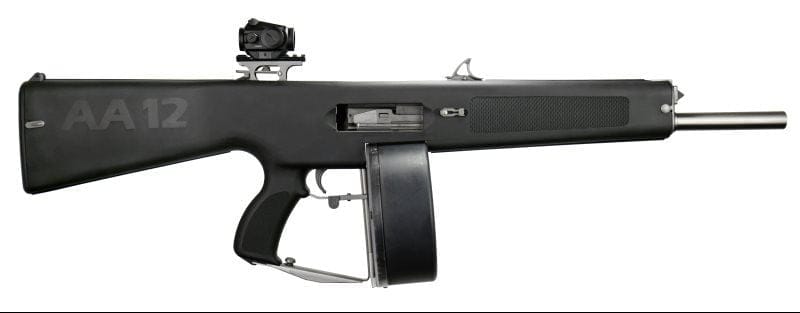










 Titan ICBM missiles steered entirely by slight change of exhaust direction of its engine using gimbals, if you can hit something 16.000 km away using this ancient "magic", bolts should work perfectly too...
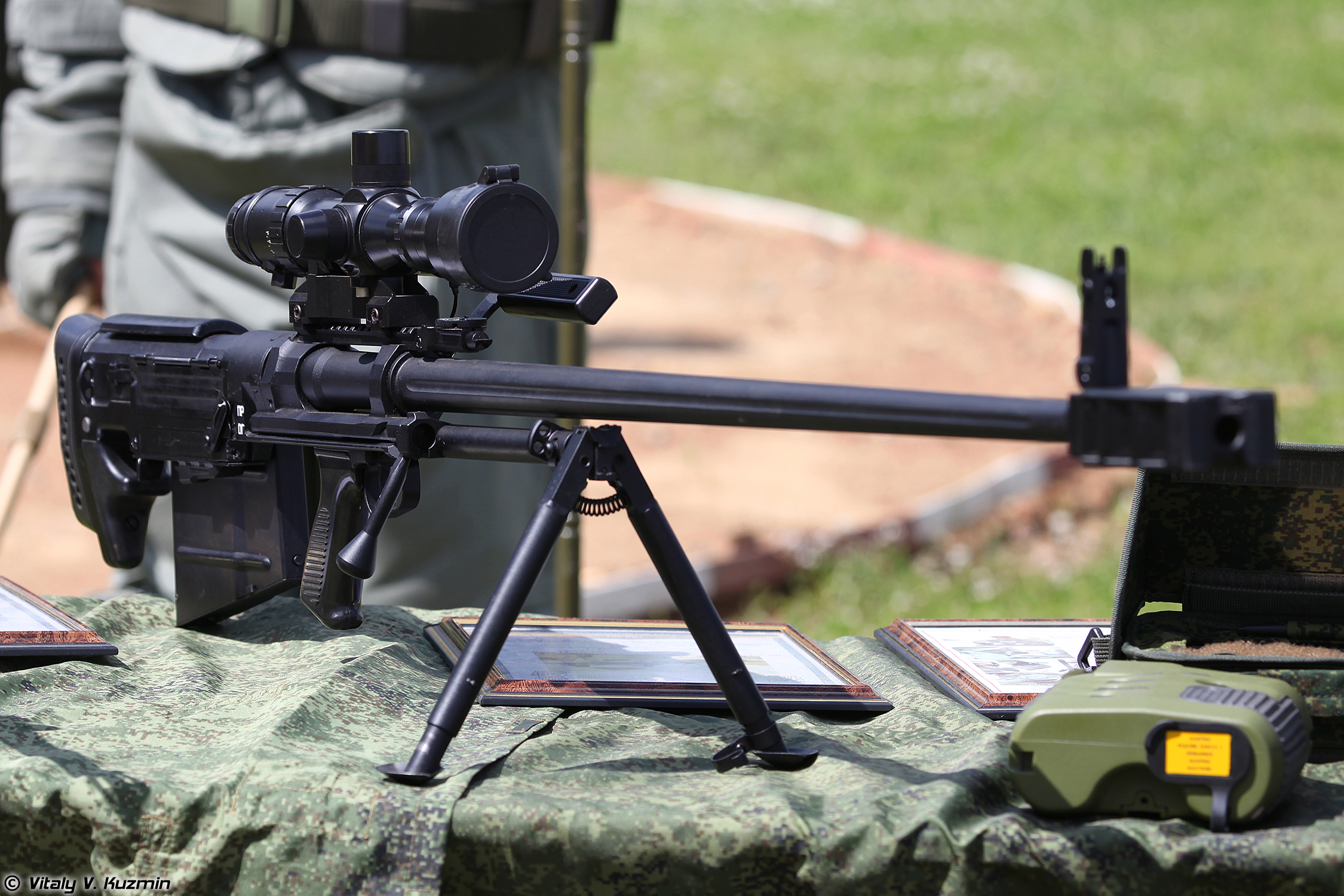
 .
.