| Author |
Message |
 |
|
|
|
|
Advert
|
Forum adverts like this one are shown to any user who is not logged in. Join us by filling out a tiny 3 field form and you will get your own, free, dakka user account which gives a good range of benefits to you:
- No adverts like this in the forums anymore.
- Times and dates in your local timezone.
- Full tracking of what you have read so you can skip to your first unread post, easily see what has changed since you last logged in, and easily see what is new at a glance.
- Email notifications for threads you want to watch closely.
- Being a part of the oldest wargaming community on the net.
If you are already a member then feel free to login now. |
|
 |
2012/12/09 21:48:25
Subject: Is warhammer based on actual historical periods and was this done on purpose or not?
|
|

Stalwart Space Marine
|
For my school exams I am working on a paper wherein I will be comparing the Warhammer 40,000 universe to four historical periods, Roman times, medieval times, early modern times and the world wars. To do so, I am gathering information about Warhammer and its origins, and that is the reason of this post.
I would like to ask a couple of questions about how the Warhammer universe is created and if there are links to historical facts, i.e. Space Wolves being Norman lookalikes.
These are my questions:
1. Who invented the Warhammer 40,000 universe/setting?
2. Do you see, as inventors, parallels between Warhammer 40,000 and our history? If so, can you give examples and were they intentional?
3. How have the inventors of the Warhammer 40,000 universe made the names of planets, armies and famous persons in the universe? (for example, why is it that Catachan will always remind me of a jungle?)
4. Are there armies are based on our forefathers, a simple example; are the Dark Eldar based on the German Blitzkrieg tactics, or perhaps is the Imperial guard a futuristic look on World War I?
5. Do you know of other studies or publications of historical links to the Warhammer 40,000 universe?
I sent this as a mail to Games Workshop but I did not get an answer (yet)
But I'm still looking for answers, and that's how I got here.
would you please if possible post your resource together with your answer so I can verify it.
|
2500 pt of deathwatch 
1250 pt nidz 
|
|
|
 |
|
2012/12/09 21:52:12
Subject: Is warhammer based on actual historical periods and was this done on purpose or not?
|
|

Trazyn's Museum Curator
|
This should answer most of your questions. http://en.wikipedia.org/wiki/Warhammer_40,000 also here (maybe) http://tvtropes.org/pmwiki/pmwiki.php/TabletopGame/Warhammer40000 Yes, there are parallels between history and Wh40k, as the wh40k setting is meant to be a parody of humanity's darkest moments. -The Decadence of the Dark Eldar is reminiscent of some of the more extreme elements of the roman empire (Particularly Caligula) crossed with Marquis de Sade, crossed with some old English folk myths. -The IoM is meant to be a blend of the Roman Empire, the Catholic Church, and pretty much every despotic regime in existance. - Some regiments of the IG are based off of real military groups, and even movies. Catachans are based off of Rambo, Cadians are a blend of modern armies, Steel Legion are WWII Germans, DKoK are a cross between WW1 French and German soldiers, Valhallans are Soviets, etc. There's a thread that explains this better here : http://www.dakkadakka.com/dakkaforum/posts/list/493381.page - Much like the IG, Space Marine Chapters are often themed. > Space Wolves are a cross between Vikings and Werewolves > Blood Angels are a cross between Greco-Romans and Vampires > White Scars are Mongols > Ultramarines are Romans > I'm not entirely sure, but I think the Raven guard were inspired by Edgar Allen Poe, and as such have a slight gothic feel to them. > Black Templars are based off of Templars (Surprise surprise!) - The entire setting takes heavy influence from the Cthulu Mythos, various other mythologies (Judeo-Christian, Greek, etc.), and sci fi writings. In fact, Warhammer 40k in general is highly derivative, taking influence from a plethora of sources. In RT (1st edition of Warhammer), there was a character named "Obi-wan Sherlock Clouseau" ( http://www.belloflostsouls.net/2010/04/most-awesome-40k-character-of-all-time.html)
|
|
This message was edited 3 times. Last update was at 2012/12/09 22:11:47
What I have
 ~4100 ~4100
 ~1660 ~1660
Westwood lives in death!
Peace through power!
A longbeard when it comes to Necrons and WHFB. Grumble Grumble
|
|
|
|
|
2012/12/09 22:19:50
Subject: Re:Is warhammer based on actual historical periods and was this done on purpose or not?
|
|

Possessed Khorne Marine Covered in Spikes
|
The one that comes to mind to me aside from the IG options, is the Tau. Their philosophy reminds me of Buddism, like Shaolin monks who are generally passive and fight when they need to.
|
 WAAAGH!!! WAAAGH!!!
|
|
|
|
|
2012/12/10 00:02:44
Subject: Is warhammer based on actual historical periods and was this done on purpose or not?
|
|

[MOD]
Otiose in a Niche
|
I'll give this a stab...
1. Who invented the Warhammer 40,000 universe/setting?
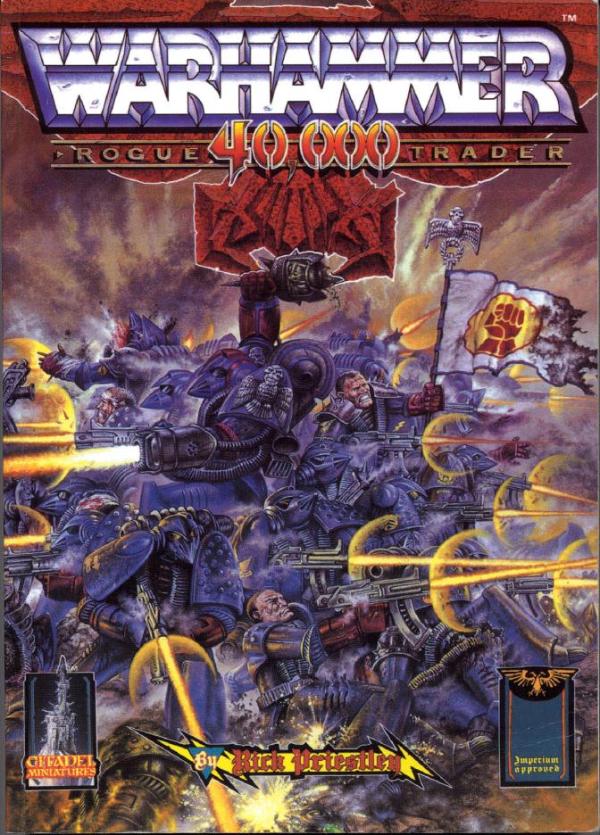
Rick Priestly is credited as the author of the first Warhammer 40k book, Rogue Trader. He's left GW but can be found on Facebook, it might be good to contact him.
Obviously a lot of other folks worked on it as well but his name on the cover.
If you can get a copy of it, there are notes that will help your thesis a lot.
2. Do you see, as inventors, parallels between Warhammer 40,000 and our history? If so, can you give examples and were they intentional?
As a long time fan I'd say 40k's historical roots are one of the keys to its success. Unlike a lot of other science fiction universes it instantly feels familiar with the use of Latin, the names and images derived from European history and obvious parallels to the real world.
The Imperium from it's very name onwards is based on the Roman Empire, the Holy Roman Empire and the Catholic Church. Space Marines are based on Roman Legions with the 2 lost primarchs corresponding to 2 lost legions.
It's also equally influenced by pop culture and science fiction. Frank Herbert's Dune books (themselves heavily based on European history), Issac Asimov's Foundation Series, Michael Moorcock's Eternal Champion books, Star Wars and Star Trek all influenced it. Dune especially is the clearest with Navigators, the God-Emperor and other terms lifted directly and other ideas like Space Marines and Sisters of Battle coming from there. If Warhammer Fantasy is GW's version of Tolkien then 40k is their version of Dune.
3. How have the inventors of the Warhammer 40,000 universe made the names of planets, armies and famous persons in the universe? (for example, why is it that Catachan will always remind me of a jungle?)
Many names are shallow or deep puns and references. IE Cadia, a cold world of glaciers and mists is Canada. Necromunda, probably the most famous 40k world is just Death World in Latin. Other names are from people they knew or famous people slightly changed or translated into another language. Sly Marbo is Sylvester 'Sly' Stallone + and anagram of Rambo.
4. Are there armies are based on our forefathers, a simple example; are the Dark Eldar based on the German Blitzkrieg tactics, or perhaps is the Imperial guard a futuristic look on World War I?
Many IG regiments are based on historical armies, often more than one. I don't think Dark Eldar tactics are an example of a real world influence but the Eldar Craftworlds all have names from ancient Celtic festivals. Ork Storm Boyz are a parody of Nazi stormtroopers, this was especially clear in Rogue Trader days when they were 'rebellious youth' who enjoyed marching and polishing their boots.
5. Do you know of other studies or publications of historical links to the Warhammer 40,000 universe?
I can't think of any off hand...
|
|
|
|
|
|
2012/12/10 13:29:12
Subject: Re:Is warhammer based on actual historical periods and was this done on purpose or not?
|
|

Regular Dakkanaut
West Browmich/Walsall West Midlands
|
on the historical note- GW have been rather cheeky as they have "borrowed" many historical ideas/tactics etc and put them into 40k, despite having done 40k for close on 10 years i'm still finding new influences.
the imperium sort of represents the late roman empire when it was besieged on all fronts by the barbarians ( thats all non- imperial armies  ) with chaos being the real bad guys, perhaps a slight hint of attila the hun...
Space marines- where do we start, first of Knights in space with guns... then we've got Vikings, Romans, Greeks and other influences, the real cheek is the Grey Knights representing the Spanish Inquisition  very well written as not to offend anyone.
The guard have many references to real life nations obviously...
as to whether they did it on purpose, well they must have done to an extent since anyone with a slight interest in world history will notice the subtle hints all over the place...
good luck with your paper btw 
|
A humble member of the Warlords Of Walsall.
Warmahordes:
Cryx- epic filth
Khador: HERE'S BUTCHER!!!
GW: IG: ABG, Dark Eldar , Tau  Black Templars. Black Templars.
|
|
|
|
|
2012/12/10 14:34:57
Subject: Re:Is warhammer based on actual historical periods and was this done on purpose or not?
|
|

Painting Within the Lines
Hamburg Germany
|
2. Do you see, as inventors, parallels between Warhammer 40,000 and our history? If so, can you give examples and were they intentional?
While many single themes of the wh40k universe have parallels in or are modelled after paragons in real history, the general setting itself is not rooting there. The premise that every faction is at war with every other (local alliances not included) is to ensure that you can clash every faction against every other (even against itself), thus providing maximum conflict potential for a game of conflict.
In real history you will see there were always major scale alliances in every conflict. The roman empire had allies (in fact started as a city that started dominating and incorporating its allied city-states) and through its whole history always tried to make allies with forces that might be a threat, but were to powerful to overcome. In WW2, Hitler made allies with Japan and Italy and in the beginning even with soviet russia although every of these allies was considered to be inferior race. In WW1 you have again the Kaiserreich and Austria as allies against the Entente. Napoleon dominated an alliance of sattelite states against his united enemies, and for a long time it was not sure which side Russia would settle on. During the 7 years war you have changing coalitions. And so on and so on... The concept that you simply cannot have peace between factions although you fight alongside against third parties occasionally exists only in theory with the "aryan" concept of Nazi Germany. But even then it would have been one faction against the allied rest of the world.
In 40k, alliances are always restricted to local splinter-forces on single occasions. Alliances between whole factions are unthinkable.
4. Are there armies are based on our forefathers, a simple example; are the Dark Eldar based on the German Blitzkrieg tactics, or perhaps is the Imperial guard a futuristic look on World War I?
Actually I would assume Dark Eldar tactics are an interpretation of the viking raids on the British Isles. They come out of nowhere swift like the wind, on galleon-like, light built and very agile barges, grab as many slaves as they can and then dissapear as fast as possible, again into nowhere. And their name is the inscripture of evil itself. So while actual Dark Eldar background is a complete other story, this image is a perfect description how the christian world experienced and described the vikings.
So the Dark Eldar are a good example of how myth-knitting works in 40k factory. Take archetypes, myths and cliché pieces from our reality and merge them together as it seems fit, never being completely one or the other thing. In this case mischievous, child-robbing and evil-bearing dark elves from the underworld, and cruel, slave robbing and evil viking raiders from overseas.
|
|
This message was edited 1 time. Last update was at 2012/12/10 14:36:36
|
|
|
|
|
2012/12/10 16:45:29
Subject: Is warhammer based on actual historical periods and was this done on purpose or not?
|
|
Potent Possessed Daemonvessel
|
The Rick Priestly universe is a very different place from the current 40K universe. You can no longer pin it down to a single (or even small group) of authors.
Another problem is a lot of the source material for the universe is other sci-fi/fantasy, rather than any real events. For example, Space Wolves aren't so much based on vikings, but rather pop culture's stereotype of vikings which has very little to do with real vikings.
|
|
|
|
|
|
2012/12/10 18:42:46
Subject: Is warhammer based on actual historical periods and was this done on purpose or not?
|
|
Stalwart Space Marine
|
hey,
I thank you all very VERY much for all the help it gets me somewhat further in shaping my opinion towards warhammer, but my biggest problem now is that I can not trust any of my sources... not to offend you 
It will not be enough that 'someone on a forum' said this, I can't built a writing on that (unfortunately)
so would you guys please be so kind to help met get usable resources, unlike for example the Lexicanum, witch offers GREAT information, but can't be relied on...
and that's so far my biggest issue, to be able to rely on information I find.
but still, thanks for the help so far!
|
2500 pt of deathwatch
1250 pt nidz
|
|
|
|
|
2012/12/10 18:59:05
Subject: Re:Is warhammer based on actual historical periods and was this done on purpose or not?
|
|
Painting Within the Lines
Hamburg Germany
|
My advise: directly prove these conclusions instead of citing sources. Use the codices, the novels, white dwarf magazine, whatever you can lay your hands on. On lexicanum most of the time there is a source named for every information.
For example, use the thread in this forum segment about historical paragons of the imperial guard armies as a guide what to prove, then use the pictures (you can name the citadel catalogue as a soucre f.e.) to compare them directly to historical evidence. You can then state that you were inspired by the interne community, but did the prove by yourself.
|
|
|
|
|
2012/12/10 19:06:54
Subject: Is warhammer based on actual historical periods and was this done on purpose or not?
|
|

Twisted Trueborn with Blaster
Fredericton, NB
|
Short of GW telling you something in writing, or the use of your own literary criticism skills, there is nothing to back up your paper as a hard source.
To answer your questions:
1. Rick Priestly (and others who were at GW at the time)
2. Flawed premise. Warhammer 40k is the ultimate melting pot of Science Fiction and Fantasy literature, it is made up of elements drawn from there, which are in turn reflections of elements of human history...but to draw historical parallels directly is like trying to read a third generation copy of a photocopy.
3. Again drawn from literature and history (sometimes at random)
4. Armies are all based in historic or literary norms. Although some have aesthetics which differ from their actually usage.....DE are pirates plain and simple.
5. To my knowledge there is no academic survey or study of the 40k universe...as it is far too niche. It is something, as a lit major, that I would love to write about, but which would have very little academic weight or purpose.
|
Know thy self. Everything follows this.
|
|
|
|
|
2012/12/10 19:53:11
Subject: Is warhammer based on actual historical periods and was this done on purpose or not?
|
|
Trazyn's Museum Curator
|
Apparently, there was a guy on the forum who did write a paper on Wh40k.
Forgot who it was though. Its been a while.
|
What I have
~4100
~1660
Westwood lives in death!
Peace through power!
A longbeard when it comes to Necrons and WHFB. Grumble Grumble
|
|
|
|
|
2012/12/10 21:45:50
Subject: Is warhammer based on actual historical periods and was this done on purpose or not?
|
|
Trustworthy Shas'vre
|
If I were to assign a general historical era to 40K I would pick a medieval world with the Imperium representing the Holy Roman Empire, the Eldar and Dark Eldar representing the scattered points that remained of the old Roman Empire and the corrupted Byzantine Empire respectively. The Orks represent the Barbarian hordes while Chaos represents the near constant wars regarding Heresey.
Tau, being the new empire in the east that follows a new religion, possesses great science and may rise to swallow the Imperium represents the rise of the Islamic Caliphate. The Tyranids are a good metaphor for either The Black death or the great hordes from the steppes that occasionally appeared to wreak havoc. The Necons are a tie in to another ancient empire, Egypt, but fitting them into the medieval narrative is pretty tricky.
Individual elements within 40K are somewhat varied in origin, so won't necessarily fit the Medieval interpretation.
|
Tau and Space Wolves since 5th Edition. |
|
|
|
|
2012/12/10 22:20:29
Subject: Is warhammer based on actual historical periods and was this done on purpose or not?
|
|
[MOD]
Solahma
|
40k is based on 4 historical periods:
Blackadder

Blackadder II

Blackadder the Third

Blackadder Goes Fourth

|
|
|
|
|
|
2012/12/10 23:22:27
Subject: Is warhammer based on actual historical periods and was this done on purpose or not?
|
|
[MOD]
Otiose in a Niche
|
 HumeyKillar wrote: HumeyKillar wrote:hey,
I thank you all very VERY much for all the help it gets me somewhat further in shaping my opinion towards warhammer, but my biggest problem now is that I can not trust any of my sources... not to offend you
It will not be enough that 'someone on a forum' said this, I can't built a writing on that (unfortunately)
so would you guys please be so kind to help met get usable resources, unlike for example the Lexicanum, witch offers GREAT information, but can't be relied on...
and that's so far my biggest issue, to be able to rely on information I find.
but still, thanks for the help so far!
Seek out GW-related writers who can tell you what historical influences they draw on.
As I mentioned Rick Priestly is on Facebook, so is Dan Abnett and I bet with some work you could track down William King (who basically created the Norse-derived Space Wolf fluff), Andy Chambers (who was the head of the 40k team in the 2000s), Ian Watson (who wrote the very first 40k novel Inquisitor back in the early 90s), Marc Gascoigne (first editor and publisher on the Black Library), and Gav Thorpe (who wrote the Eldar codex and several novels in the 2000s).
If none of them answer look for interviews with them on line. I remember a few good ones with Watson and Abnett about how they approach 40k.
Then you can cite real people who actually made these choices.
Good luck!
|
|
|
|
|
|
2012/12/12 23:35:30
Subject: Re:Is warhammer based on actual historical periods and was this done on purpose or not?
|
|
Combat Jumping Akalis
|
Hey man believe it or not i'm doing something similar. more focusing on the imperial doctrine and its closeness with the catholic church. for example the inquisition and the Spanish inquisition. as well the emperor being a god amongst men and the basis of all that follows. but yes many items in 40k do have real world influences, some harder to find others painfully obvious, (Marbo being an anagram Rambo, and catachans looking like vietnam era marines) others slightly more hidden (i draw some lines between Horus and Judas, and the obvious Emperor and Jesus). Imperium being from the dark ages, Chaos being based off of the Muslims from the great crusades (occupying the holy land as well as being sworn enemies of the imperium). unfortunately these are just the lines i draw between things so i have no way of knowing if they are right or wrong. i hope this helps
(I DID NOT INTEND ANY OFFENSE TOWARDS ANY GROUP! my opinions of this are not based on any forms of racism only what I see from history.)
|
|
|
|
|
|
2012/12/12 23:48:06
Subject: Is warhammer based on actual historical periods and was this done on purpose or not?
|
|
[MOD]
Solahma
|
You're going to have trouble because ... basically we know nothing about the doctrine of the Ecclesiarchy.
We know:
(a) they believe the Emperor is a god BUT
- we don't know if they believe he was also a human being
- we don't know what their definition of god is
- we don't know whether the Emperor is the only god or merely the good/best god
(b) they believe that the (non-mutated) human form is sacred BUT
- we don't know why
- we don't know what "sacred" means to them (considering they also practice penitential mutilation and self-mutilation)
Furthermore, it's not that anything in 40k is based on Catholicism itself but rather that 40k is inspired by certain viewpoints about Catholicism. So, the Inquisition of 40k has very little to do with the Spanish Inquisition itself but the 40k version does take a lot from the 16th-century anti-Spanish propaganda from Britain and the Netherlands (read up on the Black Legend).
|
|
|
|
|
|
2012/12/12 23:54:11
Subject: Is warhammer based on actual historical periods and was this done on purpose or not?
|
|
Deranged Necron Destroyer
|
 Manchu wrote:40k Manchu wrote:40k is based on 4 historical periods:
Blackadder
Blackadder II
Blackadder the Third
Blackadder Goes Fourth
Oh thats good.
|
|
|
|
|
2012/12/13 01:06:42
Subject: Is warhammer based on actual historical periods and was this done on purpose or not?
|
|
[MOD]
Solahma
|
Accurate, no?
|
|
|
|
|
|
2012/12/13 01:46:47
Subject: Is warhammer based on actual historical periods and was this done on purpose or not?
|
|

Hellacious Havoc
Commorragh
|
Manchu wrote:You're going to have trouble because ... basically we know nothing about the doctrine of the Ecclesiarchy.
We know:
(a) they believe the Emperor is a god BUT
- we don't know if they believe he was also a human being
- we don't know what their definition of god is
- we don't know whether the Emperor is the only god or merely the good/best god
(b) they believe that the (non-mutated) human form is sacred BUT
- we don't know why
- we don't know what "sacred" means to them (considering they also practice penitential mutilation and self-mutilation)
Furthermore, it's not that anything in 40k is based on Catholicism itself but rather that 40k is inspired by certain viewpoints about Catholicism. So, the Inquisition of 40k has very little to do with the Spanish Inquisition itself but the 40k version does take a lot from the 16th-century anti-Spanish propaganda from Britain and the Netherlands (read up on the Black Legend).
Confusing...Now I'm starting to wonder - Is 40k that complicated?
|
The Wolves go for the throat. We go for the eyes. Then the tongue. Then the hands. Then the feet. Then we skin the crippled remains, and offer it up as an example to any still bearing witness. The wolves were warriors before they became soldiers. We were murderers first, last, and always."
-- First Captain Sevatar, when asked why the Night Lords aren't the Emperor's sanction force against other Legions.
|
|
|
|
|
2012/12/13 02:00:39
Subject: Is warhammer based on actual historical periods and was this done on purpose or not?
|
|

Horrific Howling Banshee
|
imo the Dark Eldar have a lot more in common to fairies than anything else.
They pop out of nowhere then take you to their own dimension, to torture, rape and you their slave, isn't that familiar?
|
|
|
|
|
2012/12/13 11:42:07
Subject: Re:Is warhammer based on actual historical periods and was this done on purpose or not?
|
|
Painting Within the Lines
Hamburg Germany
|
Garvy wrote:
imo the Dark Eldar have a lot more in common to fairies than anything else.
They pop out of nowhere then take you to their own dimension, to torture, rape and you their slave, isn't that familiar?
totally right concerning fluff. But look at them on the battlefield actually: as I stated above, they come in Galley-like, highly mobile but very light-built vessels. Hey, they have a ship's body, prow, keel, even a mast with sail! They fast-attack, but must not dig in and await incoming. They even have berserk close combatants. That is very viking-style. While the motif of fighting female witches may fit to certain farie types it also fits to Valkyries. Not to forget that the fairie Mythos is also part of norse myths. In the end, because the viking Raider stereotype and one central trope of the Faerie myth both are that of cruel, rapist devilish slavers coming out of nowhere and disappearing again, these two motifs blend very well together.
In my opinion that is the key element of 40k faction design. Using common stereotypes from history ( btw. historical reflection), and blending them together when necessary and / or fitting. So on one hand Dark Eldar are rooted in parts of the Faerie myths. (In the negative parts - the positive part of "Trooping Faeries" blessing the realms, or the part that the same cruel and selfish faeries might help and guide a deserving individual just because they feel so, are left out). On the other hand the Dark Eldar are as firmly rooted in the Viking Raider motif. (Again, the "Noble Viking" part is left out and reserved for the Space Wolves.) Both motifs for themselves do not quite fit, only the combination makes them what they are.
|
|
This message was edited 1 time. Last update was at 2012/12/13 11:43:39
|
|
|
|
|
2012/12/13 12:06:05
Subject: Is warhammer based on actual historical periods and was this done on purpose or not?
|
|
Wing Commander
|
Indeed. Exalt-worthy, even. Probably why I exalted it, come to think of it...
Automatically Appended Next Post:
 Hruotland wrote:Garvy Hruotland wrote:Garvy wrote:
imo the Dark Eldar have a lot more in common to fairies than anything else.
They pop out of nowhere then take you to their own dimension, to torture, rape and you their slave, isn't that familiar?
totally right concerning fluff. But look at them on the battlefield actually: as I stated above, they come in Galley-like, highly mobile but very light-built vessels. Hey, they have a ship's body, prow, keel, even a mast with sail! They fast-attack, but must not dig in and await incoming. They even have berserk close combatants. That is very viking-style. While the motif of fighting female witches may fit to certain farie types it also fits to Valkyries. Not to forget that the fairie Mythos is also part of norse myths. In the end, because the viking Raider stereotype and one central trope of the Faerie myth both are that of cruel, rapist devilish slavers coming out of nowhere and disappearing again, these two motifs blend very well together.
In my opinion that is the key element of 40k faction design. Using common stereotypes from history ( btw. historical reflection), and blending them together when necessary and / or fitting. So on one hand Dark Eldar are rooted in parts of the Faerie myths. (In the negative parts - the positive part of "Trooping Faeries" blessing the realms, or the part that the same cruel and selfish faeries might help and guide a deserving individual just because they feel so, are left out). On the other hand the Dark Eldar are as firmly rooted in the Viking Raider motif. (Again, the "Noble Viking" part is left out and reserved for the Space Wolves.) Both motifs for themselves do not quite fit, only the combination makes them what they are.
So we're agreed, then. Dark Eldar = Faerie-Vikings (or Viking-Faeries)!
|
|
This message was edited 2 times. Last update was at 2012/12/13 12:08:37
 Homebrew Imperial Guard: 1222nd Etrurian Lancers (Winged); Special Air-Assault Brigade (SAAB) Homebrew Imperial Guard: 1222nd Etrurian Lancers (Winged); Special Air-Assault Brigade (SAAB)
 Homebrew Chaos: The Black Suns; A Medrengard Militia (think Iron Warriors-centric Blood Pact/Sons of Sek) Homebrew Chaos: The Black Suns; A Medrengard Militia (think Iron Warriors-centric Blood Pact/Sons of Sek) |
|
|
|
|
2012/12/13 12:30:53
Subject: Is warhammer based on actual historical periods and was this done on purpose or not?
|
|
Rough Rider with Boomstick
|
Dark Eldar are far more like Barbary corsairs off of the 'Barbary Coast' as well as the pirates & slavers off of the Eastern & Western African coasts and the pirates of Malay, Borneo & the Asiatic.
The Norðmann of c8-c11 who went 'Vikingr' was far more interested in valuable loot than slaves - slaves have to be fed and watered and require space. All of those conditions are hard to meet in a slender warship which has room for its crew, their weapons & equipment, their supplies and spare equipment for the ship. Certainly they could squeeze some aboard but it has to be cost-effective for them - will they get a good enough price for them for the cost of feeding & watering them and is it safe enough in that cramped space even with the slaves manacled/restrained? Compare that to the golden/silver altar pieces from a Christian church and the valuables from a few villages and it makes more sense to go for the loot over the slaves.
|
|
This message was edited 2 times. Last update was at 2012/12/13 12:32:14
|
|
|
|
|
2012/12/13 14:52:07
Subject: Is warhammer based on actual historical periods and was this done on purpose or not?
|
|

Ferocious Black Templar Castellan
|
They're actually not. They take their heraldry from the Knights of St. John AKA the Knights Hospitallers AKA the Knights of Malta AKA a whole lot of names. They're mostly based on the Livonian Brothers of the Sword and the Teutonic Order, though.
|
For thirteen years I had a dog with fur the darkest black. For thirteen years he was my friend, oh how I want him back. |
|
|
|
|
2012/12/13 15:16:50
Subject: Is warhammer based on actual historical periods and was this done on purpose or not?
|
|
Ancient Venerable Dreadnought
|
The answer is "Yes. Everything in 40K is derivative." Anyone who has told you otherwise is wrong.
However, what that means is that 40K is designed to feed off of stylistic and cultural elements that people will recognize. That's why it's managed to be so popular. All of the armies are evocative of something you already know, and that's how a lot of players choose their first army. The setting cherry-picks enough elements from different well known cultural and historical elements to grab your attention and create associative relationships. Look at a "What's your favorite Space Marine Chapter?" thread. Inevitably, the very first Space Wolves player will say something to the effect of "I love that they are vikings in space!" Though they aren't really vikings at all, but a mix of a ton of those kinds of elements (though to be fair the Space Wolves are probably the most easily defined as far as their influences since GW has decided to Wolfy wolf every wolf about wolf).
Which is exactly why, in the threads about "What real life armies are Imperial Guard regiments based on?" you get so many answers. It's because there is never one answer. All of the armies are designed to evoke some very basic images for people. Hence why some people see USMC dress blues when they look at Mordians, and others see 18th century Prussians. It's because they are both, and other things.
Remember though, that there a lot of the influences aren't historical, but pop-culture in nature. The Tau, for example, are more Anime Mecha than anything, mostly because GW was trying to rope that market into the game back around 2000. I mean, if your game appeals to a certain demographic, might as well hit all the segments of that demographic, right?
Some of the references are shameless, like Lionel Johnson, author of the poem Dark Angel, lol. Or Sly Marbo. Or the Black Templars "Holy Orbs of Antioch". Others are a slightly more subtle, like Konrad Curze, Primarch of Joseph Conrad, author of Heart of Darkness, and the Dr. Kurtz character from it, or the navigators from Dune (among other things from Dune).
|
|
|
|
|
|
2012/12/13 18:10:43
Subject: Is warhammer based on actual historical periods and was this done on purpose or not?
|
|
Trazyn's Museum Curator
|
 AlmightyWalrus wrote: AlmightyWalrus wrote: They're actually not. They take their heraldry from the Knights of St. John AKA the Knights Hospitallers AKA the Knights of Malta AKA a whole lot of names. They're mostly based on the Livonian Brothers of the Sword and the Teutonic Order, though.
Really? The Iron Cross wasn't a templar thing? EDIT: Turns out it wasn't; it was a modified Teutonic thing. It seems that the Black Templars are a mix of the various knightly orders.
|
|
This message was edited 1 time. Last update was at 2012/12/13 18:14:50
What I have
~4100
~1660
Westwood lives in death!
Peace through power!
A longbeard when it comes to Necrons and WHFB. Grumble Grumble
|
|
|
|
|
2012/12/13 22:33:12
Subject: Is warhammer based on actual historical periods and was this done on purpose or not?
|
|
Combat Jumping Akalis
|
Manchu wrote:You're going to have trouble because ... basically we know nothing about the doctrine of the Ecclesiarchy.
We know:
(a) they believe the Emperor is a god BUT
- we don't know if they believe he was also a human being
- we don't know what their definition of god is
- we don't know whether the Emperor is the only god or merely the good/best god
(b) they believe that the (non-mutated) human form is sacred BUT
- we don't know why
- we don't know what "sacred" means to them (considering they also practice penitential mutilation and self-mutilation)
Furthermore, it's not that anything in 40k is based on Catholicism itself but rather that 40k is inspired by certain viewpoints about Catholicism. So, the Inquisition of 40k has very little to do with the Spanish Inquisition itself but the 40k version does take a lot from the 16th-century anti-Spanish propaganda from Britain and the Netherlands (read up on the Black Legend).
I haven't thought about that, thank you for bringing it up. in all honesty you probably just brought my grade up letter grades by bringing this up.
Now back to the original question. yes it is all based on something, figuring out what maybe a little hard though.
|
|
|
|
|
|
2012/12/13 22:58:46
Subject: Is warhammer based on actual historical periods and was this done on purpose or not?
|
|
[MOD]
Solahma
|
gh05tdemon wrote:in all honesty you probably just brought my grade up letter grades by bringing this up.
Let me know how it works out.
|
|
|
|
|
|
2012/12/14 06:43:48
Subject: Is warhammer based on actual historical periods and was this done on purpose or not?
|
|

Regular Dakkanaut
Ork and Catachan Training Center, Australia
|
Manchu wrote:40k is based on 4 historical periods:
Blackadder
Blackadder II
Blackadder the Third
Blackadder Goes Fourth
Dammit, Manchu. Now I want to see them aain. 
The DeathWatch are kind of based on modern special forces: they have specialist equipment, are completely badass, drawn from different areas of their respective department. EG, Aussie SAS might get a badass dude from one regiment, and a badass dude from another regiment. And also, they are small, surgical strike teams, a role special forces commonly take up. They also have to be really, really badass to stand a chance of getting in the deathwatch.
|
By bolter and honour, by blood and fire, we shall cleanse this galaxy. By Vulkan, and by the Emperor, CHARGE!
Yo Dawgs, I heard you like grimdark, so I put grimdark in yo grimdark in yo grimdark in yo universe that is obviously grimdark.
"On the Anvil of War are the strong tempered and the weak made to perish, thus are men's souls tested as metal in the forge's fire." — Primarch Vulkan |
|
|
|
|
2012/12/16 15:46:56
Subject: Is warhammer based on actual historical periods and was this done on purpose or not?
|
|
Regular Dakkanaut
|
 CthuluIsSpy wrote: CthuluIsSpy wrote:
Really?
The Iron Cross wasn't a templar thing?
EDIT: Turns out it wasn't; it was a modified Teutonic thing. It seems that the Black Templars are a mix of the various knightly orders.
Black Templars don't use the Iron Cross they use the Maltese Cross - they are similar crosses, in the same way a Sherman MkI tank is similar to a Sherman MkII tank, or the way Mk4 Power Armour is similar to Mk7 Power armour - but they aren't the same.
|
|
This message was edited 1 time. Last update was at 2012/12/16 15:55:36
|
|
|
|
|
|
|



 Fluff for the Fluff God!


