It cost me about £60 for the RTV and resin to make my Tyranid snake-type Termagant bases.
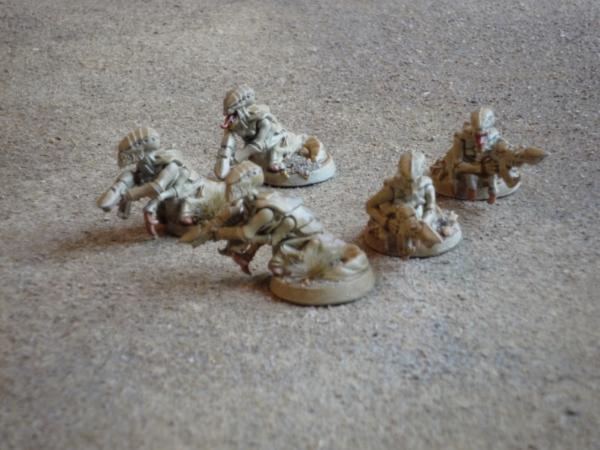
It worked fine as a one piece mould because it's the base and bottom of the creature and the top comes from the normal model and that's where the eye tends to fall. The detail of my casting is pretty sparse, but it doesn't matter when you throw down 66 of them on the table.
I made five moulds in order to be able to use a sensible quantity of resin for every run. You need to measure out a large enough weight of resin to get a fairly accurate mixture so it will cure properly. I measured out 20 grams each of the two compounds, using an electronic kitchen scales accurate to 2g (10%). I had a few that were a bit "weepy" from not being properly cured, but these eventually cured or at least dried up and I was able to use them. It helped that the weeping occurred on the bottom of the base of the casting
I made 66 models, so they cost me about 90p each in terms of the casting materials, and I have moulding compound and some resin left over for another project. Also the moulds are fine in case I want to cast more bases.
The only big mistake I made was on my first casting, when I got a bit of moisture in the mould and it caused the resin to turn into foam. After that I made sure the moulds were completely clean and dry and I never looked back.
From doing that project I learned how to mix the RTV and the resin properly. What I don't know is how to make a good 2-part mould. I know the theory from watching tutorials, but it takes a real project to learn the technique properly.


