Over the last decade or so I've done the occasional painting project for horse and musket era gaming in different scales but none stuck enough that I actually put any force together large enough to really game with. Usually I'd paint a few test figures, try out the rules with a buddy with empty bases and lose interest and ebay the stuff. The strange this is that I'm incredibly interested in the period. I'm always reading books, watching documentaries and listening to lectures and podcasts about various facets of life and history from 1650 to World War 1.
A while back I noticed a local store had a new section of used stuff on consignment and I got a strange painting guide from 1963 and a second edition of the same guide from the early 1970s. It was full of strange 40mm and 54mm figures (the 2nd edition was dominated by the 1/32 scale plastic figures that flooded the market in the 60s). There was a charm to the figures, their style and the approach everyone seemed to be taking. I thought it was an interesting read but didn't really think people did things that way anymore.
Turns out I was wrong. They do. Like all things nostalgic, things get brought back when the generation that did them as kids hits retirement. And the people who were there gaming in the 60s and 70s with the strange painting style and rules approach are starting up retirement businesses and spending their golden years doing what they love. I may be a bit more than half their age, but I'm definitely happy to see the approach return.
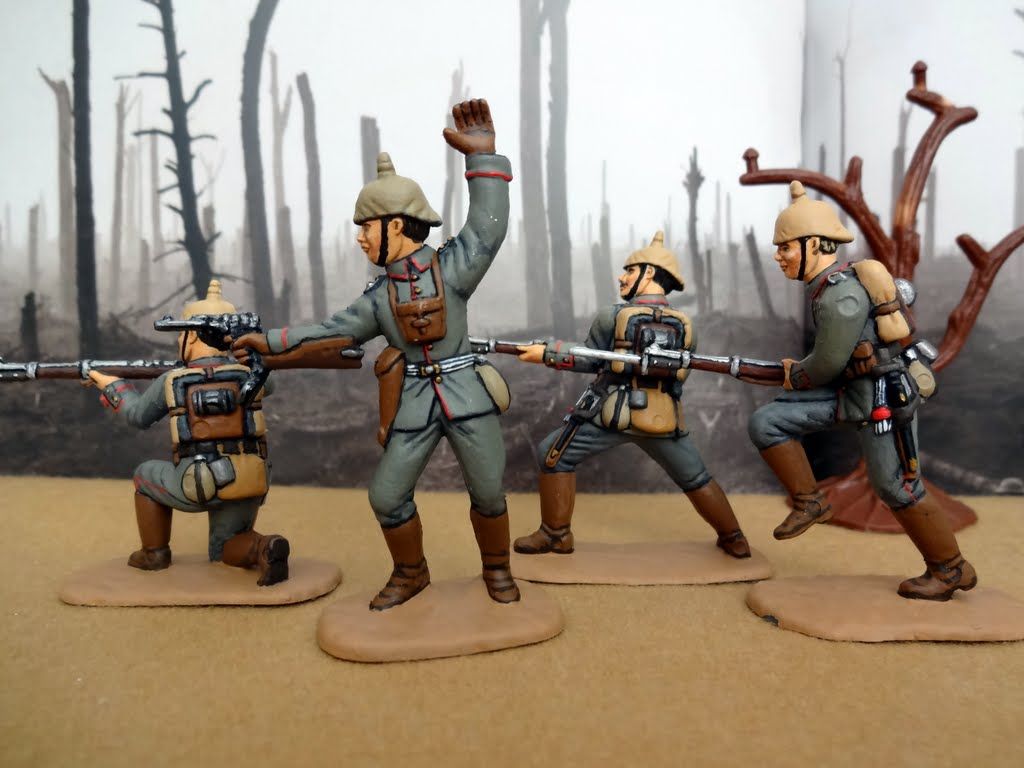
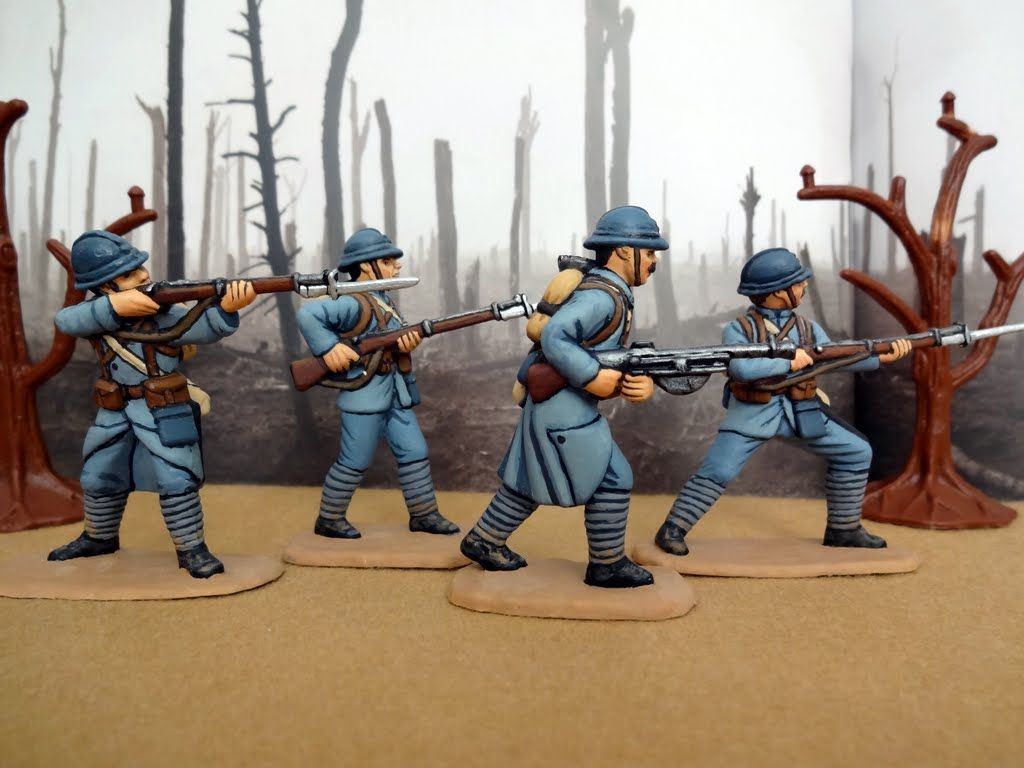
Here are some pictures of the type of figures and the approach to both painting and gaming that I'm talking about. They might click with you or they might make you go "that looks terrible!"
As you can see, there's lots of single figures rather than stands or elements and when movement trays are used, they're largely for convenience as the rules will often reference measuring to the officer or flag rather than the edge of the movement trays. Lots of duplicate poses as well. The soldiers end up looking very uniform and like they're acting in concert a bit too well

The painting style is often block painted with heavy black lining. Or no shading and a heavy gloss coat. I plan on going with really high contrast black lining like in the first couple of pictures. There was a lot of commonality in uniforms in the 18th century, so I'll probably end up using the same figures for multiple nations with only the colour of the uniforms distinguishing them. It takes a very, very keen eye to distinguish a Swedish Carolean from a French fusilier from the same decade.
The rules for these types of games often don't concern themselves with ground scale or time scale, or even figure ratios. Many horse & musket rules sets are based on a unit representing a certain type of formation and have set figure ratios like each figure represents 24 men. The games often have only a few distinguishing troop types like infantry, cavalry, skirmishers, sappers, etc., and usually there aren't specific model stats. Army lists are usually non existent. It's all scenario based or even randomly determined (like literally roll 5 times on this table and that's what you get) . The early 80s saw an increase in the concentration on "realism" and "accurate simulation" that just isn't present here. Similarly things like army list tweaking is a latter invention not really present in these games either.
The other thing that seems to dominate this approach is free rules. Most of the old rules from the 1960s and 70s are impossible to find, but are still under copyright. And given the relative simplicity of the games, it's often easy enough just to put a few pages of rules together as a PDF and go from there. So there's a lot of choose from. I did end up playing one test game using poker chips as I don't have enough figures yet. I played using the free miniature wargaming handbook from All The King's Men. While it's made for 54mm, it's pretty much scale agnostic.
The game was utterly fantastic. You can activate the same unit multiple times per turn, but each time you do it gets worse and resets to normal performance each turn. The game uses a deck of cards and when your suit comes up you can activate a unit. So you can be really daring with a single unit and activate it two or three times in a row if that's what you need to do, but the soldiers will tire and accomplish less as you go. It's one of those simple rules that produces complex implications type of game. The PDF can be found on the right of the page below:
http://allthekingsmentoysoldiers.com/ I remember seeing some people paint some 54mm Napoleonics at the last regional convention and they had a Model Soldier Society sign on their table, so I think I'll go to their next monthly meeting and see if anyone else locally is into gaming with them. Armies In Plastic makes 18th century stuff and they're the ones that made those WW1 cartoony toy soldier figures in the pictures in the spoiler tags above, so I might go that route to start. Though I must admit the All The Kings Men metals look really good too.