Yellow doesn't have to be evil. I think the reason a lot of people struggle with is that they expect it to behave like many wargame paints where one or two coats will work or they attempt to paint it over a black undercoat (which will make you wanna pull your hair out). As has been said above, many thin coats over white will yield the best results.
I use the Minitaire yellows by Badger. Yes, they're airbrush paints but they work just fine with a brush and I personally like them better than my Vallejo Game Color for painting yellows. I have complete sets of both lines and use both for different applications, but the Minitaire yellows are especially good for brush painting. I do thin them slightly with water/flow-aid or with airbrush thinner. The base coat can be in the thicker side, but over reducing is best for the midtones and shadows because it will give better control. Patience is key, but the results are worth it.
Here's the process:
Base coat white.
Many thin layers of the brightest yellow. Wait until the previous layer is dry before applying the next. Minitaire paints are notorious for drying quickly (too fast for airbrush use in some cases, but that's another discussion) so it won't take long.
Apply the next darkest yellow (midtone) in thin layers as above.
Apply the shade in thin layers as above.
Bonus points if you apply a purple wash or ghost tint in the crevices. (Purple and yellow are compliments, so a tiny bit of light purple wash in the darkest recesses will make it pop.)
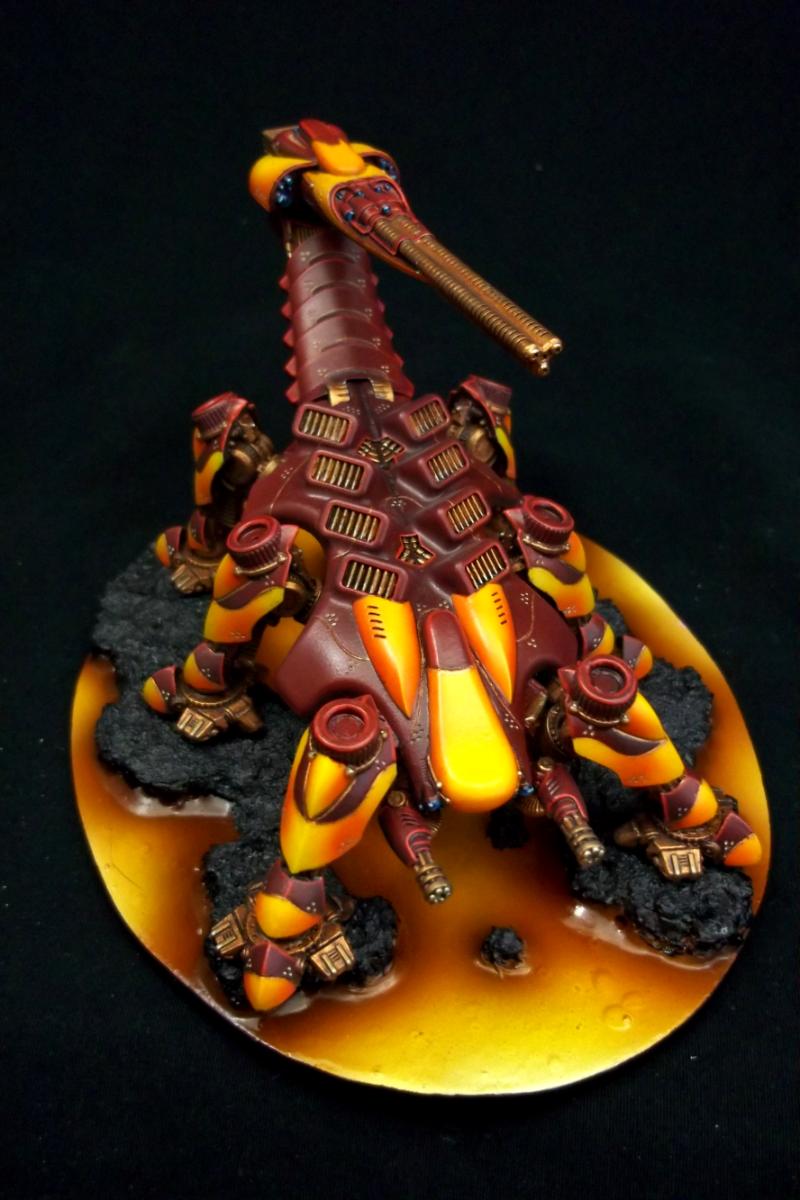
Here are the specific colors I used. It was initially done with an airbrush, but touchups due to masking, handling, and learning mistakes were done with a regular brush. I've done the entire process with a regular brush on smaller units.
1. Base / Edge Highlight: Minitaire 121 Irradiated Yellow
2. 1st Shade: Minitaire 125 Warning Yellow
3. 2nd Shade: Minitaire 126 Pumpkin
4. 3rd Shade: Minitaire 129 Scorching Red
5. Ghost Tint: Minitaire 170 Yellow over entire surface.
I later applied Ghost Tint: Minitaire 173 Magenta over the entire dark red area (1 Magenta : 5 H2O) for the purple element.
Here's a sample of the results.
It's not hard, but it is time consuming. How far you want to go with something like this will depend upon the number of troops, any time constraints, and your overall level of patience.




 Legion: Dark Angels