| Author |
Message |
 |
|
|
|
|
Advert
|
Forum adverts like this one are shown to any user who is not logged in. Join us by filling out a tiny 3 field form and you will get your own, free, dakka user account which gives a good range of benefits to you:
- No adverts like this in the forums anymore.
- Times and dates in your local timezone.
- Full tracking of what you have read so you can skip to your first unread post, easily see what has changed since you last logged in, and easily see what is new at a glance.
- Email notifications for threads you want to watch closely.
- Being a part of the oldest wargaming community on the net.
If you are already a member then feel free to login now. |
|
 |
2013/07/26 15:43:58
Subject: How to use weathering poweder?
|
|

Battleship Captain
|
Howdy Dakka,
I am currently painting my Eldar Iyenden style army. I have chosen a bone colored scheme. Here is a WIP
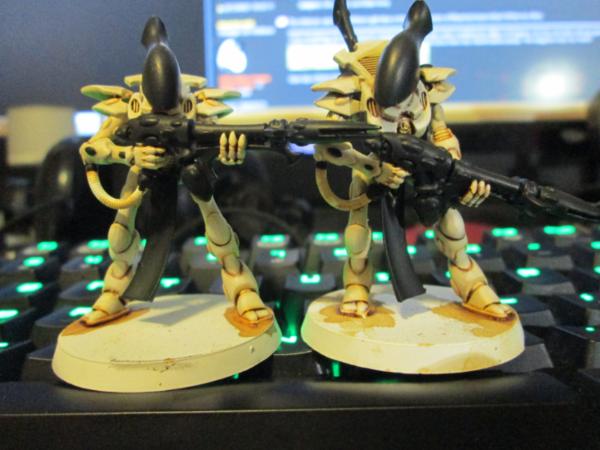
I want to seek to use powder to do a dusty weathering to the models. I want them too look old and worn, and used a lot (not so much battled scared) but have lived for eons. Have a few questions as such.
1. What powders do you recommend?
2. What should I use to lock the dust on to the model?
3. What can I do if I make a mistake?
Links to any tutorials are appreciated.
|
|
|
 |
|
2013/07/26 17:03:12
Subject: How to use weathering poweder?
|
|

Mysterious Techpriest
|
hey panda,
1. I use mig powders, I've not tried any of the other brands, but I quite like them, there is a decent range of colours with a very fine particle size.
2. I lock mine on with white spirit, leavving a powdery residue when dry. You can either:
- mix it with the powder and apply as a paste/paint then dust when dry, this leaves quite thick areas of powder and is good for mud and rust.
- or dust on and lightly apply the spirit then brush off leaving dust in the recesses.
there are other brands mig and I think vajello and/or ak make a powder fixer.
just don't use varnish on the top of the powders as it will ruin the effect
3. just dust it more with a brush or use white spirit and "wash" it off. I apply a coat of satin varnish underneath before I apply powders just in case.
hope it helps
N.
|
|
|
|
|
|
2013/07/26 17:08:42
Subject: Re:How to use weathering poweder?
|
|
Bane Knight
Inverness, Scotland.
|
|
|
|
|
|
2013/07/26 17:16:42
Subject: How to use weathering poweder?
|
|
Battleship Captain
|
OneManNoodles wrote:hey panda,
1. I use mig powders, I've not tried any of the other brands, but I quite like them, there is a decent range of colours with a very fine particle size.
2. I lock mine on with white spirit, leavving a powdery residue when dry. You can either:
- mix it with the powder and apply as a paste/paint then dust when dry, this leaves quite thick areas of powder and is good for mud and rust.
- or dust on and lightly apply the spirit then brush off leaving dust in the recesses.
there are other brands mig and I think vajello and/or ak make a powder fixer.
just don't use varnish on the top of the powders as it will ruin the effect
3. just dust it more with a brush or use white spirit and "wash" it off. I apply a coat of satin varnish underneath before I apply powders just in case.
hope it helps
N.
These tips sound really useful, but I am kinda confused on the white spirit application. So the spirit can take off dust as it seals? I am slightly lost at what you are saying sorry.
Edit: Now that I watched the video. I understand what you are saying! Superb help thank you.
 thanks!
|
|
This message was edited 1 time. Last update was at 2013/07/26 17:27:21
|
|
|
|
|
2013/07/26 18:16:40
Subject: How to use weathering poweder?
|
|
Gargantuan Gargant
|
For light dustings, I tend to apply the pigment dry, then set it with rubbing alcohol (70% isopropyl), but the method is the same with any fixer. Brushing over the pigments (with a wet brush, at least) will shift them around, regardless of what you're using. If you want them to collect only in recesses, stroke the whole area gently with a broad flat or filbert brush - most of the pigment will be dragged off of the flats, settling in the crevices. If you want them to stay put, just touch a fixer-soaked brush lightly to the surface here and there, letting capillary action carry the fixer throughout all the pigment without disturbing it, overmuch. If you don't completely flood the area, causing runs and drips, it'll dry looking pretty close to what you started with.
Mistakes can simply be washed off. Alcohol and white spirit are rarely a match for running water and a bit of gentle scrubbing (you can use the same brush). They'll come loose even more easily with more of the fixer acting as a solvent.
As for brands, I've heard good things about MIG, Secret Weapon, Vallejo, and AK. I've only ever used the APJ pigments, though, which weren't available very long, and ground pastel chalks, so I can't comment on any specific quirks or differences between the usual suspects.
I would disagree with OneManNoodles, though, on one point - varnishing doesn't automatically ruin everything. "Naked" pigment generally does look more realistic and varnishing does tend to diminish the effect, but you can account for that in application. Plenty of wargamers who use them intentionally overdo their applications, at least slightly, knowing that the varnishing necessary for the effect's longevity will dial things back down to where they want them. For a display model, by all means leave the pigments uncovered - even unfixed - but know that they won't hold up to even relatively gentle handling over the course of a few games or the mild but repeated abrasion of being carried in foam trays.
|
The Dreadnote wrote:But the Emperor already has a shrine, in the form of your local Games Workshop. You honour him by sacrificing your money to the plastic effigies of his warriors. In time, your devotion will be rewarded with the gift of having even more effigies to worship.
|
|
|
|
|
2013/07/26 18:22:47
Subject: How to use weathering poweder?
|
|
Legendary Master of the Chapter
|
IIRC, you can dilute pigment powder in iso and brush it on like a wash or airbrush with it.
you could mix the colored dust you like and airbrush them from top down to look like dust has collected on them.
|
 Unit1126PLL wrote: Unit1126PLL wrote: Scott-S6 wrote: Scott-S6 wrote:And yet another thread is hijacked for Unit to ask for the same advice, receive the same answers and make the same excuses.
Oh my god I'm becoming martel.
Send help!
|
|
|
|
|
2013/07/26 18:50:26
Subject: How to use weathering poweder?
|
|
Mysterious Techpriest
|
I agree with oadie, I know I tend to over do it with varnish, I'd really like to know the technique for keeping as much of the pigment's effect as possible whilst having it in place
I only use the pigments on the legs/feet or recesses of infantry models and bases and don't have a problem, typically these parts are not touched and the rim of the base will guard the top from rubbing in a foam case, tanks are another matter...
|
|
|
|
|
|
2013/07/26 19:33:26
Subject: How to use weathering poweder?
|
|
Gargantuan Gargant
|
Not really a technique, per se - it's really just applying it sparingly. Do your main protective varnishing before applying pigments, then give everything another light matte dusting after they've been applied and fixed. The pigment can still absorb moisture, so it will tend to soak up a bit of the final coat (obviously more pronounced on thicker deposits than light distings). This binds the pigment together into its own protective shell, more than building a thicker shell over it. That's what helps preserve the look, as much as it can be preserved.
You're entirely right, Noodles, that areas protected by the sculpt may never need more than a light fixing (came on a bit strong, for the sake of argument). Honestly, I've found that alcohol alone makes pigments rather difficult to shift, if you want to soften a blend, for example, but a few passes of a finger are nothing compared to even a few rounds going in and out of a foam tray or a tumble onto a sand-textured table. Exposed parts are likely to lose the effect pretty rapidly without additional protection.
|
The Dreadnote wrote:But the Emperor already has a shrine, in the form of your local Games Workshop. You honour him by sacrificing your money to the plastic effigies of his warriors. In time, your devotion will be rewarded with the gift of having even more effigies to worship.
|
|
|
|
|
2013/07/26 19:58:47
Subject: How to use weathering poweder?
|
|
Battleship Captain
|
oadie wrote:For light dustings, I tend to apply the pigment dry, then set it with rubbing alcohol (70% isopropyl), but the method is the same with any fixer. Brushing over the pigments (with a wet brush, at least) will shift them around, regardless of what you're using. If you want them to collect only in recesses, stroke the whole area gently with a broad flat or filbert brush - most of the pigment will be dragged off of the flats, settling in the crevices. If you want them to stay put, just touch a fixer-soaked brush lightly to the surface here and there, letting capillary action carry the fixer throughout all the pigment without disturbing it, overmuch. If you don't completely flood the area, causing runs and drips, it'll dry looking pretty close to what you started with.
Mistakes can simply be washed off. Alcohol and white spirit are rarely a match for running water and a bit of gentle scrubbing (you can use the same brush). They'll come loose even more easily with more of the fixer acting as a solvent.
As for brands, I've heard good things about MIG, Secret Weapon, Vallejo, and AK. I've only ever used the APJ pigments, though, which weren't available very long, and ground pastel chalks, so I can't comment on any specific quirks or differences between the usual suspects.
I would disagree with OneManNoodles, though, on one point - varnishing doesn't automatically ruin everything. "Naked" pigment generally does look more realistic and varnishing does tend to diminish the effect, but you can account for that in application. Plenty of wargamers who use them intentionally overdo their applications, at least slightly, knowing that the varnishing necessary for the effect's longevity will dial things back down to where they want them. For a display model, by all means leave the pigments uncovered - even unfixed - but know that they won't hold up to even relatively gentle handling over the course of a few games or the mild but repeated abrasion of being carried in foam trays.
I was thinking of using the Humbrol pigments and varnishes to do it simply because the linked video tutorial looked really simply and gave a very effective bind. It also seems cheaper than secret weapon's pigments (namely because its less colors, but larger bottles) I never done a varnish protective coat either, so I will have to look into that.
Desubot wrote:IIRC, you can dilute pigment powder in iso and brush it on like a wash or airbrush with it.
you could mix the colored dust you like and airbrush them from top down to look like dust has collected on them.
Oh neat! I will have to try that. 
oadie wrote:Not really a technique, per se - it's really just applying it sparingly. Do your main protective varnishing before applying pigments, then give everything another light matte dusting after they've been applied and fixed. The pigment can still absorb moisture, so it will tend to soak up a bit of the final coat (obviously more pronounced on thicker deposits than light distings). This binds the pigment together into its own protective shell, more than building a thicker shell over it. That's what helps preserve the look, as much as it can be preserved.
You're entirely right, Noodles, that areas protected by the sculpt may never need more than a light fixing (came on a bit strong, for the sake of argument). Honestly, I've found that alcohol alone makes pigments rather difficult to shift, if you want to soften a blend, for example, but a few passes of a finger are nothing compared to even a few rounds going in and out of a foam tray or a tumble onto a sand-textured table. Exposed parts are likely to lose the effect pretty rapidly without additional protection.
Well I want the effect to last, so protection is what I will have to do. I don't suppose anyone can link me to a matt varnish I can add to my models to protect them? I have never varnished before.
Thanks Dakka for all the tips/info you guys are awesome.
|
|
|
|
|
2013/07/26 20:08:03
Subject: How to use weathering poweder?
|
|
Legendary Master of the Chapter
|
 cormadepanda wrote: cormadepanda wrote:
Desubot wrote:IIRC, you can dilute pigment powder in iso and brush it on like a wash or airbrush with it.
you could mix the colored dust you like and airbrush them from top down to look like dust has collected on them.
Oh neat! I will have to try that.
It appears to be a thing
http://www.youtube.com/watch?v=HVQhd-txLzY
i cant watch at work :(
|
Unit1126PLL wrote: Scott-S6 wrote:And yet another thread is hijacked for Unit to ask for the same advice, receive the same answers and make the same excuses.
Oh my god I'm becoming martel.
Send help!
|
|
|
|
|
2013/07/26 20:49:35
Subject: How to use weathering poweder?
|
|
Battleship Captain
|
 Desubot wrote: Desubot wrote: cormadepanda wrote:
Desubot wrote:IIRC, you can dilute pigment powder in iso and brush it on like a wash or airbrush with it.
you could mix the colored dust you like and airbrush them from top down to look like dust has collected on them.
Oh neat! I will have to try that.
It appears to be a thing
http://www.youtube.com/watch?v=HVQhd-txLzY
i cant watch at work :(
Neat! I don't own an air brush, still thinking about it, but that was nice to see.
|
|
|
|
|
2013/07/27 01:58:38
Subject: How to use weathering poweder?
|
|
Gargantuan Gargant
|
cormadepanda wrote:Well I want the effect to last, so protection is what I will have to do. I don't suppose anyone can link me to a matt varnish I can add to my models to protect them? I have never varnished before.
There are dozens of threads on Dakka about people's favorite varnishes, if you do a search. Personally, I consider Testors Dullcote to be the best, bar none. It's a lacquer, so it's a bit stinkier and takes longer to dry than some sprays, but the quality of the finish simply can't be beat. It's also a touch pricier per volume than other sprays, but that's easily mitigated by using coupons at craft stores that carry it (e.g. Michaels, Hobby Lobby, etc.) and/or using it as a final layer over coats of cheaper acrylic gloss. Even with those drawbacks, I consider it well worth it - it's strong, it goes on smooth, even in thin coats (some thick sprays tend to leave an orange peel texture unless you really lay them on thick), and leaves a nice, even, flat finish. I've yet to have any issues with frosting, either.
|
The Dreadnote wrote:But the Emperor already has a shrine, in the form of your local Games Workshop. You honour him by sacrificing your money to the plastic effigies of his warriors. In time, your devotion will be rewarded with the gift of having even more effigies to worship.
|
|
|
|
|
2013/07/27 04:28:20
Subject: How to use weathering poweder?
|
|
Battleship Captain
|
 oadie wrote: oadie wrote: cormadepanda wrote:Well I want the effect to last, so protection is what I will have to do. I don't suppose anyone can link me to a matt varnish I can add to my models to protect them? I have never varnished before.
There are dozens of threads on Dakka about people's favorite varnishes, if you do a search. Personally, I consider Testors Dullcote to be the best, bar none. It's a lacquer, so it's a bit stinkier and takes longer to dry than some sprays, but the quality of the finish simply can't be beat. It's also a touch pricier per volume than other sprays, but that's easily mitigated by using coupons at craft stores that carry it (e.g. Michaels, Hobby Lobby, etc.) and/or using it as a final layer over coats of cheaper acrylic gloss. Even with those drawbacks, I consider it well worth it - it's strong, it goes on smooth, even in thin coats (some thick sprays tend to leave an orange peel texture unless you really lay them on thick), and leaves a nice, even, flat finish. I've yet to have any issues with frosting, either.
You are exalted!
|
|
|
|
|
|
|
|




