| Author |
Message |
 |
|
|
|
|
Advert
|
Forum adverts like this one are shown to any user who is not logged in. Join us by filling out a tiny 3 field form and you will get your own, free, dakka user account which gives a good range of benefits to you:
- No adverts like this in the forums anymore.
- Times and dates in your local timezone.
- Full tracking of what you have read so you can skip to your first unread post, easily see what has changed since you last logged in, and easily see what is new at a glance.
- Email notifications for threads you want to watch closely.
- Being a part of the oldest wargaming community on the net.
If you are already a member then feel free to login now. |
|
 |
2016/09/06 03:18:03
Subject: Basic tips for speeding up your paintjobs
|
|

Ferocious Blood Claw
|
I manage to devote on average about 2 hours a day to painting, which isn't bad, I suppose. However, when you're a slow painter and you paint a horde army, that can start to feel like a serious slog. Hence the idea of making a list of tips to speed up the process:
1. Batch painting
Suppose you take a group of 20 models (the more similar the paints scheme, the more efficient this method is) and you paint the same element on all 20 models, before moving on to the next step: you prime 20 models, apply basecoat on 20 models, paint the standard color on 20 models, wash 20 models etc. etc.
Pros
- You will save substantial amounts of time, because you won't be changing paints or brushes very often and because there are no downtimes due to waiting for washes or paints to dry - you simply move on to the next model.
- After warming up to a certain color and technique, you tend to get faster and faster. Which leads to the cons.
Cons
- If you find joy in painting, then batch painting is the way to kill that joy. Chances are that you will apply the same brushstrokes of the same color in the same order over and over again, which becomes very tedious, very fast. This is the reason I don't paint in batches but rather in pairs or groups of three models maximum.
__________________
2. Wet Palette
This is my favorite and probably the one factor that accelerated my painting the most. I'll skip the part about water and osmosis, just cutting to che point: A wet palette will keep paint moist as long as the water supply underneath allows it. Which is usually very long.
Pros
- A wet palette will save you a lot of time. Depending on the surrounding environment your paints can potentially stay wet for days on your palette. But even over the course of a 2 hour session, you won't have to constantly dip your brush into your pot/squeeze more paint out of your bottle to re-up your palette.
- You will not have to keep adding water or medium onto your dry palette to prevent your paints from drying out. This is especially useful when you mix your own colors. Instead of worrying about getting the mix right multiple times, you can prepare one large amount that will stay moist and thin for a long time. The constant water supply will also ensure that your paint is thin and runs well.
Cons
- There are some procedures that don't work great with a wet palette. I've had nothing but good results with 95% of the acrylic paints I use, however, some combinations tend to be off balance on a wet palette. For example if you need to have a very precise mix between a flow improver and a paint, chances are a wet palette will mess with the consistency of your paint, due to the added water from your palette.
- Setting up a wet palette will take a bit more time than prepping a dry palette (which usually boils down to having one). The parchment/cookie paper can start curling at the borders and require you to replace it altogether. However, the time thus spent is nothing, compared to the time saved!
__________________
3. Do not correct mistakes
... right away. This might sound like a no brainer, but it wasn't for me. If I banked with the brush onto an unwanted surface, I used to immediately correct it, which usually means prepping brush and color required to correct the part you mistakenly painted over. Now this is the one thing that I tend to do in batches. If I screw up, I'll leave the mistake there, as much as it might bother me, and finish applying all colors I need. After this is done, and usually before starting with washes, I do one correction run, meaning I "scan" and correct all the blues, all the red, all the metals etc. etc.
Pros
- You don't have to prepare paint and brush to correct an area of 0.5 mm².
Cons
- Can't think of any. Really.
__________________
4. "Move" faster
I realize this sounds silly and might be highly subjective, but I found out that on very detailed areas, a very slowly-aimed brushstroke sometimes is less precise than a very quick, confident flick of your brush. The way I go about this is similar to golfers practicing a few empty swings before hitting the ball: I draw a few lines into the air, next to the area I need to cover, to sort of calibrate or zero in on the position of the brush and then just go for it. I'm confident that the rate of mistakes is equal or better than the super slow, anxious approach.
Pros
It's faster.
Cons
It might be all in my head.
__________________
5. (Comission) Airbrush
Here's the thing: I'm not going to recommend buying an airbrush if you consider yourself a "basic" painter like I do. I don't own one myself and I'm still at the point where I ask myself "Do I really need an airbrush?" and the answer is no. However, if you've ever seen one in action, you know that no other procedure gets paint on models more rapidly and more evenly.
I'm not even a fan of the smoothness an airbrush gives to minis, in most cases, but I recently "commissioned" priming and basecoating of about 30 models to someone with an airbrush. I wouldn't pay someone else to paint my minis, but in the case of these two layers, I feel that I can still claim glory and shame for whatever the model looks like after I'm done with it.
Pros
- Priming and basecoating for 30 models took about 15 minutes. Ridiculous.
- The models smell delicious. I'm not joking.
- Extremely smooth surfaces.
Cons
- Extremely smooth surfaces.
- It's not for free (usually).
- You didn't do it all by yourself.
Ok, that's what I can think of for now. Feel free to add or correct or change.
|
|
|
 |
|
2016/09/06 03:43:21
Subject: Re:Basic tips for speeding up your paintjobs
|
|
Incorporating Wet-Blending
|
0.5 Miniature Preparation
* Mold lines: Hobby knife, jeweler's files, and engraving pen ($10).
* Gaps: Vallejo Plastic Putty for small gaps. Needs no kneading or mixing.
* Priming: Zenithal priming (completely spray black, then highlight spray grey, then white). Brush-on primer if painting only one or two mini's.
2.5 Washes.
* Use wash to pre-ink after priming miniatures (white prime, zenithal priming).
* Use washes to thin paint. I find this forces me to mix paints, and keep the paint "undiluted" like water would do. The paint also "flows" off the brush into recesses easier, thus reducing mistakes.
* Don't only think washes are there for "slop and glop". You can apply washes in specific areas like you do basecoats; this is called a controlled wash.
* You can afford a few bucks for brown and black washes, at least. Secret Weapon Miniatures makes a great Stone wash for dungeon bases and game tiles; use with different shades of grey undercoats.
4.5 Prismacolor Brushtip Pens
* Useful for various touch ups and some details like gem stones and eyes.
* Much more convenient than breaking out the paints to fix a small detail you missed.
|
|
This message was edited 1 time. Last update was at 2016/09/06 03:44:40
|
|
|
|
|
2016/09/06 04:06:16
Subject: Basic tips for speeding up your paintjobs
|
|
Longtime Dakkanaut
|
Unless you're a Golden Demon painter (or in that neighborhood) or painting for display, good enough is good enough. This is especially important if you are having to paint a large number of models.
Only buy new stuff as a reward for completing stuff you already have. That encourages you to make progress on your mountain o' minis.
Don't feel bad about 'cheating'. Block color painting with a nice wash(GW and Army Painter are two types I use) can get you really nice results.
|
Thread Slayer |
|
|
|
|
2016/09/06 05:03:03
Subject: Re:Basic tips for speeding up your paintjobs
|
|

Grizzled Space Wolves Great Wolf
|
I find batch painting only really speeds me up if I'm going to be waiting for paint to dry. If it takes me 20 minutes to paint 1 model, batch painting 6 at a time will take me 120 minutes 
The difference is firstly, when you batch paint you produce all the models at once, individually painting 10 models at once you're likely going to get a few models in before it's so mind-numbingly boring that you give up. But if you're doing 10 models, it might still be mind-numbingly boring but you're more likely to push through until you have a finished product. Secondly, anything that takes time to dry, things like washes you usually have to wait for before continuing, so if you batch paint you're less likely to be sitting on your hands waiting. But other than washes most hobby paints dry pretty fast so it's not a big issue.
For my speed painting tips...
1. Prime white or another light colour and use heavily watered down paints and washes. It's faster than working up from a black primer.
2. Use Big Brushes, well, the biggest brush that is practical at the time. You'll lay paint down much faster and also smoother.
3. Plan your scheme to be conducive to speed painting. Paint a model and time how long it takes to do certain tasks, figure out if those tasks can be eliminated or replaced with faster methods and then plan your scheme around it. When I started collecting Orcs I had what I thought was a simple scheme, and it was, but in reality it was a slow scheme to paint, no matter how fast I tried to paint I wouldn't be able to bring it down to less than an hour per model. Now it takes me 20-25 minutes to paint an Orc because I completely changed HOW I paint them.
4. If you have a good technique with a hairy brush, airbrushing PROBABLY won't speed you up. The benefit of an airbrush is improving quality rather than speed, IMO. I spray can prime white and then lay down my basecoat with a large hairy brush just as fast if not faster than an airbrush. Of course it depends on the models, if you're painting tanks or large monsters an airbrush is a real benefit. For infantry, not so much. I'm not saying don't buy an airbrush, I'm just saying if you already have a good hairy brush technique, don't expect an airbrush to speed you up.
|
|
|
|
|
2016/09/06 05:34:34
Subject: Basic tips for speeding up your paintjobs
|
|

Fixture of Dakka
|
I'll add two more to the list 
1. Paint Moar! The more you paint, the faster you get.
2. If you airbrush, spraying subassemblies of different main colors separately and then gluing those together afterwards is a lot less effort and time than masking.
Personally though, I wouldn't get too hung up on the speed. If your goal is to just plow through models to play them, just airbrush fully assembled pieces with a few colors, dip it or drown it in a wash, and call it a day. If your goal is to have models that are as nice as you can reasonably make them without going crazy, just take your time and finish the models when you finish the models.
|
|
|
|
|
2016/09/06 06:04:50
Subject: Basic tips for speeding up your paintjobs
|
|
Grizzled Space Wolves Great Wolf
|
 Talys wrote: Talys wrote:1. Paint Moar! The more you paint, the faster you get.
I've only ever gotten slower with age, lol. My first army was about 60 models large and I painted it in the space of 3 weekends. Never since have I painted an army that fast. Automatically Appended Next Post: Talys wrote:Personally though, I wouldn't get too hung up on the speed. If your goal is to just plow through models to play them, just airbrush fully assembled pieces with a few colors, dip it or drown it in a wash, and call it a day. If your goal is to have models that are as nice as you can reasonably make them without going crazy, just take your time and finish the models when you finish the models.
I both agree and disagree. Aside from that first army (which I stupidly sold) most my armies have taken agggggges to paint, like, years. As such I end up not playing any games with them. You can produce some good looking armies quickly if you take care with speed painting techniques, which is important if you're painting especially large armies or don't have much free time. I tend to make the distinction between "this is for the display shelf" and "this is for the table". The latter I pay attention to how long things take because I never want to be in the same position I found myself with my 'nids, an army that took me years before I had painted enough to play a game, then I quit 40k soon after. For display shelf models, I just take as long as I want, the amount of time usually being how long it'll take me to get bored of working on 1 model.
|
|
This message was edited 3 times. Last update was at 2016/09/06 06:12:04
|
|
|
|
|
2016/09/06 07:06:17
Subject: Basic tips for speeding up your paintjobs
|
|
Fixture of Dakka
|
@Skink - Not too different from me My first 40k army was mostly the original plastic space marines, and I painted about 60 of them (2 boxes, lol... remember when we got 30 in a box??) in record time. And they don't even look terrible!
But it's also important to note that those first couple of boxes, I painted like a demon (non-stop hours) so that I could play with the models, and I just don't do that anymore. To the contrary, the more excited I am about a model, the more time I take to paint it now.
What I meant was that as we get more experienced, we're able to paint to the same level more quickly, or, given the same time inputs, we produce better quality output. A lot of the intermediate level skills like painting straight freehand lines, wet blending, and writing text end up "just working" the first go-around, not requiring correction -- so time is spent on creativity rather than experimentation and re-dos. For example, when I first started painting cloth (robes, tabbards, etc), a given model might take several tries. Bulging muscles, hair, eyes/faces, jewels, glowy weapons -- all the same kind of thing.
|
|
|
|
|
2016/09/06 07:21:55
Subject: Basic tips for speeding up your paintjobs
|
|
Ferocious Blood Claw
|
I try to compromise between a decent time frame and a decent look. The problem is that once I have the mini in my hand and I positively know that I have the capability to make it look much better, I usually still will end up investing all possible effort into it.
Only recently I've started a new AoS army where I try to draw a definite distinction between single models and larger units.
|
|
|
|
|
2016/09/06 08:04:31
Subject: Basic tips for speeding up your paintjobs
|
|
Grizzled Space Wolves Great Wolf
|
Talys wrote:What I meant was that as we get more experienced, we're able to paint to the same level more quickly, or, given the same time inputs, we produce better quality output. A lot of the intermediate level skills like painting straight freehand lines, wet blending, and writing text end up "just working" the first go-around, not requiring correction -- so time is spent on creativity rather than experimentation and re-dos. For example, when I first started painting cloth (robes, tabbards, etc), a given model might take several tries. Bulging muscles, hair, eyes/faces, jewels, glowy weapons -- all the same kind of thing.
I've gotten better over the years, but not faster. I guess if I repainted things I didn't like instead of just moving on to the next model I'd be faster, but I usually find more value in just moving on to the next model.
I do touch up mistakes (like I get paint on the wrong area) but I'm no less likely to make those mistakes now than I was 10 years ago
|
|
|
|
|
2016/09/06 08:19:35
Subject: Basic tips for speeding up your paintjobs
|
|

Is 'Eavy Metal Calling?
|
To add to the above
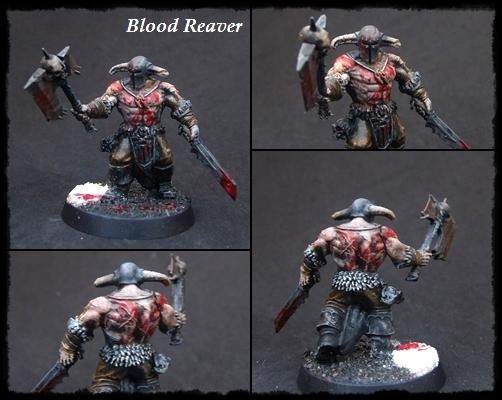
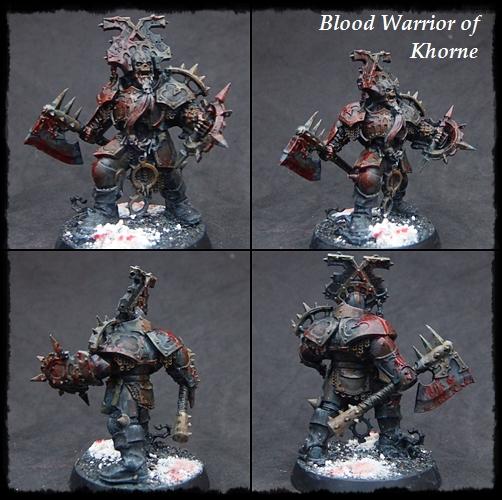
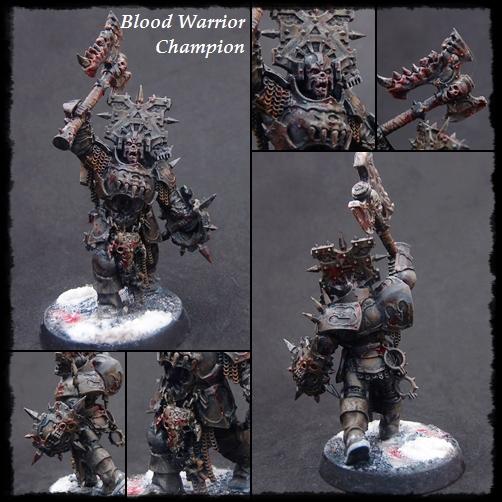
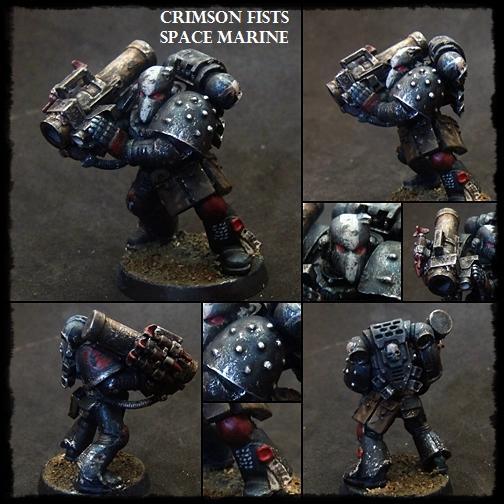
Trust The Drybrush, Trust the Wash! While many people dismiss them as beginner techniques, both drybrushing and washing can be highly effective even on high-quality models, not to mention simple and speedy. Rather than painstakingly edge highlighting a set of Power Armour, a quick, top-down and careful* drybrush will get similar and (in my opinion) more natural results a lot faster. Likewise, starting light and applying a darker wash can get you just as good a result as a carefully layering up from dark to light.
*in both cases, this is key! There's a difference between the 'load up your brush and hit the whole model hard as you can' drybrushing and 'carefully, use a brush with hardly any paint on it to build up colour around the edges' type, and it's the latter you want here. Likewise, washing needs to be done in a considered manner, rather than blocking in the colours and hitting it all with 2 gallons of Agrax Earthshade! Treat them like you would any other technique, and apply them with the due care.
Another one I'd suggest is mixing paints on the fly. Why change pot/paint 2-3 times when highlighting when you can stick a blob of (insert colour here) and (insert white/light grey/light brown/other here) and add a little of the latter to the former each time? It saves time, gives a more natural progression than just switching up colours completely and once you get good at it, you'll find you're being consistent enough to not have to worry about getting the same shade each time, it'll just come naturally.
On a different note, get a cheap hairdryer to speed up drying! Saves so much time, especially with washes! Just be careful not to let the paint pool and you'll find it a useful tool.
Finally, take time where it's needed, save time when you can. By which I mean that even if you can paint the armour on a Space Marine in 10 minutes flat, you should still be taking the necessary time to pick out the details and give them due attention. Again, you can still use simple techniques, so long as you avoid rushing and make sure it still looks 'good enough' when done.
To finish, some examples of where all of the above can get you:
Hope that helps!
|
|
|
|
|
|
2016/09/06 08:34:10
Subject: Re:Basic tips for speeding up your paintjobs
|
|
Member of a Lodge? I Can't Say
|
When painting tanks (haven't tested it on infantry models) I use a large dry brush to do the highlighting. It has to be very dry though so the paint only goes on the very edges. Works like a charm and saves loads of time.
|
“Because we couldn’t be trusted. The Emperor needed a weapon that would never obey its own desires before those of the Imperium. He needed a weapon that would never bite the hand that feeds. The World Eaters were not that weapon. We’ve all drawn blades purely for the sake of shedding blood, and we’ve all felt the exultation of winning a war that never even needed to happen. We are not the tame, reliable pets that the Emperor wanted. The Wolves obey, when we would not. The Wolves can be trusted, when we never could. They have a discipline we lack, because their passions are not aflame with the Butcher’s Nails buzzing in the back of their skulls.
The Wolves will always come to heel when called. In that regard, it is a mystery why they name themselves wolves. They are tame, collared by the Emperor, obeying his every whim. But a wolf doesn’t behave that way. Only a dog does.
That is why we are the Eaters of Worlds, and the War Hounds no longer."
– Eighth Captain, Khârn |
|
|
|
|
2016/09/06 12:13:38
Subject: Basic tips for speeding up your paintjobs
|
|
Powerful Phoenix Lord
|
My suggestion? Cheat.
Unless you paint for competitions or you genuinely love painting, most people want a reasonable paintjob so figures can be put on the table. Use whatever method or tricks you can find to do so (i.e. threads like this). Painting sci-fi stuff you can get away with a load of cheats.
-Coloured primer (such as Army Painter) heck yes. All day.
-Drybrush and similar techniques
-Dips/washes all day long.
-Airbrush (I don't have one, but go for it!)
-Buy painted stuff on eBay or get someone to paint your stuff (if you can't stand painting - I have a weird compulsion to only field my own painted stuff)
I don't love painting, but I love finishing models. Nothing is better than a fully painted army on the table (particularly against another one). Don't be shy about making the most of tricks and cheats to get the look you want, in the time you want. Speed and better skill will come with time, particularly if you want to study master painters.
As someone said above...good is good enough. Get paint on that plastic!
|
|
This message was edited 1 time. Last update was at 2016/09/06 12:14:10
|
|
|
|
|
2016/09/06 15:38:45
Subject: Re:Basic tips for speeding up your paintjobs
|
|
Infiltrating Broodlord
Lake County, Illinois
|
I had a post on my blog recently on this very same subject. Many of the tips are somewhat psychological, but they've helped me a lot.
http://adventuresinminiaturegaming.blogspot.com/2016/06/painting-tips-for-rest-of-us.html
|
|
|
|
|
|
|
|