OK, so the 12 time zone trip took more out of me than expected but now it's time for...
THE GOOD Short answer is this is an interesting book, more for the
IT and social predictions than the environmental ones.
Longer answer is that Nature's End holds up surprisingly well. The changing narrators and the use of real and fictional news stories keeps things going. And some passages make me smile.
Trans Atmosphere Vehicles (TAVs) have replaced airplanes and can make the India to New York flight in 2 hours. At the minor cost of tearing holes in the ozone lair and causing cancer for the plebes below. There's a bit where the narrator waxes nostalgic about the good old days of sipping white wine and chatting with your neighbor on a long flight and how that's been lost. Having just done that trip twice... bring on the TAVs and the skin cancer!
No not really.

There's also a mention of someone not having smelled tobacco in 25 years which is surprisingly accurate. And a couple of mentions of Hyundais, which only appeared in the US in 1986. There's a long scene set during California wildfires burning down a neighborhood. When the narrator returns a few years later they've been rebuilt perfectly. No one learned anything. Ouch.
Another great scene is when the heroes are reflecting on their New York apartment, their filtered air and water and realize you have to be rich to live the way they thought all Americans live. That one hit all the feels.
Note that the population in the dying world of Nature's End is 7 billion, the reality is 8 billion, take that however you will.
THE BAD Wow the writer hates India, he really, really hates it.
Lemme quote:
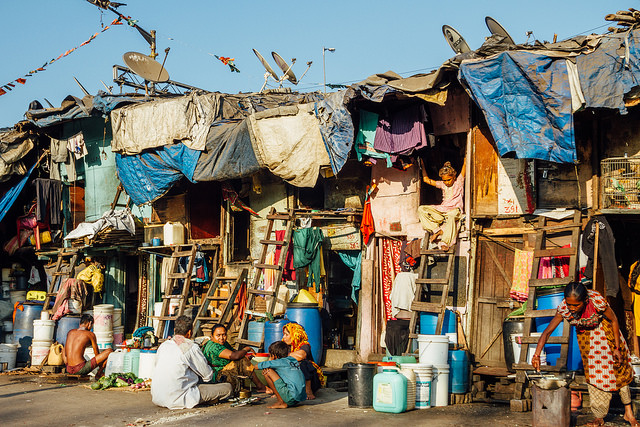
There is no housing in Calcutta, except for the rich and the lucky. The local definition of prosperity is a piece of tin over one's head and a bicycle chained to one's arm. Theft is, quite simply, the primary means of exchange. Even in western-style hotels anything left unattended will be stolen.
Show me on this doll where India hurt you?
Jobs are "divided" with the original holder selling parts of the work. Thus even in the rather modest Star of India Hotel where we stayed I counted six maids at work in my room, two making the bed, two cleaning the rug with small brushes and pans, two more polishing and cleaning everything else. The original jobholder has not worked in years; she lives in an air-conditioned apartment and collects a portion of each salary.
This is just a weird bit and a really common left-wing idea that jobs are some sort of finite resource and that the only way to make more jobs is to divvy them up into smaller portions. And not needed. I mean look, yeah, there is cheap labor in India, six maids in a foreign hotel room would be only a bit crazy.
Contrasted with the environmental research it seems the authors didn't spend too much looking at India. They mention the only cars are limos and pedicabs. No Indian brands, non of the ubiquitous tuk-tuks or 2-wheelers. Come on, even James Bond did better than that.
Lacking either bells or horns, the cabbies made a mouth noise, a sort of sharp bark which they repeated continually, their heads down, their backs running with sweat and flies.
Again, a graphic description that has nothing to do with reality. I mean, OK, underdeveloped country, but motor rickshaws have been around since the 1950s (starting in Japan) and yeah horns and bells are not some rare technology only available to Americans.
Here in Calcutta, it is ironic, I cannot telephone my neighbor but I can in an instant reach New York, Moscow, Peking.
So, America has internet, cell phones, etc, (very well predicted
IMHO) but not India? I remember articles as early as the mid 90s about how cell phones were changing life and business in India. Yes the digital divide is real, but the book makes a point of how cheap computing is in the distant future/past year of 2025. So I am deducting points for a failed prediction here!
overall I would guess that India in 1987 (and still?) was just an easy catch all for third world hellhole. At least it got off better than China where we only get a passing reference to millions of people fleeing the "Chinese miracle".
THE UGLY When we get the plot point that the evil Gupta Singh was actually a white dude, I kind of figured it had to be the late great Tom Sinclair (having faked his death) since he got so much build up. Or that Tom would turn out to have uploaded his mind to the cloud, or something. In the end one of the genius kids at Magic casually mentions that Tom had a self destructive steak and that's about all the deconstruction/clay feet he gets.
Instead we get the evil Indian dude who's really a white dude and talks like a fortune cookie version about "The Orient"...
Gerontological manipulations is not popular in India. Who wants to live beyond his time? To the Hindus, it is an abomination. To the Moslems, something odd and hard to fathom.
And it goes on and on...
Eventually we find out he's really the white dude scientist who created intelligence upgrade technology and was so disappointed he decided to pose an India guru and try to kill a third of the human race. His true identity was mentioned/foreshadowed a few times in passing in the world-building bits but y'know, he never appeared.
And somehow the 35 million Indian people in Calcutta never noticed? Not once? Even when Gupta Singh badmouthed Cricket?
that damned English cricket that some Indians also pretend to play
Thems fighting words "Gupta"
Which brings up the question of why include that plot point at all? Couldn't Gupta Singh just be a villain? Or couldn't the scientist dude just transition to genocidal villain? Why this plot twist?
I wonder if this isn't an example of what my lit teacher would call Orientalism which comes in two flavors. The good people of the Orient are too pure and good to ever come up with this genocidal plan, and/or too simple to ever be the real masterminds. Both the idealized version and the racist version end up in the same place.
Regardless it stuck in my craw as an annoyance.
So to answer the only real question when reviewing a book, is it worth your time?
Yes.
With an open and critical mind comparing the grim darkness of Nature's End and the grim darkness of 2025 it is interesting. Not great, not the train wreck of NYPD 2025, but interesting.








 Your #1 Fan