What's your current technique? Are you painting thinned (almost wash-like) paint directly in to the crevices?
If you're doing that, you'll always get a bit of an edge that you need to blend in if you want to be able to view the model up close (I don't bother when painting large regimental blocks that I intend to be viewed as a whole).
The way I tackle shades is to paint them in to the crevice, then wash my brush off and where that ugly harsh transition line normally forms I sweep with my clean brush across it to blend it in.
The trick is to clean your brush (doesn't need to be perfectly clean, I usually just swish it in the water for 2-3 seconds) then wipe the excess water off on a tissue (so your brush is damp but not so wet that it leaves puddles on the model) then use the tip of your brush to sweep away the line. If you find there's too much paint on the model for you to remove in one swipe, just wipe the brush off on a tissue again and go back to the model.
The other trick is timing, how long to wait between applying the line and blending the line, I find it useful to mix my shade with drying retarder to open up the windows where I can easily manipulate the paint and also do my shades over the top of a varnish to protect the underlying paint from my meddling. The tank pictured below I mixed 2 drops of Burnt Umber, 1 drop of black and 2 drops of Vallejo drying retarder and then thinned it to wash-like consistency. With that mix, if I paint a line then come back to clean it within 1-3 minutes (approximately) I can just use water for cleaning my brush, but swapping to vodka I open that window up to about 10-15 minutes, use Vallejo Airbrush Thinner and I open that window up to about half an hour, maybe more (note: This is what I use on the brush to clean up the paint, not what I thin the original paint with!). So if I paint maybe a third the lines on my model and then wash the brush off and come back to clean them up with Vallejo Airbrush Thinner, that works pretty well. If I'm only using water I can only paint 1 or 2 lines then I have to clean the brush and fix those lines before the paint dries too much.
Needless to say, I have water, vodka and Vallejo airbrush thinner on my desk at all times

If I do happen to make a mistake and don't notice it, I can usually clean off the paint with Vallejo Airbrush thinner for over an hour, it's just harder to make the blend look smooth.
It's a lot more effort than just painting a line though, it's worth it for models you want to look top notch.
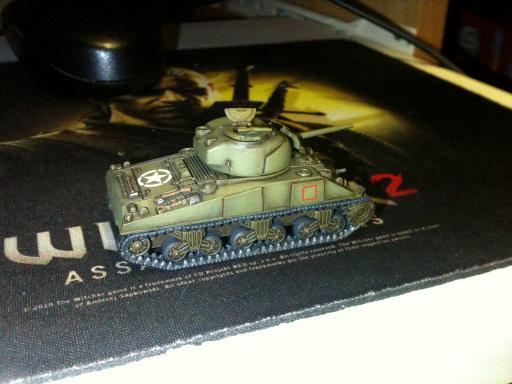
Instead of blending it smoothly you can also intentionally wipe it across the surface in a streaking motion to create subtle filtering and weathering like I attempted to do with this firefly...
http://www.dakkadakka.com/gallery/685395-firefly3.html?m=2