| Author |
Message |
 |
|
|
|
|
Advert
|
Forum adverts like this one are shown to any user who is not logged in. Join us by filling out a tiny 3 field form and you will get your own, free, dakka user account which gives a good range of benefits to you:
- No adverts like this in the forums anymore.
- Times and dates in your local timezone.
- Full tracking of what you have read so you can skip to your first unread post, easily see what has changed since you last logged in, and easily see what is new at a glance.
- Email notifications for threads you want to watch closely.
- Being a part of the oldest wargaming community on the net.
If you are already a member then feel free to login now. |
|
 |
2021/02/01 23:08:02
Subject: First time air-brushing ... need advice
|
|

Regular Dakkanaut
|
I bought a cheap air-brush on Amazon and hooked it up to an old work air-compressor in the shed.
I don't know anything about air-brushing or air-compressors, but I'm pretty sure something ain't right.
I have a hose going from the compressor to a wall-mounted water-trap/filter/pressure-gauge that I bought on amazon. From there another hose goes to a small water-trap which is connected to the handle of the air-brush.
The compressor doesn't keep the pressure constant (should it?). It seems like a balloon, I have to turn it on the pump it up, and then when I'm painting it gradually goes down until it's too weak and I have to turn it on and pump it up again. I have to just look at the pressure gauge and start and stop the pressure myself. If the pressure is too strong, for some reason no paint comes out of the brush, just air. So if I accidentally put too much pressure in, I just have to blow it out until it gets down to 50PSI and paint starts coming through. Once it gets down to about 15 it's too weak and again no paint comes through, and I have to manually turn the compressor back on and get it back up to ~50, rinse and repeat constantly working between 15-50PSI.
It seems that people on YouTube or whatever work with a constant pressure of around 25. I don't know how they do that.
Also, I think the compressor has a leak. If I turn the compressor on and get the gauge up to some number (say 30PSI), then turn the compressor off (I have to or it will just keep gaining pressure), should it hold that pressure forever? The one I have holds it for a while, but it does gradually go down over about 15-20 minutes, even if I'm not painting. Obviously if I am painting, it goes down even quicker.
Despite all this, I did manage to get great results that I'm very happy with, but the setup just doesn't seem right at all. It was all very inconsistent.
Any tips appreciated.
|
|
This message was edited 3 times. Last update was at 2021/02/01 23:10:37
|
|
|
 |
|
2021/02/01 23:21:58
Subject: First time air-brushing ... need advice
|
|

Lord of the Fleet
|
 The Pig-Faced Orc wrote: The Pig-Faced Orc wrote:I bought a cheap air-brush on Amazon and hooked it up to an old work air-compressor in the shed. I don't know anything about air-brushing or air-compressors, but I'm pretty sure something ain't right. Get yourself a good book and read up. Airbrushing can be very rewarding but very easy to balls-up. Book looking at model railway airbrushing are more often more comprehensive as they cover a wide variety of surfaces and mediums. I have a hose going from the compressor to a wall-mounted water-trap/filter/pressure-gauge that I bought on amazon. From there another hose goes to a small water-trap which is connected to the handle of the air-brush. The compressor doesn't keep the pressure constant (should it?). It seems like a balloon, I have to turn it on the pump it up, and then when I'm painting it gradually goes down until it's too weak and I have to turn it on and pump it up again. I have to just look at the pressure gauge and start and stop the pressure myself. If the pressure is too strong, for some reason no paint comes out of the brush, just air. So if I accidentally put too much pressure in, I just have to blow it out until it gets down to 50PSI and paint starts coming through. Once it gets down to about 15 it's too weak and again no paint comes through, and I have to manually turn the compressor back on and get it back up to ~50, rinse and repeat constantly working between 15-50PSI. Does your compressor have an air tank? It seems that people on YouTube or whatever work with a constant pressure of around 25. I don't know how they do that. Those compressors usually cost hundreds of pounds/dollars/etc when used by professionals. My first one cost £60 off Amazon and it was crap, but it was very good for learning the skill. My new one is my dad's old one that was built in 1984. While I don't know the brand it's far more suitable once you get more into the skill. Also, I think the compressor has a leak. If I turn the compressor on and get the gauge up to some number (say 30PSI), then turn the compressor off (I have to or it will just keep gaining pressure), should it hold that pressure forever? The one I have holds it for a while, but it does gradually go down over about 15-20 minutes, even if I'm not painting. Obviously if I am painting, it goes down even quicker. Not 100% sure on this but my gut feeling is that the compressor will leak air over time through the seals and gaskets, etc, particularly if it's a cheap one. That's why one with an air tank is more effective at holding the pressure. Despite all this, I did manage to get great results that I'm very happy with, but the setup just doesn't seem right at all. It was all very inconsistent. That's great to hear. Don't be put off at all, my first attempt looked like the opening of a Saw movie, but eventually you get the hand of colours and pressures. Any tips appreciated.
My main tip would be: Cleanliness is next to Godlines Whatever you do, you want to keep your airbrush clean, I cannot stress that enough. After each session, remove the needle and run cleaner through the components. Make sure it stays as clean as possible otherwise you'll always have trouble with it. One example I remember was when dried paint in the nozzle clogged the airflow and paint spat out of the cup onto the carpet! Save yourself a lot of hassle and spend the extra 5 mins keeping it clean. Once you're confident with the basics I would very strongly recommend getting a decent setup. A good compressor and airbrush is indescribably better than the cheap Chinese crap you get off Amazon. While it's good for a beginner, you'll soon want to move to more advanced stuff.
|
|
This message was edited 1 time. Last update was at 2021/02/01 23:22:13
|
|
|
|
|
2021/02/01 23:22:06
Subject: First time air-brushing ... need advice
|
|

Incorporating Wet-Blending
|
A compressor will discharge if the reservoir is not very large - a small 2L tank will last about 20 seconds at 30PSI before the compressor will kick up again.
What you want is a regulator that will keep the pressure at 30PSI (or let you change it higher or lower).
|
|
|
|
|
2021/02/01 23:23:46
Subject: First time air-brushing ... need advice
|
|

Stealthy Grot Snipa
|
It would help a LOT if you posted some pictures of your compressor and the various hoses and attachments you've got going. While I'm not hugely knowledgable about air compressors, it sounds a lot like yours doesn't have a tank on it - if it did, the tank would store any compressed air and allow you to airbrush for a while without needing to constantly run the compressor. It also sounds like you may need some kind of regulator in order to keep the psi at a more constant pressure setting; your compressor may be more intended for things like power tools because 50psi is far too much for something like an airbrush.
|
|
|
|
|
2021/02/01 23:56:15
Subject: First time air-brushing ... need advice
|
|
Thane of Dol Guldur
|
Yeah I can't deduce what your problem is without some visual aids. You should have a knob and a guage that shows what your pressure is and allows you to set the pressure you want. Even without an air tank, this should keep stay constant because it will pressurize the air line and the brush itself, and then the compressor should kick in once you start spraying and the pressure initially drops.
|
  Heresy World Eaters/Emperors Children Heresy World Eaters/Emperors Children 
Instagram: nagrakali_love_songs |
|
|
|
|
2021/02/02 06:31:26
Subject: First time air-brushing ... need advice
|
|
Regular Dakkanaut
|
Thanks guys.
It's an old work compressor with a huge tank on it!
I'll post some pictures this morning when the sun comes up and I can brave the cold and snow to go out into the shed. 
|
|
|
|
|
2021/02/02 06:59:38
Subject: First time air-brushing ... need advice
|
|
Regular Dakkanaut
|
I use a large compressor for all my airbrushing, its a 4hp 150l tank so way over kill. When I turn it on it runs until it reaches about 150 psi then cuts out (I hope yours also has a cut out).
With 150 litres at 150 PSI I can turn the compressor off and airbrush for a couple of hours, I usually have 10-20 PSI for airbrushing at the regulator.
The pressure in the compressor provided it is higher than what you need is largely irrelevant as the regulator is what governs the usable pressure.
If I was to guess I would say you have the regulator fully open and are trying to adjust the pressure by turning the compressor on and off, this would make airbrushing practically impossible!
|
|
|
|
|
|
2021/02/02 11:04:17
Subject: First time air-brushing ... need advice
|
|
Regular Dakkanaut
|
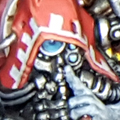 maxwin wrote: maxwin wrote:I use a large compressor for all my airbrushing, its a 4hp 150l tank so way over kill. When I turn it on it runs until it reaches about 150 psi then cuts out (I hope yours also has a cut out).
With 150 litres at 150 PSI I can turn the compressor off and airbrush for a couple of hours, I usually have 10-20 PSI for airbrushing at the regulator.
The pressure in the compressor provided it is higher than what you need is largely irrelevant as the regulator is what governs the usable pressure.
If I was to guess I would say you have the regulator fully open and are trying to adjust the pressure by turning the compressor on and off, this would make airbrushing practically impossible!
I don't even know if I have a regulator! I was under the impression I'd be able to adjust the pressure with the water-trap/gauge thing (pictured below) but I can't quite figure out what that dial does. Regardless of where I set it, the pressure will max out if I leave the compressor on, and will also eventually slowly fall down to 0 (faster if I'm using the airbrush).
What I have noticed is that it releases air at different places depending on where I set the dial. I can tell it's releasing air because of the loud hissing noise. lol. That stops when it reaches a certain point, depending on where the dial is set. But it doesn't seem like a very useful feature (because as soon as I start air-brushing, the pressure will keep dropping until I have to turn on the compressor again a few minutes later).
I've taken to just loading it up with air and using the little knob under the nozel of my airbrush (which seems to limit the maximum output ... I dunno) to ensure it's not blowing models off the table.
Regardless of having no idea what I'm doing an using possibly faulty/incomplete equipment, I'm really quite happy with the results I managed to achieve. Probably looks amateurish to you guys, but for my first time with an air-brush I'm happy.  That green zenithel highlight will serve as the base coat for the armour plates as well as the primer for the other parts which I will brush over.
Here are the photographs requested this morning.
Click on any image to expand.


One thing that I found odd was that the little arrow (you can see it above the gauge in the zoomed-in photo of the water-trap) seems to me to be pointing in the wrong direction. I had assumed that was to indicate the intended flow of air. However if I change the connections around, the pressure just builds up in the water-trap and is never released into the hose with the air-brush. I couldn't figure out what was wrong, so out of desperation I switched the hoses around and walah, it suddenly worked. Seems counter intuitive considering the direction of that arrow though ( atm, it's pointing to the hose that goes back into the air compressor).


|
|
This message was edited 3 times. Last update was at 2021/02/02 13:19:38
|
|
|
|
|
2021/02/02 11:15:44
Subject: Re:First time air-brushing ... need advice
|
|
Regular Dakkanaut
|
Please see attached, should solve your problems
I have the same regulator as pictured, I mounted that next to my booth so I can adjust it on the fly when needed. Tend to prime at 20 psi and finer detail work at 10 psi, you have a long road of learning curve to go, messing with pressure, flow, viscosity, etc
|
|
This message was edited 1 time. Last update was at 2021/02/02 11:19:41
|
|
|
|
|
2021/02/02 13:16:38
Subject: Re:First time air-brushing ... need advice
|
|
Regular Dakkanaut
|
maxwin wrote:Please see attached, should solve your problems
I have the same regulator as pictured, I mounted that next to my booth so I can adjust it on the fly when needed. Tend to prime at 20 psi and finer detail work at 10 psi, you have a long road of learning curve to go, messing with pressure, flow, viscosity, etc
Thanks ... I just can't get mine to work as you describe.
I know I wrote too much, but can you have a quick read of what I wrote before and give me your thoughts on that? Specifically these two things:
1.
I don't even know if I have a regulator! I was under the impression I'd be able to adjust the pressure with the water-trap/gauge thing (pictured below) but I can't quite figure out what that dial does. Regardless of where I set it, the pressure will max out if I leave the compressor on, and will also eventually slowly fall down to 0 (faster if I'm using the airbrush).
What I have noticed is that it releases air at different places depending on where I set the dial. I can tell it's releasing air because of the loud hissing noise. lol. That stops when it reaches a certain point, depending on where the dial is set. But it doesn't seem like a very useful feature (because as soon as I start air-brushing, the pressure will keep dropping until I have to turn on the compressor again a few minutes later).
I've taken to just loading it up with air and using the little knob under the nozel of my airbrush (which seems to limit the maximum output ... I dunno) to ensure it's not blowing models off the table.
2.
One thing that I found odd was that the little arrow (you can see it above the gauge in the zoomed-in photo of the water-trap) seems to me to be pointing in the wrong direction. I had assumed that was to indicate the intended flow of air. However if I change the connections around, the pressure just builds up in the water-trap and is never released into the hose with the air-brush. I couldn't figure out what was wrong, so out of desperation I switched the hoses around and walah, it suddenly worked. Seems counter intuitive considering the direction of that arrow though (atm, it's pointing to the hose that goes back into the air compressor).
Cheers!
|
|
This message was edited 1 time. Last update was at 2021/02/02 13:19:21
|
|
|
|
|
2021/02/02 13:23:36
Subject: First time air-brushing ... need advice
|
|
Regular Dakkanaut
|
I feel like such an idiot now lol, you have the regulator piped up the wrong way around.
|
|
|
|
|
|
2021/02/02 13:43:35
Subject: First time air-brushing ... need advice
|
|
Regular Dakkanaut
|
maxwin wrote:I feel like such an idiot now lol, you have the regulator piped up the wrong way around.
Well ... you feel like an idiot?
It made sense, but when it was piped up the other way, nothing was happening. So .. 
I'll go back and put it the other way again. It's a bit of pain as I need to put those bits on the vice and really lean on them to tighten the connections well enough to stop air leaks.
But I had it like that originally, and just nothing came through the air-brush. Pressure just built up in the regulator.
|
|
This message was edited 1 time. Last update was at 2021/02/02 13:44:36
|
|
|
|
|
2021/02/02 14:06:06
Subject: First time air-brushing ... need advice
|
|
Regular Dakkanaut
|
You have to turn the regulator tap quite a bit and you will notice that when you open the airbrush the regulator pressure drops, I like to adjust my pressure with the airbrush fully open in order to get repeatable results.
You shouldn't need to tighten them too much as you could crack the regulator body, I use ptfe tap on those joints to air tight them, 5 wraps around the threads is plenty.
|
|
|
|
|
|
2021/02/02 14:15:44
Subject: First time air-brushing ... need advice
|
|
Regular Dakkanaut
|
maxwin wrote:You have to turn the regulator tap quite a bit and you will notice that when you open the airbrush the regulator pressure drops, I like to adjust my pressure with the airbrush fully open in order to get repeatable results.
You shouldn't need to tighten them too much as you could crack the regulator body, I use ptfe tap on those joints to air tight them, 5 wraps around the threads is plenty.
Yeah, I've been using ptfe tape too, but it was still a massive pain in the butt to get all the air leaks out. I really had to tighten everything down with a lot of strength.
Speaking of which, I've obviously used too much and completely fethed this thing up. On one side, I've mangled the locking nut (I never realised I was so strong ... or those things are so soft!). Luckily it was putting it in, so hopefully it's now tight as a nun on Sunday and will never need to come back out. On the other side I've ruined the thread on the adapter. I know it's not the thread in the regulator because the other connection screws in fine. Just not the one I need. I dunno how this happened, once again, I guess I just don't know my own apparently immense power. lol.
Easy fix, I'll just have to drive down and buy a new adapter. But annoying nonetheless.
All a learning experience, but what a pain.


|
|
|
|
|
2021/02/02 15:36:21
Subject: First time air-brushing ... need advice
|
|
Regular Dakkanaut
|
You could just file down the first thread at 45 degrees and it should start then
|
|
|
|
|
|
2021/02/03 08:47:14
Subject: First time air-brushing ... need advice
|
|
Regular Dakkanaut
|
maxwin wrote:You could just file down the first thread at 45 degrees and it should start then
Thanks for the tip! I will try that as a back-up option. I was hoping someone handy would give a tip just like that.
But I bought a new adapter. Everything is working as it should now.
Couple more newb questions:
1. How do you go about cleaning out the little nozzle bits and stuff? So far I've just been washing the cup out with water a few times and then blasting air-brush cleaner through it. That seems to work fine as far as functionality goes, but if I take it all apart, there's lots of gunk in the various parts. I could clean it out using a needle or something but it would be tedious. Is there some special way? Maybe a toothbrush and turpentine?
2. Now I can actually gauge properly how much pressure I'm spraying with, even 20PSI seems like a lot. I set mine to 10PSI (it drops down to about 8 with the airbrush fully opened). Does that sound reasonable?
3. What are the pros and cons of different pressures?
4. I guess I should just buy a book on air brushing or something. Anyone recommend a good one?
|
|
This message was edited 1 time. Last update was at 2021/02/03 08:49:02
|
|
|
|
|
2021/02/03 19:13:14
Subject: First time air-brushing ... need advice
|
|
Regular Dakkanaut
|
1 - I clean mine much the same only I use a rag to block the nozzle and let the air bubble back through the cup, rinse and repeat that 2 or 3 times until the water is clean.
2 - Sounds good
3 - get more paint on faster, I use 20 psi for priming and base coating, though you do need to be careful not to over do it
4 - Probably ... but I didn't lol
|
|
|
|
|
|
2021/02/03 19:58:56
Subject: First time air-brushing ... need advice
|
|
Grizzled Space Wolves Great Wolf
|
One thing I’ve noticed is the cheap regulators aren’t very accurate, so don’t focus too much on the precise pressure reading as it might be a few PSI off. There’s a few guides online for finding the right pressure and paint viscosity based upon what your spray pattern looks like.
Also with the cheaper regulators, if you problems with leaks after hooking them up to a very strong shop compressor they might not be able to deal with the very high pressure on the inlet side and so might need a 2nd coarser regulator for drop the pressure. You shouldn’t need to tighten any of the joints too hard as the metals they use are generally on the soft side.
Regarding books, there’s so much info online these days. Google/YouTube areprobably all you need.
|
|
|
|
|
2021/02/03 20:42:09
Subject: First time air-brushing ... need advice
|
|
[DCM]
Procrastinator extraordinaire
|
Great to hear things are up and running, may you have many smooth airbrush sessions!
1. Regular cleaning is a good habit to have and you'll find that if you clean the airbrush decently, you won't need to strip it down to clean it all out. I do the same as yourself roughly, dump any paint in the cup, fill it with water and take an old paintbrush to lift any paint, dump that, then put a mix of cleaner and water into it and spray it through as that'll clean the nozzle as well. A cotton bud soaked with cleaner is handy to have for any tougher bits of paint in the cup. If your needle is easy to remove,k after you've given everything a rough clean and take the bud with cleaner and give it a scrub. This also gives you a chance to clean around the nozzle if there's been a build up of paint without damaging the needle.
2. You'll find you'll develop preferences for what pressure you spray at. 20 is good, 10 and 8 is a little low if you're not doing fine detail work.
3. Different pressures work better with different paints. For metallics, a low PSI (8-10) is good for smooth spraying as you don't want the flakes drying before hitting the model, while ink sprays better at higher pressure. 15-20 I find to be a good sweet spot but turn it down if I want finer detail work.
4. Marco Frisoni on YouTube has great tutorials and so does Next Level Painting if you want some quick tutorials. If you can source some of the more recent Airfix Model World magazines, they have parts one and two of their airbrush for beginners articles that could be useful for you!
|
|
|
|
|
|
2021/02/04 21:22:45
Subject: First time air-brushing ... need advice
|
|
Regular Dakkanaut
|
PRACTICE, PRACTICE.
Airbrushing is like oil painting. You can't just pick up an AB and be the next Bob Ross or Picasso in a few minutes. Even rattle cans require some skill (though admittedly not as much as AB) to get good results.
Once you get comfortable with the AB to where you can pop paint in and go I'd suggest upgrading the AB to something of higher quality. Harder and Steenbeck or Iwata make very good AB's.
I have multiple AB". I have an Iwata with a .2mm nozzle and I have a Badger Patriot 105 for large models/terrain. Both are near indestructible and both are such a dream to use compared to my first AB which was priced cheaper than a lobster dinner. LOL
|
|
|
|
|
2021/02/05 08:10:57
Subject: First time air-brushing ... need advice
|
|
Regular Dakkanaut
|
jivardi wrote:PRACTICE, PRACTICE.
Airbrushing is like oil painting. You can't just pick up an AB and be the next Bob Ross or Picasso in a few minutes. Even rattle cans require some skill (though admittedly not as much as AB) to get good results.
Once you get comfortable with the AB to where you can pop paint in and go I'd suggest upgrading the AB to something of higher quality. Harder and Steenbeck or Iwata make very good AB's.
I have multiple AB". I have an Iwata with a .2mm nozzle and I have a Badger Patriot 105 for large models/terrain. Both are near indestructible and both are such a dream to use compared to my first AB which was priced cheaper than a lobster dinner. LOL
Thanks for the tips!
|
|
|
|
|
|
|


