Seventy years after the end of World War Two, the voices of revisionism in Japan are growing stronger and moving into the mainstream, particularly on the issue of comfort women, who were women forced to be sex slaves for Japanese soldiers during the war.
One of the most eloquent voices of revisionism is Toshio Tamogami.
Mr Tamogami is well-educated, knowledgeable and, when I meet him, exquisitely polite. The former chief of staff of Japan's air force believes in a version of Japanese history that is deeply at odds with much of the rest of the world.
But it is increasingly popular among young Japanese, tired of being told they must keep apologising to China and Korea.
Last year Mr Tamogami ran for governor of Tokyo. He came fourth, with 600,000 votes. Most strikingly, among young voters aged 20 to 30 he got nearly a quarter of the votes cast.
"As a defeated nation we only teach the history forced on us by the victors," he says. "To be an independent nation again we must move away from the history imposed on us. We should take back our true history that we can be proud of."
In this "true" history of the 20th Century that Mr Tamogami talks of, Japan was not the aggressor, but the liberator. Japanese soldiers fought valiantly to expel the hated white imperialists who had subjugated Asian peoples for 200 years.
It is a proud history, where Japan, alone in Asia, was capable of taking on and defeating the European oppressors. It is also a version of history that has no room for the Japanese committing atrocities against fellow Asians.
Mr Tamogami believes that Japan did not invade the Korean Peninsula, but rather "invested in Korea and also in Taiwan and Manchuria".
I ask him about the invasion of China in 1937 and the massacre of civilians in the capital Nanjing. Surely that was naked aggression?
"I can declare that there was no Nanjing Massacre," he says, claiming there were "no eyewitnesses" of Japanese soldiers slaughtering Chinese civilians.
Former chief of Japan's air forces, Toshio Tamogami, says that stories of atrocities such as the Nanjing massacre in the 1930s are "lies and fabrication"
It is when I ask him about the issue of Korean comfort women that Mr Tamogami's denials are most indignant.
He declares it "another fabrication", saying: "If this is true, how many soldiers had to be mobilised to forcibly drag those women away? And those Korean men were just watching their women taken away by force? Were Korean men all cowards?"
Although they may not say it as loudly and as bluntly as Mr Tamogami, this is a version of history that is widely believed by many Japan's nationalists.
Earlier this year at a joint session of the US Congress in Washington DC, Prime Minister Shinzo Abe expressed deep sorrow for the suffering caused by Japan during WW2.
Mr Abe does not deny there were Korean women serving as comfort women near the frontlines in China and South East Asia.
But he has repeatedly said there is no evidence these women were coerced or that the Japanese military was involved in their recruitment and confinement. The implication is the women were prostitutes.
This is a very murky area. Girls from poor families have been sold in to prostitution in Japan, Korea and China for centuries, and the practice was certainly still going on in the 1930s and 1940s.
But that does not absolve the Japanese military from responsibility.
'We were kidnapped'
In a quiet valley an hour's drive from Seoul there is a small care home called the House of Sharing. This is where some of the last surviving comfort women are cared for in their old age. There are only ten left here now.
Lee Ok Seon is a tiny 88-year-old with thick white curly hair and badly-fitting false teeth. She chuckles as I try to cajole her to speak to me in Chinese.
Ms Lee spent 65 years in China, and only returned to South Korea 15 years ago.
She was born in the port city of Busan on the southern tip of modern day South Korea. Her family was poor and she was sent out to work at the age of 14.
"I had to start work as a housekeeper for another family at a young age. It was at that time I was out on the street one day… that's how I got kidnapped," she says.
She said two men grabbed her and put her on a train. "By the time we arrived I realised we had crossed the border into China. I was sent to a place where there were already several comfort women.
"I wonder why they called us comfort women. We didn't go by our own accord, we were kidnapped. I was forced to have sex with many men each day."
Ms Lee spent three years in the brothel close to a Japanese military camp in Manchuria. I ask her why she didn't try to escape.
"Of course I tried to escape several times!" she says. "Each time I was taken back and I was beaten over and over.
The military police would ask me 'Why are you trying to escape?' I would tell them because I am cold and have no food. They would hit me again saying I talked too much."
She says that she lost part of her hearing and some of her teeth from those assaults.
Revisionists like Mr Tamogami say women like Lee Ok Seon have been coached to embellish their stories; that they are tools of a South Korean government that is intent on humiliating Japan and squeezing it for more money
It is certainly true that the comfort women issue is used by the South Korean government for its own political ends. But there is plenty of other evidence that the Japanese military organised the comfort women system, not least from the men who served in the Japanese imperial army in China.
'Ridiculous to deny'
Masayoshi Matsumoto is now 93 and lives with his daughter on the edge of Tokyo. He has a warm open face and the piercing eyes of a much younger man.
Former Japanese soldier Masayoshi Matsumoto: "I call myself a war criminal"
As a 20-year-old he served as a medical orderly in northwest China. "There were six comfort women for our unit," he tells me. "Once a month I would check them for sexually transmitted diseases.
"The Korean women were mainly for the officers," he says. "So the ordinary soldiers attacked local villages screaming, 'Are there any good girls here?' Those soldiers robbed, raped, or killed those who did not listen to them."
Those who were captured were taken to Mr Matsumoto's unit to serve as comfort women.
After the war Mr Matsumoto became a priest to try and atone for his sins. For decades he said nothing of what he'd seen.
But then as the voices of denial grew stronger he was filled with righteous anger, and decided to speak out.
"It's ridiculous... Mr Abe speaks as if this is something he witnessed, but he didn't. I did," says Mr Matsumoto.
"Someone told me this, 'One who fails to look back and perceive the past will repeat their wrongdoing'. But Mr Abe thinks we should erase anything bad Japan had done in the past and pretend nothing happened. That is why I cannot forgive him," he adds.
Mr Matsumoto sits back in his chair and chuckles.
"One day the right-wingers will come and get me for saying such things," he says, drawing a finger across his throat.
That seems unlikely, but Mr Matsumoto and all the other survivors are now in their late 80s or 90s. Soon they will all be gone - while the voices of denial grow louder and stronger
I'm all about leaving the sins behind. The war is over for 70 years now, the world has moved on and the nations have suffered enough but I find it ridiculous to try to erase history.
However it is also true that Korea and China have great difficulty in leaving behind their status as miserable victims of 70 years ago. It is too useful to them as a way of creating group conformity with the government's agenda and deflecting attention from genuine problems. that face them.
In all three countries education is blighted by nationalism. At least Japan has officially apologised and paid reparations several times.
Denailism != Revisionism (because it's becoming a pet peeve )
Revisionism is good. Revisionism is historians taking another look at something with fresh ideas and information.
Denalism on the other hand is basically a fancy word for conspiracy theory Because you know. Surely the mass graves, and all the photos of the Rape of Nanking, must surely be fake right? It's all just a plan by the Illuminati! Just like how they made up the Holocaust!
Historical Denalism (hell, even Historical Nihilism) is a growing trend I've noticed in Chinese, Korean, and Japanese Media. Cause I watch lots of anime and read lots of comics from that side of the big lake I've been seeing more and more of them the last couple of years and it is disturbing the loop dah loops some people seem willing to jump through to deny even basic historical fact. 'Investing' is a pretty inventive way of phrasing what happened in Korea and Manchuria (but then again... it seems a bit humorous to mock some guy in Japan for crazy historical denialism when I live in America...).
Then again, politician says something outright stupid. Not like this guy is alone in that (*glares at 'legitimate rape' comments from a few years back). Yeah, people say really stupid gak when running for office.
Sinful Hero wrote: Us Southernors have trouble accepting what happened over 150 years ago. This isn't something that's going away anytime soon.
Yeah no shizz. I read this thread and immediately thought of just a few weeks ago how many people were posting that the civil was was all about state's rights and not really slavery at all.
Sinful Hero wrote: Us Southernors have trouble accepting what happened over 150 years ago. This isn't something that's going away anytime soon.
Yeah no shizz. I read this thread and immediately thought of just a few weeks ago how many people were posting that the civil was was all about state's rights and not really slavery at all.
"States' rights" is coded language in the South anyway. That's why Reagan infamously invoked them at that county fair in Mississippi in 1980.
But back on topic, most people prefer to think of themselves as good people and their country as a good place. So it all gets rationalized. The citizens say "I wasn't the one pulling the trigger." The soldiers pulling the trigger say "I wasn't the one giving the order." The people giving the orders say "I wasn't the one ultimately in charge." And you construct a reality in an effort to quell all the cognitive dissonance.
gorgon wrote: "States' rights" is coded language in the South anyway. That's why Reagan infamously invoked them at that county fair in Mississippi in 1980.
But back on topic, most people prefer to think of themselves as good people and their country as a good place. So it all gets rationalized. The citizens say "I wasn't the one pulling the trigger." The soldiers pulling the trigger say "I wasn't the one giving the order." The people giving the orders say "I wasn't the one ultimately in charge." And you construct a reality in an effort to quell all the cognitive dissonance.
gorgon wrote: "States' rights" is coded language in the South anyway. That's why Reagan infamously invoked them at that county fair in Mississippi in 1980.
But back on topic, most people prefer to think of themselves as good people and their country as a good place. So it all gets rationalized. The citizens say "I wasn't the one pulling the trigger." The soldiers pulling the trigger say "I wasn't the one giving the order." The people giving the orders say "I wasn't the one ultimately in charge." And you construct a reality in an effort to quell all the cognitive dissonance.
Says the Yankee.
Nah, just someone who knows who George Wallace was.
Funny thing is if you read over the speeches and writings of the Confederacy's leaders, you will find that slavery does come up quite frequently. In fact the Confederacy was ideologically dedicated to the notion that the white man was superior and that the laws of the confederacy were morally and logically superior to the laws of other nations. Southern leaders founded the Confederacy in order to preserve the institution of slavery. This was their primary goal, and they made no secret of it. They did not hide their intentions behind flowery language and code-words like the cowardly Southern separatists of today. They did not care about the Constitution. If they did, they would have held onto it instead of rejecting it and starting a new nation.
The Southern states seceded because a prominent abolitionist named Abraham Lincoln won the US presidential election. That's all there is to it. Step into your time machine, go back and ask Jefferson Davis himself. He stated this exact reason repeatedly, and never offered any other rationale or justification for his actions. The South did not want to live in a country with an Abolitionist president. That is why the US Civil War occurred. Anyone who argues otherwise is willfully ignorant of American History and simply enjoys being wrong.
It is strange how some nations take things differently. England and Germany's relationship is fine.....in fact Englands relationship with a lot of places is pretty good considering the gak we got up to.
We even got over certain colonials giving the V's to the King and going their own way
Haruspex wrote: Funny thing is if you read over the speeches and writings of the Confederacy's leaders, you will find that slavery does come up quite frequently. In fact the Confederacy was ideologically dedicated to the notion that the white man was superior and that the laws of the confederacy were morally and logically superior to the laws of other nations. Southern leaders founded the Confederacy in order to preserve the institution of slavery. This was their primary goal, and they made no secret of it. They did not hide their intentions behind flowery language and code-words like the cowardly Southern separatists of today. They did not care about the Constitution. If they did, they would have held onto it instead of rejecting it and starting a new nation.
The Southern states seceded because a prominent abolitionist named Abraham Lincoln won the US presidential election. That's all there is to it. Step into your time machine, go back and ask Jefferson Davis himself. He stated this exact reason repeatedly, and never offered any other rationale or justification for his actions. The South did not want to live in a country with an Abolitionist president. That is why the US Civil War occurred. Anyone who argues otherwise is willfully ignorant of American History and simply enjoys being wrong.
Kilkrazy wrote: At least Japan has officially apologised and paid reparations several times.
At least the chinese and korean governments have not commited mass attrocities on the japanese population .
Maybe, but I agree with Killkrazy, Japan at least did what it could to make up for past mistakes and again, the war ended 70 years ago, it should have been more than enough time to bury the axe. The problem is the idea of trying to "erase" history to make it all better. For me, that idea is atrocious, it's as if they are trying to run away from their responsability. (besides that, they are the only nation who so far was hit not only with 1, but 2 nukes! That's a good enough "karma's a bitch" for their massacres)
And yes, Daston, it's amazing how Europe still manages to keep it's relations considering we've been kicking each other's asses since... always
And going a bit OT: I had no idea some parts of America STILL feel that way about the battles 150 years ago. Damn, that's crazy!
Kilkrazy wrote: At least Japan has officially apologised and paid reparations several times.
At least the chinese and korean governments have not commited mass attrocities on the japanese population .
Maybe, but I agree with Killkrazy, Japan at least did what it could to make up for past mistakes and again, the war ended 70 years ago, it should have been more than enough time to bury the axe. The problem is the idea of trying to "erase" history to make it all better. For me, that idea is atrocious, it's as if they are trying to run away from their responsability. (besides that, they are the only nation who so far was hit not only with 1, but 2 nukes! That's a good enough "karma's a bitch" for their massacres)
And yes, Daston, it's amazing how Europe still manages to keep it's relations considering we've been kicking each other's asses since... always
And going a bit OT: I had no idea some parts of America STILL feel that way about the battles 150 years ago. Damn, that's crazy!
You have to remember, a lot of those people haven't been dead for too long. And regarding the Nanking massacre, are still alive.
My great grandmother went to her grave cursing carpet-bagging Yankees, and seeing the folks moving in from Chicago and New Jersey I think I can relate.
Kilkrazy wrote: At least Japan has officially apologised and paid reparations several times.
At least the chinese and korean governments have not commited mass attrocities on the japanese population .
Maybe, but I agree with Killkrazy, Japan at least did what it could to make up for past mistakes and again, the war ended 70 years ago, it should have been more than enough time to bury the axe. The problem is the idea of trying to "erase" history to make it all better. For me, that idea is atrocious, it's as if they are trying to run away from their responsability. (besides that, they are the only nation who so far was hit not only with 1, but 2 nukes! That's a good enough "karma's a bitch" for their massacres)
And yes, Daston, it's amazing how Europe still manages to keep it's relations considering we've been kicking each other's asses since... always
And going a bit OT: I had no idea some parts of America STILL feel that way about the battles 150 years ago. Damn, that's crazy!
You have to remember, a lot of those people haven't been dead for too long. And regarding the Nanking massacre, are still alive.
My great grandmother went to her grave cursing carpet-bagging Yankees, and seeing the folks moving in from Chicago and New Jersey I think I can relate.
True, WWII for me was something that happened before my parents were even born. I can understand how it can be very different for others.
I visited my grandmother in Germany last month, and I looked at an old photo album that her father put together for her Confirmation (she was 14 then). In included pictures of her growing up near Nuernberg during the Nazi rallies and pictures of her as a teenager in her bombed out city.
When I talk about WW2 it is very easy to forget that my grandmother was a young teenager and that she was directly affected by events that I consider history.
And yes, Daston, it's amazing how Europe still manages to keep it's relations considering we've been kicking each other's asses since... always
Probably because most wars in Europe between major powers tend to be ultimately based on realpolitik as opposed to along ethnic lines. You get anti-whoever propaganda churned out against whoever the enemy of the day is, but alliances have changed so often over the last 500 years that it rarely sticks.
As such, even after WW2 and the Cold War, us lot here in Britain are pretty amicable towards both Russians and Germans.
Maybe, but I agree with Killkrazy, Japan at least did what it could to make up for past mistakes and again, the war ended 70 years ago, it should have been more than enough time to bury the axe. The problem is the idea of trying to "erase" history to make it all better. For me, that idea is atrocious, it's as if they are trying to run away from their responsability. (besides that, they are the only nation who so far was hit not only with 1, but 2 nukes! That's a good enough "karma's a bitch" for their massacres)
Somehow, I don't think the East Asian "problem" is going to go away any time soon.... A buddy of mine from the army went from being stationed in Korea, to being stationed in Japan (normal routes in the army mean you'd go from Korea, to a stateside assignment, then on to another overseas tour)... And he told me how it is practically a national pass time in Japan for people there to be racist towards other Asian countries. As in, he was able to get into bars and clubs that "gaijin" are normally not permitted in, because the regulars "knew" that he hated Koreans, and they loved to hear him rip on them (he didn't really hate Koreans, but the quality of alcohol in the local places were better than the "gaijin" places)
I think in the case of Japan, China, and Korea specifically, we're not talking a "mere" 70 year old conflict, we're talking thousands of years of oppression coming from somewhere, whether it's China invading and oppressing everyone, or Japan doing it, or even Korea gaining some power... each have their "reasons" for hating each other, and it's a whole lot older than the 20th century.
And yes, Daston, it's amazing how Europe still manages to keep it's relations considering we've been kicking each other's asses since... always
Probably because most wars in Europe between major powers tend to be ultimately based on realpolitik as opposed to along ethnic lines. You get anti-whoever propaganda churned out against whoever the enemy of the day is, but alliances have changed so often over the last 500 years that it rarely sticks.
As such, even after WW2 and the Cold War, us lot here in Britain are pretty amicable towards both Russians and Germans.
I think that two things that really help (Western) Europe be friendlier towards Germany.
1) Relatively clean war: The conflict on the Western Front/North Africa probably did the best job at keeping within the rules of war. So while France was occupied, and Britain bombed, and then Germany very bombed, things weren't out-and-out brutal (when compared to the Eastern or Pacific Theaters) for most of the populace and the Allied Armies.
2) Post-war, it got drilled into Germany that they had crossed a line. End result is that Germans learn that they committed atrocities. Japan did not get this treatment. This may partially have been to avoid slandering the Emperor, but I suspect it may also have been related to the factions in the Cold War. Israel is a Western Ally, so Germany is freely grilled over it's treatment of Jews (we hear less about conditions on the eastern front at this time period). China and North Korea are communist, so we don't go encouraging sympathy towards them. Nuke-fear also makes America look like a bit of a bad guy at this time. As a result, Japan escapes with much less guilt-tripping over it's warcrimes.
2) Post-war, it got drilled into Germany that they had crossed a line. End result is that Germans learn that they committed atrocities. Japan did not get this treatment.
Japan totally got that treatment.
The issue is that nationalism dies hard, and especially in a region where nationalist tensions are still intense, it dies even harder. We might not hear as much about Japan as we do about Germany, but people in Asia hear about it all the time. You could effectively switch the 'Nazi' part of Godwin's Law to 'Japan' and the rule would be perfectly functional in the Asian corners of the Interwebs.
The issue is that Japanese Imperialism and its revival in modern times gets more press attention. Neo-Nazi's and Neo-Fascists have been running around Europe and the US for decades. It's old hat (hehe) so no one pays it as much mind. Granted, rose tinted glasses for the great days of the Japanese Empire aren't new either , but much like Germany Japan has frequently been quite proactive in shunning and shaming anyone who was vocal about it until the last decade, decade and a half.
Daston wrote: It is strange how some nations take things differently. England and Germany's relationship is fine.....in fact Englands relationship with a lot of places is pretty good considering the gak we got up to.
We even got over certain colonials giving the V's to the King and going their own way
I am pretty sure it has much more to do with how Germany dealt/was treated in the post-war period compared to Germany. Germans are used to the Nazis being depicted as the ultimate villains, while even an historically accurate and quite moderate movie like City of life and death barely managed to be shown in Japan...
This article from the BBC today seems somewhat relevant in light of comments on denialism and the above comment.
The 'sanitised narrative' of Hiroshima's atomic bombing
By Rupert Wingfield-Hayes
BBC News
4 August 2015
Hiroshima survivor Keiko Ogura recalls the horror of what she saw
The US has always insisted that the atomic bombs dropped on Hiroshima and Nagasaki were necessary to end World War Two. But it is a narrative that has little emphasis on the terrible human cost.
I met a remarkable young man in Hiroshima the other day. His name is Jamal Maddox and he is a student at Princeton University in America. Jamal had just toured the peace museum and met with an elderly hibakusha, a survivor of the bombing.
Standing near the famous A-Bomb Dome, I asked Jamal whether his visit to Hiroshima had changed the way he views America's use of the atom bomb on the city 70 years ago. He considered the question for a long time.
"It's a difficult question," he finally said. "I think we as a society need to revisit this point in history and ask ourselves how America came to a point where it was okay to destroy entire cities, to firebomb entire cities.
"I think that's what's really necessary if we are going to really make sense of what happened on that day."
Damage in Hiroshima, 1945
A conventional view in the US is that while terrible, the use of the bomb brought an end to the war
It isn't the sort of thing you often hear said by Americans about Hiroshima. The first President George Bush famously said that issuing an apology for Hiroshima would be "rank revisionism" and he would never do it.
The conventional wisdom in the United States is that the dropping of atom bombs on Hiroshima and Nagasaki ended the war, and because of that it was justified - end of story.
Is that really the end of the story?
It's certainly a convenient one. But it is one that was constructed after the war, by America's leaders, to justify what they had done. And what they had done was, by any measure, horrendous.
Damage from US bombing of Tokyo (1945)
It didn't start on 6 August. It had started months before with the fire bombing of Tokyo.
On 9 March 1945, 25 sq km (9.7 sq miles) of Tokyo were destroyed in a huge firestorm. The death toll was as large, or even larger, than the first day at Hiroshima. From April to July the relentless bombing continued in other parts of Japan.
Then came Hiroshima.
'There was no sound at all'
Keiko Ogura had just celebrated her eighth birthday. Her home was on the northern edge of Hiroshima behind a low hill. At 08:10 on 6 August, she was out on the street in front of the house.
Picture of a model showing the target of the atomic bomb in Hiroshima
The bomb was set to explode 500m (0.3 miles) above the ground for maximum destructive effect
"I was surrounded by a tremendous flash and blast at the same time," she says.
"I couldn't breathe. I was knocked to the ground and became unconscious. When I awoke I thought it was already night because I could not see anything, there was no sound at all."
What Keiko witnessed in the following hours is hard to comprehend.
By mid-morning, survivors of the blast began pouring out of the city looking for help. Many were in a terrible state.
"Most of the people who were fleeing tried to go to the hillside. There was a Shinto shrine near our house so many came here," she says.
"Their skin was peeling off and hanging. At first I saw some and I thought they were holding a rag or something, but really it was skin peeling off. I noticed their burned hair. There was a very bad smell."
Eighteen-year-old Shizuko Abe was staggering out of the city, the whole right side of her body burned, her skin hanging off. Now 88, she still bears the terrible imprint of the bomb on her face and hands.
Yoshie Amaha, a patient at the Tokyo Imperial University Hospital, displaying injuries suffered as a result of the atomic bomb that was dropped on Hiroshima on the 6 August 1945.
Many of those who did not die from the initial impact of the bomb were left with horrific injuries
"I was burned badly on my right side and my left hand was also burned from the bomb. Fire was coming closer… We were told to run to rivers when hit by air raids so people jumped into the rivers.
"So many bodies were floating in the river that I could not even see the water," she says.
Somehow, despite the agony, she staggered to a medical station.
"They did not even have any dressing for the wounds. Many injured people lay their bodies down under the roof, so I found a place there as well to lie down. People around me were calling out 'Mother it hurts, Father it hurts'.
"When I stopped hearing that, I realised they had died right next to me."
The crew of the Enola Gay were treated as heroes for dropping an A-bomb on the heavily populated city
Hiroshima was not a military target. The crew of the Enola Gay did not aim at the docks, or large industrial facilities.
Their target was the geographical centre of the city. The bomb was set to explode 500m (0.3 miles) above the ground for maximum destructive effect.
On the ground many survived the initial blast, but were trapped in the wreckage of their homes under wooden beams and heavy tiled roofs. Then the fires began.
Ms Abe remembers hearing the cries for help from beneath the debris as the flames swept forward.
"They were such sad voices calling out for help. Even 70 years later, I can still hear them calling out for help," she says.
Children in Hiroshima, Japan, wearing masks to combat the odour of death after the city was destroyed by the first atom bomb, October 1945.
No-one is sure how many died on that first day. Estimates start at 70,000. More than eight out of 10 were civilians.
If you look up "Hiroshima in colour" online, you will find some remarkable film that is now kept in the US national archives.
A US military team and Japanese camera crew shot more than 20 hours of film in March 1946. It is the most complete and detailed visual record of the after effects of the first atomic attack.
There is high-quality colour footage of the horrific scarring caused by flash burns from the bomb. There are injuries that had never been seen before.
'They should not thank the bomb'
What is all the more remarkable is that the film was not seen in public until the early 1980s. It was marked secret and suppressed by the US government for more than 30 years.
Instead, Americans were told a sanitised narrative of the bombing of Hiroshima and Nagasaki: that a great scientific endeavour had brought quick victory, and saved hundreds of thousands of lives on both sides.
Radiation poisoning, a previously unknown condition, would claim thousands more victims in the weeks after the bombing
Decades later when Ms Ogura travelled to the Washington DC to see the unveiling of the Enola Gay at the Smithsonian Museum, she was astonished to find this version of history still holding sway.
"Many American people said to me, '"Congratulations, you could come here thanks to the bombing! Without the bombing you would have to do hara-kiri, you know, commit suicide'."
"That is a very awful excuse. We do not blame the Americans, but they should not say that thanks to the bomb so many people could survive."
A lifetime of radiation secrecy
The atomic bombing has left one final legacy that sets it apart from all the other horrors of World War II.
In the weeks after the bombing otherwise healthy people began dying of a strange new illness. First they lost their appetite, then they began to run a high fever.
Finally strange red blotches began appearing under their skin. No-one knew it at the time, but these people were dying from radiation poisoning.
To this day many hibakusha keep their pasts a secret, afraid that their families will be discriminated against because of the fear of radiation.
"I had bad burns and looked deformed so I could not keep it secret," says Ms Abe. "My children were discriminated against. They were called 'A-bomb children'."
Tears fill her eyes as she describes what happened to them.
Rupert Wingfield-Hayes takes a trip on the tram that survived the Hiroshima bombing
"They told me they had to choose a different route to come home from school because they were bullied and chased by the other children. I felt the pain my children had to go through because of their mother, because of me."
Even today some hide the fact that a grandparent is an A-bomb survivor, afraid their children may find it difficult to find a husband or wife.
The human cost
It is said that those who don't know their own history are condemned to repeat it. Japanese leaders are rightly criticised for their continued attempts to whitewash Japan's WWII crimes in China, Korea and South East Asia.
A file photo dated September 1945 of the remains of the Prefectural Industry Promotion Building after the bombing of Hiroshima, which was later preserved as the Hiroshima Peace Memorial, Atomic Bomb Dome or Genbaku Dome
Today it is known as the A-bomb Dome, a peace memorial to the bombing
It is also true that terror bombing was not invented by the United States. The Nazis unleashed it at Guernica in 1937 and again on British cities in 1940.
The Japanese bombed Chongqing for six years. The British destroyed Dresden and many other German cities.
But no other bombing campaign in WW2 was as intense in the destruction of civilian lives as the US bombing of Japan in 1945. Between 300,000 and 900,000 people died.
As Jamal Maddox put it to me so well, how was it that the country that entered the war to save civilisation ended it by slaughtering hundreds of thousands of civilians?
While I think dropping the bomb on Hiroshima and Nagaski should be something to reflect on and not celebrate, a few questions come to mind after reading the last few lines in that article.
Who were the aggressors in that war?
Would a land invasion of the Japanese island have caused more or less damage to and for the Japanese citizenry than 2 atomic weapons?
If Japan or Germany had developed the A-bomb first, would they have refused to drop it, or have dropped it in a 'safe', out-of-the-way location?
Did the Japanese quietly reflect on or celebrate the sneak attack at Pearl Harbor?
Would a land invasion of the Japanese island have caused more or less damage to and for the Japanese citizenry than 2 atomic weapons?
Honestly, I believe it would have been even worse if they didn't use the A-bombs, based on all the accounts we know from the war in the Pacific. If the Emperor said "fight 'till the last" once the US invaded, it would have been a massacre in both US troops and Japanese civilians.
gorgon wrote: While I think dropping the bomb on Hiroshima and Nagaski should be something to reflect on and not celebrate, a few questions come to mind after reading the last few lines in that article.
Who were the aggressors in that war?
Japan.
Would a land invasion of the Japanese island have caused more or less damage to and for the Japanese citizenry than 2 atomic weapons?
Probably less. There's this American myth that the Japanese population were all frothing at the mouth extremists, just waiting to swarm any American landing en masse with Grandads katanas. It's also just that, a myth.
If Japan or Germany had developed the A-bomb first, would they have refused to drop it, or have dropped it in a 'safe', out-of-the-way location?
They would have dropped it. I'm not sure that Imperial Japan/Nazi Germany are good people to take as an example of moral virtue though. Generally speaking, in situations like this, you want to do the opposite thing to them. Otherwise, you're not really any better (since you're doing the same things).
Did the Japanese quietly reflect on or celebrate the sneak attack at Pearl Harbor?
Post-war? I think they did a lot of reflecting. I don't see many PH Day celebrations over there.
Honestly, I believe it would have been even worse if they didn't use the A-bombs, based on all the accounts we know from the war in the Pacific. If the Emperor said "fight 'till the last" once the US invaded, it would have been a massacre in both US troops and Japanese civilians.
See my previous comments on the myth of the Japanese extremist. There's also the fact that such a view splits the options into a) nuke Japan, and b) invade Japan. In reality, there's option c) blockade Japan, and d) Leave Japan to the Soviets or do a combined assault with them.
Japan had had something like a quarter of its cities levelled and countless casualties already from American napalm bombing when the nukes were dropped. Most of its population was starving, and its military was so low on resources that the last battleship was sent out to fight without enough fuel to get back again. Japan has very few natural resources, it relies primarily on imports to run its industry and produce the corresponding goods. The fact is, when those two nuclear bombs were dropped, Japan had lost all ability to threaten America, or indeed, anyone. They had token military resources left, and the population was starving and homeless.
To make an analogy, it was the equivalent of kicking someone in the head when they're lying unconscious on the floor for fear they might wake up. Sure, that person was the one who attacked you. But does it really make it the right thing to do?
The American myth to date is that nuking is cheaper than invasion, so it was the logical thing to do to spare American lives. When you point out that there was a third option though, that of blockade, the reaction is normally one of , 'Well, they shouldn't have started it then!' as if the Japanese initiation of hostilities and atrocities gave America carte blanche to initiate them right back at any scale and come out morally unblemished.
And if you believe it did, then that's your point of view, and I respect your right to have it. I just disagree. The reason the Americans dropped the one bomb wasn't to spare American lives, but for geopolitical reasons with regards to the Soviet Union.
Every country tends to be in denial about some of the more unsavoury parts of it's past. If not in outright denial, at the least, they do not like to acknowledge the nasty parts. It's completely normal.
I mean, I see British people doing a bit of backslapping on here, but really, it's not like there isn't a fair bit of historical blindness prevalent in Britain on a lot of the dirty business of Empire. I'm sure it's somewhat similar in Japan, with some extremely well informed people and then a lot of people who sort of shy away from the worst of their nation's historical actions.
(Not German but) I think Germany is somewhat of an exception in this regard, as they have been pretty thoroughly hit over the head with the Nazis til they have pretty thoroughly accepted it.
Da Boss wrote: Every country tends to be in denial about some of the more unsavoury parts of it's past. If not in outright denial, at the least, they do not like to acknowledge the nasty parts. It's completely normal.
This is the thing. I personally think Hamburg/Dresden was a bit OTT, although there is some minor moral justification for it (primarily that there was still a belief in the RAF that it would work to end the war quicker against an opponent that could still fight back). I acknowledge though that the BE did several unsavoury things across the Empire postwar, but I don't feel that acknowledging that fact in any way makes me personally culpable (how could it?) or that it makes any of the better things it did worse.
History is history. Its viewed through the lens of the examiner, and it only ever seems to become problematic for people when nationalism or current politics intervene. It's hard to declare your country is the best when you have to acknowledge the past follies of that nation.
And if you believe it did, then that's your point of view, and I respect your right to have it. I just disagree. The reason the Americans dropped the one bomb wasn't to spare American lives, but for geopolitical reasons with regards to the Soviet Union.
While I agree with most of your view, I think you apply a little too much of what has come to be known in hind sight. At the time, military planners were frantic about how bloody a mainland invasion would be after the very brutal Okinawa Campaign. We can examine that possibility objectively in 1946, but in 1945 things were far less certain and military planners (at least in the Pacific generally) tended to plan for the worst and oiten found themselves to be correct so they ran with it.
The primary motivations for the bomb were a) mainland invasion is gonna be bloody (finding out this was false later is not really relevant to the decision making at the time), and b) the fear that a Soviet invasion of China and Manchuria would be just as brutal as the war had been with Japan, and as with Europe before, a profound fear that once there the Soviets would never leave.
Does that justify dropping the bomb? Morally I'd say the dropping was wrong, but that's on a level where I'd argue war is inherently wrong in itself. From a practical perspective, the bomb was probably prudent, but that's cold heartless realpolitik for you (EDIT: Though, even then hindsight says that China became Communist anyway... So... mission failed?)
Actually its worse than a moot point. Operation Olympic called for MULTIPLE nuke strikes (on the order of fifteen!) as part of its invasion plan.
https://en.wikipedia.org/wiki/Operation_Downfall "Nuclear weapons
On Marshall's orders, Major General John E. Hull looked into the tactical use of nuclear weapons for the invasion of the Japanese home islands, even after the dropping of two strategic atomic bombs on Japan (Marshall did not think that the Japanese would capitulate immediately). Colonel Lyle E. Seeman reported that at least seven Fat Man-type plutonium implosion bombs would be available by X-Day, which could be dropped on defending forces. Seeman advised that American troops not enter an area hit by a bomb for "at least 48 hours"; the risk of nuclear fallout was not well understood, and such a short amount of time after detonation would have resulted in substantial radiation exposure for the American troops.[39]
Ken Nichols, the District Engineer of the Manhattan Engineer District, wrote that at the beginning of August 1945, "[p]lanning for the invasion of the main Japanese home islands had reached its final stages, and if the landings actually took place, we might supply about fifteen atomic bombs to support the troops."[40] An air burst 1,800–2,000 ft (550–610 m) above the ground had been chosen for the (Hiroshima) bomb to achieve maximum blast effects, and to minimize residual radiation on the ground as it was hoped that American troops would soon occupy the city.[41]"
EDIT: interesting planning. Nimitz was thinking of loading his carrier fleet with just fighters, using B17 as radar pickets, and sending in a feigning action first to draw in suicide attacks against the fleet weeks before the real invasion. The Japanese had 10,000 kamikazis ready vs. 2,000 at Okinawa, plus suicide boats and troops. It would have been a bloodbath and then a counterbloodbath when the allied forces effectively went "Russia into Berlin" style as a result.
Not sure why we started talking about nukes. People may argue about the necessity of dropping the bomb, but no one in America denies it happened.
The Japanese seem to be increasingly denying that many of their worst atrocities even occurred. If you are looking for something to compare it to, compare it to holocaust denial.
I suppose it's on people's minds since the anniversary is around now.
It's pretty comparable to holocaust denial, but also generally to denial of historical atrocities. "Japan" as a whole is not denying, there are elements within Japan that are. The current government is pretty nationalistic and by Japanese standards is fairly warlike, but they're not representative of all opinion on Japan or anything.
That said, I'm sure more could be done in education in schools about these topics, but that's almost always true in all nations.
Regarding the atomic bombing...was it really necessary to target a city? Could they not have just obliterated an unpopulated or low population Japanese island as a demonstration of its power and a threat to drop more bombs on Japan's cities?
"See that island over there? Yeah, it doesn't exist anymore. We have X more of these things. Surrender now."
Same outcome - Japan is intimidated into surrender - but with a dramatically reduced loss of life.
I suppose the obvious answer is that those who gave the orders to drop the bombs on cities were bloodthirsty sadists who wanted to test the effects on a human population.
There certainly was some experimentation on victims to understand the effects of radiation exposure and so on. And the results of radiation sickness and so on were kept under wraps for a while, so survivors didn't all get decent treatment.
I dunno though. I guess it was a demonstration of willingness as well as power.
Da Boss wrote: There certainly was some experimentation on victims to understand the effects of radiation exposure and so on. And the results of radiation sickness and so on were kept under wraps for a while, so survivors didn't all get decent treatment.
I dunno though. I guess it was a demonstration of willingness as well as power.
Well it seems like a case of immediately jumping to the last resort.
Step 1 should have been...inform Japan of the existence of this terrible new weapon you've made.
Step 2...demonstrate its power. Obliterate some small low population island off the coast but within sight of mainland Japan. Demand immediate surrender.
Step 3...and only THEN begin dropping these bombs on cities if Japan refuses the demand to surrendur.
I don't know a great deal about the Pacific Theatre in WW 2 so idk, but did the US give Japan a warning first that they possessed the ability to delete entire cities in an instant? Or did they just go "Surprise mother fether!"
Because the full power of the weapon wouldn't sink in unless there was a massive casualty list to go along with it. It took two obliterated cities to make Japan surrender. An island wouldn't have reduced that.
I don't know a great deal about the Pacific Theatre in WW 2 so idk, but did the US give Japan a warning first that they possessed the ability to delete entire cities in an instant? Or did they just go "Surprise mother fether!"
I think it was more the latter, because there were great fears that if the "cat got out of the bag" then Germany and Russia would suddenly be able to build them by the dozen and start tossing them like hand grenades about Europe.
IMO, I kind of agree with some here, that the first bomb could easily have been dropped somewhere that held less civilian population, with the second bomb being dropped on one of the cities (as it's basically an escalation of force at that point)
We did issue a threat to bomb Japan off the face of the earth. But even if we had been explicit saying ''we have a bomb that can destroy an entire city by itself'' they wouldn't have believed us. They didn't even believe Hiroshima had been totally destroyed at first, it really took the second bomb to make them realize what was happening.
And the bomb did save Japan. Even if they wouldn't have all fought to the death like was originally thought, it would have been extremely bloody. Far more than the bombs killed.
Da Boss wrote: There certainly was some experimentation on victims to understand the effects of radiation exposure and so on. And the results of radiation sickness and so on were kept under wraps for a while, so survivors didn't all get decent treatment.
I dunno though. I guess it was a demonstration of willingness as well as power.
Well it seems like a case of immediately jumping to the last resort.
Step 1 should have been...inform Japan of the existence of this terrible new weapon you've made.
Step 2...demonstrate its power. Obliterate some small low population island off the coast but within sight of mainland Japan. Demand immediate surrender.
Step 3...and only THEN begin dropping these bombs on cities if Japan refuses the demand to surrendur.
I don't know a great deal about the Pacific Theatre in WW 2 so idk, but did the US give Japan a warning first that they possessed the ability to delete entire cities in an instant? Or did they just go "Surprise mother fether!"
The only way to show people you're willing to do a thing is to do that thing.
LordofHats wrote:
While I agree with most of your view, I think you apply a little too much of what has come to be known in hind sight. At the time, military planners were frantic about how bloody a mainland invasion would be after the very brutal Okinawa Campaign. We can examine that possibility objectively in 1946, but in 1945 things were far less certain and military planners (at least in the Pacific generally) tended to plan for the worst and oiten found themselves to be correct so they ran with it.
Such reasoning only applies if you run with the idea that an invasion was a necessary evil. The paucity of natural resources in Japan was a known fact, the desolation wreaked by American napalm bombing was a known fact (damage done could be seen on most subsequent runs and was recorded to plot future targets amongst other things) and by the time the bomb was dropped, the inability of the Imperial airforce/Navy to fight back was also a known fact. Under those circumstances, a blockade is an obvious option.
It is possible to say that it was not seriously considered, but if that is the case, it says much about American military planning of the day. Primarily, that the American perspective was one of complete domination/victory at any human cost, be it of their own lives, or those of their opponents.
Shadow Captain Edithae wrote:Regarding the atomic bombing...was it really necessary to target a city? Could they not have just obliterated an unpopulated or low population Japanese island as a demonstration of its power and a threat to drop more bombs on Japan's cities?
"See that island over there? Yeah, it doesn't exist anymore. We have X more of these things. Surrender now."
Same outcome - Japan is intimidated into surrender - but with a dramatically reduced loss of life.
I suppose the obvious answer is that those who gave the orders to drop the bombs on cities were bloodthirsty sadists who wanted to test the effects on a human population.
It was more about demonstrating the bomb to the Soviets, and forcing the Japanese to capitulate before the Soviets could get involved. Which are perfectly legitimate geopolitical reasons. The question is whether or not such reasons were worth the cost borne by the Japanese. From an American viewpoint (as it had no cost to them) probably so. From a moral/humanitarian one, not so much.
Ya'll forget... Japan didn't surrender until AFTER the 2nd bomb dropped. So, dropping it 1st on an uninhabited island wouldn't do gak.
They had three days after Hiroshima before Fat Man was dropped on Nagasaki. That's not a whole lot of time to come to terms with what just happened.
Should have debated faster!
You must be kidding. Everyone knows it takes three days just to get the committee through the first few boxes of doughnuts and powerpoint presentations!
Ya'll forget... Japan didn't surrender until AFTER the 2nd bomb dropped. So, dropping it 1st on an uninhabited island wouldn't do gak.
They had three days after Hiroshima before Fat Man was dropped on Nagasaki. That's not a whole lot of time to come to terms with what just happened.
Should have debated faster!
You must be kidding. Everyone knows it takes three days just to get the committee through the first few boxes of doughnuts and powerpoint presentations!
Around here three days is just enough time to appoint people to the task force in charge of creating a committee...
I think dropping it on an island somewhere and then escalating is a pretty dangerous approach- it increases the risk of the weapon being shot down and potentially falling into enemy hands. I think that can't be forgotten as a consideration.
Ketara you forget the ideological element to the military strategy in combination with the practicality. America was aiming for a "hard surrender" as this is the most optimal result if one is to achieve long lasting results. An armistice or surrender due to blockade would not be significant. Contrast the Armistice in 1918 with the utter defeat of Nazi Germany in 1945, equally compare the Korean war with the Vietnam war. Both roughly contemporaneous and yet completely different outcomes due to the lack of spectacular definitive outcome in Korea.
My point is that America needed to utterly defeat Japan for it to start to rebuild as a new nation rather than just to carry on doing what it was doing before. Thus the only comparisons are Marines flying the Stars and Stripes over Tokyo a la Russians in Berlin or the Atomic Bomb. Blockade would not have seriously been considered as an alternative and would not have had the same positive long term effects
Shadow Captain Edithae wrote: Regarding the atomic bombing...was it really necessary to target a city? Could they not have just obliterated an unpopulated or low population Japanese island as a demonstration of its power and a threat to drop more bombs on Japan's cities?
"See that island over there? Yeah, it doesn't exist anymore. We have X more of these things. Surrender now."
Same outcome - Japan is intimidated into surrender - but with a dramatically reduced loss of life.
I suppose the obvious answer is that those who gave the orders to drop the bombs on cities were bloodthirsty sadists who wanted to test the effects on a human population.
There was an attempt to discuss the surrender apparently, but America made no budge on it and Japan saw it as a loss of culture to be assimilated completely as was the assumption. The nukes actually weren't needed, it was the threat of Russia joining in with America for a land based assault that did it in the end. The threat there they saw was chance losing that cultural identity with America or have it guaranteed to be replaced when Russia steps in and they become a socialist country.
The nuke in the end was more America flexing to Russia as they felt threatened by them at the time too, basically handing them the resources from a joint invasion on Japan felt like sort of a backfire hence the pressure they put for the surrender to come before the 15th. The nukes did it for most of the party in charge of keeping the war going, but others wanted to keep going until the Russian threat was apparent.
Yes, I'm sorry that the civil war discussion dragged things OT for a page. My intent was only to illustrate that I imagine it's a pretty natural instinct to want to downplay the awful things that our forebears did. I think there are only a handful of countries that have really owned up to their past unpleasantness, right? Germany, Australia, South Africa come to mind.
Also, didn't Japan apologize at some point in the past? I could swear they made an apology, formally, for Nanking. Perhaps I am misremembering.
IGtR= wrote: Ketara you forget the ideological element to the military strategy in combination with the practicality. America was aiming for a "hard surrender" as this is the most optimal result if one is to achieve long lasting results.
It depends on what you mean by 'long lasting results'. Do you mean peace? Control of a former enemy? Strategic domination? The maximum amount of concessions? All of these things?
An armistice or surrender due to blockade would not be significant.
I disagree. Blockade is generally an ineffective form of resolving a conflict, it is true. But island nations are the exceptions that break the rule. Japan was especially vulnerable with it's low amounts of arable land and mineral resources. If America had wanted to, it could have reduced Japan to being a very primitive society indeed just by blockading the trade routes and smashing any heavy industry through regular bombing.
Contrast the Armistice in 1918 with the utter defeat of Nazi Germany in 1945, equally compare the Korean war with the Vietnam war. Both roughly contemporaneous and yet completely different outcomes due to the lack of spectacular definitive outcome in Korea.
I'll be honest, all four conflicts had such a varying range of combat conditions and resolutions that trying to break them down into simplistic comparisons strikes me as an ineffective way of trying to make any sort of point.
My point is that America needed to utterly defeat Japan for it to start to rebuild as a new nation rather than just to carry on doing what it was doing before.
Why was what it was doing before so bad that it needed to rebuild 'as a new nation'? Yes, the military leadership/influence was a bit of an issue, but roll back fifteen years, and Japan is no better or worse than America in its policies. The occupation of Haiti was hardly a bright spot in American history.
Grey Templar wrote: We did issue a threat to bomb Japan off the face of the earth. But even if we had been explicit saying ''we have a bomb that can destroy an entire city by itself'' they wouldn't have believed us. They didn't even believe Hiroshima had been totally destroyed at first, it really took the second bomb to make them realize what was happening.
And the bomb did save Japan. Even if they wouldn't have all fought to the death like was originally thought, it would have been extremely bloody. Far more than the bombs killed.
There are newsreels actually warning Japan that we have a new explosive power and that they need to surrender.
We'd firebombed all of Tokyo and they didn't surrender. What does bombing a deserted island do?
Ya'll forget... Japan didn't surrender until AFTER the 2nd bomb dropped. So, dropping it 1st on an uninhabited island wouldn't do gak.
They had three days after Hiroshima before Fat Man was dropped on Nagasaki. That's not a whole lot of time to come to terms with what just happened.
Long enough to almost stage a coup to stop said surrender. Really how long does it take to say "Holy gak! We surrender!"
I disagree. Blockade is generally an ineffective form of resolving a conflict, it is true. But island nations are the exceptions that break the rule. Japan was especially vulnerable with it's low amounts of arable land and mineral resources. If America had wanted to, it could have reduced Japan to being a very primitive society indeed just by blockading the trade routes and smashing any heavy industry through regular bombing.
And in the year or years that took how many millions of Chinese would have died?
We'd firebombed all of Tokyo and they didn't surrender. What does bombing a deserted island do?
Unfortunately, surrenders are usually dictated by people at the top. Who, in a military dictatorship, are snug in a bunker underground with the best food and resources.
And in the year or years that took how many millions of Chinese would have died?
Why does a blockade preclude eliminating the few remaining isolated outgunned ill-supplied cut off Japanese troops in China?
We'd firebombed all of Tokyo and they didn't surrender. What does bombing a deserted island do?
Unfortunately, surrenders are usually dictated by people at the top. Who, in a military dictatorship, are snug in a bunker underground with the best food and resources.
And in the year or years that took how many millions of Chinese would have died?
Why does a blockade preclude eliminating the few remaining isolated outgunned ill-supplied cut off Japanese troops in China?
IIRC there were hundreds of thousands of Japanese soldiers in China. This would just move the casualties to China.
As you noted, safe in their bunker the command would not surrender. In the end the Allies would still have had to invade Japan.
IIRC there were hundreds of thousands of Japanese soldiers in China. This would just move the casualties to China.
The remaining Japanese forces had already been kicked about by the Soviets to the extent that some people theorise it was a bigger contributing factor to the Japanese surrender than the nukes.
As you noted, safe in their bunker the command would not surrender. In the end the Allies would still have had to invade Japan.
Safe in their bunker command surrendered to the nukes. This means it is not impossible that surrender could have occurred through the application of alternative pressures. The war was lost by this stage, and they knew it. Like Germany at the end, they were scrambling to find some way of surrender that didn't involve total occupation/subjugation, and hoped to turn things around for just that one week to allow them to negotiate it. There were always some diehards, but surrender was going to happen one way or another. All that the nuke changed was the timescale.
Desubot wrote: Im pretty sure those bunkers where not nuke proof.
no one would of accounted for that.
Actually, considering the (lack of) accuracy of early nuclear weapons, the odds of getting a good enough hit on a hardened position ought to be rather slim, although I'm far from an expert on the subject.
IIRC there were hundreds of thousands of Japanese soldiers in China. This would just move the casualties to China.
The remaining Japanese forces had already been kicked about by the Soviets to the extent that some people theorise it was a bigger contributing factor to the Japanese surrender than the nukes.
The ones in Manchuria. Different country, different troops.
Oh wow. thats a lot of guys.
According to a report submitted by the Japanese Headquarters, there were in the China Theatre (excluding Manchuria), Indochina north of the 16th parallel, and Formosa over 1,385,000 Japanese troops and over half a million Japanese civilians.
Desubot wrote: Im pretty sure those bunkers where not nuke proof.
no one would of accounted for that.
Actually, considering the (lack of) accuracy of early nuclear weapons, the odds of getting a good enough hit on a hardened position ought to be rather slim, although I'm far from an expert on the subject.
Well it would literally have been the first two nuclear weapons (deployed) so i wouldn't know about accuracy
Id speculate that the reason they surrendered was that the game had completely changed. they could attempt to fight the traditional game of ground chess, then murica brings out the Feth you table flipper that you have no power to stop. (ish)
Edit: Well contributed to it. double edit: not that im saying people should be thanking the decision to bomb. still a dick move bro justified or not.
Ketara, I think your link there lays it on a bit think when applying moral blame, yeah? No one knew how deadly the radiation was. The Americans were going to march their own troops through it and all.
Telling us about the persecution the fallout survivors suffered at the hands of their countrymen shouldn't fall on America, no?
And the Japanese navy were like nothing Americans had even encountered before. Unbelievably low capture rates owning to the Japanese military culture owning the vast majority of fighting aged males heart and soul.
Their belief in fighting to the death was no small factor in their atrocious treatment of POW's.
You've been talking about this whole thing as though Japan were just your average state during wartime. That's not terribly honest.
All that said, I cannot argue with your conclusions. The US didn't need to use the nuke, but decided they'd rather do that than give Russia a foothold. Not keeping the high ground there. This moral lapse occurred before the nukes, it's just that firebombing isn't as sexy as nuking something.
Scrabb wrote: Ketara, I think your link there lays it on a bit think when applying moral blame, yeah?
I'm not entirely sure who else but America is responsible for America employing nuclear weaponry. But, yes I do agree the article lays it on a bit thick. I was more interested in the aspects relating to the American acceptance of the reasons surrounding the use of nuclear weaponry.
No one knew how deadly the radiation was. The Americans were going to march their own troops through it and all.
This is true, and undeniable.
Telling us about the persecution the fallout survivors suffered at the hands of their countrymen shouldn't fall on America, no?
There's a certain amount of responsibility attached to deliberately giving people a condition that leads to others mistreating them. If I inject someone with HIV, I bear some small responsibility for the subsequent mistreatment of future poor treatment on that account.
And the Japanese navy were like nothing Americans had even encountered before. Unbelievably low capture rates owning to the Japanese military culture owning the vast majority of fighting aged males heart and soul.You've been talking about this whole thing as though Japan were just your average state during wartime. That's not terribly honest.
The Japanese forces were better motivated than most, and more loyal than most. That, I'm happy to accept. But surrender and the end of the war was inevitable, one way or another. Belief does not generate oil for engines. Faith does not grow food. Desire does not levitate you across oceans.
The Japan that was nuked was a Japan that was no longer a threat, and had little means remaining to prosecute anything but a desperate defence of the home isles.
All that said, I cannot argue with your conclusions. The US didn't need to use the nuke, but decided they'd rather do that than give Russia a foothold. Not keeping the high ground there. This moral lapse occurred before the nukes, it's just that firebombing isn't as sexy as nuking something.
It could be argued that firebombing destroyed property more than it killed. Like you, I personally think the firebombing was practically just as bad though towards the end. There's something to be said about repeatedly hitting civilian targets that can't strike back in any way.
Telling us about the persecution the fallout survivors suffered at the hands of their countrymen shouldn't fall on America, no?
There's a certain amount of responsibility attached to deliberately giving people a condition that leads to others mistreating them. If I inject someone with HIV, I bear some small responsibility for the subsequent mistreatment of future poor treatment on that account.
In hindsight. since no one knew that would of happened.
I'm not entirely sure who else but America is responsible for America employing nuclear weaponry.
How about the guys that started it. How about the guys in charge that wouldn't surrender. Everything after their first incursions into China is completely and utterly on them.
Yea, I'm pretty sure they were the responsible ones.
Telling us about the persecution the fallout survivors suffered at the hands of their countrymen shouldn't fall on America, no?
There's a certain amount of responsibility attached to deliberately giving people a condition that leads to others mistreating them. If I inject someone with HIV, I bear some small responsibility for the subsequent mistreatment of future poor treatment on that account.
In hindsight. since no one knew that would of happened.
I'm not sure that, 'I planned to vaporise them instead of give them a medical condition, honest!' is much of an improvement.
Frazzled wrote:How about the guys that started it.
How about the guys in charge that wouldn't surrender.
Yea, I'm pretty sure they were the responsible ones.
Like I said earlier.
When you point out that there was a third option though, that of blockade, the reaction is normally one of , 'Well, they shouldn't have started it then!' as if the Japanese initiation of hostilities and atrocities gave America carte blanche to initiate them right back at any scale and come out morally unblemished.
You said blockade yes. Then I pointed out there were nearly 1.5 million Japanese troops in occupied lands and you were merely shifting the casualties somewhere else, and then you STILL would have had to invade Japan, with then same casualties.
Frazzled wrote: You said blockade yes. Then I pointed out there were nearly 1.5 million Japanese troops in occupied lands and you were merely shifting the casualties somewhere else, and then you STILL would have had to invade Japan, with then same casualties.
I'm afraid my response is that you're shifting the issue entirely, and somewhat incoherently. You're trying to argue that the nuke was necessary, because if it wasn't dropped, Japan would have surrendered later on, resulting in Chinese casualties, yes?
Firstly, I'd say it's a matter of moral confusion. If I have to commit an atrocity in order to prevent an atrocity, that doesn't mean the atrocity I commit is morally clear. If I have to shoot Person X in order to stop their cousin Person Y from killing Person Z, that doesn't give me a Get Out of Jail free card. I'm still responsible for my actions, and I still shot someone.
Secondly, it's an issue of equivalency at best. Saying you killed hundreds of thousands to save hundreds of thousands is something of an equal result. You can say the Chinese civilians deserve to die less than Japanese civilians, but that's a pretty callous judgement. In most cases, civilians want to get on with their lives regardless of nationality, it's governments that start wars.
Thirdly, it's making the assumption that Japan wouldn't have surrendered shortly or after the application of alternative kinds of pressure anyway (Dan Van Der Vat for example, reckons the surrender of Manchuria was just as instrumental in causing surrender as the nukes).
Fourthly, you're employing some sort of strange psychic vision to decide that an embattled Japanese army would decide to waste their time and energy slaughtering as many chinese civilians as they could get their hands on, and what's more, they'd kill just as many as the nukes did. Which is quite some prescience on your part.
Fifth, Japanese troops being elsewhere doesn't necessarily result in invading Japan so much as it does China in order to stop those troops. You can not nuke Japan, not invade Japan, and still conduct military actions against those troops.
Kilkrazy wrote: What would people have the Japanese nation (acting through its government) do?
Not sure if you are being rethorical, because the answer seems obvous. Have movies like City of Life and Death broadoasted on public national TV. Also have some documentaries along with the movies. Produce such kind of movies and documentaries. Have those facts be a much greater part of the history courses in school. Ban negationism by law. And so on, and on, and on...
Firstly, I'd say it's a matter of moral confusion. If I have to commit an atrocity in order to prevent an atrocity, that doesn't mean the atrocity I commit is morally clear. If I have to shoot Person X in order to stop their cousin Person Y from killing Person Z, that doesn't give me a Get Out of Jail free card. I'm still responsible for my actions, and I still shot someone.
Secondly, it's an issue of equivalency at best. Saying you killed hundreds of thousands to save hundreds of thousands is something of an equal result. You can say the Chinese civilians deserve to die less than Japanese civilians, but that's a pretty callous judgement. In most cases, civilians want to get on with their lives regardless of nationality, it's governments that start wars.
Yes but if I shoot two guys who were making the bullets for guy X so he could shoot guys A-H then there is no equivalency.
You're arguing blockade. Blockade does nothing but increase the kill count.
*Hundreds of thousands of Japanese troops in China die.
*Hundreds of thousands, maybe millions of Chinese die.
*Hundreds of thousands, maybe millions of Japanese die from starvation.
*When the Allies STILL are forced to invade, hundreds of thousands, maybe millions die.
Yes but if I shoot two guys who were making the bullets for guy X so he could shoot guys A-H then there is no equivalency.
It's an excellent thing that isn't the case then. The Japanese merchant fleet was obliterated by the time of the nukes, so there's absolutely no question of them supplying Japanese troops in China with munitions.
You're arguing blockade. Blockade does nothing but increase the kill count.
*Hundreds of thousands of Japanese troops in China die.
*Hundreds of thousands, maybe millions of Chinese die.
*Hundreds of thousands, maybe millions of Japanese die from starvation.
*When the Allies STILL are forced to invade, hundreds of thousands, maybe millions die.
Blockade does nothing but increase the killing.
It's a slow meter of destruction. Food was scarce in Japan, but hundreds of thousands aren't going to keel over and die next week. Chinese civilians aren't all going to be loaded up in trains and sent to gas chambers, and Japanese troops aren't going to insist on dying to the last man. You keep making these grandiose claims, when in reality they're completely intangible invented figures. The nuclear casualties on the other hand, are concrete fact. The argument against them, is that it may have been possible to lower those overall casualty figures by not resorting to muthertruckin' nukes to end things. If you want to believe differently based on imaginary casualty figures you're handwaving out of the air, that's your call. I disagree though.
Telling us about the persecution the fallout survivors suffered at the hands of their countrymen shouldn't fall on America, no?
There's a certain amount of responsibility attached to deliberately giving people a condition that leads to others mistreating them. If I inject someone with HIV, I bear some small responsibility for the subsequent mistreatment of future poor treatment on that account.
In hindsight. since no one knew that would of happened.
I'm not sure that, 'I planned to vaporise them instead of give them a medical condition, honest!' is much of an improvement.
But it is entirely different.
while both are terrible anyway
One is a quick death the other is malicious torture over time. the intent matters and saying they deliberately caused rad poisoning is pretty bias.
But it is entirely different.
while both are terrible anyway
One is a quick death the other is malicious torture over time. the intent matters and saying they deliberately caused rad poisoning is pretty bias.
But it is entirely different.
while both are terrible anyway
One is a quick death the other is malicious torture over time. the intent matters and saying they deliberately caused rad poisoning is pretty bias.
There's a certain amount of responsibility attached to deliberately giving people a condition that leads to others mistreating them. If I inject someone with HIV, I bear some small responsibility for the subsequent mistreatment of future poor treatment on that account.
But it is entirely different.
while both are terrible anyway
One is a quick death the other is malicious torture over time. the intent matters and saying they deliberately caused rad poisoning is pretty bias.
There's a certain amount of responsibility attached to deliberately giving people a condition that leads to others mistreating them. If I inject someone with HIV, I bear some small responsibility for the subsequent mistreatment of future poor treatment on that account.
besides the original quote?
Ah, I see what you mean. A misunderstanding there, what I meant was that the nuke was deliberately dropped, and harm was deliberately caused. I'm not saying that radiation poisoning specifically was deliberate, because that would be silly (since they didn't really know it existed).
It's an excellent thing that isn't the case then. The Japanese merchant fleet was obliterated by the time of the nukes, so there's absolutely no question of them supplying Japanese troops in China with munitions.
They already had munitions. They will still die which mitigates your argument about the benefit of blockade. They will still kill lots of Chinese before they themselves die. We would still have to invade Japan. This goes against the whole point of the island hopping campaign, which was to reduce casualties and get there as quickly as possible.
It's a slow meter of destruction. Food was scarce in Japan, but hundreds of thousands aren't going to keel over and die next week.
Exactly it would take a year or two. Then the Allies would still have to invade because it would fail. We haven’t even mentioned that the B-29s would still have been bombing every day.
Chinese civilians aren't all going to be loaded up in trains and sent to gas chambers,
No they preferred to rape and kill them on location. They would work prisoners to death though, so I guess you're wrong about that.
and Japanese troops aren't going to insist on dying to the last man.
Tarawa, Saipan, Iwo Jima, the Philippines, and Okinawa would like to have a word with you about that.
The only way this ends is if Japan surrenders as quickly as possible. Its simple, terrible, horrible math.
Estimates of the numbers of Japanese personnel taken prisoner during the Pacific War differ.[1][26] Japanese historian Ikuhiko Hata states that up to 50,000 Japanese became POWs before Japan's surrender.[41] The Japanese Government's wartime POW Information Bureau believed that 42,543 Japanese surrendered during the war;[16] a figure also used by Niall Ferguson who states that it refers to prisoners taken by United States and Australian forces.[42] Ulrich Straus states that about 35,000 were captured by western Allied and Chinese forces,[43] and Robert C. Doyle gives a figure of 38,666 Japanese POWs in captivity in camps run by the western Allies at the end of the war.[44] Alison B. Gilmore has also calculated that Allied forces in the South West Pacific Area alone captured at least 19,500 Japanese.[45]a
As the Japanese forces in China were mainly on the offensive and suffered relatively few casualties, few Japanese soldiers surrendered to Chinese forces prior to August 1945.[46] It has been estimated that at the end of the war Chinese Nationalist and Communist forces held around 8,300 Japanese prisoners. The conditions these POWs were held in generally did not meet the standards required by international law. The Japanese government expressed no concern for these abuses, however, as it did not want IJA soldiers to even consider surrendering. The government was, however, concerned about reports that 300 POWs had joined the Chinese Communists and had been trained to spread anti-Japanese propaganda.[47]
The Japanese government sought to suppress information about captured personnel. On 27 December 1941, it established a POW Information Bureau within the Ministry of the Army to manage information concerning Japanese POWs. While the Bureau cataloged information provided by the Allies via the Red Cross identifying POWs, it did not pass this information on to the families of the prisoners. When individuals wrote to the Bureau to inquire if their relative had been taken prisoner, it appears that the Bureau provided a reply which neither confirmed or denied whether the man was a prisoner. Although the Bureau's role included facilitating mail between POWs and their families, this was not carried out as the families were not notified and few POWs wrote home. The lack of communication with their families increased the POWs feelings of being cut off from Japanese society.
Germany
The Office of the Provost Marshal General (OPMG) supervised[11]:8 the 425,000 German prisoners. They stayed in 700 camps[14] in 46 states; a complete list may not exist because of the small, temporary nature of some camps and the frequent use of satellite or sub-camps administratively part of larger units.[17] Other than barbed wire and watchtowers, the camps resembled standard United States or German military training sites;[12][18][11]:33 the Geneva Convention of 1929 required the United States to provide living quarters comparable to those of its own military,[15] which meant 40 square feet (3.71 m²) for enlisted men and 120 square feet (11.15 m²) for officers.[13]:xxii If prisoners had to sleep in tents while their quarters were constructed, so did their guards.[19] The three admirals and 40 generals in custody were sent to a Mississippi camp, where each had his own bungalow with garden.[15]
Government guidelines mandated placing the compounds away from urban, industrial areas for security purposes, in regions with mild climate to minimize construction costs, and at sites where POWs could alleviate anticipated farm labor shortages.[18]
Yes, I'm sorry that the civil war discussion dragged things OT for a page. My intent was only to illustrate that I imagine it's a pretty natural instinct to want to downplay the awful things that our forebears did. I think there are only a handful of countries that have really owned up to their past unpleasantness, right? Germany, Australia, South Africa come to mind.
Also, didn't Japan apologize at some point in the past? I could swear they made an apology, formally, for Nanking. Perhaps I am misremembering.
The Japanese government has made many apologies, with increasing frequency and abjectness, as well as reparations, none of which have been formally accepted by the Korean and Chinese governments.
Ketara wrote: Such reasoning only applies if you run with the idea that an invasion was a necessary evil.
Given the geopolitical goals/fears of the Western Allies, it became such. At least to an extent, those fears were well founded, because that part turned out to be real.A blockade would simply be allowing the Soviets to overrun Manchuria, China, and Korea, which at the time especially worried the United States.
Primarily, that the American perspective was one of complete domination/victory at any human cost, be it of their own lives, or those of their opponents.
Yeah. The Unconditional Surrender Doctrine probably fits into this fairly well.
It was more about demonstrating the bomb to the Soviets, and forcing the Japanese to capitulate before the Soviets could get involved. Which are perfectly legitimate geopolitical reasons. The question is whether or not such reasons were worth the cost borne by the Japanese. From an American viewpoint (as it had no cost to them) probably so. From a moral/humanitarian one, not so much.
I think part of the larger issue is that the Atomic Bomb can be viewed as a mere, albeit extreme, continuation of the larger Allied Strategic Bombing campaign which is itself morally and strategically dubious, and American insistence that surrender be unconditional.
Let us assume the Allies did enact a blockade. I think it hard to fathom Japan would ever accept Unconditional Surrender. All overtures made by the Imperial government before the Atomic Bombs were at the explicit cost of a Conditional Surrender, Something that for better or worse, FDR and Truman after him were refusing to accept. A blockade in itself, is unlikely to extort surrender from Japan. The strategic bombing campaign would have likely continued under a blockade and Japanese civilians would have continued to die. Even without the bombs, the Allied fleet would be vulnerable under a blockade to the large build up of Kamikaze fighters operating from the shore which at the time Olympic was being planned were very numerous. The Blockade scenario would have undoubtedly prolonged the war for who knows how long, and people on both sides would have simply continued killing each other. Plus the Soviets would have been unleashed on Asia and who knows how that would have turned out.
An invasion scenario I think would have been less bloody on the whole than Allied planners feared in 1945. The lion share of deaths would have come from the immediate invasion on Kyushu, but once that was cleared... Japan basically had nothing else to even offer token resistance with. The Civilian militias, if Germany is any similar indication, would likely break of their own accord when faced by Allied troops and once the kamikaze planes were used up, there weren't going to be anymore. However we can look at the mass civilian deaths on Okinawa (mass suicides by a fearful populace) and even if the Allies weren't taking many casualties after a bloody beach landing, we can assume it probably than hundreds of thousands of Japanese might take their own lives. The Japanese Government did a fairly good job through the war terrorizing the people with fears of the horrible mass murdering/mass raping American imperialists... Which is somewhat ironic given all the gak that happened in Korea in Nanking now that I think about it.
Anyway, looking at the three options , Nuke, Don't Nuke Blockade, and Don't Nuke Invade, we're seeing huge amount civilian deaths no matter what we did. From a purely academic history perspective, I think the orthodox view that the bombings were the lesser of all evils still holds water. The Pacific War was brutal from beginning to end. We in the US however, like to ignore the brutality of American troops because we perceive Japan's brutality as being much worse. Unlike Japan, we never really came to terms with the Atomic Bomb because we definitely do from a social political perspective chalk it up to "they started it *shrugs*."
Also, didn't Japan apologize at some point in the past? I could swear they made an apology, formally, for Nanking. Perhaps I am misremembering.
The Japanese government has offered several apologies over the many years for a lot of things (Korea, Nanking, Bataan).
However the issues are extremely divisive politically inside Japan. There is for example the Yasukuni Shrine, constructed as a memorial to soldiers who died in WWII. In itself, this such a thing would be understandable. You can honor the dead and their sacrifice without necessarily honoring the crimes many of them committed. The issue though becomes a big deal when the museum next door outright denies the Nanking massacre, and the shrine itself deifies (its a Shinto thing) many convicted War Criminals, including those who precipitated Nanking and the Bataan Death March.
It depends on what you mean by 'long lasting results'. Do you mean peace? Control of a former enemy? Strategic domination? The maximum amount of concessions? All of these things?
I mean all of the above. Most important is destroying the will of the next generation or survivors to continue the war, or to avenge the previous conflict, eg Germany and the "stabbed in the back" belief that Hitler played up. Definition of "hard surrender" is total strategic defeat and loss of will for resistance. That is what leads to long lasting peace and a stable region.
An armistice or surrender due to blockade would not be significant.
I disagree. Blockade is generally an ineffective form of resolving a conflict, it is true. But island nations are the exceptions that break the rule. Japan was especially vulnerable with it's low amounts of arable land and mineral resources. If America had wanted to, it could have reduced Japan to being a very primitive society indeed just by blockading the trade routes and smashing any heavy industry through regular bombing.
Blockade has an inefficient psychological impact. And the impact on heavy industry by bombing has and was overestimated. The Nazis managed to fight for a long time while being bombed around the clock in precision daylight raids by the USAAF and night mass raids by the RAF. Additionally regardless of the technical and industrial capability of the Japanese the US was worried about fanatical resistance and massive casualties. A blockade with incessant Kamikaze attacks could be costly and would most likely encourage a last chance mass suicide attack by the Japanese if it were attempted. A blockade would also most likely have not ended the war. Few wars have been ended by blockade and rarely against a fanatical enemy.
Contrast the Armistice in 1918 with the utter defeat of Nazi Germany in 1945, equally compare the Korean war with the Vietnam war. Both roughly contemporaneous and yet completely different outcomes due to the lack of spectacular definitive outcome in Korea.
I'll be honest, all four conflicts had such a varying range of combat conditions and resolutions that trying to break them down into simplistic comparisons strikes me as an ineffective way of trying to make any sort of point.
True the conflicts I named had varying combat conditions I was merely trying to, somewhat simplistically demonstrate that generally clear results lead to longer lasting stability. Messy finishes do not satisfy any nation and lead to a continuation of the conflict.
Why was what it was doing before so bad that it needed to rebuild 'as a new nation'? Yes, the military leadership/influence was a bit of an issue, but roll back fifteen years, and Japan is no better or worse than America in its policies. The occupation of Haiti was hardly a bright spot in American history.
Dunno rape of Nanking, obsession with domination of Asia, threat to the region, attack on Pearl Harbor, maybe America did not want these to happen again. And from this perspective America did pretty well in rehabilitating Japan. And Japan was a regional threat for a significant period of time and could arguably be seen as a roblem pre Russo-Japanese war. So a paradigm change was required (from the Western pov) so that Japan could function as part of the vision of post-war Asia. And this has largely succeeded.
Also comparing Haiti to Japan's conduct is tenuous. There was not mass rape, genocide, torture of POWs, or barbarity to anywhere near the extent of the Japanese in anywhere near the prevalence that existed among the Japanese. There was a belief of racial superiority similar to that of the Nazis which led to mass murder and quasi-genocidal or genocidal policies and events. I believe that there was rightly a feeling that Japan needed to be rebuilt as a new nation.
Japan's war in mainland Asia is something I need to look more into.
Yes, Japan and its modern history is pretty cool and is usually not well known despite it's importance.
For example Japan was the first non western nation to defeat a western power in warfare (against Russia). Crushing it's navy at sea and defeating the Russians at port Arthur which would pave the way for Warfare in the first world war. The modernization, expansionism and so on right up till its final defeat in Manchuria against soviets and the nuking is pretty interesting. Surprisingly alien too. Japan also showed just how flawed the United Nations concept as (The old UN) a world peace keeping force at the time.
So much fascinating stuff there. While what they did is inexcusable you can actually trace back their recent history and find out why they committed these atrocities and invaded nearby lands. Much like you likely know why Germany committed it's atrocities after learning about it in school.
In my opinion the wars in Asia in the 20th century has to be the most interesting time period to learn about. It even influenced many later events like the Vietnam War and so on.
Swastakowey wrote: Yes, Japan and its modern history is pretty cool and is usually not well known despite it's importance.
For example Japan was the first non western nation to defeat a western power in warfare (against Russia). Crushing it's navy at sea and defeating the Russians at port Arthur which would pave the way for Warfare in the first world war. The modernization, expansionism and so on right up till its final defeat in Manchuria against soviets and the nuking is pretty interesting. Surprisingly alien too. Japan also showed just how flawed the United Nations concept as (The old UN) a world peace keeping force at the time.
They also, if memory serves, were amazingly humane to their POWs in WWI. I remember reading some accounts from their German naval POWs about their good treatment.
Swastakowey wrote: Yes, Japan and its modern history is pretty cool and is usually not well known despite it's importance.
For example Japan was the first non western nation to defeat a western power in warfare (against Russia). Crushing it's navy at sea and defeating the Russians at port Arthur which would pave the way for Warfare in the first world war. The modernization, expansionism and so on right up till its final defeat in Manchuria against soviets and the nuking is pretty interesting. Surprisingly alien too. Japan also showed just how flawed the United Nations concept as (The old UN) a world peace keeping force at the time.
They also, if memory serves, were amazingly humane to their POWs in WWI. I remember reading some accounts from their German naval POWs about their good treatment.
My how things changed for WWII.
Yea, I personally think it comes down to desperation. By the time WW2 was coming around Japan was against the world (while Germany and Italy are allies on paper I think it made no difference to how they felt). The major reason for Japans modernization and eventual imperialism was to ensure she would not end up like her neighbors (exploited by western powers) and then as time went on turned into an attempt at solidifying it's place as a world power forever. So yea at the beginning working with the west to achieve this failed (they got ripped off in peace agreements and so on) and so desperation and hate set in and well we all know how it ended.
gorgon wrote: "States' rights" is coded language in the South anyway. That's why Reagan infamously invoked them at that county fair in Mississippi in 1980.
But back on topic, most people prefer to think of themselves as good people and their country as a good place. So it all gets rationalized. The citizens say "I wasn't the one pulling the trigger." The soldiers pulling the trigger say "I wasn't the one giving the order." The people giving the orders say "I wasn't the one ultimately in charge." And you construct a reality in an effort to quell all the cognitive dissonance.
States' Rights were there to keep the Federal Government in check - stop it from becoming oppressive. Unfortunately, ever since the Civil War, they've slowly become nothing but an illusion.
Swastakowey wrote: So yea at the beginning working with the west to achieve this failed (they got ripped off in peace agreements and so on) and so desperation and hate set in and well we all know how it ended.
I agree - they weren't treated with much dignity despite their successes in modernizing. They got Syndrome'd
Secondly, it's an issue of equivalency at best. Saying you killed hundreds of thousands to save hundreds of thousands is something of an equal result. You can say the Chinese civilians deserve to die less than Japanese civilians, but that's a pretty callous judgement. In most cases, civilians want to get on with their lives regardless of nationality, it's governments that start wars.
Thirdly, it's making the assumption that Japan wouldn't have surrendered shortly or after the application of alternative kinds of pressure anyway (Dan Van Der Vat for example, reckons the surrender of Manchuria was just as instrumental in causing surrender as the nukes).
Fourthly, you're employing some sort of strange psychic vision to decide that an embattled Japanese army would decide to waste their time and energy slaughtering as many chinese civilians as they could get their hands on, and what's more, they'd kill just as many as the nukes did. Which is quite some prescience on your part.
Fifth, Japanese troops being elsewhere doesn't necessarily result in invading Japan so much as it does China in order to stop those troops. You can not nuke Japan, not invade Japan, and still conduct military actions against those troops.
Do you even logic, bro?
The Japan of that era was essentially the same as the United States of today. Basically, the US of today has approx. 13.7 million hunters. That means 13.7 million men and women who are able to accurately wield a firearm. Of these hunters, if even half of them were to be willing to fight if the US were to be invaded, they would form the largest army in the world; easily able to overpower nearly any military force on the planet. This isn't even accounting the fact that the US militia (policemen, not to mention government agencies like the FBI and NSA), who number more than 1.1 million in active-duty officers, has had training that is the equal of that of some military forces, and has equipment that can even be superior to that of some militaries. On top of these civilian elements, you have thirteen hundred thousand active-duty military personnel, as well as 877 million in the reserve. If, say, the Chinese, Russians, North Koreans, and Japanese all decided to tag-team the US, as soon as they tried to invade, they would face a fight that would absolutely devastate their militaries, even when combined.
That description of the US, as of now, was basically the condition of Japan, only with more fanaticism. Imperial Japan had a population of approx. 35 million people, 5 million of which were active-duty soldiers, and the other 30 million were actively training to fight off a US invasion using any means possible - that means civilian men, women, and children all training to use everything from homemade spears to brand-new pistols to kill US soldiers. Now, while the US would have been more than capable of defeating these forces eventually, the losses would be catastrophic - one estimate had them at over 1 million, which isn't even taking into account the massive civilian casualties that would be inflicted, and likely would cripple Japan's growth and development for decades to come.
And, this doesn't even take into account the casualties from the Japanese occupations all across the Pacific and China (the US never actually took every Japanese stronghold, they used the strategy of "island-hopping" to take only the most critical of checkpoints necessary to defeat Japan, while keeping the Japanese forces stretched thin), which would have to be rooted out if their morale was not broken.
Now compare this with the less than 200k dead civilians from Hiroshima and Nagasaki, and the nukes were downright humane.
Swastakowey wrote: Yes, Japan and its modern history is pretty cool and is usually not well known despite it's importance.
For example Japan was the first non western nation to defeat a western power in warfare (against Russia). Crushing it's navy at sea and defeating the Russians at port Arthur which would pave the way for Warfare in the first world war. The modernization, expansionism and so on right up till its final defeat in Manchuria against soviets and the nuking is pretty interesting. Surprisingly alien too. Japan also showed just how flawed the United Nations concept as (The old UN) a world peace keeping force at the time.
They also, if memory serves, were amazingly humane to their POWs in WWI. I remember reading some accounts from their German naval POWs about their good treatment.
My how things changed for WWII.
One journalist once reported that when Japanese soldiers looted a residence in the Seymour Expedition (because everyone was there looting in the Seymour Expedition ). the soldiers were so polite it didn't even look like looting
Radical changes occurred in Japanese culture and military conduct between 1900 and 1945. I read a book about it once but I honestly don't remember a damn thing about it
That means 13.7 million men and women who are able to accurately wield a firearm.
Not really... Even into the 20th century, most Japanese had never even held a firearm. Most of Japan still subsisted off agriculture.
Even if that weren't the case, Japan didn't have that many rifles by 1945. Post war examinations of Japan's defense plans revealed that of 90 Divisions organized to defend the home islands, only 40 were able to be armed. The citizen militias organized by the Imperial Army were mostly armed with farming implements. There was even less available ammunition and virtually no heavy weapons left (the bulk of what remained of the Imperial Army was trapped on Mainland Asia with no means of returning to Japan). I don't doubt that there was still a profound will to fight in Japan, but the reality is the means were nonexistent.
Secondly, it's an issue of equivalency at best. Saying you killed hundreds of thousands to save hundreds of thousands is something of an equal result. You can say the Chinese civilians deserve to die less than Japanese civilians, but that's a pretty callous judgement. In most cases, civilians want to get on with their lives regardless of nationality, it's governments that start wars.
Thirdly, it's making the assumption that Japan wouldn't have surrendered shortly or after the application of alternative kinds of pressure anyway (Dan Van Der Vat for example, reckons the surrender of Manchuria was just as instrumental in causing surrender as the nukes).
Fourthly, you're employing some sort of strange psychic vision to decide that an embattled Japanese army would decide to waste their time and energy slaughtering as many chinese civilians as they could get their hands on, and what's more, they'd kill just as many as the nukes did. Which is quite some prescience on your part.
Fifth, Japanese troops being elsewhere doesn't necessarily result in invading Japan so much as it does China in order to stop those troops. You can not nuke Japan, not invade Japan, and still conduct military actions against those troops.
Do you even logic, bro?
The Japan of that era was essentially the same as the United States of today. Basically, the US of today has approx. 13.7 million hunters. That means 13.7 million men and women who are able to accurately wield a firearm. Of these hunters, if even half of them were to be willing to fight if the US were to be invaded, they would form the largest army in the world; easily able to overpower nearly any military force on the planet. This isn't even accounting the fact that the US militia (policemen, not to mention government agencies like the FBI and NSA), who number more than 1.1 million in active-duty officers, has had training that is the equal of that of some military forces, and has equipment that can even be superior to that of some militaries. On top of these civilian elements, you have thirteen hundred thousand active-duty military personnel, as well as 877 million in the reserve. If, say, the Chinese, Russians, North Koreans, and Japanese all decided to tag-team the US, as soon as they tried to invade, they would face a fight that would absolutely devastate their militaries, even when combined.
That description of the US, as of now, was basically the condition of Japan, only with more fanaticism. Imperial Japan had a population of approx. 35 million people, 5 million of which were active-duty soldiers, and the other 30 million were actively training to fight off a US invasion using any means possible - that means civilian men, women, and children all training to use everything from homemade spears to brand-new pistols to kill US soldiers. Now, while the US would have been more than capable of defeating these forces eventually, the losses would be catastrophic - one estimate had them at over 1 million, which isn't even taking into account the massive civilian casualties that would be inflicted, and likely would cripple Japan's growth and development for decades to come.
And, this doesn't even take into account the casualties from the Japanese occupations all across the Pacific and China (the US never actually took every Japanese stronghold, they used the strategy of "island-hopping" to take only the most critical of checkpoints necessary to defeat Japan, while keeping the Japanese forces stretched thin), which would have to be rooted out if their morale was not broken.
Now compare this with the less than 200k dead civilians from Hiroshima and Nagasaki, and the nukes were downright humane.
The "all mobalized nation of Japan" thing is actually very incorrect. While yes there where some women training with spears and some children, most of them are actually working factories or making crap in their backyards. This total mobalization of people was not for fighting but for creating weapons and replacing their loss of production. As a result we have "last ditch rifles" and the output of military gear was so low in quality that Japanese troops spent a lot of time training to kill themselves with it more than anything else.
While it is true that Japan had a huge will to fight, it did no have the means to fight by the end of it. If America had invaded they would be fighting against only hundreds of Tanks (yes hundreds...) many of which would not have worked, untrained pilots trying likely resorting to kamikaze strikes, small groups of civilians with spears and "Last Ditch Rifles" and that is about it alongside the home army who probably had what was left of Japans drying reserves and gear. Chances are the Japanese would merely have been slaughtered for a while and the population, not separated by huge bodies of water (unlike their unfortunate soldiers in the Pacific), would quickly realize how futile it will be. Especially when most of their gear will not work. Japan had horrible logistics (evident throughout the entire war), dated weapons of low quality (even lower as the war got closer to the end) and could not feed it's own people.
Japan in it's final state was nothing like America. America is not starving, America has the latest technology and has all the resources they need, America is the dominant power of the world (Not merely contesting a region) and finally America is not dealing with desperation on a scale never seen before. To add to this America has not been in a real war for longer than decades and does not have threats from more dominant powers that are surrounding them. The situation is not even similar at all.
All we need to look at see how badly the Imperial Army was fearing at the time was look at the Soviet invasion of Manchuria. Soviets destroyed the Japanese with ease. Likely the same would happen when America landed on Japan.
I do not doubt the Nukes would be faster, cheaper and more contained than an actual invasion, but I also think people over estimate how much loss there would be invading a starving and tired nation. But lets not over hype Japan eh?
Sgt_Scruffy wrote: Not sure why we started talking about nukes. People may argue about the necessity of dropping the bomb, but no one in America denies it happened.
The Japanese seem to be increasingly denying that many of their worst atrocities even occurred. If you are looking for something to compare it to, compare it to holocaust denial.
Honestly, nukes don't even compare to the Americans' treatment of the Native Americans. At least the nukes being dropped made logical sense, the oppression of the natives was just a blatant atrocity and waste of resources, as well as waste of potential military assets.
Secondly, it's an issue of equivalency at best. Saying you killed hundreds of thousands to save hundreds of thousands is something of an equal result. You can say the Chinese civilians deserve to die less than Japanese civilians, but that's a pretty callous judgement. In most cases, civilians want to get on with their lives regardless of nationality, it's governments that start wars.
Thirdly, it's making the assumption that Japan wouldn't have surrendered shortly or after the application of alternative kinds of pressure anyway (Dan Van Der Vat for example, reckons the surrender of Manchuria was just as instrumental in causing surrender as the nukes).
Fourthly, you're employing some sort of strange psychic vision to decide that an embattled Japanese army would decide to waste their time and energy slaughtering as many chinese civilians as they could get their hands on, and what's more, they'd kill just as many as the nukes did. Which is quite some prescience on your part.
Fifth, Japanese troops being elsewhere doesn't necessarily result in invading Japan so much as it does China in order to stop those troops. You can not nuke Japan, not invade Japan, and still conduct military actions against those troops.
Do you even logic, bro?
The Japan of that era was essentially the same as the United States of today. Basically, the US of today has approx. 13.7 million hunters. That means 13.7 million men and women who are able to accurately wield a firearm. Of these hunters, if even half of them were to be willing to fight if the US were to be invaded, they would form the largest army in the world; easily able to overpower nearly any military force on the planet. This isn't even accounting the fact that the US militia (policemen, not to mention government agencies like the FBI and NSA), who number more than 1.1 million in active-duty officers, has had training that is the equal of that of some military forces, and has equipment that can even be superior to that of some militaries. On top of these civilian elements, you have thirteen hundred thousand active-duty military personnel, as well as 877 million in the reserve. If, say, the Chinese, Russians, North Koreans, and Japanese all decided to tag-team the US, as soon as they tried to invade, they would face a fight that would absolutely devastate their militaries, even when combined.
That description of the US, as of now, was basically the condition of Japan, only with more fanaticism. Imperial Japan had a population of approx. 35 million people, 5 million of which were active-duty soldiers, and the other 30 million were actively training to fight off a US invasion using any means possible - that means civilian men, women, and children all training to use everything from homemade spears to brand-new pistols to kill US soldiers. Now, while the US would have been more than capable of defeating these forces eventually, the losses would be catastrophic - one estimate had them at over 1 million, which isn't even taking into account the massive civilian casualties that would be inflicted, and likely would cripple Japan's growth and development for decades to come.
And, this doesn't even take into account the casualties from the Japanese occupations all across the Pacific and China (the US never actually took every Japanese stronghold, they used the strategy of "island-hopping" to take only the most critical of checkpoints necessary to defeat Japan, while keeping the Japanese forces stretched thin), which would have to be rooted out if their morale was not broken.
Now compare this with the less than 200k dead civilians from Hiroshima and Nagasaki, and the nukes were downright humane.
The "all mobalized nation of Japan" thing is actually very incorrect. While yes there where some women training with spears and some children, most of them are actually working factories or making crap in their backyards. This total mobalization of people was not for fighting but for creating weapons and replacing their loss of production. As a result we have "last ditch rifles" and the output of military gear was so low in quality that Japanese troops spent a lot of time training to kill themselves with it more than anything else.
While it is true that Japan had a huge will to fight, it did no have the means to fight by the end of it. If America had invaded they would be fighting against only hundreds of Tanks (yes hundreds...) many of which would not have worked, untrained pilots trying likely resorting to kamikaze strikes, small groups of civilians with spears and "Last Ditch Rifles" and that is about it alongside the home army who probably had what was left of Japans drying reserves and gear. Chances are the Japanese would merely have been slaughtered for a while and the population, not separated by huge bodies of water (unlike their unfortunate soldiers in the Pacific), would quickly realize how futile it will be. Especially when most of their gear will not work. Japan had horrible logistics (evident throughout the entire war), dated weapons of low quality (even lower as the war got closer to the end) and could not feed it's own people.
Japan in it's final state was nothing like America. America is not starving, America has the latest technology and has all the resources they need, America is the dominant power of the world (Not merely contesting a region) and finally America is not dealing with desperation on a scale never seen before. To add to this America has not been in a real war for longer than decades and does not have threats from more dominant powers that are surrounding them. The situation is not even similar at all.
All we need to look at see how badly the Imperial Army was fearing at the time was look at the Soviet invasion of Manchuria. Soviets destroyed the Japanese with ease. Likely the same would happen when America landed on Japan.
I do not doubt the Nukes would be faster, cheaper and more contained than an actual invasion, but I also think people over estimate how much loss there would be invading a starving and tired nation. But lets not over hype Japan eh?
Now that I've read up on it, I realize that the Japanese did not have their entire citizenship up in arms. They had approx. 2 million combat-ready militia. However, the issue here is similar to what would happen if you were to invade any heavily nationalistic country - virtually every individual doing everything they can to help their homeland win the war. Think the movie "Red Dawn", only with more of the "no surrender" mentality. Also, don't forget the equally fanatical japanese soldiers garrisoning mainland Japan.
Of course, blockading Imperial Japan would beat them into submission, but then you'd have the issue of a recumbent Imperial Japan eventually trying to forge another Pacific Empire, like they'd had before.
LordofHats wrote: One journalist once reported that when Japanese soldiers looted a residence in the Seymour Expedition (because everyone was there looting in the Seymour Expedition ). the soldiers were so polite it didn't even look like looting
Radical changes occurred in Japanese culture and military conduct between 1900 and 1945. I read a book about it once but I honestly don't remember a damn thing about it
I can't remember which book I read about for the German POWs - might have been the same book you read
Secondly, it's an issue of equivalency at best. Saying you killed hundreds of thousands to save hundreds of thousands is something of an equal result. You can say the Chinese civilians deserve to die less than Japanese civilians, but that's a pretty callous judgement. In most cases, civilians want to get on with their lives regardless of nationality, it's governments that start wars.
Thirdly, it's making the assumption that Japan wouldn't have surrendered shortly or after the application of alternative kinds of pressure anyway (Dan Van Der Vat for example, reckons the surrender of Manchuria was just as instrumental in causing surrender as the nukes).
Fourthly, you're employing some sort of strange psychic vision to decide that an embattled Japanese army would decide to waste their time and energy slaughtering as many chinese civilians as they could get their hands on, and what's more, they'd kill just as many as the nukes did. Which is quite some prescience on your part.
Fifth, Japanese troops being elsewhere doesn't necessarily result in invading Japan so much as it does China in order to stop those troops. You can not nuke Japan, not invade Japan, and still conduct military actions against those troops.
Do you even logic, bro?
The Japan of that era was essentially the same as the United States of today. Basically, the US of today has approx. 13.7 million hunters. That means 13.7 million men and women who are able to accurately wield a firearm. Of these hunters, if even half of them were to be willing to fight if the US were to be invaded, they would form the largest army in the world; easily able to overpower nearly any military force on the planet. This isn't even accounting the fact that the US militia (policemen, not to mention government agencies like the FBI and NSA), who number more than 1.1 million in active-duty officers, has had training that is the equal of that of some military forces, and has equipment that can even be superior to that of some militaries. On top of these civilian elements, you have thirteen hundred thousand active-duty military personnel, as well as 877 million in the reserve. If, say, the Chinese, Russians, North Koreans, and Japanese all decided to tag-team the US, as soon as they tried to invade, they would face a fight that would absolutely devastate their militaries, even when combined.
That description of the US, as of now, was basically the condition of Japan, only with more fanaticism. Imperial Japan had a population of approx. 35 million people, 5 million of which were active-duty soldiers, and the other 30 million were actively training to fight off a US invasion using any means possible - that means civilian men, women, and children all training to use everything from homemade spears to brand-new pistols to kill US soldiers. Now, while the US would have been more than capable of defeating these forces eventually, the losses would be catastrophic - one estimate had them at over 1 million, which isn't even taking into account the massive civilian casualties that would be inflicted, and likely would cripple Japan's growth and development for decades to come.
And, this doesn't even take into account the casualties from the Japanese occupations all across the Pacific and China (the US never actually took every Japanese stronghold, they used the strategy of "island-hopping" to take only the most critical of checkpoints necessary to defeat Japan, while keeping the Japanese forces stretched thin), which would have to be rooted out if their morale was not broken.
Now compare this with the less than 200k dead civilians from Hiroshima and Nagasaki, and the nukes were downright humane.
The "all mobalized nation of Japan" thing is actually very incorrect. While yes there where some women training with spears and some children, most of them are actually working factories or making crap in their backyards. This total mobalization of people was not for fighting but for creating weapons and replacing their loss of production. As a result we have "last ditch rifles" and the output of military gear was so low in quality that Japanese troops spent a lot of time training to kill themselves with it more than anything else.
While it is true that Japan had a huge will to fight, it did no have the means to fight by the end of it. If America had invaded they would be fighting against only hundreds of Tanks (yes hundreds...) many of which would not have worked, untrained pilots trying likely resorting to kamikaze strikes, small groups of civilians with spears and "Last Ditch Rifles" and that is about it alongside the home army who probably had what was left of Japans drying reserves and gear. Chances are the Japanese would merely have been slaughtered for a while and the population, not separated by huge bodies of water (unlike their unfortunate soldiers in the Pacific), would quickly realize how futile it will be. Especially when most of their gear will not work. Japan had horrible logistics (evident throughout the entire war), dated weapons of low quality (even lower as the war got closer to the end) and could not feed it's own people.
Japan in it's final state was nothing like America. America is not starving, America has the latest technology and has all the resources they need, America is the dominant power of the world (Not merely contesting a region) and finally America is not dealing with desperation on a scale never seen before. To add to this America has not been in a real war for longer than decades and does not have threats from more dominant powers that are surrounding them. The situation is not even similar at all.
All we need to look at see how badly the Imperial Army was fearing at the time was look at the Soviet invasion of Manchuria. Soviets destroyed the Japanese with ease. Likely the same would happen when America landed on Japan.
I do not doubt the Nukes would be faster, cheaper and more contained than an actual invasion, but I also think people over estimate how much loss there would be invading a starving and tired nation. But lets not over hype Japan eh?
Now that I've read up on it, I realize that the Japanese did not have their entire citizenship up in arms. They had approx. 2 million combat-ready militia. However, the issue here is similar to what would happen if you were to invade any heavily nationalistic country - virtually every individual doing everything they can to help their homeland win the war. Think the movie "Red Dawn", only with more of the "no surrender" mentality.
Ish. Combat ready at the time of invasion would likely have been far from effective. If you have seen the rifles used at the time it is almost laughable. The battle for Stalingrad at around 1 million men per side in the beginning, 2 million is not many, especially if they are going to die at any rate similar to the deaths in the pacific.
I personally think Japan would have fallen pretty easily when word got out that Americans had landed and the Japanese are being told to fight them with Sticks. I heard a quote from a Japanese boy who after the war felt betrayed because after seeing the results of the Nuclear blast thought "how could our government be so foolish to think we could have any chance against a nation with such power while all we have are sticks?" Paraphrasing of course but it just goes to show that people at the time are already growing weary of the war. I am very certain the hype of their ability to fight to the death in an American invasion was simply hyped up to make people not feel as bad about nuking them.
Soldiers in the Pacific had no way of communicating with other islands or the people at home. Word of how helpless the situation was could not spread and ultimately each island had to learn the lesson on it's own (we can see this in diaries of how soldiers felt as the war went on). But on the main land? All it takes is for refugees to tell other citizens as the flee from conflict about how Japanese are dying in fruitless efforts to stop a superior enemy. The people are starving, they have crap to fight with and defeat after defeat they will lose their will. Frankly I think once the soviets crush Manchuria and America lands with ease, walking through Japanese last ditch at defense it will have been over quickly.
I have heard that America had half a million purple hearts made in preparation for the invasion and that is proof many people use for the assumed scale of the conflict. But given how a purple heart medal, especially for a nation like USA, is gonna be important for many decades to come I have feeling they merely purchased that many to help justify the nukes at the time. I mean those purple hearts are still being used apparently. Of course this is what I think as I see no reason to believe Japan could wage a war killing hundreds of thousands with sticks and crap rifles.
Ultimately however, it is obvious that the nuking ended the war faster and likely cheaper than sending in waves of military forces there.
Secondly, it's an issue of equivalency at best. Saying you killed hundreds of thousands to save hundreds of thousands is something of an equal result. You can say the Chinese civilians deserve to die less than Japanese civilians, but that's a pretty callous judgement. In most cases, civilians want to get on with their lives regardless of nationality, it's governments that start wars.
Thirdly, it's making the assumption that Japan wouldn't have surrendered shortly or after the application of alternative kinds of pressure anyway (Dan Van Der Vat for example, reckons the surrender of Manchuria was just as instrumental in causing surrender as the nukes).
Fourthly, you're employing some sort of strange psychic vision to decide that an embattled Japanese army would decide to waste their time and energy slaughtering as many chinese civilians as they could get their hands on, and what's more, they'd kill just as many as the nukes did. Which is quite some prescience on your part.
Fifth, Japanese troops being elsewhere doesn't necessarily result in invading Japan so much as it does China in order to stop those troops. You can not nuke Japan, not invade Japan, and still conduct military actions against those troops.
Do you even logic, bro?
The Japan of that era was essentially the same as the United States of today. Basically, the US of today has approx. 13.7 million hunters. That means 13.7 million men and women who are able to accurately wield a firearm. Of these hunters, if even half of them were to be willing to fight if the US were to be invaded, they would form the largest army in the world; easily able to overpower nearly any military force on the planet. This isn't even accounting the fact that the US militia (policemen, not to mention government agencies like the FBI and NSA), who number more than 1.1 million in active-duty officers, has had training that is the equal of that of some military forces, and has equipment that can even be superior to that of some militaries. On top of these civilian elements, you have thirteen hundred thousand active-duty military personnel, as well as 877 million in the reserve. If, say, the Chinese, Russians, North Koreans, and Japanese all decided to tag-team the US, as soon as they tried to invade, they would face a fight that would absolutely devastate their militaries, even when combined.
That description of the US, as of now, was basically the condition of Japan, only with more fanaticism. Imperial Japan had a population of approx. 35 million people, 5 million of which were active-duty soldiers, and the other 30 million were actively training to fight off a US invasion using any means possible - that means civilian men, women, and children all training to use everything from homemade spears to brand-new pistols to kill US soldiers. Now, while the US would have been more than capable of defeating these forces eventually, the losses would be catastrophic - one estimate had them at over 1 million, which isn't even taking into account the massive civilian casualties that would be inflicted, and likely would cripple Japan's growth and development for decades to come.
And, this doesn't even take into account the casualties from the Japanese occupations all across the Pacific and China (the US never actually took every Japanese stronghold, they used the strategy of "island-hopping" to take only the most critical of checkpoints necessary to defeat Japan, while keeping the Japanese forces stretched thin), which would have to be rooted out if their morale was not broken.
Now compare this with the less than 200k dead civilians from Hiroshima and Nagasaki, and the nukes were downright humane.
The "all mobalized nation of Japan" thing is actually very incorrect. While yes there where some women training with spears and some children, most of them are actually working factories or making crap in their backyards. This total mobalization of people was not for fighting but for creating weapons and replacing their loss of production. As a result we have "last ditch rifles" and the output of military gear was so low in quality that Japanese troops spent a lot of time training to kill themselves with it more than anything else.
While it is true that Japan had a huge will to fight, it did no have the means to fight by the end of it. If America had invaded they would be fighting against only hundreds of Tanks (yes hundreds...) many of which would not have worked, untrained pilots trying likely resorting to kamikaze strikes, small groups of civilians with spears and "Last Ditch Rifles" and that is about it alongside the home army who probably had what was left of Japans drying reserves and gear. Chances are the Japanese would merely have been slaughtered for a while and the population, not separated by huge bodies of water (unlike their unfortunate soldiers in the Pacific), would quickly realize how futile it will be. Especially when most of their gear will not work. Japan had horrible logistics (evident throughout the entire war), dated weapons of low quality (even lower as the war got closer to the end) and could not feed it's own people.
Japan in it's final state was nothing like America. America is not starving, America has the latest technology and has all the resources they need, America is the dominant power of the world (Not merely contesting a region) and finally America is not dealing with desperation on a scale never seen before. To add to this America has not been in a real war for longer than decades and does not have threats from more dominant powers that are surrounding them. The situation is not even similar at all.
All we need to look at see how badly the Imperial Army was fearing at the time was look at the Soviet invasion of Manchuria. Soviets destroyed the Japanese with ease. Likely the same would happen when America landed on Japan.
I do not doubt the Nukes would be faster, cheaper and more contained than an actual invasion, but I also think people over estimate how much loss there would be invading a starving and tired nation. But lets not over hype Japan eh?
Now that I've read up on it, I realize that the Japanese did not have their entire citizenship up in arms. They had approx. 2 million combat-ready militia. However, the issue here is similar to what would happen if you were to invade any heavily nationalistic country - virtually every individual doing everything they can to help their homeland win the war. Think the movie "Red Dawn", only with more of the "no surrender" mentality.
Ish. Combat ready at the time of invasion would likely have been far from effective. If you have seen the rifles used at the time it is almost laughable. The battle for Stalingrad at around 1 million men per side in the beginning, 2 million is not many, especially if they are going to die at any rate similar to the deaths in the pacific.
I personally think Japan would have fallen pretty easily when word got out that Americans had landed and the Japanese are being told to fight them with Sticks. I heard a quote from a Japanese boy who after the war felt betrayed because after seeing the results of the Nuclear blast thought "how could our government be so foolish to think we could have any chance against a nation with such power while all we have are sticks?" Paraphrasing of course but it just goes to show that people at the time are already growing weary of the war. I am very certain the hype of their ability to fight to the death in an American invasion was simply hyped up to make people not feel as bad about nuking them.
Soldiers in the Pacific had no way of communicating with other islands or the people at home. Word of how helpless the situation was could not spread and ultimately each island had to learn the lesson on it's own (we can see this in diaries of how soldiers felt as the war went on). But on the main land? All it takes is for refugees to tell other citizens as the flee from conflict about how Japanese are dying in fruitless efforts to stop a superior enemy. The people are starving, they have crap to fight with and defeat after defeat they will lose their will. Frankly I think once the soviets crush Manchuria and America lands with ease, walking through Japanese last ditch at defense it will have been over quickly.
I have heard that America had half a million purple hearts made in preparation for the invasion and that is proof many people use for the assumed scale of the conflict. But given how a purple heart medal, especially for a nation like USA, is gonna be important for many decades to come I have feeling they merely purchased that many to help justify the nukes at the time. I mean those purple hearts are still being used apparently. Of course this is what I think as I see no reason to believe Japan could wage a war killing hundreds of thousands with sticks and crap rifles.
Ultimately however, it is obvious that the nuking ended the war faster and likely cheaper than sending in waves of military forces there.
All that it takes is crap, sticks, and a shovel, and you can kill dozens of americans with pungi sticks. Heck, the shovel isn't even always necessary. Many of the Japanese were losing heart, that is correct. However, in a nation such as that, there would be millions more who would not give up until their Emperor did. Remember, the Confederates had their entire homeland ravaged by a superior force, and they remained resiliently anti-Union for decades to come, despite the obvious inferiority of their military capabilities.
Because an invasion is expected and not something beyond comprehension. Nukes were something alien. No honorable fight to the death or suicide. Only fire and suffering with no option to strike back with your dying breath.
You are assuming the Emperor will not give up though. Why would the emperor give up at Nukes but not at an Invasion on many fronts?
[Removed as found to be unreliable.]
Automatically Appended Next Post:
Grey Templar wrote: Because an invasion is expected and not something beyond comprehension. Nukes were something alien. No honorable fight to the death or suicide. Only fire and suffering with no option to strike back with your dying breath.
Japan had already been totally ruined by conventional bombing. All the Nuke did was condense that into a single bomb.
Grey Templar wrote: Because an invasion is expected and not something beyond comprehension. Nukes were something alien. No honorable fight to the death or suicide. Only fire and suffering with no option to strike back with your dying breath.
Just like all the bombing raids then? This was not the first time japan had their cities devastated by literally fire. I think you are very incorrect in how they viewed the invasion. They viewed it as inevitable which implies they knew they had already lost.
On August 6, 1945, the world dramatically entered the atomic age: without either warning or precedent, an American plane dropped a single nuclear bomb on the Japanese city of Hiroshima. The explosion utterly destroyed more than four square miles of the city center. About 90,000 people were killed immediately; another 40,000 were injured, many of whom died in protracted agony from radiation sickness. Three days later, a second atomic strike on the city of Nagasaki killed some 37,000 people and injured another 43,000. Together the two bombs eventually killed an estimated 200,000 Japanese civilians.
Between the two bombings, Soviet Russia joined the United States in war against Japan. Under strong US prodding, Stalin broke his regime's 1941 non-aggression treaty with Tokyo. On the same day that Nagasaki was destroyed, Soviet troops began pouring into Manchuria, overwhelming Japanese forces there. Although Soviet participation did little or nothing to change the military outcome of the war, Moscow benefitted enormously from joining the conflict.
In a broadcast from Tokyo the next day, August 10, the Japanese government announced its readiness to accept the joint American-British "unconditional surrender" declaration of Potsdam, "with the understanding that the said declaration does not compromise any demand which prejudices the prerogatives of His Majesty as a Sovereign Ruler."
A day later came the American reply, which included these words: "From the moment of surrender the authority of the Emperor and the Japanese Government to rule the State shall be subject to the Supreme Commander of the Allied Powers." Finally, on August 14, the Japanese formally accepted the provisions of the Potsdam declaration, and a "cease fire" was announced. On September 2, Japanese envoys signed the instrument of surrender aboard the US battleship Missouri in Tokyo Bay.
A Beaten Country
Apart from the moral questions involved, were the atomic bombings militarily necessary? By any rational yardstick, they were not. Japan already had been defeated militarily by June 1945. Almost nothing was left of the once mighty Imperial Navy, and Japan's air force had been all but totally destroyed. Against only token opposition, American war planes ranged at will over the country, and US bombers rained down devastation on her cities, steadily reducing them to rubble.
What was left of Japan's factories and workshops struggled fitfully to turn out weapons and other goods from inadequate raw materials. (Oil supplies had not been available since April.) By July about a quarter of all the houses in Japan had been destroyed, and her transportation system was near collapse. Food had become so scarce that most Japanese were subsisting on a sub-starvation diet.
On the night of March 9-10, 1945, a wave of 300 American bombers struck Tokyo, killing 100,000 people. Dropping nearly 1,700 tons of bombs, the war planes ravaged much of the capital city, completely burning out 16 square miles and destroying a quarter of a million structures. A million residents were left homeless.
On May 23, eleven weeks later, came the greatest air raid of the Pacific War, when 520 giant B-29 "Superfortress" bombers unleashed 4,500 tons of incendiary bombs on the heart of the already battered Japanese capital. Generating gale-force winds, the exploding incendiaries obliterated Tokyo's commercial center and railway yards, and consumed the Ginza entertainment district. Two days later, on May 25, a second strike of 502 "Superfortress" planes roared low over Tokyo, raining down some 4,000 tons of explosives. Together these two B-29 raids destroyed 56 square miles of the Japanese capital.
Even before the Hiroshima attack, American air force General Curtis LeMay boasted that American bombers were "driving them [Japanese] back to the stone age." Henry H. ("Hap") Arnold, commanding General of the Army air forces, declared in his 1949 memoirs: "It always appeared to us, atomic bomb or no atomic bomb, the Japanese were already on the verge of collapse." This was confirmed by former Japanese prime minister Fumimaro Konoye, who said: "Fundamentally, the thing that brought about the determination to make peace was the prolonged bombing by the B-29s."
Japan Seeks Peace
Months before the end of the war, Japan's leaders recognized that defeat was inevitable. In April 1945 a new government headed by Kantaro Suzuki took office with the mission of ending the war. When Germany capitulated in early May, the Japanese understood that the British and Americans would now direct the full fury of their awesome military power exclusively against them.
American officials, having long since broken Japan's secret codes, knew from intercepted messages that the country's leaders were seeking to end the war on terms as favorable as possible. Details of these efforts were known from decoded secret communications between the Foreign Ministry in Tokyo and Japanese diplomats abroad.
In his 1965 study, Atomic Diplomacy: Hiroshima and Potsdam (pp. 107, 108), historian Gar Alperovitz writes:
Although Japanese peace feelers had been sent out as early as September 1944 (and [China's] Chiang Kai-shek had been approached regarding surrender possibilities in December 1944), the real effort to end the war began in the spring of 1945. This effort stressed the role of the Soviet Union ...
In mid-April [1945] the [US] Joint Intelligence Committee reported that Japanese leaders were looking for a way to modify the surrender terms to end the war. The State Department was convinced the Emperor was actively seeking a way to stop the fighting.
A Secret Memorandum
It was only after the war that the American public learned about Japan's efforts to bring the conflict to an end. Chicago Tribune reporter Walter Trohan, for example, was obliged by wartime censorship to withhold for seven months one of the most important stories of the war.
In an article that finally appeared August 19, 1945, on the front pages of the Chicago Tribune and the Washington Times-Herald, Trohan revealed that on January 20, 1945, two days prior to his departure for the Yalta meeting with Stalin and Churchill, President Roosevelt received a 40-page memorandum from General Douglas MacArthur outlining five separate surrender overtures from high-level Japanese officials. (The complete text of Trohan's article is in the Winter 1985-86 Journal, pp. 508-512.)
This memo showed that the Japanese were offering surrender terms virtually identical to the ones ultimately accepted by the Americans at the formal surrender ceremony on September 2 -- that is, complete surrender of everything but the person of the Emperor. Specifically, the terms of these peace overtures included:
Complete surrender of all Japanese forces and arms, at home, on island possessions, and in occupied countries.
Occupation of Japan and its possessions by Allied troops under American direction.
Japanese relinquishment of all territory seized during the war, as well as Manchuria, Korea and Taiwan.
Regulation of Japanese industry to halt production of any weapons and other tools of war.
Release of all prisoners of war and internees.
Surrender of designated war criminals.
Is this memorandum authentic? It was supposedly leaked to Trohan by Admiral William D. Leahy, presidential Chief of Staff. (See: M. Rothbard in A. Goddard, ed., Harry Elmer Barnes: Learned Crusader [1968], pp. 327f.) Historian Harry Elmer Barnes has related (in "Hiroshima: Assault on a Beaten Foe," National Review, May 10, 1958):
The authenticity of the Trohan article was never challenged by the White House or the State Department, and for very good reason. After General MacArthur returned from Korea in 1951, his neighbor in the Waldorf Towers, former President Herbert Hoover, took the Trohan article to General MacArthur and the latter confirmed its accuracy in every detail and without qualification.
Peace Overtures
In April and May 1945, Japan made three attempts through neutral Sweden and Portugal to bring the war to a peaceful end. On April 7, acting Foreign Minister Mamoru Shigemitsu met with Swedish ambassador Widon Bagge in Tokyo, asking him "to ascertain what peace terms the United States and Britain had in mind." But he emphasized that unconditional surrender was unacceptable, and that "the Emperor must not be touched." Bagge relayed the message to the United States, but Secretary of State Stettinius told the US Ambassador in Sweden to "show no interest or take any initiative in pursuit of the matter." Similar Japanese peace signals through Portugal, on May 7, and again through Sweden, on the 10th, proved similarly fruitless.
By mid-June, six members of Japan's Supreme War Council had secretly charged Foreign Minister Shigenori Togo with the task of approaching Soviet Russia's leaders "with a view to terminating the war if possible by September." On June 22 the Emperor called a meeting of the Supreme War Council, which included the Prime Minister, the Foreign Minister, and the leading military figures. "We have heard enough of this determination of yours to fight to the last soldiers," said Emperor Hirohito. "We wish that you, leaders of Japan, will strive now to study the ways and the means to conclude the war. In doing so, try not to be bound by the decisions you have made in the past."
By early July the US had intercepted messages from Togo to the Japanese ambassador in Moscow, Naotake Sato, showing that the Emperor himself was taking a personal hand in the peace effort, and had directed that the Soviet Union be asked to help end the war. US officials also knew that the key obstacle to ending the war was American insistence on "unconditional surrender," a demand that precluded any negotiations. The Japanese were willing to accept nearly everything, except turning over their semi-divine Emperor. Heir of a 2,600-year-old dynasty, Hirohito was regarded by his people as a "living god" who personified the nation. (Until the August 15 radio broadcast of his surrender announcement, the Japanese people had never heard his voice.) Japanese particularly feared that the Americans would humiliate the Emperor, and even execute him as a war criminal.
On July 12, Hirohito summoned Fumimaro Konoye, who had served as prime minister in 1940-41. Explaining that "it will be necessary to terminate the war without delay," the Emperor said that he wished Konoye to secure peace with the Americans and British through the Soviets. As Prince Konoye later recalled, the Emperor instructed him "to secure peace at any price, notwithstanding its severity."
The next day, July 13, Foreign Minister Shigenori Togo wired ambassador Naotake Sato in Moscow: "See [Soviet foreign minister] Molotov before his departure for Potsdam ... Convey His Majesty's strong desire to secure a termination of the war ... Unconditional surrender is the only obstacle to peace ..."
On July 17, another intercepted Japanese message revealed that although Japan's leaders felt that the unconditional surrender formula involved an unacceptable dishonor, they were convinced that "the demands of the times" made Soviet mediation to terminate the war absolutely essential. Further diplomatic messages indicated that the only condition asked by the Japanese was preservation of "our form of government." The only "difficult point," a July 25 message disclosed, "is the ... formality of unconditional surrender."
Summarizing the messages between Togo and Sato, US naval intelligence said that Japan's leaders, "though still balking at the term unconditional surrender," recognized that the war was lost, and had reached the point where they have "no objection to the restoration of peace on the basis of the [1941] Atlantic Charter." These messages, said Assistant Secretary of the Navy Lewis Strauss, "indeed stipulated only that the integrity of the Japanese Royal Family be preserved."
Navy Secretary James Forrestal termed the intercepted messages "real evidence of a Japanese desire to get out of the war." "With the interception of these messages," notes historian Alperovitz (p. 177), "there could no longer be any real doubt as to the Japanese intentions; the maneuvers were overt and explicit and, most of all, official acts. Koichi Kido, Japan's Lord Privy Seal and a close advisor to the Emperor, later affirmed: "Our decision to seek a way out of this war, was made in early June before any atomic bomb had been dropped and Russia had not entered the war. It was already our decision."
In spite of this, on July 26 the leaders of the United States and Britain issued the Potsdam declaration, which included this grim ultimatum: "We call upon the government of Japan to proclaim now the unconditional surrender of all Japanese armed forces and to provide proper and adequate assurance of good faith in such action. The alternative for Japan is prompt and utter destruction."
Commenting on this draconian either-or proclamation, British historian J.F.C. Fuller wrote: "Not a word was said about the Emperor, because it would be unacceptable to the propaganda-fed American masses." (A Military History of the Western World [1987], p. 675.)
America's leaders understood Japan's desperate position: the Japanese were willing to end the war on any terms, as long as the Emperor was not molested. If the US leadership had not insisted on unconditional surrender -- that is, if they had made clear a willingness to permit the Emperor to remain in place -- the Japanese very likely would have surrendered immediately, thus saving many thousands of lives.
The sad irony is that, as it actually turned out, the American leaders decided anyway to retain the Emperor as a symbol of authority and continuity. They realized, correctly, that Hirohito was useful as a figurehead prop for their own occupation authority in postwar Japan.
Justifications
President Truman steadfastly defended his use of the atomic bomb, claiming that it "saved millions of lives" by bringing the war to a quick end. Justifying his decision, he went so far as to declare: "The world will note that the first atomic bomb was dropped on Hiroshima, a military base. That was because we wished in this first attack to avoid, insofar as possible, the killing of civilians."
This was a preposterous statement. In fact, almost all of the victims were civilians, and the United States Strategic Bombing Survey (issued in 1946) stated in its official report: "Hiroshima and Nagasaki were chosen as targets because of their concentration of activities and population."
If the atomic bomb was dropped to impress the Japanese leaders with the immense destructive power of a new weapon, this could have been accomplished by deploying it on an isolated military base. It was not necessary to destroy a large city. And whatever the justification for the Hiroshima blast, it is much more difficult to defend the second bombing of Nagasaki.
All the same, most Americans accepted, and continue to accept, the official justifications for the bombings. Accustomed to crude propagandistic portrayals of the "Japs" as virtually subhuman beasts, most Americans in 1945 heartily welcomed any new weapon that would wipe out more of the detested Asians, and help avenge the Japanese attack on Pearl Harbor. For the young Americans who were fighting the Japanese in bitter combat, the attitude was "Thank God for the atom bomb." Almost to a man, they were grateful for a weapon whose deployment seemed to end the war and thus allow them to return home.
After the July 1943 firestorm destruction of Hamburg, the mid-February 1945 holocaust of Dresden, and the fire-bombings of Tokyo and other Japanese cities, America's leaders -- as US Army General Leslie Groves later commented -- "were generally inured to the mass killing of civilians." For President Harry Truman, the killing of tens of thousands of Japanese civilians was simply not a consideration in his decision to use the atom bomb.
Critical Voices
Amid the general clamor of enthusiasm, there were some who had grave misgivings. "We are the inheritors to the mantle of Genghis Khan," wrote New York Times editorial writer Hanson Baldwin, "and of all those in history who have justified the use of utter ruthlessness in war." Norman Thomas called Nagasaki "the greatest single atrocity of a very cruel war." Joseph P. Kennedy, father of the President, was similarly appalled.
A leading voice of American Protestantism, Christian Century, strongly condemned the bombings. An editorial entitled "America's Atomic Atrocity" in the issue of August 29, 1945, told readers:
The atomic bomb was used at a time when Japan's navy was sunk, her air force virtually destroyed, her homeland surrounded, her supplies cut off, and our forces poised for the final stroke ... Our leaders seem not to have weighed the moral considerations involved. No sooner was the bomb ready than it was rushed to the front and dropped on two helpless cities ... The atomic bomb can fairly be said to have struck Christianity itself ... The churches of America must dissociate themselves and their faith from this inhuman and reckless act of the American Government.
A leading American Catholic voice, Commonweal, took a similar view. Hiroshima and Nagasaki, the magazine editorialized, "are names for American guilt and shame."
Pope Pius XII likewise condemned the bombings, expressing a view in keeping with the traditional Roman Catholic position that "every act of war directed to the indiscriminate destruction of whole cities or vast areas with their inhabitants is a crime against God and man." The Vatican newspaper Osservatore Romano commented in its August 7, 1945, issue: "This war provides a catastrophic conclusion. Incredibly this destructive weapon remains as a temptation for posterity, which, we know by bitter experience, learns so little from history."
Authoritative Voices of Dissent
American leaders who were in a position to know the facts did not believe, either at the time or later, that the atomic bombings were needed to end the war.
When he was informed in mid-July 1945 by Secretary of War Henry L. Stimson of the decision to use the atomic bomb, General Dwight Eisenhower was deeply troubled. He disclosed his strong reservations about using the new weapon in his 1963 memoir, The White House Years: Mandate for Change, 1953-1956 (pp. 312-313):
During his [Stimson's] recitation of the relevant facts, I had been conscious of a feeling of depression and so I voiced to him my grave misgivings, first on the basis of my belief that Japan was already defeated and that dropping the bomb was completely unnecessary, and secondly because I thought that our country should avoid shocking world opinion by the use of a weapon whose employment was, I thought, no longer mandatory as a measure to save American lives. It was my belief that Japan was, at that very moment, seeking some way to surrender with a minimum loss of "face."
"The Japanese were ready to surrender and it wasn't necessary to hit them with that awful thing ... I hated to see our country be the first to use such a weapon," Eisenhower said in 1963.
Shortly after "V-J Day," the end of the Pacific war, Brig. General Bonnie Fellers summed up in a memo for General MacArthur: "Neither the atomic bombing nor the entry of the Soviet Union into the war forced Japan's unconditional surrender. She was defeated before either these events took place."
Similarly, Admiral Leahy, Chief of Staff to presidents Roosevelt and Truman, later commented:
It is my opinion that the use of the barbarous weapon at Hiroshima and Nagasaki was of no material assistance in our war against Japan ... The Japanese were already defeated and ready to surrender because of the effective sea blockade and the successful bombing with conventional weapons ... My own feeling was that in being the first to use it, we had adopted an ethical standard common to the barbarians of the Dark Ages. I was not taught to make war in that fashion, and wars cannot be won by destroying women and children.
If the United States had been willing to wait, said Admiral Ernest King, US Chief of Naval Operations, "the effective naval blockade would, in the course of time, have starved the Japanese into submission through lack of oil, rice, medicines, and other essential materials."
Leo Szilard, a Hungarian-born scientist who played a major role in the development of the atomic bomb, argued against its use. "Japan was essentially defeated," he said, and "it would be wrong to attack its cities with atomic bombs as if atomic bombs were simply another military weapon." In a 1960 magazine article, Szilard wrote: "If the Germans had dropped atomic bombs on cities instead of us, we would have defined the dropping of atomic bombs on cities as a war crime, and we would have sentenced the Germans who were guilty of this crime to death at Nuremberg and hanged them."
US Strategic Bombing Survey Verdict
After studying this matter in great detail, the United States Strategic Bombing Survey rejected the notion that Japan gave up because of the atomic bombings. In its authoritative 1946 report, the Survey concluded:
The Hiroshima and Nagasaki bombs did not defeat Japan, nor by the testimony of the enemy leaders who ended the war did they persuade Japan to accept unconditional surrender. The Emperor, the Lord Privy Seal, the Prime Minister, the Foreign Minister, and the Navy Minister had decided as early as May of 1945 that the war should be ended even if it meant acceptance of defeat on allied terms ...
The mission of the Suzuki government, appointed 7 April 1945, was to make peace. An appearance of negotiating for terms less onerous than unconditional surrender was maintained in order to contain the military and bureaucratic elements still determined on a final Bushido defense, and perhaps even more importantly to obtain freedom to create peace with a minimum of personal danger and internal obstruction. It seems clear, however, that in extremis the peacemakers would have peace, and peace on any terms. This was the gist of advice given to Hirohito by the Jushin in February, the declared conclusion of Kido in April, the underlying reason for Koiso's fall in April, the specific injunction of the Emperor to Suzuki on becoming premier which was known to all members of his cabinet ...
Negotiations for Russia to intercede began the forepart of May 1945 in both Tokyo and Moscow. Konoye, the intended emissary to the Soviets, stated to the Survey that while ostensibly he was to negotiate, he received direct and secret instructions from the Emperor to secure peace at any price, notwithstanding its severity ...
It seems clear ... that air supremacy and its later exploitation over Japan proper was the major factor which determined the timing of Japan's surrender and obviated any need for invasion.
Based on a detailed investigation of all the facts and supported by the testimony of the surviving Japanese leaders involved, it is the Survey's opinion that certainly prior to 31 December 1945 and in all probability prior to 1 November 1945 [the date of the planned American invasion], Japan would have surrendered even if the atomic bombs had not been dropped, even if Russia had not entered the war, and even if no invasion had been planned or contemplated.
Historians' Views
In a 1986 study, historian and journalist Edwin P. Hoyt nailed the "great myth, perpetuated by well-meaning people throughout the world," that "the atomic bomb caused the surrender of Japan." In Japan's War: The Great Pacific Conflict (p. 420), he explained:
The fact is that as far as the Japanese militarists were concerned, the atomic bomb was just another weapon. The two atomic bombs at Hiroshima and Nagasaki were icing on the cake, and did not do as much damage as the firebombings of Japanese cities. The B-29 firebombing campaign had brought the destruction of 3,100,000 homes, leaving 15 million people homeless, and killing about a million of them. It was the ruthless firebombing, and Hirohito's realization that if necessary the Allies would completely destroy Japan and kill every Japanese to achieve "unconditional surrender" that persuaded him to the decision to end the war. The atomic bomb is indeed a fearsome weapon, but it was not the cause of Japan's surrender, even though the myth persists even to this day.
In a trenchant new book, The Decision to Drop the Atomic Bomb (Praeger, 1996), historian Dennis D. Wainstock concludes that the bombings were not only unnecessary, but were based on a vengeful policy that actually harmed American interests. He writes (pp. 124, 132):
... By April 1945, Japan's leaders realized that the war was lost. Their main stumbling block to surrender was the United States' insistence on unconditional surrender. They specifically needed to know whether the United States would allow Hirohito to remain on the throne. They feared that the United States would depose him, try him as a war criminal, or even execute him ...
Unconditional surrender was a policy of revenge, and it hurt America's national self-interest. It prolonged the war in both Europe and East Asia, and it helped to expand Soviet power in those areas.
General Douglas MacArthur, Commander of US Army forces in the Pacific, stated on numerous occasions before his death that the atomic bomb was completely unnecessary from a military point of view: "My staff was unanimous in believing that Japan was on the point of collapse and surrender."
General Curtis LeMay, who had pioneered precision bombing of Germany and Japan (and who later headed the Strategic Air Command and served as Air Force chief of staff), put it most succinctly: "The atomic bomb had nothing to do with the end of the war."
Automatically Appended Next Post:
Grey Templar wrote: Because an invasion is expected and not something beyond comprehension. Nukes were something alien. No honorable fight to the death or suicide. Only fire and suffering with no option to strike back with your dying breath.
Japan had already been totally ruined by conventional bombing. All the Nuke did was condense that into a single bomb.
It was completely unnecessary.
That's pretty interesting. I agree with it too, however I think I need to do some more reading on it. But honestly I would not be surprised if this was the case.
I think you are undervaluing the ideological ''brainwashing'' that the Japanese were under. Even if the bombs weren't important in a material way, they were very important for the psychological victory. Its one thing to use a million bombs, its another to use only one.
I think the bombs were vital in destroying the destructive Bushido code and its twisted derivations that the Japanese had allowed to grip their culture. Thus avoiding a similar situation like ww1 had on Germany leading to a future conflict. Allowing Japan to make peace on their own terms would have only allowed Japan to remain militarized, potentially leading to future conflict. Particularly during the Cold War.
Grey Templar wrote: I think you are undervaluing the ideological ''brainwashing'' that the Japanese were under. Even if the bombs weren't important in a material way, they were very important for the psychological victory. Its one thing to use a million bombs, its another to use only one.
I think the bombs were vital in destroying the destructive Bushido code and its twisted derivations that the Japanese had allowed to grip their culture. Thus avoiding a similar situation like ww1 had on Germany leading to a future conflict. Allowing Japan to make peace on their own terms would have only allowed Japan to remain militarized, potentially leading to future conflict. Particularly during the Cold War.
There was no way Japan would be able to remain militarized, even without the atomic bombs being used. It had no factories left. Add in that both atomic bombs were used on civilian targets, not military ones, and that argument is shown to be completely false.
Not to mention that these are the terms offered by Japan before the bombs were used:
Complete surrender of all Japanese forces and arms, at home, on island possessions, and in occupied countries. Occupation of Japan and its possessions by Allied troops under American direction. Japanese relinquishment of all territory seized during the war, as well as Manchuria, Korea and Taiwan. Regulation of Japanese industry to halt production of any weapons and other tools of war. Release of all prisoners of war and internees. Surrender of designated war criminals.
The reason Japan's last overture before the bombing was rejected was because it did not call for the dissolution of the Imperial State, which was a military state. The Potsdam Conference mere days before the bombings saw the Allies reaffirm a dedication to Unconditional Surrender, a mechanism of which was the desire (particularly by the United States and the United Kingdom) to completely dissolve the Japanese government.
Automatically Appended Next Post:
Grey Templar wrote: I think you are undervaluing the ideological ''brainwashing'' that the Japanese were under.
The use of 'brainwashing' in reference to the Japanese population has always been troublesome because it implies something that didn't actually happen. At least not in the way people think of it.
Devotion to the Emperor and loyalty to the state were not values instilled into the population by the Imperial regime. They were long standing cultural values. Values that both made the Japanese fanatical in combat, and made it so easy for war to end just by having the Emperor make a public call to end hostilities. There's a reason Japan has struggled to deal with the conflicting feelings and ideals of the pre and post Imperial periods of their history and a big part of that is the question of the values held by Japan at the time, and whether or not they were wholly wrong or misguided.
The 'brainwashing' which keeps getting referenced, is unlikely to have caused the Japanese population to start opposing Allied troops with shovels and pictchforks (that's just silly). The Imperial Army would happily fight to the death (all 1,000,000 of them) because that's what they did and Army hardliners right up until the signing of the surrender were happy to express their willingness to do so. The population at large would more likely have committed mass suicides in excess of those seen on Okinawa.
Grey Templar wrote: I think you are undervaluing the ideological ''brainwashing'' that the Japanese were under. Even if the bombs weren't important in a material way, they were very important for the psychological victory. Its one thing to use a million bombs, its another to use only one.
I think the bombs were vital in destroying the destructive Bushido code and its twisted derivations that the Japanese had allowed to grip their culture. Thus avoiding a similar situation like ww1 had on Germany leading to a future conflict. Allowing Japan to make peace on their own terms would have only allowed Japan to remain militarized, potentially leading to future conflict. Particularly during the Cold War.
I think you are over estimating this Bushido code. Especially it's effect on normal people. Japan was more ignorant of the real world than brain washed. A strong sense of nationalism is hardly brain washing either. I think you will find most people in japan where simply lied to more than anything else (more lied to than most nations would lie to their people).
Also I was under the impression what happened with Germany was the fact the terms of peace where heavily unfair. Reparations, demilitarization and the land changes led to horrible conditions which started various political movements and so on. A nuke is not needed to avoid this situation again, instead far less harsh peace agreements are needed. The whole reason Japan went on it's path was because of unfair treatment from the west. So when the war ended it was only normal that it becomes demilitarized but I think USA staying and occupying Japan had more to do with securing its long term peace. If I recall correctly Germany was not occupied after ww1 and was left to fester in it's own poverty and so on.
No Nuke is needed for what you say it is. Frankly the only good reason to use them was to save time, money and ultimately test the weapon on a real target. Japan would have surrendered pretty quickly if invaded by USA and I highly doubt many casualties would have come up.
On August 6, 1945, the world dramatically entered the atomic age: without either warning or precedent, an American plane dropped a single nuclear bomb on the Japanese city of Hiroshima. The explosion utterly destroyed more than four square miles of the city center. About 90,000 people were killed immediately; another 40,000 were injured, many of whom died in protracted agony from radiation sickness. Three days later, a second atomic strike on the city of Nagasaki killed some 37,000 people and injured another 43,000. Together the two bombs eventually killed an estimated 200,000 Japanese civilians.
Between the two bombings, Soviet Russia joined the United States in war against Japan. Under strong US prodding, Stalin broke his regime's 1941 non-aggression treaty with Tokyo. On the same day that Nagasaki was destroyed, Soviet troops began pouring into Manchuria, overwhelming Japanese forces there. Although Soviet participation did little or nothing to change the military outcome of the war, Moscow benefitted enormously from joining the conflict.
In a broadcast from Tokyo the next day, August 10, the Japanese government announced its readiness to accept the joint American-British "unconditional surrender" declaration of Potsdam, "with the understanding that the said declaration does not compromise any demand which prejudices the prerogatives of His Majesty as a Sovereign Ruler."
A day later came the American reply, which included these words: "From the moment of surrender the authority of the Emperor and the Japanese Government to rule the State shall be subject to the Supreme Commander of the Allied Powers." Finally, on August 14, the Japanese formally accepted the provisions of the Potsdam declaration, and a "cease fire" was announced. On September 2, Japanese envoys signed the instrument of surrender aboard the US battleship Missouri in Tokyo Bay.
A Beaten Country
Apart from the moral questions involved, were the atomic bombings militarily necessary? By any rational yardstick, they were not. Japan already had been defeated militarily by June 1945. Almost nothing was left of the once mighty Imperial Navy, and Japan's air force had been all but totally destroyed. Against only token opposition, American war planes ranged at will over the country, and US bombers rained down devastation on her cities, steadily reducing them to rubble.
What was left of Japan's factories and workshops struggled fitfully to turn out weapons and other goods from inadequate raw materials. (Oil supplies had not been available since April.) By July about a quarter of all the houses in Japan had been destroyed, and her transportation system was near collapse. Food had become so scarce that most Japanese were subsisting on a sub-starvation diet.
On the night of March 9-10, 1945, a wave of 300 American bombers struck Tokyo, killing 100,000 people. Dropping nearly 1,700 tons of bombs, the war planes ravaged much of the capital city, completely burning out 16 square miles and destroying a quarter of a million structures. A million residents were left homeless.
On May 23, eleven weeks later, came the greatest air raid of the Pacific War, when 520 giant B-29 "Superfortress" bombers unleashed 4,500 tons of incendiary bombs on the heart of the already battered Japanese capital. Generating gale-force winds, the exploding incendiaries obliterated Tokyo's commercial center and railway yards, and consumed the Ginza entertainment district. Two days later, on May 25, a second strike of 502 "Superfortress" planes roared low over Tokyo, raining down some 4,000 tons of explosives. Together these two B-29 raids destroyed 56 square miles of the Japanese capital.
Even before the Hiroshima attack, American air force General Curtis LeMay boasted that American bombers were "driving them [Japanese] back to the stone age." Henry H. ("Hap") Arnold, commanding General of the Army air forces, declared in his 1949 memoirs: "It always appeared to us, atomic bomb or no atomic bomb, the Japanese were already on the verge of collapse." This was confirmed by former Japanese prime minister Fumimaro Konoye, who said: "Fundamentally, the thing that brought about the determination to make peace was the prolonged bombing by the B-29s."
Japan Seeks Peace
Months before the end of the war, Japan's leaders recognized that defeat was inevitable. In April 1945 a new government headed by Kantaro Suzuki took office with the mission of ending the war. When Germany capitulated in early May, the Japanese understood that the British and Americans would now direct the full fury of their awesome military power exclusively against them.
American officials, having long since broken Japan's secret codes, knew from intercepted messages that the country's leaders were seeking to end the war on terms as favorable as possible. Details of these efforts were known from decoded secret communications between the Foreign Ministry in Tokyo and Japanese diplomats abroad.
In his 1965 study, Atomic Diplomacy: Hiroshima and Potsdam (pp. 107, 108), historian Gar Alperovitz writes:
Although Japanese peace feelers had been sent out as early as September 1944 (and [China's] Chiang Kai-shek had been approached regarding surrender possibilities in December 1944), the real effort to end the war began in the spring of 1945. This effort stressed the role of the Soviet Union ...
In mid-April [1945] the [US] Joint Intelligence Committee reported that Japanese leaders were looking for a way to modify the surrender terms to end the war. The State Department was convinced the Emperor was actively seeking a way to stop the fighting.
A Secret Memorandum
It was only after the war that the American public learned about Japan's efforts to bring the conflict to an end. Chicago Tribune reporter Walter Trohan, for example, was obliged by wartime censorship to withhold for seven months one of the most important stories of the war.
In an article that finally appeared August 19, 1945, on the front pages of the Chicago Tribune and the Washington Times-Herald, Trohan revealed that on January 20, 1945, two days prior to his departure for the Yalta meeting with Stalin and Churchill, President Roosevelt received a 40-page memorandum from General Douglas MacArthur outlining five separate surrender overtures from high-level Japanese officials. (The complete text of Trohan's article is in the Winter 1985-86 Journal, pp. 508-512.)
This memo showed that the Japanese were offering surrender terms virtually identical to the ones ultimately accepted by the Americans at the formal surrender ceremony on September 2 -- that is, complete surrender of everything but the person of the Emperor. Specifically, the terms of these peace overtures included:
Complete surrender of all Japanese forces and arms, at home, on island possessions, and in occupied countries.
Occupation of Japan and its possessions by Allied troops under American direction.
Japanese relinquishment of all territory seized during the war, as well as Manchuria, Korea and Taiwan.
Regulation of Japanese industry to halt production of any weapons and other tools of war.
Release of all prisoners of war and internees.
Surrender of designated war criminals.
Is this memorandum authentic? It was supposedly leaked to Trohan by Admiral William D. Leahy, presidential Chief of Staff. (See: M. Rothbard in A. Goddard, ed., Harry Elmer Barnes: Learned Crusader [1968], pp. 327f.) Historian Harry Elmer Barnes has related (in "Hiroshima: Assault on a Beaten Foe," National Review, May 10, 1958):
The authenticity of the Trohan article was never challenged by the White House or the State Department, and for very good reason. After General MacArthur returned from Korea in 1951, his neighbor in the Waldorf Towers, former President Herbert Hoover, took the Trohan article to General MacArthur and the latter confirmed its accuracy in every detail and without qualification.
Peace Overtures
In April and May 1945, Japan made three attempts through neutral Sweden and Portugal to bring the war to a peaceful end. On April 7, acting Foreign Minister Mamoru Shigemitsu met with Swedish ambassador Widon Bagge in Tokyo, asking him "to ascertain what peace terms the United States and Britain had in mind." But he emphasized that unconditional surrender was unacceptable, and that "the Emperor must not be touched." Bagge relayed the message to the United States, but Secretary of State Stettinius told the US Ambassador in Sweden to "show no interest or take any initiative in pursuit of the matter." Similar Japanese peace signals through Portugal, on May 7, and again through Sweden, on the 10th, proved similarly fruitless.
By mid-June, six members of Japan's Supreme War Council had secretly charged Foreign Minister Shigenori Togo with the task of approaching Soviet Russia's leaders "with a view to terminating the war if possible by September." On June 22 the Emperor called a meeting of the Supreme War Council, which included the Prime Minister, the Foreign Minister, and the leading military figures. "We have heard enough of this determination of yours to fight to the last soldiers," said Emperor Hirohito. "We wish that you, leaders of Japan, will strive now to study the ways and the means to conclude the war. In doing so, try not to be bound by the decisions you have made in the past."
By early July the US had intercepted messages from Togo to the Japanese ambassador in Moscow, Naotake Sato, showing that the Emperor himself was taking a personal hand in the peace effort, and had directed that the Soviet Union be asked to help end the war. US officials also knew that the key obstacle to ending the war was American insistence on "unconditional surrender," a demand that precluded any negotiations. The Japanese were willing to accept nearly everything, except turning over their semi-divine Emperor. Heir of a 2,600-year-old dynasty, Hirohito was regarded by his people as a "living god" who personified the nation. (Until the August 15 radio broadcast of his surrender announcement, the Japanese people had never heard his voice.) Japanese particularly feared that the Americans would humiliate the Emperor, and even execute him as a war criminal.
On July 12, Hirohito summoned Fumimaro Konoye, who had served as prime minister in 1940-41. Explaining that "it will be necessary to terminate the war without delay," the Emperor said that he wished Konoye to secure peace with the Americans and British through the Soviets. As Prince Konoye later recalled, the Emperor instructed him "to secure peace at any price, notwithstanding its severity."
The next day, July 13, Foreign Minister Shigenori Togo wired ambassador Naotake Sato in Moscow: "See [Soviet foreign minister] Molotov before his departure for Potsdam ... Convey His Majesty's strong desire to secure a termination of the war ... Unconditional surrender is the only obstacle to peace ..."
On July 17, another intercepted Japanese message revealed that although Japan's leaders felt that the unconditional surrender formula involved an unacceptable dishonor, they were convinced that "the demands of the times" made Soviet mediation to terminate the war absolutely essential. Further diplomatic messages indicated that the only condition asked by the Japanese was preservation of "our form of government." The only "difficult point," a July 25 message disclosed, "is the ... formality of unconditional surrender."
Summarizing the messages between Togo and Sato, US naval intelligence said that Japan's leaders, "though still balking at the term unconditional surrender," recognized that the war was lost, and had reached the point where they have "no objection to the restoration of peace on the basis of the [1941] Atlantic Charter." These messages, said Assistant Secretary of the Navy Lewis Strauss, "indeed stipulated only that the integrity of the Japanese Royal Family be preserved."
Navy Secretary James Forrestal termed the intercepted messages "real evidence of a Japanese desire to get out of the war." "With the interception of these messages," notes historian Alperovitz (p. 177), "there could no longer be any real doubt as to the Japanese intentions; the maneuvers were overt and explicit and, most of all, official acts. Koichi Kido, Japan's Lord Privy Seal and a close advisor to the Emperor, later affirmed: "Our decision to seek a way out of this war, was made in early June before any atomic bomb had been dropped and Russia had not entered the war. It was already our decision."
In spite of this, on July 26 the leaders of the United States and Britain issued the Potsdam declaration, which included this grim ultimatum: "We call upon the government of Japan to proclaim now the unconditional surrender of all Japanese armed forces and to provide proper and adequate assurance of good faith in such action. The alternative for Japan is prompt and utter destruction."
Commenting on this draconian either-or proclamation, British historian J.F.C. Fuller wrote: "Not a word was said about the Emperor, because it would be unacceptable to the propaganda-fed American masses." (A Military History of the Western World [1987], p. 675.)
America's leaders understood Japan's desperate position: the Japanese were willing to end the war on any terms, as long as the Emperor was not molested. If the US leadership had not insisted on unconditional surrender -- that is, if they had made clear a willingness to permit the Emperor to remain in place -- the Japanese very likely would have surrendered immediately, thus saving many thousands of lives.
The sad irony is that, as it actually turned out, the American leaders decided anyway to retain the Emperor as a symbol of authority and continuity. They realized, correctly, that Hirohito was useful as a figurehead prop for their own occupation authority in postwar Japan.
Justifications
President Truman steadfastly defended his use of the atomic bomb, claiming that it "saved millions of lives" by bringing the war to a quick end. Justifying his decision, he went so far as to declare: "The world will note that the first atomic bomb was dropped on Hiroshima, a military base. That was because we wished in this first attack to avoid, insofar as possible, the killing of civilians."
This was a preposterous statement. In fact, almost all of the victims were civilians, and the United States Strategic Bombing Survey (issued in 1946) stated in its official report: "Hiroshima and Nagasaki were chosen as targets because of their concentration of activities and population."
If the atomic bomb was dropped to impress the Japanese leaders with the immense destructive power of a new weapon, this could have been accomplished by deploying it on an isolated military base. It was not necessary to destroy a large city. And whatever the justification for the Hiroshima blast, it is much more difficult to defend the second bombing of Nagasaki.
All the same, most Americans accepted, and continue to accept, the official justifications for the bombings. Accustomed to crude propagandistic portrayals of the "Japs" as virtually subhuman beasts, most Americans in 1945 heartily welcomed any new weapon that would wipe out more of the detested Asians, and help avenge the Japanese attack on Pearl Harbor. For the young Americans who were fighting the Japanese in bitter combat, the attitude was "Thank God for the atom bomb." Almost to a man, they were grateful for a weapon whose deployment seemed to end the war and thus allow them to return home.
After the July 1943 firestorm destruction of Hamburg, the mid-February 1945 holocaust of Dresden, and the fire-bombings of Tokyo and other Japanese cities, America's leaders -- as US Army General Leslie Groves later commented -- "were generally inured to the mass killing of civilians." For President Harry Truman, the killing of tens of thousands of Japanese civilians was simply not a consideration in his decision to use the atom bomb.
Critical Voices
Amid the general clamor of enthusiasm, there were some who had grave misgivings. "We are the inheritors to the mantle of Genghis Khan," wrote New York Times editorial writer Hanson Baldwin, "and of all those in history who have justified the use of utter ruthlessness in war." Norman Thomas called Nagasaki "the greatest single atrocity of a very cruel war." Joseph P. Kennedy, father of the President, was similarly appalled.
A leading voice of American Protestantism, Christian Century, strongly condemned the bombings. An editorial entitled "America's Atomic Atrocity" in the issue of August 29, 1945, told readers:
The atomic bomb was used at a time when Japan's navy was sunk, her air force virtually destroyed, her homeland surrounded, her supplies cut off, and our forces poised for the final stroke ... Our leaders seem not to have weighed the moral considerations involved. No sooner was the bomb ready than it was rushed to the front and dropped on two helpless cities ... The atomic bomb can fairly be said to have struck Christianity itself ... The churches of America must dissociate themselves and their faith from this inhuman and reckless act of the American Government.
A leading American Catholic voice, Commonweal, took a similar view. Hiroshima and Nagasaki, the magazine editorialized, "are names for American guilt and shame."
Pope Pius XII likewise condemned the bombings, expressing a view in keeping with the traditional Roman Catholic position that "every act of war directed to the indiscriminate destruction of whole cities or vast areas with their inhabitants is a crime against God and man." The Vatican newspaper Osservatore Romano commented in its August 7, 1945, issue: "This war provides a catastrophic conclusion. Incredibly this destructive weapon remains as a temptation for posterity, which, we know by bitter experience, learns so little from history."
Authoritative Voices of Dissent
American leaders who were in a position to know the facts did not believe, either at the time or later, that the atomic bombings were needed to end the war.
When he was informed in mid-July 1945 by Secretary of War Henry L. Stimson of the decision to use the atomic bomb, General Dwight Eisenhower was deeply troubled. He disclosed his strong reservations about using the new weapon in his 1963 memoir, The White House Years: Mandate for Change, 1953-1956 (pp. 312-313):
During his [Stimson's] recitation of the relevant facts, I had been conscious of a feeling of depression and so I voiced to him my grave misgivings, first on the basis of my belief that Japan was already defeated and that dropping the bomb was completely unnecessary, and secondly because I thought that our country should avoid shocking world opinion by the use of a weapon whose employment was, I thought, no longer mandatory as a measure to save American lives. It was my belief that Japan was, at that very moment, seeking some way to surrender with a minimum loss of "face."
"The Japanese were ready to surrender and it wasn't necessary to hit them with that awful thing ... I hated to see our country be the first to use such a weapon," Eisenhower said in 1963.
Shortly after "V-J Day," the end of the Pacific war, Brig. General Bonnie Fellers summed up in a memo for General MacArthur: "Neither the atomic bombing nor the entry of the Soviet Union into the war forced Japan's unconditional surrender. She was defeated before either these events took place."
Similarly, Admiral Leahy, Chief of Staff to presidents Roosevelt and Truman, later commented:
It is my opinion that the use of the barbarous weapon at Hiroshima and Nagasaki was of no material assistance in our war against Japan ... The Japanese were already defeated and ready to surrender because of the effective sea blockade and the successful bombing with conventional weapons ... My own feeling was that in being the first to use it, we had adopted an ethical standard common to the barbarians of the Dark Ages. I was not taught to make war in that fashion, and wars cannot be won by destroying women and children.
If the United States had been willing to wait, said Admiral Ernest King, US Chief of Naval Operations, "the effective naval blockade would, in the course of time, have starved the Japanese into submission through lack of oil, rice, medicines, and other essential materials."
Leo Szilard, a Hungarian-born scientist who played a major role in the development of the atomic bomb, argued against its use. "Japan was essentially defeated," he said, and "it would be wrong to attack its cities with atomic bombs as if atomic bombs were simply another military weapon." In a 1960 magazine article, Szilard wrote: "If the Germans had dropped atomic bombs on cities instead of us, we would have defined the dropping of atomic bombs on cities as a war crime, and we would have sentenced the Germans who were guilty of this crime to death at Nuremberg and hanged them."
US Strategic Bombing Survey Verdict
After studying this matter in great detail, the United States Strategic Bombing Survey rejected the notion that Japan gave up because of the atomic bombings. In its authoritative 1946 report, the Survey concluded:
The Hiroshima and Nagasaki bombs did not defeat Japan, nor by the testimony of the enemy leaders who ended the war did they persuade Japan to accept unconditional surrender. The Emperor, the Lord Privy Seal, the Prime Minister, the Foreign Minister, and the Navy Minister had decided as early as May of 1945 that the war should be ended even if it meant acceptance of defeat on allied terms ...
The mission of the Suzuki government, appointed 7 April 1945, was to make peace. An appearance of negotiating for terms less onerous than unconditional surrender was maintained in order to contain the military and bureaucratic elements still determined on a final Bushido defense, and perhaps even more importantly to obtain freedom to create peace with a minimum of personal danger and internal obstruction. It seems clear, however, that in extremis the peacemakers would have peace, and peace on any terms. This was the gist of advice given to Hirohito by the Jushin in February, the declared conclusion of Kido in April, the underlying reason for Koiso's fall in April, the specific injunction of the Emperor to Suzuki on becoming premier which was known to all members of his cabinet ...
Negotiations for Russia to intercede began the forepart of May 1945 in both Tokyo and Moscow. Konoye, the intended emissary to the Soviets, stated to the Survey that while ostensibly he was to negotiate, he received direct and secret instructions from the Emperor to secure peace at any price, notwithstanding its severity ...
It seems clear ... that air supremacy and its later exploitation over Japan proper was the major factor which determined the timing of Japan's surrender and obviated any need for invasion.
Based on a detailed investigation of all the facts and supported by the testimony of the surviving Japanese leaders involved, it is the Survey's opinion that certainly prior to 31 December 1945 and in all probability prior to 1 November 1945 [the date of the planned American invasion], Japan would have surrendered even if the atomic bombs had not been dropped, even if Russia had not entered the war, and even if no invasion had been planned or contemplated.
Historians' Views
In a 1986 study, historian and journalist Edwin P. Hoyt nailed the "great myth, perpetuated by well-meaning people throughout the world," that "the atomic bomb caused the surrender of Japan." In Japan's War: The Great Pacific Conflict (p. 420), he explained:
The fact is that as far as the Japanese militarists were concerned, the atomic bomb was just another weapon. The two atomic bombs at Hiroshima and Nagasaki were icing on the cake, and did not do as much damage as the firebombings of Japanese cities. The B-29 firebombing campaign had brought the destruction of 3,100,000 homes, leaving 15 million people homeless, and killing about a million of them. It was the ruthless firebombing, and Hirohito's realization that if necessary the Allies would completely destroy Japan and kill every Japanese to achieve "unconditional surrender" that persuaded him to the decision to end the war. The atomic bomb is indeed a fearsome weapon, but it was not the cause of Japan's surrender, even though the myth persists even to this day.
In a trenchant new book, The Decision to Drop the Atomic Bomb (Praeger, 1996), historian Dennis D. Wainstock concludes that the bombings were not only unnecessary, but were based on a vengeful policy that actually harmed American interests. He writes (pp. 124, 132):
... By April 1945, Japan's leaders realized that the war was lost. Their main stumbling block to surrender was the United States' insistence on unconditional surrender. They specifically needed to know whether the United States would allow Hirohito to remain on the throne. They feared that the United States would depose him, try him as a war criminal, or even execute him ...
Unconditional surrender was a policy of revenge, and it hurt America's national self-interest. It prolonged the war in both Europe and East Asia, and it helped to expand Soviet power in those areas.
General Douglas MacArthur, Commander of US Army forces in the Pacific, stated on numerous occasions before his death that the atomic bomb was completely unnecessary from a military point of view: "My staff was unanimous in believing that Japan was on the point of collapse and surrender."
General Curtis LeMay, who had pioneered precision bombing of Germany and Japan (and who later headed the Strategic Air Command and served as Air Force chief of staff), put it most succinctly: "The atomic bomb had nothing to do with the end of the war."
Automatically Appended Next Post:
Grey Templar wrote: Because an invasion is expected and not something beyond comprehension. Nukes were something alien. No honorable fight to the death or suicide. Only fire and suffering with no option to strike back with your dying breath.
Japan had already been totally ruined by conventional bombing. All the Nuke did was condense that into a single bomb.
It was completely unnecessary.
Dammit, I didn't think the US government was that fethed up back then. I thought that it started some time during the Cold War :(
Grey Templar wrote: I think you are undervaluing the ideological ''brainwashing'' that the Japanese were under. Even if the bombs weren't important in a material way, they were very important for the psychological victory. Its one thing to use a million bombs, its another to use only one.
I think the bombs were vital in destroying the destructive Bushido code and its twisted derivations that the Japanese had allowed to grip their culture. Thus avoiding a similar situation like ww1 had on Germany leading to a future conflict. Allowing Japan to make peace on their own terms would have only allowed Japan to remain militarized, potentially leading to future conflict. Particularly during the Cold War.
I think you are over estimating this Bushido code. Especially it's effect on normal people. Japan was more ignorant of the real world than brain washed. A strong sense of nationalism is hardly brain washing either. I think you will find most people in japan where simply lied to more than anything else (more lied to than most nations would lie to their people).
Also I was under the impression what happened with Germany was the fact the terms of peace where heavily unfair. Reparations, demilitarization and the land changes led to horrible conditions which started various political movements and so on. A nuke is not needed to avoid this situation again, instead far less harsh peace agreements are needed. The whole reason Japan went on it's path was because of unfair treatment from the west. So when the war ended it was only normal that it becomes demilitarized but I think USA staying and occupying Japan had more to do with securing its long term peace. If I recall correctly Germany was not occupied after ww1 and was left to fester in it's own poverty and so on.
No Nuke is needed for what you say it is. Frankly the only good reason to use them was to save time, money and ultimately test the weapon on a real target. Japan would have surrendered pretty quickly if invaded by USA and I highly doubt many casualties would have come up.
Actually, brainwashing was precisely what was going on in Imperial Japan. It's a kind of brainwashing known as "societal brainwashing", or "cultural conditioning". Basically, the simple act of living in that culture brainwashes you to its beliefs, no matter what society or culture that you live in. If you live in a militaristic and honor-obsessive culture, then you will become far more militaristic and honor-obsessive than if you lived in a liberal, free-market economy that values personal freedoms and rights more than honesty and virtue.
Dammit, I didn't think the US government was that fethed up back then. I thought that it started some time during the Cold War :(
War is always difficult.
Though after doing a bit of digging, that site may not be the most reliable source.
Apparently the site is pretty notorious for Holocaust denial.
So I would warn that it is highly likely to be unreliable.
After digging I haven't found anywhere else that corroborates much of what is claimed.
Yea looking around I can't find much either. Chances are the original story is true. The choice between nuking them or invading them. I do remember though watching a documentary about it, and seem to remember a situation where the Emperor was about to surrender but militarists attacked the palace and prevented it or something.
Here, so after the bombs went off there was an attempt to stop the Emperor surrendering, however no evidence for before the bombs. However they did try talk to the soviets about a surrender but nothing of substance came from that. Certainly no discussions.
Actually, brainwashing was precisely what was going on in Imperial Japan. It's a kind of brainwashing known as "societal brainwashing", or "cultural conditioning". Basically, the simple act of living in that culture brainwashes you to its beliefs, no matter what society or culture that you live in. If you live in a militaristic and honor-obsessive culture, then you will become far more militaristic and honor-obsessive than if you lived in a liberal, free-market economy that values personal freedoms and rights more than honesty and virtue.
Ok... so by that logic we are all brain washed because we take on the norms of our respected countries... so in other words they aren't brain washed they are simply following the trends of their country?
Come on dude, there was no massive brain washing program turning people into nut jobs. They may have been nationalistic but that does not = brain washed.
Dammit, I didn't think the US government was that fethed up back then. I thought that it started some time during the Cold War :(
War is always difficult.
Though after doing a bit of digging, that site may not be the most reliable source.
Apparently the site is pretty notorious for Holocaust denial.
So I would warn that it is highly likely to be unreliable.
After digging I haven't found anywhere else that corroborates much of what is claimed.
Yea looking around I can't find much either. Chances are the original story is true. The choice between nuking them or invading them. I do remember though watching a documentary about it, and seem to remember a situation where the Emperor was about to surrender but militarists attacked the palace and prevented it or something.
Here, so after the bombs went off there was an attempt to stop the Emperor surrendering, however no evidence for before the bombs. However they did try talk to the soviets about a surrender but nothing of substance came from that. Certainly no discussions.
Actually, brainwashing was precisely what was going on in Imperial Japan. It's a kind of brainwashing known as "societal brainwashing", or "cultural conditioning". Basically, the simple act of living in that culture brainwashes you to its beliefs, no matter what society or culture that you live in. If you live in a militaristic and honor-obsessive culture, then you will become far more militaristic and honor-obsessive than if you lived in a liberal, free-market economy that values personal freedoms and rights more than honesty and virtue.
Ok... so by that logic we are all brain washed because we take on the norms of our respected countries... so in other words they aren't brain washed they are simply following the trends of their country?
Come on dude, there was no massive brain washing program turning people into nut jobs. They may have been nationalistic but that does not = brain washed.
It's an established facet of our psychology. If something is told to you enough times, you come to believe it. If you are told enough times that surrender is a terrible, terrible, dishonorable thing to do, then you will come to hate surrender. I don't exactly have access to my personal book collection right now, but, I'll try to cite this as soon as I get home.
Dammit, I didn't think the US government was that fethed up back then. I thought that it started some time during the Cold War :(
War is always difficult.
Though after doing a bit of digging, that site may not be the most reliable source.
Apparently the site is pretty notorious for Holocaust denial.
So I would warn that it is highly likely to be unreliable.
After digging I haven't found anywhere else that corroborates much of what is claimed.
Yea looking around I can't find much either. Chances are the original story is true. The choice between nuking them or invading them. I do remember though watching a documentary about it, and seem to remember a situation where the Emperor was about to surrender but militarists attacked the palace and prevented it or something.
Here, so after the bombs went off there was an attempt to stop the Emperor surrendering, however no evidence for before the bombs. However they did try talk to the soviets about a surrender but nothing of substance came from that. Certainly no discussions.
Actually, brainwashing was precisely what was going on in Imperial Japan. It's a kind of brainwashing known as "societal brainwashing", or "cultural conditioning". Basically, the simple act of living in that culture brainwashes you to its beliefs, no matter what society or culture that you live in. If you live in a militaristic and honor-obsessive culture, then you will become far more militaristic and honor-obsessive than if you lived in a liberal, free-market economy that values personal freedoms and rights more than honesty and virtue.
Ok... so by that logic we are all brain washed because we take on the norms of our respected countries... so in other words they aren't brain washed they are simply following the trends of their country?
Come on dude, there was no massive brain washing program turning people into nut jobs. They may have been nationalistic but that does not = brain washed.
It's an established facet of our psychology. If something is told to you enough times, you come to believe it. If you are told enough times that surrender is a terrible, terrible, dishonorable thing to do, then you will come to hate surrender. I don't exactly have access to my personal book collection right now, but, I'll try to cite this as soon as I get home.
Ok firstly normal people likely did not get told this, the army did as part of their training yes. But that is no different from Stalins "Not one step back" or Hitlers "Defend every inch of land" etc.
Again yes technically... it is brainwashing. But so is me being taught math (1+1=2 is technically brain washed into my head). I mean you can hardly use "brainwashing" as an excuse for something. The person who used the term brainwashing was clearly trying to paint the people in question under a negative light to justify the bombs. They where no more or less brainwashed than anyone else. Because your definition of brainwashing is simply a cause of existing in a group.
Dammit, I didn't think the US government was that fethed up back then. I thought that it started some time during the Cold War :(
War is always difficult.
Though after doing a bit of digging, that site may not be the most reliable source.
Apparently the site is pretty notorious for Holocaust denial.
So I would warn that it is highly likely to be unreliable.
After digging I haven't found anywhere else that corroborates much of what is claimed.
Yea looking around I can't find much either. Chances are the original story is true. The choice between nuking them or invading them. I do remember though watching a documentary about it, and seem to remember a situation where the Emperor was about to surrender but militarists attacked the palace and prevented it or something.
Here, so after the bombs went off there was an attempt to stop the Emperor surrendering, however no evidence for before the bombs. However they did try talk to the soviets about a surrender but nothing of substance came from that. Certainly no discussions.
Actually, brainwashing was precisely what was going on in Imperial Japan. It's a kind of brainwashing known as "societal brainwashing", or "cultural conditioning". Basically, the simple act of living in that culture brainwashes you to its beliefs, no matter what society or culture that you live in. If you live in a militaristic and honor-obsessive culture, then you will become far more militaristic and honor-obsessive than if you lived in a liberal, free-market economy that values personal freedoms and rights more than honesty and virtue.
Ok... so by that logic we are all brain washed because we take on the norms of our respected countries... so in other words they aren't brain washed they are simply following the trends of their country?
Come on dude, there was no massive brain washing program turning people into nut jobs. They may have been nationalistic but that does not = brain washed.
It's an established facet of our psychology. If something is told to you enough times, you come to believe it. If you are told enough times that surrender is a terrible, terrible, dishonorable thing to do, then you will come to hate surrender. I don't exactly have access to my personal book collection right now, but, I'll try to cite this as soon as I get home.
Ok firstly normal people likely did not get told this, the army did as part of their training yes. But that is no different from Stalins "Not one step back" or Hitlers "Defend every inch of land" etc.
Again yes technically... it is brainwashing. But so is me being taught math (1+1=2 is technically brain washed into my head). I mean you can hardly use "brainwashing" as an excuse for something. The person who used the term brainwashing was clearly trying to paint the people in question under a negative light to justify the bombs. They where no more or less brainwashed than anyone else. Because your definition of brainwashing is simply a cause of existing in a group.
Dammit, I didn't think the US government was that fethed up back then. I thought that it started some time during the Cold War :(
War is always difficult.
Though after doing a bit of digging, that site may not be the most reliable source.
Apparently the site is pretty notorious for Holocaust denial.
So I would warn that it is highly likely to be unreliable.
After digging I haven't found anywhere else that corroborates much of what is claimed.
Yea looking around I can't find much either. Chances are the original story is true. The choice between nuking them or invading them. I do remember though watching a documentary about it, and seem to remember a situation where the Emperor was about to surrender but militarists attacked the palace and prevented it or something.
Here, so after the bombs went off there was an attempt to stop the Emperor surrendering, however no evidence for before the bombs. However they did try talk to the soviets about a surrender but nothing of substance came from that. Certainly no discussions.
Actually, brainwashing was precisely what was going on in Imperial Japan. It's a kind of brainwashing known as "societal brainwashing", or "cultural conditioning". Basically, the simple act of living in that culture brainwashes you to its beliefs, no matter what society or culture that you live in. If you live in a militaristic and honor-obsessive culture, then you will become far more militaristic and honor-obsessive than if you lived in a liberal, free-market economy that values personal freedoms and rights more than honesty and virtue.
Ok... so by that logic we are all brain washed because we take on the norms of our respected countries... so in other words they aren't brain washed they are simply following the trends of their country?
Come on dude, there was no massive brain washing program turning people into nut jobs. They may have been nationalistic but that does not = brain washed.
It's an established facet of our psychology. If something is told to you enough times, you come to believe it. If you are told enough times that surrender is a terrible, terrible, dishonorable thing to do, then you will come to hate surrender. I don't exactly have access to my personal book collection right now, but, I'll try to cite this as soon as I get home.
Ok firstly normal people likely did not get told this, the army did as part of their training yes. But that is no different from Stalins "Not one step back" or Hitlers "Defend every inch of land" etc.
Again yes technically... it is brainwashing. But so is me being taught math (1+1=2 is technically brain washed into my head). I mean you can hardly use "brainwashing" as an excuse for something. The person who used the term brainwashing was clearly trying to paint the people in question under a negative light to justify the bombs. They where no more or less brainwashed than anyone else. Because your definition of brainwashing is simply a cause of existing in a group.
Basically, the Nazi propaganda minister, Urwin Rommel, was right in his beliefs that if repeat a lie often enough, anybody will believe it.
Yep, but then how is Japan ANY different to the other nations involved? How is their "brainwashing" somehow special? American propaganda says Japanese are poor visioned (hence why they usually have spectacles in propaganda), small and buck toothed savages. Japanese Propaganda portrays Americans as weak willed violent savages.
All sides in the war withheld information from the public, all sides lied to the public, all sides did X. All sides socially conditioned. Heck it is technically impossible not to be effected by this social conditioning.
Japan is not special in this regard. While yes, repeat information to someone enough and they eventually believe/remember it. But that is simply normal for people to experience intentional or not, especially in ANY wartime.
Ultimately when people call Japan at the time brainwashed what they are saying is "I do not like the popular opinion in Japan at the time, so they mus have been brainwashed". I think ultimately you will find the average Japanese person is no different from anyone else. They more readily gave their lives, but that is likely from desperation more than social conditioning.
Going back to my original point, Japan wasn't brainwashed in some special way, they where merely normal just like anyone else at the time. As I said more ignorant if anything, but what nations citizens at the time where free of this problem? I suppose while it is technically brainwashing, I would hardly view it as anything worth considering.
Except these were cultural norms that were heavily distilled into their society, not something that was a recent development. Cultural values that were hundreds or thousands of years old.
Grey Templar wrote: Except these were cultural norms that were heavily distilled into their society, not something that was a recent development. Cultural values that were hundreds or thousands of years old.
So brainwashing is perfectly applicable.
What cultural norms?
In what way did the average Japanese person back then differ from an American at the time that can be attributed to brainwashing? Then how is it relevant to the bombs or invasion choice?
The only one thing I can think of is the belief of the emperor as a deity... but then most Americans where/are Christian so its hardly a big difference.
With a fanatical devotion to a person that includes fighting to the death to protect him. A code of death before dishonor. Fighting to the death is literally the only option besides victory. Compromise isn't in the vocabulary.
Combine this with tales of Americans being raping savage barbarians and its a recipie for disaster. If they were able to convince non-japanese to commit mass suicide what do you think their own citizens would have done? Japan was a very different place back then.
Grey Templar wrote: With a fanatical devotion to a person that includes fighting to the death to protect him. A code of death before dishonor. Fighting to the death is literally the only option besides victory. Compromise isn't in the vocabulary.
Combine this with tales of Americans being raping savage barbarians and its a recipie for disaster. If they were able to convince non-japanese to commit mass suicide what do you think their own citizens would have done? Japan was a very different place back then.
Ok so soldiers did this but I think you will find it has more to do with fear and desperation over anything else. But civilians likely would not have, they did not get the same treatment that soldiers got. But what about this is unique compared to Soviets who enforced this rule of death or victory (also out of desperation) or Germany (also out of desperation) and so on. What makes Japan any different?
When Japan was fighting to the death, many soldier felt they had no choice. Disease was rampant, ammunition was short/out, fuel was gone, communication was hardly available and they thought they would die regardless. What does this mean? Well when the enemy comes they decide they need to stop them to protect their home, they know full well what occupation of Japan could mean after seeing what Happened to China or Korea before they invaded them. They where also universally starving. I am very certain this has more to do with them fighting to the death than simply being told to. After all plenty of armies tried telling people to fight to the death but there simply was not that same kind of fair Japan grew up with of foreign powers.
Propaganda is hardly a Japanese thing. ALL nations (even my little country of NZ) had propaganda which was likely full of lies.
So that is one example of questionable brain washing origins. I think you will find on an island with nowhere to run, against an army you know to be superior in all but spirit and who could turn your homeland into a puppet state like they did with many Asian countries around you it is only natural they would try do all in their power to prevent you from reaching their home. What other choice did they have?
As for the Island Natives committing suicide (I am sure it only happened on one island), that would be brain washing. I agree, but there is no evidence of this being a normal thing back in Japan. The constant military presence on the island likely had a lot to do with it.
It happened on far more than one island. There was one which had the worst example of it, but it was far from the only example.
The fact is its all speculation one way or the other, but the evidence was certainly there for a large scale fight to the death and/or suicide. Not everyone in Japan, but certainly a huge chunk of the population. It still would have resulted in massive death tolls if we had invaded.
Grey Templar wrote: It happened on far more than one island. There was one which had the worst example of it, but it was far from the only example.
The fact is its all speculation one way or the other, but the evidence was certainly there for a large scale fight to the death and/or suicide. Not everyone in Japan, but certainly a huge chunk of the population. It still would have resulted in massive death tolls if we had invaded.
Sorry two islands. Saipan and Okinawa.
No it would likely have not.
By your logic if they where so brain washed there would have been massed suicides all over the country since defeat was not an option. Outside of Military commanders I don't recall much suicide.
It is likely there was strong support for the war, but I think you will find few would fight to the death in numbers like we saw in the Pacific. Look at Manchuria, most of the army there was captured (no massed fighting to the death etc). Wikipedia tells me 640,000 captured by soviets while only 84,000 killed. The situations in the Pacific where vastly different to that of mainland Asia and I am certain that it contributed to a much higher surrender rate than we see on the Islands. Hardly the brainwashed to the death army.
Likely mainland Japan would have been the same, but mainland Japan had civilians and frankly by the time the Russians and Americans invade (Russians already technically invaded the other half of the joint island Japan and Russia shred) everyone would know it is over. Japan was already seeking peace (in its own favour) and I doubt it would have taken much more to finish it off.
Yep, but then how is Japan ANY different to the other nations involved? How is their "brainwashing" somehow special? American propaganda says Japanese are poor visioned (hence why they usually have spectacles in propaganda), small and buck toothed savages. Japanese Propaganda portrays Americans as weak willed violent savages.
All sides in the war withheld information from the public, all sides lied to the public, all sides did X. All sides socially conditioned. Heck it is technically impossible not to be effected by this social conditioning.
Japan is not special in this regard. While yes, repeat information to someone enough and they eventually believe/remember it. But that is simply normal for people to experience intentional or not, especially in ANY wartime.
Ultimately when people call Japan at the time brainwashed what they are saying is "I do not like the popular opinion in Japan at the time, so they mus have been brainwashed". I think ultimately you will find the average Japanese person is no different from anyone else. They more readily gave their lives, but that is likely from desperation more than social conditioning.
Going back to my original point, Japan wasn't brainwashed in some special way, they where merely normal just like anyone else at the time. As I said more ignorant if anything, but what nations citizens at the time where free of this problem? I suppose while it is technically brainwashing, I would hardly view it as anything worth considering.
I also learned I am likely very brainwashed.
Well,"normal" is kind of subjective. Japan's "normal" just so happens to have been more fanatically loyal and worshipful to a single being, whereas pretty much everybody else worships a being who lives in another dimension.
Also, don't take the brainwashing too hard, we all fall victims to it - heck, even a TV advertisement is a form of brainwashing, albeit a lesser one.
Also, have I mentioned that the coding for this site can be very frustrating?
Well, the bombs were dropped and we found out how destructive and horrible they really were, but it was preferable to a ground invasion. I mean, the Eastern Front should be a nice example of what happens when you let your soldiers run about in cities: things story, men beaten and women raped. Hell, we fell into a vicious cycle in the Pacific with Japanese prisoners, something that was unfortunate and nasty and perpetuated by their ideals of no surrendering. There's a lot of armchair generals and moral high horses to be found when you broach this topic, but I believe it was a necessary thing to do in order to ensure compliance and, theory wise, to try and intimidate the Soviet Union.
But Japan has always denied or neglect to mention their own war crimes during that time period, as do the detractors of the atomic bombings. Sure, American did some bad things, as did most anybody else -- but god forbid Japan be mentioned too?
The Airman wrote: But Japan has always denied or neglect to mention their own war crimes during that time period, as do the detractors of the atomic bombings. Sure, American did some bad things, as did most anybody else -- but god forbid Japan be mentioned too?
Whataboutism is usually a Russian speciality, but you're well on your way to mastering the art.
You are assuming the Emperor will not give up though. Why would the emperor give up at Nukes but not at an Invasion on many fronts?
[Removed as found to be unreliable.]
Automatically Appended Next Post:
Grey Templar wrote: Because an invasion is expected and not something beyond comprehension. Nukes were something alien. No honorable fight to the death or suicide. Only fire and suffering with no option to strike back with your dying breath.
Japan had already been totally ruined by conventional bombing. All the Nuke did was condense that into a single bomb.
It was completely unnecessary.
If it were unnecessary the Japanese would have already surrendered.
Ok... so by that logic we are all brain washed because we take on the norms of our respected countries... so in other words they aren't brain washed they are simply following the trends of their country?
Come on dude, there was no massive brain washing program turning people into nut jobs. They may have been nationalistic but that does not = brain washed.
Ok firstly normal people likely did not get told this, the army did as part of their training yes. But that is no different from Stalins "Not one step back" or Hitlers "Defend every inch of land" etc.
Again yes technically... it is brainwashing. But so is me being taught math (1+1=2 is technically brain washed into my head). I mean you can hardly use "brainwashing" as an excuse for something. The person who used the term brainwashing was clearly trying to paint the people in question under a negative light to justify the bombs. They where no more or less brainwashed than anyone else. Because your definition of brainwashing is simply a cause of existing in a group.
Comparing Japan with two countries that are renowned as being entirely brainwashed by propaganda at the time does not give you a particularly strong argument. I also think that you are misusing the term desperation in your later points. Certain Russians, Germans, Japanese were desperate but there was a pre-existing culture that caused them to behave differently. The atrocities of the Eastern Front were incomparably worse than the Western Front, at least until the Rhine was crossed, and equally Japanese barbarity in the Pacific was of orders of magnitude worse than the Allies. It is brainwashing that accounts for this as they were utterly fanatical. Yes this happened to a greater extent but they were broad cultural values of racial superiority, excessive nationalism and a quasi-bushido code.
And regardless of the existence of brainwashing there was fear among military planners that the population would resist strongly and that this would have led to mass casualties on both sides. The motivations of the bombing could therefore have been partly due to a desire to limit casualties and engaging in hypothetical counter-factual debate cannot demonstrate that there would not have been serious resistance.
Frazzled wrote: If it were unnecessary the Japanese would have already surrendered.
True, but they had already offered to start peace talks after being driven back home. The US wanted unconditional surrender and saw the nukes as the best way to achieve that. A crushing victory instead of letting the enemy remain beaten but unconquered.
Still, as horrible as those bombs were they did also show people that they were, well, horrible. They're probably a very large part of the reasons for people not using nukes later, for example in Korea. That would have become a very large and nasty show if people started throwing nukes around.
Frazzled wrote: If it were unnecessary the Japanese would have already surrendered.
True, but they had already offered to start peace talks after being driven back home.
And they wanted to keep their conquered territories.
Feeling out a third party is a joke excuse by apologists to say "look see, they were trying to surrender, but those evil Americans were evilz and wouldn't let us."
Horse gak.
Rather than respond to two dozen odd comments, I feel it would be better to post one last time summing up my thoughts on the discussion so far. I've actually learned a few things I didn't know over the course of it, and I've found it quite interesting.
The facts as I understand them are thus:- At the time of the dropping of the two nuclear weapons, Japan had no means of fighting back against American naval/aerial attacks. Japan was extremely low on resources and food with little to no hope of replenishing them. Japanese troops did however, still occupy China, and plans were being made to dig in on the home islands. The lack of material resources made the efficacy of any defence questionable however, and the fanaticism ascribed to the Japanese military was unlikely to have extended to the entire Japanese population. Japan had also suffered severely already from extensive napalm bombing.
The Soviet invasion of Manchuria and the thrashing of Japanese forces had a great psychological impact on the civilian aspects of the Japanese government, as well as Hirohito himself (to the point where it is described as the second of the two blows that convinced him to make peace). The Japanese had been interested in negotiating some sort of surrender for the previous few months, and had attempted to get the Soviets to intercede for them before the truce was broken. There were a number of hardliners in the Japanese military who were determined to carry on fighting the good fight, as it were, regardless of the fat of the nation, but they did not possess control of the government to the extent that they'd have been able to circumvent Hirohito (as was proven when the surrender occurred and the one attempted military coup was conducted by low rankers and was stillborn).
From these facts (which are more or less indisputable), I draw the following conclusions. Firstly, that the Japanese Empire was finished. Secondly, that forcing Japan to surrender was heavily dependent on convincing Hirohito of that fact. Thirdly, the Japanese ability to resist any American or Soviet forces was non-existent at sea, crippled in Northern China, and heavily circumscribed at home.
Now American planners would have had no access to Hirohito, and would not have known how badly he took the news of the Soviet invasion. They also would not have known about the poor state of Japanese defences, and were basing their casualty estimates on Japanese defences on previous, better prepared locations. However, they would have been cognisant of the damage the nuclear weaponry was going to cause, and the limited ability of Japan to resist for any further extended period. They would also have known of the success of the Soviet operations.
In this situation, I believe that use of the nuclear bomb was premature, if you work on the basis of moral/humanitarian grounds (namely, that of vapourising hundreds of thousands of civilians). Why? Because the success of Soviet operations and the lack of capabilities of Japanese forces outside of their home islands gave everyone a breathing space in which to negotiate. If the Americans had been less insistent on complete and utter surrender (I think that it often starts as many wars as it ends), or had they been wiling to wait a further month for more Soviet successes in the field, it is possible that a surrender could have occurred without the number of casualties the bombs caused. Granted, casualties would have continued to rack up in the meantime, but those casualties are an unknown figure. It is possible Japan would have surrendered a week later than they did, or a year. In the former, it would be less casualties, in the latter it could have been just as many. It's an unknowable 'what if' of history.
But I personally, believe that the moral thing to do in that particular situation, would have been to ease off the nuclear trigger finger for a period of time, a month or so to see how the situation developed.
In geopolitical terms however, further Soviet successes, and menacing of the Japanese Home isles were diametrically opposed to American interests. The Americans wanted to keep the Soviets out of postwar Japan, and that was the reason that there was a pressure to invade 'Now, now, now!', and they were calculating casualty lists. And that, I believe, is why the bomb was dropped when it was. The Japanese calculated the Soviets could be just ten days away from homelands after they hit Manchuria, and I have no doubt American planners would have been making the same calculations. And so, the decision was made to drop the bomb for those geopolitical reasons. Not to try and spare casualties, but to speed up the Japanese surrender to American strategic advantage.
As such, the moral/humane thing to do was overruled by strategy. Was that the right or wrong thing to do? That comes down to your personal preference I suppose. Hopefully, such a call will never have to be made again though.
Feeling out a third party is a joke excuse by apologists to say "look see, they were trying to surrender, but those evil Americans were evilz and wouldn't let us."
They were trying to negotiate, not surrender. Or at least not unconditionally. A less determined (or capable) enemy might have let them do so. But it had been decided that the japanese should be taken out as a threat for good and the means were available. I'd even say the Japanese are now far better off than they would be if they'd been allowed to keep to their old system instead of being subject to occupation. Which doesn't make the nukes less horrible, ofc - but at the time it seemed like the only way to ensure unconditional surrender without totally leveling the islands.
Frazzled wrote: Again, you're utterly ignoring casualty estimates by the Alllies.
Your arguments rests on a lot of maybes, could haves, etc.
The fact is they didn't surrender until these events occurred, all of them occurred.
And it worked.
No, I mentioned them.
The Americans wanted to keep the Soviets out of postwar Japan, and that was the reason that there was a pressure to invade 'Now, now, now!', and they were calculating casualty lists.
Casualty lists are only a factor if you assume that America HAD to invade Japan. That is a 'maybe, could have, etc' as you put it. It is unknown if it would have been necessary. Welcome to 'what if' history.
Feeling out a third party is a joke excuse by apologists to say "look see, they were trying to surrender, but those evil Americans were evilz and wouldn't let us."
They were trying to negotiate, not surrender. Or at least not unconditionally. A less determined (or capable) enemy might have let them do so. But it had been decided that the japanese should be taken out as a threat for good and the means were available. I'd even say the Japanese are now far better off than they would be if they'd been allowed to keep to their old system instead of being subject to occupation. Which doesn't make the nukes less horrible, ofc - but at the time it seemed like the only way to ensure unconditional surrender without totally leveling the islands.
True, and absent very limited conditions, unconditional surrender was the only option.
The fact is they didn't surrender until these events occurred, all of them occurred.
Correlation does not imply causation. We don't know if Hirohito would've been pushed to surrender by the Soviet advance or not.
Considering the effect that being conquered by the Soviets would have had on Japanese culture, I think it's a definite yes.
Stalin wouldn't let the Imperial family remain, you can just look at what happened to the Tsars family to see that. He also would've tried to obliterate the japanese culture and way of life, just like he tried to do in most of the eastern european countries he acquired in that war.
The fact is they didn't surrender until these events occurred, all of them occurred.
Correlation does not imply causation. We don't know if Hirohito would've been pushed to surrender by the Soviet advance or not.
That's the key, really. I believe another Japan was washed up to the point Hirohito would have folded within the following month anyway, invasion or no. And I think the potential for overall lives saved, and the powerlessness of Japanese forces was great enough, for a short breathing space to have been advisable, if you look at it from a moral standpoint.
The fact is they didn't surrender until these events occurred, all of them occurred.
Correlation does not imply causation. We don't know if Hirohito would've been pushed to surrender by the Soviet advance or not.
That's the key, really. I believe another Japan was washed up to the point Hirohito would have folded within the following month anyway, invasion or no. And I think the potential for overall lives saved, and the powerlessness of Japanese forces was great enough, for a short breathing space to have been advisable, if you look at it from a moral standpoint.
YMMV.
Meanwhile Chinese and Koreans would continue to be dying, and Allied POW's would continue to be dying. There's no logical reason for the allies to wait for anything. Time was Life.
If it caused more Japanese casualties who gave a gak?
Meanwhile Chinese and Koreans would continue to be dying, and Allied POW's would continue to be dying. There's no logical reason for the allies to wait for anything. Time was Life.
Perhaps I'm not making this clear.
Event A (the dropping of the nuclear bomb) resulted in X number of definitive casualties. It is possible, that by waiting slightly longer and not initiating Event A, the number of casualties that would have resulted would have been less than that definitive number of casualties. It is also possible it would have been equivalent or greater. But weighing up the evidence, I am inclined to believe it would have been lesser.
Meanwhile Chinese and Koreans would continue to be dying, and Allied POW's would continue to be dying. There's no logical reason for the allies to wait for anything. Time was Life.
Perhaps I'm not making this clear.
Event A (the dropping of the nuclear bomb) resulted in X number of definitive casualties. It is possible, that by waiting slightly longer and not initiating Event A, the number of casualties that would have resulted would have been less than that definitive number of casualties. It is also possible it would have been equivalent or greater. But weighing up the evidence, I am inclined to believe it would have been lesser.
Prove it. On its face its false. One more allied casualty incurred for not using the bomb was one too many. And yes I am absolutely valuing the lives of the allies and the subject citizens over those of Japan.
Prove it. On its face its false.
One more allied casualty incurred for not using the bomb was one too many. And yes I am absolutely valuing the lives of the allies and the subject citizens over those of Japan.
I'll prove it if you can prove the casualty list from an invasion of Japan. Which you can't, because this is 'What if?' history.
I'll hold with my own opinion with regards to making my own judgement on weighing up the evidence of what 'could have happened'. You are free to believe as you will.
Prove it. On its face its false.
One more allied casualty incurred for not using the bomb was one too many. And yes I am absolutely valuing the lives of the allies and the subject citizens over those of Japan.
I'll prove it if you can prove the casualty list from an invasion of Japan. Which you can't, because this is 'What if?' history.
I'll hold with my own opinion with regards to making my own judgement on weighing up the evidence of what 'could have happened'. You are free to believe as you will.
I can prove that, absent a miracle proving the existence of Dog, there will be at least one casualty in any invasion or even a mere few day's delay. Thats one more than actually occurred. Your plan is no go on that basis alone.
Prove it. On its face its false.
One more allied casualty incurred for not using the bomb was one too many. And yes I am absolutely valuing the lives of the allies and the subject citizens over those of Japan.
I'll prove it if you can prove the casualty list from an invasion of Japan. Which you can't, because this is 'What if?' history.
I'll hold with my own opinion with regards to making my own judgement on weighing up the evidence of what 'could have happened'. You are free to believe as you will.
I can prove that, absent a miracle proving the existence of Dog, there will be at least one casualty in any invasion or even a mere few day's delay. Thats one more than actually occurred. Your plan is no go on that basis alone.
*sighs*
As said, I believe that the total casualties could well have been less. You try and circumvent that by proudly announcing that you care not if a single Japanese person dies, which is fine. That's your opinion, everyone gets one.
I only hope though, that the day your daughter's faces are at risk of being melted off from nuclear fire because of the decisions of a bunch of old men in a room in Washington, the person with the finger on the button is more merciful than you.
But that is exactly the calculus the Allied would have used. They had a duty to nothing else but that.
"I only hope though, that the day your daughter's faces are at risk of being melted off from nuclear fire because of the decisions of a bunch of old men in a room in Washington, the person with the finger on the button is more merciful than you. "
If you can't win the argument, make it personal. I'm confident that had the situation been reversed, the bombs would have dropped on the US and this conversation would never have come up.
And on that note I am out. Making it personal was inappropriate and beneath the seriousness of the discussion.
Automatically Appended Next Post:
kronk wrote: I hope his daughter doesn't invade Pearl Harbor!
You better. She has 20,000 Mongols loitering in the hills. Once that Winchester repeater order comes through its Clobberin Time!
Mmmm...again who would win: Quanah Parker and 50 Comanches or Subotai and 50 mongols. on the next Ultimate Warrior!
There's a very good case to be made that the Soviet offensive was at least as much an impetus for peace as the A-Bombs were. The Japanese had been trying to use the Soviets as an intermediary to initiate peace negotiations in the last few months of the war. When it became clear such was impossible with the Soviet declaration of war, that left largely only one option left, which was agreement to US terms without negotiations. Similarly, the USSR had been the enemy Japan had really been expecting to fight and engage in large scale warfare with for the preceding 40 years, and much of Japan's best troops (depleted though they were) and most valuable resources & installations, were in Manchuria and Korea, and the Red Army overran and destroyed these with shocking ease and swiftness, comparable to the German advances into the Soviet Union in 1941 in many ways. Once this occurred, there were no reserves of troops, vastly fewer resources available, no more negotiation possibility, and no more "empire" left to Japan, and nowhere left to run.
If you can't win the argument, make it personal. I'm confident that had the situation been reversed, the bombs would have dropped on the US and this conversation would never have come up.
And on that note I am out. Making it personal was
Making it personal? I'm wishing your family the absolute best I can, namely that if anyone is ever in a position to harm them without retribution, they choose not to do so. If you take offensive at that, there's not much I can say.
Grey Templar wrote: Unnecessary to have peace, probably. Necessary for the peace we ended up getting which was most advantageous, most likely.
Not really. As many of them point out, Japan no longer had the means to wage war. It didn't even have an air force capable of defending its own skies. Japan would have surrendered even if the bomb had not been dropped.
If you can't win the argument, make it personal. I'm confident that had the situation been reversed, the bombs would have dropped on the US and this conversation would never have come up.
And on that note I am out. Making it personal was
Making it personal? I'm wishing your family the absolute best I can, namely that if anyone is ever in a position to harm them without retribution, they choose not to do so. If you take offensive at that, there's not much I can say.
A reminder:
I only hope though, that the day your daughter's faces are at risk of being melted off from nuclear fire because of the decisions of a bunch of old men in a room in Washington, the person with the finger on the button is more merciful than you.
That sort of language would rightfully generate a demand for duel at dawn with whippy sticks if we were in the same room.
Whippy sticks...GW's method for the satisfaction of honor since 1982.
Grey Templar wrote: Unnecessary to have peace, probably. Necessary for the peace we ended up getting which was most advantageous, most likely.
Not really. As many of them point out, Japan no longer had the means to wage war. It didn't even have an air force capable of defending its own skies.
Sure, but that is irrelevant. The goal was unconditional surrender. Not just a peace where Japan was left alone.
Japan wouldn't have stopped their aggression if America became unable to strike back, why should we have done any different?
The logical answer would be, 'Because you're not them'. I mean, would you want to be judged to be on the same moral level as Imperial Japan? Them doing something should be a good indicator as to why you shouldn't do it, if anything.
That sort of language would rightfully generate a demand for duel at dawn with whippy sticks if we were in the same room.
Whippy sticks...GW's method for the satisfaction of honor since 1982.
I shall remember in the future that wishing for your family's wellbeing to be separate from the actions of your government, is a cause of affront. Perhaps now though, you might have gleaned some understanding as to why an arbitrary decision to kill hundreds of thousands of average joes like you and me isn't necessarily the best thing.
Different times dude. Civilians have only recently been seen as off limits in wartime because, rightly so, they are indeed part of any war effort. They have always been fair game since the dawn of warfare.
Grey Templar wrote: Unnecessary to have peace, probably. Necessary for the peace we ended up getting which was most advantageous, most likely.
Not really. As many of them point out, Japan no longer had the means to wage war. It didn't even have an air force capable of defending its own skies. Japan would have surrendered even if the bomb had not been dropped.
I'm sure you're right. If we had invaded mainland Japan without dropping the bombs, I'm 100% certain that they would have simply laid down their arms, not fired a shot, and no civilian, allied, or Japanese soldiers would have died.
Texas! wait its not about Texas so
'Murica! wait its not about the US? then
Bacon! what we ate the bacon? then
Bourbon! (or rum depending on what week)
Automatically Appended Next Post:
Grey Templar wrote: Different times dude. Civilians have only recently been seen as off limits in wartime because, rightly so, they are indeed part of any war effort. They have always been fair game since the dawn of warfare.
Actually in most parts of the world, they still are.
kronk wrote: I hope his daughter doesn't invade Pearl Harbor!
My mother in law didn't invade Pearl Harbour, she had only just been born when it happened.
I think he was referring to my daughter, thus incurring my demand for whippy stick justice. JUSTICE!!!
Yes, I was referring to Frazz's kiddo.
She got her license Tuesday. My little girl who's danced sitting in a shoe box is endangering lives as we speak. Its so dry here. I have some dust in my eye.
Bourbon? You horrible person! I do enjoy the occasional Jack Daniels with ice, but that's mostly because it tastes so awful that I have to slow down drinking and remain mostly sober... Whisky (or whiskey) for me is either Scotch or Irish.
Hmm, well, some Japanese distilleries actually make pretty good stuff too. And to be fair they wouldn't be doing it if they hadn't been properly occupied and de-Samuriefied (is that a word) at the end of WW2.
But to stay on topic, history isn't carved in stone except when it is - and in those cases it's most often because none of the conquered people remain to object. The Roman Peace was usually accomplished by killing everyone carrying a weapon and enslaving anyone who wasn't. No one left in the area to threaten the peace, mission accomplished. The Japanese had to see the Emperor admit he's not a god, and then had to change some things pretty fast. Providing industrial output to the Korean war gave them a focus and they soon became an industrial power instead of a military power, which has served them well.
If you can't win the argument, make it personal. I'm confident that had the situation been reversed, the bombs would have dropped on the US and this conversation would never have come up.
And on that note I am out. Making it personal was
Making it personal? I'm wishing your family the absolute best I can, namely that if anyone is ever in a position to harm them without retribution, they choose not to do so. If you take offensive at that, there's not much I can say.
You made it personal. You can't deny it . We all read the post. Nothing left to do but move on and continue the pointless argument.
Frazzled wrote: I'm confident that had the situation been reversed, the bombs would have dropped on the US and this conversation would never have come up.
Oh so thats OK then?
"Our enemy are monsters and they would have done it".
Meanwhile Chinese and Koreans would continue to be dying, and Allied POW's would continue to be dying. There's no logical reason for the allies to wait for anything. Time was Life.
Perhaps I'm not making this clear.
Event A (the dropping of the nuclear bomb) resulted in X number of definitive casualties. It is possible, that by waiting slightly longer and not initiating Event A, the number of casualties that would have resulted would have been less than that definitive number of casualties. It is also possible it would have been equivalent or greater. But weighing up the evidence, I am inclined to believe it would have been lesser.
maybe instead of if maybe and should having the states for dropping nukes that may or may not have ended the war
you should be should have maybe what ifing how many people would be alive if japan hadnt decided to go all killy on everyone in the area.
the facts are plain, the bombs were dropped and right away japan surrendered, maybe it was because they changed their minds because pokemon told them too, but its far more likely it was due to them being nuked. you dont get to put double blind scientific lab test levels of things on real life occurrences especially past ones.
Frazzled wrote: I'm confident that had the situation been reversed, the bombs would have dropped on the US and this conversation would never have come up.
Oh so thats OK then?
"Our enemy are monsters and they would have done it".
I know this offends many left sensibilities... but war is literally kill or be killed... yes japan would have done it, if they are willing to *start the war* and kamikaze their own people, you can bet they were willing to nuke American cities had the roles been reversed.
the USA would also have quickly surrendered once it knew it had zero chance of survival if it didnt.
You should feel extraordinarily lucky that a state like the USA was the first to come up with the bomb.
that I and frazzled think it was the right choice, does not mean we endorse baby killing... every single japanese person who died is just more blood on the hands of the people who *started the war* if you want to lay blame.
If you can't win the argument, make it personal. I'm confident that had the situation been reversed, the bombs would have dropped on the US and this conversation would never have come up.
And on that note I am out. Making it personal was
Making it personal? I'm wishing your family the absolute best I can, namely that if anyone is ever in a position to harm them without retribution, they choose not to do so. If you take offensive at that, there's not much I can say.
You made it personal. You can't deny it . We all read the post. Nothing left to do but move on and continue the pointless argument.
So Frazzled is OK with the vaporization and horrific mutilation of hundreds of thousands of Japanese people (many of them daughters), but the moment someone brings up his own daughter and expresses a wish that should the situation ever be reversed that his enemy would have mercy...suddenly THAT is inappropriate?
I know this offends many left sensibilities... but war is literally kill or be killed... yes japan would have done it, if they are willing to *start the war* and kamikaze their own people, you can bet they were willing to nuke American cities had the roles been reversed.
the USA would also have quickly surrendered once it knew it had zero chance of survival if it didnt.
You should feel extraordinarily lucky that a state like the USA was the first to come up with the bomb.
Try applying that logic to ISIS.
Still think its OK to be every bit as evil and brutal as your enemy?
Frazzled wrote: I'm confident that had the situation been reversed, the bombs would have dropped on the US and this conversation would never have come up.
Oh so thats OK then?
"Our enemy are monsters and they would have done it".
You're saying it like its a bad thing.
So Frazzled is OK with the vaporization and horrific mutilation of hundreds of thousands of Japanese people (many of them daughters), but the moment someone brings up his own daughter and expresses a wish that should the situation ever be reversed that his enemy would have mercy...suddenly THAT is inappropriate?
I said that was the calculus of the Allies and the absolute right way for them to view it from their perspective.
Try applying that logic to ISIS.
Still think its OK to be every bit as evil and brutal as your enemy?
Since we keep playing the personal attack game I will answer. I would do far worse far more quickly. They are using good old fashioned terror tactics. Highly effective. Highly logical. Historically the best way to stop that is wipe out the opposite utterly. Not defeat them but wipe them out.
Thats what the Sunnis are afraid the Shiites are winding up to do. Because they are.
Frazzled wrote: I'm confident that had the situation been reversed, the bombs would have dropped on the US and this conversation would never have come up.
Oh so thats OK then?
"Our enemy are monsters and they would have done it".
You're saying it like its a bad thing.
You're saying that being a sick sadistic fether is a good thing?
Frazzled wrote: I'm confident that had the situation been reversed, the bombs would have dropped on the US and this conversation would never have come up.
Oh so thats OK then?
"Our enemy are monsters and they would have done it".
You're saying it like its a bad thing.
You're saying that being a sick sadistic fether is a good thing?
I'm saying its just like playing patty cake. Winning isn't the most important thing, its the only thing.
If I win I am the good guy because you are dead and I say what happened. If I lose then you are the good guy because I am dead and you say what happened.
Grey Templar wrote: All is fair in love and war. Pulling punches makes no sense unless the other guy is also doing it.
All that does is create an ever escalating cycle of violence.
Until you are dead or in terror of course, which is the whole ing point.
I am trying to figure out why you're trying to play thies high horse game, tht are supporting an action that would have led to hundreds of thousands, maybe millions of dead.
To use an Obama ism: Let me be clear, the Allies did not start the war. They responded to vicious attacks by an Empire, The Empire picked the wrong people to with and the descendants of that are remembering the losses they took. Understandable.
But lets not forget how we got there, and what the alternatives were.
To be fair, while the Allies did not want the war, they basically put Japan into a situation where (given the Japanese government of the time) they were going to have to go to war with somebody (and one could argue that warfare had already begun by economic means), and the western allies were the logical target in many respects, and had a not-unrealistic chance of making something work.
EDIT: the "unconditional surrender" demand was also somewhat controversial even at the time, at least behind closed doors, for multiple reasons (not the least of which was that it certainly stiffened the spine of opposing leadership), and there's a reason most wars don't end that way.
Vaktathi wrote: To be fair, while the Allies did not want the war, they basically put Japan into a situation where (given the Japanese government of the time) they were going to have to go to war with somebody (and one could argue that warfare had already begun by economic means), and the western allies were the logical target in many respects, and had a not-unrealistic chance of making something work.
Thats blindingly incorrect and reveals serious misjudgement.
They put an embargo on Japan because of its depredations in China and their move to take over French Indochina and do the same there. Japan could have, you know, quit raping and murdering people by the thousands. I know it would have been a burden.
They could have acquired oil from the Axis friendly powers. Was the USSR part of the embargo? If not, they had oil out the yin yang.
Then why the feth are you guys complaining about japan's atrocities, like Pearl Harbour and Nanking? After all, thats war for you.
I am trying to figure out why you're trying to play thies high horse game, tht are supporting an action that would have led to hundreds of thousands, maybe millions of dead.
No games here, I'm just trying to be consistent when condemning what I consider to be evil acts. Unlike you, who seems to think two wrongs make a right.
Nanking was wrong.
Pearl Harbour was wrong.
Hiroshima and Nagasaki were wrong.
The Holocaust was wrong.
The Holodomor was wrong.
May Lai was wrong.
Feth America. Feth Japan. Feth ANYBODY that commits atrocities, like Nanking, Holocaust, Pearl Harbour, Hiroshima and Nagasaki, Holodomor.
Grey Templar wrote: All is fair in love and war. Pulling punches makes no sense unless the other guy is also doing it.
What about My Lai?
What about it?
Was that fair? Was that okay just because it was in a war?
No. It did not further the war effort. T further the war effort it would have had to have been all the villages in North Vietnam, and none left alive.
Now before you try to compare, lets really compare. In Japan during Nanking they made up trading cards and did running tallies in the newspapers on the number of kills certain soldiers made that day. Eventually the US investigated My Lai, and put the offenders in prison after admitting what happened.
Grey Templar wrote: All is fair in love and war. Pulling punches makes no sense unless the other guy is also doing it.
What about My Lai?
What about it?
Was that fair? Was that okay just because it was in a war?
No. It did not further the war effort. T further the war effort it would have had to have been all the villages in North Vietnam, and none left alive.
Now before you try to compare, lets really compare. In Japan during Nanking they made up trading cards and did running tallies in the newspapers on the number of kills certain soldiers made that day. Eventually the US investigated My Lai, and put the offenders in prison after admitting what happened.
You don't defeat evil by becoming it.
We didn't. To follow your example. After we conquered Japan would have had to rape and kill (not necessarily in that order) EVERYONE in the capital, and waste about 10% of the population.
The worse thing we did was introduce the horrifically bad for you American diet, and the horror that is baseball.
Fact is, you may not defeat evil by "becoming" it, but you sure as gak DO defeat it by being harder than, and more willing to go where evil doesn't want to go.
The amount of money put into the was pretty big. They had set up factories and so on to get this bomb a reality. Germany was no longer a viable target since the war had ended there and they needed to test this bomb in reality to justify continuing the use of the weapon. Also think about the money that could be made by further development of the weapon. I think it was something like 2 billion at the end of the project was spent?
If they had invaded (which I reckon would not have been that bad had it happened) they would then they would have the cost of mobilizing armies and landing armies supplying them and so on all of which would add more cost for little gain.
It makes sense they used the bomb and it was undoubtedly faster. However it is very unlikely the bomb could be justified from a loss of life stand point. I mean more Japanese died from those 2 bombs than the USA lost from the pacific theater (111,000 losses in pacific, most of them non combat related too). That is just from the 2 Nuclear Bombs. The thinking that japan could kill half a million men with what was left of its people with seems pretty far fetched. There is no way Japan in 1945 could equal the Americans killed in the war (when the war started Japan was at it's most well equipped as it could not keep it's men supplied even then properly).
Lowest estimate of DEATH from the bombs = 129,000
Americans KILLED from the pacific theater = 111,606 (a lot of these disease or accidents etc)
I am very certain Japan using spears and whatever rifles they had left (most of them terrible quality) could not match the killing potential of Japan at it's height in the second world war.
Vaktathi wrote: To be fair, while the Allies did not want the war, they basically put Japan into a situation where (given the Japanese government of the time) they were going to have to go to war with somebody (and one could argue that warfare had already begun by economic means), and the western allies were the logical target in many respects, and had a not-unrealistic chance of making something work.
Thats blindingly incorrect and reveals serious misjudgement.
Only if you're not fully accounting for the qualifier "with the government at the time" and the existing geopolitical realities of the time.
They put an embargo on Japan because of its depredations in China and their move to take over French Indochina and do the same there.
Japan could have, you know, quit raping and murdering people by the thousands. I know it would have been a burden.
In theory sure. Would it ever happen with the ultranationalist government that was in totalitarian control of Japan at the time? No. Would such a government even be capable of backing down? Not really, particularly when the Army largely did whatever the hell it wanted and started the war in China in large part by its own initiative. Have such sanctions ever stopped a conflict in progress before? No.
To put it another way, if some big strong dude comes across a smaller drunk dude beating up on his crippled neighbor and tells him he won't sell him any more Pabst for being an donkey-cave, would you just expect the drunk dude to stop, just because?
Furthermore, if the bigger dude is mostly distracted by a bigger fight on the other side of the room and still recovering from a wicked hangover and just waking up (the US was still recovering from the Depression and was not fully mobilized for war) and is blocking the drunk dude's path to the liquor cabinet, what other result would you expect than for the smaller drunk dude to take a swing in the hopes of a quick knockout?
if one inserts themselves into a fight, they shouldn't be surprised when they get hit, particularly if they're not geared up for a fight yet.
I'm not trying to justify anything Japan did, only explain what happened and why it wasn't a clear cut case of "they should have just stopped what they were doing " and "well they just attacked out of nowhere for no reason". Those sanctions, to the minds of the Japanese leadership, were a direct provocation and an interference in Japan's sovereign destiny, basically short of a declaration of war in name only. Are there serious issues with why that's messed up? Absolutely, but it is what it is. Lots of people thought that a war was going to break out much as it did. The US made itself a target and made the mistake of giving Japan a realistic opening. Had the US naval oil reserves (larger than Japan's entire national reserve) at Pearl Harbor been attacked and destroyed by the aborted 3rd wave attack on Pearl Harbor and the US carriers been in port to be attacked, it's possible the Japanese could have achieved the goals they were aiming for simply because the US would not have been able to mount any sort of response, Midway could not have happened, etc.
They could have acquired oil from the Axis friendly powers.
Neither of which had oil of their own short of extremely limited artificial production, primarily dependent on Romania for the major supply of oil, and what they could pull out of occupied USSR territory in 1941. It's not like the other Axis powers had oil to spare, and certainly no way to deliver it to Japan on the other side of the planet in any meaningful quantities, particularly past the British Navy.
Was the USSR part of the embargo? If not, they had oil out the yin yang.
The USSR certainly wasn't going to sell oil to Japan. First and foremost, they needed everything they had, with the most destructive conflict in human history taking place on their soil at the time. Second, and almost as important, the USSR had been Japan's chief military nemesis for the previous 40 years, most of Japan's strategic planning had been around another war with the Russians following the Russo-Japanese war in 1905. These two were serious rivals, and the USSR was very much afraid of a Japanese invasion from the east until just a couple of weeks before Pearl Harbor (and is why the USSR only began to move forces out of Siberia after nearly 6 months of war with Germany, just barely in time to defend Moscow).
Note that I'm not trying to argue that Japan was some innocent victim or that the Japanese Empire did deserve much of what happened to it, but rather that the western allies did a lot to make that situation possible and in large part put themselves into the line of fire.
Wow that's way longer than I intended it to be
TL;DR Japan wasn't going to get oil from people who had none to give and/or weren't on great terms with Japan anyway, Japan's mindset was not one that would see sanctions as anything but a threat and provocation, and the US in large part invited attack by inserting herself into a conflict when she was not yet ready for one.
TL;DR Japan wasn't going to get oil from people who had none to give and/or weren't on great terms with Japan anyway, Japan's mindset was not one that would see sanctions as anything but a threat and provocation, and the US in large part invited attack by inserting herself into a conflict when she was not yet ready for one.
Exalted, people really have trouble understanding this sometimes but attacking Pearl Harbor, from the Japanese point of view, was their only option. To them the sanctions were tantamount to a declaration of war and the only way for them to win was to preemptively destroy as much of the US' fleet as they could, get a good geostrategic position and then try to bring the western allies to the bargaining table. It worked for them before in the Russo-Japanese war
Vaktathi wrote: To be fair, while the Allies did not want the war, they basically put Japan into a situation where (given the Japanese government of the time) they were going to have to go to war with somebody (and one could argue that warfare had already begun by economic means), and the western allies were the logical target in many respects, and had a not-unrealistic chance of making something work.
Thats blindingly incorrect and reveals serious misjudgement.
Only if you're not fully accounting for the qualifier "with the government at the time" and the existing geopolitical realities of the time.
They put an embargo on Japan because of its depredations in China and their move to take over French Indochina and do the same there.
Japan could have, you know, quit raping and murdering people by the thousands. I know it would have been a burden.
In theory sure. Would it ever happen with the ultranationalist government that was in totalitarian control of Japan at the time? No. Would such a government even be capable of backing down? Not really, particularly when the Army largely did whatever the hell it wanted and started the war in China in large part by its own initiative. Have such sanctions ever stopped a conflict in progress before? No.
To put it another way, if some big strong dude comes across a smaller drunk dude beating up on his crippled neighbor and tells him he won't sell him any more Pabst for being an donkey-cave, would you just expect the drunk dude to stop, just because?
Furthermore, if the bigger dude is mostly distracted by a bigger fight on the other side of the room and still recovering from a wicked hangover and just waking up (the US was still recovering from the Depression and was not fully mobilized for war) and is blocking the drunk dude's path to the liquor cabinet, what other result would you expect than for the smaller drunk dude to take a swing in the hopes of a quick knockout?
if one inserts themselves into a fight, they shouldn't be surprised when they get hit, particularly if they're not geared up for a fight yet.
I'm not trying to justify anything Japan did, only explain what happened and why it wasn't a clear cut case of "they should have just stopped what they were doing " and "well they just attacked out of nowhere for no reason". Those sanctions, to the minds of the Japanese leadership, were a direct provocation and an interference in Japan's sovereign destiny, basically short of a declaration of war in name only. Are there serious issues with why that's messed up? Absolutely, but it is what it is. Lots of people thought that a war was going to break out much as it did. The US made itself a target and made the mistake of giving Japan a realistic opening. Had the US naval oil reserves (larger than Japan's entire national reserve) at Pearl Harbor been attacked and destroyed by the aborted 3rd wave attack on Pearl Harbor and the US carriers been in port to be attacked, it's possible the Japanese could have achieved the goals they were aiming for simply because the US would not have been able to mount any sort of response, Midway could not have happened, etc.
They could have acquired oil from the Axis friendly powers.
Neither of which had oil of their own short of extremely limited artificial production, primarily dependent on Romania for the major supply of oil, and what they could pull out of occupied USSR territory in 1941. It's not like the other Axis powers had oil to spare, and certainly no way to deliver it to Japan on the other side of the planet in any meaningful quantities, particularly past the British Navy.
Was the USSR part of the embargo? If not, they had oil out the yin yang.
The USSR certainly wasn't going to sell oil to Japan. First and foremost, they needed everything they had, with the most destructive conflict in human history taking place on their soil at the time. Second, and almost as important, the USSR had been Japan's chief military nemesis for the previous 40 years, most of Japan's strategic planning had been around another war with the Russians following the Russo-Japanese war in 1905. These two were serious rivals, and the USSR was very much afraid of a Japanese invasion from the east until just a couple of weeks before Pearl Harbor (and is why the USSR only began to move forces out of Siberia after nearly 6 months of war with Germany, just barely in time to defend Moscow).
Note that I'm not trying to argue that Japan was some innocent victim or that the Japanese Empire did deserve much of what happened to it, but rather that the western allies did a lot to make that situation possible and in large part put themselves into the line of fire.
Wow that's way longer than I intended it to be
TL;DR Japan wasn't going to get oil from people who had none to give and/or weren't on great terms with Japan anyway, Japan's mindset was not one that would see sanctions as anything but a threat and provocation, and the US in large part invited attack by inserting herself into a conflict when she was not yet ready for one.
Wow now we're at the point of Blaming the Victim. Its America's fault for Japan attacking it. If only it didn't wear that short dress.
Same for Indochina
Same for China
Same for Singapore
Same for Malaysia
Same for the Marshalls
Same for the Marianas
Same for Korea
Same for the Phillipines
Same for Manchuria
All those evilz countries with their short skirts!
Wow now we're at the point of Blaming the Victim. Its America's fault for Japan attacking it. If only it didn't wear that short dress.
Same for Indochina
Same for China
Same for Singapore
Same for Malaysia
Same for the Marshalls
Same for the Marianas
Same for Korea
Same for the Phillipines
Same for Manchuria
All those evilz countries with their short skirts!
No he's arguing that attacking the US was the only geopolitically sound move for Japan at the time.
I really think people should be able to talk about WW2 in terms of geopolitics and political realism without getting bombarded by moral arguments. Yes what Japan did was morally wrong, but from a political perspective it was really their only option.
Wow now we're at the point of Blaming the Victim. Its America's fault for Japan attacking it. If only it didn't wear that short dress.
Same for Indochina
Same for China
Same for Singapore
Same for Malaysia
Same for the Marshalls
Same for the Marianas
Same for Korea
Same for the Phillipines
Same for Manchuria
All those evilz countries with their short skirts!
No he's arguing that attacking the US was the only geopolitically sound move for Japan at the time.
I really think people should be able to talk about WW2 in terms of geopolitics and political realism without getting bombarded by moral arguments. Yes what Japan did was morally wrong, but from a political perspective it was really their only option.
Also it pays to consider the events that caused the decisions and then the events that caused those before hand etc. Usually it has a lot of butterfly effect going on. Always got to look at why X was done and sometimes the answer can be found way back and then compounded into the event in question. Which is why we have historians who have the fun job of finding this stuff out. Even then, there are always differing opinions on why.
Wow now we're at the point of Blaming the Victim. Its America's fault for Japan attacking it. If only it didn't wear that short dress.
Same for Indochina
Same for China
Same for Singapore
Same for Malaysia
Same for the Marshalls
Same for the Marianas
Same for Korea
Same for the Phillipines
Same for Manchuria
All those evilz countries with their short skirts!
No he's arguing that attacking the US was the only geopolitically sound move for Japan at the time.
I really think people should be able to talk about WW2 in terms of geopolitics and political realism without getting bombarded by moral arguments. Yes what Japan did was morally wrong, but from a political perspective it was really their only option.
Then he's arguing like an idiot using the PR of a murderous regime.
They could have left China.
They have acquired oil from Eastern Europe and potentially Russia.
The Japanese military had been anti western-particularly Britain and the US- for decades before the war.
They wanted it to happen, and it did and they got their asses kicked for it.
Wow now we're at the point of Blaming the Victim. Its America's fault for Japan attacking it. If only it didn't wear that short dress. Same for Indochina Same for China Same for Singapore Same for Malaysia Same for the Marshalls Same for the Marianas Same for Korea Same for the Phillipines Same for Manchuria
All those evilz countries with their short skirts!
No he's arguing that attacking the US was the only geopolitically sound move for Japan at the time.
I really think people should be able to talk about WW2 in terms of geopolitics and political realism without getting bombarded by moral arguments. Yes what Japan did was morally wrong, but from a political perspective it was really their only option.
Then he's arguing like an idiot using the PR of a murderous regime. They could have left China. They have acquired oil from Eastern Europe and potentially Russia. The Japanese military had been anti western-particularly Britain and the US- for decades before the war. They wanted it to happen, and it did and they got their asses kicked for it.
No... they did what they did because they did not want to end up like their neighbours (conquered and part of western empires and or very unfair trade deals that were in western favour) so they modernized and decided to flex their power in the region. This involved fighting russia for land in asia and after working with the west (unfortunately the west treated them like crap) they walked out of the League of nations and eventually that lead to WW2.
Honestly I don't blame them. At least they tried working with the west to secure their place in the world before they went a too far. You could say their anti west policy was a result of anti non white policies by the leading powers.
Also Japan was very anti Soviet Union more than anything else, believing the next big war would again be fighting Russia in China.
I am not excusing their actions, merely stating there is a cause and effect and neither side has a pretty picture painted.
Then answer the question:
Explain Manchuria
Explain China
Explain IndoChina
Explain Korea.
Do you extend the same kind understanding to Nazi Germany?
I'm not saying it was "right" in a moral sense, they weren't, they were reprehensible. I'm saying war with America was their only option in a geopolitical sense. In that sense Japan's actions in Asia were irrelevant, other than the fact that Japan needed the resources if they wanted to achieve parity with the US.
And yes I extend the same understand to every nation, when I'm talking geopolitics and power relations.
And I am saying you're completely and utterly wrong.
You're excusing rampant empire building, replete with inhuman barbarity on a Mongol level scale, and then saying they had to. Had to why?
Indeed the Japan post war has been far far stronger, and its one of the most peaceful countries in the world (except that Godzilla cat, he's like the world's largest biker picking fights everywhere).
Frazzled wrote: And I am saying you're completely and utterly wrong.
You're excusing rampant empire building, replete with inhuman barbarity on a Mongol level scale, and then saying they had to. Had to why?
Indeed the Japan post war has been far far stronger, and its one of the most peaceful countries in the world (except that Godzilla cat, he's like the world's largest biker picking fights everywhere).
Feth America. Feth Japan. Feth ANYBODY that commits atrocities, like Nanking, Holocaust, Pearl Harbour, Hiroshima and Nagasaki, Holodomor.
Then Guck yourself
England: Boer concentration camps Amritsar Massacre Cyprus Internment Partitioning of India Exacerbating The Irish Famine Bloody Sunday Burning of Cork
England:
Boer concentration camps
Amritsar Massacre
Cyprus Internment
Partitioning of India
Exacerbating The Irish Famine
Bloody Sunday
Burning of Cork
England:
Boer concentration camps
Amritsar Massacre
Cyprus Internment
Partitioning of India
Exacerbating The Irish Famine
Bloody Sunday
Burning of Cork
Hybrid Son Of Oxayotl wrote: So, nobody is talking about japanese negationists anymore? The last one that did was killkrazy but he stopped after I answered his question iirc...
True. The real topic here:
He declares it "another fabrication", saying: "If this is true, how many soldiers had to be mobilised to forcibly drag those women away? And those Korean men were just watching their women taken away by force? Were Korean men all cowards?"
What an ass-hat. Unarmed Korean civilians against platoons of armed Japanese raiding their villages. Who were the cowards here?
Feth America. Feth Japan. Feth ANYBODY that commits atrocities, like Nanking, Holocaust, Pearl Harbour, Hiroshima and Nagasaki, Holodomor.
Then Guck yourself
England:
Boer concentration camps
Amritsar Massacre
Cyprus Internment
Partitioning of India
Exacerbating The Irish Famine
Bloody Sunday
Burning of Cork
Well, I'm sure the U.S. will similarly be responsible for far fewer atrocities and more easily claim the moral high ground after we slide down into being a second-rate world power.
Feth America. Feth Japan. Feth ANYBODY that commits atrocities, like Nanking, Holocaust, Pearl Harbour, Hiroshima and Nagasaki, Holodomor.
Then Guck yourself
England:
Boer concentration camps
Amritsar Massacre
Cyprus Internment
Partitioning of India
Exacerbating The Irish Famine
Bloody Sunday
Burning of Cork
Your point is?
Like I said, feth ANYBODY that does these sorts of things. My country included. The operative word here being ANYBODY.
Frazzled wrote: You seem really ok with Japan having done it though.
I cited Nanking in that list.
But Keep hitting that straw man if it makes you feel better.
I apologize. I missed it over you berating of the Allies on a thread that was actually about the warcrimes Japan did and how revisionists are trying to cover up history.
Frazzled wrote: You seem really ok with Japan having done it though.
I cited Nanking in that list.
But Keep hitting that straw man if it makes you feel better.
I apologize. I missed it over you berating of the Allies on a thread that was actually about the warcrimes Japan did and how revisionists are trying to cover up history.
Hey, I'm not the one who originally brought up the atomic bombings.
Don't want your delicate sensibilities offended? Then don't post your opinion that the atomic bombings were justified on a public forum where <GASP> people might disagree with you.
kronk wrote: I am more handsome than Genda currently is.
Yea but even zombie Adolf is going to outdo the great Kronk. He was Kronkl before Kronk, restoring European birthrates during the height of the Cold War. He helped make the Cold War Hot!
Ok seriously, he had extensive interviews on World at War. At one point he's smoking a cigarette with one of the stick things while talking about flying the 262. He was the Most Interesting Man alive version 1.0
Has to be coffee for me unless I go off my meds or Manchu finally hijacked my pharmacy account.............reminds me.......Manchu....careful with the blue ones
Either going to look at the very beautiful sky or have a raging hard on
Wow now we're at the point of Blaming the Victim. Its America's fault for Japan attacking it. If only it didn't wear that short dress.
If you want to take that there with that sort of analogy, well ok... I think that's missing much of the point and appealing to an emotional reaction rather than a more "realpolitik" view, is insisting on judging things from a 21st century civilian Western social standpoint without understanding the 20th century (in some cases, 19th century remnant) mindset of an Asian military power (that had had a very...interesting relationship with Western militaries in the past) that effectively already saw itself at war before any shots were fired,
My point wasn't to excuse the excesses of the Empire of Japan in the 20th century, only to explain that it's actions weren't as capricious as it's often framed, and why the idea that "omg we never expected them to attack us it was so random and for no reason!" is...silly. They weren't even particularly unique, almost every major power acted in a similar manner for similar reasons at some point, the US quite often, just typically smaller nations (oh noes, our banana supply got nationalized/cut-off! gotta invade...).
Frazzled wrote: Still scratching my head on how its rational to go to war with a major power, when you can purchase those supplies somewhere else.
It didn't even occur to them. They didn't want to buy, they wanted to conquer and own. That why the got into Manchuria in the first place.
Two reasons. First, they couldn't just buy oil, most other oil producing nations either didn't have any left to sell, no way to get it to Japan, or wouldn't trade it with Japan. The Soviet Union wasn't going to sell her any and didn't have any to spare. The western nations weren't going to sell her any (and that included the middle eastern oil). Her Axis allies didn't have any to spare and no way to transport it. Who would Japan buy from, and would they be able to supply sufficient quantities for her goals?
Second, this was the great age of "self sufficiency", where it was a matter of pride and national security for many nations that they be self sufficient in certain things, particularly after seeing how Colonial powers were able to use their empires to leverage victory in previous wars. And to some extent, they had a point, lack of domestic oil production was a major critical strategic weakness for both Japan and Germany during WW2.
Alternatively they could have stopped and negotiated a withdrawal from China. They were looking for a way out of there anyway, and could have created a face saving way of doing so. (agreeing to leave with an agreed upon interim gov etc.)
So in other words, they had options, but they would rather kill a whole lot of people instead.
Frazzled wrote: Still scratching my head on how its rational to go to war with a major power, when you can purchase those supplies somewhere else.
It didn't even occur to them. They didn't want to buy, they wanted to conquer and own. That why the got into Manchuria in the first place.
They misunderestimated the American's will to fight, and miscalculated the time of the attack; they bombed Pearl Harbor when the Aircraft Carriers, their primary targets, were elsewhere, and instead of being cowed by having their fleet destroyed, all that did was piss the Americans off.
Frazzled wrote: Alternatively they could have stopped and negotiated a withdrawal from China. They were looking for a way out of there anyway, and could have created a face saving way of doing so. (agreeing to leave with an agreed upon interim gov etc.)
So in other words, they had options, but they would rather kill a whole lot of people instead.
Sure, in theory. In practical terms of what was realistically possible, they weren't going to withdraw in the face of that sort of threat, it just would not have been culturally acceptable, particularly when they felt that in previous instances of foreign negotiation they'd been cheated in many ways, particularly following the first Sino-Japanese war and the Russo-Japanese war after foreign mediators and pressure had resulted in significantly fewer gains than they'd set out to achieve, largely for the benefit of non-combatant powers.
There's a good deal of history feeding the decisions that has to be taken into account.
And, as noted before, the Japanese had a reasonable chance at "victory", had the US carriers been in port, and that 3rd wave of bombers gone in to attack the US oil reserves, it's very likely that the US simply would not have been able fight that war, particularly if it also wanted to contribute to fighting Germany. From a "Game of Empire" standpoint, and with the history they had, it wasn't an irrational or unexpected move, and nobody expected it to be taken to the "unconditional surrender" level it was, in either the Pacific or European conflicts.
Frazzled wrote: Alternatively they could have stopped and negotiated a withdrawal from China. They were looking for a way out of there anyway, and could have created a face saving way of doing so. (agreeing to leave with an agreed upon interim gov etc.)
So in other words, they had options, but they would rather kill a whole lot of people instead.
Sure, in theory. In practical terms of what was realistically possible, they weren't going to withdraw in the face of that sort of threat, it just would not have been culturally acceptable, particularly when they felt that in previous instances of foreign negotiation they'd been cheated in many ways, particularly following the first Sino-Japanese war and the Russo-Japanese war after foreign mediators and pressure had resulted in significantly fewer gains than they'd set out to achieve, largely for the benefit of non-combatant powers.
There's a good deal of history feeding the decisions that has to be taken into account.
And, as noted before, the Japanese had a reasonable chance at "victory", had the US carriers been in port, and that 3rd wave of bombers gone in to attack the US oil reserves, it's very likely that the US simply would not have been able fight that war, particularly if it also wanted to contribute to fighting Germany. From a "Game of Empire" standpoint, and with the history they had, it wasn't an irrational or unexpected move, and nobody expected it to be taken to the "unconditional surrender" level it was, in either the Pacific or European conflicts.
You know, the US was incredibly isolationist at that time. It likely would've been incredibly easy to get the US to ignore Japanese expansionism, had the Japanese not shot the bear with a .22 and hoped that the bear would die.
Frazzled wrote: Alternatively they could have stopped and negotiated a withdrawal from China. They were looking for a way out of there anyway, and could have created a face saving way of doing so. (agreeing to leave with an agreed upon interim gov etc.)
So in other words, they had options, but they would rather kill a whole lot of people instead.
Sure, in theory. In practical terms of what was realistically possible, they weren't going to withdraw in the face of that sort of threat, it just would not have been culturally acceptable, particularly when they felt that in previous instances of foreign negotiation they'd been cheated in many ways, particularly following the first Sino-Japanese war and the Russo-Japanese war after foreign mediators and pressure had resulted in significantly fewer gains than they'd set out to achieve, largely for the benefit of non-combatant powers.
There's a good deal of history feeding the decisions that has to be taken into account.
And, as noted before, the Japanese had a reasonable chance at "victory", had the US carriers been in port, and that 3rd wave of bombers gone in to attack the US oil reserves, it's very likely that the US simply would not have been able fight that war, particularly if it also wanted to contribute to fighting Germany. From a "Game of Empire" standpoint, and with the history they had, it wasn't an irrational or unexpected move, and nobody expected it to be taken to the "unconditional surrender" level it was, in either the Pacific or European conflicts.
You know, the US was incredibly isolationist at that time. It likely would've been incredibly easy to get the US to ignore Japanese expansionism, had the Japanese not shot the bear with a .22 and hoped that the bear would die.
Yeah, but the Japanese commanders probably didn't realise that. They just saw a big western power and their base in Hawaii and got scared. Captain Matthew Perry may have had something to do with it.
And the US trade embargo on Japan already showed that the US was hardly impartial to its designs.
Add in that Japan wanted the Philippines, which were an American territory, and Japan was faced with two choices:
1) Take the Philippines and use its forces to attempt to create a very strong defence against US counterattack.
or
2) Pre-emptively strike at the US and attempt to remove their ability to fight, at least for a time, during which Japan could continue to gain strength.
It chose to go with option 2, which I think was the sounder strategic decision. Option 1 is risky as if it fails then Japan will be very much exposed as the full might of the US is brought to bear, whereas option 2 allows them to dictate the first blow. If all of the objectives of the attack on Pearl Harbour had been met (destruction of aircraft carriers and oil reserves) then it may have been successful.
Frazzled wrote: Alternatively they could have stopped and negotiated a withdrawal from China. They were looking for a way out of there anyway, and could have created a face saving way of doing so. (agreeing to leave with an agreed upon interim gov etc.)
So in other words, they had options, but they would rather kill a whole lot of people instead.
Sure, in theory. In practical terms of what was realistically possible, they weren't going to withdraw in the face of that sort of threat, it just would not have been culturally acceptable, particularly when they felt that in previous instances of foreign negotiation they'd been cheated in many ways, particularly following the first Sino-Japanese war and the Russo-Japanese war after foreign mediators and pressure had resulted in significantly fewer gains than they'd set out to achieve, largely for the benefit of non-combatant powers.
There's a good deal of history feeding the decisions that has to be taken into account.
And, as noted before, the Japanese had a reasonable chance at "victory", had the US carriers been in port, and that 3rd wave of bombers gone in to attack the US oil reserves, it's very likely that the US simply would not have been able fight that war, particularly if it also wanted to contribute to fighting Germany. From a "Game of Empire" standpoint, and with the history they had, it wasn't an irrational or unexpected move, and nobody expected it to be taken to the "unconditional surrender" level it was, in either the Pacific or European conflicts.
You know, the US was incredibly isolationist at that time. It likely would've been incredibly easy to get the US to ignore Japanese expansionism, had the Japanese not shot the bear with a .22 and hoped that the bear would die.
US isolationism extended only so far, and for Japan to get to the oil fields and other resources she needed to in the south Pacific (and do so with secure supply lines), would have inevitably involved war as the US had its own nascent imperial holdings in the area. Also, again, it's not that she "shot a bear with a 22", Japan's opening salvo had a good chance to inflict enough damage that the US simply wouldn't be able to pursue a conflict no matter how pissed off we were, but they missed a couple of key targets and the very operation they executed changed naval warfare in ways nobody expected (and, as such, the battleships they sunk weren't as crippling as anyone expected). A better analogy would be they shot the bear with a 30.06, but managed to miss all the vital organs and blood vessels (being the carriers and oil reserves).
It was a gamble that very obviously didn't pay off, but with the information available at the time, the mindsets and worldviews of the parties at the time, and the geopolitical realities of the time, it was neither a gamble that didn't have a realistic chance of paying off, nor were hostilities something people weren't expecting and preparing for. Also, nobody expected any conflict to be taken to an "unconditional surrender" end, and that policy didn't come about until 1943 (and was contentious behind closed doors between the US and UK).
Vaktathi wrote: Also, nobody expected any conflict to be taken to an "unconditional surrender" end, and that policy didn't come about until 1943 (and was contentious behind closed doors between the US and UK).
This. Japan's plan was never really to defeat the US in the sense of the allies defeating Nazi Germany. Japan knew it would not be able to conquer mainland US. The objective of Japan was to inflict enough losses on the US to make the war untenable and then negotiate a peace which allowed it to keep hold of the gains it had made. Not even all of them, necessarily, but the majority and certainly the strategic ones. If that meant grabbing some less important areas in order to bargain them back, then so be it.
If Japan did not lose four of six heavy carriers at the Battle of Midway we might have a way different development and conclusion of WWII in the Pacific
If US carriers were caught in Pearl another factor
Frazzled wrote: Alternatively they could have stopped and negotiated a withdrawal from China. They were looking for a way out of there anyway, and could have created a face saving way of doing so. (agreeing to leave with an agreed upon interim gov etc.)
So in other words, they had options, but they would rather kill a whole lot of people instead.
Pretty much. Japan was never realistically going to withdraw from China. They literally faked an international incident twice, to start conflicts with China. In Japan's mind the conquest of China was integral to the formation of the great Pan-Asian alliance that would oppose Western Empires. Japan's political views were too ideologically saturated to realize the hole they were digging for themselves.
I reckon even if Pearl Harbour or Midway had been more succesful results for the Japanese, the war would have eventually gone against them. It would have been more prolonged and unpleasant.
The Japanese never had the capability to invade the continent of North America, which would have been able to continue as the arsenal of democracy, build more carriers, and so on.
Well, in keeping with the spirit of the Japanese, I'm going to go ahead and deny that the nuclear bombings of Hiroshima and Nagasaki ever happened. We invested in both cities, starting with an extensive remodeling. There were some isolated incidents of bombing in Japan (The Doolittle Raid), but really we were extending our hand of friendship from 35,000 feet.
All the photos are obviously faked by the insidious forces of Dolphin and Whale.
Kilkrazy wrote: I reckon even if Pearl Harbour or Midway had been more succesful results for the Japanese, the war would have eventually gone against them. It would have been more prolonged and unpleasant.
The Japanese never had the capability to invade the continent of North America, which would have been able to continue as the arsenal of democracy, build more carriers, and so on.
Indeed. Naval force escorting landing forces for Tarawa. November 1943
The American invasion force to the Gilberts was the largest yet assembled for a single operation in the Pacific, consisting of 17 aircraft carriers (6 CVs, 5 CVLs, and 6 CVEs), 12 battleships, 8 heavy cruisers, 4 light cruisers, 66 destroyers, and 36 transport ships.
Forces that engaged the Japanese reconstsituted at the Marianas -Battle of the Phillipine Sea. Known as the Marianas Turkey Shoot.
7 fleet carriers
8 light fleet carriers
7 battleships
8 heavy cruisers
13 light cruisers
58 destroyers
28 submarines
956 carrier aircraft
Forces at Okinawa
Central Pacific Task Forces (Fifth Fleet) under Admiral Raymond Spruance:
Covering Forces and Special Groups (Task Force 50) directly under Spruance:
Fast Carrier Force (TF 58) under Vice Admiral Marc A. Mitscher with 88 ships (including 11 fleet carriers, 6 light carriers, 7 battleships and 18 cruisers);[25]
British Carrier Force (TF 57) under Vice Admiral Sir Bernard Rawlings with 4 carriers, 2 battleships, 5 cruisers, 14 destroyers and fleet train;[25]
Joint Expeditionary Force (TF 51) under Vice Admiral Richmond K. Turner (who was holding position of Commander, Amphibious Forces, Pacific):[26]
Amphibious Support Force (TF 52) under Rear Admiral William H. P. Blandy:[26]
TG 52.1: 18 escort carriers with 450 aircraft;[26]
Sl Escort Carrier Group: 4 escort carriers with Marine Aircraft Group 31 and 33;[26]
Mine Flotilla (TG 52.2)
Underwater Demolition Flotilla (TG 52.11): ten 100-men UDT aboard destroyer escorts[26]
170 fire support landing craft
Western Islands Attack Group (TG 51.1) under Rear Admiral Ingolf N. Kiland with 77th Infantry Division, 17 attack and attack cargo transporters, 56 LSTs and support vessels;[26]
Northern Attack Force (TF 53) under Rear Admiral Lawrence F. Reifsnider, Commander Amphibious Group 4, aboard USS Panamint (AGC-13) with III Amphibious Corps (Major General Roy Geiger) on 40+ attack and attack cargo transporters, 67 LSTs and support vessels;[26]
Southern Attack Force (TF 55) under Rear Admiral John L. Hall with XXIV Corps (Major General John R. Hodge);[26]
Demonstration Group (TG 51.2) with 2nd Marine Division;[26]
Gunfire and Covering Support Group (TF 54) under Rear Admiral Morton L. Deyo with 10 old battleships, 11 cruisers and 30 destroyers.[27]
Expeditionary Troops (TF 56) under Lieutenant General Simon Bolivar Buckner, Jr. with Tenth Army.[26]
Jihadin wrote: If Japan did not lose four of six heavy carriers at the Battle of Midway we might have a way different development and conclusion of WWII in the Pacific
If US carriers were caught in Pearl another factor
OFF TOPIC...Lets say worst case scenario happens... Enterprise, Saratoga, and Lexington are sunk at pearl harbor + they take out the secondary targets of the submarine base, and the oil fields.
This certainly is a big blow to the US Pacific fleet, because they then would have to move to San Diego.
The consequences of moving to San Diego would be thus..
1)Unable to defend Guadalcanal, and no battle of Coral Sea..and thus leaves Australia/NZ open for invasion..which probably would have happened.
2)Yorktown, Wasp, Ranger(old as dirt), would have to transfer from Atlantic to Pacific, to meet up with Hornet, thus giving the USA only 4 carriers..all based in the Pacific.
3) Hawaii, is vulnerable to invasion
4)Probably no battle of Midway?
5) USA had an emergency plan to convert ships to carriers, but this would take at least 6 months to complete, start rolling out mid 42', and the ramp up of essex carriers wouldn't start to kick until late 42.
So even if the pearl harbor attack resulted in the worst case scenario...all it really would have done is delay the inevitable by maybe 1 or 2 years.
The only victory that Japan could have hoped to achieve was to create war weariness in the USA, so that they would sue for peace..The japanese situation was very similar to the situation of the confederacy, in that Lee knew that the south could never beat the north, militarily or economically, that's why Gettysburg, and Antietam happened, he was trying to get a victory in the north, so that the northern civilians would over overwhelmingly pressure Lincoln to sue for peace.
ONTOPIC... was either atomic bomb "necessary"? I think from a strategic standpoint in hindsight, probably not. However, it's Monday morning quarterbacking to decry the use of them as a warcrime. After okinawa, the USA wasn't going to go through another bloodbath, if they could avoid it. And the mass bombing of cities, had already been an established doctrine in ww2, so.. to the planners of the time, it wouldn't be any different than the firebombing of Tokyo, or the bombing of Dresden or London.
1)Unable to defend Guadalcanal, and no battle of Coral Sea..and thus leaves Australia/NZ open for invasion..which probably would have happened.
Despite the ever present fear, post war documents reveal that the invasion of Australia and New Zealand were never given serious consideration. The Navy toyed with the idea, but top Army planners (Tojo namely) decided early on that it was not feasible to take and hold either, and would cost more resources than they'd gain, as well as risk making their end game strategy unworkable.
2)Yorktown, Wasp, Ranger(old as dirt), would have to transfer from Atlantic to Pacific, to meet up with Hornet, thus giving the USA only 4 carriers..all based in the Pacific.
To be fair, they weren't doing much in the Atlantic. Barring the U-boat war, the Atlantic war was pretty stale. British and cruiser carried planes could have handled it themselves until more carriers were built.
3) Hawaii, is vulnerable to invasion
Yeah, but the Japanese would have never invaded it. The declaration of war being delivered late was a galvanizing error for their war strategy, and taking a major US territory by force would have further galvanized US leadership and the population. Japan wanted to either crush US moral with casualties, or crush the US navy in a decisive battle. Taking Hawaii would have rendered either of those options moot.
However the threat of invasion would likely be taken seriously by the US and presented a constraint on military planning. Which plays into the next bit;
4)Probably no battle of Midway?
Well there'd have been a battle, but it would likely have been poor little Midway getting rolled over by the Imperial Navy. Midway was critical to Yamomoto's plan, as holding it would allow the Japanese fleet to hold a forward position and engage the US fleet more favorably. It also would force the US fleet to move against them, as a fleet stationed in Midway was withing striking distance of any harbor the US navy might birth at. Thus holding Midway, and being able to threaten Hawaii, and strike at the west coast, opened the door to force the decisive conflict Japan wanted.
However, within our ability to guess, Japan would have still lost that battle. US industry far outstripped Japanese capability and the US navy was bigger and more technologically advanced in the areas that ultimately mattered in the war (carriers and naval aviation, once we got better planes that is).
So even if the pearl harbor attack resulted in the worst case scenario...all it really would have done is delay the inevitable by maybe 1 or 2 years.
Indeed.
ONTOPIC... was either atomic bomb "necessary"?
General bombing might very well have had the same end result, or the continued Soviet push into China. Like I said earlier, Hirohito through his life always credited the Atomic bomb as his chief reason in his decision, but Japan would lose eventually anyway and probably have accepted unconditional surrender without a full on invasion of Kyushu.
Really, the big question is how different would the post war period be without the bomb having ever been dropped? Would the US have been more aggressive towards Russia? Would Russia have been more aggressive with the west? Would we have actually used it Korea? It's completely unknowable how the rest of the century would have gone, but it would probably be way different.
Yamamoto's strategic objective in the Midway camaign was to draw the remaining US carriers into a battle where they would be destroyed.
This obviously would not have been necessary if they had been destroyed at Pearl Harbour.
However it's worth noting that two of the damaged battleships were returned to service within a few months. If they had been carriers, together with some carriers diverted from the Atlantic, the battle of Midway might actually have occurred in some form, later in the year.
I"m referring to the war planned in mid-1942. Midway was always an objective, but Japan rapidly realized that Pearl Harbor was not the gut punch they really wanted it to be, and were forced to alter their war goals (Yamomoto originally backed a much more aggressive Pacific War, but with the US carriers still roaming the high seas, he ended up backing the Army's preferred defensive stance and the Imperial Navy became much more cautious).
Yamamoto's primary objective at Midway was to destroy the US carriers. If he had managed this, he would also have captured Midway itself as an outpost. The purpose in attackng Midway was to draw the US carriers out to defend it.
Japan's overall war strategy from the beginning was to create a strategic defense perimeter of islands surroundnig important resources like the Dutch East Indies oil fields. Therefore if Midway had been a success for the Japanese, they would have been very unlikely to attack further towards the NA continent.
The current Abe administration has received heavy criticism for endorsing denialism in regards to Japanese history. There was an upset some time ago about some education ministry (something like that) making an argument the implied a denial on the Nanking massacre.
So yeah. They run for office, get appointed, etc. It's becoming a growing trend in conservative Japanese politics, especially in relation to foreign policy towards China.
EDIT: This is the bit on his historical views from Wikipedia (Shinzo Abe is the current PM of Japan)
Abe is widely viewed as a right-wing nationalist.[48][49][50] The British journalist Rupert Wingfield-Hayes of BBC described him as "far more right wing than most of his predecessors."[51] Since 1997, as the bureau chief of the 'Institute of Junior Assembly Members Who Think About the Outlook of Japan and History Education', Abe led the Japanese Society for History Textbook Reform. On his official homepage[52] he questions the extent to which coercion was applied toward the comfort women, dismissing South Korean "revisionism" as foreign interference in Japanese domestic affairs. In a Diet session on October 6, 2006, Abe revised his statement regarding comfort women, and said that he accepted the report issued in 1993 by the sitting cabinet secretary, Yōhei Kōno, where the Japanese government officially acknowledged the issue. Later in the session, Abe stated his belief that Class A war criminals are not criminals under Japan's domestic law.[53]
In a meeting of the Lower House Budget Committee in February 2006, Shinzō Abe said, 'There is a problem as to how to define aggressive wars; we cannot say it is decided academically',[54] and 'It is not the business of the government to decide how to define the last world war. I think we have to wait for the estimation of historians'.[54] However, on a TV program in July 2006[55] he denied that Manchukuo was a puppet state.
Abe published a book called Toward a Beautiful Nation (美しい国へ Utsukushii kuni e?) in July 2006, which became a bestseller in Japan. In this book, he says that Class A war criminals (those charged with crimes against peace) who were adjudicated in the Tokyo Tribunal after World War II were not war criminals in the eye of domestic law.[citation needed] The Korean and Chinese governments, as well as noted academics and commentators, have voiced concern about Abe's historical views.[56][57][58]
In March 2007, in response to a United States Congress resolution by Mike Honda, Abe denied any government coercion in the recruitment of comfort women during World War II,[59] in line with a statement made almost ten years before on the same issue, in which Abe voiced his opposition to the inclusion of the subject of military prostitution in several school textbooks and then denied any coercion in the "narrow" sense of the word, environmental factors notwithstanding.[60]
However, it provoked negative reaction from Asian and western countries, for example, a New York Times editorial on March 6, 2007:
What part of 'Japanese Army sex slaves' does Japan's prime minister, Shinzo Abe, have so much trouble understanding and apologizing for? ... These were not commercial brothels. Force, explicit and implicit, was used in recruiting these women. What went on in them was serial rape, not prostitution. The Japanese Army's involvement is documented in the government's own defense files. A senior Tokyo official more or less apologized for this horrific crime in 1993...Yesterday, [Abe] grudgingly acknowledged the 1993 quasi-apology, but only as part of a pre-emptive declaration that his government would reject the call, now pending in the United States Congress, for an official apology. America isn't the only country interested in seeing Japan belatedly accept full responsibility. [South] Korea and China are also infuriated by years of Japanese equivocations over the issue.[61]
The American newspaper Washington Post editorial, "Shinzo Abe's Double Talk" (March 24, 2007), also criticized him: "he's passionate about Japanese victims of North Korea—and blind to Japan's own war crimes".[62] A March 2, 2014 New York Times editorial called Abe a "nationalist" who is a profound threat to American-Japanese relations,[63] and a November 14, 2014 opinion piece labeled Abe's position on the subject of comfort women a "war on truth." [64]
generalgrog wrote: ONTOPIC... was either atomic bomb "necessary"? I think from a strategic standpoint in hindsight, probably not. However, it's Monday morning quarterbacking to decry the use of them as a warcrime. After okinawa, the USA wasn't going to go through another bloodbath, if they could avoid it. And the mass bombing of cities, had already been an established doctrine in ww2, so.. to the planners of the time, it wouldn't be any different than the firebombing of Tokyo, or the bombing of Dresden or London.
That is not on topic. That is more off topic. On topic, the japanese government issued official apologies abroad, but domestically, they did very little to stiffle negationism and improve awareness on their war crimes...
Abe published a book called Toward a Beautiful Nation (美しい国へ Utsukushii kuni e?) in July 2006, which became a bestseller in Japan. In this book, he says that Class A war criminals (those charged with crimes against peace) who were adjudicated in the Tokyo Tribunal after World War II were not war criminals in the eye of domestic law.[citation needed] The Korean and Chinese governments, as well as noted academics and commentators, have voiced concern about Abe's historical views.[56][57][58]
I think the present administration (Japan) is tired of WWII atrocities being used as a beat stick against them being they (present people in administration) have nothing to do with the issue.
Its like the attempt of US Government today issuing a official apology to Black Americans on behalf of Confederate State Government.
Also came across article that Japan is kind "OF" getting back into the aircraft carrier business
Jihadin wrote: Its like the attempt of US Government today issuing a official apology to Black Americans on behalf of Confederate State Government.
Which US Government? The one Federal government? One of the fifty State Governments? One of the numerous local governments? We aren't even getting to principalities, territories, ect.
Jihadin wrote: Its like the attempt of US Government today issuing a official apology to Black Americans on behalf of Confederate State Government.
Which US Government? The one Federal government? One of the fifty State Governments? One of the numerous local governments? We aren't even getting to principalities, territories, ect.
All the above
Not sure of your um....vintage Ahtman but....
The British, the Vatican, the Germans and the South Africans have all issued formal apologies for their official cruelties, and each case has had a cleansing, even liberating effect. The United States Congress apologized to African-Americans for slavery in 2009, though it came with a caveat that the mea culpa could not be used as legal rationale for reparations.
And President Bill Clinton, while in Africa in 1998, apologized for the slave trade, but not for a government that institutionalized white supremacy during its first four score and change.
North Korea at that time was getting quite feisty, we were getting settled in Bosnia and Kosovo was going batfeth crazy
Jihadin wrote: Not sure of your um....vintage Ahtman but....
Well people say, attribute, and misrepresent things that happen when it comes to the US government(s) so it isn't that strange to want some sort of attribution for an un-sourced statement. I am sure there has been some work across the field dealing with racial issues but without knowing specifically what you are referring to it is kind of hard to examine it.
Kilkrazy wrote: Yamamoto's primary objective at Midway was to destroy the US carriers.
You sure about this?
The US carriers being there was unknown to the Japanese, the US actually had set a trap after breaking the Japanese codes. I'm pretty sure the goal of Midway was to capture the island as a strategic forward base to extend their reach farther.
The Japanese didn't realize the US carrier fleet was there till after they launched their attack. I think the hope was that the US fleet would react to Midway being occupied, not any hope of catching them at or around Midway.
Jihadin wrote: I think the present administration (Japan) is tired of WWII atrocities being used as a beat stick against them being they (present people in administration) have nothing to do with the issue.
Gibberish. They have nothing to do with the issue? The hell is that suppose to mean? You are the head of a state, you got to deal with what your predecessors left you and that is NOT optional. No "I did not took this loan personnally so the debt does not exist", no "I did not vote this treaty myself so I will pretend it does not exist" and no "I did not personally rape and kill and enslave and conducte inhuman "scientific" experiments on thousands of Chineses and Koreans and ... so history is irrelevant and I totally do not have to account for it".
They totally have everything to do with how the memories of the war crimes are handled, they are doing a crappy work and they totally deserve a LOT of flak for it.
I certainly think at some point you are no longer responsible and don't have to face any repercussions. But they are attempting to deny the events occurred which is its own category of disgusting.
Like how Iran wasn't responsible for the Holocaust, but they are disgusting for denying it happened. Present day Japan isn't in any way responsible for what Japan did in WW2, but they're dirtbags if they try to deny that it happened.
Jihadin wrote: I think the present administration (Japan) is tired of WWII atrocities being used as a beat stick against them being they (present people in administration) have nothing to do with the issue.
Gibberish. They have nothing to do with the issue? The hell is that suppose to mean? You are the head of a state, you got to deal with what your predecessors left you and that is NOT optional. No "I did not took this loan personnally so the debt does not exist", no "I did not vote this treaty myself so I will pretend it does not exist" and no "I did not personally rape and kill and enslave and conducte inhuman "scientific" experiments on thousands of Chineses and Koreans and ... so history is irrelevant and I totally do not have to account for it".
They totally have everything to do with how the memories of the war crimes are handled, they are doing a crappy work and they totally deserve a LOT of flak for it.
Not only have they repeatedly said sorry etc it is in no way their duty to say anything. Just like I will not say sorry for anything my father may have done and nor would I expect my sun to say sorry for something on my behalf. The concept is silly.
The people expecting those who had nothing to do with the events say sorry on someone else's behalf (are those people even sorry?) is a complete waste of time. "I am sorry some people did something nasty to some people long ago, feel better yet?"
It's not a big deal at all.
As someone said above however, denying it is a problem...
I wont run for prime minister as long as people like you are there to govern
If someone has an issue with someones father/a countries ancestors then unfortunately for them they will never not be angry.
Explain please how Japan will make these hateful attitudes go away by saying sorry over and over? Seems like a waste of money to me. This goes for any country. Saying sorry does nothing.
Swastakowey wrote: Explain please how Japan will make these hateful attitudes go away by saying sorry over and over? Seems like a waste of money to me. This goes for any country. Saying sorry does nothing.
See my edit. Learn how Germany did it. Get a hint, basically.
Automatically Appended Next Post: Also you might want to learn that there are still survivors from those times.
So you think survivors care that some random people who did nothing to them said sorry?
The only problem here is that some Japanese deny it happened. Other than that, there is no need for anything else.
kronk wrote: Back on topic, so are there a lot of WW2 revisionists in the Japanese politics? They hold offices and stuff?
Don't know about Japan, sure seem like a lot here.
Trying to equate having a debate about the merits of the atomic bombings with flat-out denial of stuff like Nanking or the "comfort women" is dishonest and rude at best.
kronk wrote: Back on topic, so are there a lot of WW2 revisionists in the Japanese politics? They hold offices and stuff?
Don't know about Japan, sure seem like a lot here.
Trying to equate having a debate about the merits of the atomic bombings with flat-out denial of stuff like Nanking or the "comfort women" is dishonest and rude at best.
Strange, thats how I feel when I see misguided idiots equating the Allies with the Axis powers in terms of war crimes.
kronk wrote: Back on topic, so are there a lot of WW2 revisionists in the Japanese politics? They hold offices and stuff?
Don't know about Japan, sure seem like a lot here.
Trying to equate having a debate about the merits of the atomic bombings with flat-out denial of stuff like Nanking or the "comfort women" is dishonest and rude at best.
Strange, thats how I feel when I see misguided idiots equating the Allies with the Axis powers in terms of war crimes.
Where is anyone making that claim? You're right that doing so would be silly, but that's not the majority of the stuff you're arguing against in this thread, so I'm a bit confused as to why it enters the discussion at all.
Frazzled wrote: You must have skipped to the end and not read the previous ten pages.
You're not getting away that easily. I can't read your mind, so I need you to point me to where the overaching argument is that the bombings of Hiroshima and Nagasaki were equivalent to the friggin' Holocaust.
We seem to have taken this argument beyind its logical conclusion, plus it is now past the 70th anniversary of Nagasaki bombing so I think this is a good point to close the thread.


 )
)
 I've been seeing more and more of them the last couple of years and it is disturbing the loop dah loops some people seem willing to jump through to deny even basic historical fact. 'Investing' is a pretty inventive way of phrasing what happened in Korea and Manchuria (but then again... it seems a bit humorous to mock some guy in Japan for crazy historical denialism when I live in America...).

 .
.







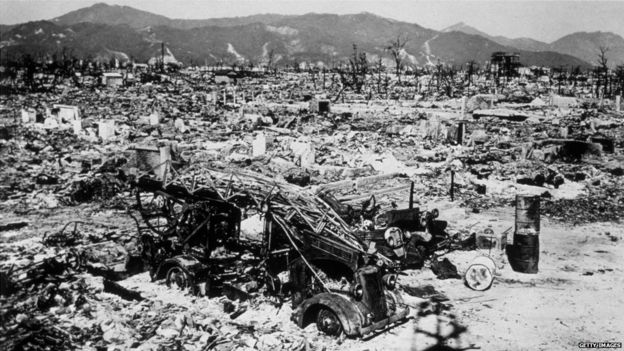
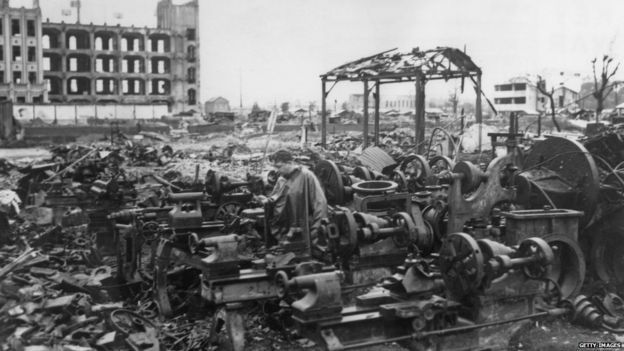
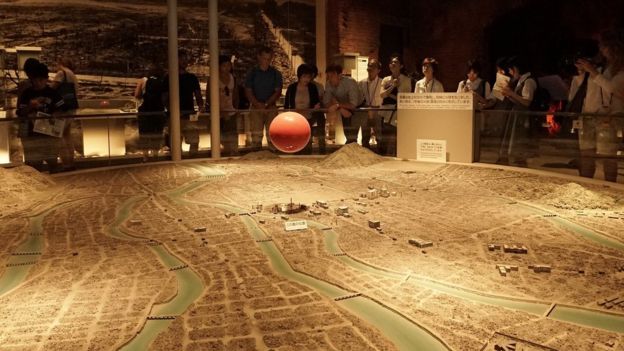
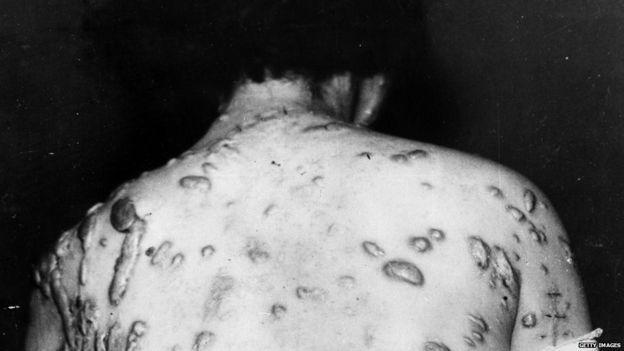

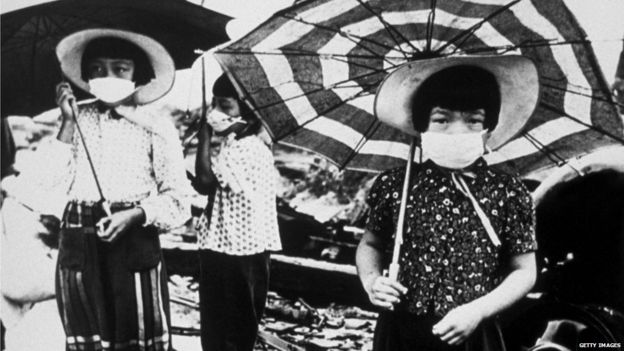
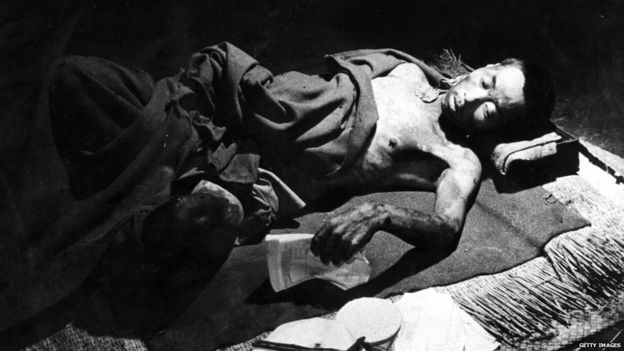
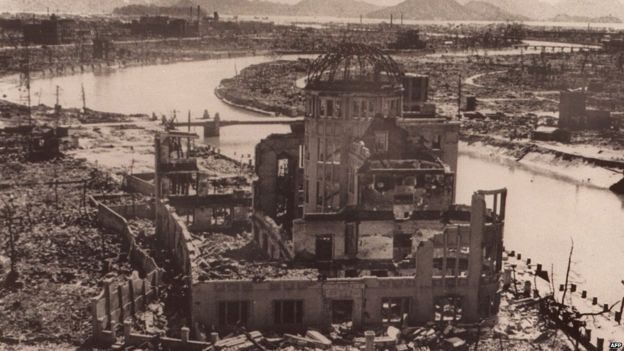
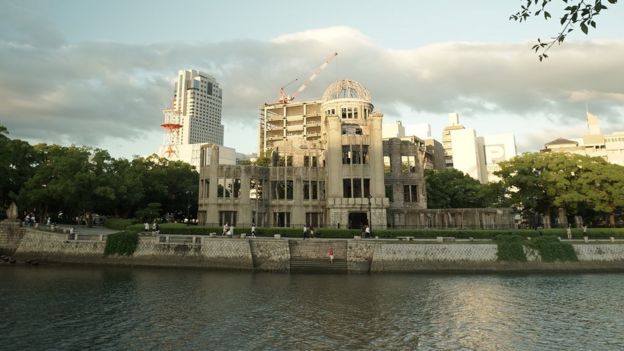












 Mixing up a military general with a politician





 ing point.