| Author |
Message |
 |
|
|
|
|
Advert
|
Forum adverts like this one are shown to any user who is not logged in. Join us by filling out a tiny 3 field form and you will get your own, free, dakka user account which gives a good range of benefits to you:
- No adverts like this in the forums anymore.
- Times and dates in your local timezone.
- Full tracking of what you have read so you can skip to your first unread post, easily see what has changed since you last logged in, and easily see what is new at a glance.
- Email notifications for threads you want to watch closely.
- Being a part of the oldest wargaming community on the net.
If you are already a member then feel free to login now. |
|
 |
2009/10/14 13:46:22
Subject: Natural History argument: Species and Hybridisation
|
|

Decrepit Dakkanaut
|
Argued this lunchtime in the canteen:
The Other Bloke: Species is defined by the ability to produce viable offspring, end of story.
Me: As a keeper of cichlid species of fish, I am very aware of species and even families (especially the rift lake species of Malawi) that will cross breed and produce viable offspring.
So, species can cross breed and produce viable young in certain instances is my stance, his is that if all these fish can cross-breed to produce viable young, they are in fact all one species.
|
|
|
|
 |
|
2009/10/14 13:57:52
Subject: Natural History argument: Species and Hybridisation
|
|

Moustache-twirling Princeps
About to eat your Avatar...
|
If I am not mistaken, much the same thing occurs with plants. From this I can only surmise that the categorization that is implemented, can often be lacking in substantial data to enforce it's claim.
Not too rare, but this sort of cross breeding thing is not common by any stretch of the imagination. There are frogs that can change sexes, and this is an indicator of exactly how complicated evolution is, and as usual, the confusion that follows.
In all honesty, the only thing that matters are the differences, and the names used are little more than icons to speed up the understanding of that process.
|
|
This message was edited 1 time. Last update was at 2009/10/14 13:59:51
|
|
|
|
|
2009/10/14 13:59:21
Subject: Natural History argument: Species and Hybridisation
|
|
Avatar of the Bloody-Handed God
Inside your mind, corrupting the pathways
|
It is my understanding that a species is defined as a group of organisms which can breed together to produce a normal offspring of both sexes and which itself is able to produce young.
The problem is that biology is annoying in that things from different species can sometimes actually breed with other species to produce viable offspring.
So I think you are both right, because there is quite a lot of scope within the world of biology for both definitions to be accurate, with arguments for and against both points of view, as well as other definitions of what makes a "species".
|
|
|
|
|
|
2009/10/14 14:05:53
Subject: Natural History argument: Species and Hybridisation
|
|
Moustache-twirling Princeps
About to eat your Avatar...
|
Usually the definition is very (and by this I do mean extremely) precise, but when you begin to factor in things that were not accounted for given the specific nature of a certain lifeform; things can get very messy.
Evolution is all about similarities, and to a lesser extent the differences in what information we have available. So when you start to split hairs when it comes down to those similarities, while compounding that by omitting various factors, there is less reliable outcomes from your research.
|
|
|
|
|
|
2009/10/14 14:09:52
Subject: Natural History argument: Species and Hybridisation
|
|
Avatar of the Bloody-Handed God
Inside your mind, corrupting the pathways
|
The original definition was fairly precise, however, we have more and more evidence to suggest that what were once considered different species can actually breed together and break all sorts of definitions (not to mention laws regarding interspecies erotica  ).
This has lead to a number of different definitions for you to choose from as to what actually constitutes a species.
I should probably have put in some inverted commas in my post to make it more obvious in what way each "species" was meant, in general or specifically 
|
|
|
|
|
|
2009/10/14 14:12:21
Subject: Natural History argument: Species and Hybridisation
|
|
Mutilatin' Mad Dok
Indiana
|
I want fish, but my girlfriend won't let me get any. As a result, I have no knowledge of species.
|
|
|
|
|
|
2009/10/14 14:18:12
Subject: Re:Natural History argument: Species and Hybridisation
|
|
Moustache-twirling Princeps
About to eat your Avatar...
|
SilverMK2 wrote:The original definition was fairly precise, however, we have more and more evidence to suggest that what were once considered different species can actually breed together and break all sorts of definitions (not to mention laws regarding interspecies erotica ).
You can't "break" a scientific definition, you can however, develop further language to express that definition further.
http://people.virginia.edu/~sos-iwla/Stream-Study/StreamStudyHomePage/Glossary.HTML wrote:Species= The basic category of biological classification consisting of similar organisms that are capable of mating and reproduction
You can call it basic if you want, but to say that going further isn't borderline OCD, at least for someone that does not specialize in that area, is just being disingenuous. When you start to get into sub-species, which is what I would consider any of these amazing lifeforms mentioned in the OP's fishtank, and I would do it by default. Much simpler than trying to cut a word into three meaningless interpretations.
youngblood wrote:I want fish, but my girlfriend won't let me get any. As a result, I have no knowledge of species.
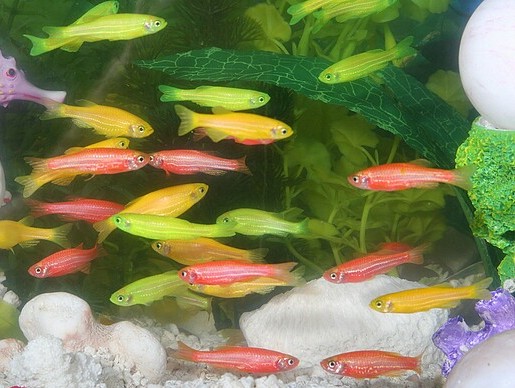
You should get a bunch of posters like this... and then when your GF mentions them... say you didn't notice .

Oh... we should just make this the Fish thread, and Youngblood should just get a bunch of these... and put them next to his collection of antique lava lamps, which I assume he has.
|
|
This message was edited 2 times. Last update was at 2009/10/14 14:25:18
|
|
|
|
|
2009/10/14 14:24:37
Subject: Re:Natural History argument: Species and Hybridisation
|
|
Avatar of the Bloody-Handed God
Inside your mind, corrupting the pathways
|
Wrexasaur wrote:You can't "break" a scientific definition, you can however, develop further language to express that definition further.
You can break all sorts of things, though I am using language rather sloppily as I was not really expecting someone to pick apart my post
So yes, you cannot really "break" a definition, however, you can encounter something which defies the existing definition, yet clearly should be contined within the definition, meaning you have to either change the definition, or create a new definition for whatever it is that breaks the laws you have currently (such as in the case of general and special relativity).
http://people.virginia.edu/~sos-iwla/Stream-Study/StreamStudyHomePage/Glossary.HTML wrote:Species= The basic category of biological classification consisting of similar organisms that are capable of mating and reproduction
You can call it basic if you want, but to say that going further isn't borderline OCD, at least for someone that does not specialize in that area, is just being disingenuous. When you start to get into sub-species, which is what I would consider any of these amazing lifeforms mentioned in the OP's fishtank, and I would do it by default. Much simpler than trying to cut a word into three meaningless interpretations.
I am not entirely sure what you are responding to here...
|
|
|
|
|
|
2009/10/14 14:27:31
Subject: Natural History argument: Species and Hybridisation
|
|
Moustache-twirling Princeps
About to eat your Avatar...
|
I was just elaborating on that definition, and I am not sure what you are getting at with the whole definition thing.
Why would you try and change a definition that works so beautifully for most all lifeforms, when you could just as well elaborate with an entirely new term. One which would most likely be along the lines of Sub-prime species, meaning the ability to interbreed in that specific set of "species".
|
|
This message was edited 2 times. Last update was at 2009/10/14 14:32:24
|
|
|
|
|
2009/10/14 14:48:03
Subject: Natural History argument: Species and Hybridisation
|
|
Avatar of the Bloody-Handed God
Inside your mind, corrupting the pathways
|
Ah, I see what you mean.
Well, for the same way that we would change the definition of "the atom", which was once defined as "the smallest unit of matter", but which, following the discovery of subatomic particles, has been redefined to fall into line with current knowledge.
Given the current indecision as to what actually constitues a species, it would probably be best to keep with the original definition until a firmer understanding can be reached and add in a few clauses and new definitions to describe the exceptions until a better definition can be established.
I was just stating that there are a number of competing definitions as to what constitues a species at the moment, each with various merits and failures.
|
|
|
|
|
|
2009/10/14 15:05:03
Subject: Natural History argument: Species and Hybridisation
|
|
Decrepit Dakkanaut
|
Well he's been to university so obviously he knows more about biology than I do...
Or he's been taught Mayr's 'definition of species' out of a text book and has absorbed that as 'the truth'.
His argument tells me that a malawan eye-biter (dimidiochromis compressiceps) is the same species as a red top dogtooth (cynotilapia afra). Google these fish and tell me they are the same species... It doesn't add up but they can most certainly hybridise in captivity.
|
|
|
|
|
|
2009/10/14 15:15:05
Subject: Natural History argument: Species and Hybridisation
|
|

Joined the Military for Authentic Experience
|
Seperate species can often interbreed, but their offspring usually won't be able to breed itself.
This isn't always the case though. Fitting definitions to the messy biology world is really quite difficult, as the language isn't all that precise. So it's okay to relax a bit with biology definitions a lot of the time and accept that "most of the time" this is the definition, but there are probably some exceptions.
|
|
|
|
|
|
2009/10/14 15:16:43
Subject: Natural History argument: Species and Hybridisation
|
|
Decrepit Dakkanaut
|
I was going to state that this was down to the more primative and mutable zygotes in fish than in mammilians, but then I found coydogs, so the dog (wolf) can mate with the coyote, a different species to the wolf, and produce viable pups.
|
|
|
|
|
|
2009/10/14 15:25:31
Subject: Natural History argument: Species and Hybridisation
|
|
Avatar of the Bloody-Handed God
Inside your mind, corrupting the pathways
|
One part of the species definition is to include a clause against different types of animals being able to breed in un-natural circumstances, such as when forced to do so by people etc.
So, two types of animal that would not normally breed in the wild which can produce viable young in captivity can still be counted as different species.
I would imagine that your fish would be such animals, where they would not normally meet (unless they were into internet dating and could afford the air fare ).
|
|
|
|
|
|
2009/10/14 15:27:37
Subject: Re:Natural History argument: Species and Hybridisation
|
|
Moustache-twirling Princeps
About to eat your Avatar...
|
dimidiochromis compressiceps
 cynotilapia afra

Not particularly astounding, but it is quite amazing, I must admit.
Now onto us...

Wait a minute... it can't really be that simple... .
I am just going to go ahead and throw this in here too.
http://en.wikipedia.org/wiki/Taxonomy
Biology uses Taxonomy, but most basic biology courses only skim the surface of that subject; being as it is not all that necessary to actually learning the material in most cases.
|
|
This message was edited 2 times. Last update was at 2009/10/14 15:37:29
|
|
|
|
|
2009/10/14 15:39:50
Subject: Natural History argument: Species and Hybridisation
|
|
Decrepit Dakkanaut
|
SilverMK2 wrote:One part of the species definition is to include a clause against different types of animals being able to breed in un-natural circumstances, such as when forced to do so by people etc.
So, two types of animal that would not normally breed in the wild which can produce viable young in captivity can still be counted as different species.
I would imagine that your fish would be such animals, where they would not normally meet (unless they were into internet dating and could afford the air fare ).
Thanks for the comparison pics Wrex, also worth noting the cyno is adult and fully grown at about 3-4 inches and the Dimi is adult at about 1ft plus.
Silver, we face a problem in that nature frequently does throw us viable hybrids, last time I was over in USA, I was visiting Clyde Peeling's Reptileland and talking with the keepers about the different rattlesnakes, timber, diamond back, eastern etc. Apparently there are several areas where the populations overlap and you can find hybrids in those areas, yet they are clearly classified into seperate species.
|
|
|
|
|
|
2009/10/14 15:46:02
Subject: Natural History argument: Species and Hybridisation
|
|
Moustache-twirling Princeps
About to eat your Avatar...
|
I do not have any experience with fish, but those do have some pretty distinct similarities on face value. If I didn't know any better, I could even say that one was male and one was female, yet still of the same species.
A lot of fish look similar though, it could be that fish are just better at this kind of interbreeding, where it would seem that they are distinct species to begin with.
I think a bit about spiders when it comes to this kind of thing, just because they can demonstrate the vast differences seen within one species; albeit between the males and females on almost all occasions.

This guy is downright amazing, and he would probably have some of the most useful insight into this kind of thing.
http://en.wikipedia.org/wiki/E._O._Wilson
I am not sure why I am linking this, but for those who can watch it, please do. This is by far, one of my favorite NOVA episodes, you can't get much more inspiring than this cat.
http://www.hulu.com/watch/63732/nova-lord-of-the-ants
|
|
This message was edited 4 times. Last update was at 2009/10/14 15:54:24
|
|
|
|
|
2009/10/14 15:54:02
Subject: Natural History argument: Species and Hybridisation
|
|
Avatar of the Bloody-Handed God
Inside your mind, corrupting the pathways
|
MeanGreenStompa wrote:Silver, we face a problem in that nature frequently does throw us viable hybrids, last time I was over in USA, I was visiting Clyde Peeling's Reptileland and talking with the keepers about the different rattlesnakes, timber, diamond back, eastern etc. Apparently there are several areas where the populations overlap and you can find hybrids in those areas, yet they are clearly classified into seperate species.
Of course, that is why there is so much discussion on the actual definition of a species, and there are several competing definitions.
Also why biology is annoying
Hell, I can splice DNA all day long and create new strains of bacteria which have never been seen before, and before long they will have traded their genetic code around and there will be a million hybrid strains, each with features of their original modified "parent" cell, and whatever bacterial strains they have combined genetic information with.
|
|
|
|
|
|
2009/10/14 18:09:42
Subject: Natural History argument: Species and Hybridisation
|
|
Rogue Daemonhunter fueled by Chaos
|
The best definition of species I learned was that they were "groups of populations that interbreed to form viable offspring, and do not, absent pressure, interbreed with other populations."
So, for example, polar bears and grizzly bears could interbreed, they just generally don't.
Part of this is because we see and view animals in terms of their expressed traits (the phenotype) when what's really at stake is the underlying genetics (the genotype). In the polar bears and grizzly bears, the genotypes are indistinguishable. You can't tell which is which, or even that there is a different. Yet when you look at the populations, they're very different.
So at this point species has a pretty vague definition, but it's certainly not as simple as the ability to produce viable offspring.
|
|
|
|
|
2009/10/14 18:38:17
Subject: Re:Natural History argument: Species and Hybridisation
|
|
Longtime Dakkanaut
|
Here is another one for you. The ring species.
For example the ensanata salamanders of California. All of the sallies will breed with each other along the interior of the ring, but the two groups on the end won't breed. This is something I have been looking at recently as it is very interesting.
GG
|
|
|
|
|
2009/10/14 21:08:37
Subject: Natural History argument: Species and Hybridisation
|
|
Decrepit Dakkanaut
|
He's linked me this as part of his argument:
http://www.macroevolution.net/table-of-contents.html
Which i don't really understand since from it I got this:
"Another example of a stabilization process is that of a hybrid cross producing offspring that are capable of reproducing themselves. True, most hybrids are sterile -- but many are not (this is discussed at length this website's discussion of hybridization). Moreover, it is now known that hybridization occurs frequently in a natural setting, and that fertility is a heritable trait that is variable in degree. So the relatively sterile hybrids produced by an initial cross can give rise to later generations in which fertility steadily improves under the influence of artificial or natural selection (breeders of animals and plants often take advantage of this fact). When a hybrid is capable of apomixis or vegetative reproduction -- both very common circumstances -- sterility is not even an issue."
Which entirely validates my statement that different species can mate to produce reproduction capable offspring.
Automatically Appended Next Post: Polonius wrote:The best definition of species I learned was that they were "groups of populations that interbreed to form viable offspring, and do not, absent pressure, interbreed with other populations."
Yes that's the Mayr's definition, which was the one being abridged into 'species cannot hybridise to produce viable offspring'.
|
|
This message was edited 1 time. Last update was at 2009/10/14 21:13:00
|
|
|
|
|
|
|