Switch Theme:

Weathering models  [RSS] Share on facebook Share on Twitter Submit to Reddit
»
Author Message
Advert


Forum adverts like this one are shown to any user who is not logged in. Join us by filling out a tiny 3 field form and you will get your own, free, dakka user account which gives a good range of benefits to you:
  • No adverts like this in the forums anymore.
  • Times and dates in your local timezone.
  • Full tracking of what you have read so you can skip to your first unread post, easily see what has changed since you last logged in, and easily see what is new at a glance.
  • Email notifications for threads you want to watch closely.
  • Being a part of the oldest wargaming community on the net.
If you are already a member then feel free to login now.


Made in au
Grizzled Space Wolves Great Wolf


There's a lot of potential weathering techniques. Here's some I like to use on my models.

1. Paint chipping. Can be done in different ways, depends what you think is under the paint. Here's a schematic I made for another thread on what I think is a good way to do paint chipping.
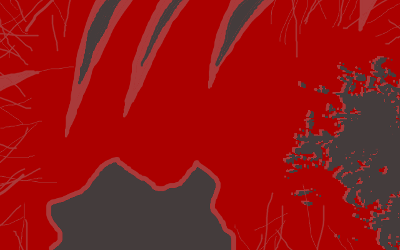


Basically you have your base colour, you paint grey (or metallic if you want) blotches on to it and then use a lighter version of your base colour to "highlight" the scratches. You can also use that lighter colour to make some smaller scratches that damaged the paint without going through. Going around the image, to create long scratches like at the top, you'd paint on long strips of grey and then highlight the edges with a pale red. The chunk of paint missing on the bottom left would be done by just painting a blob with a paint brush. The stuff on the right of the image which looks like abrasion damage is something you'd apply with a sponge.

I normally apply my scratches with a sponge or with a fine detail brush. On my WW2 aircraft like this one (which were aluminium under the paint) I just painted on Runefang Steel with a fine detail brush, slowly building up the paint chips with a series of smaller scratches (rather than just painting a big blob).
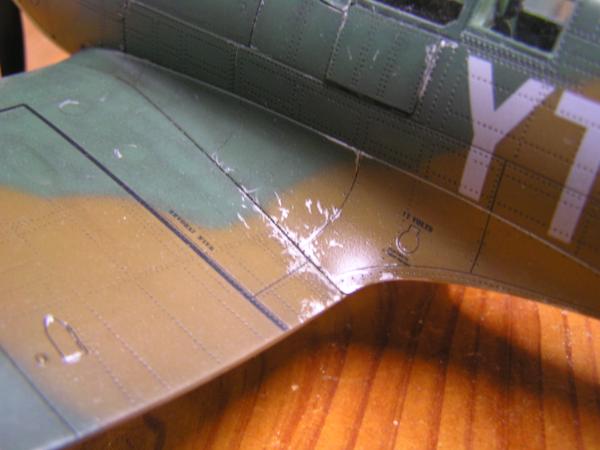


A more advanced method would be to use a chipping medium or salt to do the paint chipping.

I think you have to be somewhat artistic when you apply paint scratches, try to use them to tell a story rather than just applying them evenly all over the model otherwise it will look strange. For example, the spitfire has more paint scratched off around that area because that's where the pilot and mechanic would climb up on the wing when getting in to the cockpit and the hatch which is scratched up is a swinging hatch which would be open and closed frequently. The paint scratching in the bottom left of the photo is where the flap mechanism pops out of the wing and though you can't see it in these images I have done scratching around the machine gun access panels, electronics access panel, oil filler, etc. On tanks you tend to get scratching around hatches and blackening around the engine.

2. Airbrushing - if you have an airbrush you can airbrush brown tones lightly to represent a build up of grime or light beige tones to represent dust. On the spitfire above I used an airbrush to darken the areas around panel and rivet lines.

3. Pin washing - That's where you do a wash that only focuses on the crevices. There's a few ways of doing it but my preferred method is an oil wash. Enamel washes also work well. You can use acrylic washes but they are hard to manipulate and often look messy (and not in the good way).

4. Pigments - You can use pigments to create dusty effects, dirt build up, you can mix it with varnish and/or plaster and/or sand to make mud effects. Personally I've always struggled with pigments, they can look good but I find it really hard to predict what they'll look like when I'm done so I don't really like them.

5. Oil Paints - Oil paints can be manipulated after you've applied them. They can be smeared, wiped off, drybrushed back on, blended in. Stuff that's a nightmare to do with regular acrylic paints. For example, the bottom of this Spitfire wing I applied black and dark brown oil paint quite heavily, then wiped it away with a tissue (leaving it in the crevices, panel lines and whatnot) then came back with a regular brush and reapplied it areas that I wanted it to be more built up and progressively drybrushed it in and wiped it away with a tissue until I had the effect I wanted (for example around the flap and aileron and in the wheel well). The subtle gun smoke trails weere achieved by drybrushing black oil paint in long streaks.
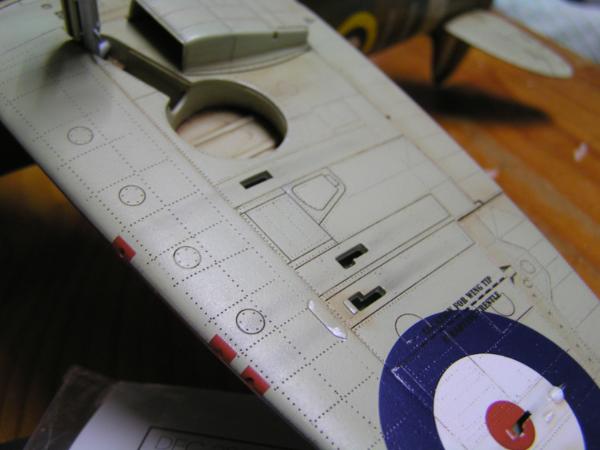


If you don't own an airbrush, oil paints can be a way of achieving similar results with regular hairy brushes (if you know what you're doing!). In fact oils beat the airbrush in some areas, like being able to create a sharp line that gradually fades out, something that's almost impossible to do with an airbrush but easy to do with oils.

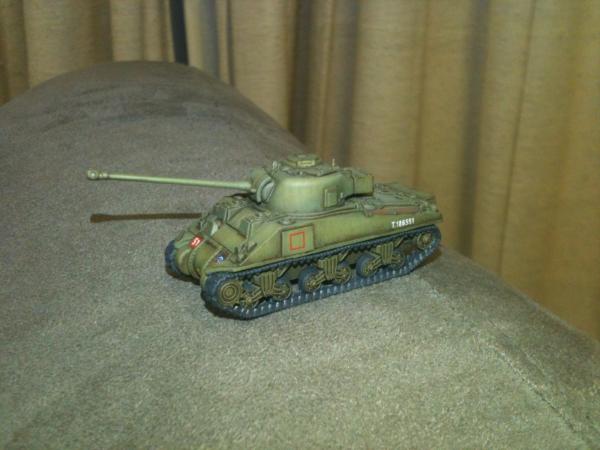
6. Acrylic washes. I am falling out of love with acrylic washes. But they can still be good. This Sherman I achieved the streaky dirt effect by applying dark brown wash mixed with plenty of drying retarder in to the crevices and then coming back with a clean brush and blending the wash in to the panel, by using a streaking motion to create the blends, the blends ended up streaky and makes it look like it has been dirty and maybe rained to create the streaks.


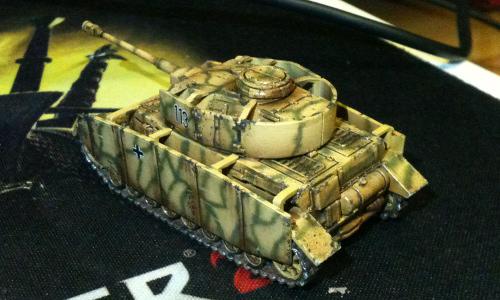
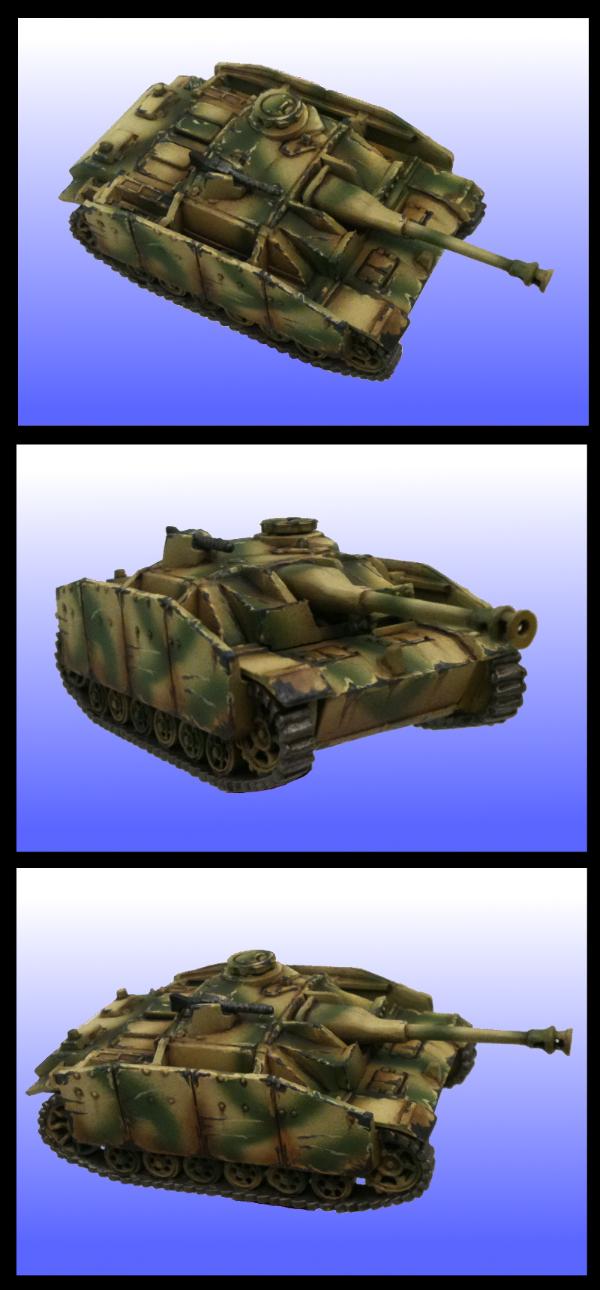
I usually use a mix of techniques. For example these German tanks I initially painted them to be clean then did paint chipping using dark grey paint on a sponge then highlighted the paint chips with a light sand tone (lighter version than I used on the base coat) then drybrushed a dark brown to look like dirt and grime build up and then used an enamel wash pin wash to darken the crevices and create some streaking. I really like the effect. I used a couple of different browns for the streaking and focused some of them around the paint chips (where dirt and rust would accumulate).


This message was edited 1 time. Last update was at 2015/11/25 12:18:16


Made in au
Grizzled Space Wolves Great Wolf


 TseGuevara wrote:
Next is chipping. This is an area where a lot of wargamers make a critical mistake – chipping with metal. The thing is, metal chips on armor almost never occur. Real-life chippings are either primer showing through much less adhesive camo paint (and priming is usually done with brown), or, indeed, metal, but already oxidized. In either case, chippings are mostly brown (with the exception of hard edges and tracks). This is even more important when you take your space marine – their armor is made of CERAMICS, not metal, and as such it would make more sense to chip them using light grey or sand colors.
Then there are all sorts of pigments that can greatly help you to initate realistic rust, dirt, dust, etc. Just don't overdo them – dirt tend to accumulate in very specific parts of vehicle. Same goes for rust – tank, which is in constant use, will be kept in good condition, and rust will only form on constantly heated parts, i.e. on exhausts but never on tracks.
It all depends on the subject matter and what story you are trying to tell. In the context of 40k, you can tell almost any story you want, materials can be whatever you want, paint can be whatever you want.

As an FYI, I used metallic to do the paint chipping on the Spitfire because in real life they were aluminium and paint tended to not stick brilliantly to them. It's quite common to see photos of WW2 aircraft with scratches and chips exposing the bare metal underneath. Sometimes huge chunks of it, some more than others, lots of photos of Japanese aircraft missing yards of paint. I've seen photos of Spitfires that had more paint missing than my model, others which didn't have a scratch on them.

My 15mm tanks are overweathered, the Stug has unrealistically large chunks of paint missing.... but I like them because they are 15mm scale so rather than trying to be photo realistic I intentionally exaggerated the weathering so it stands out more on the table top and in my display cabinet.

In the end you are just trying to tell a story and do it convincingly. If there's going to be exposed metal, ask why, ask if there should be smaller scratches that didn't penetrate the paint but are still visible, should there be exposed primer, should the paint just have come off in a big chunk, if so why? Should there be some transfer (like if it drove through a brick wall, there might be brick coloured marks on it).

This message was edited 2 times. Last update was at 2015/11/25 13:23:51


Made in au
Grizzled Space Wolves Great Wolf


Guildenstern wrote:
when you guys are talking about oil washes, what exactly are you using? Do you simply thin the desired oil paint for use as a wash or is there some other product available as an oil wash? or both lol I guess same question for the testors enamels as well.

I've used oil enamel and acrylics (now) but generally for very different things. My testor enamels were always the ones I used for models before (cars planes etc), for instance. I've really only started playing with various techniques, and mixing paint types too, when I started doing miniatures again.
For oil washes I always just mix my own from regular oil paint and white spirit. You can thin it a lot, in which case it will tend to pull itself in to the crevices very easily, or you can only thin it slightly in which case it's easier to clean up afterwards and tends to be a bit more opaque. If I thin it heavily, I tend to aim to only get it in the crevices so there's little to no clean up. If I don't thin it much, I tend to cover the entire surface and then use a tissue to wipe it up and a soft brush to blend it in. Creates a slightly different effect.

You can make oil washes using something like Humbrol Thinner as well, I know some people who swear by it, but I find it to be way too harsh on the underlying paint for my likings.

When I talk about enamel washes, I'm typically just meaning premixed ones that you can purchase. Tamiya make some extremely thin washes designed for panel line washes, I find they tend to work best on aircraft which have very fine panel lines, I don't really like them on armoured models. AK interactive, Testors and Humbrol all make enamel washes as well but I haven't tried any of those ones as of yet.

I haven't tried it before but on the aircraft I'm currently working on I intend to mix my own enamel wash as I don't own the colour I want to use in wash form.

This message was edited 2 times. Last update was at 2015/11/28 01:26:50


Forum Index » Painting & Modeling
Go to: