Analysis of the data is mixed. Germany relaxed restrictions 2 weeks ago ( https://abcnews.go.com/Business/wireStory/germany-relaxes-virus-rules-fallback-clause-70535448 ), so there should be the initial surge of new cases happening- but daily new cases still looks relatively low (1155, as opposed to their peak of 6933). It will be very interesting to see if this indicates a true increase in the curve, or if it is just one of the fluctuations that happen in the graph historically.
Weirdly though, the daily death total spiked quite high- 282, which is pretty close to their darkest days 333. I don't understand why that would be the case.
I'm not trying to support or oppose the Germany claim, but I'm hoping their situation will help us know what to expect as the USA opens up.
Death rates going up is likely because as you relax the lockdown more of the highly vulnerable become at risk once again. Some will not maintain lockdowns and will relax their own isolation just like younger/not at risk groups will. Plus you'll get more people wanting to visit parents and relatives. Basically a fresh wave of vulnerable people becomes exposed which sends the death rate up; even if the overall infection rate isn't increasing very rapidly.
Azreal13 wrote: That still means that statistically 200 people will be in charge of a vehicle that probably shouldn't be yet.
True, but there are plenty of people who have passed driving tests who definitely shouldn't be on the road. Be it because they're irresponsible teens or old people with failing mind and body.
For sure. My mother in law, when she was alive, comes to mind. She drove for at least 10 years more than she should have.
Exactly. thats why you need to give it a little time to see where the stats go. provided the healthcare system of said country isnt overwhelmed, that shouldn't really be an issue.
I think two other important components to the problem are the lack of testing and lack of information. It’s perfectly rational to want to return to normal behaviors if you feel normal. We’ve been self quarantining for a month and a half now and if you feel healthy at this point you probably believe you don’t aren’t infected so why not go out? There isn’t testing available for asymptomatic people so people that honestly believe they are healthy can’t be sure whether or not they’re putting others at risk. It’s crazy that we’re opening back up with no widespread testing. What is different from when the lockdown started? Why is it safe now if it wasn’t then? And if we can’t safely end the lockdown without testing and we don’t know when we’ll have widespread testing how can we keep everyone locked down indefinitely?
We don’t seem to have a comprehensive plan. Coupled with that we don’t have good information. We can’t tell who has it or has had it unless they’re actively sick. We’re not sure what treatments are effective, how many strains of the virus are out there or if people can get infected more than once. Some research has been done on some states in regards to how widespread the virus has been. We know there’s been more cases than just the confirmed ones but we’ll never get an accurate count. That ties back into not knowing if you are infected or have been infected if you were asymptomatic. It’s a very confusing and anxious situation.
I agree that moving forward with no real information seems...crazy. Like I've said, my heart tells me we'll navigate this thing, but my brain just keeps screaming that we're walking into a buzzsaw.
My state (PA) is at least planning to hire citizens to do contact tracing. I dunno if it's enough people to make a real difference, and my understanding is that work requires some real training. But it's something. And the name -- Commonwealth Civilian Coronavirus Corps, or CCCC -- obviously plays on the Depression-era CCC. Which my grandfather was a part of.
AegisGrimm wrote: We are so monumentally, horrendously screwed by stupidity here in the US. Seriously, I already had a somewhat low opinion of my fellow human beings, but I am even revising that previous thought.
I am a work tool and appliance delivery driver who has just got back to work after the shelter in place orders have been lifted partially, and everyone slammed back out into the public like nothing has even changed.
It might as well be May of 2019.
In the past three days of deliveries, I have been met by exactly ONE maintenance guy out of at least 30 properties all across my state who wore a mask, and he only remembered it because he saw me wearing mine. None of my shop wears even one piece of PPE, and they think that that masks are "stupid and pointless". Today they were all eating from a single communal pizza for lunch.
I have actually been scoffed and eye-rolled at by customers for wearing a mask, and even given unsolicited advise about how all of this is a hoax and barely anyone is REALLY getting sick. One guy said that yeah, he used to wear a mask, but it was too much of a pain to talk in, so he said in his words "Eff it, I'll either die or I won't". One of the guys has been in our shop every day to buy materials with no mask or anything, and is from an apartment complex maybe 1/8 of a mile away that he openly states has several confirmed resident cases.
Some of the properties I deliver to are even majority-senior housing, and it's like nothing is going on!
My mom and dad live next door to my wife and kids and I, and we had been sheltering in place together. Unfortunately, I have had to go back to quarantining my family from them, because Mom is going through cancer treatments and so is immune-comprimised. I figure I am so exposed at work that there is no reason to take the chance.
Sorry if it sounds like I am venting, but hey at least it's relevant and non-political!
Wow, how different things are by state. Here in San Diego it is very much the opposite. Mask requirement started in May, but I would say 80% of people (and all workers) were already wearing masks anyways. People are going out of their way to maintain distance, barely any traffic on the roads, pretty much completely inverted.
Even within the state itself things vary massively. Orange County has done a whopping 40k tests total and the only testing I can find that doesn't require a referral is literally Sean Penn's non-profit. San Diego county has cleared roughly 65k so roughly 50% more despite a 4% population difference. LA county is offering free testing and can clear a whopping 18k tests a day,
Azreal13 wrote: That still means that statistically 200 people will be in charge of a vehicle that probably shouldn't be yet.
But frankly its probably less scary than it appears from a UK perspective where our population density and congested road network, as well as our propensity for manual transmission cars, makes the thought of allowing drivers with only half a licence (you have both a theoretical and practical exam to pass over here, not sure if that's mirrored) out on their own (not to mention eligible to travel the motorway/interstate network,) is terrifying.
True. It also would t surprise me if the need to clear the backlog and issue tens of thousands of teens their DL which is typically the only govt issues photo ID people have or carry is more of an impetus than letting teens drive. Few people are driving anywhere these days.
If all they need is ID, non-drivers licenses exist, and are valid anywhere a driver's license is.
Future War Cultist wrote: I’ve been hearing a few people saying that a vaccine may never come. I really hope that isn’t the case because if so, then what?
Hardly surprising as getting a vaccine for any coronavirus ranges from difficult to impossible.
But what happens is what probably happened with all of the past viruses that now make up the pool of generic cold and flu viruses. They burn out and become a background disease after they've eliminated all of the individuals who are vulnerable to it. It'll kill a good amount of people, but it will end as quick as it came.
Even if a vaccine can be made, it will probably happen long after the virus has worked its way through the entire population.
Future War Cultist wrote: I’ve been hearing a few people saying that a vaccine may never come. I really hope that isn’t the case because if so, then what?
Hardly surprising as getting a vaccine for any coronavirus ranges from difficult to impossible.
But what happens is what probably happened with all of the past viruses that now make up the pool of generic cold and flu viruses. They burn out and become a background disease after they've eliminated all of the individuals who are vulnerable to it. It'll kill a good amount of people, but it will end as quick as it came.
Even if a vaccine can be made, it will probably happen long after the virus has worked its way through the entire population.
Yup. its not a nice thought, but I think that what you say is basically inevitable, sooner or later. People talking like we will somehow get rid of the virus, or eliminate it, especially those using it as a way to try and promote longer and more draconian lockdowns, are just naive in my opinion. It isnt going away. shield the vulnerable as best as possible, thats all we can do.
People think this is a disease like Smallpox or Bubonic plague where you can actually cure it. But its a Cold/Flu virus on steroids. You can't cure the common cold, you can't cure a 'roided up version of it either.
Grey Templar wrote: People think this is a disease like Smallpox or Bubonic plague where you can actually cure it. But its a Cold/Flu virus on steroids. You can't cure the common cold, you can't cure a 'roided up version of it either.
There's vaccines for the flu. The problem is they only confer short term immunity, and there's about a hundred different strains that rotate through every year. Since we can't immunize against them all, we operate on a best guess basis, which is why you can still get the flu after getting your yearly jab.
Grey Templar wrote: People think this is a disease like Smallpox or Bubonic plague where you can actually cure it. But its a Cold/Flu virus on steroids. You can't cure the common cold, you can't cure a 'roided up version of it either.
Ah so you are anti-vacc disbeliever? Seeing we have vaccines for influenza.
Grey Templar wrote: People think this is a disease like Smallpox or Bubonic plague where you can actually cure it. But its a Cold/Flu virus on steroids. You can't cure the common cold, you can't cure a 'roided up version of it either.
Ah so you are anti-vacc disbeliever? Seeing we have vaccines for influenza.
First, how in the feth did you get anti vac from that?
And second, where’s your source for your claims on Germany? I’m going to keep asking until you post it.
Azreal13 wrote: That still means that statistically 200 people will be in charge of a vehicle that probably shouldn't be yet.
But frankly its probably less scary than it appears from a UK perspective where our population density and congested road network, as well as our propensity for manual transmission cars, makes the thought of allowing drivers with only half a licence (you have both a theoretical and practical exam to pass over here, not sure if that's mirrored) out on their own (not to mention eligible to travel the motorway/interstate network,) is terrifying.
True. It also would t surprise me if the need to clear the backlog and issue tens of thousands of teens their DL which is typically the only govt issues photo ID people have or carry is more of an impetus than letting teens drive. Few people are driving anywhere these days.
If all they need is ID, non-drivers licenses exist, and are valid anywhere a driver's license is.
True but they'd still have the 20k backlog for DLs that they'd have to clear later. This way it's 2 birds 1 stone.
I think two other important components to the problem are the lack of testing and lack of information. It’s perfectly rational to want to return to normal behaviors if you feel normal. We’ve been self quarantining for a month and a half now and if you feel healthy at this point you probably believe you don’t aren’t infected so why not go out? There isn’t testing available for asymptomatic people so people that honestly believe they are healthy can’t be sure whether or not they’re putting others at risk. It’s crazy that we’re opening back up with no widespread testing. What is different from when the lockdown started? Why is it safe now if it wasn’t then? And if we can’t safely end the lockdown without testing and we don’t know when we’ll have widespread testing how can we keep everyone locked down indefinitely?
We don’t seem to have a comprehensive plan. Coupled with that we don’t have good information. We can’t tell who has it or has had it unless they’re actively sick. We’re not sure what treatments are effective, how many strains of the virus are out there or if people can get infected more than once. Some research has been done on some states in regards to how widespread the virus has been. We know there’s been more cases than just the confirmed ones but we’ll never get an accurate count. That ties back into not knowing if you are infected or have been infected if you were asymptomatic. It’s a very confusing and anxious situation.
I agree that moving forward with no real information seems...crazy. Like I've said, my heart tells me we'll navigate this thing, but my brain just keeps screaming that we're walking into a buzzsaw.
My state (PA) is at least planning to hire citizens to do contact tracing. I dunno if it's enough people to make a real difference, and my understanding is that work requires some real training. But it's something. And the name -- Commonwealth Civilian Coronavirus Corps, or CCCC -- obviously plays on the Depression-era CCC. Which my grandfather was a part of.
We're trying to expand and improve contact tracing here in NC too but testing is still a problem. The test is just a nasal swab witch isn't a big deal but the swabs have to be sent to a lab for testing. Typically the turnaround was a couple days because tests were sent to third party labs but they were able to send them to the local UNC hospital lab for testing that cut the tiime down to 1 day. However, as testing increased the UNC lab got swamped so they had to send the backlog out to third party labs so testing results became a 3 day turnaround. So with testing only available for people who have symptoms and needing 3 days to confirm infection most people who are sick and don't need hospitalization only have to stay home for about 10 days. The downside to contact tracing is that self quarrantining is still voluntary. Nobody is keeping infected people under surveillance or punishing them for breaking isolation. Infected people are told to stay home but as of right now if they have compelling reasons like work to leave their home there's nothing in place to keep them from going out or punishing them if they do.
Grey Templar wrote: People think this is a disease like Smallpox or Bubonic plague where you can actually cure it. But its a Cold/Flu virus on steroids. You can't cure the common cold, you can't cure a 'roided up version of it either.
Ah so you are anti-vacc disbeliever? Seeing we have vaccines for influenza.
And in the US tens of thousands of people (averaging around 40k) a year die from the flu even with flu shots being free and easily accessible. The vaccines don't eliminate the danger we just accept the consequences of flue season and keep society operating normally.
Grey Templar wrote: People think this is a disease like Smallpox or Bubonic plague where you can actually cure it. But its a Cold/Flu virus on steroids. You can't cure the common cold, you can't cure a 'roided up version of it either.
Ah so you are anti-vacc disbeliever? Seeing we have vaccines for influenza.
First, how in the feth did you get anti vac from that?
And second, where’s your source for your claims on Germany? I’m going to keep asking until you post it.
I mean i have seen hegel, i have seen other philosophers, but the mental gymnastics from this i agree is worth olympia gold.
Prestor Jon wrote: And in the US tens of thousands of people (averaging around 40k) a year die from the flu even with flu shots being free and easily accessible. The vaccines don't eliminate the danger we just accept the consequences of flue season and keep society operating normally.
And that's because there's over a hundred flu strains (essentially all of which we have vaccines for), not all of which are vaccinated against every year. Since the vaccines only allow temporary immunity to the flu, and they can't reasonably vaccinate against all of them, we get a vaccine against the CDC's best guess of what will be circulating that year. Sometimes they get it wrong, and often people don't get their shots, so people still get the flu, and some of them die.
Grey Templar wrote: People think this is a disease like Smallpox or Bubonic plague where you can actually cure it. But its a Cold/Flu virus on steroids. You can't cure the common cold, you can't cure a 'roided up version of it either.
Ah so you are anti-vacc disbeliever? Seeing we have vaccines for influenza.
no way.. This is my favourite post on this page. Flu vaccines are made on a best guess strategy, on which strains are going to be most prominent that season. As has already been mentioned. Its a complete guessing game. Which is what a vaccine for cv19, if one is even possible, will likely take the form of.
Grey Templar wrote: People think this is a disease like Smallpox or Bubonic plague where you can actually cure it. But its a Cold/Flu virus on steroids. You can't cure the common cold, you can't cure a 'roided up version of it either.
Ah so you are anti-vacc disbeliever? Seeing we have vaccines for influenza.
no way.. This is my favourite post on this page. Flu vaccines are made on a best guess strategy, on which strains are going to be most prominent that season. As has already been mentioned. Its a complete guessing game. Which is what a vaccine for cv19, if one is even possible, will likely take the form of.
No, it won't. There aren't terribly many strains of COVID-19, one of them is extremely dominant, and it remains to be seen if a vaccine can be effective against more than one of them. Flu vaccines are ineffective specifically because they need to be tailored to exactly one strain's shell. This isn't the case for all diseases.
True. I guess it remains to be seen if they could make something for the few strains of cv. I thought that coronavirus ability to mutate was what effectively stopped vaccines being made.
Prestor Jon wrote: And in the US tens of thousands of people (averaging around 40k) a year die from the flu even with flu shots being free and easily accessible. The vaccines don't eliminate the danger we just accept the consequences of flue season and keep society operating normally.
And that's because there's over a hundred flu strains (essentially all of which we have vaccines for), not all of which are vaccinated against every year. Since the vaccines only allow temporary immunity to the flu, and they can't reasonably vaccinate against all of them, we get a vaccine against the CDC's best guess of what will be circulating that year. Sometimes they get it wrong, and often people don't get their shots, so people still get the flu, and some of them die.
You are 100% correct. I'm not making any arguments or statements disputing that. I was trying to point out that even with a vaccine we are still vulnerable to the flue and we just keep operating like normal anyway because we've come to accept the risk. We don't know when we'll get a vaccine for covid19 or how effective it will be. Hopefully we get a vaccine eventually and it wipes out any danger from the virus but that might not happen, we may have to accept coronavirus as being somethng we just have to live with and accept like the flu. We don't have enough information to be able to make a reasonable prediction for the future.
queen_annes_revenge wrote: True. I guess it remains to be seen if they could make something for the few strains of cv. I thought that coronavirus ability to mutate was what effectively stopped vaccines being made.
There are plenty of coronaviruses with vaccines. If you're referring to the common cold, it's because the common cold isn't caused by any one virus. It's a collection of symptoms caused by hundreds of different viruses, usually rhinoviruses.
queen_annes_revenge wrote: True. I guess it remains to be seen if they could make something for the few strains of cv. I thought that coronavirus ability to mutate was what effectively stopped vaccines being made.
There are plenty of coronaviruses with vaccines. If you're referring to the common cold, it's because the common cold isn't caused by any one virus. It's a collection of symptoms caused by hundreds of different viruses, usually rhinoviruses.
Are you sure? Not being facetious, I'm genuinely curious. As far as I was aware the 6 pre cv19 coronas have no effective vaccines, those being mers, Sars 1 and OC43, -HKU1, HCoV-229E, -NL63, the 4 mild human cv. Wikipedia page has it that there are no vaccines for those. I'd be interested to hear otherwise.
Prestor Jon wrote: And in the US tens of thousands of people (averaging around 40k) a year die from the flu even with flu shots being free and easily accessible. The vaccines don't eliminate the danger we just accept the consequences of flue season and keep society operating normally.
And that's because there's over a hundred flu strains (essentially all of which we have vaccines for), not all of which are vaccinated against every year. Since the vaccines only allow temporary immunity to the flu, and they can't reasonably vaccinate against all of them, we get a vaccine against the CDC's best guess of what will be circulating that year. Sometimes they get it wrong, and often people don't get their shots, so people still get the flu, and some of them die.
There's more to it than that. The flu vaccine's legendary ineffectiveness is caused more by genetic drift during the creation process than the WHO choosing the wrong strain. The antigen for flu vaccine is grown in chicken eggs and always comes out slightly different than the virus it's trying to imitate. If it's close enough you'll produce antibodies that protect you from the real virus if it's off just a little too much the vaccine is ineffective.
Even permanent immunity would mean little due to how fast a virus genome will change. Think of it like a drunk person copying a book, then passing it to another drunk who does his best to copy that, before passing it to another, and so on. And there is no proofreading allowed.
In other news, it seems that recovery from the virus is more difficult than previously imagined.
In the Netherlands people recuperating after surviving now aside from reduced long capacity also seem to suffer from damage to other organs, like the heart and kidneys, and some exibit symptoms of a brain infarct (is that an aneurysm in english? I always confuse the term).
It's unclear if and which of these problems are due to the respirators and associated drugs, and which are after-effects of the infection, but it seems something's wrong with their blood afterwards.
Personal conjecture: If your lungs are so badly damaged that you need a respirator, brain damage from lack of oxygen seems quite possible to me.
Grey Templar wrote: People think this is a disease like Smallpox or Bubonic plague where you can actually cure it. But its a Cold/Flu virus on steroids. You can't cure the common cold, you can't cure a 'roided up version of it either.
Ah so you are anti-vacc disbeliever? Seeing we have vaccines for influenza.
First, how in the feth did you get anti vac from that?
And second, where’s your source for your claims on Germany? I’m going to keep asking until you post it.
Yeah, I mean seriously. I didn't say anything about vaccines at all. I said Cure. A Cure is something that can eliminate a disease with nearly perfect results. In such a fashion that the disease can be completely eliminated, like we did with smallpox. A Cure might be a vaccine, like Smallpox was. Bubonic plague and leprosy are cured by antibacterial drugs.
Influenza vaccines basically suck, as far as vaccines go. They're only good for a year and they don't even fully protect you unless you get lucky. Saying they are a cure is completely false. The flu shot is just rolling the dice and hoping you get lucky. It might not work for you as an individual, it might not work against the strains you contact, and your immune system might not even need the help given the particular strains that year. Flu shots are only useful because they're cheap and don't hurt your chances so you might as well get one. If they weren't inexpensive and/or had bad side effects they would be useless because of how poorly they protect you.
queen_annes_revenge wrote: True. I guess it remains to be seen if they could make something for the few strains of cv. I thought that coronavirus ability to mutate was what effectively stopped vaccines being made.
There are plenty of coronaviruses with vaccines. If you're referring to the common cold, it's because the common cold isn't caused by any one virus. It's a collection of symptoms caused by hundreds of different viruses, usually rhinoviruses.
Which is why a vaccine for COVID-19 is basically a semi-useless goal. By the time it exists, COVID-19 won't be the problem. It'll be COVID-9 billion thats causing problems. And even if COVID-19 were still causing issues, Coronavirus vaccines are pretty ehhhh in terms of effectiveness.
It might also be that the volume means that some of the respirators being used are perhaps not the best on the market; or that staff aren't fully trained in their specific use so there could be mistakes happening (even really small ones) that could be compounding the situation.
Long term effects of recovery are really hard to understand right now; even china is only a few months out from their infection wave and recoveries.
I believe I recall reading that lung capacity should increase during recovery, though to what degree is hard to say and likely varies a lot depending on the health of the person when they go in; what treatments they get and how long they are infected for. And that's before considering any other ailments that might get them at the same time (eg pneumonia)
Bran Dawri wrote: In other news, it seems that recovery from the virus is more difficult than previously imagined.
In the Netherlands people recuperating after surviving now aside from reduced long capacity also seem to suffer from damage to other organs, like the heart and kidneys, and some exibit symptoms of a brain infarct (is that an aneurysm in english? I always confuse the term).
It's unclear if and which of these problems are due to the respirators and associated drugs, and which are after-effects of the infection, but it seems something's wrong with their blood afterwards.
Personal conjecture: If your lungs are so badly damaged that you need a respirator, brain damage from lack of oxygen seems quite possible to me.
Many of the people who have went to hospital have had their air amount in blood be even down to 50%...Under 90% is already abnormal. They are basically suffocating. That's how younger people can go to hospital only lately having had any trouble when they have been suffering from it even for week and then suddenly can die from it despite appearing to be okay only short while ago.
If your oxygen levels drop that low no wonder you suffer after effect. Wouldn't surprise many of the recovered people will have lost some of their expected life expectancy from corona.
Bran Dawri wrote: In other news, it seems that recovery from the virus is more difficult than previously imagined.
In the Netherlands people recuperating after surviving now aside from reduced long capacity also seem to suffer from damage to other organs, like the heart and kidneys, and some exibit symptoms of a brain infarct (is that an aneurysm in english? I always confuse the term).
It's unclear if and which of these problems are due to the respirators and associated drugs, and which are after-effects of the infection, but it seems something's wrong with their blood afterwards.
Personal conjecture: If your lungs are so badly damaged that you need a respirator, brain damage from lack of oxygen seems quite possible to me.
This explains what I’ve heard about my dad’s friends dad. He was suffering organ failure while in ICU and even now he’s still on dialysis. They reckon he’ll never be the same again. Horrendous stuff.
Amazing how every year nobody remembers VE day (or VJ day) but yet during lockdown its suddenly remembered because now they can drink booze and party! So pathetic.
I have heard chatter about pathology speculation that the brain is a direct, not indirect, target for some time, also about the heart and infarct means you lost blood flow to an area, long enough that the tissue in that area died.
aneurysm is when a blood vessel (by weakening of the wall, or high blood pressure, or perhaps a congenital defect in the formation of the blood vessel itself) expands a bit like a balloon, which is dangerous because many aneurysmal blood vessels pop and bleed profusely. Inside the head of a person, its ALSO dangerous becasue your brain is trapped in a solid casing (the skull doesn't expand) and inflating an small blood balloon inside the skull beside the brain crushes the brain and can cause its blood flow to be interrupted that way, or the aneurysm can pop (berry aneurysms, a from of intracranial aneuyrsm are particularly striking when they do this, as they cause an incredible headache, and often swiftly afterwards, death.) A popped aneurysm bleeds directly into the brain, or at least, directly around it, creating pressure that cuts off blood flow. An unpopped aneurysm, however, can also be very problematic because its one of the places in an otherwise healthy person that blood clots can form and suddenly cut off the flow of blood beyond the anyeursm (because clot in the way) .. thus depriving the tissue nearby of blood and potentially infarcting (starving for oxygen till it dies and rots) a chunk of the brain.
So the one can lead to the other, eh?
Infart in this disease is not necessarily anyeurismal. There seems to be a clotting disorder that is associated with the virus that could lead to lots and lots of tiny clots hitting the brain and killing lots and lots of tiny areas of the brain, with a similar outcome to a larger single infarction event. Look up the term "lacunar" brain infaction. Its also possible that whatever chainge in blood chemistry that causes false readings on pulseoximetry in these patients is affecting things directly -- possibly via the accumulation of methemoglobins (has been speculated).
Its also possible that virus enters inside the blood brain barrier and directly kills neurons and support cells, causing areas of dead tissue. There has been chatter about this possibility since some neurologists became aware of diminished central respiratory drive in some patients a few month ago.
It is also (so many) possible that the immune system recognizes the virus -- but that some protein or glycoprotien or something in the brain is so similar that the immune system attacks the brain itself. This is usually prevented or diminished by a healthy blood brain barrier, but in a patient on a respirator, all sorts of stuff may stop working that you can normally sort of count on in the body's normal state. Hell, you could even be triggering microseizures from hypoxia in local brain tissue that leads to the overload and metabolic burnout of .. well, point is, your scientist types will probably spend 10 years arguing over what is doing this.
The upshot we need to know is, its happening, and the virus causes it, and its something we got to be aware of when we try to figure out what comes next.
The personal conjecture isn't necessarily wrong -- the respirator makes breathing less difficult and removes part of the need for the body to provide the energy to do so. This doesn't necessarily help if the lung fields themselves are so damaged from local inflammation that the usually gossamer thin alveoli (part of the lung your oxygen enters) is clogged by inflammation and can't accept outside air oxygen. This ALSO is discussed by various people studying this horrific and unpleasant disease of old folk. So apparently, ventilators have been useless in a large percentage of patients, or to put it another way, between 80 and 88 percent (depends on which study) of the venitilator patients die on the vent. The 12 percent who someday get weaned off it probably come as close to death as you care to name, and may have all sorts of chronic low oxygen in their tissues issues. (The main offendes there being heart, kidney, brain, which are all tissues that run hot metabolically. While I think liver does a lot of metabolism, the liver has significant regenerative capabilities the other 3 organs lack.) But I digress.
Anyway. Upshot is, its probably better not to get very sick with this virus and nearly die, if you can avoid that, too.
ValentineGames wrote: Amazing how every year nobody remembers VE day (or VJ day) but yet during lockdown its suddenly remembered because now they can drink booze and party! So pathetic.
That has nothing to do with the lockdown. The government moved the May bank holiday to coincide with VE day this year as it is the 75th anniversary.
ValentineGames wrote: Amazing how every year nobody remembers VE day (or VJ day) but yet during lockdown its suddenly remembered because now they can drink booze and party! So pathetic.
That has nothing to do with the lockdown. The government moved the May bank holiday to coincide with VE day this year as it is the 75th anniversary.
They also announced it after most calendars were printed; hence why some don't show the change. It caused a lot of annoyance for event planners, jobs and suchlike
ValentineGames wrote: Amazing how every year nobody remembers VE day (or VJ day) but yet during lockdown its suddenly remembered because now they can drink booze and party! So pathetic.
That has nothing to do with the lockdown. The government moved the May bank holiday to coincide with VE day this year as it is the 75th anniversary.
The date makes no difference to the point that nobody usually gives a gak until it gives them an excuse to party in the streets.
Just like the NHS clap. Nobody gives a gak. It's just booze.
ValentineGames wrote: Amazing how every year nobody remembers VE day (or VJ day) but yet during lockdown its suddenly remembered because now they can drink booze and party! So pathetic.
That has nothing to do with the lockdown. The government moved the May bank holiday to coincide with VE day this year as it is the 75th anniversary.
The date makes no difference to the point that nobody usually gives a gak until it gives them an excuse to party in the streets.
Just like the NHS clap. Nobody gives a gak. It's just booze.
A bit like the original celebration then?
Not sure if you are just being outraged (Trademark) for the sake of it?
Is there a reason they shouldn't? The fun police are out in full force on my camp, saying people can't even sit in their front gardens, but what's the problem if civvies want to do it?
queen_annes_revenge wrote: Is there a reason they shouldn't? The fun police are out in full force on my camp, saying people can't even sit in their front gardens, but what's the problem if civvies want to do it?
There is no problem. Valentine is angry for some reason.
Besides only a small minority were celebrating by breathing over each over and passing bottles of Value Vodka around - thankfully the further spread of Corona will be limited.
ValentineGames wrote: Amazing how every year nobody remembers VE day (or VJ day) but yet during lockdown its suddenly remembered because now they can drink booze and party! So pathetic.
That has nothing to do with the lockdown. The government moved the May bank holiday to coincide with VE day this year as it is the 75th anniversary.
The date makes no difference to the point that nobody usually gives a gak until it gives them an excuse to party in the streets.
Just like the NHS clap. Nobody gives a gak. It's just booze.
A bit like the original celebration then?
Not sure if you are just being outraged (Trademark) for the sake of it?
Yep I can’t say I agree that nobody ever remembers days like V E Day. There were plenty of celebrations that were due to go ahead today that have been cancelled for obvious reasons.
As a family the kids have made flags and hung them in the garden. We have been and will be watching the programmes that are on the tv then do the garden party thing this afternoon then probably binge watch Band of Brothers tonight.
It's definitely had far more attention than usual, but I don't think it's much more than the 60th, and less than the 50th. We do have a general trend towards increasing celebration of military history and military personnel, though, so whilst I think lockdown boredom has increased awareness and attention a little, it's really not that significant.
That was extremely in-depth and informative. The news article I read concerning this was nowhere near as thorough. Thanks, and have an exalt!
@ValentineGames: Both remembrance day and liberation day (may 4th and 5th for us) are commemorated/celebrated every year in the Netherlands. It's a day off for most only every 5 years, but there's definitely attention to it every year. Bonus: Last year was also the 75th anniversary of operation Market Garden, which in the relevant cities is also an event every year. Last year there were actual WW2 paratrooper transport planes flying over the city (I live in Nijmegen), and surviving veterans of the battle from all over (mostly UK and Canada are invited/come over to be honoured.
My brother was working on a massive event that was supposed to run this summer - a 500th anniversary... He'd spent a year planning it, apparently there was going to be a TV series about it and everything. Cancelled. He gets nothing for his work to date. And his busiest summer ever has changed to no work whatsoever.
queen_annes_revenge wrote: All the folks out in my local town sat in front of their houses. Hope the rozzers leave them alone
If they're being responsible and social distancing yes.
But if it's like outside my window where you've got a good 18 people and kids running back and forth dancing to noise from the 80's and 90's and getting drunk off their heads and drawing on our driveway and fences...
This is nothing to do with VE day. It's just council estate scum breaking all guidelines for safety and protection to get pissed and be anti social.
Police should be down here reminding people to be responsible and to use at least 1 braincell.
Do the plans even matter if shops are just going to reopen without being part of it?
Because things like GW don't fit into that plan until October yet they've decided on their own to open up even if only in a limited capacity.
So... This graph is surely pointless?
Grey Templar wrote: People think this is a disease like Smallpox or Bubonic plague where you can actually cure it. But its a Cold/Flu virus on steroids. You can't cure the common cold, you can't cure a 'roided up version of it either.
Ah so you are anti-vacc disbeliever? Seeing we have vaccines for influenza.
First, how in the feth did you get anti vac from that?
And second, where’s your source for your claims on Germany? I’m going to keep asking until you post it.
Yeah, I mean seriously. I didn't say anything about vaccines at all. I said Cure. A Cure is something that can eliminate a disease with nearly perfect results. In such a fashion that the disease can be completely eliminated, like we did with smallpox. A Cure might be a vaccine, like Smallpox was. Bubonic plague and leprosy are cured by antibacterial drugs.
Influenza vaccines basically suck, as far as vaccines go. They're only good for a year and they don't even fully protect you unless you get lucky. Saying they are a cure is completely false. The flu shot is just rolling the dice and hoping you get lucky. It might not work for you as an individual, it might not work against the strains you contact, and your immune system might not even need the help given the particular strains that year. Flu shots are only useful because they're cheap and don't hurt your chances so you might as well get one. If they weren't inexpensive and/or had bad side effects they would be useless because of how poorly they protect you.
queen_annes_revenge wrote: True. I guess it remains to be seen if they could make something for the few strains of cv. I thought that coronavirus ability to mutate was what effectively stopped vaccines being made.
There are plenty of coronaviruses with vaccines. If you're referring to the common cold, it's because the common cold isn't caused by any one virus. It's a collection of symptoms caused by hundreds of different viruses, usually rhinoviruses.
Which is why a vaccine for COVID-19 is basically a semi-useless goal. By the time it exists, COVID-19 won't be the problem. It'll be COVID-9 billion thats causing problems. And even if COVID-19 were still causing issues, Coronavirus vaccines are pretty ehhhh in terms of effectiveness.
So, you realise the 19 part refers to the year it was discovered right? Not the number in line? There is no Covid "9 billion" because we will have a vaccine before the next 9 billion years pass.
Grey Templar wrote: People think this is a disease like Smallpox or Bubonic plague where you can actually cure it. But its a Cold/Flu virus on steroids. You can't cure the common cold, you can't cure a 'roided up version of it either.
Ah so you are anti-vacc disbeliever? Seeing we have vaccines for influenza.
First, how in the feth did you get anti vac from that?
And second, where’s your source for your claims on Germany? I’m going to keep asking until you post it.
Yeah, I mean seriously. I didn't say anything about vaccines at all. I said Cure. A Cure is something that can eliminate a disease with nearly perfect results. In such a fashion that the disease can be completely eliminated, like we did with smallpox. A Cure might be a vaccine, like Smallpox was. Bubonic plague and leprosy are cured by antibacterial drugs.
Influenza vaccines basically suck, as far as vaccines go. They're only good for a year and they don't even fully protect you unless you get lucky. Saying they are a cure is completely false. The flu shot is just rolling the dice and hoping you get lucky. It might not work for you as an individual, it might not work against the strains you contact, and your immune system might not even need the help given the particular strains that year. Flu shots are only useful because they're cheap and don't hurt your chances so you might as well get one. If they weren't inexpensive and/or had bad side effects they would be useless because of how poorly they protect you.
queen_annes_revenge wrote: True. I guess it remains to be seen if they could make something for the few strains of cv. I thought that coronavirus ability to mutate was what effectively stopped vaccines being made.
There are plenty of coronaviruses with vaccines. If you're referring to the common cold, it's because the common cold isn't caused by any one virus. It's a collection of symptoms caused by hundreds of different viruses, usually rhinoviruses.
Which is why a vaccine for COVID-19 is basically a semi-useless goal. By the time it exists, COVID-19 won't be the problem. It'll be COVID-9 billion thats causing problems. And even if COVID-19 were still causing issues, Coronavirus vaccines are pretty ehhhh in terms of effectiveness.
So, you realise the 19 part refers to the year it was discovered right? Not the number in line? There is no Covid "9 billion" because we will have a vaccine before the next 9 billion years pass.
Just a quick forum reminder - please use "Post Reply" at the bottom of the page rather than "Quote" if you are only adding a sentence to a long text chain, or spoiler tags. We also ask people to refrain from image only posts.
This is just for readability on the forum in general, but particularly with a thread this large it is really helpful. Thanks everyone
reds8n wrote: ...on the subject of the calendar errors
Spoiler:
might have some issues with step 3 there one fears.
I know a lot of people have lost track of the days during lockdown but this is I mean apart from adding an extra day to the month, the 30th of June is a Tuesday
So, you realise the 19 part refers to the year it was discovered right? Not the number in line? There is no Covid "9 billion" because we will have a vaccine before the next 9 billion years pass.
Facepalm.
In the grim darkness of the future, there is only Covid 40k.
Not sure if it's been said but apparently they are giving blood transfusions from people that recovered from the illness to people that have it. I suggested this only to a couple internet places but it is most likely this was thought up separately or already being done. Still it's nice to know it was a good idea. I'll post the link when I get on my computer but it should be in a simple search to corona virus.
Yes, an immune globulin. But they are difficult to make large scale so you would only use them for people in ICU most likely. Still need a vaccine to get out of this.
reds8n wrote: ...on the subject of the calendar errors
Spoiler:
might have some issues with step 3 there one fears.
Man, you gotta wait until the end of August before restaurants open? Ain't gonna be any restaurants left to open by then. Me? I just got back from eating a burger at Five Guys. It was good. Tasted like freedom.
Youve totally inspired me to order pizza now. As I don't wanna go out and its beyond the 9 oclock hour when the coronavirus grimdark shuts down all stores and restaurants aroudn here anyway...
If we are going to save local restaurants from dying before october (or whenever that happens here) we got to be serious about throwing them a little money from time to time.
Also, re the virus, I noticed something quite interesting. The age stratification of known cases in washington state and oregon were vastly different from all other american age group strata -- which nicely dovetails the statements people have made about substrains being different. Does anyone know if the testing in washington state could have artifactually overstated very old people in the PCR / Swab data back in april? Testing regimens vary so much by day and by state, I am hesitant to make much of this, but figured maybe someone knew.
Dukeofstuff wrote: If we are going to save local restaurants from dying before october (or whenever that happens here) we got to be serious about throwing them a little money from time to time.
It is also amazing what a simple act of normalcy can do for one's state of mind.
When I moved to Japan for study abroad, we were warned that culture shock is a very real thing. It starts with a honeymoon where everything is exciting and new, but then you realize this is the new normal and that things that used to be simple are now an ordeal. Your social situation is different and there are obstacles preventing you from doing the things that used to be comforting to you. This constant frustration and hopelessness eventually gets to you, in a big way.
After about four months of your new normal, a very serious depression sets in - people think "homesick" is a cute little moment of missing your life, but it can be very serious and dangerous. It takes about six months to a year to become fully adjusted to your new environment... but then the study abroad is over and you return home, and what they don't tell you is that now you have reverse culture shock. You have to go through it all over again. I went through a similar thing when I moved to LA (and back) - the depression is real. You can set your watch by it.
There's going to be a lot of consequences from this lockdown, but one that I don't see people mentioning is the very real threat of culture shock happening in maybe a month or two. You're going to have the entire world going through a depression at roughly the exact same time. It's going to be very bad. So make sure you can hold on to whatever normalcy you can, for as long as you can. Try not to change everything all at once.
On the weekend, I've made it a point to order takeout from the places around here to help keep them in business and break up the monotony of sitting at home, I've found it pretty helpful in maintaining sanity and having something to look forward to during the week.
Not gonna lie though, if the quarantine were lifted tomorrow and my work wanted me to go back into the office and commute like I was, I've gone so feral that I'd probably face culture shock, but I'm also a fairly introverted person and don't mind a lot of isolation
That said, for my personal work situation, in our zoom meeting with the C-levels today, its amusingly and increasingly apparent that the old normal just isn't coming back, in large part because the expensive office remodel that was kicked off late last year (instead of moving to a larger office when bespoke warehouse/office space was going up all around us... ) and is expected to wrap up this month to shift cubes/offices to cram more people in the building absolutely does not fit the social distancing guidelines. The new expensive cubes they put in with fancy elevating desks and substantially lower cubicle walls with a 50% greater occupancy density are close enough that everyone can basically stand up and link hands down the cubicle isles, and there's no way to address that except to remodel the office again or...there need to permanently be fewer people in the office, and most of the workforce that isn't required to physically move product or deal with IT hardware or the like has proven that they can do their jobs just fine remotely without commuting across town every day to sit and collectively do spreadsheets in the same enclosure.
reds8n wrote: ...on the subject of the calendar errors
Spoiler:
might have some issues with step 3 there one fears.
Man, you gotta wait until the end of August before restaurants open? Ain't gonna be any restaurants left to open by then. Me? I just got back from eating a burger at Five Guys. It was good. Tasted like freedom.
How are those WHO terrorists and their propaganda about a flu that wont kill 50k getting on?
Automatically Appended Next Post: The twitter hashtag #streetparty has A LOT of, err, not positive examples of social distancing across the UK for VE day parties. Presumably mostly showing folks who clap very aggressively on Thursday evenings.
Also in twitter fun, the BBC last night tweeted the headline 'Italy's death toll from the Coronavirus passes 30,000, the highest in the EU' which is some pretty sublime spin.
flamingkillamajig wrote: Not sure if it's been said but apparently they are giving blood transfusions from people that recovered from the illness to people that have it. I suggested this only to a couple internet places but it is most likely this was thought up separately or already being done. Still it's nice to know it was a good idea. I'll post the link when I get on my computer but it should be in a simple search to corona virus.
Yeah like century old idea that was pulled again since no vaccine. Pre vaccine this was fairly common so we know it's safe and used to have effect so potential was here always as well.
Sqorgar wrote: Man, you gotta wait until the end of August before restaurants open? Ain't gonna be any restaurants left to open by then. Me? I just got back from eating a burger at Five Guys. It was good. Tasted like freedom.
How are those WHO terrorists and their propaganda about a flu that wont kill 50k getting on?
I always make a point of clicking Filter Thread when he returns.
reds8n wrote: ...on the subject of the calendar errors
Spoiler:
might have some issues with step 3 there one fears.
Man, you gotta wait until the end of August before restaurants open? Ain't gonna be any restaurants left to open by then. Me? I just got back from eating a burger at Five Guys. It was good. Tasted like freedom.
When a burger tastes like freedom which insinuates we don't seem to have then i am happy for not having one. But then again i am also relevant as a person for my state not just all 4 years just to get ignored again.
You do you do.
Soo Greece...
Last Monday movement restrictions were lifted and with bars and pubs still closed there have been instances of people who congregate in squares buy a drink from the coffee shop and go to enjoy their drink in the square. A LOT of people.
Death toll is thankfully low at 158 with 2.7k infected and diagnosed.
And it appears that the guardian has noted that we are doing quite well...
https://www.youtube.com/watch?v=1nTqaG49Tz Seeing as all news should now be treated as having to advance a narrative i feel the need to ask what do the British Dakkaites think of the Guardian.
The video does say a few things about the deterioration of the Heath system in Greece but the real picture is a lot bleaker. The system threw it's last reserves on the virus and now is teetering on the brink while waiting for the next wave...
konst80hummel wrote: Soo Greece...
Last Monday movement restrictions were lifted and with bars and pubs still closed there have been instances of people who congregate in squares buy a drink from the coffee shop and go to enjoy their drink in the square. A LOT of people.
Death toll is thankfully low at 158 with 2.7k infected and diagnosed.
And it appears that the guardian has noted that we are doing quite well...
https://www.youtube.com/watch?v=1nTqaG49Tz Seeing as all news should now be treated as having to advance a narrative i feel the need to ask what do the British Dakkaites think of the Guardian.
The video does say a few things about the deterioration of the Heath system in Greece but the real picture is a lot bleaker. The system threw it's last reserves on the virus and now is teetering on the brink while waiting for the next wave...
Well, let's hope people do maintain social distancing for the foreseeable future.
Also i do hope for you that it doesn't escalates.
Seeing as all news should now be treated as having to advance a narrative i feel the need to ask what do the British Dakkaites think of the Guardian.
The Guardian is a very liberal left newspaper, typically oriented with / supporting the Liberal Democrat party.
This is not correct. The Guardian is a (traditionally) centre left and socially liberal newspaper. It is primarily associated with the Labour party, though has been an opponent of the Labour left editorially for the last couple decades, leaning more to the Labour right/new Labour. It does have a few very left columnists (Charlie Brooker, for example) but they have never been representative of its editorial position.
The liberal democrats are an economically liberal centre-right party whom the Guardian has been a fierce critic of for decades.
konst80hummel wrote: Soo Greece...
Last Monday movement restrictions were lifted and with bars and pubs still closed there have been instances of people who congregate in squares buy a drink from the coffee shop and go to enjoy their drink in the square. A LOT of people.
Death toll is thankfully low at 158 with 2.7k infected and diagnosed.
And it appears that the guardian has noted that we are doing quite well...
https://www.youtube.com/watch?v=1nTqaG49Tz Seeing as all news should now be treated as having to advance a narrative i feel the need to ask what do the British Dakkaites think of the Guardian.
The video does say a few things about the deterioration of the Heath system in Greece but the real picture is a lot bleaker. The system threw it's last reserves on the virus and now is teetering on the brink while waiting for the next wave...
The Guardian is very left wing, and is often associated with the BBC, the Labour Party and the ‘Islington Set’...it also has a reputation for spelling mistakes but that’s more of a jokey thing. I still read it though because it’s important to read a wide range of opinions, provided that they’re credible of course.
I think the Independent is the paper associated with the Liberal Democratic Party but I’m not 100% on that.
I'm a guardian reader, believe it or not. Although I don't align with their views. One thing that bugs me is their allowance of profanity on their pages. What's that about?
Anyway we're going off on a tangent.
UK to quarantine new visitors to the country for 14 days. Stable door, horse and bolted come to mind. That should have been in place before we even considered this lockdown.
Well the Lib Dem’s and the Blairite faction of Labour (or ‘New’ Labour) are very similar to each other, so there’s bound to be some overlap.
But back to an earlier point; I absolutely want to support local businesses when they start tentatively reopening. There’s a few restaurants and take out places that I’m missing big time, a couple of pubs, the cinemas (what happened with Trolls 2 must have spooked them) and even my barbers.
UK to quarantine new visitors to the country for 14 days. Stable door, horse and bolted come to mind. That should have been in place before we even considered this lockdown.
I think this is more focus group via newspaper leaks. I don't think it'll actually make tomorrow's announcement.
And in news other than the political leanings of newspapers
My mother had her birthday the other day and this lockdown produced a few interesting differences:
1) Even though my family has dispersed steadily over the years and not all make it home for various family events (like birthdays); we've never really done skype chats or such on the day - its more a phone call home and that's it. This year we actually did a video group for singing around the cake.
2) She got more phone calls from random friends/family/distant relative whatevers than in many years. Even from a few she's hardly spoken too in years.
I think this shows that there's certainly a building need for social interaction and that some elements of the old community system are arising back up. I'd even argue that one big difference isn't just the social isolation people are feeling; its the massive slowdown in life for many. For those out of work life has suddenly hit the brakes. There's no parties, events, work, commuting - life has taken a bit slowdown.
Of course I fully accept that for key workers and medical staff life has taken the fully opposite direction and is now a panic station of fear and high work loads.
flamingkillamajig wrote: Not sure if it's been said but apparently they are giving blood transfusions from people that recovered from the illness to people that have it. I suggested this only to a couple internet places but it is most likely this was thought up separately or already being done. Still it's nice to know it was a good idea. I'll post the link when I get on my computer but it should be in a simple search to corona virus.
Yeah like century old idea that was pulled again since no vaccine. Pre vaccine this was fairly common so we know it's safe and used to have effect so potential was here always as well.
It is worth bearing in mind that this is not suitable for wide-scale battling of the virus.
It requires a suitable blood type, from a donor who has had covid-19 and recovered and who also does not have any of the conditions that would prevent them from giving blood. So that can quite severely limit the available blood for treatment of covid patients.
UK to quarantine new visitors to the country for 14 days. Stable door, horse and bolted come to mind. That should have been in place before we even considered this lockdown.
I think this is more focus group via newspaper leaks. I don't think it'll actually make tomorrow's announcement.
My mistake. This is airlines who've announced it so presumably they've had advance warning.
nfe wrote:How are those WHO terrorists and their propaganda about a flu that wont kill 50k getting on?
You're kidding right? The leader of the WHO, that Tedros guy, is a literal terrorist. He belonged to a organization in Ethiopia that the US has listed as a terrorist group, which ended up taking power and committing genocide against the group that lost. As health minister, he stole aid to children, covered up cholera epidemics, extradited journalists so that they could be tortured in prison, and indebted Ethiopia to China to the tune of billions. He is as corrupt as is possible. His rise to leadership in the WHO is rife with scandal, and as the head of the WHO, he declared Robert Mugabe, a genocidal African warlord, as a "goodwill ambassador" to the WHO (until better minds convinced him to rescind the offer). Also, the WHO has been giving conflicting health advice to the world on behalf of China - so much so that the US insists it will not fund the WHO any longer without a change in leadership and an audit.
Let's sum up. The WHO is run by an ex-terrorist who literally stole medicine from sick children, supports genocidal warlords, and takes marching orders from a totalitarian government that makes dissenting citizens disappear from their homes - I feel COMPLETELY justified in calling the WHO a terrorist organization.
Obviously, with the 50k deaths worldwide, I was off - though I was off in the original idea, which was that this thing was no more dangerous than the flu. But the flu kills about 50k people in the US alone, not worldwide. That was my mistake. The flu is estimated to kill about 290,000 to 645,000 people a year worldwide... which this thing is looking like it will be a healthy part of that balanced breakfast. As the deaths from CV19 goes up, the reported deaths from the flu have gone down. And all evidence is pointing to the fact that lockdowns have had no measurable effect on the spread or severity of the virus since all countries, regardless of measures, follow the same basic curve of infection and we now something close to a control group with Sweden not locking down at all and not being worse for wear.
Just about everything I said back at the beginning of this thread is being born out by study after study, and while people are still scared of this thing, they are much, much less scared, leading to news articles that are starting to admit that the IFR is not 3%-6%, the Imperial College model was complete bs (and having seen the code for it, it's WAY more bs than I originally expected), that lockdowns are security theater that don't affect the spread of the virus, that a vaccine isn't coming any time soon or may not even be possible (but that's okay because we won't need one), and the effects of these lockdowns will harm more people than the virus ever could of. Basically, I've been right from the beginning.
Eldarain wrote:I always make a point of clicking Filter Thread when he returns.
Me thinks the lady doth protest too much. If you were really ignoring me, you wouldn't make a big show about how much you are ignoring me. You'd just do it.
nfe wrote:How are those WHO terrorists and their propaganda about a flu that wont kill 50k getting on?
You're kidding right? The leader of the WHO, that Tedros guy, is a literal terrorist. He belonged to a organization in Ethiopia that the US has listed as a terrorist group, which ended up taking power and committing genocide against the group that lost. As health minister, he stole aid to children, covered up cholera epidemics, extradited journalists so that they could be tortured in prison, and indebted Ethiopia to China to the tune of billions. He is as corrupt as is possible. His rise to leadership in the WHO is rife with scandal, and as the head of the WHO, he declared Robert Mugabe, a genocidal African warlord, as a "goodwill ambassador" to the WHO (until better minds convinced him to rescind the offer).
This is a hell of a goalpost move, as now you're talking about an individual's past, not the organization or its present actions or utility. Lots of international organizations get eyebrow raising appointees, it's the nature of the game and it's fair to call them out when it happens, but that's not the same thing as the organization itself. That's not to say WHO is perfect or beyond criticism, but you're going way off the deep end here.
Also, the WHO has been giving conflicting health advice to the world on behalf of China - so much so that the US insists it will not fund the WHO any longer without a change in leadership and an audit.
Um...you do realize that this was entirely a domestic political decision made to deflect blame by a dude who literally said he took responsibility for nothing while simultaneously claiming absolute power and authority that the US constitution clearly did not grant, and who is at least as corrupt as anyone you're referring to? The same dude who actively promoted a quack cure, and thought that injecting disinfectant and shining bright lights inside the body were things being actively medically investigated? Literally nobody buys that the US stopped funding WHO for any of these reason, there's a reason nobody else on the entire planet has followed suit.
Just about everything I said back at the beginning of this thread is being born out by study after study, and while people are still scared of this thing, they are much, much less scared, leading to news articles that are starting to admit that the IFR is not 3%-6%
might have some issues with step 3 there one fears.
Man, you gotta wait until the end of August before restaurants open? Ain't gonna be any restaurants left to open by then. Me? I just got back from eating a burger at Five Guys. It was good. Tasted like freedom.
Five Guys really? There ok, I do like that they have a very slim menu but I don't find them that better than anywhere else really. Maybe just a little better. Their fries are fairly good. Seems like everybodys changer their burgers over the last few years and them destroy my stomach now days. Which is odd as I make my own burgers and have no problems at all. Must be them and not me.
I used to love the Whopper from BK but after puking up a triple in 06'. Can't bring myself to even try another one. Real shame too that was my favorite burger. Not sure if it was the toppings or the burger that brought on such an unpleasant reaction. Never again, I guess.
CFR will always be higher, and in this case where there are asymptomatic and mildly symptomatic cases that aren't recorded it will likely be significantly higher than the overall IFR, which, as already been mentioned is likely below 1%
This is a wonderful tool where you can compare countries data. Some manual conversions are necessary, as some countries report deaths per million, and others report overall deaths.
The USA, has a death per million rate of 233.17, and has been on some measure of restriction or shutdown for over a month.
Sweden, if we're using it as our litmus test of doing nothing, has a death per million rate of 297.16. This was calculated from the reported overall deaths by coronavirus of 3175, and the population of Sweden which was given as 10.23 million.
By that factor, the social distancing measures the United States put in place have already saved 21,001.518 lives.
Contrasting that with any of the truly effective track and trace nations, Say, South Korea, and you get a deaths per million of 0.201.
What data do you have that supports the idea that social distancing and lockdown has done nothing, Sqorgar?
Of even more interests is all of the data coming from Denmark and Sweden, because in every environmental way they're as identical as we're likely to get- but their response to the Coronavirus has been on both sides of the spectrum.
There are other factors that need to be considered though, that can't always be plugged into that data. The amount of infected people arriving in countries, which starts the spreading events etc. As far as I'm aware Sweden had lots of people returning from Italy and central Europe. I might be wrong but I think this is why Britain's rate is so high. We probably had more people arriving with the virus at that peak time than say, Germany with its very low numbers.
You've also got to consider the general mobility of the population within the country. Some nations feature more isolated populations with less general mobility between them. Others have huge population centres (cities) that comprise large percentages of their population total. So if one city gets infected the country's rate is shown to be very high - even though lockdown and social isolation might well have great benefits in protecting the smaller urban and also rural communities.
Vaktathi wrote: This is a hell of a goalpost move, as now you're talking about an individual's past, not the organization or its present actions or utility. Lots of international organizations get eyebrow raising appointees, it's the nature of the game and it's fair to call them out when it happens, but that's not the same thing as the organization itself. That's not to say WHO is perfect or beyond criticism, but you're going way off the deep end here.
Saying that I feel comfortable calling the WHO a terrorist organization because they are run by a literal terrorist and is used to support literal terrorists is not a goal post move. But sure, let's just ignore that hanging chad for a moment. I said that the purpose of the WHO was to use fear to increase the UN's control over world governments, as per Agenda 2030. Did you see where the UN wants control of 10% of the WORLD'S GDP to fight COVID-19? The UN only wants about $100 billion for themselves, but they want a fund - that they control - of multiple trillions of dollars in order to fight the economic devastation brought on by.... the WHO's recommended policies for fighting COVID-19... and look, they even reference Agenda 2030 as their justification. Who exactly elected the UN to control that much money? Hopefully not the guys who vetted Tedros for head of WHO.
Um...you do realize that this was entirely a domestic political decision made to deflect blame by a dude who literally said he took responsibility for nothing while simultaneously claiming absolute power and authority that the US constitution clearly did not grant, and who is at least as corrupt as anyone you're referring to? The same dude who actively promoted a quack cure, and thought that injecting disinfectant and shining bright lights inside the body were things being actively medically investigated? Literally nobody buys that the US stopped funding WHO for any of these reason, there's a reason nobody else on the entire planet has followed suit.
I'm no Trump fan, but I'm absolutely in favor of his decision to stop funding the WHO. It was probably this decision, ill advised as you seem to think it is, which stopped the UN's plan for usurping control from world governments under the pretense of a worldwide crisis that doesn't exist. Personally, I think WHO is more in the pockets of Big Pharma than China, but I'll take a win where I can get it.
Just about everything I said back at the beginning of this thread is being born out by study after study, and while people are still scared of this thing, they are much, much less scared, leading to news articles that are starting to admit that the IFR is not 3%-6%
World case fatality rate with data available as of today is ~7% and ~6% in the US.
Yeah, see, the IFR (infection fatality rate) is different than CFR (or case fatality rate). The case fatality rate is amount of death per confirmed cases - but there are many, many more infections out there than we have tested for. From antibody tests done in various places around the world, we can see that there are potentially millions of people who have had COVID-19 already that are not included in the CFR. Here's a NYT article about the antibody tests done in NY that showed about 21% of people had COVID-19 antibodies. They estimate a potential 2.7 million people have successfully had the virus in NY alone, which would increase the number of world cases by about 67%. And that's just one state.
There's also evidence that COVID-19 has been around since before they said it started. They've gone back and tested blood samples of people who were sick in January and February, which tested positive for the virus. I'm not sure which test they used, but there is evidence that we've been fighting this thing for a while.
The PCR tests, which they've been using up until now to test for the coronavirus are kind of gak tests. Even the creator of the test says it shouldn't be used to isolate individual viruses. See, what they do is that they take the genetic material and run it through a process kind of like an amplifier. And then they do it again. And again. About 40 times (which is the upper limit for what the test considers usable data). But if you amplify something repeatedly like that, you end up amplifying the noise too. Ever amplified music too loud and you start to get buzzing? Same principle. The PCR tests are essentially picking up insubstantial noise and using that to test for the presence of... well, not even the virus. The PCR tests are actually looking for genetic material that is shed by your cells when infected. But other things can also cause the cells to shed this material (like stress), so you can't even say that you've found the virus itself. Long story short, the PCR tests are essentially worthless. One African country said that a fruit and a goat tested positive for COVID-19. Not sure how reliable they are, but I've also heard that pets and even tigers have also tested positive. The antibody tests are more reliable, and they say the infection is WAY more widespread than we already knew - and that's a good thing.
There's also the problem that the way we are treating this thing may actually be increasing the death rate. People who go on ventilators have about an 80% chance of dying. They are actually really bad for you, as a general rule, and many doctors won't use them. But it turns out that ventilators are even needed since even though the blood oxygen levels are low on patients, they are still about to talk and do activities - the problem isn't that their lungs can't breathe, but that the oxygen isn't bonding to the hemoglobin very well. So rather than using ventilators, they are now suggesting that patients just be given oxygen and rested horizontally on their stomachs. Ventilators may have been more dangerous than the virus.
Factoring all this stuff in, I've seen some (world renowned) epidemiologists suggest the IFR could be as low as 0.02%.
So, separately from a lot of the above discussion - I was surprised there hasn't been more coverage of the fact that France went back and tested samples that came up negative for pneumonia in December, and one of them came up positive for COVID-19:
As the article says, that's a month before their first official case, and 2 1/2 months before they went into lockdown.
It's possible that a lot more people have had the virus than we have any idea of. I don't think this changes all that much in that social distancing (imo) should continue regardless, even while we open up the economy as much as can be safely done.
But it does mean that the world had very little chance of responding correctly to this outbreak, when it was publicly spreading so long before it had even been acknowledged as a threat. I am wondering if other countries will also find they had much earlier community spread than originally thought, and this would also explain why it was in such a crisis state so suddenly - the curve was already ramping up exponentially before anyone knew what was happening.
I expect some British users will be familiar with BBC Click, it's a tech show that airs on the BBC news channel and then occasionally hops over on to BBC1 by dint of the fact that the BBC uses their 24 hour news channel to pad out their overnight schedule.
Anyway, the current episode features an interview with an Icelandic geneticist that had some interesting things to say, Iceland having a very unique record of their population's ancestry means they also have an unusually high insight into the genetic profile.
A couple of things stand out.
- They're increasingly certain that "asymptomatic" is incorrect, and believe that anyone who contracts it will develop some symptoms at some point.
- They can actually track the virus because of its own DNA, meaning it's possible to diagnose where in the world a particular person's disease originated.
- As a result of this, they were able to determine that while the West Coast of the US was first to develop cases, directly from Wuhan/China, the New York strain is the dominant one, likely because the travel habits of the population result in a lot more traffic through the East Coast.
- The "New York Strain" does, in fact, appear to be derived from the UK, as do many of the other European strains, making it possible to argue that the UK, London even, is the true epicentre of the outbreak, even if other countries have recorded higher deaths earlier.
- Viruses only commonly mutate successfully if they become more transmissible and less deadly, as that serves the virus better in terms of allowing it to reproduce. Covid19 currently is quite lethal and highly transmittable, so we are unlikely to see it develop into a more deadly strain, but neither is there any real pressure on it to mutate into a less lethal one.
I think I've got that mostly right, I expect iPlayer has it if anyone wishes to fact check.
Saying that I feel comfortable calling the WHO a terrorist organization because they are run by a literal terrorist and is used to support literal terrorists is not a goal post move. But sure, let's just ignore that hanging chad for a moment. I said that the purpose of the WHO was to use fear to increase the UN's control over world governments, as per Agenda 2030. Did you see where the UN wants control of 10% of the WORLD'S GDP to fight COVID-19? The UN only wants about $100 billion for themselves, but they want a fund - that they control - of multiple trillions of dollars in order to fight the economic devastation brought on by.... the WHO's recommended policies for fighting COVID-19... and look, they even reference Agenda 2030 as their justification. Who exactly elected the UN to control that much money? Hopefully not the guys who vetted Tedros for head of WHO.
how about the countries of this planet?
Also, you complaining about a voting process as an US citizen?
Or the legitimacy of a institution on the basis of a voting system?
The USA, has a death per million rate of 233.17, and has been on some measure of restriction or shutdown for over a month.
Sweden, if we're using it as our litmus test of doing nothing, has a death per million rate of 297.16. This was calculated from the reported overall deaths by coronavirus of 3175, and the population of Sweden which was given as 10.23 million.
You can't treat the USA as a single monolithic entity. Our country is large enough to hold the entire population the of the world, several times over, and still have room to spare. We've got mountains, forests, deserts, swamps, plains, and so on. We've got places with one person per square mile, and places with a thousand people per square mile. And we don't generally have a lot of interaction across the country - people on the east coast don't really spend a lot of time interacting with people on the west coast, a three or four day drive away. The fact is, a full third of the deaths happening in the US come from one single state, NY. You can't look at the US data as a whole and then try to draw conclusions using simple math - that kind of crap is why the Imperial College estimated that this thing would kill millions.
Similarly, Sweden is following the same curve as everybody else, but it is at a different point on it. You are comparing a country in an early stage of infection to a country in a later stage.
By that factor, the social distancing measures the United States put in place have already saved 21,001.518 lives.
If you believe nothing else, you need to believe that there is literally no way this virus could kill 21 million people.
What data do you have that supports the idea that social distancing and lockdown has done nothing, Sqorgar?
I've read multiple articles on it, like this one - one of the first ones that come up when I search for "evidence lockdowns work". Comparing places with lockdowns to places without lockdowns, it's quite obvious that lockdowns are not making an appreciable difference. Even in NYC, the majority of new cases are coming from people who are abiding by the lockdown and not leaving their house. According to contract tracing, the most common places the virus spreads between people is in homes, not when they are out and about. And not going outside and getting enough sun could be causing a vitimin D deficiency, which has been found in 100% of the most serious COVID-19 infections.
But at the end of the day, why is it my responsibility to prove that lockdowns don't work rather than that the people who want to put the world on house arrest proving that they do? Shouldn't the burden of proof being on the imposer, not the imposed? There is no proof, at all, that lockdowns work.
Of even more interests is all of the data coming from Denmark and Sweden, because in every environmental way they're as identical as we're likely to get- but their response to the Coronavirus has been on both sides of the spectrum.
Again, these places are at different points in the curve, but they are both following the same curve. You can't just look at any three week period and assume you are comparing apples to apples. As an example, one of those articles mentions comparing the excess mortality rate for the first three weeks in April. While I agree that we should absolutely look at excess mortality rates, lockdowns are going to affect that even if COVID does not. When lockdowns are going on, there's less people on the road and thus less traffic accidents (and less traffic fatalities). So this means that the overall excess fatalities could be down - way down - while the actual deaths from COVID remain relatively the same and make it look like fewer people are dying from the later rather than the former. Also, these two countries did not start their curves at the same time, so comparing the same three week period rather than the same periods during the curve would lead to warped expectation. Remember, there are lies, damn lies, and statistics.
But the real measure will be what the countries look like in a few months. The point of the lockdowns was never to stop the infections, but to spread them out to prevent hospitals from getting overwhelmed. Remember "flatten the curve"? At some point, society has to begin again, and whatever effects you got from lockdowns would eventually be rubbed out as the people who should've gotten it earlier will still get it later. There's no vaccine. We can't save everyone. Lockdowns were never intended to be a long term solution. It was only supposed to be for a few weeks to "flatten the curve". That's what they were sold to us on, but now we're being told lockdowns need to go until October or later - when the next flu season starts?
Well, the hospitals aren't overwhelmed. The curve is flattened. Why the hell are there still lockdowns?
Well, the hospitals aren't overwhelmed. The curve is flattened. Why the hell are there still lockdowns?
If its accepted that the curve of infection is flatter in most countries because of lockdowns then surely that explains why the lockdowns are continuing. If your infection rate is flatlining with lockdowns then one would assume without the lockdowns the curve will resume rising. So if you just flatline and then end lockdowns the curve will increase and go beyond the threshold for the medical services.
Instead the curve has to reduce significantly to restore the buffer before your hit the medical capacity for the country. Only then should lockdowns start to end in a big way and even then it might only be for a short period before they have to be imposed again to stabilise the infection curve once more.
You mean have them vote on who controls 10% of the world GDP? Do they get a bigger vote if they contribute more money to it? Does this mean that this new part of the UN would basically just be America or China running it? And if they don't get more votes based on their contribution, why would they contribute? What's in it for the US to give billions - even trillions - of dollars so that countries that put in pocket change gets to tell them how to spend it? It'd never work. The reason why the UN never became the world government is because nobody wants a world government run by anybody but themselves.
Also, you complaining about a voting process as an US citizen?
Or the legitimacy of a institution on the basis of a voting system?
While I think voting is rife for corruption (or at least it is in the US), I still have a problem with someone governing others who doesn't have to answer to anybody. Yes, Minister is one of my favorite tv programs, and when the term "deep state" was first described to me, I was like, "oh, you mean civil servants like Sir Humphrey Appleby?" No matter how corrupt voting gets, having to answer to voters is one of the few checks we have that keep the Applebys of the world from running roughshod over it. It's an odd limit that keeps things from getting too comfortable in its corruption.
Heh. Now that I think about it, isn't BIll Gates basically just Sir Humphrey Appleby? Tedros became the head of the WHO largely on the recommendation of the Bill and Melinda Gates Foundation, on behalf of their work together in Ethiopia. Tedros basically proved himself to be a willing and useful pawn, so they put him in charge of the WHO (despite complaints from many other members). The WHO has screwed up and Tedros is taking the blame, but the very people who put him there in the first place are still there and running things behind the scenes.
If its accepted that the curve of infection is flatter in most countries because of lockdowns then surely that explains why the lockdowns are continuing. If your infection rate is flatlining with lockdowns then one would assume without the lockdowns the curve will resume rising. So if you just flatline and then end lockdowns the curve will increase and go beyond the threshold for the medical services.
We aren't just not overwhelming hospitals, we are closing them down! Multiple hospitals have closed down and dozens, if not hundreds, or thousands of doctors, nurses, and administrators have been furloughed or outright let go. Surely, at the point in which the hospitals are letting people go because there aren't enough patients, we can relax the restrictions to get that curve a little higher, right?
More to the point, why are places with relatively few deaths locked down in the first place? California has something like 67 deaths per million people and they closed down beachs last week. California is one of the most draconian about lockdowns, and one of the ones where it is least necessary. Alaska has had 10 deaths TOTAL, and parts of it are locked down. You think those 10 deaths are overwhelming their medical services?
Georgia opened up a few weeks ago, and guess what? The curve is not increasing. Florida opened up on Monday and we're gonna get salons and gyms open on Monday. Hell, by the standards of other states, Florida barely locked down at all in the first place. As we enjoy our freedom burgers and having jobs, the rest of you can just look on in jealousy as you wonder why the hell you still can't leave your house until July.
Instead the curve has to reduce significantly to restore the buffer before your hit the medical capacity for the country. Only then should lockdowns start to end in a big way and even then it might only be for a short period before they have to be imposed again to stabilise the infection curve once more.
The lockdowns are going to end because places like Texas, Georgia, and Florida show that it is a bunch of stupid bs. They are going to end because people can only stay terrified for so long before they give up. They are going to end because people are going to protest their abusive house arrests until somebody listens. They are going to end because of the numerous lawsuits being made against the governors for overstepping their constitutional bounds. But California, Michigan, and New York are never going to end their lockdown because they are run by donkey-caves.
I am absolutely delighted to have been wrong about the morbidity rate of the coronavirus. You were correct, it was not as fatal as the initial data showed.
You picked Sweden to be the exemplar for no lockdown, not me. The article you posted was interesting- but it's data has not aged well.
The crux of it's counter of the Sweden and Denmark was "Again, there is very little evidence that Sweden has become an unlivable Covid-19 hotbed. As of 17 April, Sweden’s Covid-19 statistics were: 13,216 total cases, 1,400 total deaths, 1,309 cases per million and 139 deaths per million. In terms of cases per million residents, Sweden ranks slightly ahead of its close neighbours, Denmark (1,221) and Norway (1,274). But in Europe as a whole, Sweden ranks 23rd in terms of cases per million and 10th in terms of deaths per million."
Leaving aside the hyperbole, the situation has changed . Sweden's case rate total is 25,000. Norway is at 8,070, and Denmark is at 8,093. Death rates followed accordingly- Sweden 32220, Norway 218, and Denmark 526. Adjusting for population(10 million for Sweden, about 5 million for Norway and Denmark), Sweden should only have 2x the deaths and cases of Norway and Denmark.
To find out where they are on the curve- first case for the countries were Sweden February 15th, Norway February 26th, and Denmark February 27th. Daily new cases for Sweden is presently at 642. For Norway, 26. For Denmark, 135. I wonder if your article plugged in those numbers for the states as well.
The numbers do not support the theory that lockdowns and social isolation are ineffective. Quite the opposite.
We are in agreement that lockdowns need to be ended as swiftly as possible- this is not sustainable. But doing so before you have control of the situation dramatically increases the number of cases your country has to deal with, as well as the number of deaths.
All my numbers for this post came from worldmeters.info, and were curent as of May 9th.
RiTides wrote: So, separately from a lot of the above discussion - I was surprised there hasn't been more coverage of the fact that France went back and tested samples that came up negative for pneumonia in December, and one of them came up positive for COVID-19:
As the article says, that's a month before their first official case, and 2 1/2 months before they went into lockdown.
It's possible that a lot more people have had the virus than we have any idea of. I don't think this changes all that much in that social distancing (imo) should continue regardless, even while we open up the economy as much as can be safely done.
But it does mean that the world had very little chance of responding correctly to this outbreak, when it was publicly spreading so long before it had even been acknowledged as a threat. I am wondering if other countries will also find they had much earlier community spread than originally thought, and this would also explain why it was in such a crisis state so suddenly - the curve was already ramping up exponentially before anyone knew what was happening.
This. china found out in december? january? they traced their earliest case back to november time? so if you add in a fudge factor of 2 weeks or so, you're talking about a potential spread from october last year.think about how many people couldve been moving around the world after coming into contact with infected in wuhan.
This^ i just wonder how many peeps over winter were misdiagnosed as the flu when it was corvid, and remembrr whuhan is an international travel and distribution area. So if this was around oct/nov 2019 in the general population it would have spread without anyone even knowing it.
Eh, frustration is understandable. There's really on so much denial, disinformation and outright conspiracy nuttery one can really stand.
I'm just wondering how long until we have a straight faced post about how Covid-19 doesn't really exist and all those deaths were faked becuz NWO etc etc.
EDIT: oops not faster than the mods cleaning up it seems.
Well, the hospitals aren't overwhelmed. The curve is flattened. Why the hell are there still lockdowns?
Duh. Lockdowns doing what they were supposed to do. Even kindergarden kid can understand so surely you can too.
If you remove lockdown guess what? Cases spike again and hospitals overwhelmed.
If lockdowns wouldn't be people would complain goverment didn't do anything when hundreds of thousands in world dies. If they are people complain as they don't see problem because problems were solved. Always same pattern.
Well, the hospitals aren't overwhelmed. The curve is flattened. Why the hell are there still lockdowns?
Duh. Lockdowns doing what they were supposed to do. Even kindergarden kid can understand so surely you can too.
If you remove lockdown guess what? Cases spike again and hospitals overwhelmed.
If lockdowns wouldn't be people would complain goverment didn't do anything when hundreds of thousands in world dies. If they are people complain as they don't see problem because problems were solved. Always same pattern.
This seems appropriate, pretty sure it has been posted before in this thread already.
Well, the hospitals aren't overwhelmed. The curve is flattened. Why the hell are there still lockdowns?
Duh. Lockdowns doing what they were supposed to do. Even kindergarden kid can understand so surely you can too.
I don't usually make fun of someone's spelling, but if you are going to be dismissive of others, you might want to note that kindergarten is spelled with a 't'.
There's no evidence the lockdowns have done anything at all. Not flatten the curve. Not prevent deaths. Nothing. Science is built on the concept of falsifiability - the idea that for an assertion to be proven correct, there must be a condition under which it is proven wrong. In this case, the hospitals are not overrun, thus you assert that it must be because the lockdowns are working. So, for that assertion to be considered worth our time, there must be a condition under which the lockdowns can be said to not be working.
The obvious one is, if there is no lockdown, then hospitals will be overrun. So, all we need to do is fine a country, state, or provence which did not lock down and which has hospitals that are overrun. Hmm, that's weird. There's many places with different lockdowns, including no lockdowns at all, and their hospitals are not overrun.
If you remove lockdown guess what? Cases spike again and hospitals overwhelmed.
Hmm, let's try a different falsifiable hypothesis. If the lockdown is lifted, there will be a spike in cases. All we need to do is find someplace that has lifted the lockdown about two weeks ago and look for spikes. Let's try Georgia. Hmm. No spike. Wonder why that is?
Well, the obvious answer is that lockdowns are irrelevant to the curve of the disease. This could be because the disease was around before we were testing for it, and a large percentage of our population already had it (and didn't die) and spread it. It could be because the tests we've been using to test for COVID-19 have been flawed (which also explains the otherwise complicated situation of people who already recovered from COVID-19 testing positive again, and also tigers, goats, and fruit). It could be because the virus kills off the low hanging fruit first, with the volume of deaths being overwhelmingly weighted towards the beginning of the outbreak. There's a lot of reasons why it could happen. There's not going to be a second wave. There's not going to be a spike. There's no reason to be in a lockdown, except that a bunch of politicians want to look like they are taking action and are too chicken to roll back the lockdown on the off chance that there is a second wave.
If lockdowns wouldn't be people would complain goverment didn't do anything when hundreds of thousands in world dies. If they are people complain as they don't see problem because problems were solved. Always same pattern.
This is a manufactured crisis in the first place. The only reason you think it is as dangerous as you do is because of media reports coming out of China, and stuff like the Imperial College model predicting that millions could die from this thing. In early days, when the data wasn't there, it is understandable (though not GOOD) that people may expect for and plan for the worst out of paranoia. But the data is coming in steadily now, and if you are still scared, it's because you are listening to news sources trying to scare you.
Let's take the Imperial College model. That is singlehandedly responsible for the UK going into lockdown. If I remember correctly, the UK was going for herd immunity, the Imperial College model comes out predicting 500,000 deaths, and days later, the UK goes into full lockdown mode. This model is also one of the reasons that people believed that this virus was as deadly as it was, and that enforcing a lockdown was the only way to prevent this apocalyptic event.
So how was this model calculated? Well, you can go read the code yourself. If you aren't a programmer, here's one (of many) takes on its quality. Now, I'm not an epidemiologist, but I am a programmer (one of my many hats). This code, which has been cleaned up over the past month by Microsoft from its original single 15,000 line C file, is unmaintainable. It is filled with bugs. It has been continually added to over the past 15 years without any regard for readability or correctness. In fact, because it is non-deterministic, they can't even test if it is running correctly because the numbers it spits out differ every time you run it based on whether you run it single threaded or in multiple threads, what kind of machine you run it on, and even how many times it runs.
The model itself appears to be a crappy version of SimCity. It only models a few things. Cities, airports, hotels. It does multiple sweeps over them using some formula to predict the spread of the disease among populations and the travel between these populations. It basically models almost nothing that is actually relevant to the spread of the virus (or any virus) at all, which is why this program has been predicting absurdly exaggerated numbers for over a decade (remember when it predicted millions dead from the bird flu, and about 150 people died total? Yup, this program). This thing is an embarrassment. No policy should ever be based on this thing, ever. And it has repeatedly proven that over the years, and yet, here we are.
If you are from the UK, the reason you are in a lockdown right now is not because it was scientifically proven to work. You are in a lockdown right now because somebody's buggy self made version of SimCity decided it would work. I don't know about you, but I wouldn't plan my city with SimCity, and it's a way better simulation than what Imperial College made.
Ladies and gentlemen, the personification of why so many people think the US is sleepwalking into a disaster.
But I guess you're in a win/win situation aren't you? Because if it isn't Armageddon you'll bleat about how the social distancing did nothing and if it is you'll bleat about how social distancing did nothing.
Sqorqar wrote:I don't usually make fun of someone's spelling, but if you are going to be dismissive of others, you might want to note that kindergarten is spelled with a 't'.
Maybe make fun of other people's command of the english language in a thread where you haven't just misread 21 thousand as 21 million?
Sqorgar wrote:
Well, the hospitals aren't overwhelmed. The curve is flattened. Why the hell are there still lockdowns?
I've been driving for a while. I'm not dead. Why the hell am I still wearing a seatbelt?
Sqorgar wrote:[qThis is a manufactured crisis in the first place. The only reason you think it is as dangerous as you do is because of media reports coming out of China, and stuff like the Imperial College model predicting that millions could die from this thing. .
No, the reason people think it is dangerous is because almost 300,000 people are dead, 4 million people have contracted it, and doctors still don't know what long term effects will be suffered by those who have recovered.
'Manufactured crisis'... this is an absolutely adsurd claim, that flies in the face of evidence and common sense.
Thank the Omnissiah for the ignore button. JHC. This isn’t 4chan or a similar gakhole. Although the one world government stuff has that vintage Usenet aroma, with vanilla notes and hints of blackberry.
I agree somewhat. I don't believe that enforced lockdowns are what's causing the progression of cases the way it is, and this is backed up by the unherd interview I posted with the German scientist a few days ago. Saying the reason it's going down is because of the lockdown is 'post hoc ergo Procter hoc' that happens to benefit lockdown supporters massively, because it can't effectively be disproven, as the lockdown are already implemented, so any drop in case numbers and the supporter can say well that's because of lockdown.
There's increasing evidence that this is mainly spread indoors, at large attendance events. Super spreading events if you will. Then, it's at least partly nosocomial. People pick it up at hospitals and medical centres. Those are the drivers.
Casual encounters(not the good sort) outdoors, people on the street, this is not spreading the virus. Keeping people inside is not solving this.
Social distancing is an appropriate measure, but more so inside, or on public transport (God knows how they're going to solve that). You're not going to catch this wandering past people in the street, unless they grab you and cough in your face. But we're too far gone for that now, you can't walk down the road without people jumping into traffic to avoid you, it's insanity.
I wouldn't go so far as to say there won't be a second wave. Previous epidemics show that we can't bank on that, but we are prepared. The overwhelming of the NHS that was predicted failed to materialise. The extra capacity is there.
queen_annes_revenge wrote: I agree. I don't believe that enforced lockdowns are what's causing the progression of cases the way it is, and this is backed up by the unherd interview I posted with the German scientist a few days ago. Saying the reason it's going down is because of the lockdown is 'post hoc ergo Procter hoc' that happens to benefit lockdown supporters massively, because it can't effectively be disproven because its been implemented. There's increasing evidence that this is mainly spread indoors, at large attendance events. Super spreading events if you will. Then, it's at least partly nosocomial. People pick it up at hospitals and medical centres. Those are the drivers.
Casual encounters(not the good sort) outdoors, people on the street, this is not spreading the virus. Keeping people inside is not solving this.
Social distancing is an appropriate measure, but more so inside, or on public transport (God knows how they're going to solve that). You're not going to catch this wandering past people in the street, unless they grab you and cough in your face. But we're too far gone for that now, you can't walk down the road without people jumping into traffic to avoid you, it's insanity.
You'd have a point if it weren't for the football Match in Northern italy.
Or sweden which has as allready braucht up seemingly catched up.
This seems appropriate, pretty sure it has been posted before in this thread already.
Spoiler:
That's called a false equivalence. We know that the parachutist will fall if he cuts his chute. It's proven, gravity, etc etc. This situation is different. There is no proof that lockdown is the cause of the downturn in cases.
You'd have a point if it weren't for the football Match in Northern italy.
Or sweden which has as allready braucht up seemingly catched up.
Football match? I'm not familiar with that one, can you explain?
And Sweden are following the same pattern as everyone else. Their problem seems to be in care homes, where they failed to stop it catching, which they have admitted.
The first confirmed case of this disease in my state, a school custodian, spent two months in the hospital as a result, just being released this week, and he was neither immuno-compromised nor elderly. Anyone calling this a manufactured crisis has literally zero idea what they're talking about.
There is no proof that lockdown is the cause of the downturn in cases.
Other than the epidemiologists predicted the effect and timing on new cases of lockdown, and that's what happened, more or less exactly?
I mean, that's not technically proof, but if, in the absence of any possibility of foreknowledge, I declare X is going to happen if Y takes place, and I'm right, what's a more plausible explanation than sound reasoning?
Well a football event is understandable. Even if its outside, you're still is close proximity and there's a lot of shouting, singing, chants etc, there's probably a lot of aerosolised saliva particles floating around there.
I did see a study that suggested outdoor sports events were not usually super spreader events (this study was for flu) but it didn't seem to make sense to me. I'd have to dig it up.
We aren't just not overwhelming hospitals, we are closing them down! Multiple hospitals have closed down and dozens, if not hundreds, or thousands of doctors, nurses, and administrators have been furloughed or outright let go. Surely, at the point in which the hospitals are letting people go because there aren't enough patients, we can relax the restrictions to get that curve a little higher, right?
More to the point, why are places with relatively few deaths locked down in the first place? California has something like 67 deaths per million people and they closed down beachs last week. California is one of the most draconian about lockdowns, and one of the ones where it is least necessary. Alaska has had 10 deaths TOTAL, and parts of it are locked down. You think those 10 deaths are overwhelming their medical services?.
The answer to the first paragraph is pretty easy to find with just a tiny amount of searching. The medical staff being furloughed are basically a result of the way healthcare is funded in the USA. Because everything is privately funded hospitals are currently losing money because all those juicy, profitable elective and non-emergency surgeries and procedures aren't going ahead because of the pandemic. Therefore many of theses hospitals are furloughing staff because they can't afford to pay them. It's like a cosmetic surgeon furloughing staff because their business isn't doing so well right now. I initially saw this explanation on the BBC but the Guardian also has an article explaining it. I know, conspiracy theories are less fun when you have to do even a small amount of research:
The second paragraph is just showing lockdowns working. I'm sure if cases were running rampant there despite lockdown you'd be pointing out how ineffective lockdowns are for that reason too. It's a lose/lose for those in favour of lockdowns because either way you've got a ready-made excuse for why they don't work. As a practical example, my wife is from a small village in rural Russia. Up until about two weeks ago they had no cases in their village, now they've got an outbreak and the local hospital is overwhelmed. That was without social distancing and lockdowns being followed. I assume up until their outbreak there were plenty of people in that village who figured all these lockdown measures were pointless.
Ah but there you go.. Social distancing and lockdowns.. You've got 2 variables there. They are not one and the same. You can socially distance without lockdown.
Iift the lockdown in the UK right now and you'd see exactly what Im talking about.
queen_annes_revenge wrote: Ah but there you go.. Social distancing and lockdowns.. You've got 2 variables there. They are not one and the same. You can socially distance without lockdown. Iift the lockdown in the UK right now and you'd see exactly what Im talking about.
Except the lockdown was in part a response to peoples inability, or refusal, to socially distance. Ending the lockdown will not fix that issue.
queen_annes_revenge wrote: Ah but there you go.. Social distancing and lockdowns.. You've got 2 variables there. They are not one and the same. You can socially distance without lockdown.
Iift the lockdown in the UK right now and you'd see exactly what Im talking about.
Issue with that is People just trying to "Outsmart" everything and not doing what they're told
The answer to the first paragraph is pretty easy to find with just a tiny amount of searching. The medical staff being furloughed are basically a result of the way healthcare is funded in the USA. Because everything is privately funded hospitals are currently losing money because all those juicy, profitable elective and non-emergency surgeries and procedures aren't going ahead because of the pandemic. Therefore many of theses hospitals are furloughing staff because they can't afford to pay them. It's like a cosmetic surgeon furloughing staff because their business isn't doing so well right now. I initially saw this explanation on the BBC but the Guardian also has an article explaining it. I know, conspiracy theories are less fun when you have to do even a small amount of research
Aye, there's a lot of medical staff that simply have nothing to do during a pandemic as they're not involved in ER's, ICU's, epidemiology, etc and may have little or no experience in such. A rheumatologist specializing in geriatric arthritis isn't exactly going to have much to do or be much assistance during an infectious disease outbreak, and there's probably less demand for anesthesiologists with fewer people out and about commuting and getting in car accidents, sustaining workplace injuries, getting in bar fights, etc. Just because someone works in the medical field doesn't mean their services are in demand currently.
The answer to the first paragraph is pretty easy to find with just a tiny amount of searching. The medical staff being furloughed are basically a result of the way healthcare is funded in the USA. Because everything is privately funded hospitals are currently losing money because all those juicy, profitable elective and non-emergency surgeries and procedures aren't going ahead because of the pandemic. Therefore many of theses hospitals are furloughing staff because they can't afford to pay them. It's like a cosmetic surgeon furloughing staff because their business isn't doing so well right now. I initially saw this explanation on the BBC but the Guardian also has an article explaining it. I know, conspiracy theories are less fun when you have to do even a small amount of research
Aye, there's a lot of medical staff that simply have nothing to do during a pandemic as they're not involved in ER's, ICU's, epidemiology, etc and may have little or no experience in such. A rheumatologist specializing in geriatric arthritis isn't exactly going to have much to do or be much assistance during an infectious disease outbreak, and there's probably less demand for anesthesiologists with fewer people out and about commuting and getting in car accidents, sustaining workplace injuries, getting in bar fights, etc. Just because someone works in the medical field doesn't mean their services are in demand currently.
Doubly so since quite a few hospitals (at least in the US, and I've heard other places) stopped many forms of 'elective' procedures, including some life saving ones. If they won't do those procedures, they're not going to keep those specialists on hand.
Azreal13 wrote: Socially distancing without lockdown is so much harder. Ever travelled on a tube at rush hour?
While I agree, people are obviously going to have to try to continue social distancing in large part even after lockdowns end (and in most places, this will happen in phases). So, they'll have to figure out alternatives... whether it's continuing to work remotely where possible, biking / driving / using alternate transport, everyone on the tube wearing a mask... there's a lot that can be done that isn't full lockdown or full return to normal. Honestly, I can't see "normal" in the near future, but some measures absolutely need to be eased in phases, and are being or are about to be most places, depending on where they are on the curve.
The thing with Georgia is that it didn't life it's stay at home order "weeks ago" - today is the 9th day, so a little over a week. If there was spike, we may not have seen it yet because they are yet symptomless.
And of course, despite the fact the stay at home order was lifted - that doesn't mean anything has returned to normal. I truly doubt business is booming at shopping malls and bowling alleys in Georgia, despite the fact some of these businesses are now allowed again to reopen.
No, it was in response to the ICL model. A few scenes in the paper of crowded beaches shown in the media may have contributed, but now we know that interactions outside arent causing the spread, so we can re evaluate that right there. These unprecedented restrictions should be being reviewed and adjusted at every available opportunity so as not to restrict any liberties for a moment longer than necessary.
queen_annes_revenge wrote: Ah but there you go.. Social distancing and lockdowns.. You've got 2 variables there. They are not one and the same. You can socially distance without lockdown.
Iift the lockdown in the UK right now and you'd see exactly what Im talking about.
Issue with that is People just trying to "Outsmart" everything and not doing what they're told
I assume by outsmart you mean knowing their rights?
'Doing what they're told'
That's the problem right there.
insaniak wrote: Maybe make fun of other people's command of the english language in a thread where you haven't just misread 21 thousand as 21 million?
Ha! You're right. He said it would save 21,001.518 lives. I think it's fairly obvious why I would confuse a period for the comma - who the feth uses three decimal points to measure something that only exists as whole numbers? How do you save 0.518 lives? I don't think we need that many significant digits. Let's just round up to the next whole number.
I've been driving for a while. I'm not dead. Why the hell am I still wearing a seatbelt?
1,350,000 automobile deaths occurred worldwide last year - and that's with seat belts! That's almost FIVE HUNDRED PERCENT higher than the number of deaths attributable to coronavirus!!! Screw your seat belt! Why do we still allow people to drive?! Why haven't we locked down cars!!?!? We could save MILLIONS!! Every life is worth it! Why should these people die just because you don't want to take a bus to get your haircut? If you are against the car lockdown, you just want to kill grandma! (Am I doing this right? When do I post the meme?)
No, the reason people think it is dangerous is because almost 300,000 people are dead, 4 million people have contracted it, and doctors still don't know what long term effects will be suffered by those who have recovered.
300,000 people have died worldwide. That's 0.005% of the 7.8 billion people on this planet, and fewer people than have died in... oh, let's say automobile accidents. Heart disease kills something like 15 million people every year. 372,000 people drown every year. For some reason, we can look at those numbers and remember that death is an inevitable risk in everything we do, but we look at something less deadly and less dangerous and think the risk is too high?
Of those 300,000 deaths, more than half have been over the age of 80. Two thirds of the deaths have come from people already in hospitals or assisted living care. 97% of the deaths have been people with one or more comorbidities - things like being morbidly obese, having hypertension, diabetes, or being immunodeficient - things already lowering their life expectancy by decades. Honestly, if don't need to use a mobility scooter to go around Disney World, the chance of you NOT dying from this is pretty damn good.
And those 4 million people who have contracted it? Well, there's probably a hell of a lot more than 4 million, and 99% of them have had zero or mild symptoms and were in no way, shape, or form in any danger at all at any point during their infection. Many of them didn't even realize they were supposed to be sick. There's even an increasingly likely chance that you've already had it and just didn't know.
The fact is, you are unreasonably scared of the coronavirus because the little voice in your head that judges risks has been warped by fear. Some of this fear was justified, but no longer is, now that better evidence is available. And some of this fear is due to a mass hysteria. It's the same sort of hysteria that causes mobs to lynch innocent people or accuse their fellow villagers of being witches. Anybody who is not with you is against you. They are a threat to your survival. You see some guy sitting outdoors on a bench without wearing a face mask, and he's literally going to kill your grandma.
But I'm not a threat to your survival. I'm on your side. I want you to come out the other end of this thing healthy and safe. And I have high confidence in this happening. My comments should make you feel better. I'm saying the virus isn't dangerous, that you have nothing to fear. That you WILL be safe. That you don't have to put up with the inconvenience or indignity of a lockdown. That you can see your family and even hug them, and you don't have to freak out when the guy behind you in the grocery store doesn't stand directly on the little X made out of tape.
But you are just so certain that the night is dark and full of terrors that you think I must be a witch, aligned with that darkness. If your mind is that diseased, I can't help you. I'm no witch, but I doubt there's much I can do to convince you of that. But just know that at the end of all this, you will be safe and (relatively) healthy, and that I've always said you would be.
Sqorgar wrote: 1,350,000 automobile deaths occurred worldwide last year - and that's with seat belts! That's almost FIVE HUNDRED PERCENT higher than the number of deaths attributable to coronavirus!!! Screw your seat belt! Why do we still allow people to drive?! Why haven't we locked down cars!!?!? We could save MILLIONS!! Every life is worth it! Why should these people die just because you don't want to take a bus to get your haircut? If you are against the car lockdown, you just want to kill grandma! (Am I doing this right? When do I post the meme?)
Preaching to the converted, here. If it were up to me, every single car on the road would be fitted with collision avoidance and breathaliser ignition systems, and renewing your license would require a resit of the practical driving test and a road law refresher.
For the rest of your post, I really don't know what to tell you. You're not the messiah. You're a peddler of conspiracy theories. Get a grip.
I'm finding as well that the fact that we predicted right back at the start that people would treat this like Y2K - insisting that the fact it turned out less devastating than predicted means we didn't need all the preventative measures that made it less devastating than predicted - doesn't make the fact that it's now happening any less frustrating.
Ouze wrote: The thing with Georgia is that it didn't life it's stay at home order "weeks ago" - today is the 9th day, so a little over a week. If there was spike, we may not have seen it yet because they are yet symptomless.
Florida opened on Monday. I think Georgia opened last Thursday. So, it's been eight or nine days and, on average, symptoms start to manifest around 5 days after infection. If there was going to be a spike, we'd be see some evidence of it happening by now. The real test will be Tuesday. I'd say Monday, but they like to cram a bunch of weekend updates into the Monday update, which tends to make it seem like a spike.
We've been two weeks away from an apocalypse that never came for months now. You should be happy that we're reopening and okay. It kind of feels like you are cheering for our deaths.
And of course, despite the fact the stay at home order was lifted - that doesn't mean anything has returned to normal. I truly doubt business is booming at shopping malls and bowling alleys in Georgia, despite the fact some of these businesses are now allowed again to reopen.
I can't speak for Georgia, but things are fairly hopping here in Florida. Every restaurant I've eaten at this week has had a dozen or more of people at it. Some people are wearing masks, but a lot aren't.
There's been a few places that haven't fully opened yet, but it has mostly been hipster-focused places that have chosen not to reopen. But we've got a lot of good ole boys down here and you can't measure the feths they give with a PCR test. The BBQ places are open and packed (as packed as 25% capacity will allow), but you might not be able to get your vegan eggplant and tofu salad with artisanal craft beer right now. They respect us too much to allow us to give them business.
Yeah... personally, while I'm in favor of some easing of restrictions (I mentioned us being able to go to the beach, staying far away from people, and it was a huge relief) I don't find those arguments convincing at all Sqorgar.
I don't care if it mostly targets at risk people, those people are still my neighbors. I live in Florida, and there's a lot of that target population in my community, even my church. I'm going to do everything I can to lessen their risk.
That said, I also have small kids and want to be a good parent, so it is a balancing act of how to stay socially distant and yet take the best care of them, which absolutely involves things like exercise and playing outside. We've found all sorts of ways to do it while trying to stay far away from people.
It doesn't have to be an either/or, ultimatum type situation here... you can have compassion for people and while some things are being eased, still take as many precautions as possible. It's just being a good citizen, neighbor, and friend (or even family).
Edit: From your post, I also get the impression we must live in very different parts of FL as obviously it's a huge state. It's not like you describe at all here. Restrictions are easing, but people are absolutely taking as many precautions as possible...
Always good to have death Olympics, where unless you get first place, it doesn't matter. Also good to have the experts like Dr Phil weigh in on these threads.
insaniak wrote: I'm finding as well that the fact that we predicted right back at the start that people would treat this like Y2K - insisting that the fact it turned out less devastating than predicted means we didn't need all the preventative measures that made it less devastating than predicted - doesn't make the fact that it's now happening any less frustrating.
The difference is, we know that the Y2K worked because we made it work. Hell, I was part of that work. I know exactly what would've happened to the code if I didn't change it because I ran a multitude of tests before and after the change, such that I can demonstrate absolutely that what I did made a difference. We don't have any evidence that the lockdowns have done anything. I read an article earlier today which also noticed. The author may have been referencing this earlier article.
I don't care if it mostly targets at risk people, those people are still my neighbors. I live in Florida, and there's a lot of that target population in my community, even my church. I'm going to do everything I can to lessen their risk.
And you should. It absolutely should be your choice, and their choice, if they are at risk. But I'm not convinced that locking everyone in their homes, legally, is the best way to go about saving them. For instance, I've known people who lost family members recently - not to COVID, but to cancer and a heart attack - that weren't able to see their sick family members in the last weeks of their lives... and they are livid. Absolutely pissed that they never got to say goodbye to their loved ones. A lockdown isn't saving anyone, and it is only making the elderly's last days a nightmare of isolation and loneliness. There's a better way. We can protect the at risk without locking them away.
That said, I also have small kids and want to be a good parent, so it is a balancing act of how to stay socially distant and yet take the best care of them, which absolutely involves things like exercise and playing outside. We've found all sorts of ways to do it while trying to stay far away from people.
Kids are a completely different discussion. I've got some choice words on how they are handling schools during all this, and my daughter has had to keep her braces on for an extra month and a half (so far) because dental care is considered an optional procedure. Kids aren't socializing or getting enough exercise, and I swear that if they decide to do distance learning for the fall semester, I'll take my kids out of school and home school them.
Edit: From your post, I also get the impression we must live in very different parts of FL as obviously it's a huge state. It's not like you describe at all here. Restrictions are easing, but people are absolutely taking as many precautions as possible...
I'm in the Panhandle. People are taking precautions - they are standing slightly farther away from each other and there are a lot of masks, but I wouldn't say that anybody is living in fear.
Regionally that makes some sense (I'm in the Tampa-St.Pete area, so it's likely more closely populated). And I can sympathize with some things you're saying.
However, I feel like you're mixing some arguments. You say "a lockdown isn't saving anyone, and it is only making the elderly's last days a nightmare of isolation and loneliness". Yet your earlier post specifically pointed out how it was a huge risk to the elderly. Both things can be true at once - lockdown is making it harder on those who were in hospice and just wanting to see their loved ones, and yet also making it safer for those who were at high risk. It's a complicated situation... and I think everybody needs to try to put themselves in the other's shoes, as both of those things are rough and we're figuring out how to balance them.
I also don't think social distancing should in any way be thought of as "living in fear" (not that you said that, just pointing out the phrase). I really want to do a lot of things, appropriately socially distanced, and it's not due to fear... just precaution, and out of consideration for others (family, friends, neighbors, etc).
Sooooo.. a quick break from the discussions that relate to the politics of opening. The time has come, the walrus said, to reference many things. Of bluetoed victims of the plague, and spiderbites and scones.
Okay, I really can tie those three together. Blue toes is tossed about in the media as a sign (somehting you FEEL is a symptom, something you observe is a sign) of the disease in some people -- a new and "confusing one". Without a clue here, I speculate what this might mean. Blue blood is one of three things. Its blood someone injected blue dye into, its blood that is deoxygenated, and its blood that because of aberrant hemoglobin precursors is unable to carry oxygen in all of its pigments. Pigments? Well, hemeglobin is one of most famous pigments in the human body offhand, its literally why caucasion colored people not clear colored like some wierd deep sea animal. The mix of arterial red and a bit of venous blue blood in the peripheral tissues gives lips their red and skin their pink, except when you are, for example, very cold or suffereing some sort of wierdo blood circulation issue or oxygen deprivation.
That's in the normal person. What might cause you to get problems JUST in your feet? The feet are way down at the bottom of your personal gravity well, and there are a couple of disease processes that preferentially migrate to the feet as a result. Spiderbites is one -- the injected venom can sort of ooze down into the foot and cause its cellular and tissue damage there, if you got, for example, bit on the leg. Ow! So its possible that something in this dire disease is similarly tracking the effect of gravity, building up in feet (possibly the feet of people who work on their feet a lot) and then being clinically evident in that spot first, rather than causing the hands and mouth to go blue. Possible. Because there has been chatter about the possibility that there is aberrant overproduction of heme precursors, I can't rule a methemoglobinemia that somehow in this disease ends up in dependant areas out. So that's tying in spiderbites -- substances like dye or toxin not normally found in the lymph or blood that end up down there. MAYBE.
But another possible and logical model immediately springs to mind. One of the major morbidity cofactors -- diabetes -- is already a disease state well known for causing aberrations to the blood vessels in the feet of its victims, leading to a chronically poor oxygenation, actual necrosis in some cases, the gangrenous necrosis toe by toe of the feet across the disease's worse progressions and the amputations for bad peripheral vascular trauma of multiple toes or such. Its enough that diabetes patients often get their feet cleaned by professionals .. after diminished nerve capability means they become less likely to spot the beginnings of infection or rot down there. As I remember it, there is a thickening of the delicate walls of blood vessels from the gradual attachment of more and more tiny sugar molecules to the proteins, and all sorts of other nasty stuff. That's ... grr ... probably a huge oversimiplification, but bear with me, there is something in diabetes mellitus that can directly screw with blood vessels, and something about being feet that makes it show up there first and worst. And you get diabetes from eating too many carbs -- like in scones, a dish made of carbs -- and not exercising the calories off enough. And thus its all tied back together!
So blue toe sign might this be a dye in the blood that pools in the feet (methemeoglobin = precursor to hemoglobin + emia = in the blood?) It might be. It might also be a result of the interaction of poor oxygenation with preexisting conditions of bad vascular circulation in the feet -- which is certainly compatible with the diabetes being a risk factor for this disease's morbidity and mortality already. That would be particularly hard to show because basically, one of the things that screws up oxygenation studies like the pulse ox is methemoglobins being present in tissue, or some other thing that causes a discoloration and by the time you are slicing up the toes in a pathology lab to figure out if they were low oxygen, dyed blue, or simply wierd, its an autopsy, not a medical investigation of the living patients.
If its some wierdo pigment or dye that is a side product of metabolic disruption, I don't know how that is great to know other than you should be checking your feet and seeing a doctor if the toes turn blue right now. If its some sort of interaction with low oxygen tension in the blood and perhaps a precursor effect like diabetes, then it gives you an idea you should .. wow .. be checking your feet and if they go all funny colored see a doctor. In that second case, though, you probably have other clues by then, too, but in the first case, perhaps that dye ends up in the blood before people realize they have it. Who knows?
Anyway. Generic advice to a diabetes sufferer would be to clean up your blood sugar so as to be better able to ward off infection through a healthy immune response. That isn't going to be bad advice right now -- and especially because blood sugar controls get wonky when the body starts to fight off a lot of infections, close monitoring and regular mild exercise atop a carefully planned diet are probably the best steps the blood sugar sick among us can prepare for this with.
There is a saying "its easier to pull a fat man through the eye of a needle, than to take sugar away from a diabetic" .. but in many cases, even mild, repeated exercise (the Pima indian tribe is the most famous example, in the are of the US Public Health doctors, they instituted a program of walking half an hour 3 times a week, and it damn near cured the whole tribe of functionally being diabetic. But I digress) ah... even mild, repeated exercise like a half hour stroll after dinner every day is very likely to be of huge benefit for the pre-diabetic people or diabetic people currently on lockdown, with less than normal exercise chances out in the world and even lacking the minimal exercise that many jobs bring (eg, standing on your feet and walking for a shift). Giving your immune system its fighting best against this disease is very probably the only variable we get to play with before we come under the gun, as 70 to 80 percent of us all eventually will, and sleep schedules, exercise regularity, and diet sanity are some great weapons. Perhaps you know someone who falls in this risk category, and a gentle reminder that they can get real benefit out of a half hour walk could help them motivate. One of the big errors in the way we approach working out is to imagine it takes lycra and a gym and / or a maschoistic ruck run through a swamp while carrying 180 pounds (that's like 13 stone for you euro types who don't use pounds any more). Exercise to the sedentary is pretty much anything except a couch these days.
But again, I digressed a bit, todays thought really was "why blue TOES, why not blue LIPS" and the speculations above are two possible reasons why.
However, I feel like you're mixing some arguments. You say "a lockdown isn't saving anyone, and it is only making the elderly's last days a nightmare of isolation and loneliness". Yet your earlier post specifically pointed out how it was a huge risk to the elderly. Both things can be true at once - lockdown is making it harder on those who were in hospice and just wanting to see their loved ones, and yet also making it safer for those who were at high risk. It's a complicated situation... and I think everybody needs to try to put themselves in the other's shoes, as both of those things are rough and we're figuring out how to balance them.
I'm saying a few things.
1) There's no evidence that lockdowns are making a lick of difference. When compared to communities that don't lock down, they follow essentially the same curve of infection. And when you look at these curves relative to the lockdowns, improvements are seen before they could reasonably be expected based on the timing of the lockdown. At the very least, there's no explicit evidence that the lockdowns are what is making the difference, and given the extreme social, psychological, and physical burden these lockdowns are having on a great number of people, shouldn't we be demanding at least some empirical evidence that they have been effective before continuing them any longer?
2) We can create a compassionate system for protecting the ones at risk that is infinitely better than the system we have now - a system I would basically call elderly abuse. Isolating the elderly from their family, from visitors, keeping them from going out or being part of events and gathering. There are ways that we can easily minimize risk without isolating them from all human contact. The way we've approached this lockdown has been inhumane, and preventing families from getting the closure they need during the sickness and death of loved ones. For instance, during this thing, my kid's math teacher found out she had stage 3 ovarian cancer. She had to get surgery and her husband could not take her to the hospital, sit with her in the waiting room, or comfort her during a time when I know she needed him the most. They removed her uterus and overies, a ten pound tumor, plus sections of the surround organs. I can not imagine sitting in the waiting room, facing that kind of surgery without someone's hand to hold. Her surgery was a success and she's recuperating, but she just had the hardest few days of her life and was alone during the single most terrifying part.
3) Those who are not at risk - the vast majority of people - should not be put on house arrest to benefit the few who are. Those who are at risk can be easily protected without society coming to a complete halt for half a year. Moreover, in my experience, the people who we would probably consider most at risk (the elderly) are the ones most likely to choose to a normal life and seeing family over isolation and loneliness - I know that if I were in the twilight of my life, I'd rather spend every day with my loved ones rather than avoid them and live a little bit longer. I also see more 70 year olds out and about than 25 year olds, honestly. I think your view of death changes as you get older and it becomes more inevitable. But at any rate, I think it should be their choice, at least, rather than one that is made by politicians on their behalf.
I also don't think social distancing should in any way be thought of as "living in fear" (not that you said that, just pointing out the phrase). I really want to do a lot of things, appropriately socially distanced, and it's not due to fear... just precaution, and out of consideration for others (family, friends, neighbors, etc).
I understand the sentiment. For many people, it is just a courtesy, or a simple act of following practices that they've been told will help some. But some people really do act out in fear. Luckily, I've yet to meet, in person, someone who would decide to fight me in the middle of Publix because I wasn't wearing a mask - but I've seen their Facebook posts. Hell, I've read posts in this very thread.
I guess I'll agree to disagree - your #1 point / assumption (that lockdowns don't make "a lick of difference") has been, in my view, proven false both in this thread and in general. If our starting points are that different, we can't really effectively discuss much beyond that...
Well, just watched UFC 249 in Jacksonville, FL. Aside from those involved in the octagon, social distance protocols were in effect, all personnel tested and cleaning crews came in after every fight.
Pretty surreal watching fights with no crowd, particularly because quite a few of the fights were barnburners. But damn did I miss sports.
Now bring back baseball! The UFC just laid out the blueprint for sports to come back.
It's not normal, though. A lot of the income is from ticket sales. How will that be replaced?
I was under the impression that ticket sales were rapidly becoming unimportant to sports. Or at least football anyway. All the money was from advertising and remote viewing.
Advertising will make up some of the shortfall, since a lot of the shortfall from ticket sales will be made up for by increased viewer numbers watching from home, which is likely to be somewhat inflated when things first start up again due to people going through withdrawal from not being able to watch other people running around with a ball for the past several months...
insaniak wrote: Advertising will make up some of the shortfall, since a lot of the shortfall from ticket sales will be made up for by increased viewer numbers watching from home, which is likely to be somewhat inflated when things first start up again due to people going through withdrawal from not being able to watch other people running around with a ball for the past several months...
It may vary sport to sport, but this will make absolutely no difference to the big ones. They'll lose a lot of on site advertising and programme sponsors etc, though these aren't a big percentage of revenue anyway, but viewing figures won't change meaningfully. The people going to watch their side live are the same people watching all the other teams on TV, then you have global audiences, to the point that on site viewers are financially irrelevant to big sides. Old Trafford takes 76,000 people but the games are watched by an average 68 million. Your overall numbers viewing won't change sufficiently for it to makes much odds to broadcasters and advertisers. Losing 76,000 tickets multiple times a week is a big loss to the club, but an extra 76,000 viewers isn't a meaningful gain to advertisers or broadcasters.
Additionally, the pubs and other public viewing places won't be buying in and they're a major revenue stream for broadcasters.
On the other hand, smaller clubs, and smaller sports, see a much, much higher percentage of revenue coming from ticket sales because they don't have the advertising power, and don't have colossal viewing figures so could present a new audience with a sizeable percentage increase but the tv isn't interested in them and they only really get occasional coverage or streaming. At the moment, these sports are getting some extra interest because people keen to watch sport will absolutely find sport to watch (me and lots of friends have been watching Belarusian football ) but they're sunk when the elite ones come back.
Blue blood is one of three things. Its blood someone injected blue dye into, its blood that is deoxygenated, and its blood that because of aberrant hemoglobin precursors is unable to carry oxygen in all of its pigments. Pigments? Well, hemeglobin is one of most famous pigments in the human body offhand, its literally why caucasion colored people not clear colored like some wierd deep sea animal. The mix of arterial red and a bit of venous blue blood in the peripheral tissues gives lips their red and skin their pink, except when you are, for example, very cold or suffereing some sort of wierdo blood circulation issue or oxygen deprivation.
Eh?
Deoxygenated blood is not literally blue. It's a darker, slightly more purply red than oxygenated blood (say Khorne Red vs Evil Sunz Scarlet) - but it's still red.
Think international travel will make a comeback anytime soon? I know that this is an incredibly selfish thing to think about at this present time and I apologise for it but I had planned to go to New York and Japan this year and I’m far less traveled than I’d like to be at this age....really hoping I haven’t missed my chances like with Hong Kong.
Future War Cultist wrote: Think international travel will make a comeback anytime soon? I know that this is an incredibly selfish thing to think about at this present time and I apologise for it but I had planned to go to New York and Japan this year and I’m far less traveled than I’d like to be at this age....really hoping I haven’t missed my chances like with Hong Kong.
depends on how fast we got a cure, which can range from vacination too other things.
International travel might come back sooner, but with quarantine periods which will make it quite impractical for the short trips we are used too. A 2 week wait in an airport hotel for you to clear entry is basically too long for how we view overseas travel today.
It's the entire length of many people's typical holiday - sometimes double. Meanwhile its completely impractical for business trips.
Effective screening tests and pre-travel isolation (only for those who drive themselves and don't use public transport to access the airport - good luck proving that) could be used to try and work around it; however its likely to remain a policy for quite some time.
So I figure long distance travel is a no-go for a good while yet. Countries just don't want to risk setting up their own monitoring systems and then see it all shot to bits with a tourist or two infecting a whole plane and suddenly you've got several hundred people all going to different places once they arrive - all carrying it.
Heck maybe they'll make everyone wear oxygen masks during the flight and load people on three or four at a time until the mask is in place.
I know the feeling. That said I'm sure that travel will return.
It's important to realise that this pandemic isn't going to change the world for decades to come. Travel will return; sports events with thick cheering crowds will return; busy malls and conventions; international meetings; holidays; trips abroad; sunny days by the seaside and a full house of parliament. It will all return given time.
If anything if you are earning use the next year or two to help save so that you can travel when the world opens up a bit more.
It feels a super long way off now, especially because lockdown slows down life for many people to a crawl; or has had the opposite effect and has chocked working people with insane workloads. Either approach makes the future feel a VERY long way away.
queen_annes_revenge wrote: Yup. The alternative is, 2 week quarantine before you fly, but that might have issues.
In theory its the more sensible approach if you can be held somewhere like a hotel on site at the airport or next to it. So that you don't undo all the good work by then getting infected travelling to the airport. It also means that the plane should, in theory, have no infected people on board and thus even on a long flight you should be safe from infection.
2 Weeks at the arrival location is, in a way, bit like closing the gate after the horse has bolted because it means that if one person on the plane did have it; chances are the rest now have it as well. So instead of 1 infected person in the source country, you've got 100 or more - some of which will be flight crew - in the destination country instead. So now they've got a medical problem and they are not "home". This might be a huge issue for some more developing countries that might not have the best medical care on hand. Suddenly there's calls for people to be flown back home.
Either way though 2 weeks in isolation prior or following travel at BOTH ends of the travel means a solid month doing nothing to make one outgoing and return trip. That excludes any time spent on the actual trip itself. In the modern world that's a vast chunk of time and very few people can afford a month's holiday or a months business costs for anything but the most essential of travel.
For those still on the fence, these are 2 peer reviewed medical journal articles which explain the basis for lockdowns and social distancing- or as they're technically referred to, nonpharmaceutical interventions to impact pandemics. You'll notice they're both from 2006 or 2007. They are based on studies of what worked, and what didn't from pandemic outbreaks starting at the 1918 influenza (Spanish flu).
Both conclude that the severity of pandemics can be greatly reduced by early and sustained application of multiple interventions- in other words, the earlier you can get these measures into place and the more measures are there, the better outcomes for the population.
Sqorgar, while we don't have a lot of evidence for what works on the Coronavirus, we have over a century of well documented responses to pandemics that support social distancing, masks, and even closing schools and public places.
What differs about it, and what required this mass shutdown and isolation is ironically how mildly it impacts most people. Interventions work well if you self quarantine for 2 weeks at first sign of symptoms, with a traditional illness. That worked with SARS, influenza, everything we've dealt with before- this one though does have a very high rate of asymptomatic infection. That makes it impossible to isolate your infectious people without isolating everyone until you can identify the people who are infected but asymptomatic.
We need at the least some sort of contact tracing protocol in place before you can safely relax the restrictions, and ideally readily available, rapid testing.
Historically speaking, social isolation measures do save lives, and we have a century worth of data and study by epidemiologists to back it up, as well as the dramatic differences between the death rates in countries that did not lock down or restrict early in this pandemic.
The top countries by death and cases are USA, Spain, Italy, UK, and Russia. The USA bungled their response and delayed it, Spain and Italy did the same, the UK lost that critical first response by embracing the herd immunity approach, and Russia, well.... Russia throws doctors who dissent out of windows. The measures work, and they reduce deaths. Doing more of them early and for a longer time results in more reduction of deaths, and frankly a shorter emergency period.
The article Sqorgar linked is not a study. Its an opinion piece, by someone who as far as I can tell is not qualified on the subject, conjuring with numbers in a very suspect way to what seems to be a pre made conclusion. For example, taking the date of lockdown start for Spain without acknowledging that the official lockdown only began a week after multiple measures had already been taken. Same for France. These measures ramped up into a lockdown, it didn't go from 0 to 100 on the official lockdown date.
Furthermore, these graphs seem outdated. Take the Lombardy one, newer graphs seem to show the peak actually around the period Sqorgar's article claims the lockdown effect (which is flawed in itself, because the median time for over 70 is about two weeks, not over three and they are the majority of deaths, when looking at age/death relation, the spike timing of the lockdown actually makes sense, because 80% of Italy's death are over 70 years old so the average of Sqorgar's article doesn't apply for 4/5ths of deaths, https://onlinelibrary.wiley.com/doi/full/10.1002/jmv.25689?af=R )should not yet kick in, but the article itself has older graphs with an earlier expected peak than actually occurred. Compare figure 6 Lombardy from this article, the peak is actually spot on if you take two weeks into account rather than the predicted estimate Sqorgar's article works with of 3 to almost 3.5 weeks, age is a massive factor in the earlier spike unless you only going of the average time, which is what Sqorgar's article does:
Leaked UK advice coming tonight does away with instruction to stick within your own household and simply advises you to stay at home as much as possible and to limit contact with others.
I'm betting on A LOT of parties next weekend, and some very busy national parks and beaches (weather permitting).
My neighbour heard the rumours that lockdown was going to be modified on Sunday (clearly leaked to the media in advance of Boris Johnsons speech later today) and annoyingly widely speculated on in the media, especially the news papers
and translated that into a large backgarden party on Saturday for various family and friends with no social distancing at all and people coming in and out of the house all afternoon
it depressed the hell out of me as I fear that's being repeated all around the country (and reports from Londons parks confirms it is)
I fear a significant uptick in cases in a week or twos time, and deaths in a month and am just hoping these aren't high enough for everything to end up tightened up again
So I guess FL. reopened last Monday. Friday we went out for a few things. At Walmart we got in with no issue and people were hit or miss on the masks but it did seem like people were giving each other a lot of space. We tried to follow the marked directions but found a lot of people doing their own thing. I didn't see it as a problem as the foot tragic was so light. Sadly they were out of craft paint but almost all of the rest of the store was open, didn't see if the garden center as open or not we were trying to stick to a list and get in and out and be on our way.
The restaurant we had chosen was still only doing carry out but they are very strict about it and keep the door locked until they are ready to bring out bags of food. I like how they are doing it. I know they want to reopen and follow them on FB and know they are dealing as best they can.
The feed store was different. we placed the order online and parked and waited when we got there ect. they had a lot of foot traffic in and out and not very many people were wearing masks. Their store is so much smaller than the huge Walmart building so it compounds the exposure to other people. I can imagine a lot of them were thinking, I'll just be in and out but probably neglected to realize with a reopening comes a larger number of other people. Or they just don't care, who can say.
I tried the liquor store online site to place an order but decided to go in to pick it up. They had masks on and a set of face shields set up on the counters at the registers. Walmart and out local grocery store had the same as well.
We're homebodies mostly and in a rural area. I do think a reopen and an encouragement to not really go out is a step in the right direction but it'll be difficult for areas with a higher population. So far for this whole lockdown I've still been able to do everything I have needed or wanted to do including carry out from restaurants. A day or two ago our county has If I remember 120 or 121 cases and only 2 deaths so far.
My largest complaint I guess, would be the way some places have decided what is or is not essential items in stores. I read that seeds were deemed not essential in some places as declared by their governments. And yet you could still order them on line. I just think more places should have and should operate a stronger online component to their business. I was glad to see the FLGS set up a site of their own. I really hope it helps keep them alive. A comic shop I follow on FB in Olympia Washington also seems to be using social media and I think a new website to carry on. I'm really hoping more businesses let people work from home as applicable. I mean, hey if it's good for the environment maybe they can get a tax credit or something.
I guess it's not all gloom and doom out there, ymmv.
Kilkrazy wrote: A lot of the income is from ticket sales. How will that be replaced?
I'm a basketball fan, and recently read that 40% of revenue is from in-person attendance. That's crazy! I've only ever been to one professional game of it and found I liked the broadcast better anyway . Hopefully they do recoup some of that from extra TV/online viewership...
Regarding travel, my wife had a professional training in europe moved from May to October. Hopefully that's before a second surge, if there is one...
Kilkrazy wrote: A lot of the income is from ticket sales. How will that be replaced?
I'm a basketball fan, and recently read that 40% of revenue is from in-person attendance. That's crazy! I've only ever been to one professional game of it and found I liked the broadcast better anyway . Hopefully they do recoup some of that from extra TV/online viewership...
Regarding travel, my wife had a professional training in europe moved from May to October. Hopefully that's before a second surge, if there is one...
That's a colossal percentage of revenue for a major team compared to the big global sports. Are tickets astronomically expensive?
RiTides wrote: I guess I'll agree to disagree - your #1 point / assumption (that lockdowns don't make "a lick of difference") has been, in my view, proven false both in this thread and in general. If our starting points are that different, we can't really effectively discuss much beyond that...
I haven’t read a single article or paper that has evidence that the lockdowns have worked, or how well they’ve worked. Heck, if you search for “have lockdowns worked”, you’ll primarily find articles saying it has not, and a few that assert that it has without explanation or data. But I’m always open to counter arguments, so if you have a link to something empirical, I’d love to read it.
Kilkrazy wrote: A lot of the income is from ticket sales. How will that be replaced?
I'm a basketball fan, and recently read that 40% of revenue is from in-person attendance. That's crazy! I've only ever been to one professional game of it and found I liked the broadcast better anyway . Hopefully they do recoup some of that from extra TV/online viewership...
Regarding travel, my wife had a professional training in europe moved from May to October. Hopefully that's before a second surge, if there is one...
That's a colossal percentage of revenue for a major team compared to the big global sports. Are tickets astronomically expensive?
NBA ticket sales make up about 22% of annual revenue each year. The bulk of revenue for major league sports (in the US) comes from multi billion dollar tv deals. Live sports are one of the few remaining types of programming that consistently gets high viewership.
RiTides wrote: I guess I'll agree to disagree - your #1 point / assumption (that lockdowns don't make "a lick of difference") has been, in my view, proven false both in this thread and in general. If our starting points are that different, we can't really effectively discuss much beyond that...
I haven’t read a single article or paper that has evidence that the lockdowns have worked, or how well they’ve worked. Heck, if you search for “have lockdowns worked”, you’ll primarily find articles saying it has not, and a few that assert that it has without explanation or data. But I’m always open to counter arguments, so if you have a link to something empirical, I’d love to read it.
he let's ignore that sweden vs denmark comparison, or South korea, or New zealand which have more or less squashed it.
Prestor Jon - Here's the link where I got the 40% revenue number from. Adam Silver (the NBA commissioner) just said this on a call with all NBA players this week:
Silver said that 40% of the league's revenue comes from money built around game nights in arenas.
It says "money built around game nights", so that probably adds concessions and... not sure what else to ticket sales alone. But yeah, I had not expected it to be that high...
RiTides wrote: I guess I'll agree to disagree - your #1 point / assumption (that lockdowns don't make "a lick of difference") has been, in my view, proven false both in this thread and in general. If our starting points are that different, we can't really effectively discuss much beyond that...
I haven’t read a single article or paper that has evidence that the lockdowns have worked, or how well they’ve worked. Heck, if you search for “have lockdowns worked”, you’ll primarily find articles saying it has not, and a few that assert that it has without explanation or data. But I’m always open to counter arguments, so if you have a link to something empirical, I’d love to read it.
It is probably to early to really tell if these lockdowns worked this time. In about 5 years we will have a few, peer-reviewed and well-regarded studies about the impact.
We can only go off what worked in the past, as that is the closest we have good access to the data for analysis. Based on that, some studies from 2006 and 2007 dealing with past epidemics and pandemics is the best we have to work with and make contingency plans with.
Therefore, you can say "No this time is totally unique and like nothing else" or you can think "It probably has some lessons from past outbreaks". Of course, if you say the former that essentially means you have no real plan except hope, and hope is not a strategy.
he let's ignore that sweden vs denmark comparison, or South korea, or New zealand which have more or less squashed it.
yeah,
How can you say I ignored the Sweden vs Denmark comparison when I wrote an entire post directly addressing it? The comparisons made in those articles were not apples to apples comparisons and create misleading implications.
Also, South Korea didn't have a lockdown - they used extensive testing and contract tracing, but did not force a stay at home order or force the closing of "non-essential" businesses. Hell, Running Man (my favorite tv show) has been producing new episodes throughout this entire situation. I'd be thrilled if we followed South Korea's example and didn't have a lockdown (though I have privacy concerns about how they do contract tracing).
Similarly, Japan didn't have a lockdown - or really do anything else, actually - and they seem fairly unaffected by this thing. I can't speak on New Zealand, so I'll look into it.
Parts of Japan were under a state of emergency and a voluntary lockdown. But Japan claims it could not initiate a mandatory lockdown due to their constitution. However, its approach did not look to different in the areas under a state of emergency compared to a lockdown. Working from home, closing of business and schools etc.
South Korea had enough capacity for contact tracing not to have needed a lockdown. But virtually no other country has that capability, the US would need to increase the number of daily tests more than ten fold to reach that point, based on some estimates. SK could check the spread in a way few other countries could or even can at this point. Arguing that SK didn't need a lockdown is only possible due to its unique position at that point.
Sqorgar - I wanted to write a separate post just addressing your post. For reference, I'm a mechanical engineer who has worked primarily in the biotech industry in a laboratory setting - so not a scientist, but I'm around them all the time
Scientific papers take a long time to produce. Like Easy E said, I'm sure these will be forthcoming one way or another. Right now, we're all responding in real-time.
So, that leaves us trying to piece together things logically. And the reason I didn't want to engage with your discussion earlier is, if we can't agree about a fundamental starting point, we can't really usefully (and logically) discuss things further.
For this post, I'm going to use the term "social distancing" rather than "lockdown" which I think has some baggage associated with it. If you are contending that social distancing doesn't help prevent the spread of a disease like this, I feel that is a basic logical fallacy. This disease is not unique in how it spreads, and you could look at any number of studies for similar diseases spread by coughing / sneezing / etc to see what measures are helpful. In light of this - of course staying distant from others helps. Also, of course wearing a mask helps. This was a point I argued earlier in the thread before the government advised for wearing masks, and again, it's just logical.
But no one is right all the time. If you look at my posts even earlier, I wasn't sure how much social distancing was really needed - I was still hoping to play at my FLGS like normal . The point is, we're all acting off incomplete information, but logically - how could social distancing measures NOT help?
You can say, you don't agree with them for other reasons, but it's obvious they help. And if you can't accept that as a starting point for discussion, then we can't really go on to discuss what measures should or shouldn't be implemented based on other societal factors.
Two final points. First, we've all been behind the 8-ball on this, as I posted earlier France had community transmission a month before they identified their first (what they thought was isolated) case. So, no wonder we've all been way off in response times, and suffered so much as a result. This is in large part China's fault, and of course there will be review of WHO oversight (in my view, I think they need beefing up, rather than the reverse, but they just didn't have the information they needed, and thus gave bad guidance like recommending against travel restrictions, because they were in the dark like everyone else).
Second, as you have seen I'm in favor of the easing of some restrictions. We're all figuring this out as we go! Did it make sense to close Florida beaches during the spread break rush? Absolutely! But now, being able to use them as a local (we go to a state park where there is literally just beach, no commercial outlets) lets us actually avoid people more than the other forms of exercise we were trying to use. There is room to discuss what parts of lockdowns need to continue, or not. But in my view, there is no room to say that social distancing is ineffective. Logically, this is just impossible to defend for an infectious disease. This is also why I like discussing "social distancing" rather than lockdown... you mention Japan, and they're a country that through their culture naturally are most distant. South Korea is another example that avoided massive lockdown, but to do so implemented things that were impossible in the US - massive amounts of testing and contact tracing, and cultural acceptance of things that many other places would balk at:
I really like the last line of this article, though, as I think once we're past the "crisis" point in other countries, it's the way forward:
We will continue to adjust the level of social distancing in consideration of further progress, and we are ready to implement a “social distancing in normal life,” under which our normal life and virus containment can both be achieved in balance with each other.
Figuring out how to social distance in normal life is the key to getting out of lockdowns as much as possible. If you can mitigate risk while still opening things back up, that's the ideal scenario... but it obviously has to be tailored to each country, culture, and at what point they are on the infection curve.
Sorry for the book but that's my take. Social distancing is obviously effective. Lockdowns are trickier, but are basically just forcing social distancing (in my view). The sooner we can all learn to social distance in normal life, the sooner we can get back to it, imo!
queen_annes_revenge wrote: South Korea also did some pretty illiberal things, publishing people's names and addresses etc.i don't think even China went that far.
True, and if you break quarantine in SK if you have the virus, you might be jailed for a year. Afaik that goes a lot further than in Europe or the US.
In Greece we had a bloody lockdown from mid march to now and we only had 2,8 k cases. Turkey next door delayed 2 weeks and the numbers are still spiking there. So Yeah lockdowns bloody work! And sorry for the tone but antiscience types and antivaxers get seriously on my nerves.
Yeah they do - but the bummer is, because so many countries were unaware of how many cases they had, some came too late . I honestly think some of the blame is unfair in certain situations... Italy, for instance, culturally is just set up to suffer from this (with their close-knit communities, with multi-generational families living together, etc) and also got caught with a strong seeding very early on. I'm sure we'll all learn from this on how to handle such things in the future... but the deck was stacked strongly against many places this time.
Greek families are even more closer knit. The grand parents here habitually take on the role of babysitters while the parents are off working and during the economic crisis the pension of a grandparent was what brought food on the table. Plus more packed busses and trains due to chronically underfunded public transport. Our health system is also underfunded. No way we would have so few cases if the lockdown hadn't gone in effect. With numbers... Greece cases per million 261 and deaths per million 14. Full lockdown 23 of March Turkey (same climate and familial structures funny how we Mediterraneans look alike) Cases per million 1,644 Deaths per million 45 Partial lockdown from April 5. How's that for the effect of quarantine?
konst80hummel wrote: In Greece we had a bloody lockdown from mid march to now and we only had 2,8 k cases. Turkey next door delayed 2 weeks and the numbers are still spiking there.
So Yeah lockdowns bloody work!
And sorry for the tone but antiscience types and antivaxers get seriously on my nerves.
post hoc ergo proctor hoc again.. youre making a blanket assumption off one piece of information without considering a whole host of other factors. I could make a simple counterpoint in stating that Belgium has a strict lockdown, and they have the worst death rate per million in Europe. Holland has advisory social distancing and a targeted 'intelligent' lockdown in place has a much lower death rate.
RiTides wrote: Sqorgar - I wanted to write a separate post just addressing your post. For reference, I'm a mechanical engineer who has worked primarily in the biotech industry in a laboratory setting - so not a scientist, but I'm around them all the time
Scientific papers take a long time to produce. Like Easy E said, I'm sure these will be forthcoming one way or another. Right now, we're all responding in real-time.
So, that leaves us trying to piece together things logically. And the reason I didn't want to engage with your discussion earlier is, if we can't agree about a fundamental starting point, we can't really usefully (and logically) discuss things further.
For this post, I'm going to use the term "social distancing" rather than "lockdown" which I think has some baggage associated with it. If you are contending that social distancing doesn't help prevent the spread of a disease like this, I feel that is a basic logical fallacy. This disease is not unique in how it spreads, and you could look at any number of studies for similar diseases spread by coughing / sneezing / etc to see what measures are helpful. In light of this - of course staying distant from others helps. Also, of course wearing a mask helps. This was a point I argued earlier in the thread before the government advised for wearing masks, and again, it's just logical.
But no one is right all the time. If you look at my posts even earlier, I wasn't sure how much social distancing was really needed - I was still hoping to play at my FLGS like normal . The point is, we're all acting off incomplete information, but logically - how could social distancing measures NOT help?
You can say, you don't agree with them for other reasons, but it's obvious they help. And if you can't accept that as a starting point for discussion, then we can't really go on to discuss what measures should or shouldn't be implemented based on other societal factors.
Two final points. First, we've all been behind the 8-ball on this, as I posted earlier France had community transmission a month before they identified their first (what they thought was isolated) case. So, no wonder we've all been way off in response times, and suffered so much as a result. This is in large part China's fault, and of course there will be review of WHO oversight (in my view, I think they need beefing up, rather than the reverse, but they just didn't have the information they needed, and thus gave bad guidance like recommending against travel restrictions, because they were in the dark like everyone else).
Second, as you have seen I'm in favor of the easing of some restrictions. We're all figuring this out as we go! Did it make sense to close Florida beaches during the spread break rush? Absolutely! But now, being able to use them as a local (we go to a state park where there is literally just beach, no commercial outlets) lets us actually avoid people more than the other forms of exercise we were trying to use. There is room to discuss what parts of lockdowns need to continue, or not. But in my view, there is no room to say that social distancing is ineffective. Logically, this is just impossible to defend for an infectious disease. This is also why I like discussing "social distancing" rather than lockdown... you mention Japan, and they're a country that through their culture naturally are most distant. South Korea is another example that avoided massive lockdown, but to do so implemented things that were impossible in the US - massive amounts of testing and contact tracing, and cultural acceptance of things that many other places would balk at:
I really like the last line of this article, though, as I think once we're past the "crisis" point in other countries, it's the way forward:
We will continue to adjust the level of social distancing in consideration of further progress, and we are ready to implement a “social distancing in normal life,” under which our normal life and virus containment can both be achieved in balance with each other.
Figuring out how to social distance in normal life is the key to getting out of lockdowns as much as possible. If you can mitigate risk while still opening things back up, that's the ideal scenario... but it obviously has to be tailored to each country, culture, and at what point they are on the infection curve.
Sorry for the book but that's my take. Social distancing is obviously effective. Lockdowns are trickier, but are basically just forcing social distancing (in my view). The sooner we can all learn to social distance in normal life, the sooner we can get back to it, imo!
I feel like we are on the same sort of page when it comes to all this. Social distancing does work, that has basically been proven. its places that cant really do so, that are where the spread is occuring. hospitals, public transport etc.
I just dont feel like our reaction has been correct. blanket treating people like kids, despite most acting responsibly. The information about the spread not being driven in casual outdoor encounters needs to be pushed out, if nothing other than stopping people getting mown down by cars as they jump into the road to avoid people on pavements.
konst80hummel wrote: Greek families are even more closer knit. The grand parents here habitually take on the role of babysitters while the parents are off working and during the economic crisis the pension of a grandparent was what brought food on the table. Plus more packed busses and trains due to chronically underfunded public transport.
Our health system is also underfunded. No way we would have so few cases if the lockdown hadn't gone in effect.
Good point, I'm preaching to the choir . Although I'm guessing Italy's initial seeding / caseload was much worse? Even from a distance seeing Greek culture, I think you're absolutely right.
queen_annes_revenge - I've definitely seen that we agree on the view of the outdoors, while staying socially distant. It's the thing I'm most excited about as some measures are eased here.
Italy had the fashion week in Milan. Visitors from all over the world. Not so much a worse seeding as a LOT more people in the same place. Greece's first recorded case was an exhibitor in the Fashion show.
queen_annes_revenge - I've definitely seen that we agree on the view of the outdoors, while staying socially distant. It's the thing I'm most excited about as some measures are eased here.
Yup. To be fair, at least where I am I've been left unmolested by any rozzers, whenever I've been out and about, but it's dumb things like prohibiting sports and the like on outdoor fields. Makes no sense.
Took a little trip to the shop earlier to pick up some bugmans glow. Essential purchase you know!
konst80hummel wrote: In Greece we had a bloody lockdown from mid march to now and we only had 2,8 k cases. Turkey next door delayed 2 weeks and the numbers are still spiking there.
So Yeah lockdowns bloody work!
And sorry for the tone but antiscience types and antivaxers get seriously on my nerves.
post hoc ergo proctor hoc again.. youre making a blanket assumption off one piece of information without considering a whole host of other factors. I could make a simple counterpoint in stating that Belgium has a strict lockdown, and they have the worst death rate per million in Europe. Holland has advisory social distancing and a targeted 'intelligent' lockdown in place has a much lower death rate.
That is because Belgium also counts probable corona deaths, not just positive ones like the NL. In essence the lockdown in my country versus Belgium is not that different, likely death rate wise as well if taking a broader measure. Its not advisory social distancing in the NL, its mandatory as well.
The only real difference is in how strict enforcement is and voluntary business closure versus forced closure in the retail sector.
post hoc ergo proctor hoc again.. youre making a blanket assumption off one piece of information without considering a whole host of other factors. I could make a simple counterpoint in stating that Belgium has a strict lockdown, and they have the worst death rate per million in Europe. Holland has advisory social distancing and a targeted 'intelligent' lockdown in place has a much lower death rate.
Social distancing in the Netherlands is *not* advisory. Breaking will result in a fine. The "intelligent" lockdown was a very smart terminology by our prime minister to get the otherwise rather headstrong Dutch people to fall in line.
It was otherwise still a lockdown much like other countries had, including Belgium. Nonessential businesses, schools and shops were closed, people stayed at and worked from home.
We're now slowly re-opening, starting with schools and some other businesses next week.
You must respect social distancing and cannot interact with anyone outside your household, but also must go to work if you can't work at home, thereby necessitating interaction with those outside your household.
Still at a point where no one cares to socially distance much here in Michigan (US).
I had two different deliveries on Thursday to Senior Apartment complexes/ Care Homes where it's all probably 75+ year old populations, and at both places the maintenance guys I was delivering to met me with no masks or gloves at all. They haven't seen me in 4 weeks, I could be sick with damn near anything, and they are working in a high-risk population. There are guys coming into our main store from complexes with known confirmed cases, and they aren't bothering with any masks at all, either on site or at our store. They say "they're too much of a pain in the ass to wear, so we aren't bothering".
I swear, if everyone actually bothered with appropriate distancing and masks, our economy could be 90% open (or more) and everything would be fine (or as near as it can be, considering).
nfe wrote: You must respect social distancing and cannot interact with anyone outside your household, but also must go to work if you can't work at home, thereby necessitating interaction with those outside your household.
Yeah but the interacting out of household clearly means socially..
More importantly, GW factory falls under stage 1 for sure (those that can’t work from home).
Stage 2 being shops and the like.
Stage 3 being hospitality. Restaurants mentioned, but also would include hairdressers, masseurs, zoos and those similar.
I swear, if everyone actually bothered with appropriate distancing and masks, our economy could be 90% open (or more) and everything would be fine (or as near as it can be, considering).
I dunno if I agree with that exactly, but I agree that Americans probably need to be treated like children since we can’t behave like responsible adults. The Freedumb crowd is helping ruin it for the rest of us, and they’re too dumb to even realize it.
nfe wrote: You must respect social distancing and cannot interact with anyone outside your household, but also must go to work if you can't work at home, thereby necessitating interaction with those outside your household.
Yeah but the interacting out of household clearly means socially..
Thank goodness the virus sleeps during working hours.
You'll be expected to socially distance at work and while travelling to work. That's why travelling by car, walking or cycling if at all possible was discussed, because all the trains and buses will have greatly reduced capacity to allow people to keep separate.
RiTides wrote: I guess I'll agree to disagree - your #1 point / assumption (that lockdowns don't make "a lick of difference") has been, in my view, proven false both in this thread and in general. If our starting points are that different, we can't really effectively discuss much beyond that...
I haven’t read a single article or paper that has evidence that the lockdowns have worked, or how well they’ve worked. Heck, if you search for “have lockdowns worked”, you’ll primarily find articles saying it has not, and a few that assert that it has without explanation or data. But I’m always open to counter arguments, so if you have a link to something empirical, I’d love to read it.
I just googled 'have lockdowns worked' and the very first article that comes up is a Politico piece with a whole lot of graphs and analysis that concludes that lockdowns have been effective at slowing the spread of the virus, particularly when implemented hard and early. If you haven't read any that have said that lockdowns are effective, then I can only conclude that you're not actually looking for them.
At my work we were already thinking of reopening the shop front in a limited capacity from next week anyway. Trade sales have really started to pick up, and from Monday a few more furloughed staff are back in. But as others have said the trick is(as before the lockdown) getting the general public to respect distancing while they wait. Especially as car spares are often not an "in and out" sale.
Insaniak, I googled that and read the article, and the numbers are kind of mind-numbing (it's here, if anyone is curious - can't read it on mobile as the graphs do not show up, though). I'm not really sure about some of their correlations as a lot of those countries do have very different circumstances, and from the graphs even those hit super hard took early measures. But I think your point was just to show that there are articles presenting evidence and data regarding the effectiveness (or ineffectiveness, depending on when they were implemented) of lockdown measures in various countries, which is obviously true.
Part of the reason why I am unsure of their correlations, though (as a guy who hangs around scientists but again am actually just an engineer...) is that so many are based on "since the date of the third coronavirus death". I would find it hard to believe, for instance, that France had no deaths due to the coronavirus in the month since they've retroactively found out that they had a community-spread case in December, a month prior to their first official case. So, that would shift where they were on some of those graphs, and mean even if they took as effective measures as possible, they would be coming much too late (due to a lack of information on the spread of the disease in their country).
This makes it hard to compare things in detail until fuller studies are done tracing the origins and early spread in each country. I do think the overall trend is clear, though... and I think that's what that article is trying to deal with. Lots of room to go back and do some in-depth scientific studies, of course, which I'm looking forward to after the fact...
So uk address by bojo tonight was a waste of time. No real easing of anything, but now we're 'allowed' to sit in parks, which is good, but was basically what everyone was doing anyway. Hopefully now though the jackboot rozzers might refrain from marching through parks chastising the public.. One can hope.
queen_annes_revenge wrote: So uk address by bojo tonight was a waste of time. No real easing of anything, but now we're 'allowed' to sit in parks, which is good, but was basically what everyone was doing anyway. Hopefully now though the jackboot rozzers might refrain from marching through parks chastising the public.. One can hope.
There’s 60 pages of advice tomorrow. Worth reading first
... might've been an idea to maybe release this for people to peruse first perhaps ? One can't help but think that. say, 1900 hours tonight might've been a great time to release this.
May 2020. Our first paper analyses the pseudonymised health data of over 17.4 million UK adults to discover the key factors associated with death from COVID-19.
Background: Establishing who is at risk from a novel rapidly arising cause of death, and why, requires a new approach to epidemiological research with very large datasets and timely data. Working on behalf of NHS England we therefore set out to deliver a secure and pseudonymised analytics platform inside the data centre of a major primary care electronic health records vendor establishing coverage across detailed primary care records for a substantial proportion of all patients in England. The following results are preliminary.
Data sources: Primary care electronic health records managed by the electronic health record vendor TPP, pseudonymously linked to patient-level data from the COVID-19 Patient Notification System (CPNS) for death of hospital inpatientswith confirmed COVID-19, using the new OpenSAFELY platform.
Population: 17,425,445 adults.
Time period: 1st Feb 2020 to 25th April 2020.
Primary outcome: Death in hospital among people with confirmed COVID-19.
Methods: Cohort study analysed by Cox-regression to generate hazard ratios: age and sex adjusted, and multiply adjusted for co-variates selected prospectively on the basis of clinical interest and prior findings.
Results: There were 5683 deaths attributed to COVID-19. In summary after full adjustment, death from COVID-19 was strongly associated with: being male (hazard ratio 1.99, 95%CI 1.88-2.10); older age and deprivation (both with a strong gradient); uncontrolled diabetes (HR 2.36 95% CI 2.18-2.56); severe asthma (HR 1.25 CI 1.08-1.44); and various other prior medical conditions. Compared to people with ethnicity recorded as white, black people were at higher risk of death, with only partial attenuation in hazard ratios from the fully adjusted model (age-sex adjusted HR 2.17 95% CI 1.84-2.57; fully adjusted HR 1.71 95% CI 1.44-2.02); with similar findings for Asian people (age-sex adjusted HR 1.95 95% CI 1.73-2.18; fully adjusted HR 1.62 95% CI 1.43-1.82).
Conclusions: We have quantified a range of clinical risk factors for death from COVID-19, some of which were not previously well characterised, in the largest cohort study conducted by any country to date. People from Asian and black groups are at markedly increased risk of in-hospital death from COVID-19, and contrary to some prior speculationthis is only partially attributable to pre-existing clinical risk factors or deprivation; further research into the drivers of this association is therefore urgently required. Deprivation is also a major risk factor with, again, little of the excess risk explained by co-morbidity or other risk factors. The findings for clinical risk factors are concordant with policies in the UK for protecting those at highest risk. Our OpenSAFELY platform is rapidly adding further NHS patients’ records; we will update and extend these results regularly.
In one incident, a broadband engineer was spat at in the face by an enraged member of the public. The engineer is now ill with suspected coronavirus.
Since March 30, there have been 77 arson attacks on mobile phone masts across the UK, with staff working on mobile infrastructure also reporting 180 incidents of abuse. There have been 13 additional incidents of sabotage reported, ranging from failed arson attacks to attempts to damage mobile network infrastructure in other ways. From April 20 through May 5, more than a week after the supposed peak of attacks in early April, there were 16 arson or sabotage attacks on mobile phone masts. When failed or attempted attacks are added to the tally, that number increases to 74.
So, we can have pudding if we eat our greens (don't act like complete muppets. Obey social distancing rules, its a call to work not an excuse for a bbq on the common etc) if not it'll be straight to our rooms to think about what we have done.
Boris is actually being a little bit smart. The easing of lockdown can begin but the govt cant solely be responsible if individuals don't take responsibility for their actions (however ineffective the Govt has been so far).
Automatically Appended Next Post:
queen_annes_revenge wrote: So uk address by bojo tonight was a waste of time. No real easing of anything, but now we're 'allowed' to sit in parks, which is good, but was basically what everyone was doing anyway. Hopefully now though the jackboot rozzers might refrain from marching through parks chastising the public.. One can hope.
I really don't like the filth, but you seem to be under the impression that the forces of the entire country are spending time in riot gear kettling parks, commons and town squares - reenacting acting the Brixton riots.
I'd add that Germany didn't implement a full lockdown like some countries did. The earliest response was stuff like that restaurants were essentially forced to close (distancing and reduced capacity made it unprofitable to run), big venues had to be closed and same for any big events. Early it felt more like the rules were for companies while people were advised to do things. Of course everything is interconnected and if a restaurant can't open effectively that's gonna affect its employees, and so on.
From a citizen perspective you could go outside and people were advised to be careful (some additional rules that I can't remember all, stuff like fewer people in cars, hoping that people stay at home if they can). But generally the rules and advice were normal stuff I did anyways (stay away from random people in public, wash your hands correctly when you come back, just everyday common sense stuff, I was actually thankful for that). It felt neither oppressive nor totalitarian, just somewhat inconvenient. Stricter rules about wearing masks (when shopping and on public transportation, not outside in general) were applied end of April (20th or 21st?), same about distancing while shopping or in a bus, tram,… . When it came to personal movement it never felt too drastic (at least to me).
Relaxation of rules essentially led to some people acting like it's over. It's a bit disappointing when you are shopping and there's enough space but some people feel like everything's over and they suddenly can't be bothered to drive their shopping cart in a slightly wider curve around you. Yesterday we even had "protests" in city centres. Here in Munich we had about 3000 people with the usual banners (I even saw a photo of one comparing politicians with Mengele, as they are supposedly "experimenting" on the populace at large with their rules (something like that?), which was weird) and, of course, this protest had a lot of disregard for mask wearing and social distancing in general.
To use the seatbelt analogy: It's like someone's life was saved by one (and/or an airbag) and they just run back into traffic because they survived the initial accident and now think that everything's okay again.
No. But there have been plenty of examples, throughtout the entire lockdown (and before). The police are supposed to be a professional outfit. They will be judged on their performance. I have stated in this thread that my local police(Thames valley) have been pretty good around or neck of the woods, generally leaving folks alone.
Well, unless they were all snogging, I can't say I'd be too bothered. The risk is low.
We were forbidden from sitting on front lawns on my camp, which is ridiculous. I wasn't planning on doing that anyway, bu them saying that just made me want to sit out with some beer on my front grass. In the circumstances I didn't see any MPs all day, so we wouldve been OK, but no one else in the street did anything anyway.
I'd add that Germany didn't implement a full lockdown like some countries did. The earliest response was stuff like that restaurants were essentially forced to close (distancing and reduced capacity made it unprofitable to run), big venues had to be closed and same for any big events. Early it felt more like the rules were for companies while people were advised to do things. Of course everything is interconnected and if a restaurant can't open effectively that's gonna affect its employees, and so on.
From a citizen perspective you could go outside and people were advised to be careful (some additional rules that I can't remember all, stuff like fewer people in cars, hoping that people stay at home if they can). But generally the rules and advice were normal stuff I did anyways (stay away from random people in public, wash your hands correctly when you come back, just everyday common sense stuff, I was actually thankful for that). It felt neither oppressive nor totalitarian, just somewhat inconvenient. Stricter rules about wearing masks (when shopping and on public transportation, not outside in general) were applied end of April (20th or 21st?), same about distancing while shopping or in a bus, tram,… . When it came to personal movement it never felt too drastic (at least to me).
Relaxation of rules essentially led to some people acting like it's over. It's a bit disappointing when you are shopping and there's enough space but some people feel like everything's over and they suddenly can't be bothered to drive their shopping cart in a slightly wider curve around you. Yesterday we even had "protests" in city centres. Here in Munich we had about 3000 people with the usual banners (I even saw a photo of one comparing politicians with Mengele, as they are supposedly "experimenting" on the populace at large with their rules (something like that?), which was weird) and, of course, this protest had a lot of disregard for mask wearing and social distancing in general.
To use the seatbelt analogy: It's like someone's life was saved by one (and/or an airbag) and they just run back into traffic because they survived the initial accident and now think that everything's okay again.
The same sort of lockdown feeling in the NL by the sound of it. Its not too strict, they just rely on a lot of common sense that sometimes seems to be lacking these last few days.
That experience of relaxation is very recognizable though. Suddenly its been busier and people do not seem to care about keeping their distance as much. Going to work and getting essentials is going to become a minefield. Its pretty horifying to see that with slight relaxations most people think its business as usual and cram into public transport to shopping centres and the beach. I get the feeling the NL might see a rise on the R rating as well at this rate.
Funnily enough, we also have had multiple demonstration in my city (the governmental capital) which seem to be a collection of far right nutjobs, anarchists, anti vaxxers and 5g protesters. Not really the best and brightest after hearing what they have to say. They came out in force during our public holiday on the anniversary of the WW2 capitulation of German troops in the Netherlands and boy, did they milk that with equating pandemic lockdown restrictions with Nazi oppression... it also introduced me to the alternative of a sit-in, the hug-in, these people SMH...
We were forbidden from sitting on front lawns on my camp, which is ridiculous. I wasn't planning on doing that anyway, bu them saying that just made me want to sit out with some beer on my front grass.
But heaven forbid they should treat us like kids...
My dad went into hospital last week with heart problems. Tested negative for Covid 19 when he went in. As of yesterday he's now got it. Given he social isolates at the best of times, looks like he picked it up there.
Doesn't appear to have developed any symptoms yet, fingers crossed...
Patriarch wrote: My dad went into hospital last week with heart problems. Tested negative for Covid 19 when he went in. As of yesterday he's now got it. Given he social isolates at the best of times, looks like he picked it up there.
Doesn't appear to have developed any symptoms yet, fingers crossed...
insaniak wrote: I just googled 'have lockdowns worked' and the very first article that comes up is a Politico piece with a whole lot of graphs and analysis that concludes that lockdowns have been effective at slowing the spread of the virus, particularly when implemented hard and early. If you haven't read any that have said that lockdowns are effective, then I can only conclude that you're not actually looking for them.
Well, the place where you made a mistake was that you used Google. Try using something like duck duck go. It anonymizes your searches so you don't get targeted results, and it isn't run by Google who thinks search algorithms are a form of activism.
So, I checked out that Politico piece and... well, it's wholly unconvincing. Firstly, it only compares one statistic: number of cases versus when the lockdown was announced. As Nate Silver would point out, coronavirus case counts are meaningless. Basically, the early parts of the curve are representative of an increase in testing, not an increase of cases - the actual curve likely started earlier and may be differently shaped than what out insufficient testing. You can't use the number of cases alone. A better metric would be to look at multiple different factors and see if their is a correlating change among all of them surrounding the announcement of the lockdown.
Second, it compares different countries with wildly different factors based on this single statistic. You can't say that Greece had fewer cases due to an earlier lockdown than northern Italy because Greece is in a completely different climate zone than northern Italy (this might be most important factor of all - all the worst epidemics occurred in the same narrow climate band as each other). It has less air pollution. It has a younger, healthier population. It has a different medical system. Lots of things could contribute to the overall severity of the epidemic.
Third, the graphs themselves don't show any actual obvious relationship between when the lockdowns are announced and, well, anything. The article talks repeatedly about locking down before the third death (which certainly wasn't actually the third death), but if the lockdowns worked - and they are extreme and intrusive responses of some significance - the relationship should be absolutely crystal clear in every situation. It's like showing up to a wedding drunk and without pants - there's going to be a very obvious distruption. The lockdowns are so expansive that if their end result is to just nudge the graph a bit, then they definitely aren't worth it.
Anyway, that article wasn't just unconvincing, I'm not sure the authors really understand the complexity of the situation. They appear to be data analysts, so I guess they know how to read a graph - but I guess it never occurred to them that the graph might be filled with worthless data, or that the graph might only contain part of the picture (or none of it). You absolutely can not draw any conclusions from the number of cases alone.
See this is what makes Sqorgar so fun--I used duck duck go and the first result was an article about how lockdowns have worked and where to go from here. It is like he posts a guide on how to refute his post within the post itself.
Sqorgar wrote: Well, the place where you made a mistake was that you used Google. Try using something like duck duck go. It anonymizes your searches so you don't get targeted results, and it isn't run by Google who thinks search algorithms are a form of activism.
Yes, when I'm looking for information, I too prefer to use the smaller library over the one with access to more information.
So, I checked out that Politico piece and... well, it's wholly unconvincing.
Hopefully this 50 page document due to be released today sorts things out here in the UK, but I doubt it. The twitter sphere is ablaze with people who are confused about the update, people ridiculing those who are confused about the update, and frothing fear mongers who seem to think the update means everyone is going to die. The UK is a mess. This is what happens when you depend so much on the government and official institutions for guidance on every single issue, that you can't function when their micromanagement inevitably fails.
queen_annes_revenge wrote: Hopefully this 50 page document due to be released today sorts things out here in the UK, but I doubt it. The twitter sphere is ablaze with people who are confused about the update, people ridiculing those who are confused about the update, and frothing fear mongers who seem to think the update means everyone is going to die. The UK is a mess. This is what happens when you depend so much on the government and official institutions for guidance on every single issue, that you can't function when their micromanagement inevitably fails.
correction this is what happens when a centrally run government fails to work propperly and efficently respectively fails at communication.
True, but the populace(or at least the that as represented by twitter) are in a frenzy, freaking out because they don't know what to do now their parents/big brother can't hold their hands. It's slightly pathetic.
Not that I think using his alternative choice is necessarily right, as it may be chosen as it’s one that proves the point as you say.
He is right, the way Google targets and gathers data, it’s not the best to get factual evidence unless you go deeper in (not just what they bring to the top).
But I think there’s a lot of evidence for lockdowns working without having to resort to someone’s published opinion on google or otherwise
queen_annes_revenge wrote: True, but the populace(or at least the that as represented by twitter) are in a frenzy, freaking out because they don't know what to do now their parents/big brother can't hold their hands. It's slightly pathetic.
Twitter isn't a useful barometer, but I think they're mostly in a frenzy because the Prime Minister changed guidance on a Sunday evening with no clarity and encourage people to go back to work whilst observing social distancing rules under threat of fines in currently near-impossible circumstances and have no idea what this means for their income.
But yeah, it's probably just that people need their hands held.
queen_annes_revenge wrote: True, but the populace(or at least the that as represented by twitter) are in a frenzy, freaking out because they don't know what to do now their parents/big brother can't hold their hands. It's slightly pathetic.
twitter is no indicator of the populance.
Infact any social media should be taken with a grain of salt for the percieved anonimity of people leading to trollish and wierdly aggressive behaviour.
The majority of the population not knowing what to do without handholding, in what for the vast majority is a first in a lifetime pandemic, doesn't sound that odd to me. Not exactly something that people tend to be prepared/educated for in advance.
queen_annes_revenge wrote: True, but the populace(or at least the that as represented by twitter) are in a frenzy, freaking out because they don't know what to do now their parents/big brother can't hold their hands. It's slightly pathetic.
twitter is no indicator of the populance.
Infact any social media should be taken with a grain of salt for the percieved anonimity of people leading to trollish and wierdly aggressive behaviour.
queen_annes_revenge wrote: True, but the populace(or at least the that as represented by twitter) are in a frenzy, freaking out because they don't know what to do now their parents/big brother can't hold their hands. It's slightly pathetic.
Twitter isn't a useful barometer, but I think they're mostly in a frenzy because the Prime Minister changed guidance on a Sunday evening with no clarity and encourage people to go back to work whilst observing social distancing rules under threat of fines in currently near-impossible circumstances and have no idea what this means for their income.
But yeah, it's probably just that people need their hands held.
Not surprising. boris wants to keep the corona thing going on for another 9-10 months at least. Too convenient scapegoat for him. So he'll do anything to muddle things further.
queen_annes_revenge wrote: True, but the populace(or at least the that as represented by twitter) are in a frenzy, freaking out because they don't know what to do now their parents/big brother can't hold their hands. It's slightly pathetic.
Twitter isn't a useful barometer, but I think they're mostly in a frenzy because the Prime Minister changed guidance on a Sunday evening with no clarity and encourage people to go back to work whilst observing social distancing rules under threat of fines in currently near-impossible circumstances and have no idea what this means for their income.
But yeah, it's probably just that people need their hands held.
Somewhat Ironic...
But, that's why the fine BS needs to be done away with. Credit the people with some autonomy, stop micromanaging every single thing in our lives. You could have a set of standards and practices in regard to social distancing, and each business should be incentivised to follow them as best as possible.
I've been working through this whole thing, with social distancing paid lip service but not really possible to actually implement in any real way. We've had no issues. Granted public facing spheres are different, but let people do what they need to do. People arent stupid, despite it often seeming so.
queen_annes_revenge wrote: True, but the populace(or at least the that as represented by twitter) are in a frenzy, freaking out because they don't know what to do now their parents/big brother can't hold their hands. It's slightly pathetic.
Twitter isn't a useful barometer, but I think they're mostly in a frenzy because the Prime Minister changed guidance on a Sunday evening with no clarity and encourage people to go back to work whilst observing social distancing rules under threat of fines in currently near-impossible circumstances and have no idea what this means for their income.
But yeah, it's probably just that people need their hands held.
Not surprising. boris wants to keep the corona thing going on for another 9-10 months at least. Too convenient scapegoat for him. So he'll do anything to muddle things further.
Yeah, I mean why wouldn't a pm who just got voted in with a massive majority, enjoying overwhelming popularity, who was just about to make actual progress with brexit, want this debacle that he is clearly struggling with, and that is frankly not really doing him any favours in popularity stakes to carry on indefinitely? Honestly...
queen_annes_revenge wrote: True, but the populace(or at least the that as represented by twitter) are in a frenzy, freaking out because they don't know what to do now their parents/big brother can't hold their hands. It's slightly pathetic.
Twitter isn't a useful barometer, but I think they're mostly in a frenzy because the Prime Minister changed guidance on a Sunday evening with no clarity and encourage people to go back to work whilst observing social distancing rules under threat of fines in currently near-impossible circumstances and have no idea what this means for their income.
But yeah, it's probably just that people need their hands held.
Somewhat Ironic...
But, that's why the fine BS needs to be done away with. Credit the people with some autonomy, stop micromanaging every single thing in our lives. You could have a set of standards and practices in regard to social distancing, and each business should be incentivised to follow them as best as possible.
I've been working through this whole thing, with social distancing paid lip service but not really possible to actually implement in any real way. We've had no issues. Granted public facing spheres are different, but let people do what they need to do. People arent stupid, despite it often seeming so.
First things first, unless your baseline is 'idealistic dreams of prepper militiamen in North Carolina', no one is being micromanaged in the UK. You've been at pains, repeatedly, to set out how vague and hands-off the actual legislation is when you've been advocating ignoring suggested rules to go and wander around the coubtrtside.
That aside, you are aware that, even if all that was suggested by government was 'a set of standards and practices', the overwhelming majority of persons unable to work from home would still not actually be in a position to make decisions about when and how to return to work for themselves if they want to eat and pay rent, yeah? They're completely at the mercy of employers, who may entirely ignore suggested policy, at which point they what? Put up with it or lose their jobs, I guess?
Obviously, the main problem just now is that that's literally the position English workers are in.
suggested 'advice'. yes, I do suggest going to the countryside, and will continue to do so. its good for you.
the legislation is somewhat vague, insofar as it allows for different subjective interpretation, which is why its an issue, and why I advocate for its abolition. it was brought in because people practically begged for rules they could follow in order for them to feel safe.
It was the employers I was talking about.
Automatically Appended Next Post: suggested 'advice'. yes, I do suggest going to the countryside, and will continue to do so. its good for you.
the legislation is somewhat vague, insofar as it allows for different subjective interpretation, which is why its an issue, and why I advocate for its abolition. it was brought in because people practically begged for rules they could follow in order for them to feel safe.
How? There are plenty of people who have been working throughout this whole thing, with no issues. if your employer takes adequate precautions, whats the issue? you cant stay cocooned in your house forever, and nor should the government encourage that.
Well, since we seem to be writing on cave walls with dirt, Strawman not valid argument.
I'm not building a strawman. You've explicitly stated the former and the latter is a result of what you're advocating.
To be clear in case I've misunderstood you: You're position is that the government should set out some basic standards that employers should seek to meet? I'm assuming this is without legal recourse given that you've been clear that people should be trusted to make up their own minds about what to do, then clarified that by people you mean employers, and if you wanted legal recourse you'd be advocating a more strict system than we have currently, not less. All correct?
Ok. If so, the result is employers dictating what their employees can choose to do. If you just say here's what we think you should do, have at it. That's what you get. Employers can decide to reopen as they see fit and workers are obliged to return to work or be laid off. People need money and are, at best, being offered a Hobson's choice. I get you probably think employees being offered a Hobson's choice re: working conditions is perfectly acceptable, because you're a pretty fervent laissez faire character, and that's a position you're free to take, but yoi must be aware that in the current climate, those employees can't extactly hop on their bike and trot off elsewhere.
Easy E wrote: "Workers who can not work from home are expendable workers"
That's the message I keep hearing in my head......
Mine too but it's weird to me how they get treated as expendable but labelled as "essential." Well, not weird once you figure out it's just PR spin to make it easier to overlook their mistreatment.
The dichotomy between the two lock down experiences, the unemployed or struggling essential workers for whom the pandemic has been a terrible experience and the work from home get to wear pajamas all day workers for whom the pandemic has brought tangible benefits like less work stress, no commute, more family time. There doesn't seem to be a lot of mingling of the two either socially or geographically and I think that causes a lot of difficulties in discussing the lockdown. It's also hard to find media reporting that addresses both viewpoints.
queen_annes_revenge wrote: How? There are plenty of people who have been working throughout this whole thing, with no issues. if your employer takes adequate precautions, whats the issue? you cant stay cocooned in your house forever, and nor should the government encourage that.
Because for years we have been hearing about how these "essential jobs" are for "college kids, teenagers, or part-timers" only and not intended to provide a living wage or benefits here in the States. Now, they are required to keep the economy functioning. Maybe they are more important than we have been led to believe after all?
queen_annes_revenge wrote: How? There are plenty of people who have been working throughout this whole thing, with no issues. if your employer takes adequate precautions, whats the issue? you cant stay cocooned in your house forever, and nor should the government encourage that.
Because for years we have been hearing about how these "essential jobs" are for "college kids, teenagers, or part-timers" only and not intended to provide a living wage or benefits here in the States. Now, they are required to keep the economy functioning. Maybe they are more important than we have been led to believe after all?
Of course they are important. Even if a job is only an intermediate step on a career ladder, it's still important. Those jobs need doing or they wouldn't exist in the first place.
"Suggestions" and "Suggested Guidance" means bupkis. You either have to tell people what to do, or don't. If you don't, then you're liable. And heck, while we're at it, even if you do tell people what to do, they won't listen, they'll get sick, and then complain you didn't tell them what to do. Lose lose.
The best position for any governmental agency is to put out "guidance", be consistent in messaging and application, and then decide how draconian you need to be about enforcement.
It's amazing how unimportant government is until you need it.
Think about how smart the average person is. Then remember that half of the people are dumber than that.
That should tell you all you need to know about how much "hand holding" is necessary.
Most people are barely scraping by on a good day, and can barely look up, and they're expected to be responsible adults and figure out all that's happening, with much of it potentially life threatening, and with fifteen different pundits, talking heads, papers, influencers, facebook, and the government all telling you different stuff. Yeah, that works. +facepalm+
queen_annes_revenge wrote: How? There are plenty of people who have been working throughout this whole thing, with no issues. if your employer takes adequate precautions, whats the issue? you cant stay cocooned in your house forever, and nor should the government encourage that.
Because for years we have been hearing about how these "essential jobs" are for "college kids, teenagers, or part-timers" only and not intended to provide a living wage or benefits here in the States. Now, they are required to keep the economy functioning. Maybe they are more important than we have been led to believe after all?
Of course they are important. Even if a job is only an intermediate step on a career ladder, it's still important. Those jobs need doing or they wouldn't exist in the first place.
Lets be real though, working the register at MacDonalds or packing boxes for Amazon aren't going to be an intermediate step on a career ladder for most, because there are far more people at the bottom than needed higher up. And most jobs really don't require experience packing boxes or flipping burgers for a few years.
Important during a pandemic is really questionable if you take those two examples. Do people really need a Big Mac or (given the well known example) order a dildo from Amazon at the risks of those employee's life? Yes in normal society these jobs need doing, when trying to fight a pandemic though?
Sqorgar wrote: He belonged to a organization in Ethiopia that the US has listed as a terrorist group
Iran has labeled the US government as being a terrorist organization, guess we're all terrorists now too. Being a member of a terrorist organization, when that terrorist organization is either a government or a political party within a government is essentially a meaningless metric as its often dictated by political expediency more than it is a reflection of the threat or danger posed by a person or organization. As far as the TPLF is concerned, to the best of my knowledge the US doesn't label them as a terror organization, though they are listed in the Global Terrorism Database (which is non-governmental). Thats not to say that the TPLF isn't bad company, it very much is, just that this bit here isn't something you should stake your case on.
As far as Tedros involvement, I cannot find anything from a verifiable or reliable source to indicate Tedros involvement with the TPLF prior to 2001 - by this point the ruling party in Ethiopias government which was going through internally driven reforms to shift it away from its previous hardline militancy, which isn't to say the TPLF wasn't (or isn't) still extreme or military, but all the talk of him being a "literal terrorist" seems predicated on the idea that he was some sort of paramilitary leader or some nonsense for the previous decade, despite the fact that he was in the UK earning degrees (Masters from University of London in 92, and a PhD from the University of Nottingham in 2000 (something that I would imagine would be difficult for him to do if he was, in fact, a "literal terrorist"). The accusations of him being a terrorist also overlook the fact that he was a junior pencil pusher in the previous government - the Derg - with the TPLF fought against and overthrew - the TPLF probably would have killed him had he not fled to the UK in 1987 - so its extremely unlikely that he was involved with the TPLF early on or was a member in '91 as some allege (especially given that he was a student in London at the time).
As health minister, he stole aid to children, covered up cholera epidemics, extradited journalists so that they could be tortured in prison, and indebted Ethiopia to China to the tune of billions.
The WHO is run by an ex-terrorist who literally stole medicine from sick children, supports genocidal warlords, and takes marching orders from a totalitarian government that makes dissenting citizens disappear from their homes - I feel COMPLETELY justified in calling the WHO a terrorist organization.
Cholera accusation notwithstanding, do you have sources as to Tedros involvement in any of these accusations? First I've heard of his involvement in anything aside from the Cholera coverup. As far as Cholera is concerned, its certainly within the realm of possibility and plausibility, but for what its worth at the time of his candidacy to lead the WHO a number of investigations by various media sources and government agencies turned up little to support his involvement.
though I was off in the original idea, which was that this thing was no more dangerous than the flu. But the flu kills about 50k people in the US alone, not worldwide. That was my mistake. The flu is estimated to kill about 290,000 to 645,000 people a year worldwide... which this thing is looking like it will be a healthy part of that balanced breakfast.
If by healthy part you mean "significantly more". The administration expects 100k dead in the US by the end of May, and 3000 dead *per day* by early June. Basic math should tell you that if those numbers stabilize there we'll be looking at 200k by the end of June, and roughly an additional 100k per month in the US alone every month after that. The number of confirmed dead from COVID globally is already basically 290k, and thats before you account for China most likely under-reporting by a factor of 10 and all the unknowns from nations that are known to be underreporting or fudging numbers like Brazil and Russia, as well as all the "third world" nations like those in Africa and Latin America that don't have the infrastructure to adequately track and report this. And this has only been going on for about 4 full months now and you're comparing it to numbers for what the flu does over the course of a *full year*.
And all evidence is pointing to the fact that lockdowns have had no measurable effect on the spread or severity of the virus since all countries, regardless of measures, follow the same basic curve of infection and we now something close to a control group with Sweden not locking down at all and not being worse for wear.
Extraordinary claims require extraordinary evidence, and that is definitely an extraordinary claim you're making, as everything indicated by actual policy experts indicates that the lockdowns are having a *huge* effect. I'm really not sure where you got the idea that every country follows the same basic curve when thats demonstrably not been the case, to say that Sweden and New Zealand (which did lock down and has for all intents and purposes beat the virus with a very small case count and only a literal handful of deaths) are on the same curve is entirely 100% laughably incorrect. Theres a reason why all the models are now indicating *more* depths as a result of the lockdowns being lifted. You're also ignoring the fact that despite Sweden not locking down, it has imposed various restrictions (closing schools for students over the age of like 12 or something, banning gatherings greater than x many people, etc.).
To also say they are "not worse for wear" discounts the fact that it has a small population and a very low population density. They may not be worse for wear in relation to the US - a country with a population 30+ times larger and a density 4x larger - or New Jersey - a state with a similar population but a density 48x greater, but by relation to its neighbors in Norway, Denmark, and Finland, the results in Sweden are absolutely catastrophic, especially once you normalize the data on a per capita basis: https://imgur.com/a/xo62Ee9
The only reason you *think* they are following the same curve is because you're looking at log charts and evidently not understanding the numbers on the y-axis.
Just about everything I said back at the beginning of this thread is being born out by study after study
This, except the opposite. Study after study has repeatedly torpedoed the various shifting goalpost arguments you've made. I'm really not sure where you're drawing data to justify the assertion to the contrary as it wouldn't fit any of the studies I've seen regardless of the political bias of the source.
leading to news articles that are starting to admit that the IFR is not 3%-6%
IFR was never was stated to be 3-6% in the first place. CFR maybe, but not IFR. The results we are seeing from COVID today are consistent with most of our predictions from 3+ months ago in terms of both IFR and CFR. There was some hubbaloo of a number in that neighborhood in Feb/March, but those numbers were the percentage of fatalities from *reported* cases (i.e. CFR - case fatality rate), not the IFR. Bit of a difference there and you attempting to equate the two is disingenuous (if I'm being polite) and moronic (if I'm not).
the Imperial College model was complete bs (and having seen the code for it, it's WAY more bs than I originally expected)
except it isn't? The ICL model has actually born out to be reasonably accurate, the 1.1-2.2 million death figure that was reported was always the worst case "do nothing" scenario in which governments took zero response whatsoever and individuals made no changes to their behavior - which was already essentially obsolete when it was published because by that time governments globally had already taken steps to address the crisis and individual behavior had already altered in an unforseen and unprecedented manner. The model *always* included more conservative scenarios with varying degrees of individual and governmental response that indicated a lower number of deaths - anyone who spent more than 5 seconds glancing at headlines already knew this and was aware of it, your own ignorance of it is not indicative of a failure on the part of the model. https://reason.com/2020/03/27/no-british-epidemiologist-neil-ferguson-has-not-drastically-downgraded-his-worst-case-projection-of-covid-19-deaths/
Contrary to what you may have read or heard, British epidemiologist Neil Ferguson has not suddenly reduced his worst-case projection of COVID-19 deaths in the U.K. by a factor of 28. To the contrary, he says the policies adopted by the British government, which are in line with the aggressive control measures recommended by a highly influential March 16 paper that Ferguson and other researchers at Imperial College wrote, should keep the number of deaths below 20,000.
"We assessed in that report…that fatalities would probably be unlikely to exceed about 20,000 with effectively a lockdown, a social distancing strategy," Ferguson, who is himself recovering from COVID-19, told a parliamentary committee on Wednesday. "But it could be substantially lower than that."
As a note, the UK has seen 32k deaths so far - the paper was calculated on the basis of Great Britain rather than the UK, I don't have stats for GB specifically, but it seems like if anything the results derived from the ILC model were *too* conservative, as GB/the UK have exceeded the 20,000 figure by 50%, though the 32k figure is still very squarely within the range of likely values within the various mitigation scenarios presented - i.e. the Imperial War College model is actually scarily accurate.
In reality, the only major model that has really been wrong has been the IHME model used by the Trump administration which predicted 70,000 deaths in the US by August (newsflash, we've already exceeded that number) - in large part because it doesn't* actually model the virus at all but attempts to project results by extrapolating data from the performance of other countries and fitting it to a curve - which brings me back to a previous point: if every country followed the same curve regardless of action, then the IHME model would be right and would not have needed to be revised multiple times (with the latest going from 70k deaths by august to 134k deaths by august).
*The model was revised - and I mean, revised, completely changed from the ground up - recently to take disease transmission rates and epedemiological modeling and data into account rather than just trying to extrapolate from aggregate performance. Ultimately, this means the model was as wrong as wrong could be.
and the effects of these lockdowns will harm more people than the virus ever could of.
If you've paid attention to past discussion, you would know this is blatantly incorrect. A number of studies from a number of think tanks and universities - liberal, conservative, bipartisan, etc. - have almost unanimously found that the economic damage to the American economy from the virus in an unmitigated scenario is far far worse than the damage resulting from a suppression or mitigation policy. Different studies have come up with different results, but they all more or less indicate that we can remain in a lockdown for the better part of the year before the cost of suppression exceeds the cost of no action.
I hope at this point I don't need to continue explaining to you how horribly wrong you are.
I said that the purpose of the WHO was to use fear to increase the UN's control over world governments, as per Agenda 2030.
Stop right there. I am sending the black helicopters for you. Its in your best interest to come peacefully.
. Here's a NYT article about the antibody tests done in NY that showed about 21% of people had COVID-19 antibodies. They estimate a potential 2.7 million people have successfully had the virus in NY alone, which would increase the number of world cases by about 67%. And that's just one state.
WOAH WOAH WOAH HOLD UP. Before you run yourself off a logical cliff, the study found that 21% of people in NEW YORK CITY had the antibodies. For the rest of the state, only 3.6% of ~12 million people outside of NYC. Thats a *huge* difference, and its important to keep that in mind. The statistic you are quoting does NOT indicate that the disease is more widespread than everyone thinks it is, only that a large number of people in one particular city caught it. In aggregate with similar data taken from other states, the best guess is 6-7% of the national population has COVID-19 antibodies (this was about 2 weeks ago, so it might be 8-9% by now, who knows). There is nothing to support the idea that tons of people have already had the virus, quite the contrary.
Factoring all this stuff in, I've seen some (world renowned) epidemiologists suggest the IFR could be as low as 0.02%.
I've seen precisely one estimate anywhere near that low - and it was 0.2%, not .02% - which is still about 2-5x deadlier than seasonal influenza depending on the year, etc. - a disease which has a vaccine and some level of established herd immunity and thus a lower number of potential infections to begin with. Extraordinary claims and all that, please cite your source, this is the only one I've found for .2%: https://www.bloomberg.com/opinion/articles/2020-04-24/is-coronavirus-worse-than-the-flu-blood-studies-say-yes-by-far
I've read multiple articles on it, like this one
from the article:
As a professional political scientist
I should have stopped reading there. Its an amateurish attempt at studying the problem. I suppose he did a regression analysis, at least.
why is it my responsibility to prove that lockdowns don't work rather than that the people who want to put the world on house arrest proving that they do? Shouldn't the burden of proof being on the imposer, not the imposed?
Its called the burden of proof. You made the claim, you carry the burden, ergo you have to prove.
There is no proof, at all, that lockdowns work.
Except for the dozen or so countries where lockdowns did, in fact, work? Countries like Taiwan, New Zealand, Singapore (until they lifted the lockdown prematurely), etc. Or for that matter, the sharp decline in deaths and cases beginning approximately 2 weeks after lockdowns were imposed, or any other number of similar stats from other countries that followed that path. Oh no, I forgot, magically all countries are following the same curve for no apparent reason and it was just coincidence that this occurred within the appropriate lag window of policy shifts. There is plenty of epidemiological evidence that supports the fact that lockdowns work, nearly every health and policy expert agrees to that fact, a random youtuber with a GED or a political scientist crunching some data on the internet doesn't change that.
Again, these places are at different points in the curve, but they are both following the same curve.
No they aren't.
Well, the hospitals aren't overwhelmed. The curve is flattened. Why the hell are there still lockdowns?
Thats a really dense question to ask. The curve is flattened because of the lockdowns, the hospitals aren't overwhelmed because the curve is flattened, the lockdowns are still in place because you have to maintain the curve in a flattened state otherwise it un-flattens and the hospitals are overwhelmed, and if you paid attention to some of those cost-benefit studies I referenced earlier, the economic cost of re-imposing a lockdown after lifting it is significantly greater than just consistently maintaining it. If your concern is economic efficiency, then you will want to maintain the lockdown as long as its feasible to do so, because you only get one opportunity to do so before the incremental cost skyrockets.
The reason why the UN never became the world government is because nobody wants a world government run by anybody but themselves.
The reason it never became the world gov is because thats not what the UN exists for and was never the case. (but sit tight, those black helicopters are on their way).
Heh. Now that I think about it, isn't BIll Gates basically just Sir Humphrey Appleby?
You need to cut back on television....
California is one of the most draconian about lockdowns, and one of the ones where it is least necessary.
California seems to have the least need for a lockdown *because* its the most draconian. It was very fast to act very early on, and doing so is, again, proof that lockdowns work. California is not "following the same curve as everyone else" by any measure - and theres a reason for that (hint: its because they took strict and decisive action very early on).
You're really bad at this whole logic thing, or maybe you're just using circular logic intentionally in an attempt to justify your position and hope that nobody else will notice?
You think those 10 deaths are overwhelming their medical services?
Its not deaths that overwhelm medical facilities, its hospitalizations.
Georgia opened up a few weeks ago, and guess what? The curve is not increasing.
Georgia didn't fully reopen in one day, its been phasing things in. Give it another 2 weeks and then revisit that statement.
As we enjoy our freedom burgers and having jobs, the rest of you can just look on in jealousy as you wonder why the hell you still can't leave your house until July.
Florida is one of the hardest hit places in the nation, economically speaking. You aren't going to have jobs, because your tourist economy isn't going to get many tourists.
Also, wtf do you mean "can't leave your house"? I live in NJ, one of the really strict lockdown states, I leave my house daily - go to work in my office job (essential/critical personnel, can't work from home, have a federal directive to be here, etc.), go for a 3-5 mile walk/jog with my girlfriend after work, order take out or delivery 2-3 times a week (I too had Five Guys over the weekend, despite being "locked down"), go to the supermarket for my groceries weekly, pay the occasional visit to my FLGS for curbside pickup of hobby goods, stop by my parents place every other weekend to do laundry, play with the dog, hang out with my younger brother, and make sure they are doing okay, etc. Has life changed for me? Yes. Am I confined to my house? No. Nobody is.I can't speak to other states, other than New York (or at least NYC), but we aren't under house arrest, we are being told to act responsibly, and those businesses and venues that can't operate in such a manner by their very nature are being forced to adapt to operating in a different way or close entirely - but life goes on.
The lockdowns are going to end because places like Texas, Georgia, and Florida show that it is a bunch of stupid bs.
Not yet they haven't. This post will age well, just like all your previous posts.
people are going to protest their abusive house arrests
lol what house arrests? if you actually knew what you were talking about I would think you were a troll instead of someone who is just incredibly ignorant.
They are going to end because of the numerous lawsuits being made against the governors for overstepping their constitutional bounds.
The courts have mostly been siding with state governments
So how was this model calculated? Well, you can go read the code yourself. If you aren't a programmer, here's one (of many) takes on its quality.
From your link:
It isn’t the code Ferguson ran to produce his famous Report 9. What’s been released on GitHub is a heavily modified derivative of it, after having been upgraded for over a month by a team from Microsoft and others.
So... you're basing your judgement of the model on code that isn't used by the model???
As Nate Silver would point out, coronavirus case counts are meaningless.
He would also tell you that Lockdowns work.
key points:
-Sweden is not "following the same curve as everyone else" - https://imgur.com/a/xo62Ee9 -The "same curve" argument is demonstrably false by a number of different metrics and measures and wholly unsupported by reality (compare New Zealand to Sweden or basically anywhere else, for example. You can also compare Sweden to New Jersey, similar population sizes but drastically different numbers).
-The Imperial College model is actually very very accurate:
The ICL model has actually born out to be reasonably accurate, the 1.1-2.2 million death figure that was reported was always the worst case "do nothing" scenario in which governments took zero response whatsoever and individuals made no changes to their behavior - which was already essentially obsolete when it was published because by that time governments globally had already taken steps to address the crisis and individual behavior had already altered in an unforseen and unprecedented manner. The model *always* included more conservative scenarios with varying degrees of individual and governmental response that indicated a lower number of deaths - anyone who spent more than 5 seconds glancing at headlines already knew this and was aware of it, your own ignorance of it is not indicative of a failure on the part of the model. https://reason.com/2020/03/27/no-british-epidemiologist-neil-ferguson-has-not-drastically-downgraded-his-worst-case-projection-of-covid-19-deaths/
Contrary to what you may have read or heard, British epidemiologist Neil Ferguson has not suddenly reduced his worst-case projection of COVID-19 deaths in the U.K. by a factor of 28. To the contrary, he says the policies adopted by the British government, which are in line with the aggressive control measures recommended by a highly influential March 16 paper that Ferguson and other researchers at Imperial College wrote, should keep the number of deaths below 20,000.
"We assessed in that report…that fatalities would probably be unlikely to exceed about 20,000 with effectively a lockdown, a social distancing strategy," Ferguson, who is himself recovering from COVID-19, told a parliamentary committee on Wednesday. "But it could be substantially lower than that."
As a note, the UK has seen 32k deaths so far - the paper was calculated on the basis of Great Britain rather than the UK, I don't have stats for GB specifically, but it seems like if anything the results derived from the ILC model were *too* conservative, as GB/the UK have exceeded the 20,000 figure by 50%, though the 32k figure is still very squarely within the range of likely values within the various mitigation scenarios presented - i.e. the Imperial War College model is actually scarily accurate.
In reality, the only major model that has really been wrong has been the IHME model used by the Trump administration which predicted 70,000 deaths in the US by August (newsflash, we've already exceeded that number) - in large part because it doesn't* actually model the virus at all but attempts to project results by extrapolating data from the performance of other countries and fitting it to a curve - which brings me back to a previous point: if every country followed the same curve regardless of action, then the IHME model would be right and would not have needed to be revised multiple times (with the latest going from 70k deaths by august to 134k deaths by august).
*The model was revised - and I mean, revised, completely changed from the ground up - recently to take disease transmission rates and epedemiological modeling and data into account rather than just trying to extrapolate from aggregate performance. Ultimately, this means the model was as wrong as wrong could be.
- They're increasingly certain that "asymptomatic" is incorrect, and believe that anyone who contracts it will develop some symptoms at some point.
Yes, this has been known for a bit I think. Many asymptomatic cases are actually presymptomatic, because you're contagious for something like 5-11 days on average before the onset of symptoms.
I think I've got that mostly right, I expect iPlayer has it if anyone wishes to fact check.
link please?
It is like he posts a guide on how to refute his post within the post itself.
I know, right?!? I'm still in awe at the bit above, where his own link acknowledges that the code used is not from the model used in the Imperial College study.
queen_annes_revenge wrote: How? There are plenty of people who have been working throughout this whole thing, with no issues. if your employer takes adequate precautions, whats the issue? you cant stay cocooned in your house forever, and nor should the government encourage that.
It's likely to be those employees that don't have good representation at a union level. To either benefit from the situation or simply to cut costs to survive some aspects are likely to be ignored putting staff at risk if they become exposed. This results in a cascading situation where a few businesses start to benefit from a more relaxed approach, forcing others to follow to be competitive and then it becomes a snowball effect until the restrictions are effectively ignored. This risks allowing the virus to get a new foothold and things start all over.
Still at least we have a fancy new coloured alert system, current UK approach seems to be about this:-
NinthMusketeer wrote: See this is what makes Sqorgar so fun--I used duck duck go and the first result was an article about how lockdowns have worked and where to go from here. It is like he posts a guide on how to refute his post within the post itself.
I just checked again, and yeah, it does look like the listing has changed since I wrote that. The first result is a WSJ article last updated on... today. Always in motion the future is.
NinthMusketeer wrote: See this is what makes Sqorgar so fun--I used duck duck go and the first result was an article about how lockdowns have worked and where to go from here. It is like he posts a guide on how to refute his post within the post itself.
I just checked again, and yeah, it does look like the listing has changed since I wrote that. The first result is a WSJ article last updated on... today. Always in motion the future is.
Whether most of the articles are about how the lockdown doesn't work (now), there's certainly no shortage of them in the search listings:
Your sources are absolutely atrocious, did you even read them?
https://www.aei.org/articles/lockdowns-dont-work/
Outdated and fudging the numbers. The author takes 3 to 3.5 weeks as the median time to death, which is BS because that is based on a median age of 60 years old in a small sample size. A bigger sample size shows that it is about two weeks for over 70 year olds (he even includes said source but completely ignores that inconvenient tidbit) and guess what 4/5ths of deaths in Italy, Spain and France are 70+ years old. So his numbers are based on a metric that ignores the fact that the median age is well over 70, accounting for over 4/5ths of deaths in these countries. Guess what, if you take about two weeks, the official lockdown date and death peak actually are pretty close!
https://onlinelibrary.wiley.com/doi/full/10.1002/jmv.25689?af=R
“What we really need to focus on is finding those who are sick, those who have the virus, and isolate them, find their contacts and isolate them,” Mike Ryan said in an interview on the BBC’s Andrew Marr Show.
“The danger right now with the lockdowns ... if we don’t put in place the strong public health measures now, when those movement restrictions and lockdowns are lifted, the danger is the disease will jump back up.”
This is a great example of confusing with numbers. Direct comparison is all well and good, but you cannot make direct comparisons without giving an overview of initial infections in those states. Heavier hit states that imposed a lockdown would of course not preform better than states with a low number with no lockdown, because they start at a higher point. What is the starting point? He just takes 1 point in time, but nothing to indicate he levels the playing field by looking at the base level of infections for measuring succes. I see nothing in this article of taking that sort of difference between states into account, its just generic population numbers. Never mind the fact that his global comparison completely ignores mitigating circumstances when giving examples such as South Korea and their incredible case tracking ability. Not everyone needs lock downs because they start from different points in the process.
You should look up the current numbers, because the stats here are no longer accurate. Its making arguments on outdated data, like saying Switzerland is worse, while Sweden has actually surpassed Switzerland by twice as many deaths in this point in time. I could take it further apart, but the point is shown.
First link is tagged as an opinion piece, second link is Fox News, third is an article that's entirely precipitated on an opinion piece written elsewhere, fourth states that lockdowns don't work in isolation but as part of an approach, sixth advocates for doing it, the funding from Spiked leads back to the Koch Foundation which casts their impartiality into question and finally the whole Sweden thing has already been covered.
For the sake of brevity, I'm only going to quote relatively small snippets of the original post.
chaos0xomega wrote: Iran has labeled the US government as being a terrorist organization, guess we're all terrorists now too. Being a member of a terrorist organization, when that terrorist organization is either a government or a political party within a government is essentially a meaningless metric...
Holy goal post moving, Batman! I think at the point that you are trying to argue "depends on what the definition of terrorist organization is", you've moved past actual discussion into semantic minutiae - the last refuge of someone without a real argument.
Cholera accusation notwithstanding, do you have sources as to Tedros involvement in any of these accusations? First I've heard of his involvement in anything aside from the Cholera coverup.
https://www.theburningplatform.com/2020/04/04/the-crimes-of-tedros-adhanom/ (links to plenty of sources within the article)
If by healthy part you mean "significantly more". The administration expects 100k dead in the US by the end of May, and 3000 dead *per day* by early June.
It's hard to argue about predictions unless you want to come back in a month and have this conversation again. To be sure, I think COVID-19 is a real thing and it is causing excess mortality. However, I think I a lot of the deaths attributable to COVID-19 are deaths that would've been included in flu deaths otherwise (which is shown by flu mortality being relatively lower during this same period). I think the newness of the diseased cause bad treatment (ventilators were the absolute wrong call). And we're counting people who have died WITH COVID-19, not FROM COVID-19, warping the impression of the most severe of outcomes.
And I think the majority of the deaths have been in nursing homes and assisted living centers - in some places as much as 70% of the deaths. Nursing homes have a median stay time from admission to death of about 5 months, with 53% dying within the first six months. This means that the majority of the lives taken by COVID-19 would likely have died sooner than later - to the point where monthly excess mortality might be higher, but yearly excess mortality would stay the same (though it will be impossible to say for sure because there are many thousands of deaths expected to be the result of the lockdown itself).
Basically, we are looking at a tiny bit of the picture and trying to draw conclusion that will not be proven correct in hindsight.
And this has only been going on for about 4 full months now and you're comparing it to numbers for what the flu does over the course of a *full year*.
You are right. And given how extraordinary a worldwide lockdown is, I assume you have the extraordinary evidence that it is making a difference. I maintain that there is no evidence that it does make a difference, but I'll soften my stance somewhat to, even if it does make a measurable difference, this measurable difference is so insignificant that it does not justify itself.
I'm really not sure where you got the idea that every country follows the same basic curve...
Can't find it now, but I read that all infectious diseases follow the same basic curve, and that COVID-19 was no different. It was something measured in, I think, 2 week intervals for 8 weeks(?). The differences we're seeing in individual country results is due to the differences in testing capabilities and reporting. For instance, how Japan reports COVID-19 deaths is completely different than how Italy reports them. South Korea had enormous early testings while the US was very late to the testing and tested very little. These will make parts of the graphs look different when you look at parts of them, but overall, the curves, at a macro level, are adhering to the infectious disease curve and timeline.
You're also ignoring the fact that despite Sweden not locking down, it has imposed various restrictions (closing schools for students over the age of like 12 or something, banning gatherings greater than x many people, etc.).
Closing schools doesn't seem to make a difference. They did some studies and found that there were no cases of teachers who got the virus from their students, and the students are not transmitting it to each other. In other words, children and young people are not carriers for this disease on average.
Mass gatherings have shown to be super spreader events, and banning them could make a difference - but it is likely that they did it far too late for it to have made a significant difference.
Study after study has repeatedly torpedoed the various shifting goalpost arguments you've made.
What goal posts have I shifted? I think I've been rather consistent in my stated position that this virus is "just a flu, bro", more people will die from the lockdown than the virus, that 99% of people who aren't old, infirm, or have multiple comorbidities have nothing to fear from this thing. I guess saying that the lockdown didn't do anything is new, but I can only say that now that there's enough evidence (or lack thereof) to form that opinion.
IFR was never was stated to be 3-6% in the first place. CFR maybe, but not IFR.
I meant CFR. The media uses the term "mortality rate" rather than IFR or CFR, and in my head, the IFR is the mortality rate since the CFR is so inflated. But you are right in that when the media says "mortality rate", they mean the case fatality rate.
except it isn't? The ICL model has actually born out to be reasonably accurate
The code isn't even accurate. It's terrible, amateurish, bug ridden, and poorly constructed. Can you say your calculations are correct if your calculator is missing the 6 button?
And.... I'm only like a fifth of the way through responding to this thing... Time to take a break. Do posts have a character limit?
Your sources are absolutely atrocious, did you even read them?
Of course not. I was responding with the search results, not the contents of the search results. I wasn't presenting those links as evidence of anything except that searching "do lockdowns work" has many articles arguing that they have not (or at least appear to - didn't read them all. I've still got a post with another 20,000 words to reply to).
NinthMusketeer wrote: See this is what makes Sqorgar so fun--I used duck duck go and the first result was an article about how lockdowns have worked and where to go from here. It is like he posts a guide on how to refute his post within the post itself.
I just checked again, and yeah, it does look like the listing has changed since I wrote that. The first result is a WSJ article last updated on... today. Always in motion the future is.
Whether most of the articles are about how the lockdown doesn't work (now), there's certainly no shortage of them in the search listings:
Nobody was questioning the existence of these articles. The issue was your claim that there were no articles out there claiming that Lockdown is effective, despite a cursory search proving this claim false. I'm not exactly sure how posting a bunch of links to articles nobody asked for actually helps your argument.
Your sources are absolutely atrocious, did you even read them?
Of course not. I was responding with the search results, not the contents of the search results. I wasn't presenting those links as evidence of anything except that searching "do lockdowns work" has many articles arguing that they have not (or at least appear to - didn't read them all. I've still got a post with another 20,000 words to reply to).
Hence me saying that the search results you get who claim it doesn't work are atrocious.
Sqorgar wrote: I wasn't presenting those links as evidence of anything except that searching "do lockdowns work" has many articles arguing that they have not.
And that is proof of... search engines finding articles related to your search. Amazing!
If I search for 'Do crystals heal cancer?' I get a whole bunch of links talking about how awesome crystals are for healing, and only a couple pointing out that, no, in fact, they're not.
Quantity does not imply accuracy. Just better search engine optimization.
One of the many reasons I take this all seriously is because I got H1N1 back in 2009. A girl showed up sick to a weekend-long LARP event I was at, and 18 out of the 24 people at that event got it, several of us getting legitimately tested.
I had to take 5 full days off of work- the sickest ever been in my life. I have never taken more than 2 days off in a row in the 20 years I have been a working adult, and with H1N1 I was sick, puking and nearly bedridden, from the Monday following the LARP event to Saturday.
Because it's such a crapshoot of severity depending on each case, getting Covid-19 could do the same thing to me (or worse, or absolutely nothing) and my 66 year old mother who lives next door is currently going through Chemo treatments for bone cancer, so is immune-compromised. I'd rather not get sick and have my kids run over and pass it to her. My son already gave her (and me) Influenza-B barely two weeks before Covid came along, and just a run of the mill flu got us both sick -at seperate houses- for three full days.
Not to mention 5 years ago, when my wife brought home a (super mild for her) case of Hand, Foot And Mouth from the school she teaches at. My 1 year-old son got full body blisters and had to go to the ER, I only got it badly on my hands and feet, and we both lost nearly all our fingernails and toenails. I literally had one finger and two toes that didn't have the nails stop growing, and then literally have each newly growing nail slowly shove the old nail off over the course of a couple weeks. Even then I only took a Friday off, spent the weekend moaning in pain and hallucinating with a fever... and then went back to work (moving appliances) the next Monday.
Communicable diseases are a goddamn thing, you unbelievers. And one that puts people into hospitals is even more serious. And, no, the world is not part of some vast conspiracy to screw America by all colluding to over-inflate their numbers to make it look worse.
queen_annes_revenge wrote: suggested 'advice'. yes, I do suggest going to the countryside, and will continue to do so. its good for you.
the legislation is somewhat vague, insofar as it allows for different subjective interpretation, which is why its an issue, and why I advocate for its abolition. it was brought in because people practically begged for rules they could follow in order for them to feel safe.
It was the employers I was talking about.
Automatically Appended Next Post: suggested 'advice'. yes, I do suggest going to the countryside, and will continue to do so. its good for you.
the legislation is somewhat vague, insofar as it allows for different subjective interpretation, which is why its an issue, and why I advocate for its abolition. it was brought in because people practically begged for rules they could follow in order for them to feel safe.
It was the employers I was talking about.
Just be glad it's said to be "suggested" where you're at.
I just heard something on the tv in Michigan where our governor said the social distancing or stay at home order wasn't advice or a suggestion but an order. My half sister after hearing this called her a *****. This was after it showed a 70+ year old dude cutting peoples' hair having to be arrested for breaking the 'stay at home' order. This was supposedly in a less populated area of Michigan where the cases are relatively few.
---------
Personally for me the lockdown is getting to me a bit. I feel like a cramped sardine in a tin of sardines. I mostly just want to go to some restaurants but mostly to the GW. Also wearing the mask so many places is a pain. I'm still working since my job somehow made the cut of critical infrastructure (it's a factory). That said the lack of entertainment is getting to me. I understand it could be much worse and thankfully my toilet paper supplies went from almost nothing to critical mass (they had packages of a bunch of 48 rolls at the store). Jesus Christ the toilet paper, hand soap and various paper products crisis reminds me of all those failed states I hear about that end up with a lack of basic human goods.
If nothing else maybe this crisis will show the good and bad of people. Rather than good vibes those who act and do good and those who act in bad faith will be shown for all to see.
queen_annes_revenge wrote: True, but the populace(or at least the that as represented by twitter) are in a frenzy, freaking out because they don't know what to do now their parents/big brother can't hold their hands. It's slightly pathetic.
twitter is no indicator of the populance.
Infact any social media should be taken with a grain of salt for the percieved anonimity of people leading to trollish and wierdly aggressive behaviour.
Twitter is the new Tumblr. I heard when Tumblr started censoring nsfw content Tumblr refugees started coming in to Twitter. Remember like 5 years ago when twitter was somewhat sane? Yeah don't go there. Now there's freaking Antifa and similar there and they roam in the open.
Honestly a lot of twitter seems like a place for self absorbed people to talk about their lives and not answer to any of their fans even when they only have like 10 people sending them messages in a post. It's kind of like social media makes people super vain. Seeing Twitter and Instagram this is my general idea of those places at least.
Particularly don't go to Twitter today. It's nuts over there right now, with people screaming about censorship all over the place because they don't understand how Twitter Trends work...
Outdated and fudging the numbers. The author takes 3 to 3.5 weeks as the median time to death, which is BS because that is based on a median age of 60 years old in a small sample size. A bigger sample size shows that it is about two weeks for over 70 year olds (he even includes said source but completely ignores that inconvenient tidbit) and guess what 4/5ths of deaths in Italy, Spain and France are 70+ years old. So his numbers are based on a metric that ignores the fact that the median age is well over 70, accounting for over 4/5ths of deaths in these countries. Guess what, if you take about two weeks, the official lockdown date and death peak actually are pretty close!
https://onlinelibrary.wiley.com/doi/full/10.1002/jmv.25689?af=R
This source is even more problematic. To start, it defines a narrow scope of lockdowns which as far as I am aware, is wholly inapplicable to what we are discussing in the US:
Before I can explain exactly why lockdowns don’t work, we need to define what “lockdowns” are and, especially, what they are not. I define lockdowns as having three characteristics. First, people are ordered to stay at home or required to provide a reason for movement outside of home. Second, assemblies are limited to a very small (usually single-digit) threshold. Third, many businesses and activities are forced to close, even if they do not technically constitute assemblies and would like to stay open. Stay-at-home orders, low assembly thresholds, and business closures together constitute a lockdown. Without those three features, it’s not a lockdown.
What the author states does work, is what most Americans are referring to as a "lockdown" (whether its appropriate to do so or not):
These other policies—travel restrictions, large-assembly limits, centralized quarantine, mask requirements, and school cancellations—do work. Because COVID is an extremely severe disease that, if left unchecked, will kill hundreds of thousands of Americans, it is vitally important that policymakers focus their efforts on policies that do work (masks, central quarantines, travel restrictions, school cancellations, large-assembly limits), and avoid implementing draconian, unpopular policies that don’t work (lockdowns).
So on that basis alone it already fails to be meaningful in this debate, as the "lockdown" being described is not really applicable to the experience in most states (honestly, I'm assuming that New York and New Jersey are the strictest/tightest in the country by virtue of how severe the outbreak here has been, what we have here doesn't meet the authors definition of a lockdown by any stretch, so I don't imagine that to be the case anywhere else. I know from my friends in other states they have been free to go out and about and businesses remain open for curbisde service, etc. where they don't involve an assemblage of people/prolonged contact between individuals (i.e. barber shops, gyms, tattoo parlors)
The author also states that the Netherlands have not have a lockdown - now I could be wrong, please correct me, but everything I have read indicates that they are - in fact - on a lockdown. So on top of the issues you pointed out, theres also some basic factual errors that question the veracity and soundness of the authors arguments.
Ultimately, this article has not aged well. As noted elsewhere, Swedens numbers would currently be catastrophic if it wasn't Sweden - a country with a small population of 10 million people spread out over an impressively large area, and it is catastrophic if you adjust your frame of reference in relation to its Nordic neighbors - particularly Denmark which has half the population but 14x the density, and yet only a fraction of the deaths of Sweden.
Links to a subscriber locked article, so since you read it, it shouldn't be hard to copy paste?
To normalize for an unambiguous comparison of deaths between states at the midpoint of an epidemic, we counted deaths per million population for a fixed 21-day period, measured from when the death rate first hit 1 per million—e.g.,‒three deaths in Iowa or 19 in New York state. A state’s “days to shutdown” was the time after a state crossed the 1 per million threshold until it ordered businesses shut down.
but it fails as a meaningful test because the places slowest to shut down tended to be places with a lower pop density and a lower R0, so its basically meaningless to do the comparison the way the authors structured it - theres a reason why its an opinion piece in the WSJ (great paper, gakky opinion column) and not in a peer-reviewed study or scholoarly journal. The author does acknowledge this at one point (beyond the paywall):
Our correlation coefficient for per-capita death rates vs. the population density was 44%.That suggests New York City might have benefited from its shutdown—but blindly copying New York’s policies in places with low Covid-19 death rates, such as my native Wisconsin, doesn’t make sense.
So there is a reluctant acknowledgement that lockdowns *do* make an impact, what the author has failed to do however is extrapolate why it worked in NYC but seemed to have no impact in other areas - in this case its an issue of time. The author here struggles to really take timescales into consideration - his 21 day metric is arbitrary and irrelevant, the virus doesn't cease spreading or killing after 21 days, just because no obvious impact emerged in Wisconsin over a 21 day trial period does not mean that over an extended timeframe - say 210 days - the loss of life experienced in Wisconsin couldn't be catastrophic if a lockdown was not enacted. R0 is, after all, a measure or reproduction - if R0=2 gets you 1 million cases after 21 days, it doesn't mean that R0=1 won't *ever* get you 1 million cases, it just means that it will take a bit longer to get there. NYC is densely populated, the R0 as a result is higher, which is how you get to an estimated 20% antibody-positive rate in the City despite the fact that the rest of the state only measured at 3.6% over the same timeframe - left to its own devices, the virus will continue to spread through upstate NY until the rest of NY State has *also* reached 20% positive... and then it will continue spreading from there. It may take a lot longer, but that doesn't mean it won't happen.
While a big part of the lockdown is to flatten the curve to avert a healthcare collapse, there is stilla goal of trying to prevent deaths, not necessarily because its the morally correct thing to do, but because excess deaths still carry a hard economic cost -one which is demonstrably worse than the cost of the lockdown itself. By extending the timeframe of the virus and slowing the rate of deaths you buy time to develop the vaccine with which those deaths are averted and the costs associated are avoided.
The author is also *hugely* biased, so theres that.
This uses the bad research of your first source so it already invalidates itself.
In this case the article is misleading and spudquar apparently didn't actually read it. The headline is ‘Lockdowns Don’t Work’ - note the quotes. Thats because its addressing the assertion that they do not work, and arguing that they, in fact do, specifically in reference to the first article that squarbar posted. I.E. - this article is a takedown of the first one he referenced:
And then it turns out there is evidence they work. Stone writes:
The best evidence [for lockdowns] comes from Wuhan, where China imposed a strict lockdown in late January. Researchers have found that this lockdown, combined with other prior policies, as well as population behavioral changes, may have reduced the reproduction rate of the disease from 3.9 to 1.3: a big change, but not enough to prevent the spread of the disease. In Wuhan, the reproductive rate did not drop to 0.3, a level at which the disease can truly be beaten, until after centralized quarantine measures had been put in place. It was centralized quarantine that beat COVID in Wuhan, not lockdowns.
“Lockdowns can help reduce the rate of spread by two-thirds, but they aren’t enough to break this virus on their own” is a far cry from “lockdowns don’t work.” I would add that there’s also this study on stay-at-home orders from the U.S., though it focuses on case growth rather than deaths. (And I should concede that I share Stone’s concerns about the quality of the Chinese data.)
Then he looks at the death curves in various countries that have locked down. Deaths usually start to drop about two weeks after a lockdown, but Stone argues, based on numerous medical sources, that it takes 20 days for an infection to result in death — so this striking pattern can’t actually be an effect of the policy. I hope the experts he relies on have this number right, because if not, the graphs in the piece imply something very different indeed.
It’s also possible, of course, that these government lockdowns came on the tail of voluntary social distancing that started to turn things around early. There’s strong evidence of this from the U.S., including some that Stone recently posted on Twitter. (Here in Northern Virginia, it also matches my personal experience that businesses were closing and events were being canceled well before the official stay-at-home order.) If that’s the explanation, the lockdowns could have reinforced the trend and kept people in the habit of social distancing when they otherwise would have stopped, or they could have just been redundant. In the latter case, the measures were unnecessarily coercive, but lifting them won’t do much for the economy until people are willing to come back out again.
Lastly, Stone provides some general details about a model he built that predicts U.S counties’ per-capita death tolls as of April 19 based on some characteristics of the counties and what government policies they had in place. The results suggest school closings and mass-gathering bans work while full lockdowns do not. I’m inherently skeptical of these kinds of exercises, and I’m especially dubious that a model can reliably tease out the independent effects of interrelated policies that rolled out in fast succession throughout the country, rather than just confirming that the policies worked in conjunction with each other. But I hope he shares more details about the model elsewhere so it can undergo at least an informal peer review on social media.
I think you summed up the rest of the articles well enough.
Sqorgar wrote: Holy goal post moving, Batman! I think at the point that you are trying to argue "depends on what the definition of terrorist organization is", you've moved past actual discussion into semantic minutiae - the last refuge of someone without a real argument.
Holy missing the point, Batman! The point of that section, beyond the one sentence you half-read, is that your accusations of "terrorist" are basically unsupported. TPLF is *not* classed as a terror org by the US govt as you asserted, was in fact the ruling political party (and the *only* party) in Ethiopian politics until around 2016/2017, and Tedros level of involvement in the TPLF's more nefarious activities seems to be an unkown, but also unlikely, variable given that he only joined it later in its history after a series of internal reforms and restructuring designed to give it greater legitimacy on the world stage as a ruling government. I.E. - there is a burden of proof on your shoulders to prove that Tedros is in fact a terrorist.
https://www.theburningplatform.com/2020/04/04/the-crimes-of-tedros-adhanom/ (links to plenty of sources within the article)
Just about everything else has nothing to do with him, is unsubstantiated, factually inaccurate, suspect, or heavily spun.
Truth be told, I'm not necessarily a fan of Tedros and he probably is a bit scummy, but you have to actually be able to verify and prove it and theres a frightening lack of evidence to support the assertion.
It's hard to argue about predictions unless you want to come back in a month and have this conversation again.
This is the most sensible thing youve said in the past 138 pages.
While seasonal influenza (flu) viruses are detected year-round in the United States, flu viruses are most common during the fall and winter.
It also can last longer than 4 months:
The exact timing and duration of flu seasons can vary, but influenza activity often begins to increase in October. Most of the time flu activity peaks between December and February, although activity can last as late as May.
You are right. And given how extraordinary a worldwide lockdown is, I assume you have the extraordinary evidence that it is making a difference. I maintain that there is no evidence that it does make a difference, but I'll soften my stance somewhat to, even if it does make a measurable difference, this measurable difference is so insignificant that it does not justify itself.
We've shared a number of scholarly articles already indicating that it does make a difference, and contrary to your assertions we are witnessing it make a difference *in real time*.
Can't find it now, but I read that all infectious diseases follow the same basic curve, and that COVID-19 was no different. It was something measured in, I think, 2 week intervals for 8 weeks(?).
Yes, all infectious diseases follow the same basic exponential curve in a vacuum when their spread is unimpeded and unmitigated.... once you start throwing countermeasures at it, that is no longer true.
The differences we're seeing in individual country results is due to the differences in testing capabilities and reporting. For instance, how Japan reports COVID-19 deaths is completely different than how Italy reports them. South Korea had enormous early testings while the US was very late to the testing and tested very little.
Sure, this will effect data... up until you run up against a place like New Zealand where the outcome of the spread cannot be explained by reporting inconsistencies.
Closing schools doesn't seem to make a difference.
And yet some of the sources you linked earlier outright stated that closing schools *does* make a difference. Which is it, sudbar? Does it make a difference? or does it not? And if it doesn't make a difference, then how do you justify sourcing information to support your arguments from sources that insist closing schools *does* make a difference?
I mean, this claim is in and of itself absurd, since there is almost universal agreement amongst health experts that school closures play a huge impact in limiting viral spreads, but I suppose expert opinion hasn't mattered to you at all thus far, why should that matter now.
Mass gatherings have shown to be super spreader events, and banning them could make a difference - but it is likely that they did it far too late for it to have made a significant difference.
They banned gatherings within a week of their first confirmed case, and then tightened the restriction again a week later... how much sooner does it need to be for it to make a difference, do you think?
What goal posts have I shifted?
Where did it start, was it 12k dead? The virus is no big deal unless 12k people have died? That sounds familiar, then I think you upped it to 20 or 25, then 50, etc.Every time we run up against one of your arbitrary numbers you say "oh well, I didnt take this into consideration, but I bet its not going to kill another x thousand people"
in my stated position that this virus is "just a flu, bro"
Even though it demonstrably isn't (an argument that is also supported by a number of the sources you have shared).
The code isn't even accurate. It's terrible, amateurish, bug ridden, and poorly constructed. Can you say your calculations are correct if your calculator is missing the 6 button?
The code, per your own sources, isn't even the code used by the model, so how is it even relevant?
Gitzbitah wrote:edit- I stand corrected! Still, I appreciate all of the excellent information you put into your post.
insaniak wrote: Particularly don't go to Twitter today. It's nuts over there right now, with people screaming about censorship all over the place because they don't understand how Twitter Trends work...
Honestly I do think they shadowban certain entries on there. I've seen some right wing hashtags get blocked while the left wing hashtags made in response stayed open. Also I followed someone that supported Bernie this time around with a bunch of Antifa followers out in the open in their posts. I apologize if this is getting political but it's just what I've seen. I won't argue about it here. Believe it or not dakka is a fairly moderate place online compared to a lot of places (at least mostly).
Outdated and fudging the numbers. The author takes 3 to 3.5 weeks as the median time to death, which is BS because that is based on a median age of 60 years old in a small sample size. A bigger sample size shows that it is about two weeks for over 70 year olds (he even includes said source but completely ignores that inconvenient tidbit) and guess what 4/5ths of deaths in Italy, Spain and France are 70+ years old. So his numbers are based on a metric that ignores the fact that the median age is well over 70, accounting for over 4/5ths of deaths in these countries. Guess what, if you take about two weeks, the official lockdown date and death peak actually are pretty close!
https://onlinelibrary.wiley.com/doi/full/10.1002/jmv.25689?af=R
This source is even more problematic. To start, it defines a narrow scope of lockdowns which as far as I am aware, is wholly inapplicable to what we are discussing in the US:
Before I can explain exactly why lockdowns don’t work, we need to define what “lockdowns” are and, especially, what they are not. I define lockdowns as having three characteristics. First, people are ordered to stay at home or required to provide a reason for movement outside of home. Second, assemblies are limited to a very small (usually single-digit) threshold. Third, many businesses and activities are forced to close, even if they do not technically constitute assemblies and would like to stay open. Stay-at-home orders, low assembly thresholds, and business closures together constitute a lockdown. Without those three features, it’s not a lockdown.
What the author states does work, is what most Americans are referring to as a "lockdown" (whether its appropriate to do so or not):
His definition of the three parts is applicable for France, Spain and Italy. But as said, his method is fatally flawed by not taking age into account when looking at when those stringent lockdowns in those would kick in with death toll. It undermines his basic argument of why it supposedly doesn't work.
The author also states that the Netherlands have not have a lockdown - now I could be wrong, please correct me, but everything I have read indicates that they are - in fact - on a lockdown. So on top of the issues you pointed out, theres also some basic factual errors that question the veracity and soundness of the authors arguments.
As Bran Dawri and I have mentioned, the Netherlands most definitely has what would be called a lockdown. We hit two of the self described criteria of the author, small assemblies and forced closure of business. We're just slightly less strict than our immediate neighbours.
But it is a lock down and described as such, just because it doesn't hit one out of three self described criteria does not make it less of one.
Links to a subscriber locked article, so since you read it, it shouldn't be hard to copy paste?
To normalize for an unambiguous comparison of deaths between states at the midpoint of an epidemic, we counted deaths per million population for a fixed 21-day period, measured from when the death rate first hit 1 per million—e.g.,‒three deaths in Iowa or 19 in New York state. A state’s “days to shutdown” was the time after a state crossed the 1 per million threshold until it ordered businesses shut down.
but it fails as a meaningful test because the places slowest to shut down tended to be places with a lower pop density and a lower R0, so its basically meaningless to do the comparison the way the authors structured it - theres a reason why its an opinion piece in the WSJ (great paper, gakky opinion column) and not in a peer-reviewed study or scholoarly journal. The author does acknowledge this at one point (beyond the paywall):
Our correlation coefficient for per-capita death rates vs. the population density was 44%.That suggests New York City might have benefited from its shutdown—but blindly copying New York’s policies in places with low Covid-19 death rates, such as my native Wisconsin, doesn’t make sense.
So there is a reluctant acknowledgement that lockdowns *do* make an impact, what the author has failed to do however is extrapolate why it worked in NYC but seemed to have no impact in other areas - in this case its an issue of time. The author here struggles to really take timescales into consideration - his 21 day metric is arbitrary and irrelevant, the virus doesn't cease spreading or killing after 21 days, just because no obvious impact emerged in Wisconsin over a 21 day trial period does not mean that over an extended timeframe - say 210 days - the loss of life experienced in Wisconsin couldn't be catastrophic if a lockdown was not enacted. R0 is, after all, a measure or reproduction - if R0=2 gets you 1 million cases after 21 days, it doesn't mean that R0=1 won't *ever* get you 1 million cases, it just means that it will take a bit longer to get there. NYC is densely populated, the R0 as a result is higher, which is how you get to an estimated 20% antibody-positive rate in the City despite the fact that the rest of the state only measured at 3.6% over the same timeframe - left to its own devices, the virus will continue to spread through upstate NY until the rest of NY State has *also* reached 20% positive... and then it will continue spreading from there. It may take a lot longer, but that doesn't mean it won't happen.
While a big part of the lockdown is to flatten the curve to avert a healthcare collapse, there is stilla goal of trying to prevent deaths, not necessarily because its the morally correct thing to do, but because excess deaths still carry a hard economic cost -one which is demonstrably worse than the cost of the lockdown itself. By extending the timeframe of the virus and slowing the rate of deaths you buy time to develop the vaccine with which those deaths are averted and the costs associated are avoided.
The author is also *hugely* biased, so theres that.
Sounds like more number fudging by just throwing an overwhelming amount of data at the reader without a decent basis to base any conclusions on. I might bother to read it tomorrow, but your overview seems to make it pretty clear which way its leaning.
This uses the bad research of your first source so it already invalidates itself.
In this case the article is misleading and spudquar apparently didn't actually read it. The headline is ‘Lockdowns Don’t Work’ - note the quotes. Thats because its addressing the assertion that they do not work, and arguing that they, in fact do, specifically in reference to the first article that squarbar posted. I.E. - this article is a takedown of the first one he referenced
I probably should have spend some more time writing this one. My problem is more that the article doesn't go into the numbers of the bad source, while this can all be verified by going through the links and looking at the death toll data. It could have been much better and pointed out the severe flaws in the handling of the original sources to fudge a conclusion that isn't actually there. The issue with leaving those numbers up is that it opens itself up to attacks as an interpretation versus a 'statistical analysis' it doesn't refute.
Lockdowns work. The problem is that a lengthy lockdown crushes the economy.
However until people feel safe to go outside, they won't even if the lockdown is lifted. The economy will still get crushed, whatever the government wants to do.
People won't feel safe without a powerful Test, Trace and Isolate operation. The UK still after months of this crisis has only just produced a promise to create a TTI taskforce.
Twitter is the new Tumblr. I heard when Tumblr started censoring nsfw content Tumblr refugees started coming in to Twitter. Remember like 5 years ago when twitter was somewhat sane? Yeah don't go there. Now there's freaking Antifa and similar there and they roam in the open.
People that don't like racists are definitely the biggest problem on social media.
Twitter only has the weight it does because it's concise and open so politicians and journalists use it. Otherwise it has all the same pros and cons of any other social media. I think provided you always bear in mind that a character limit prevents nuance it's a pretty useful comms tool. It does also encourage wild speculation just to Produce content and stay in people's eyelines, which is problematic in unfolding situations like the current one, but so does rolling news, so...
Twitter is useful certainly if you don't want actual content and sense in post. Good for populist fools for making empty claims without content. Not good for any actual real communication.
36,000 English and Welsh coronavirus deaths as of 01.05. The previous week was far better than the preceding two, but still ca.50% above the five-year average.
ca 50 % above, even with lower ammounts of accidents etc?
well so much for that, do wonder though how much it is from lack of people going to the doctors in the first place. Then again accidents are also pretty high in mortality rate.
well so much for that, do wonder though how much it is from lack of people going to the doctors in the first place. Then again accidents are also pretty high in mortality rate.
Yes. 33.6% of all deaths are coronavirus related, but I've not gone through the detail for this set of figures. Until recently, flu and non-CV-19 respiratory deaths were tracking the average. You'd expect accidents to have dropped off significantly. I'm not sure where the extra ones are coming from. Serious illness that isn't treated or where the patient doesn't seek medical help for fear of coronavirus, presumably.
well so much for that, do wonder though how much it is from lack of people going to the doctors in the first place. Then again accidents are also pretty high in mortality rate.
Yes. 33.6% of all deaths are coronavirus related, but I've not gone through the detail for this set of figures. Until recently, flu and non-CV-19 respiratory deaths were tracking the average. You'd expect accidents to have dropped off significantly. I'm not sure where the extra ones are coming from. Serious illness that isn't treated or where the patient doesn't seek medical help for fear of coronavirus, presumably.
Correct me if I'm wrong, but can't the extra ones on top also be partially Covid-19 deaths? I see that they only register where Covid 19 is listed as cause of death. But that might be underreported, given that it can exacerbate other health issues to a critical point.
well so much for that, do wonder though how much it is from lack of people going to the doctors in the first place. Then again accidents are also pretty high in mortality rate.
Yes. 33.6% of all deaths are coronavirus related, but I've not gone through the detail for this set of figures. Until recently, flu and non-CV-19 respiratory deaths were tracking the average. You'd expect accidents to have dropped off significantly. I'm not sure where the extra ones are coming from. Serious illness that isn't treated or where the patient doesn't seek medical help for fear of coronavirus, presumably.
Correct me if I'm wrong, but can't the extra ones on top also be partially Covid-19 deaths? I see that they only register where Covid 19 is listed as cause of death. But that might be underreported, given that it can exacerbate other health issues to a critical point.
Depends, i assume that it is also tumor based , beeing not found and or not treated and or having weakened imune systems as a side issue of treatment making the virus the final nail in the coffin.
Probably also a higher suicide and diabetes related case due to the isolations going on, but that depends on how the "lockdown" is implemented and or how it is build and i'd assume that city folk are hit alot harder for that one .
Depends, i assume that it is also tumor based , beeing not found and or not treated and or having weakened imune systems as a side issue of treatment making the virus the final nail in the coffin.
Probably also a higher suicide and diabetes related case due to the isolations going on, but that depends on how the "lockdown" is implemented and or how it is build and i'd assume that city folk are hit alot harder for that one .
True, without more detailed statistics its hard to say. A lot of experts seem to think the numbers are at least in some sense higher than the official ones, if not only because of a lack of testing in early days and awareness.
Though terminal patients dying off due to lack of treatment is possible, but since it has been only about two months, you would expect that to go down eventually. Not many diseases go from undiscovered, to terminal to dead in two months, those are the numbers you will see months down the line most likely, when delayed treatment actually start having its effects on their health.
As for suicide rate, that shouldn't be too hard to track, but at the same time accidents will have gone down, so some balancing would be expected around those kinds of cases.
Depends, i assume that it is also tumor based , beeing not found and or not treated and or having weakened imune systems as a side issue of treatment making the virus the final nail in the coffin.
Probably also a higher suicide and diabetes related case due to the isolations going on, but that depends on how the "lockdown" is implemented and or how it is build and i'd assume that city folk are hit alot harder for that one .
True, without more detailed statistics its hard to say. A lot of experts seem to think the numbers are at least in some sense higher than the official ones, if not only because of a lack of testing in early days and awareness.
Though terminal patients dying off due to lack of treatment is possible, but since it has been only about two months, you would expect that to go down eventually. Not many diseases go from undiscovered, to terminal to dead in two months, those are the numbers you will see months down the line most likely, when delayed treatment actually start having its effects on their health.
As for suicide rate, that shouldn't be too hard to track, but at the same time accidents will have gone done, so some balancing would be expected around those kinds of cases.
It depends on your criteria. the whole with vs of thing that keeps getting mentioned but is never really gone into by anyone.
The problem being that statistics have not yet crystallized enough, usually this takes years (traffic accident data in the UK has only up to 2018 so far as I can google). People can say suicides go up, but traffics deaths can go down. That swings both ways, like overall crime versus domestic abuse and such. As said, its been a relatively short period, so people lacking treatment that weren't already at the end of their treatment options will likely suffer the effects in months or years from now and such. Only very immediate causes will affect that average much on the short term.
I'm hesitant to ascribe the excess over average deaths to other causes, because we know that Covid-19 death tracking hasn't always been very accurate. As testing capability improves that uncertainty should diminish.
Disciple of Fate wrote: The problem being that statistics have not yet crystallized enough, usually this takes years (traffic accident data in the UK has only up to 2018 so far as I can google). People can say suicides go up, but traffics deaths can go down. That swings both ways, like overall crime versus domestic abuse and such. As said, its been a relatively short period, so people lacking treatment that weren't already at the end of their treatment options will likely suffer the effects in months or years from now and such. Only very immediate causes will affect that average much on the short term.
I'm hesitant to ascribe the excess over average deaths to other causes, because we know that Covid-19 death tracking hasn't always been very accurate. As testing capability improves that uncertainty should diminish.
also in the case of suicides we do know that culture plays quite hard into that aswell, especially religious one.
Not Online!!! wrote: also in the case of suicides we do know that culture plays quite hard into that aswell, especially religious one.
Yes, things like suicide rates aren't going to look anywhere near the same across countries during this pandemic, as availability of mental health services and the level of government support for citizens in the economic downturn are also quite significant factors besides the major one you already mentioned. But in a few years we should be able to look back at suicide rate increases, because sadly, cause of death should be quite clear.
Hopefully as many people as possible can get the help they need in this difficult time.
Just been watching channel 231, the rolling BBC news channel.
There have been 50,000 deaths in the UK more than normal for the period 1st March to 1st May.
Not all those are virus infection deaths, although of course at least 30,000 are. The rest are people who die for instance from a heart attack and don't go to hospital.
OTOH there are fewer deaths from traffic or industrial accidents.
50K more when several major sources (eg roads) are having far reduced numbers means that there's a scary potential that the number of Corona deaths could be greater than the 50K.
If you'd had a reduction in other sources of death and an overall net increase then the gain in deaths is greater than just the increase alone.
Of course with the information being sketchy and such its hard to know where the line is drawn. That said the numbers are scary and we are only 2 months into this with lockdowns.
I'd also say that more people are starting to really feel the isolation aspects. I think its going to get harder and harder to keep people under lockdown. Even those in high-risk groups are more and more likely to break isolation measures for some social contact.
There was a big survey last week. The results were:
48% strongly support the lockdown and are coping well. That's people like me who have anice house and a little garden.
44%: support the lockdown but they are finding it difficult. That's people like my mother who is very gregarious and misses all her friends, even though she'se got a nice house anda big garden.
It must be far worse for people cooped up in little flats with no outdoor space.
9% flout the lockdown.
What will happen is that some of the 44% will drift into the 9% flouter category.
Another survey showed that over half of 18-24 year old males had flouted the lockdown, compared to 25% of females in the same age bracket.
The same survey showed that people with depression get worse in lockdown, while people with anxiety, like me, get better because we feel protected from the threat of infection.
Kilkrazy wrote: Another survey showed that over half of 18-24 year old males had flouted the lockdown, compared to 25% of females in the same age bracket.
The same survey showed that people with depression get worse in lockdown, while people with anxiety, like me, get better because we feel protected from the threat of infection.
That first part follows normal trends, I think... teenage boys think they're invincible and do all sorts of irrational things...
I had not thought about this helping the mental health of people with anxiety, but that makes sense! Folks getting to work from home would I think be having a positive impact in that regard - hopefully that can continue somewhat even after the crisis is over, for jobs that can be done as (or even more) effectively remotely.
Kilkrazy wrote: Just been watching channel 231, the rolling BBC news channel.
There have been 50,000 deaths in the UK more than normal for the period 1st March to 1st May.
Not all those are virus infection deaths, although of course at least 30,000 are. The rest are people who die for instance from a heart attack and don't go to hospital.
OTOH there are fewer deaths from traffic or industrial accidents.
This is based on the article nfe posted I think. The important bit in there is that those 30k deaths are noted as Coronavirus deaths. So those 20.000 over average might also hide a number of Coronavirus deaths, but were not recorded as such. Its a massive upswing, but I believe emergency treatment in the UK was always ongoing right? So people would have to actively refuse to go with critical conditions.
Kilkrazy wrote: Just been watching channel 231, the rolling BBC news channel.
There have been 50,000 deaths in the UK more than normal for the period 1st March to 1st May.
Not all those are virus infection deaths, although of course at least 30,000 are. The rest are people who die for instance from a heart attack and don't go to hospital.
OTOH there are fewer deaths from traffic or industrial accidents.
This is based on the article nfe posted I think. The important bit in there is that those 30k deaths are noted as Coronavirus deaths. So those 20.000 over average might also hide a number of Coronavirus deaths, but were not recorded as such. Its a massive upswing, but I believe emergency treatment in the UK was always ongoing right? So people would have to acA&E being overstretchedtively refuse to go with critical conditions.
A&E is always open, though possibly at some times they were very stretched with Covid-19 victims.
he problem is more around people as you say actively refusing to go with their heart attack or whatever. The point is, I suppose, that this time last year those same people would have called an ambulance, and this year they didn't. The UK death rate from heart attacks is roughly 10,000 a month. Maybe Covid doubled it by deterring victims from attending and by A&E being overstretched.
I think the point is that the excess death rate shows we are not doing very well even if the government wants to avoid comparisons with Italy and so on because of the different way such data is recorded.
It also varies a lot on your region. However because of resource sharing a region under less pressure might wind up with less staff as they get moved around.
I'd also note that our local doctors was having 40-60 min wait times and was FULL all the time. It's not empty. That's, locally, a lot of people no longer going to the doctors who once were on a regular basis. How many were those just getting off work or there for aches and pains of a mild non-medical nature;and how many were something serious or small that turns into serious etc...
Overread wrote: It also varies a lot on your region. However because of resource sharing a region under less pressure might wind up with less staff as they get moved around.
I'd also note that our local doctors was having 40-60 min wait times and was FULL all the time. It's not empty. That's, locally, a lot of people no longer going to the doctors who once were on a regular basis. How many were those just getting off work or there for aches and pains of a mild non-medical nature;and how many were something serious or small that turns into serious etc...
I wonder if surgeries are full because the population are now free to attend appointments without work getting in the way of trying to get time off? I know I have an appt booked that I would never have been able to attend if I wasn't locked down.
tneva82 wrote: Twitter is useful certainly if you don't want actual content and sense in post. Good for populist fools for making empty claims without content. Not good for any actual real communication.
On the other hand, if someone cannot create a sentence that says something of value they will probably struggle with saying something of value at all.
Brace yourselves fellow Brits... The taxes are coming. Chancellor considers increases in income tax, stopping state pension rises, and freezing public sector pay. Looks like someone looked in the piggy bank.
My company has decided that now the politicians have decided that it is safe to go back to work, all buildings are expected to go back to the office. WFH will be over because.... fear of labor laws and punch laws is leading the decisions. Workers get 0 input in it.
Those protests are paying great dividends for their astroturf sponsors. I would be impressed if i was sitting on the moon watching it all play out. In the thick of it, I am less impressed.
Surely the right time to talk taxes is after you've got the majority of the workforce working again. Or at least relaxed restrictions so that there's potential for the majority to get back to work. Remembering that this whole year the tourist industry and anything connected to it is basically a dead duck. Even if work restrictions relax no one is going on long distance holidays and even within the country travel might be restricted/discouraged etc....
Next year is when you want to roll out tax increases alongside measures to boost the economy and promote the UK as a fantastic (empty ) holiday destination.
Overread wrote: Surely the right time to talk taxes is after you've got the majority of the workforce working again. Or at least relaxed restrictions so that there's potential for the majority to get back to work. Remembering that this whole year the tourist industry and anything connected to it is basically a dead duck. Even if work restrictions relax no one is going on long distance holidays and even within the country travel might be restricted/discouraged etc....
Next year is when you want to roll out tax increases alongside measures to boost the economy and promote the UK as a fantastic (empty ) holiday destination.
It was obvious from the get go that monetary issues would arise, considering most states did not keep their Budgets in Order before 2008 allready.
If anything, they should consider tax cuts at the lower end to try and maintain demand. Nobody will buy anything if they can’t afford it in the first place.
Future War Cultist wrote: If anything, they should consider tax cuts at the lower end to try and maintain demand. Nobody will buy anything if they can’t afford it in the first place.
Or, heart me out,Stop allowing taxi heavens .
Heck gaming companies Like activision blizzard promote what is in essence minor gambling and get money with Millions Of earnings whilest not playing taxes at all.
And that is but one company doing questionable Stuff
That’s a better solution, because there’s a lot of fethers sitting on piles of wealth thinking that they’re Smaug or something, with no intention or even hope of ever actually spending it themselves. And that money needs to grease the wheels to keep us all going.
A little bit of both might help, because the likes of VAT and fuel duty mostly effects those on lower incomes anyway.
Future War Cultist wrote: That’s a better solution, because there’s a lot of fethers sitting on piles of wealth thinking that they’re Smaug or something, with no intention or even hope of ever actually spending it themselves. And that money needs to grease the wheels to keep us all going.
A little bit of both might help, because the likes of VAT and fuel duty mostly effects those on lower incomes anyway.
This will never happen, however it should happen, why on earth does anyone need hundreds of millions in cash/assets (most likely assets), let alone billions? There's only 1 billionaire on the planet that is probably actually worth their value and that is Elon, and that is only because of his direct involvement in SpaceX, Tesla (going to finally kill off the fossil fuel engine soon) and Neuralink, and whatever else he is going to co-create in the future. The rest of them are parasites, worthless parasites. Well, maybe not all of them, but Bezos and Gates really can go get back int he sea and I'm sure the majority should as well.
Without getting onto the distribution of wealth, this is going to be an issue, whenever it happens. What needs to happen now is the promotion of schemes to get people back to work. This is going to be incredibly difficult with the fear so prevalent among the population. The furlough scheme needs serious evaluation as to its practicality. Having the government pay you indefinitely, to lock yourself in your home because you 'feel unsafe' going to work, is completely unworkable.
Well Spain is looking at going for a national payout for a living wage from the government.
As for the UK no one ever said it would be forever, heck we've only been at this for a few months. However its still far too early to have the workforce back at work in a big way. Even if you can get everyone back to work there's whole areas (as noted tourism) which are going to be shut down in all practical sense anyway.
The key is to ride out this period and inject money into the country to keep people in their homes; fed and healthy and in a decent frame of mind. Once that is over and people can get back to normal life and when movement restrictions are gone or at least relaxed within the country. Then you can start to say "Ok lets stop paying people; get businesses working again, give incentives to new start ups and then start considering raising taxes to pay for it all.
Doing so too early will just drain money out of the system and greatly prolong any recovery. People without money want jobs, but if there's no money in the system there's no retail or product demand in the system to promote jobs for those people.
I wish I saved that article that explained how to eliminate tax havens. The basic premise was, take the tax from the starting point of the sale, not the end.
So if for example the likes of Amazon made 2 billion in sales from the uk, you tax them on that up front, not after that money has been spirited away to the havens.
Now it doesn’t matter where they plant their headquarters, if they have any dealings at all in the uk then they have to pay. The only way to avoid it is to literally close up shop and not sell anything at all, which I doubt even they are spiteful enough to do.
The article explained it a lot better but it was a real eureka moment imo.
Future War Cultist wrote: I wish I saved that article that explained how to eliminate tax havens. The basic premise was, take the tax from the starting point of the sale, not the end.
So if for example the likes of Amazon made 2 billion in sales from the uk, you tax them on that up front, not after that money has been spirited away to the havens.
Now it doesn’t matter where they plant their headquarters, if they have any dealings at all in the uk then they have to pay. The only way to avoid it is to literally close up shop and not sell anything at all, which I doubt even they are spiteful enough to do.
The article explained it a lot better but it was a real eureka moment imo.
I suspect the core problems are :
1) Enforcing it for the whole country not just the super-rich
2) Making it viable for both the super-rich and the smaller retailer.
Eg how do you determine the amount of tax per product sold when you collect it at the point of sale. In theory the person who sells 1000 books should pay more tax than the person who sells 100. And the person who sells 100,000 should move into a different higher tax bracket because they've sold way way more and thus made more profit. However if you do it per-sale; then you've got to have a flat value per item (so basically you're back to VAT). Otherwise if you charge the person who sells 100 books the same tax rate as the 100,000 then either one is going to be crippled by a bill they can't afford; or one is going to be paying a pittance.
In theory that's why you collect all the money in at the end and then declare taxes based on the total amount earned in a given year. That way those who earn significantly less pay significantly less in tax even to the point of having exception brackets.
Still getting some tax of them would be better than the current no-tax. I recall the stink that happened when Facebook was revealed to pay £1 in tax a year to the UK. They relented that year and paid more so that the UK didn't abandon their service. I've no idea if they've kept up with it.
queen_annes_revenge wrote: Brace yourselves fellow Brits... The taxes are coming. Chancellor considers increases in income tax, stopping state pension rises, and freezing public sector pay. Looks like someone looked in the piggy bank.
As Overread mentioned, way for them to pick the worst possible timing.
American prisoners showing exceptional logic. In bad sense. Trying to get infected by corona under assumptlon they get free from jail. Plan is semi working. They get coroea but not freedom. Nice job eh?
The Chancellor of the Exchequer manages to tax individual workers' income at source at variable rates. I don't see why it couldn't be done to businesses too.
Kilkrazy wrote: The Chancellor of the Exchequer manages to tax individual workers' income at source at variable rates. I don't see why it couldn't be done to businesses too.
Well you could Overall adopt a diffrent model low buissness taxi high income tax in individuals.
That way companies have more ressources and income tax can easily be differed via tax progression.
Regardless, stopping legal loopholes exploitation that goes on in certain countries as brought up in my exemple would do also well.
I would argue that is kind of the model we have now.
Individuals are taxed 20% or more on their earned income, plus 11% national insurance, then pay 20% VAT on lots of things they need to buy, not to mention Council Tax, which is weighted away from the higher value properties.
Meanwhile, corporation tax is 18%, and businesses get breaks such as writing off expenses against profits.
However I completely agree with you about the need to plug the loopholes.
Councils still have yet to get costs down after 2008.
Every year, the council I work at has to cut more services to meet incoming taxes. Some councils have had to call for serious help to meet the basic needs.
The UK tax system isn't working well.
Is it that the biggest companies are mostly based outside the UK and the wealth is heading out of the countries like mine?
While tax systems are not all the same, companies can choose where to base their funds. Individual tax systems cannot afford to change too much, or funds get moved out.
Look at the NHS. It is being propped up by charity campaigns. Spending cuts have been a huge reason for that.
Skinnereal wrote: Councils still have yet to get costs down after 2008.
Every year, the council I work at has to cut more services to meet incoming taxes. Some councils have had to call for serious help to meet the basic needs.
The UK tax system isn't working well.
Is it that the biggest companies are mostly based outside the UK and the wealth is heading out of the countries like mine?
While tax systems are not all the same, companies can choose where to base their funds. Individual tax systems cannot afford to change too much, or funds get moved out.
Look at the NHS. It is being propped up by charity campaigns. Spending cuts have been a huge reason for that.
See, that can happen but companies especially smaller to mid sized ones, which incidentally employ the most people in the most stable work environment, don't do that respectively can't do that
It's by and large global coorperations that can flee countries. The small and midsized ones just die.
For the mid and small sized companies local infrastructure is WAAAAAYYY more important aswell as availability of an adequatly educated workforce and the laws sourrunding work.
Which is why decentral organized countries tend to overall invest more into differing infrastructure and which is why there is more possibility to operate these kinds of buisnesses.
And to be blunt, what i have seen in rural parts of england or even germany or especially france, these non centre regions are extremely depressing in regards to infrastructure, schooling, transportation and even just basic companies.
Reasonable excuses to be outside in the UK now include emotional wellbeing. Which means anyone can go outside and the police can't bother them (unless they're gathering of course.)
The bigger issues is actually hitting the mega-companies without at the sametime hitting smaller middleweight firms that would likely go under if you hit them with the same tax bracket. Which is what tends to happen - you update a load of tax systems and those paying tax before now pay more (in some groups) whilst the mega company shifts things around and diverts tax elsewhere.
It's like how Amazon and several other major delivery firms get out of having worker expenses and employee support by hiring "independent contractors" to be their delivery drivers.
Of course you won't stop it all, but when companies like Facebook could get away with £1 in tax per year the only tax you're getting out of them is what their employees are paying, which in theory is money that they'd pay anyway if they had another job.
Overread wrote: The bigger issues is actually hitting the mega-companies without at the sametime hitting smaller middleweight firms that would likely go under if you hit them with the same tax bracket. Which is what tends to happen - you update a load of tax systems and those paying tax before now pay more (in some groups) whilst the mega company shifts things around and diverts tax elsewhere.
It's like how Amazon and several other major delivery firms get out of having worker expenses and employee support by hiring "independent contractors" to be their delivery drivers.
Of course you won't stop it all, but when companies like Facebook could get away with £1 in tax per year the only tax you're getting out of them is what their employees are paying, which in theory is money that they'd pay anyway if they had another job.
These megacorps would need a good busting due to their monopolistic nature.
Who knows maybee we get a second Teddy. by that i mean a fluke of history to curb some excesses.
Yeah, it would not be simple at all to do that sort of tax reform, I'm afraid. Not all companies even directly sell to the consumer. My wife works for a company that makes generate (the explosives) for airbags in the USA. The airbags are assembled in Mexico, shipped to auto manufacturing plants in various eastern European countries, and then the cars are sold to consumers. The company is based out of South Korea.
Well, she may have caught it from somewhere else...
I'm not excusing the act, which is deplorable and deserving of punishment, but they might have difficulty proving that was the specific cause of her infection.
I'm not excusing the act, which is deplorable and deserving of punishment, but they might have difficulty proving that was the specific cause of her infection.
The intent to do harm was still there, so an assault charge would at least stick. On the other hand, what if they find the spitter and they end up testing negative for the virus?










 no way.. This is my favourite post on this page. Flu vaccines are made on a best guess strategy, on which strains are going to be most prominent that season. As has already been mentioned. Its a complete guessing game. Which is what a vaccine for cv19, if one is even possible, will likely take the form of.





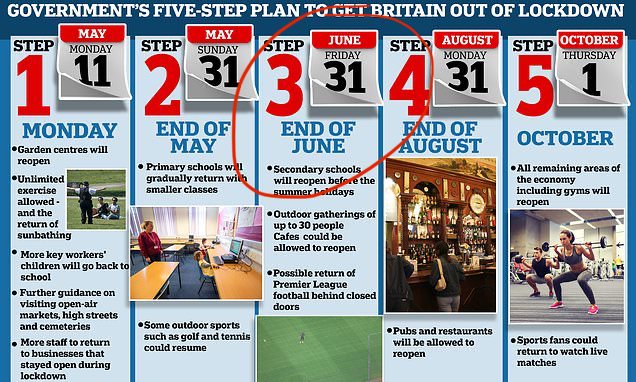



 I mean apart from adding an extra day to the month, the 30th of June is a Tuesday


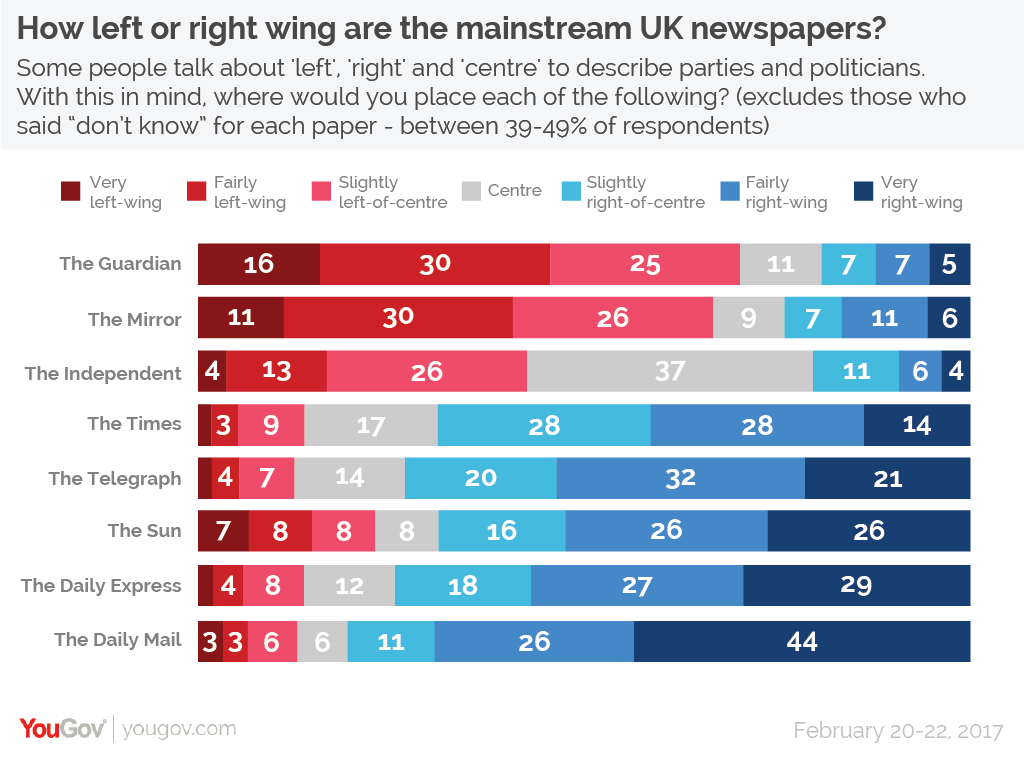








 and we're figuring out how to balance them.






 ) holiday destination.